Most lists of the best places to visit in Portugal fall into one of two traps. Either they name the same dozen places with a paragraph each and no sense of which matter more, or they pile up forty destinations with no help deciding between them. Neither tells you the thing you actually need to know: with the days you have, where should you go? This guide ranks 25 places from first to twenty-fifth, says how long each needs, how to get there and what it costs in 2026, and then helps you choose by trip length, season and taste, including the places I’d skip.
The short answer: the best places to visit in Portugal are Lisbon, Porto, Sintra, the Douro Valley and Madeira, followed by the western Algarve around Lagos, São Miguel in the Azores, Évora, Coimbra and Óbidos. With one week, do Lisbon, Sintra and Porto. With two, add the Douro and either the Algarve or an island.
The best places to visit in Portugal at a glance
Drive or travel times are from Lisbon unless stated, and they’re approximate. “Days” is the minimum I’d give a place to do it justice, not the maximum. Prices quoted later in the guide were checked in September and October 2026.
| # | Place | Region | Best for | Days | Getting there |
|---|---|---|---|---|---|
| 1 | Lisbon | Lisbon | City life, viewpoints, food, day trips | 3–4 | International airport |
| 2 | Porto | North | River city, port wine, azulejos | 2–3 | Airport; ~2h45 by Alfa Pendular from Lisbon |
| 3 | Sintra | Lisbon coast | Palaces and forested hills | 1–2 | ~40 min by train |
| 4 | Douro Valley | North | Vineyards, river, wine tasting | 2 | ~2h20 by train from Porto |
| 5 | Madeira | Atlantic island | Levada walks, cliffs, year-round warmth | 5–7 | ~1h45 flight |
| 6 | Lagos and the western Algarve | Algarve | Sea cliffs, coves, beaches | 3–4 | ~3 h by car |
| 7 | São Miguel, Azores | Atlantic islands | Crater lakes, hot springs, whales | 4–5 | ~2h25 flight |
| 8 | Évora | Alentejo | Roman temple, bone chapel, food | 1–2 | ~1h30 by car or train |
| 9 | Coimbra | Centre | University, library, student city | 1–2 | Under 2 h by Alfa Pendular |
| 10 | Óbidos | Silver Coast | Walled medieval town | Half a day or a night | ~1 h by car |
| 11 | Tomar, Batalha and Alcobaça | Centre | UNESCO monasteries | 1–2 | ~1h15–1h30 by car |
| 12 | Guimarães | North | Medieval centre, “birthplace of Portugal” | 1 | ~1 h by train from Porto |
| 13 | Peneda-Gerês National Park | North | Waterfalls, granite villages, hiking | 2–3 | ~1h30 by car from Porto |
| 14 | Serra da Estrela | Interior | Mountains, snow, cheese | 2–3 | ~3 h by car |
| 15 | Monsanto and the Historic Villages | Interior | Boulder village, border castles | 1–2 | ~3 h by car |
| 16 | Nazaré | Silver Coast | Giant winter waves, fishing town | Half a day to 1 | ~1h15 by car |
| 17 | Tavira and the Ria Formosa | Algarve | Elegant old town, lagoon islands | 2 | ~3 h by car; Algarve railway |
| 18 | Cascais and the Lisbon coast | Lisbon coast | Seaside town, Guincho, Cabo da Roca | 1 | ~40 min by train |
| 19 | Braga | North | Churches, Bom Jesus staircase | 1 | ~1 h by train from Porto |
| 20 | Costa Vicentina and the Alentejo coast | Alentejo/Algarve | Wild beaches, cliff walking | 2–4 | ~2h30 by car |
| 21 | Marvão and Castelo de Vide | Alentejo | Clifftop castle, white hill town | 1–2 | ~2h30 by car |
| 22 | Monsaraz and Alqueva | Alentejo | Walled village, lake, dark skies | 1 | ~2 h by car |
| 23 | Aveiro and the Costa Nova | Centre | Canals, striped beach houses | Half a day | ~1 h by train from Porto |
| 24 | Pico and Faial, Azores | Atlantic islands | Portugal’s highest mountain, whales, sailors’ harbour | 4–5 | Flights via the Azores |
| 25 | Viana do Castelo and Ponte de Lima | Minho | Festivals, filigree, vinho verde country | 1–2 | ~1 h by car from Porto |
How I ranked them
A ranking of places this different, a capital city against a volcanic island against a village of a few hundred people, is a judgement call, and I’d rather show the working than pretend it’s science. I weighed four things. Depth: how many days of genuinely good things there are to do. Distinctiveness: whether you could get the same experience somewhere else in Europe. Ease: how much effort, money and time it takes to get there from where most visitors land. And resilience: how well a place survives its own popularity, because a few of Portugal’s most photographed spots are disappointing at 11am in August.
That’s why Lisbon beats Madeira despite Madeira being, to my mind, the more beautiful place: Lisbon is where almost everyone lands and it rewards every extra day. It’s why Sintra ranks above the Algarve, and why the Douro, which needs a little planning, ranks above places that are easier to reach but less memorable. It’s also why a few famous names (Fátima, Albufeira, Cabo da Roca) sit in the “what to skip” section rather than the 25. The list covers mainland Portugal and both archipelagos. Lisbon gets a single entry here, though it could fill a list of its own.
If you only want the highlights of what to do rather than where to go, our pillar guide to things to do in Portugal takes the experiences one by one. This guide is about choosing the places.
The ranking: 25 places from Lisbon to the Minho
1. Lisbon
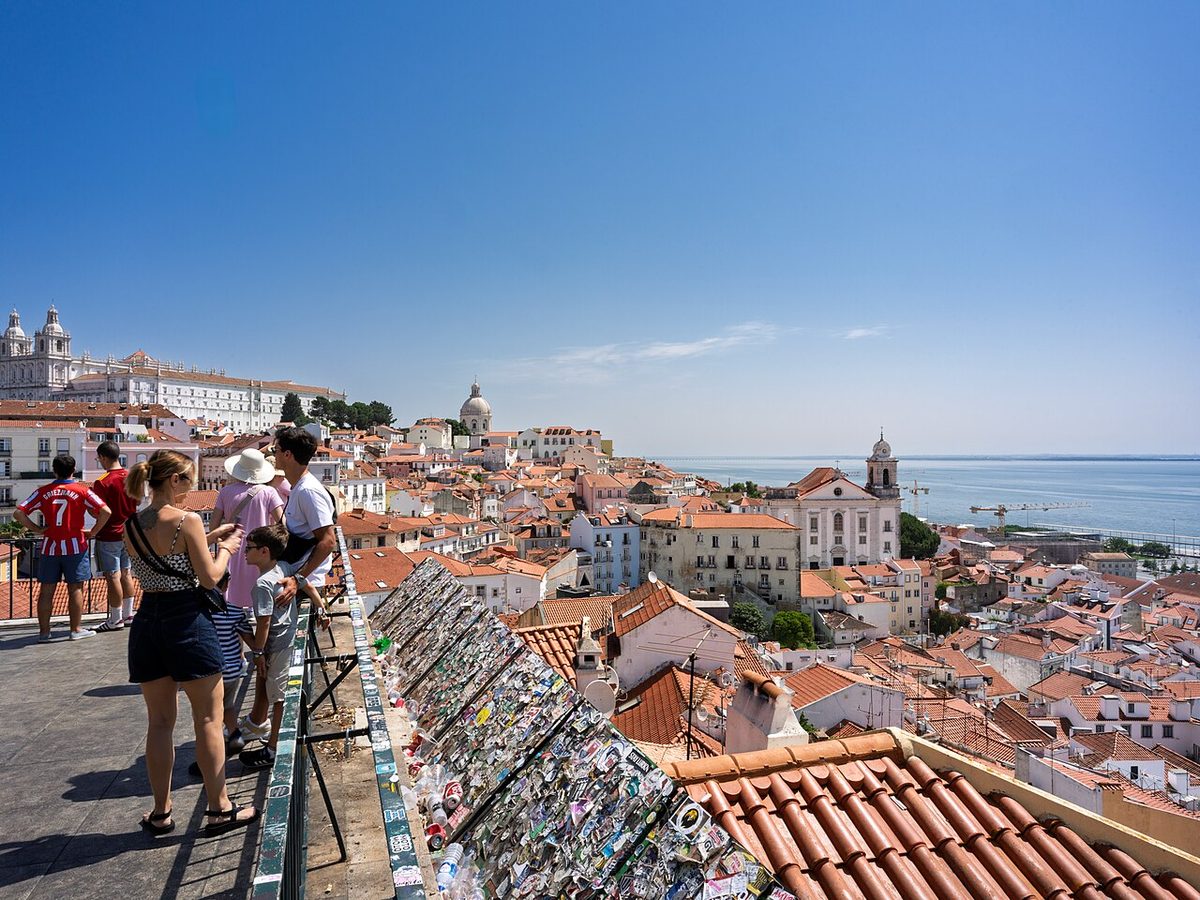
Lisbon is first because it’s where most trips start and because it never runs out. It’s a capital built over seven hills on the estuary of the Tagus, and the way the city tilts towards the water, with tiled façades, yellow trams grinding up impossible gradients and viewpoints at the top of every climb, is the image most people carry home from Portugal. The old quarter of Alfama is a maze of stairways and washing lines that survived the great earthquake of 1755 because it sits on solid rock. Baixa, below it, is the grid the Marquis of Pombal rebuilt after the disaster, ending at the vast riverside square of Praça do Comércio. Chiado and Bairro Alto are the cafés and the nightlife; Belém, along the river to the west, is the monumental Lisbon of the Discoveries, with the Jerónimos Monastery, the Belém Tower and the custard tarts that Pastéis de Belém has been baking on site since 1837.
Beyond the postcard sights, Lisbon is simply a very good city to spend time in. It eats well and cheaply, it has fado in Alfama and Mouraria, the Oceanarium in Parque das Nações (from €25 for an adult, checked September 2026), and some of Europe’s most interesting street art. It’s also the best base for day trips: Sintra, Cascais, the Arrábida coast, Évora and Óbidos are all within reach. The Lisboa Card, from around €31 for the shortest validity, covers transport and entry to the Jerónimos and Belém Tower, and is worth it if you do Belém properly in the same window.
Time needed: three or four days, plus day trips. Getting there: Portugal’s main international airport is about half an hour from the centre by metro. Best time: April to June and September to October; August is hot and crowded. Verdict: the essential first stop. Our Lisbon travel guide covers the highlights neighbourhood by neighbourhood.
Where to stay: Baixa and Chiado for a first visit, flat by Lisbon standards and close to the metro; Alfama or Graça for atmosphere, though the hills are steep and June’s festivals are loud; Príncipe Real and the Avenida da Liberdade for somewhere quieter and smarter. Belém is lovely but too far out to be a base. Local tip: the best sunsets are from the Miradouro da Senhora do Monte and the Graça viewpoint, and on the night of 12–13 June, Santo António, the whole of Alfama becomes a street party of grilled sardines and paper garlands.
2. Porto
Porto is the city people fall for harder than they expected to. It’s smaller, steeper, darker and more working-class than Lisbon, built of granite rather than limestone, and the old riverside quarter of Ribeira, a UNESCO World Heritage site, piles up the hillside above the Douro in a jumble of tiled fronts, laundry and church towers. The double-decker iron Dom Luís I bridge crosses to Vila Nova de Gaia, where the port wine lodges have aged their wines for centuries, and a lodge tour with tasting costs around €20–30. The Gaia cable car, about €7 one way, is a lazy but rewarding way to see the riverbank from above.
In the city itself, the azulejo panels inside São Bento station are free and extraordinary, the Clérigos tower is the landmark you navigate by, and the rebuilt Bolhão market is the place to graze. Then there’s Livraria Lello, the neo-Gothic bookshop with the red staircase, which now charges a voucher redeemable against a book. Sellers don’t agree on the price: I’ve seen €8 for the silver voucher and €16 for the gold, and elsewhere €10 and €15.95, so check the shop’s own site on the day, and expect a 30–60 minute queue from April to October. Porto also has the most indulgent sandwich in Europe, the francesinha, and a great café and natural-wine scene.
Time needed: two or three days, plus a day or two in the Douro. Getting there: the Alfa Pendular from Lisbon takes 2h39–2h50 and costs €35.70 in tourist class (€49.90 in first), with the Intercidades around €28.05 and promotional fares from about €16 if you book ahead; Porto also has its own international airport. Best time: May to October; the winters are wet. Verdict: unmissable, and for many travellers the favourite. See our guide to the best things to do in Porto.
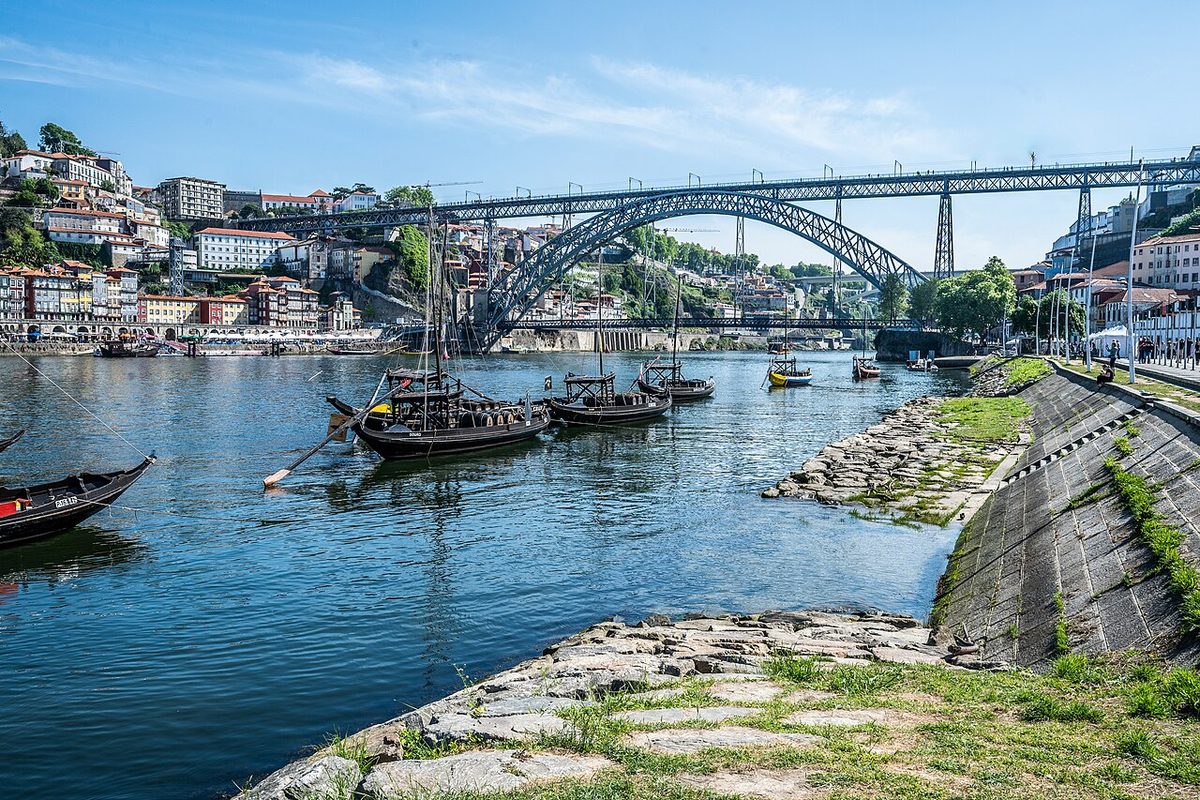
Where to stay: the Baixa around Aliados and São Bento is the most convenient; Ribeira has the views but is steep, touristy and noisy at night; Cedofeita, around the galleries of Rua Miguel Bombarda, is quieter; and the Gaia waterfront gives you the best view of Porto itself. Local tip: walk across the upper deck of the Dom Luís I bridge at sunset to the Serra do Pilar viewpoint, then ride the old tram 1 along the river to Foz do Douro, where the river meets the Atlantic. On the night of 23–24 June, São João, the whole city stays up hitting each other over the head with plastic hammers.
3. Sintra
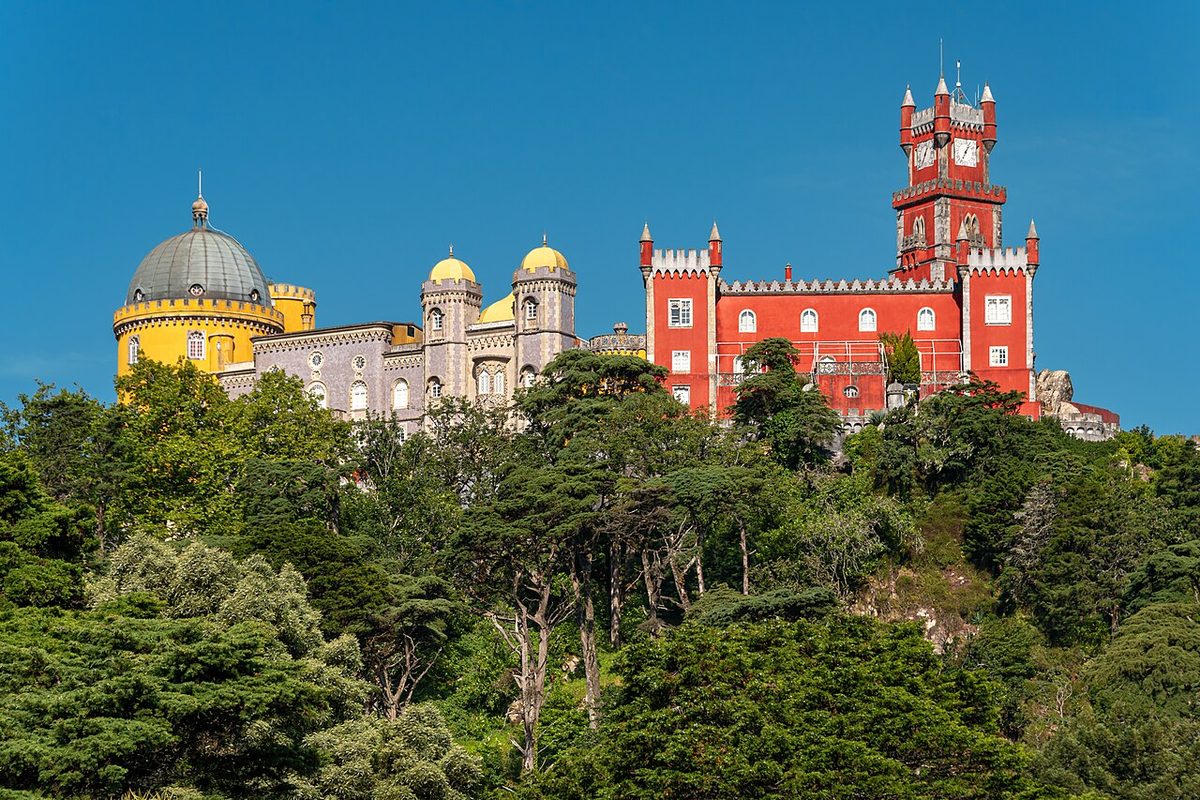
Sintra is a forested range of hills above the Atlantic, 40 minutes by train from Lisbon, where Portuguese kings and nineteenth-century romantics built palaces, castles and fantasy gardens in the mist. The headline is the Pena Palace, a candy-coloured Romantic folly on the highest peak, but the whole hillside is extraordinary: the Moorish walls of the Castelo dos Mouros snaking over the boulders, the initiation well and grottoes of Quinta da Regaleira, the exotic gardens of Monserrate, the cork-lined cells of the Convento dos Capuchos and the twin conical chimneys of the National Palace in the town.
Prices need care, because Parques de Sintra restructured Pena’s tickets and many resellers still quote the old ones. The official site lists an “Essential Visit” (the palace) at €20 and a “Complete Visit” (palace and park) at €45, with the park alone at €12; resellers still advertise €20 for the combined ticket and €10 for the park. Book on the official site, where palace entry is tied to a date and time slot. Elsewhere, the Castelo dos Mouros and Monserrate are €12 each, the National Palace €13 and the Capuchos €11 (all adult prices, checked September 2026). The 434 bus that loops up to Pena has queues of 30–40 minutes from 10am to 1pm in summer; the footpath up through the Vila Sassetti gardens takes about 35 minutes and is often quicker.
Time needed: one very full day, two to do it properly. Getting there: trains from Lisbon’s Rossio station. Best time: any time outside the summer midday crush; arrive at opening. Verdict: the best day trip in Portugal, and better still with a night in the town so you can be at Pena when it opens. Our day trips from Lisbon guide compares it with the alternatives.
Where to stay: in the old town, the Vila, so you can walk to the palaces before the day-trippers arrive. Local tip: go to Pena first, at opening, then the Castelo dos Mouros next door, and save Quinta da Regaleira, which is in the town, for the afternoon. Don’t drive up: the roads through the hills are narrow and largely one-way, and parking near the palaces is scarce. Wear proper shoes, because every route in Sintra is uphill.
4. The Douro Valley
Upriver from Porto, the Douro winds for well over a hundred kilometres between hills terraced from the waterline to the skyline with vineyards: the oldest demarcated wine region in the world, defined in 1756, and the source of every bottle of port. It’s one of the great landscapes of Europe, and it’s best in the stretch between Peso da Régua and Pinhão, where the terraces are steepest and the quintas (wine estates) line the river. You can taste at the estates, stay at one, take a boat on the river, or drive the N222 between Régua and Pinhão, which is often called one of the best driving roads in the world.
The romantic way in is the train. The Linha do Douro runs from Porto São Bento to Pinhão in about 2h20 for around €12.45 single, though there are only about two direct services a day, so check the times. The scenic stretch is after Régua, where the line runs right along the river; sit on the right leaving Porto. Pinhão station is decorated with azulejo panels of the wine harvest. September is the harvest, the vindima, and the most atmospheric month; spring is green and quiet; summer is very hot in the valley.
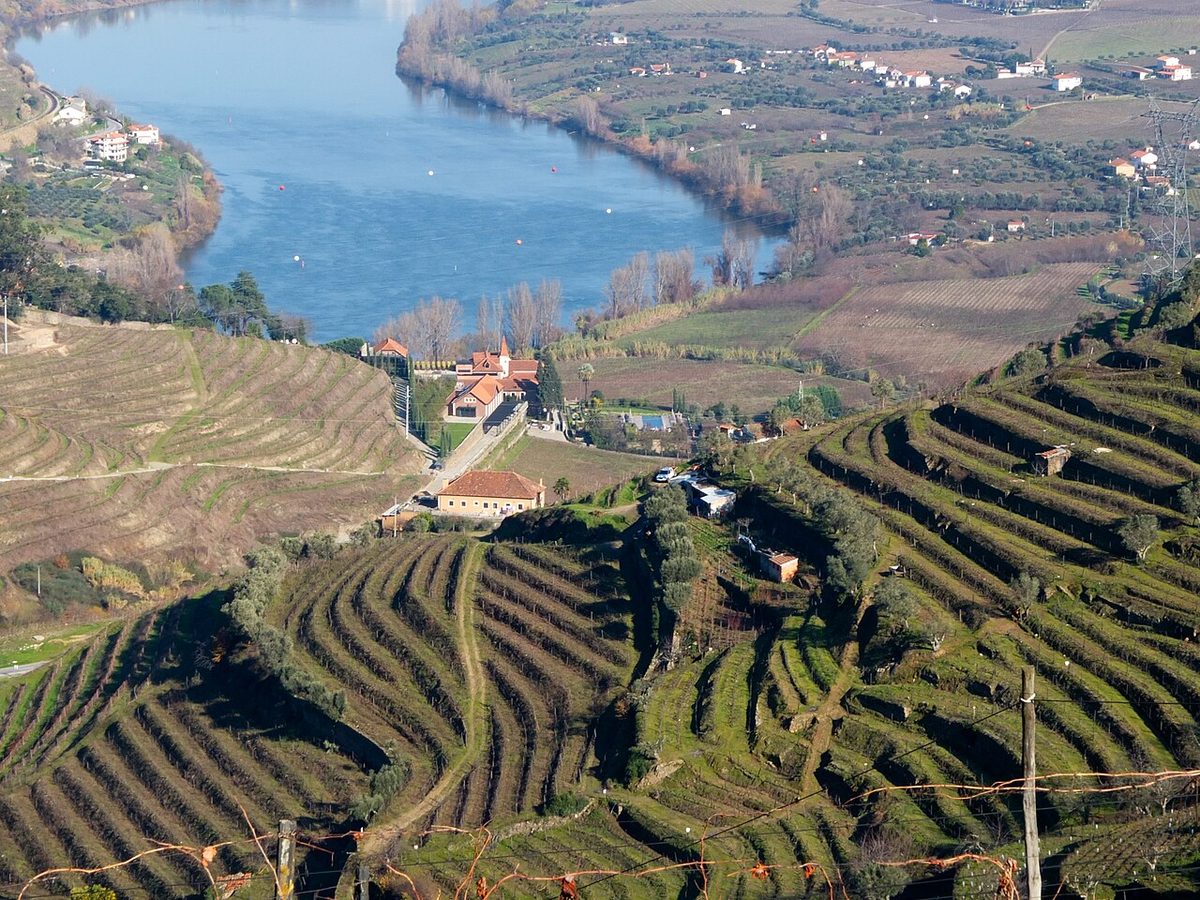
Time needed: at least one night; two is better. A day trip by tour from Porto is possible but rushed. Getting there: train or car from Porto, about two hours. Verdict: the most beautiful place in mainland Portugal, in my view, and the best value overnight. Our Douro Valley guide has the quintas, the train times and where to stay.
Where to stay: Pinhão sits in the heart of the best vineyards and on the railway; Peso da Régua is bigger, with more restaurants and the Douro Museum; but the real experience is a night at a quinta, many of which have rooms and a pool. Local tip: book quinta tastings ahead, especially at weekends; drive up to the São Leonardo de Galafura or São Salvador do Mundo viewpoints for the classic panorama over the river’s bends; and if you’re coming for the harvest, book September early.
5. Madeira
Madeira is a volcanic island rising steeply out of the Atlantic about 600 km off the coast of Morocco, an hour and three-quarters’ flight from Lisbon, and it’s the place in Portugal I’d send anyone who loves the outdoors. The island tops out at 1,862 metres at Pico Ruivo, its interior is a tangle of ridges and gorges covered in ancient laurel forest, and running across it all are the levadas, narrow irrigation channels with footpaths alongside that let you walk deep into the mountains on the level. Funchal, the capital, is an easy, flower-filled harbour town with a cable car up to Monte (€22 return, €16 one way) and the famous wicker toboggans back down (€30 for one, €40 for two, €60 for three).
Two things have changed for walkers. Since 1 January 2026, every official PR trail requires a paid booking through the regional government’s SIMplifica site in 30-minute entry slots: €4.50 per person per trail, €10.50 for PR1, with three-day (€22.50) and seven-day (€52.50) passes. And the classic PR1 from Pico do Arieiro to Pico Ruivo reopened on 27 April 2026 after the 2024 wildfire, but beyond the Pedra Rija gate it is now one way, Arieiro to Ruivo only. Madeira is also the warmest place in Portugal in winter, with Funchal’s daytime highs around 20 °C in January.
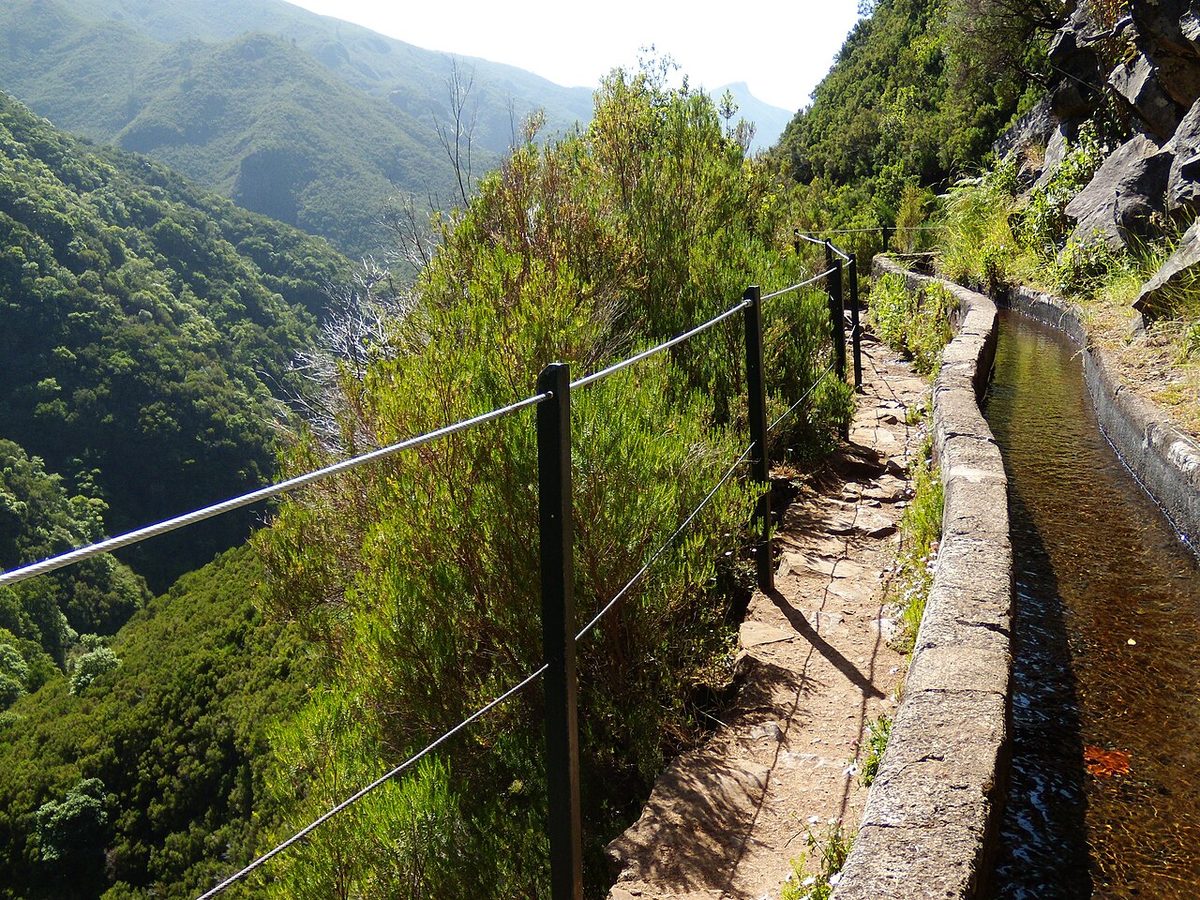
Time needed: five days minimum, a week ideally. Getting there: direct flights from Lisbon, Porto and much of Europe. Best time: year-round; spring for flowers, New Year for the fireworks, and the Festa da Flor runs from 29 April to 30 May in 2027. Verdict: the best island in Portugal for most people. Start with our Madeira guide, then pick your walks from the best levada walks.
Where to stay: Funchal for restaurants, buses and boat trips; Calheta or Ponta do Sol on the sunny south-west coast; Santana or São Vicente on the greener north side if you’re mainly there to walk. Local tip: hire a car (the roads are steep and full of tunnels, but the buses are slow), start mountain walks early before the cloud builds, and remember that the weather on the north and south coasts can be completely different on the same day. Book your trail slots on SIMplifica before you set off.
6. Lagos and the western Algarve
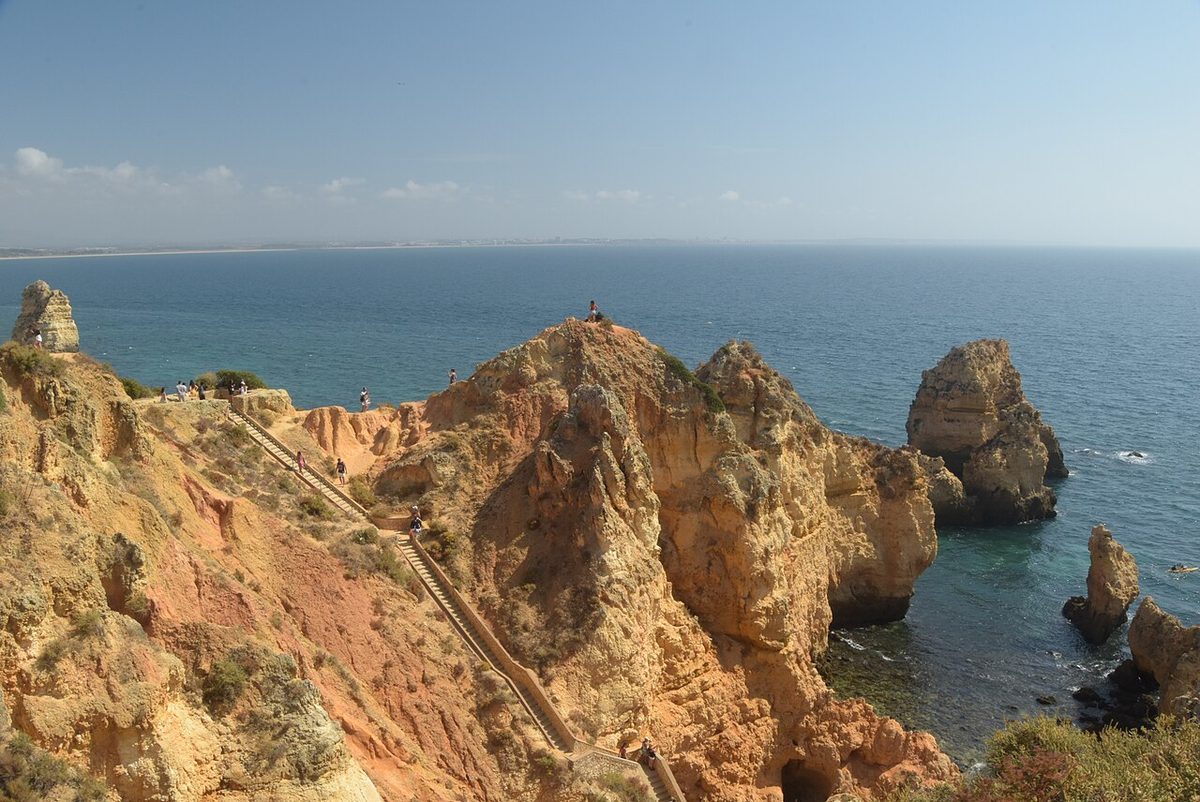
The Algarve is Portugal’s southern coast, and it’s two places in one. The middle, around Albufeira and Vilamoura, is a resort strip. The west, from Carvoeiro to Sagres, is one of Europe’s great coastlines: ochre and gold limestone cliffs carved into arches, stacks, sea caves and tiny coves of fine sand, with water that’s turquoise on a calm day. Lagos is the best base, a real town with walls, a slave-market museum and a lively centre, a short walk from Praia Dona Ana, Camilo and the sea stacks of Ponta da Piedade, which are at their best from a small boat or kayak at water level. East of Lagos are the clifftop walks and the famous sea cave at Benagil; west of it the coast grows wilder towards Sagres and the lighthouse of Cabo de São Vicente, the south-western tip of mainland Europe.
The Benagil rules changed in July 2024 and most guides haven’t caught up. Swimming to the cave is banned, with or without a float; landing on the beach inside is banned; and self-guided kayak and paddleboard rentals into the cave are banned (you can still take your own craft with a lifejacket). Guided kayak trips, typically €30–40 per person, run with one guide to six kayaks, boats keep their distance, and each group gets 5–10 minutes inside. The viral photo of one person alone on the sand is no longer legal. Note, too, that the beach at Praia do Camilo has been reported closed after a cliff collapse by one recent source and open by another, so check with the municipality of Lagos.
Time needed: three or four days. Getting there: about three hours by car from Lisbon, or fly to Faro, about 85–90 km and 1h10 from Lagos on the A22 motorway, which has been toll-free since January 2025. The Algarve railway reaches Lagos, but nothing runs west of it. Best time: May, June, September and early October; August is crowded and expensive. Verdict: the best beach coast in Portugal, if you base yourself in the west. See our Algarve travel guide, our ranking of the best beaches in the Algarve and where to stay in the Algarve.
Where to stay: Lagos for a real town with nightlife and a range of beaches within walking distance; Carvoeiro for clifftop walks and Benagil, more quietly; Sagres for surfers and the end-of-the-world feel. Local tip: walk the Seven Hanging Valleys Trail between Praia da Marinha and Vale Centianes, about 6 km one way along the clifftops, early in the morning, and take a small-boat trip from Lagos marina into the grottoes of Ponta da Piedade, which you can’t reach from the land.
7. São Miguel, Azores
The Azores are nine volcanic islands in the middle of the Atlantic, two and a half hours’ flight west of Lisbon, and São Miguel is the biggest and the easiest first visit. It’s a green island of crater lakes, hot springs, tea plantations and cows, where the landscapes look more like New Zealand or Ireland than southern Europe. Sete Cidades is the famous view, twin lakes, one blue and one green, in a vast crater; Lagoa do Fogo is a wilder lake in another crater in the middle of the island; and in the steaming valley of Furnas, fumaroles boil the ground, restaurants cook cozido stew by burying it in the hot earth, and you can soak in iron-rich thermal pools. On the north coast, the Gorreana plantation has grown tea since the nineteenth century and is free to visit.
Whale watching is world-class: sperm whales live around the islands all year, and blue, fin and sei whales pass between roughly April and June, strongest from mid-April to mid-May. Some details need care. The Lagoa do Fogo road is closed to private cars on summer days, with a €5 shuttle from Caldeira Velha; the official Azores tourism portal gives the dates as 15 June to 30 September, while local news in 2026 reported the shuttle being cleared to start in August, so check the portal. Caldeira Velha now runs timed entry (around €10, according to third-party guides), and I couldn’t confirm 2026 prices for Terra Nostra Park (€17 was the last published adult price, in 2023) or the Poça da Dona Beija pools at source.
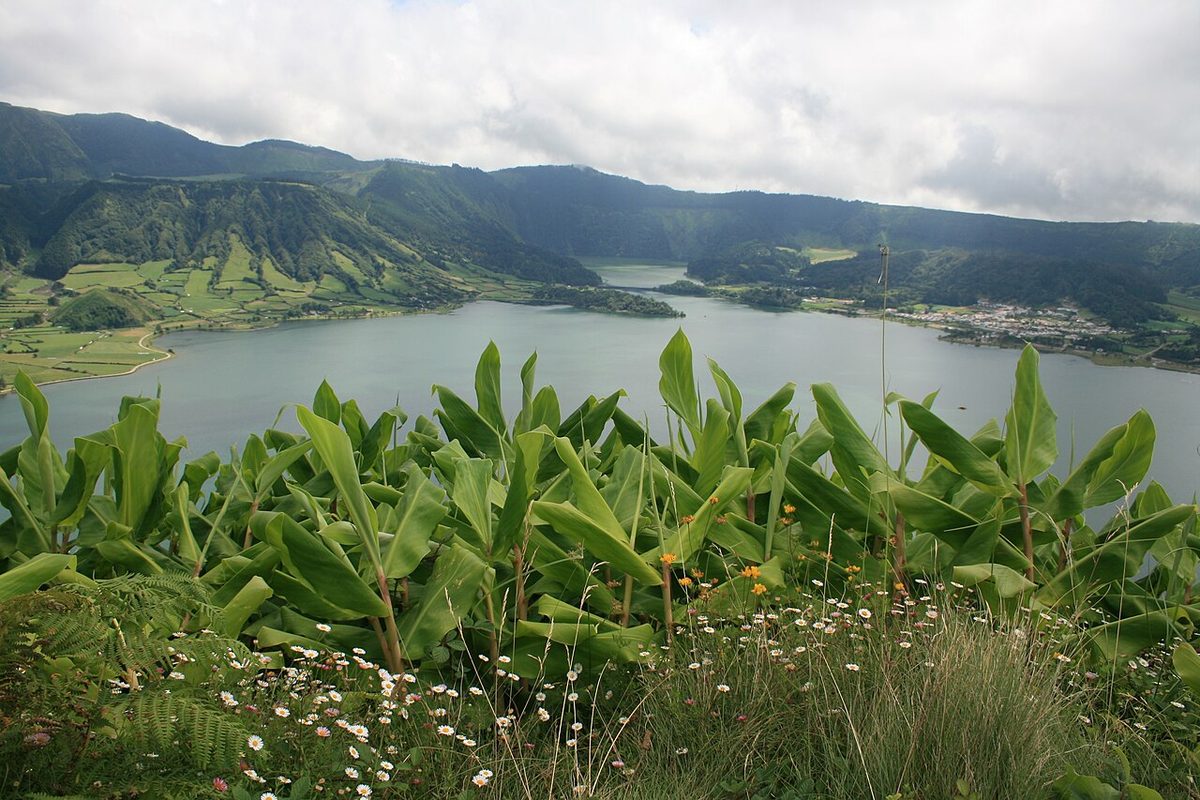
Time needed: four or five days. Getting there: direct flights from Lisbon, Porto and several European and North American cities to Ponta Delgada. Best time: May to September; winter is mild but wet and windy. Verdict: the most otherworldly place in Portugal; add a second island if you can. Our São Miguel guide has the full detail, and the Azores islands overview helps you choose among the nine.
Where to stay: Ponta Delgada, the capital, for restaurants and easy drives in every direction; Furnas for a night among the hot springs; or a rural guesthouse on the north coast. Local tip: the crater lakes are often in cloud, so check the live webcams (SpotAzores runs a network of them) before driving up to Sete Cidades or Lagoa do Fogo, and be ready to swap your plans around. Bring a dark swimsuit for Furnas: the iron-rich water stains light fabrics orange.
8. Évora
Évora is the capital of the Alentejo, the rolling, sun-baked plains of cork oak and olive groves south-east of Lisbon, and it’s one of the best-preserved historic cities in Portugal, a UNESCO site inside a ring of medieval walls. Its centrepiece is a Roman temple, its granite columns standing in the middle of the old town, but the city’s most memorable sight is the Capela dos Ossos, the Chapel of Bones, where Franciscan monks lined the walls and pillars with the bones and skulls of around 5,000 people, under an inscription reminding visitors that their own bones are waiting. It costs €6 for an adult (€4 for over-65s and under-25s), including the church’s museum spaces, checked September 2026. Climb onto the roof of the cathedral, too, for the view across the town.
Évora is also the best place to eat in the south: the Alentejo’s cooking (black pork, bread soups, lamb, sheep’s cheese) and its big, ripe red wines are among the best in Portugal. Outside the walls, the Cromeleque dos Almendres, a field of nearly a hundred standing stones among cork oaks, is older than Stonehenge. A night in the town gives you the empty, lamplit streets after the day-trippers have gone.
Time needed: a day, ideally a night. Getting there: about an hour and a half from Lisbon by car or train. Best time: spring and autumn; July and August can pass 40 °C. Verdict: the best historic city in the south, and the start of any trip into the Alentejo. See our Alentejo travel guide.
Where to stay: inside the walls, in one of the converted palaces or small guesthouses. Local tip: follow the sixteenth-century Água de Prata aqueduct to Rua do Cano, where houses and shops are built into its arches, and eat lunch at a tasca where locals order migas, açorda or pork with clams.
9. Coimbra
Coimbra was Portugal’s first capital, and its university, founded in 1290 and moved here for good in 1537, is one of the oldest in Europe. The university sits on the hilltop in the old royal palace, the Paço das Escolas, and its eighteenth-century baroque library, the Biblioteca Joanina, is one of the most beautiful rooms in the world: gilded, lacquered and lined with books, which are protected at night by a colony of bats that eat the insects. Entry to the library and the Paço das Escolas costs €25 for an adult, in timed slots, so book ahead in busy months. Below the university, the Romanesque Sé Velha (old cathedral) looks like a fortress, and the monastery of Santa Cruz holds the tombs of Portugal’s first two kings.
It’s a student city, which keeps it lively and inexpensive, with its own style of fado, sung by men in student capes, and a calendar of student festivals, the biggest being the Queima das Fitas in May. Across the river, Portugal dos Pequenitos is a miniature park of Portuguese buildings that children love. Half an hour south, Conímbriga is the best Roman site in the country, with mosaic floors still in place.
Time needed: a day, better a night. Getting there: under two hours from Lisbon by Alfa Pendular, and about an hour from Porto. Verdict: the most important stop between Lisbon and Porto; don’t just change trains. Our central Portugal guide covers Coimbra alongside Óbidos, Nazaré and the monasteries.
Where to stay: the Baixa, the flat old commercial district by the river, or close to the university on the hill. Local tip: walk down from the university through the steep lanes of the Alta, past the Sé Velha and down the Quebra-Costas steps (the name means “back-breaker”), and catch an evening of Coimbra fado, which is traditionally sung by men in student dress.
10. Óbidos
King Dinis gave Óbidos to his queen, Isabel, as a wedding present in 1282, and for centuries it passed from queen to queen. It’s a complete medieval town of whitewashed houses edged in blue and ochre, with bougainvillea over the doorways, inside a circuit of castle walls you can walk right round (there are no railings, so hold on to children). The castle is a hotel now. The town’s speciality is ginja, a sour-cherry liqueur, sold from every doorway in little edible chocolate cups. It holds a chocolate festival in spring (in 2026 it ran from 6 to 22 March), a medieval fair in summer and a Christmas village in December.
The catch is that Óbidos is an hour from Lisbon and on every coach-tour itinerary, so by late morning the main street, Rua Direita, is shoulder to shoulder. In the evening it empties and becomes the lovely place in the photos. Time needed: half a day, or better, a night inside the walls. Getting there: about an hour from Lisbon by car or bus. Verdict: the prettiest walled town in Portugal, provided you avoid the middle of the day.
Where to stay: inside the walls, in the castle pousada or a guesthouse on the lanes. Local tip: the Foz do Arelho lagoon beach is fifteen minutes away, and nearby Caldas da Rainha has a daily morning fruit and vegetable market in its main square and a museum of Bordallo Pinheiro’s ceramics, the cabbage-leaf plates you’ll see all over Portugal.
11. Tomar, Batalha and Alcobaça
Three UNESCO-listed monasteries lie within an hour of each other in the limestone hills north of Lisbon, and together they’re the finest group of medieval buildings in Portugal. The Convent of Christ at Tomar was the headquarters of the Knights Templar and their successors, the Order of Christ, who funded the voyages of discovery; its round twelfth-century church, the Charola, modelled on the Holy Sepulchre in Jerusalem, is one of the most extraordinary interiors in Europe, and its Manueline window is the most famous piece of carving in the country. Batalha was built to give thanks for the victory over Castile in 1385 that secured Portuguese independence, and its roofless Unfinished Chapels are a Gothic masterpiece. Alcobaça, the largest church in Portugal, is austere and vast, and holds the carved tombs of King Pedro I and Inês de Castro, the murdered lover he had crowned after her death.
Prices rose sharply in 2026, and most guides are out of date. The Convent of Christ is €15 (50% off for over-65s, 13–24s and families with a minor), Batalha is from €15, and at Alcobaça the church, with the tombs, is free, while the cloisters and monastic buildings are €15 (checked September 2026). Tomar itself is a handsome river town, and every four years it holds the Festa dos Tabuleiros, when women parade with towers of bread on their heads: the next one is 3–12 July 2027. Time needed: a day for all three by car; a night in Tomar is pleasant. Verdict: if you only see one, make it Tomar.
Where to stay: Tomar, a pleasant small town with riverside cafés and the best choice of rooms on the monastery route. Local tip: do them in a line, Alcobaça, then Batalha, then Tomar, and in Tomar look for the fifteenth-century synagogue, one of the oldest surviving in Portugal, which houses a small Jewish museum.
12. Guimarães
Guimarães calls itself the “birthplace of Portugal”, and the words are painted on a wall by the old city gate. Afonso Henriques, the first king, was born here, and the battle of São Mamede in 1128, fought nearby, set him on the road to independence. Its compact medieval centre, a UNESCO site, is one of the best preserved in the country: granite arcades, balconied houses and squares like the Largo da Oliveira, where students and locals fill the café tables on summer evenings. Above it on the hill stand the small, stark tenth-century castle and the much grander fifteenth-century Paço dos Duques de Bragança, a ducal palace with a forest of brick chimneys. A combined ticket for the palace and castle costs €8 (checked September 2026).
Time needed: a day trip from Porto, or a night if you like small cities. Getting there: about an hour by train from Porto. Verdict: the best medieval town in the north, and easy to pair with Braga. Our day trips from Porto guide covers both, and its castle features in our ranking of the best castles in Portugal.
Where to stay: a guesthouse in the old centre. Local tip: take the cable car up Penha hill for a picnic among the boulders and a view over the city, and stay for the evening, when the squares fill with students rather than tour groups.
13. Peneda-Gerês National Park
Peneda-Gerês, on the Spanish border in the far north, is Portugal’s only national park, created in 1971: a granite wilderness of mountains, oak woods, rivers and waterfalls, with wild garrano ponies, long-horned cattle and some of the most traditional villages in the country. In villages like Soajo and Lindoso, granite granaries on stilts, the espigueiros, stand in groups on the rocks; the spa village of Gerês is the main base; and the waterfalls and plunge pools along the rivers, such as Cascata do Arado and the pools of the Rio Homem, are the summer highlight, when locals come to swim.
Its most protected areas have rules most visitors don’t know about. Trails in the Total Protection Zone are limited to groups of ten and need authorisation from the ICNF, requested by email at least a week ahead; groups of more than ten need permission in parts of the Partial Protection Zone too. The popular waterfalls get very busy on August weekends, and the access roads are narrow. Time needed: two or three days. Getting there: about 1h30 by car from Porto; there’s very little public transport. Best time: May to October. Verdict: the best wild landscape on the mainland. Our hiking guide has the routes.
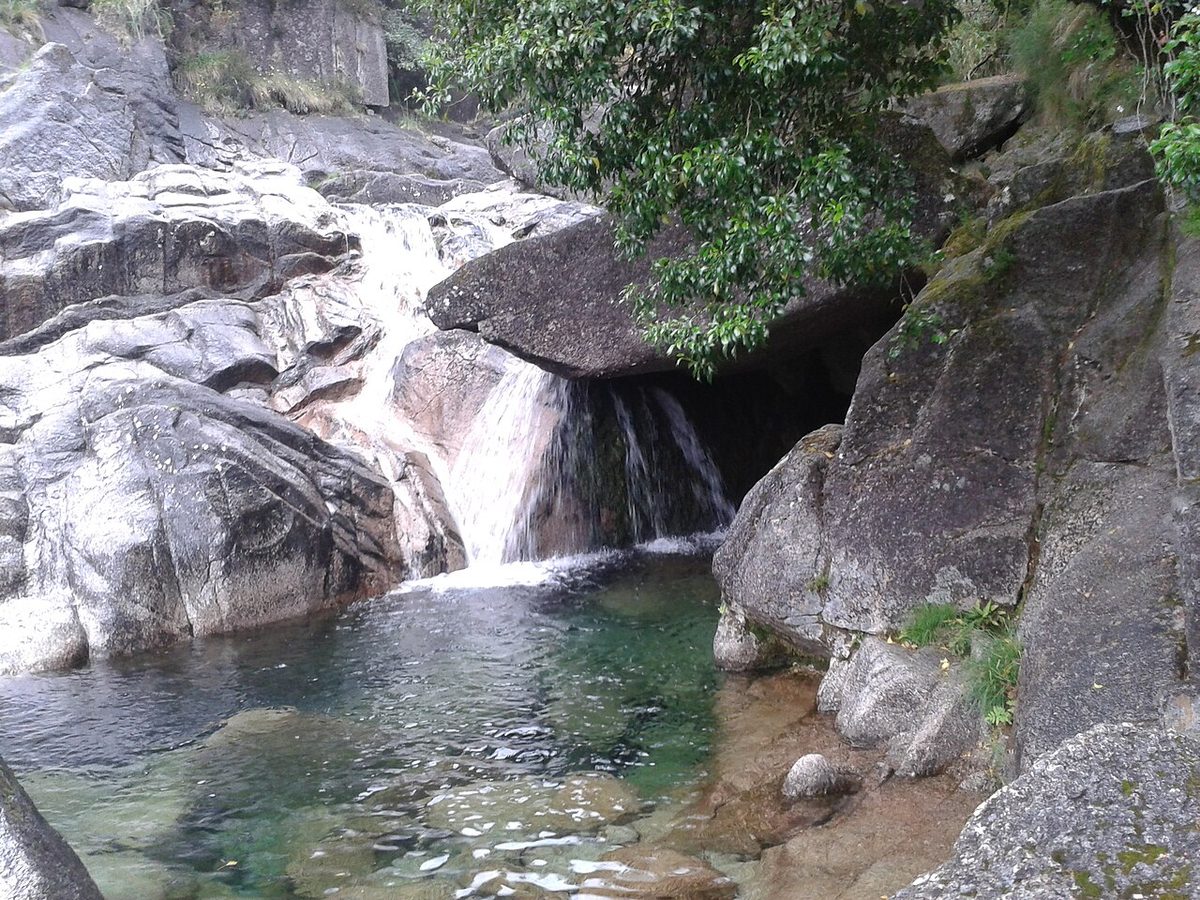
Where to stay: Gerês village for convenience, Soajo or Campo do Gerês for a rural guesthouse. Local tip: look for the Roman milestones along the Geira, the old Roman road from Braga to Astorga, which still stand by the roadside inside the park; and in the far north-east, Pitões das Júnias has a waterfall and the ruins of a medieval monastery that see a fraction of the crowds of the central waterfalls.
14. Serra da Estrela
The Serra da Estrela is mainland Portugal’s highest mountain range, a granite plateau in the interior that tops out at Torre, 1,993 metres, and it’s the most surprising landscape on the mainland: bare, boulder-strewn high ground dotted with glacial lakes, and on its eastern side the Zêzere glacial valley, a textbook U-shaped trough carved by an ice-age glacier that you can drive straight along. The N339 over the top, from Covilhã past Torre to Seia, is the highest road in the country, and the walk from Lagoa Comprida to Covão dos Conchos, a lake with a perfectly round spillway in the middle of it, is the most photographed hike in central Portugal.
It’s also the only place on the mainland where snow settles reliably in winter, with Portugal’s only ski runs just below Torre. Don’t come to ski: the runs are short, the weekend queues long, and the prices quoted by third-party listings disagree (one gives €30 for an adult day pass in main season, another €25 in high season and €15 in low), but a snow day is good fun for families. The other reason to come is the cheese: Queijo Serra da Estrela, a soft sheep’s cheese curdled with thistle flowers, so runny at its best that you eat it with a spoon. Time needed: two or three nights, based in Manteigas or Covilhã. Getting there: about three hours from Lisbon on the toll-free A23. Verdict: the best of the interior. Our Serra da Estrela and Historic Villages guide covers the roads, walks and villages.
Where to stay: Manteigas for walkers, Covilhã for the train and the snow. Local tip: drive the N338 up the glacial valley from Manteigas early in the morning and stop at Covão d’Ametade, the birch-fringed meadow at the valley head, before the picnickers arrive.
15. Monsanto and the Historic Villages
East of the Serra da Estrela, along the old border with Spain, twelve fortified villages have been restored as the Historic Villages of Portugal, and the most extraordinary of them is Monsanto, a village built among, against and underneath giant granite boulders on a lone hill above the plains. Some houses use a boulder as a wall, some as a roof. In 1938 it won a national contest as “the most Portuguese village in Portugal”, and the silver rooster trophy still sits on its clock tower. A steep path climbs through the boulders to the ruined castle and a view deep into Spain.
The other villages each have their own character: Sortelha‘s complete medieval walls on a granite ridge; Belmonte, birthplace of Pedro Álvares Cabral and home of a Jewish community that kept its faith in secret for four centuries; Almeida‘s star-shaped fortress; Idanha-a-Velha‘s Roman walls and Visigothic cathedral, fifteen minutes from Monsanto; and Piódão, a village of dark schist houses stacked up a terraced hillside, which looks like a nativity scene after dark. Time needed: a day for Monsanto and Idanha, more for a loop. Getting there: about three hours by car from Lisbon. Verdict: sleep in Monsanto; the coach groups leave by late afternoon and the village is at its best at sunset.
Where to stay: one of Monsanto’s guesthouses built among the rocks, or inside Sortelha’s walls. Local tip: twenty minutes from Monsanto, Penha Garcia has a fossil trail through a quartzite gorge where you can see the tracks of trilobites in the rock, ending at a dam pool where people swim in summer.
16. Nazaré
Nazaré is two places depending on the season. In summer it’s a traditional fishing town turned beach resort, with a broad sandy bay, fish drying on racks along the promenade, and older women who still wear the layered skirts the town is known for. Between roughly October and March, and most dramatically from November to February, it becomes something else: the place where the biggest waves ever surfed break, at Praia do Norte, just north of town. A deep underwater canyon focuses Atlantic swells into monsters that can top 20 metres, and when a big swell arrives, crowds gather on the headland around the lighthouse at the Forte de São Miguel Arcanjo to watch tow-in surfers being whipped onto them by jet ski.
The waves are hard to predict more than a few days ahead, so if you want to see them, watch the surf forecasts and be ready to drive up from Lisbon at short notice. Outside big-wave days, Praia do Norte is just a wild beach. Take the funicular up to the Sítio, the clifftop quarter, for the view over the town and bay either way. Time needed: half a day, or a night in wave season. Getting there: about 1h15 by car from Lisbon. Verdict: unique in winter, pleasant in summer. Our surfing guide explains the canyon and the season.
Where to stay: along the beachfront for the town, or up in the Sítio for the views and a short walk to the lighthouse. Local tip: the fort beside the lighthouse houses an exhibition of big-wave surfboards, and down in the town you’ll still see fish drying in the sun on racks on the beach.
17. Tavira and the Ria Formosa
Tavira is the most elegant town in the Algarve, and the antidote to the resort strip. It straddles the river Gilão in the eastern Algarve, with an old bridge (called Roman, though what you see is much later), whitewashed houses with hipped roofs, around thirty churches, a ruined castle with a garden on top, and riverside cafés that fill with locals rather than stag parties. It’s a short boat ride from Ilha de Tavira, one of the sandbar islands of the Ria Formosa, a lagoon system of channels, salt pans and long empty beaches that runs along this whole stretch of coast. At Praia do Barril, a little train runs across the dunes to a beach where hundreds of rusting anchors from the old tuna fishery lie in rows in the sand.
The eastern Algarve’s beaches are flatter and its sea calmer and warmer than the west’s; it’s the better choice for families and swimmers, less so for cliff scenery. Faro’s walled old town, 30 km west, is worth an hour too. Time needed: two days. Getting there: about three hours by car from Lisbon, or by train via Faro on the Algarve line. Verdict: the best base in the eastern Algarve. See our guide to Portugal’s best beaches for the Ria Formosa islands.
Where to stay: in the old town on either bank of the river. Local tip: Cacela Velha, a tiny whitewashed village on a bluff above the Ria Formosa about twenty minutes east, has one of the loveliest views on the coast, and Santa Luzia, just west of Tavira, calls itself the octopus capital of Portugal; order it grilled or in rice.
18. Cascais and the Lisbon coast
Cascais is a former fishing village turned smart seaside town at the end of the coastal railway from Lisbon, forty minutes from Cais do Sodré. It has a pretty old centre, small town beaches like Praia da Conceição, a marina, a citadel and some good museums, notably the Casa das Histórias Paula Rego, and the coast road west of it is the best stretch of shoreline near the capital: past the Boca do Inferno, a collapsed sea cave that thunders in a big swell, to the windswept surfing beach of Guincho, with the Sintra hills rising behind. Further on, Cabo da Roca is the westernmost point of mainland Europe.
Cascais works best as a half-day from Lisbon or as the end of a Sintra day: you can loop from Sintra down to Cabo da Roca and Cascais by bus or car and take the train back. Time needed: half a day to a day. Verdict: lovely, easy and a little overpolished; don’t expect a beach holiday, because the town beaches are small and busy.
Where to stay: most people day-trip from Lisbon, but Cascais makes a quieter base if you plan to explore Sintra and the coast by car. Local tip: a cycle path runs along the coast from Cascais towards Guincho, and bike hire is easy to find; it’s the best way to see the coast road without fighting for parking.
19. Braga
Braga is Portugal’s religious capital, a city of churches with a cathedral that’s the oldest in the country, and one of the youngest populations in Europe thanks to its university. Its great sight is just outside town: Bom Jesus do Monte, a pilgrimage church at the top of a monumental zigzag baroque staircase of fountains, chapels and statues representing the senses and the virtues, listed by UNESCO in 2019. You can climb the 500-odd steps or ride the 1882 water-powered funicular alongside them. Holy Week in Braga, with its night processions, is the most important in Portugal. In the city centre, the cathedral, the Biscainhos palace and the café life around the Praça da República make for a good day.
Time needed: a day, often combined with Guimarães. Getting there: about an hour by train from Porto. Verdict: a rewarding day trip, and a good base for Peneda-Gerês.
Where to stay: the old centre. Local tip: above Bom Jesus, the Sameiro sanctuary has an even wider view, and Braga’s historic cafés under the arcades of the Praça da República are among the grandest in the north.
20. The Costa Vicentina and the Alentejo coast
From Sines south to Sagres, Portugal’s south-west coast is protected as a natural park, and it’s the wildest shoreline in southern Europe: dark schist cliffs, white-water surf, storks nesting on sea stacks, and long beaches backed by dunes and heath, with almost no development. The towns are small and laid-back: Vila Nova de Milfontes on its river estuary, Zambujeira do Mar on its clifftop, Odeceixe where the river meets the sea in a sandbar beach, and the surf hamlets around Aljezur. It’s also the route of the Rota Vicentina: the Fishermen’s Trail runs 226.5 km along the clifftops in 13 one-day stages, walkable in either direction, best from September to June.
The water here is colder and the surf heavier than on the south coast, and the beaches can be dangerous; swim where there are lifeguards. North of Sines, Comporta is the fashionable end of the Alentejo coast, with rice paddies, stilt-house fishing piers and endless white beaches. Time needed: two to four days, more for walkers. Getting there: about 2h30 by car from Lisbon. Verdict: the best coast in Portugal for walkers and surfers, and the antidote to the Algarve in summer.
Where to stay: Vila Nova de Milfontes for the most choice; Zambujeira do Mar or Odeceixe for somewhere smaller; the area around Aljezur for surf. Local tip: if you’re walking the Fishermen’s Trail in spring, book accommodation at the end of each stage early, because the small villages fill up, and walk in the morning, as the afternoon wind on the cliffs can be strong.
21. Marvão and Castelo de Vide
In the north-east of the Alentejo, close to the Spanish border, Marvão is a walled village of white houses on a granite crag at the top of the Serra de São Mamede, with a castle at the highest point and views that seem to take in half of Portugal and a good slice of Spain. It’s one of the most dramatic sites of any village in Europe, and at sunset, from the castle keep, it’s hard to beat. A few kilometres away, Castelo de Vide is a softer, larger hill town, white houses and churches spilling down the slope below its castle, with one of the best-preserved medieval Jewish quarters in Portugal, a small medieval synagogue, and a granite fountain, the Fonte da Vila, whose water is said to guarantee your return.
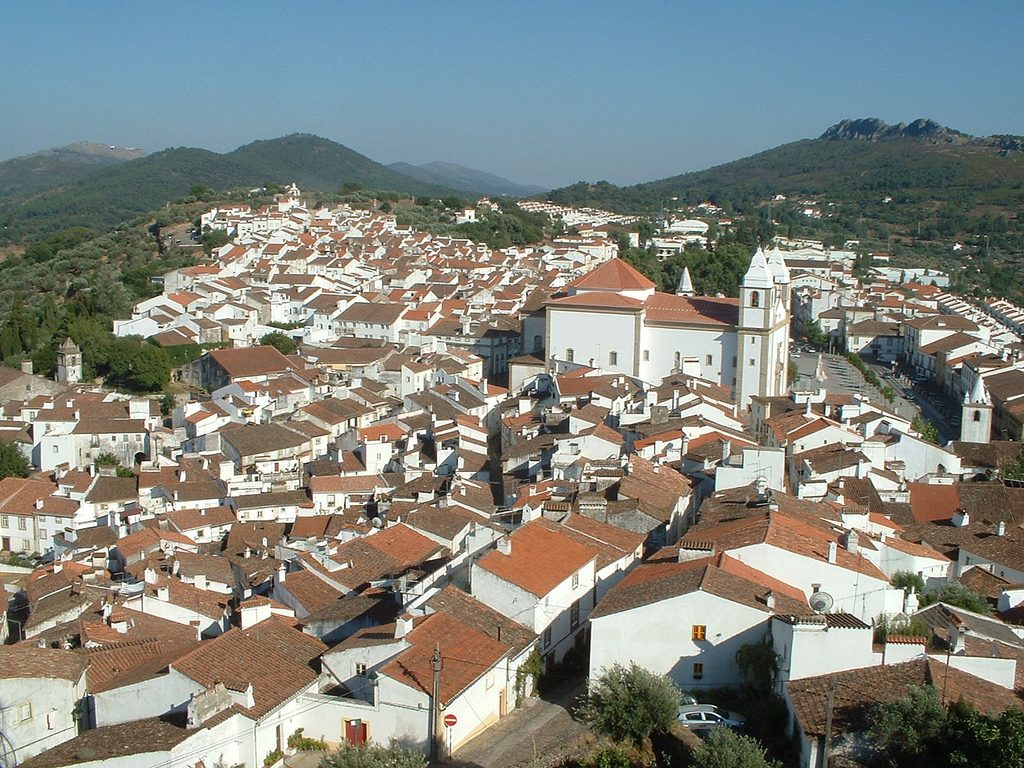
Time needed: a night in each, or a night in Marvão and an afternoon in Castelo de Vide. Getting there: about 2h30 by car from Lisbon. Verdict: the most beautiful pair of hill towns in the south, and still uncrowded.
Where to stay: inside Marvão’s walls for the sunsets and the silence, or in Castelo de Vide for more restaurants. Local tip: come in November for Marvão’s chestnut fair, and visit the excavated Roman town of Ammaia in the valley below.
22. Monsaraz and Alqueva
Monsaraz is a tiny walled village of whitewashed houses and schist-paved lanes on a hilltop above the Alqueva reservoir, the largest artificial lake in western Europe, which flooded the Guadiana valley in the early 2000s. The view from the castle walls over the lake, the olive groves and the plains to Spain is one of the great Alentejo panoramas. Around the lake, you can swim at river beaches, rent a boat or kayak, and visit the wineries of Reguengos de Monsaraz. At night, Alqueva is one of the darkest places in Europe; it was the world’s first certified Starlight Tourism Destination, and there are stargazing sessions at the observatory and with local operators.
Time needed: a day or a night. Getting there: about 50 minutes by car from Évora, two hours from Lisbon. Verdict: the best side trip from Évora, and magical at night.
Where to stay: inside the village, or at one of the wine estates nearby. Local tip: São Pedro do Corval, ten minutes away, is one of the biggest pottery centres in Portugal, with dozens of workshops selling painted Alentejo ceramics.
23. Aveiro and the Costa Nova
Aveiro sits on a lagoon on the coast between Coimbra and Porto, and its small centre is crossed by canals where brightly painted moliceiros, the high-prowed boats once used to harvest seaweed, now take visitors on short trips. The town has a cluster of Art Nouveau buildings and a sweet speciality, ovos moles, egg-yolk paste in wafer shells shaped like shells and fish. Ten minutes away on the lagoon’s outer sandbar, the Costa Nova is a row of wooden beach houses painted in bold vertical stripes, red, blue, green and yellow, behind a long Atlantic beach. The Vista Alegre porcelain factory, with its museum, is nearby at Ílhavo.
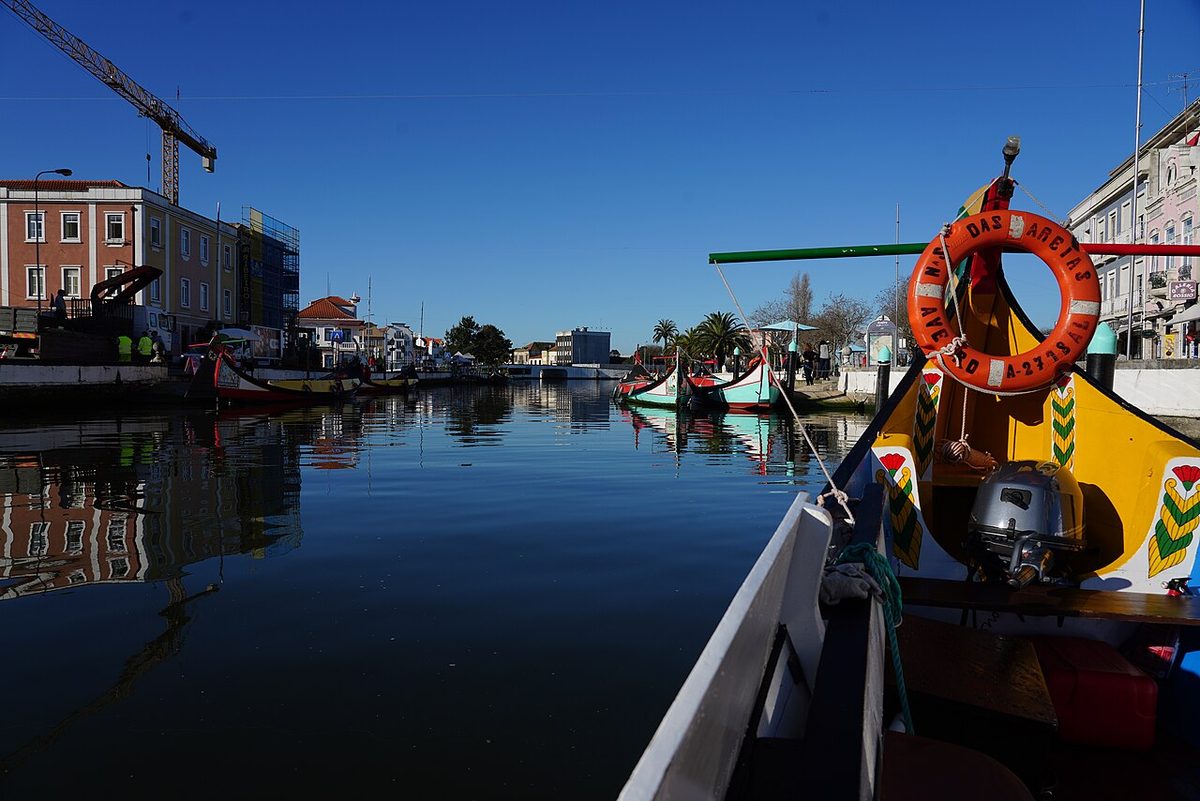
Time needed: half a day, including the Costa Nova. Getting there: about 40 minutes to an hour by train from Porto. Verdict: a pleasant half-day; it isn’t the “Venice of Portugal” its marketing promises, but the striped houses are worth the detour.
Where to stay: most visitors come for the day from Porto, but a night lets you see the canals and the Costa Nova without the crowds. Local tip: buy ovos moles from a traditional maker rather than a souvenir shop, and walk the length of the Costa Nova’s striped houses, then cross the dunes to the open Atlantic beach.
24. Pico and Faial, Azores
In the central Azores, Pico is a single volcano rising straight out of the sea to 2,351 metres, the highest point in Portugal, and climbing it, a steep, scrambly ascent of six to eight hours from the mountain house at about 1,200 metres, is one of the great adventures in the country. Registration at the Casa da Montanha is required; I couldn’t confirm the current climbing fee at source, so check before you go. Below the mountain, Pico’s vineyards, grown in a lattice of black lava-stone walls built to shelter the vines from the wind and spray, are a UNESCO World Heritage landscape. And Lajes do Pico, a whaling port until 1984, is now one of the best bases for whale watching in the Atlantic.
Across a half-hour ferry crossing, Faial‘s harbour town, Horta, is a stopover for yachts crossing the Atlantic, whose crews paint their boat’s name on the marina walls for luck and drink at Peter Café Sport. At the island’s western tip, the Capelinhos volcano erupted in 1957–58, burying the lighthouse to its middle and adding new land to the island; its interpretation centre is built underground in the ash. Time needed: four or five days for both. Getting there: flights via Ponta Delgada or Lisbon, and inter-island ferries in summer. Verdict: the best second Azorean trip, and the most dramatic.
Where to stay: Madalena on Pico, which faces Faial across the channel, or Horta on Faial. Local tip: attempt the Pico climb between June and September, start early with warm layers and plenty of water, and keep a spare day, because the weather on the summit decides everything.
25. Viana do Castelo and Ponte de Lima
The Minho, the green north-western corner of Portugal, is the land of vinho verde, granite manor houses, maize granaries and some of the country’s liveliest traditional festivals. Viana do Castelo, at the mouth of the river Lima, is its prettiest town: a handsome Renaissance and baroque centre, a historic hospital ship, the Gil Eannes, now a museum, and the basilica of Santa Luzia on the hill above, reached by funicular, with one of the best views on the north coast. In August, the Romaria d’Agonia fills the streets with women in red-and-gold traditional dress hung with gold filigree jewellery.
Twenty-five kilometres upriver, Ponte de Lima claims to be the oldest town in Portugal, having received its charter in 1125, and it’s built around a long medieval bridge over the Lima with a Roman stretch at one end. It’s the best base for the Minho’s manor-house stays and its riverside walks and cycle paths, and its fortnightly market on the riverbank is one of the oldest in the country. Time needed: a day or two. Getting there: about an hour by car from Porto. Verdict: the best of the north beyond the cities.
Where to stay: Viana for the town and the beach, or a manor house in the countryside around Ponte de Lima for the Minho’s rural tourism. Local tip: the Ecovia do Lima, a riverside path for walking and cycling, follows the river below Ponte de Lima; and try vinho verde made from the local Loureiro grape.
Fifteen more places worth a detour
These didn’t make the 25, either because they’re best as add-ons to somewhere above or because they suit a narrower range of travellers. All are worth the trip in the right circumstances.
- Arrábida and Setúbal. Forty-five minutes south of Lisbon, the Serra da Arrábida drops into turquoise water at beaches like Portinho da Arrábida, and the fishing town of Setúbal runs dolphin trips to see the roughly thirty bottlenose dolphins resident in the Sado estuary year-round.
- Comporta. White-sand beaches, rice fields and stilt piers on the Alentejo coast, now Portugal’s most fashionable beach escape, with prices to match.
- Ericeira. A whitewashed fishing town north of Lisbon and a World Surfing Reserve, with a dozen breaks in a few kilometres and a good choice of surf schools.
- Peniche and the Berlengas. A surf town with the Supertubos beach break, and the boat trip to the Berlenga islands, a nature reserve with a fort on a rock in clear water.
- Mafra. A baroque palace-convent so big it has a basilica, a library and over a thousand rooms, half an hour from Lisbon.
- Passadiços do Paiva and Arouca. Eight kilometres of wooden walkways along a gorge and the 516 Arouca suspension footbridge, €12 combined, sold online only with a daily cap, within reach of Porto.
- Amarante. A riverside town east of Porto with a monastery church, a famous bridge and some of the best convent sweets in the north.
- Lamego. The baroque staircase to the sanctuary of Nossa Senhora dos Remédios, at the western edge of the Douro wine country.
- Piódão and the schist villages. Slate villages in the forested hills east of Coimbra; Talasnal in the Serra da Lousã is the easiest to reach.
- Mértola. A white town above the Guadiana with a mosque turned church and a Moorish castle, the most Islamic-feeling place in Portugal.
- Estremoz and Vila Viçosa. The Alentejo’s marble towns, with a Saturday market in Estremoz and the ducal palace of the Bragança family in Vila Viçosa.
- Terceira, Azores. Angra do Heroísmo, a UNESCO-listed Renaissance port town, plus bullfights on a rope in the streets in summer.
- Porto Santo. Madeira’s little sister island, with a nine-kilometre golden-sand beach and a slower pace.
- Silves. The old Moorish capital of the Algarve, with a red sandstone castle above the orange groves.
- Almourol. A Templar castle on a rocky island in the Tagus, reached by a short boat ride, which looks exactly like a child’s drawing of a castle.
For more of the country’s castles in one place, see our ranking of Portugal’s castles.
Portugal’s 17 UNESCO World Heritage Sites, and where they fall in the ranking
Portugal has 17 World Heritage Sites, and most of them appear somewhere in the 25. If you collect them, this is how they map onto the places above.
| World Heritage Site | Place in this guide |
|---|---|
| Monastery of the Hieronymites and Tower of Belém, Lisbon | 1. Lisbon |
| Historic Centre of Porto, Luiz I Bridge and Monastery of Serra do Pilar | 2. Porto |
| Cultural Landscape of Sintra | 3. Sintra |
| Alto Douro Wine Region | 4. The Douro Valley |
| Laurisilva of Madeira | 5. Madeira |
| Historic Centre of Évora | 8. Évora |
| University of Coimbra, Alta and Sofia | 9. Coimbra |
| Convent of Christ in Tomar | 11. Tomar |
| Monastery of Batalha | 11. Batalha |
| Monastery of Alcobaça | 11. Alcobaça |
| Historic Centre of Guimarães | 12. Guimarães |
| Sanctuary of Bom Jesus do Monte, Braga | 19. Braga |
| Landscape of the Pico Island Vineyard Culture | 24. Pico |
| Central Zone of the Town of Angra do Heroísmo, Terceira | Honourable mention: Terceira |
| Royal Building of Mafra | Honourable mention: Mafra |
| Prehistoric Rock Art Sites in the Côa Valley | Near the Historic Villages (15) |
| Garrison Border Town of Elvas and its Fortifications | Alentejo, near Marvão (21) |
Two of them are easy to overlook. The Côa Valley rock engravings, near Vila Nova de Foz Côa, are among the largest open-air collections of Palaeolithic art in the world, visited on guided jeep tours from the Côa Museum. And Elvas, near the Spanish border in the Alentejo, is ringed by the largest bulwarked fortifications in the world, with an aqueduct marching across the plain beside them.
Where the best places sit: Portugal region by region
It helps to think of Portugal as seven travel regions, each with its own character and its own best base. Here’s how the 25 places above fall across them, and how many days each region deserves.
Lisbon and its coast
The capital and everything within an hour of it: Lisbon itself, Sintra, Cascais and the Estoril coast, the Arrábida hills and Setúbal to the south, and the palace at Mafra and the surf town of Ericeira to the north. It’s the easiest region to see without a car, because suburban trains run to Sintra and Cascais and buses cover the rest. Base yourself in Lisbon and day-trip, or split your nights between Lisbon and Sintra. Give it four to six days. Our guide to day trips from Lisbon ranks the options.
The Centre
The band between Lisbon and Porto, which most visitors drive or ride straight through, holds more of Portugal’s history than anywhere else: Óbidos and the Silver Coast, Nazaré, the three UNESCO monasteries at Alcobaça, Batalha and Tomar, the pilgrimage town of Fátima, Coimbra, Aveiro and, inland, the Serra da Estrela and the Historic Villages along the Spanish border. A car makes it far easier. Two to four nights between Lisbon and Porto, in Óbidos, Tomar or Coimbra, is the single best upgrade to a first trip. Inland, the mountains and villages need another two or three.
The North
Porto, the Douro Valley, the medieval cities of Guimarães and Braga, the green Minho with Viana do Castelo and Ponte de Lima, and Peneda-Gerês on the Spanish border, plus the remote north-east of Trás-os-Montes for those with time. It’s the wettest region and the most traditional, with the best food in the country by many Portuguese accounts. Base yourself in Porto for the city and day trips, then move to the Douro for at least a night and to the Minho or Gerês for nature. Allow five days to a week. See our day trips from Porto.
The Alentejo
A third of Portugal’s land and a small fraction of its people: rolling plains of cork oak, olive groves and wheat, whitewashed hill towns and a wild Atlantic coast. Évora is the capital and the natural base; Monsaraz and the Alqueva lake are an hour away; Marvão and Castelo de Vide sit in the hills to the north-east; Mértola is on the Guadiana to the south; and the coast runs from Comporta down through Vila Nova de Milfontes to the Algarve. It’s the best region for slow travel, food and wine, and the worst for summer heat. Three to five days.
The Algarve
Portugal’s southern coast divides into three. The west, from Lagos to Sagres and up the Costa Vicentina, has the cliffs, the coves and the surf. The centre, around Albufeira, Vilamoura and Quarteira, is the resort strip, with Carvoeiro and Benagil at its western end. The east, from Faro to Tavira and the Spanish border, has the Ria Formosa lagoon, sandbar islands, calmer and warmer water and the most traditional towns. Faro airport sits in the middle. Choose your base by the coast you want rather than by the cheapest hotel, and give it at least four days.
Madeira
One mountainous island, plus little Porto Santo with its long sandy beach. Funchal is the base for most visitors, with the levada walks, the mountain peaks and the north-coast villages all within an hour or so by car. Its climate makes it a year-round destination, and it’s the warmest part of Portugal in winter. Five days is a minimum; a week is better, especially if you want to walk.
The Azores
Nine islands in three groups, 1,500 km out in the Atlantic. São Miguel, in the eastern group, is the biggest and the usual first visit. The central group, Terceira, Graciosa, São Jorge, Pico and Faial, has the most variety, with Pico’s mountain and vineyards, São Jorge’s cliffside fajãs and Faial’s yachting harbour. The western islands, Flores and Corvo, are the wildest and the hardest to reach. Inter-island flights and summer ferries link them. Allow four or five days per island, or a week for two. Our Azores islands guide compares all nine.
How to choose: the right places for your trip
By trip length
Portugal is small, about 560 km from north to south, but it’s slower to get around than it looks on a map, and the islands each need several days. The biggest mistake I see is trying to fit too much in. These are the combinations I’d suggest.
| Trip length | Where to go | How to split it |
|---|---|---|
| 4–5 days | Lisbon and Sintra, or Porto and the Douro | 3 nights Lisbon + Sintra day; or 2 nights Porto + 1–2 in the Douro |
| 7 days | Lisbon, Sintra and Porto | 3 nights Lisbon, 1 Sintra (or day trip), 3 Porto, train between |
| 10 days | Lisbon, Sintra, central Portugal, Porto, Douro | 3 Lisbon, 1 Óbidos or Tomar, 1 Coimbra, 3 Porto, 2 Douro |
| 14 days, mainland | As above plus the Algarve or the Alentejo | Add 4 nights in Lagos, or Évora + Monsaraz + Costa Vicentina |
| 14 days, with an island | Lisbon, Sintra, Porto, Douro + Madeira or São Miguel | 7 nights mainland, 5–6 on the island, fly direct |
| 3 weeks | Mainland loop plus an island | Lisbon, the centre, Porto, the Douro, the interior or the Alentejo, the Algarve, then an island |
For day-by-day plans with train times and fares, see our Portugal itinerary planner, and for driving routes, our Portugal road trip guide.
A long weekend: which base?
With only three or four days, pick one base and resist the urge to move. Lisbon gives you the most: two days in the city and a day in Sintra, all by public transport. Porto is the most compact and atmospheric, with a day in the city, an evening in the Gaia port lodges and a day up the Douro by train or tour. Funchal is the pick between November and March, when it’s the warmest city in Portugal, with the cable car, the old town, and a levada walk or two in the hills behind it. For a beach weekend, base yourself in Lagos and don’t drive further than Sagres. What doesn’t work in a long weekend is Lisbon and Porto together, or any trip to the Azores, where the weather can easily take one of your days.
The top ten in two weeks: a route that links them
If it’s your first trip and you have a fortnight, this is the route I’d follow. It links nine of the top eleven places on the mainland in a single line from Lisbon to Porto, uses trains where they’re better and a hire car where they aren’t, and leaves no day with more than about two hours of travel.
- Days 1–3: Lisbon. One day for Alfama, the castle and the Baixa; one for Belém (the Jerónimos, the tower and the custard tarts); one for Chiado, Príncipe Real and an evening of fado. No car needed.
- Day 4: Sintra. Train from Rossio, Pena at opening, the Castelo dos Mouros, Quinta da Regaleira in the afternoon, and a night in the old town.
- Day 5: Óbidos and Nazaré. Pick up a hire car and drive about an hour north to Óbidos, then on to Nazaré, roughly half an hour further, for the clifftop Sítio and a fish lunch. Sleep in Nazaré or back in Óbidos once the coaches have gone.
- Day 6: the monasteries. Alcobaça (15 minutes from Nazaré), Batalha (about 25 minutes on) and Tomar (about 40 minutes further). Sleep in Tomar.
- Day 7: Coimbra. About an hour’s drive north. Book a slot at the Biblioteca Joanina for the afternoon, and catch Coimbra fado in the evening.
- Day 8: Aveiro and the Costa Nova, then Porto. Under an hour to Aveiro for the canals and the striped houses, then about another hour to Porto. Drop the car (expect a one-way fee).
- Days 9–10: Porto. Ribeira, the bridge, São Bento and the Bolhão market on one day; the port lodges in Gaia and Foz do Douro on the other.
- Days 11–12: the Douro. The Linha do Douro train to Pinhão (about 2h20), a night at a quinta or in Pinhão, a river trip and tastings, and back to Porto on day 12.
- Days 13–14: Guimarães and Braga. Day trips by train from Porto, about an hour each way, or one day for both by car. Fly home from Porto.
Variations: swap days 13–14 and add three more days for the western Algarve (fly or take the train south from Lisbon at the start), or replace the north for five days on Madeira or São Miguel. Our itinerary planner gives one- and two-week versions with train times and fares.
First trip or return trip?
The ranking above is built for a first visit. If you’ve already done Lisbon, Sintra and Porto, the order changes. Second-timers should put the Douro, Madeira and the Azores at the top, then the Alentejo (Évora, Monsaraz, Marvão and the coast), the interior (the Serra da Estrela and the Historic Villages) and the far north (Peneda-Gerês and the Minho). These are the places where the Portugal of the brochures gives way to the one the Portuguese holiday in, with fewer foreign visitors, lower prices and, often, better food.
By what you love
| If you love… | Go to | And skip |
|---|---|---|
| Beaches | Western Algarve (Lagos), Costa Vicentina, Comporta, Porto Santo, Tavira’s islands | The Albufeira strip in August |
| Hiking | Madeira, Peneda-Gerês, the Rota Vicentina, Serra da Estrela, the Azores | Summer walking in the Alentejo |
| Food and wine | Porto and the Douro, Évora and the Alentejo, Lisbon | Tourist-menu restaurants on the main squares |
| History and architecture | Lisbon, Évora, Tomar, Coimbra, Guimarães, the Historic Villages | Trying to see every monastery in one day |
| Volcanoes and wild nature | The Azores, Madeira | Doing an island in under four days |
| Winter sun | Madeira, the Algarve | Porto and the north between November and February |
| Surfing | Ericeira, Peniche, the west Algarve, Nazaré (to watch) | The calm south-facing Algarve beaches in summer |
| Small, pretty towns | Óbidos, Monsanto, Marvão, Monsaraz, Tavira, Ponte de Lima | Óbidos between 11am and 4pm |
| Travelling with children | Lisbon, the eastern Algarve, Coimbra, Madeira | Long drives into the interior with toddlers |
| Travelling without a car | Lisbon, Sintra, Cascais, Porto, Coimbra, Évora, Faro, Tavira, Lagos, Funchal | The Douro beyond the railway, the interior, the Costa Vicentina |
If you’re bringing children, our guide to Portugal with kids picks the most family-friendly places, and if you want to plan around food, our Portuguese food guide explains what to eat where.
Mainland or islands?
A common question is whether to spend a week on the mainland or on an island. If it’s your first trip to Portugal, I’d start on the mainland: Lisbon, Sintra and Porto give you the history, the food and the cities, and they’re easy by train. If you’ve been before, or if walking and landscapes matter more to you than cities, go straight to Madeira or the Azores. Between the two archipelagos: Madeira is warmer, more developed, easier and better for walking; the Azores are greener, wilder, quieter and better for whales and volcanic scenery. If you can, combine: Lisbon has direct flights to both.
What to skip, and what’s overrated
Nothing on this list is a bad place. But each is overrated relative to the time it costs, or famous for an experience that’s changed.
- Albufeira’s Strip in high season. The resort side of Albufeira, around Avenida Sá Carneiro, is bars, fast food and stag parties. The old town has some charm; the Strip doesn’t. Base yourself in Lagos or Tavira instead.
- Swimming to the Benagil cave. It’s been illegal since July 2024, as is landing on the beach inside. Take a guided kayak or a boat trip and enjoy it from the water.
- Cabo da Roca as a trip in itself. It’s a windswept headland with a lighthouse, a monument and a car park, and you can buy a certificate (about €12) saying you were at the westernmost point of mainland Europe. Pass through it between Sintra and Cascais; don’t make a special trip.
- Fátima, unless you’re a pilgrim. The sanctuary is vast and moving for believers, but for other visitors it’s an hour’s stop at most, and best avoided on 12–13 May and 12–13 October, when hundreds of thousands arrive.
- Livraria Lello’s queue in summer. It’s a beautiful staircase, but with a 30–60 minute queue and a voucher charge, it’s worth it only first thing in the morning or in winter.
- The Douro as a long day trip. Tour buses do Porto to the Douro and back in a day, but it’s around two hours each way. Stay a night, even a cheap one.
- An island in two or three days. Madeira and São Miguel both need four or five days; the weather alone can eat one of them.
- Aveiro as the “Venice of Portugal”. It’s a pleasant half-day with a few canals, not a Venice. The Costa Nova’s striped houses are the real reason to come.
- Lisbon’s tourist-trap queues. Tram 28 from Martim Moniz and the Santa Justa lift have queues of an hour or more in summer; board the tram early in the morning or further along its route, and walk up through Chiado instead of queuing for the lift.
Famous names that didn’t make the 25
- Faro. Most visitors to the Algarve only see the airport, but the walled old town, the cathedral tower’s view over the Ria Formosa and the bone chapel at the Igreja do Carmo make a good half-day. It’s a fine first or last night, not a holiday base.
- Portimão and Praia da Rocha. A vast beach backed by a wall of high-rise hotels. Convenient and good for families, but there are far prettier bases a few minutes either way.
- Vilamoura. A purpose-built marina resort with golf courses and big hotels. Comfortable, polished and not really Portugal.
- Costa da Caparica. Lisbon’s own beach, a long strand south of the river, much loved by Lisbon families and surfers. Worth half a day if you’re staying a week in the city; not a destination in itself.
- Viseu. A handsome granite cathedral city and the capital of the Dão wine region, with one of the best collections of Portuguese Renaissance painting at the Grão Vasco museum. A good overnight between the coast and the Douro or the Serra da Estrela, but rarely a reason to come.
Beating the crowds at the big names
Portugal’s most famous places are popular for good reasons, and most of them are still wonderful if you time your visit. A few rules of thumb, earned the hard way:
- Pena Palace: be at the gate at opening, which means sleeping in Sintra or catching an early train, and walk up through the Vila Sassetti gardens rather than queuing for the 434 bus.
- Óbidos: arrive after 4pm or stay the night. The coach tours come between late morning and mid-afternoon.
- Livraria Lello: the first slot of the morning, or a winter weekday.
- Benagil and Ponta da Piedade: the first boat or kayak trip of the day, when the sea is often calmest and the light is soft.
- Sete Cidades and Lagoa do Fogo: early morning, before the cloud builds and the tour vans arrive.
- The Douro: midweek. Weekend river cruises and tastings are much busier.
- Covão dos Conchos and the Gerês waterfalls: before 9am on summer weekends, or on a weekday.
- Lisbon’s trams and lifts: ride tram 28 from the start of the line before 9am, or take tram 12 or 24 instead; the queues at Martim Moniz and the Santa Justa lift are the longest in the city.
- Everywhere: June and September are much easier than July and August, and the second half of September is easier still.
When to go where
The good months almost everywhere are May, June, September and early October. September is the best single month: the sea is warmest, August’s crowds and prices have gone and the Douro is harvesting. July and August are hot, busy and expensive on the coast, with the interior above 40 °C during heatwaves and wildfire risk at its peak. Winter is mild in Lisbon and the Algarve, wet in Porto and the north, and reliably pleasant only in Madeira.
| Place | Best months | Avoid or beware |
|---|---|---|
| Lisbon and Sintra | April–June, September–October | August heat and crowds |
| Porto and the Douro | May–June, September–October (harvest) | November–February rain; Douro valley heat in July–August |
| Algarve | May–June, September–October | August crowds and prices |
| Madeira | All year; April–June for flowers | Very little; the north coast is wetter in winter |
| Azores | May–September; mid-April to mid-May for blue whales | November–March rain and wind |
| Évora and the Alentejo | March–May, October | July–August, often above 35–40 °C |
| Serra da Estrela | May–June, October; January–February for snow | Summer fire risk; snowy weekends |
| Nazaré | November–February for the waves | Expecting big waves in summer |
| Peneda-Gerês | May–October | August weekends at the waterfalls |
For month-by-month weather and events, see our guide to the best time to visit Portugal, and for the big dates (Santo António in Lisbon on 12–13 June, São João in Porto on 23–24 June, Holy Week in Braga), our Portugal festivals calendar.
Entry prices at the top places (2026)
Every price in this guide in one table. All are adult prices, checked in September and October 2026 against the operator’s own site unless stated. Where sellers disagree, both figures are given; where I couldn’t confirm a price at source, I say so rather than guess.
| Sight | Adult price | Notes |
|---|---|---|
| Pena Palace, Sintra | €20 palace; €45 palace and park; €12 park only | Official prices; resellers still quote €20 combined and €10 park |
| Castelo dos Mouros / Monserrate, Sintra | €12 each | Youth and senior €10 |
| National Palace of Sintra | €13 | Essential visit |
| Convento dos Capuchos, Sintra | €11 | |
| Lisboa Card | From ~€31 | Transport plus the Jerónimos and Belém Tower |
| Lisbon Oceanarium | From €25 | Child (3–12) from €15 |
| Port lodge tour and tasting, Gaia | ~€20–30 | Varies by lodge |
| Livraria Lello, Porto | €8/€16 or €10/€15.95 | Voucher against a book; sellers disagree |
| Biblioteca Joanina and Paço das Escolas, Coimbra | €25 | Timed slots |
| Convent of Christ, Tomar | €15 | 50% off for 65+, 13–24 and families with a minor |
| Monastery of Batalha | From €15 | Varies slightly by sales platform |
| Monastery of Alcobaça | Church free; cloisters €15 | |
| Capela dos Ossos, Évora | €6 | €4 for over-65s and under-25s |
| Paço dos Duques and castle, Guimarães | €8 | |
| Passadiços do Paiva + 516 Arouca | €12 | Online only, daily cap |
| Madeira cable car, Funchal–Monte | €22 return, €16 one way | Valid 60 days |
| Monte toboggan, Madeira | €30 one person, €40 two, €60 three | Monday to Saturday |
| Madeira PR trails | €4.50 per trail; PR1 €10.50 | Under-12s free but must be named |
| Lagoa do Fogo shuttle, São Miguel | €5 | Summer only; dates disputed |
| Benagil guided kayak | ~€30–40 | Typical operator range |
| Serra da Estrela ski day pass | €15–30 | Third-party listings disagree; not published by the resort |
| Terra Nostra Park, Furnas | Not confirmed | €17 was the last published price (2023) |
Tickets and bookings to make before you go
A handful of Portugal’s most popular places now run timed tickets, daily caps or online-only sales, and turning up on the day can mean a wasted journey. These are the ones to book in advance, as of October 2026.
| What | Why book ahead | Where |
|---|---|---|
| Pena Palace, Sintra | Palace entry is tied to a date and time slot; €20 Essential, €45 Complete (palace and park) | Parques de Sintra’s official site, not resellers |
| Biblioteca Joanina, Coimbra | Timed library slots; €25 with the Paço das Escolas | The University of Coimbra’s visitor site |
| Livraria Lello, Porto | Voucher entry, long queues April–October; prices differ by seller | The shop’s own site |
| Passadiços do Paiva and 516 Arouca | Online only, same-day combined ticket (€12), daily cap, no sales on site | 516arouca.pt |
| Madeira’s PR trails | Paid 30-minute entry slots since January 2026; €4.50, PR1 €10.50 | simplifica.madeira.gov.pt |
| Caldeira Velha, São Miguel | Timed entry, released for the next business day onwards | The Azores natural parks booking site |
| Lagoa do Fogo, São Miguel | Summer shuttle replaces private cars on the crater road (€5); dates disputed | The Azores tourism portal |
| Lisbon–Porto and Lisbon–Faro trains | Promotional fares from ~€16, released up to 60 days ahead, non-refundable, sell out | cp.pt |
| Benagil cave | Guided kayaks only (no rentals into the cave), small groups, 5–10 minutes inside | Licensed Algarve operators |
| Peneda-Gerês Total Protection Zone trails | ICNF authorisation, requested by email at least a week ahead, groups of up to ten | ICNF |
| Douro quinta tastings and rooms | Small estates fill up, especially at weekends and in harvest season | Directly with the quinta |
| Festa dos Tabuleiros, Tomar | The once-every-four-years festival (3–12 July 2027) fills every room for miles | Book accommodation as early as possible |
Everything else on this list, from the castle walks to the beaches and viewpoints, can be done on the day. The Lisboa Card (from around €31) is worth buying on arrival rather than in advance, once you know which days you’ll spend in Belém. For more practical advice on money, transport and safety, see our Portugal travel tips.
Getting between them
The main cities are well linked by train, the Algarve and much of the interior are easier by car, and the islands need a flight. These are the legs most visitors use, with fares checked in September 2026.
| Route | Best option | Time | Cost |
|---|---|---|---|
| Lisbon–Porto | Alfa Pendular train | 2h39–2h50 | €35.70 (first class €49.90); Intercidades ~€28.05; promo fares from ~€16 |
| Lisbon–Porto | Coach | ~3h–3h30 | Roughly €20–25, less with early promos |
| Porto–Pinhão (Douro) | Linha do Douro train | ~2h20 | ~€12.45; only about two direct trains a day |
| Lisbon–Faro | Intercidades train | ~3h30 | Quoted as €22.15 by one seller and €24.55 by another; promos cheaper |
| Lisbon–Algarve | Car | ~3 h to Faro | A2 toll ~€23.80; the A22 along the coast is free |
| Lisbon–Funchal | Flight | ~1h45 | Varies by season |
| Lisbon–Ponta Delgada | Flight | ~2h25 | Varies by season |
A hire car costs roughly €180–300 for a week in mid-season, plus fuel and tolls; the A1 from Lisbon to Porto is €25.05 for a car, while the ex-SCUT motorways (A22 in the Algarve, A23, A24, A25 and others) have been toll-free since January 2025. Our getting around Portugal guide covers trains, coaches, driving and domestic flights in detail, and the Portugal trip cost guide has full budgets.
Which airport to fly into
Portugal has five airports that matter to most visitors: Lisbon, the main hub, with the most routes and the national airline; Porto, with a good spread of European flights and a metro line into the city; Faro, for the Algarve, busiest with budget and charter flights; Funchal, for Madeira; and Ponta Delgada, for São Miguel and onward flights around the Azores. The single most useful trick is an open-jaw ticket: fly into Lisbon and home from Porto, or the other way round, and you save a three-hour backtrack at the end of the trip. If you’re combining the mainland with an island, Lisbon has direct flights to both Funchal and Ponta Delgada, and Porto has direct flights to both as well.
One warning for Madeira: Funchal’s airport is famous for its runway extended out over the sea on pillars, and strong winds regularly cause diversions and cancellations, sometimes for a day or more. Don’t schedule a tight international connection on the day you leave the island, and treat the last day as a buffer. Azorean flights are weather-prone too, particularly between the smaller islands in winter.
Frequently asked questions
What is the best place to visit in Portugal for the first time?
Lisbon, with a day or two in Sintra, then Porto, three hours north by train. Together they give you the two great cities, the palaces and the food in one easy week. Add the Douro Valley or the Algarve if you have longer.
What is the most beautiful place in Portugal?
It’s a matter of taste, but the strongest candidates are the terraced Douro Valley, Madeira’s mountains and levadas, the crater lakes of Sete Cidades on São Miguel, and the cliffs of the western Algarve around Ponta da Piedade. Among towns, Óbidos, Monsanto and Marvão are the prettiest.
Is Lisbon or Porto better to visit?
Lisbon is bigger, sunnier and has more to see and more day trips; Porto is more compact, more atmospheric and has the port lodges and the Douro on its doorstep. If you can, do both: they’re under three hours apart by train.
How many days do you need in Portugal?
A week covers Lisbon, Sintra and Porto. Ten days adds central Portugal and the Douro. Two weeks lets you add the Algarve, the Alentejo or one of the islands without rushing.
Is the Algarve or Madeira better?
For beaches and swimming, the Algarve. For walking, mountain scenery and winter warmth, Madeira. Madeira’s beaches are mostly rocky, and the Algarve has little to offer walkers beyond its clifftop paths.
Can you see Portugal without a car?
Yes, for the main places. Trains link Lisbon, Sintra, Cascais, Coimbra, Porto, the Douro, Évora and the Algarve’s main towns, and Funchal and Ponta Delgada are easy without a car. For the Douro estates, the interior, the Alentejo villages and the wild coasts, you’ll want one.
What is the cheapest place to visit in Portugal?
The interior and the Alentejo are the cheapest regions, and Porto is usually cheaper than Lisbon. Across Portugal, a budget day costs around €70–90 per person, and a lunch prato do dia with wine €9–15 (September 2026).
What’s the best month to visit Portugal?
September, narrowly ahead of May and June. The sea is at its warmest, the summer crowds and prices have gone, and the Douro is harvesting. Early October is good too.
What are the best places to visit in Portugal in winter?
Madeira, which is around 20 °C by day in January; the Algarve, which is mild and quiet; Lisbon, which has plenty of sunny days; Nazaré for the giant waves; and the Serra da Estrela if you want snow.
Is the Azores or Madeira better for a first visit?
Madeira is easier, warmer and better for walking; São Miguel in the Azores is greener, wilder and better for crater lakes, hot springs and whales. If you love hiking, start with Madeira; if you love volcanic landscapes, start with the Azores.
Where to go next
- The best things to do in Portugal, our pillar guide
- Itineraries for one and two weeks with train times and fares
- Portugal travel tips before you go
- Lisbon’s best day trips
- Which Azores island to choose
Photo credits
- The sea stacks and cliff staircase at Ponta da Piedade, Lagos (featured image) — Ana Rey from Sevilla, España, CC BY-SA 2.0, via Wikimedia Commons
- Miradouro de Santa Luzia looking over Alfama and the Tagus — Dale Cruse – 10M views from San Francisco, CA, USA, CC BY 4.0, via Wikimedia Commons
- Rabelo boats below the Dom Luís I bridge — Michael Gaylard from Horsham, UK, CC BY 4.0, via Wikimedia Commons
- Palácio da Pena, Sintra — Jorge Franganillo, CC BY 2.0, via Wikimedia Commons
- Terraced vineyards near Samodães, Douro — Philip Sheldrake from London, UK, CC BY-SA 2.0, via Wikimedia Commons
- Levada path on the way to 25 Fontes, Madeira — anagh, CC BY-SA 3.0, via Wikimedia Commons
- Sete Cidades lakes and village from the crater rim — Abspires40 from Cape Town, South Africa, CC BY 2.0, via Wikimedia Commons
- A natural pool in Peneda-Gerês National Park — Nivasbabus, CC BY-SA 3.0, via Wikimedia Commons
- Castelo de Vide from the castle — mpires, CC BY 2.0, via Wikimedia Commons
- A moliceiro on the canal in Aveiro — Ray Swi-hymn, CC BY-SA 2.0, via Wikimedia Commons
Prices checked September and October 2026 against the operators’ own sites where they publish them (Parques de Sintra, CP, the Madeira cable car and toboggans, SIMplifica, the Convent of Christ, Batalha, the University of Coimbra and the Paço dos Duques); where sellers disagree, both figures are given. Travel times are approximate. Last updated: October 2026.