Every “where to stay in Algarve” guide seems to have been written from one hotel balcony. The writer spent a week in Lagos, loved it, and now Lagos is the answer for the solo traveller, the family of five and the retired golfer alike. It isn’t. Where to stay in Algarve depends on whether you have a car, whether you want to fall asleep to the sea or to a beach bar’s sound system, and whether “central” means a twenty-minute walk to a beach or a twenty-minute taxi from the airport.
Short version: with a car on a first trip, split the nights between the central coast (Albufeira, Carvoeiro or Vilamoura) and one quieter end — Tavira in the east or Sagres in the west. Without a car, stay in Lagos, Tavira or Faro, the three towns that sit on the Algarve train line and have a centre worth walking. For a golf or resort holiday, book Vilamoura or the Golden Triangle and don’t move the car all week.
The region runs roughly 155 km east to west along a single motorway, the A22, with three distinct stretches: the eastern Algarve from the Spanish border to Faro, quiet, lagoon-fringed and cheaper; the central resort belt from Faro to Lagoa, the highest concentration of hotel beds, golf courses and organised nightlife in Portugal; and the west, from Portimão through Lagos to Sagres, where fishing-town character gives way to the wild Atlantic edge of the Costa Vicentina. Nowhere in the Algarve is genuinely more than two hours’ drive from anywhere else, but “close on a map” and “worth the daily drive” are different questions, and most of this guide is really about telling those two apart.
Where to stay in Algarve: matching a base to your trip
The table below is the fifteen-second version. Everything after it is the argument for why.
| Your trip | Best base | Why | Room, high season* | Car needed? |
|---|---|---|---|---|
| First timers, one base, want beaches and a walkable evening | Lagos | Old town inside the walls, six beaches within 20 minutes on foot, train and bus links both ways | Mid-range | Useful, not essential |
| Families with young children | Vilamoura or Carvoeiro | Calm, shallow-shelving beaches, apartment-style stays with kitchens, low-key evenings | Upscale to luxury (Vilamoura) / mid-range (Carvoeiro) | Yes |
| Groups, stag/hen, nightlife | Albufeira (the Strip) | The Algarve’s actual nightlife district; nowhere else comes close | Mid-range | No |
| Golf | Vilamoura / Golden Triangle | A dozen courses within a short drive, resort concierge desks that book tee times | Luxury | Yes |
| Couples, quiet, some charm | Tavira or Carvoeiro | Working towns first, resorts second; a proper main square or harbour to sit in | Mid-range to upscale | Useful |
| Surfing and the west coast | Sagres | Inside the surf zone itself; everything else is a 40-minute drive away from it | Budget to mid-range | Yes |
| No car, relying on trains and buses | Lagos, Tavira or Faro | The only three Algarve towns where you can arrive by train into a centre worth staying in | Mid-range | No |
| Budget, or a short layover between flights | Faro or Silves | Cheapest beds in the region; Faro is also the only base inside walking distance of the airport transfer point | Budget | No (Faro) / Yes (Silves) |
*Price tiers checked September 2026: budget €50–90, mid-range €90–160, upscale €160–260, luxury/golf resort €260–500+ for a double room in July–August. Shoulder-season (May, June, September) rates typically run 25–40% below these bands; November–February drops further still except around New Year.
The eastern Algarve: cheaper, quieter, still on the train line
East of Faro the coast turns into the Ria Formosa lagoon system — sandbar islands, salt pans, tidal channels — and the towns feel Portuguese first and touristic second. This is where to stay in Algarve if the plan is slow mornings and a beach you reach by little ferry rather than a five-minute walk.
Tavira
Tavira is the best base in the eastern Algarve and one of the best in the whole region: a Roman bridge, a hilltop castle, a river lined with palm trees, and a Saturday market that still sells fish rather than sarongs. It sits on the main Algarve railway line, 30–35 minutes and about €4 from Faro, which makes it genuinely workable without a car. The beach itself — Ilha de Tavira — is a short ferry ride from the town, not a walk, so budget the crossing (a few euros each way, more frequent in July–August) into your daily plan. Stay in the old town around Praça da República or along the river; the newer edges towards the N125 have less character and no compensating price advantage. Accommodation here leans small: converted townhouses and boutique guesthouses rather than large hotel blocks, which keeps room counts low in August — book earlier than you would for Albufeira or Vilamoura, not later.
Vila Real de Santo António and Monte Gordo
VRSA sits right on the Guadiana river facing Spain, with a grid-plan centre built after the 1755 earthquake and a passenger ferry across to Ayamonte. It’s a sensible base if you’re crossing into Spain or want the quietest, cheapest end of the coast, but it’s also the furthest point from everything else in this article — reckon on 45 minutes to Faro and well over an hour to Lagos or Sagres. Monte Gordo next door has the actual beach and the actual resort hotels; VRSA has the town. Both are meaningfully cheaper than the central coast in the same month, which is the honest reason to pick this end over Tavira if budget is the deciding factor and you don’t need to be near anything else.
Cacela Velha and the villages beyond
Cacela Velha isn’t a base at all — a fortified hilltop hamlet with one restaurant terrace, no hotels beyond a couple of small guesthouses, and no reason to want more than that. See it as a stop between Tavira and VRSA, not somewhere to book five nights.
The central resort belt: Albufeira, Vilamoura and the Golden Triangle
This is the Algarve most package holidays actually mean: purpose-built resort towns between Faro and Lagoa, with the highest concentration of hotel beds, golf courses and organised nightlife in Portugal. It’s also where the biggest gap opens between what a guide recommends and what actually suits a given trip.
Albufeira
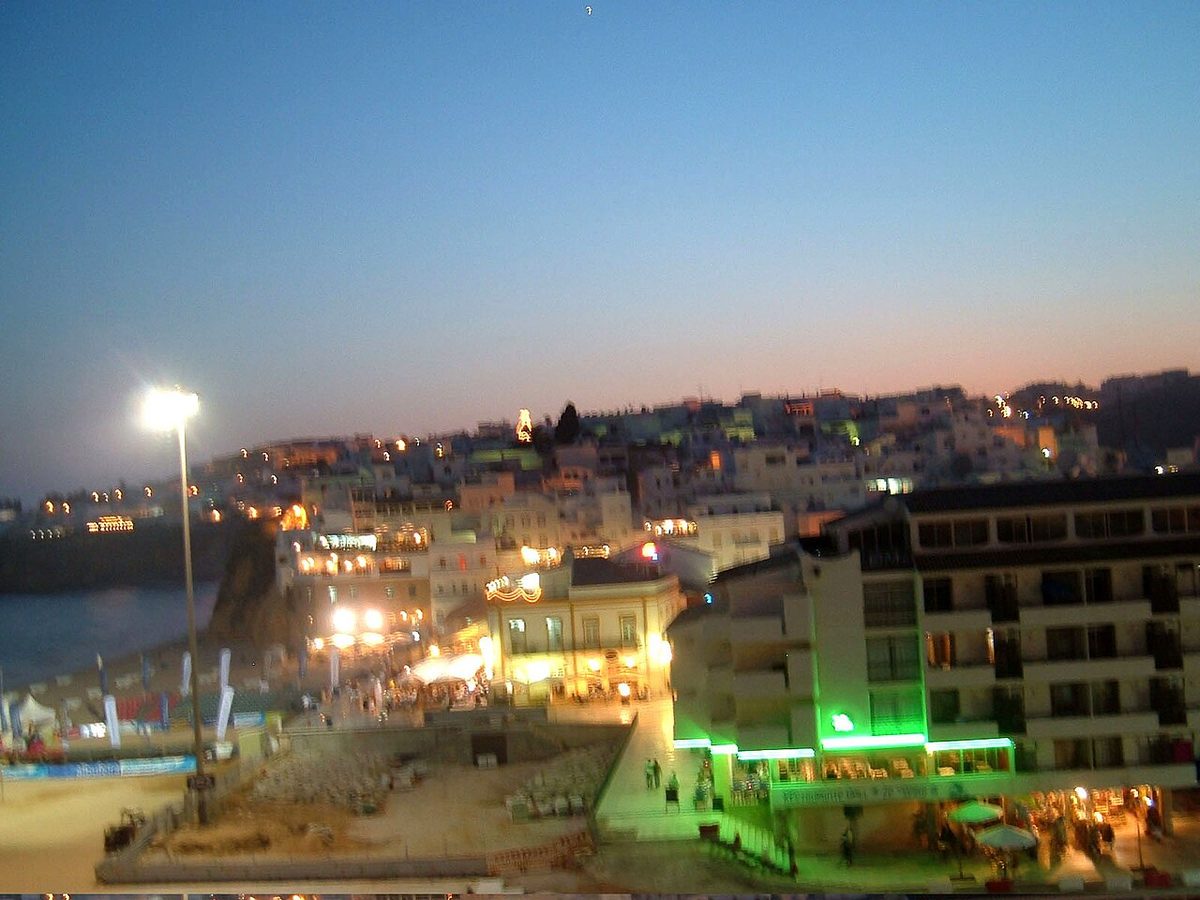
Albufeira is two towns wearing one name. The old town — whitewashed lanes above Praia dos Pescadores, a clifftop square, decent seafood — is genuinely pleasant to walk at 9pm. “The Strip” (Avenida Sá Carneiro), about two kilometres east, is the actual nightlife district: British and Irish theme bars, karaoke, clubs open past 4am in high season. Book the old town if you want to sleep; book near the Strip if you don’t plan to. Either way this is the busiest, best-connected base on the coast, with direct buses to Faro airport and easy day trips in both directions. It’s also the single largest concentration of hotel and apartment beds anywhere in the Algarve, which in practice means Albufeira has availability in August when Lagos and Tavira are already fully booked — worth remembering if you’re planning later than the rest of this guide recommends.
Vilamoura and the Golden Triangle
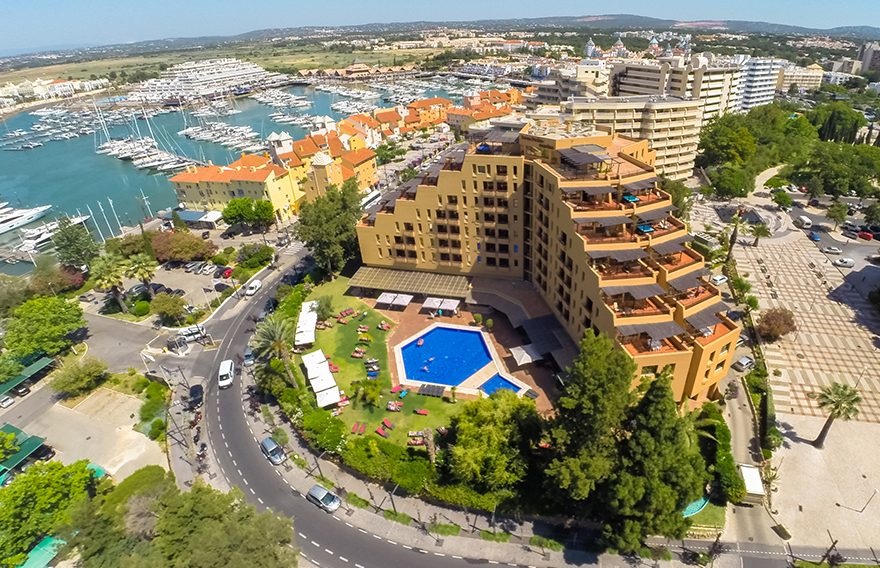
Vilamoura, Quinta do Lago and Vale do Lobo make up the “Golden Triangle”: purpose-built from the 1970s onward around marinas, golf courses and five-star resorts, and priced accordingly. Vilamoura’s marina — a wall of yachts, waterfront restaurants and a casino — is the social centre; the beach (Praia da Marina/Falésia) is genuinely excellent, with red-clay cliffs and umbrella-pine tops. This is the correct base for golf, for a resort-and-pool holiday, or for a family that wants a kids’ club rather than a castle to look at. It is not the correct base for a first trip built around old towns and cliff walks — everything characterful is a drive away, and the Triangle itself has almost no historic centre to walk. Quinta do Lago and Vale do Lobo push the same formula further upmarket again: larger villa plots, quieter streets, and a noticeably older, quieter clientele than Vilamoura’s own marina strip, which skews younger and busier after dark.
Armação de Pêra and Carvoeiro
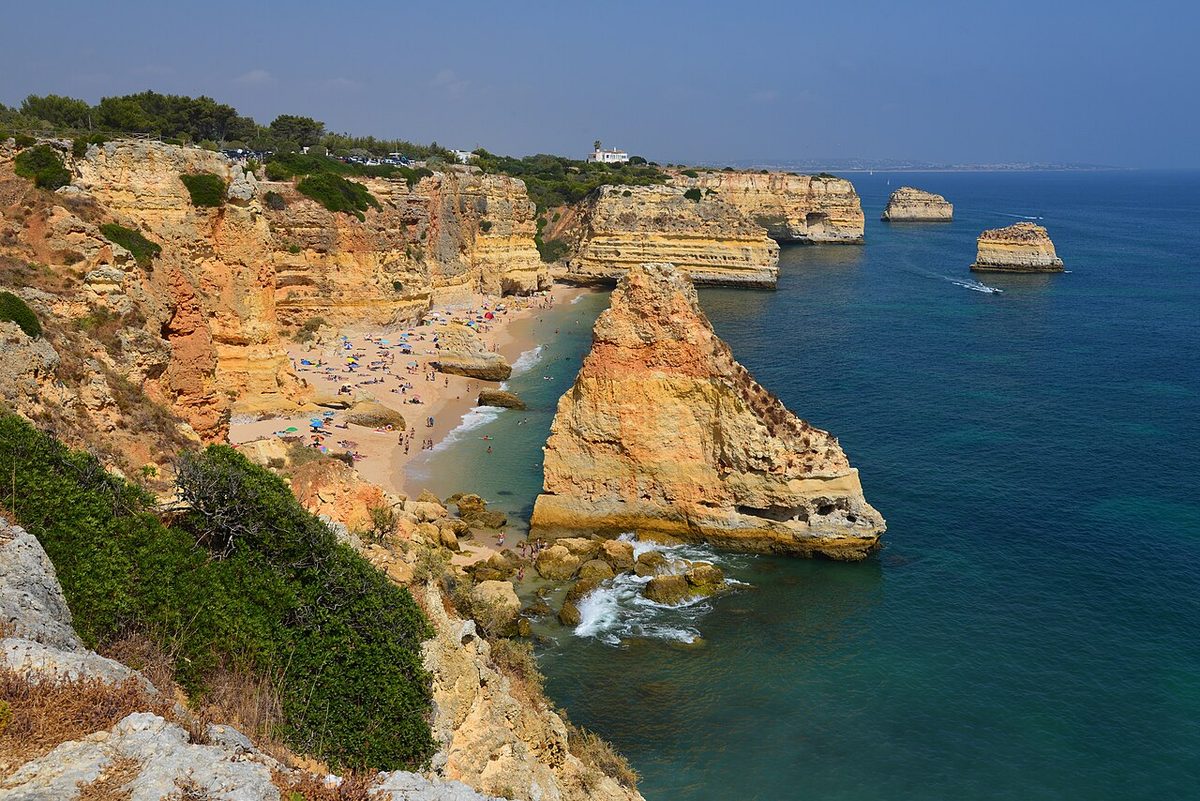
Between Albufeira and Lagos the coast turns into the limestone cliffs and sea caves most Algarve photos are actually taken of — Praia da Marinha, the Benagil cave, the Seven Hanging Valleys walk. Carvoeiro is the best base for this stretch: a small fishing-village core, a genuinely good boardwalk, and boat trips to Benagil leaving from its own harbour rather than a bus transfer away. Armação de Pêra next door is larger, cheaper and blunter — a long sandy beach backed by apartment blocks, useful for a family wanting space rather than charm. Neither town is on the train line; both need a car or a lot of taxis.
The west: Lagos, Portimão and Sagres
West of Portimão the coast turns from resort to old fishing port to, past Sagres, the wild Atlantic edge of the Costa Vicentina. This is also where the train line runs out.
Lagos
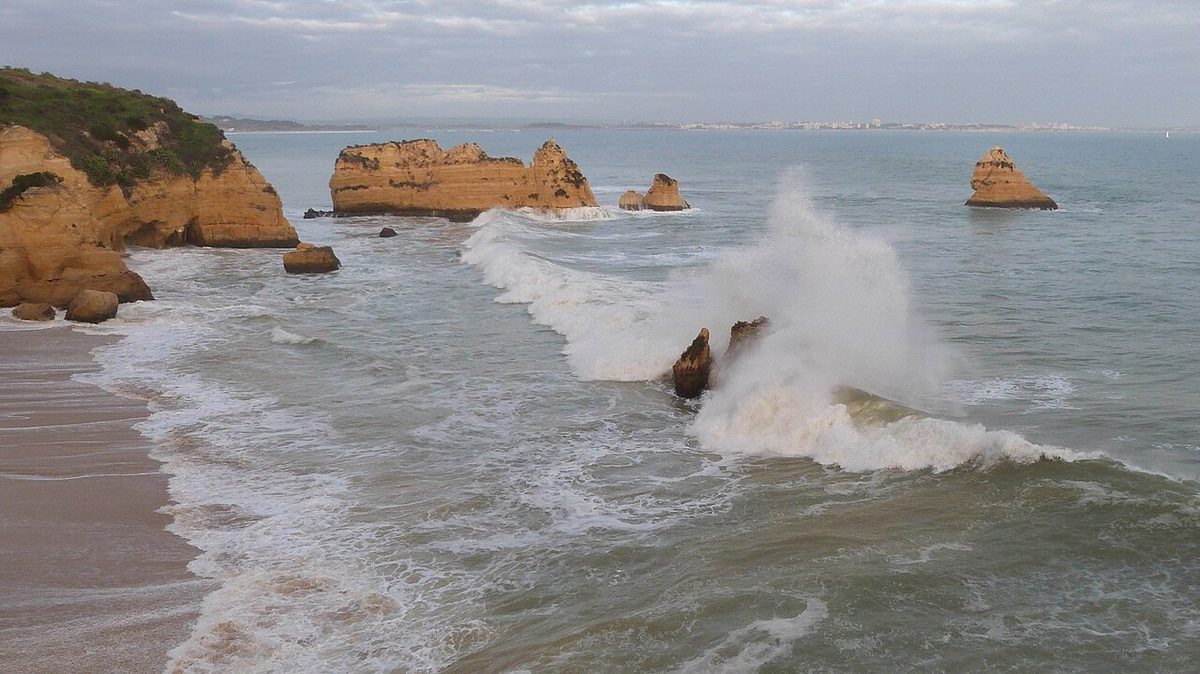
Lagos is the best all-round base in the Algarve for anyone who wants one town, a car being optional, and both charm and beaches in the same postcode. The old town sits inside 16th-century walls, with a genuine restaurant and bar scene that isn’t purely tourist-facing; Ponta da Piedade’s cliffs and sea caves are a 25-minute walk or a short bike ride south; Praia Dona Ana and Praia do Camilo are close enough to use as your daily beach. It’s the western terminus of the Algarve railway line, with direct trains to Faro (about 1h40) and connections onward to Lisbon, and buses to Sagres in 45 minutes. The trade-off is popularity: in August the old town gets genuinely crowded and accommodation prices climb to match Albufeira’s.
Portimão, Praia da Rocha and Alvor
Portimão itself is a working port town with a decent riverside, a Friday fish market and very little reason to sleep there. Praia da Rocha, its beach suburb, is the opposite: a wall of 1970s-onward hotel towers above one of the Algarve’s widest, longest beaches, popular with British and Irish package tourists and priced as mid-range as anywhere on the coast — genuinely good value if a big sandy beach and an easy strip of restaurants matter more to you than a photogenic old town. Alvor, a few kilometres west around the estuary, is quieter and prettier — a working fishing harbour, an estuary boardwalk good for birdwatching, and a beach reached by a boardwalk over the dunes rather than a cliff staircase, which also makes it one of the more pushchair-friendly bases on this stretch. Base here for beach volume and value rather than historic character.
Sagres
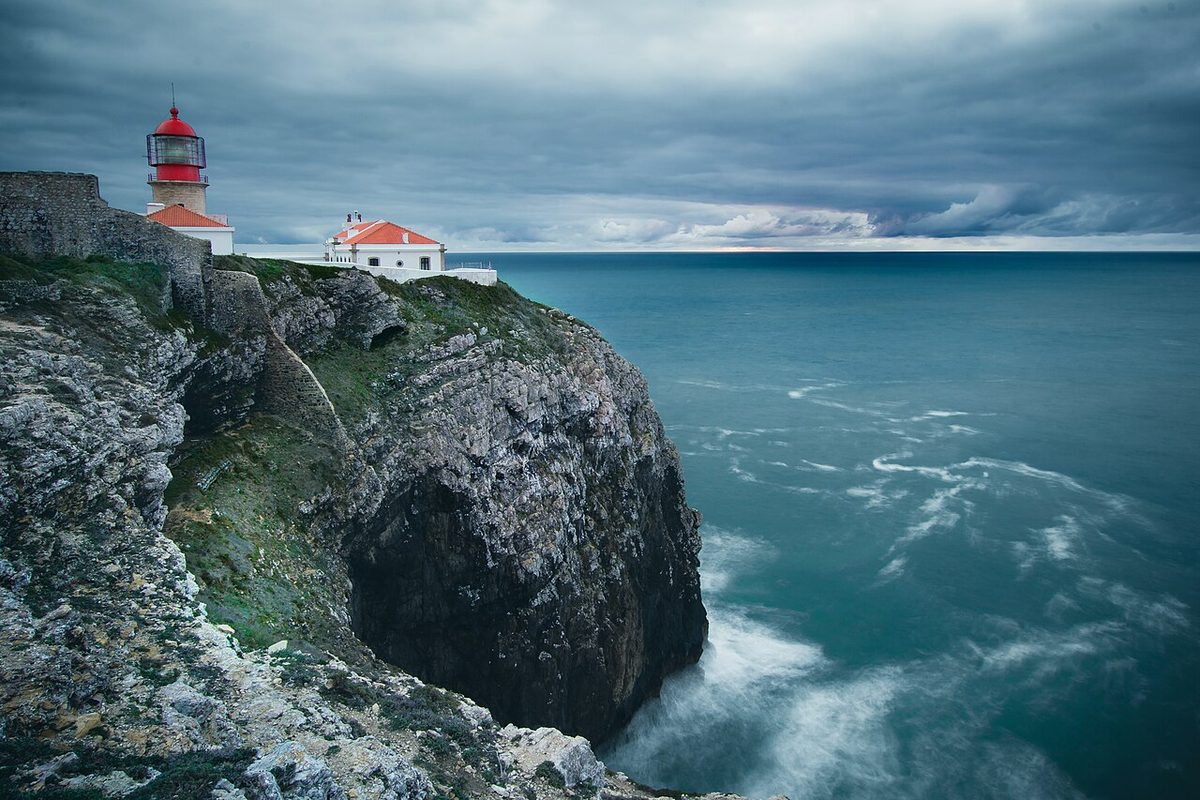
Sagres is the Algarve’s actual edge: a windswept fortress town above Cabo de São Vicente, the south-westernmost point of mainland Europe, and the heart of the region’s surf scene. It’s the only sensible base for surfing (Praia do Tonel, Praia do Amado and the Costa Vicentina beaches are all within a short drive) and for anyone who wants cliffs, big skies and a genuinely different mood from the resort coast. It’s also the natural southern starting point for the Rota Vicentina’s Fishermen’s Trail, if walking rather than surfing is the plan. The cost is isolation — the nearest supermarket-and-pharmacy town is Vila do Bispo, and everywhere else in this article is at least 40 minutes away by car. There’s no railway station within reach; buses from Lagos run but thin out badly outside summer. Rooms here also skew younger and simpler than the resort coast: surf hostels and small guesthouses outnumber full-service hotels, which is part of why the price band runs lower than almost everywhere else on this list.
Faro: you’ll probably fly through it — should you sleep there too?
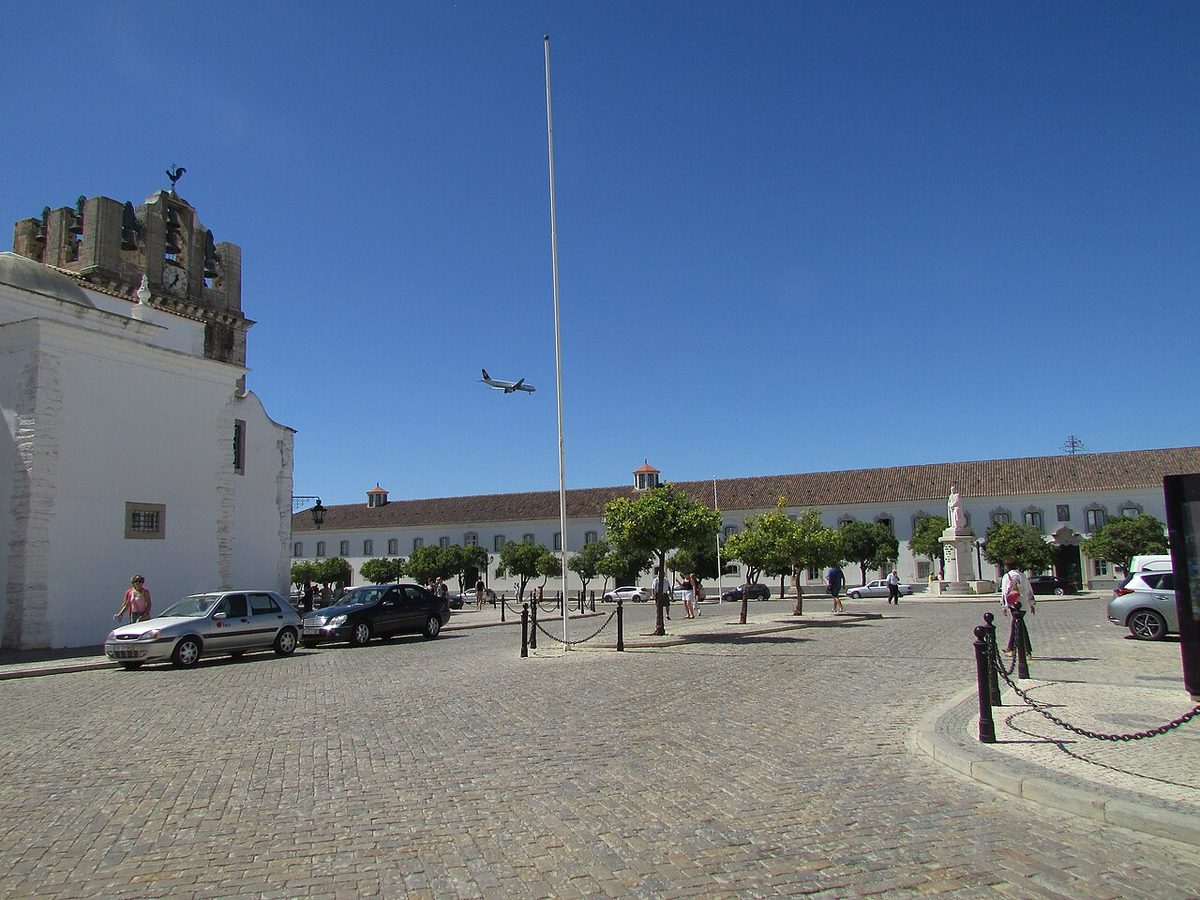
Almost every Algarve trip starts and ends at Faro airport, and almost every guide tells you not to stay in Faro itself. That’s half right. The walled old town (Cidade Velha) is small, handsome and almost entirely overlooked because it sits next to the airport rather than a famous beach — storks nest on the cathedral tower, the Arco da Vila is a genuine Moorish-era gate, and the Capela dos Ossos has its own, smaller bone chapel. It’s also the only base in this article within a 10-minute taxi of the airport, which makes it the obvious choice for a very early flight, a very late arrival, or a one-night buffer either side of a longer trip elsewhere on the coast. What it doesn’t have is a beach in town — Praia de Faro, on a sandbar island, is a 20-minute bus ride away — so don’t book Faro expecting to walk to sand.
Inland: Silves, Loulé and the case for not staying on the coast at all
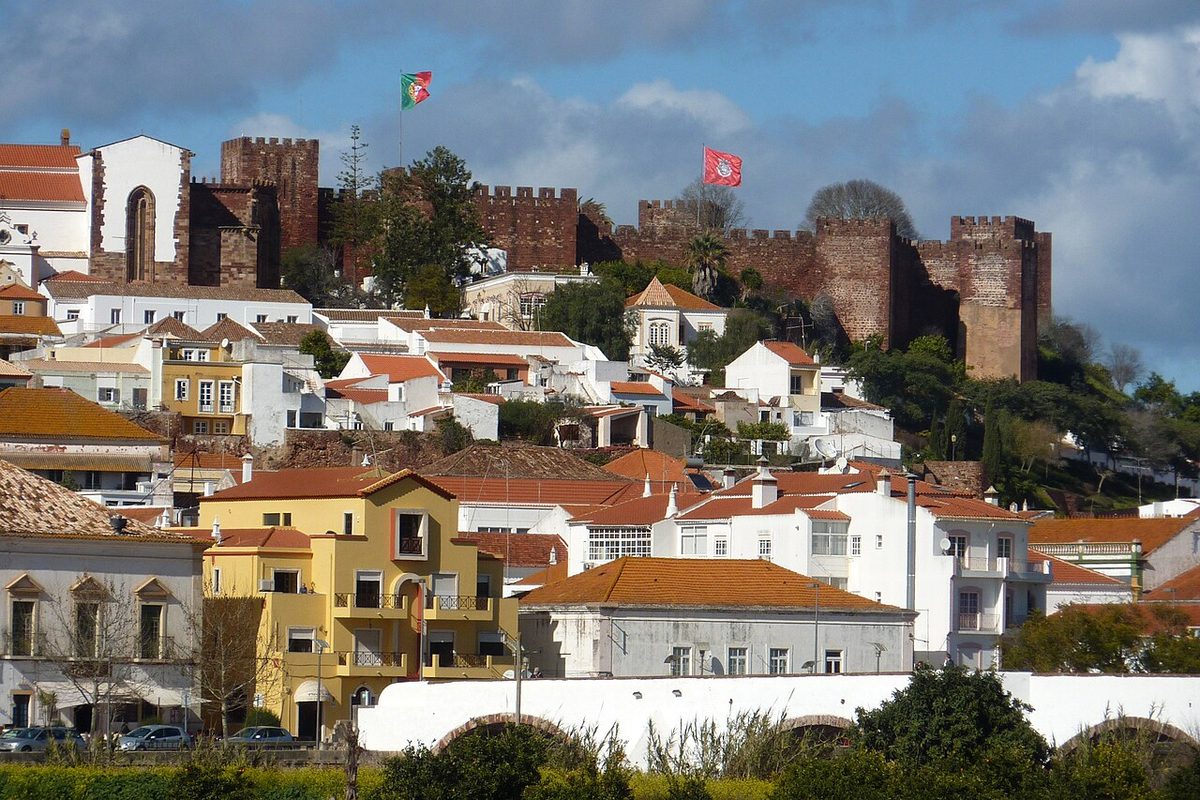
Almost nobody bases an Algarve trip inland, which is exactly why it’s worth a paragraph. Silves, the old Moorish capital of the Algarve, has a red-sandstone castle above a whitewashed town and a station on the main railway line, 2 km from the centre. Loulé keeps a genuine Saturday market (produce and fish downstairs, a smaller craft and antiques market on the third Saturday) and a working town rhythm the coast largely lost decades ago. Both are 20–30 minutes’ drive from the beaches around Albufeira and Vilamoura, and both run 30–40% cheaper than a coastal room in the same month. The honest trade-off: you will drive to the beach every day, and you’ll do it in traffic during the second half of July and all of August. Both towns have also become genuine month-long or winter-long bases for remote workers and retirees priced out of the coast, helped by fibre broadband that reached most of the interior years ago and a much thinner tourist season to navigate around.
What to skip when picking a base
Skip booking Vilamoura or the Golden Triangle if nobody in your party plays golf and nobody wants a resort pool for a week — you’ll pay a luxury-tier rate for amenities you won’t use, and there’s no historic centre to fall back on when you want a change of scene. Skip Praia da Rocha if you’ve been sold “boutique Algarve” by a hotel’s own photos; it’s a fine, functional beach suburb, but the tower-block skyline is the honest description, not the marketing one. Skip staying inside the actual Strip in Albufeira unless nightlife is the point of the trip — the noise runs past 3am in July and August and the hotels immediately behind it are not soundproofed for it. Skip assuming Sagres or the eastern villages work as a single-week, car-free base; both are genuinely remote from the rest of the coast, and you’ll spend more of the week on buses than either postcard suggests. And skip the instinct to pick one town and stay put for a fortnight — the Algarve rewards moving once, not living out of a single suitcase for fourteen days in one place while everything more interesting sits an hour away. One more: skip booking anything purely from an aerial marketing photo. A drone shot flattens the gap between a beachfront room and a “sea view” room three streets and a car park back from the water — check the actual walking distance on a map before you pay a premium for the view.
Travelling with a pushchair, or with limited mobility
This matters more for a base decision in the Algarve than in most Portuguese regions, because so much of the coast’s best scenery is reached by long staircases cut into cliffs — Praia da Marinha, Praia do Camilo, Praia Dona Ana and several of the Seven Hanging Valleys coves among them. Bases with flat-access beaches are Vilamoura and the Golden Triangle (Praia da Falésia has lift and ramp access at some entry points), Praia da Rocha and Alvor in the west, and the eastern sandbar islands off Tavira and Olhão, reached by a level boardwalk to the ferry rather than a cliff path. Old-town cobbles are the other recurring issue: Tavira, Lagos and Silves are all beautiful and all genuinely uneven underfoot, which matters more for a wheelchair or a heavy pushchair than for an able-bodied walker. Albufeira’s old town splits the difference — cobbled but largely flat, unlike the hill towns above it. If a specific attraction matters more than the base itself, it’s worth checking that property’s own access notes directly rather than assuming from these general patterns, since individual hotels within the same town can differ by a single flight of stairs at the entrance.
Getting there and getting around: distances from Faro airport
Faro airport sits directly on the A22 motorway (Via do Infante), which runs the length of the Algarve from the Spanish border to Lagos — the single most useful fact for planning a base, since almost every drive time below is really a question of how far along that one road you are. The A22 is also free: tolls on it were abolished on 1 January 2025, so driving the length of the Algarve costs nothing beyond fuel, whatever older guides say about transponders. If you drive down from Lisbon rather than flying into Faro, the A2 does still charge — about €23.80 for a car — and parts of the tolled network are electronic-only with no booths, so for that leg take the transponder the rental company offers and confirm it is active before you leave the depot rather than after the first invoice arrives.
| Base | Approx. distance from Faro airport | Approx. drive time |
|---|---|---|
| Faro old town | 6 km | 10 min |
| Vilamoura / Golden Triangle | 25 km | 25–30 min |
| Tavira | 35 km (east) | 30 min |
| Albufeira | 45 km | 35–40 min |
| Vila Real de Santo António | 55 km (east) | 45 min |
| Silves | 60 km | 45–50 min |
| Carvoeiro / Armação de Pêra | 65 km | 50 min |
| Portimão / Praia da Rocha / Alvor | 65 km | 50 min |
| Lagos | 85–90 km | 1h05–1h15 |
| Sagres | 115–120 km | 1h15–1h25 |
Without a car, the Algarve railway line runs from Vila Real de Santo António to Lagos via Faro, Tavira, Loulé, Albufeira and Silves and Portimão, with a bus replacing the last leg on a few off-peak services — but two of those station names are misleading. Albufeira’s station is officially Albufeira-Ferreiras, about 6 km from the old town, so budget a taxi or the connecting bus rather than expecting to walk in. Portimão’s station sits a similar distance out. Lagos, Tavira, Silves and Faro all have stations genuinely close to their centres. West of Lagos, to Sagres and the Costa Vicentina, there’s no railway at all — only buses, which thin out sharply outside June–September.
Whether to hire a car at all comes down to the same distance table. A week’s mid-season hire in the Algarve runs roughly €180–300 plus tolls and fuel — cheap against almost any alternative if your base is Carvoeiro, Sagres or the Golden Triangle, all off the railway line and awkward by bus. If you’re based in Lagos, Tavira or Faro and mostly want the old town, the beach and one or two day trips, the train plus the odd taxi or organised tour often works out similar in cost once you price parking (charged and genuinely tight in Lagos and Albufeira in August) against the hire-car total.
What a room actually costs, and when to book
The price tiers in the table near the top of this guide (checked September 2026) hold across the coast: budget runs roughly €50–90 a night for a double, mid-range hotels and apart-hotels €90–160, upscale boutique and 4-star €160–260, and 5-star or golf-resort properties from around €260 up past €500 in the first half of August. Vilamoura and the Golden Triangle sit almost entirely in the top two bands; Silves, Loulé and the eastern villages sit almost entirely in the bottom two; Albufeira, Lagos and Carvoeiro span the full range depending on which street you’re on.
Book May, June or September rooms by February if you want a specific property, since the shoulder-season sweet spot (warm sea, thinner crowds, prices 25–40% below August) is exactly what everyone else is trying to book too. July and August need booking even earlier for anything with a pool and a sea view — the Algarve is Portugal’s most popular domestic and short-haul holiday coast, and August in particular sells out property by property from around March onward. Winter is the opposite problem: plenty of availability, but check specifically whether your chosen hotel stays open, since a real minority of smaller coastal properties close from November to February.
A booking-mechanics note worth knowing before you commit a card number: independent guesthouses and villa agencies across the Algarve very often price a direct email or phone booking a few percent below the same room on a large platform, precisely because they’re not paying that platform’s commission — it’s worth one extra email if you’ve already found the property you want. Cancellation terms vary far more here than the headline price does; a “free cancellation” villa booking can still carry a non-refundable deposit taken weeks ahead, so read the deposit line before the nightly rate.
Split stays that work (and ones that don’t)
Tavira plus Lagos is the classic two-centre trip: four or five nights in each, the eastern lagoon and the western cliffs without duplicating either. Both are on the train line, so the whole thing works without a car if needed, though a hire car for the middle days lets you cross via Silves and the cliff coast rather than backtracking through Faro. Albufeira plus Sagres pairs the busiest base with the quietest, useful if half the group wants nightlife and the other half wants surf — but budget a full 90 minutes to move between them, not the “everything’s close” impression a small map gives.
What doesn’t work: trying to base in Sagres and day-trip to Tavira, or vice versa — that’s close to three hours of driving in a single day for two ends of the same coast. Equally, don’t split a short trip (four nights or fewer) across three bases; the Algarve’s cross-coast drives eat half a day each, and a week with three one-night moves spends more time in the car than on any beach.
Hotel, apartment or villa?
The Algarve runs a genuinely three-way accommodation market, and which one suits you matters as much as which town does. Hotels dominate Albufeira, Vilamoura, Praia da Rocha and the Golden Triangle — full-service, often with a pool and breakfast included, and the easiest option if you’re arriving without a car or without much notice. Aparthotels and self-catering apartments are the default in Carvoeiro, Armação de Pêra and the quieter parts of Lagos: a kitchen matters more than it sounds once you’ve priced a week of restaurant dinners for a family of four, and most book by the week in July and August rather than by the night. Villas with a private pool are the Golden Triangle and Carvoeiro’s other specialism — genuinely good value split five or six ways, genuinely poor value for a couple, and almost always subject to a minimum stay of five to seven nights in high season, arrival on a fixed changeover day (usually Saturday), and a security deposit taken at check-in.
A few practical details apply across all three types and rarely make it into a booking-site listing. Check-in in the Algarve, as across Portugal, is typically 14:00–15:00 and check-out 10:00–11:00; villas and larger apartments sometimes hold to a stricter changeover window because of same-day cleaning turnarounds. Several Algarve municipalities, Albufeira and Portimão among them, levy a small municipal tourist tax collected in cash or by card at check-in rather than folded into the online rate — typically a euro or two per person per night, capped after a handful of nights and waived for children, so don’t be surprised by an extra line on the final bill. And air conditioning is close to universal in anything built or renovated since the 2000s, but worth confirming on an older guesthouse or a converted farmhouse inland, where July nights can still be genuinely warm.
Frequently asked questions
Where is the best place to stay in the Algarve for a first visit?
Lagos, if you want one base with beaches, an old town and optional car use. If you’ll have a car and prefer two shorter stops, pair Tavira in the east with Lagos or Carvoeiro in the centre-west.
Where should you stay in the Algarve without a car?
Lagos, Tavira or Faro — the three towns on the Algarve railway line with a walkable centre. Albufeira also works without a car thanks to frequent buses, though its train station is 6 km out at Albufeira-Ferreiras.
Is Albufeira or Lagos better to stay in?
Albufeira has the busier nightlife and the better bus and airport links; Lagos has the more walkable old town, closer beaches on foot, and a calmer evening outside its handful of central bars. Families and couples lean Lagos; groups wanting nightlife lean Albufeira.
Where do families with young children usually stay?
Vilamoura and Carvoeiro, for calm, shallow-shelving beaches and apartment-style accommodation with kitchens. Armação de Pêra is the budget version of the same idea: a long, flat beach with plenty of space, if less charm.
Should you stay near Faro airport?
Only for a one-night buffer either side of a longer trip, or a genuinely early or late flight. Faro’s old town is worth an evening, but the beach is a bus ride away, and every other base in this guide is at least a 25-minute drive further from the terminal.
What’s the best area for golf in the Algarve?
Vilamoura and the Golden Triangle (Quinta do Lago, Vale do Lobo), with the highest concentration of courses and resorts set up specifically around tee times and concierge booking.
Is it cheaper to stay inland than on the coast?
Yes, meaningfully — Silves and Loulé typically run 30–40% below a comparable coastal room in the same month, at the cost of a daily drive to the beach.
How many nights do you need in each Algarve base?
Four to five nights lets you actually settle into a base rather than just arrive and leave. Splitting a week or less across more than two bases spends more time driving between them than using either properly.
Do Algarve villas require a minimum stay?
Almost always, in July and August: five to seven nights, usually arriving on a Saturday changeover day. Outside peak season minimum stays drop to two or three nights, and some owners will take a single night at a higher nightly rate if you ask directly.
Is there a tourist tax in the Algarve?
In several municipalities, yes — Albufeira and Portimão both charge one. It’s a small per-person, per-night fee collected at check-in rather than included in the advertised rate, capped after a set number of nights and usually waived for children, so budget a little extra cash or card capacity on arrival.
Which Algarve base is best if you have limited mobility or a pushchair?
Vilamoura, Praia da Rocha or Alvor — all have flat-access beaches reached by boardwalk or ramp rather than cliff staircases. Tavira, Lagos and Silves are worth the visit but have genuinely uneven cobbled old towns.
Is breakfast usually included in Algarve hotel rates?
At mid-range and above, generally yes; at budget guesthouses and self-catering apartments, generally no. Villas and most apartments assume you’ll use the kitchen, which is the main reason they book by the week rather than the night in summer. Check the listing rather than assuming either way — it’s one of the more commonly misread lines on an Algarve booking.
For how the Algarve’s accommodation bands fit into a whole-trip budget, our Portugal trip cost guide breaks down food, transport and attraction prices region by region alongside the room rates above.
For a closer look at the Algarve’s four best small towns as bases, Tavira, Lagos, Olhão and Silves, side by side, see our ranking of small towns across Portugal, which also has a car-free week along the Algarve railway.
Where to go next
Once you’ve picked a base, the things to do in Algarve guide covers the region coast by coast, and best beaches in Algarve breaks down which sand suits which base. If the Algarve is one stop on a longer trip, Portugal itinerary planning covers how it fits with Lisbon and the north, and best time to visit Portugal has the month-by-month weather this guide’s shoulder-season advice draws on. For the two cities most Algarve trips connect through, see things to do in Lisbon and things to do in Porto; if you’re weighing a coastal week against city time, day trips from Lisbon shows what a Lisbon-based alternative looks like. And if it’s an island rather than the mainland coast you’re after, things to do in Madeira and the Azores islands guide cover Portugal’s other two beach-and-hiking options.
Photo credits
- Featured image: Dom Pedro Hotels & Golf Collection, CC BY-SA 3.0, via Wikimedia Commons
- Albufeira old town at dusk — Mok9, CC BY-SA 2.5, via Wikimedia Commons
- Winter surf breaking over the stacks at Praia Dona Ana, Lagos — Peter Broster, CC BY 2.0, via Wikimedia Commons
- The lighthouse and cliffs at Cabo de São Vicente, Sagres — Rui Glória, CC BY-SA 4.0, via Wikimedia Commons
- Largo da Sé in Faro’s walled old town — Kolforn, CC BY-SA 4.0, via Wikimedia Commons
- The red sandstone Moorish castle above the white town of Silves — muffinn from Worcester, UK, CC BY 2.0, via Wikimedia Commons
Prices and price tiers checked September 2026; distances and drive times are approximate and vary with season and traffic on the A22. Last updated September 2026.