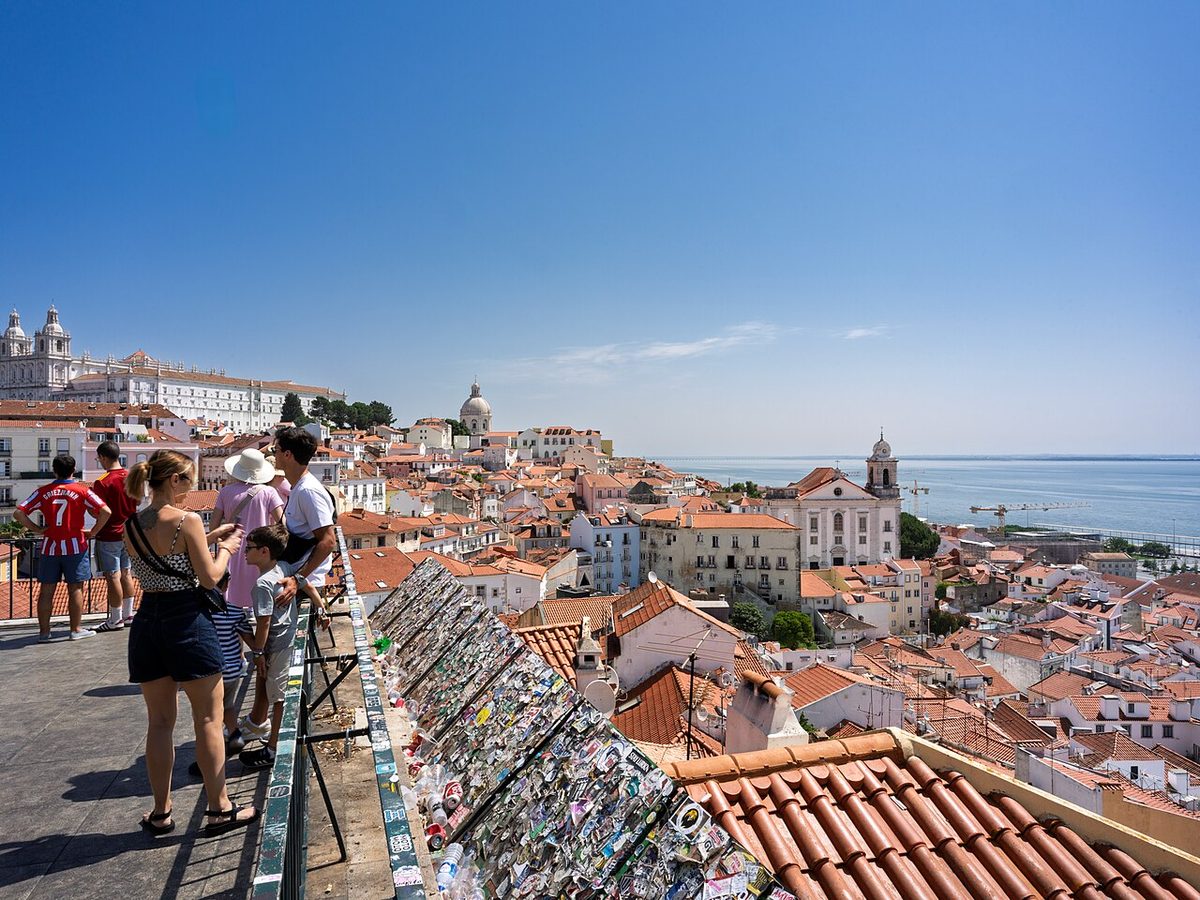
Almost every Lisbon guide is a ranked list of twenty attractions, and almost none of them tell you the thing that actually decides whether your trip works: Lisbon is a small city with a very awkward shape. It is built across seven hills above a river estuary, the interesting parts are separated by climbs that look trivial on a map and are not, and the difference between a good day and a wasted one is usually the order you did things in rather than which things you did.
The short answer: the essential things to do in Lisbon are a morning in Alfama and its viewpoints, a half day in Belém for the monastery and the original custard tarts, an evening of fado in a small room, and one day trip — Sintra for palaces, Cascais for a beach and a train ride. Three full days covers the city comfortably. Four lets you breathe.
What follows is organised by district rather than by rank, because that is how you will actually walk it: what each area is good at, roughly what it costs, how long it takes, and an honest verdict including the places I would now skip. Prices were checked in September 2026, and where sources disagree I have printed the disagreement rather than picking the tidiest number.
Lisbon at a glance: seven districts and what each one is for
Lisbon is roughly 100 square kilometres, but the part visitors use is a strip about four kilometres long between Belém in the west and Parque das Nações in the east, with the old town bulging north of the river in the middle. You can walk most of it. You will not enjoy walking all of it, because the gradients are severe and the pavement is polished limestone that turns treacherous in the rain.
Here is the comparison I wish someone had handed me before my first trip. “Half day” means about four hours including the coffee stop, because in Lisbon there is always a coffee stop.
| District | What it is for | Time needed | Rough cost | Best time of day | Verdict |
|---|---|---|---|---|---|
| Alfama & Graça | Medieval street plan, viewpoints, fado, the castle | Half day, plus an evening | Free to walk; castle entry extra | Before 10:00 or after 17:00 | The best hours in the city |
| Baixa & Rossio | Grid streets, squares, shopping, the river arch | 2–3 hours | Free | Early morning or evening | Handsome, touristy, unavoidable |
| Chiado & Bairro Alto | Bookshops, cafés, bars, nightlife | Afternoon into night | Drinks from about €3 | Chiado by day, Bairro Alto after 22:00 | Two neighbourhoods sharing one hill |
| Belém | Manueline monuments, museums, custard tarts | Half to full day | Monument entries plus €1.20–€1.50 a tart | Opening time, seriously | Go early or regret it |
| Príncipe Real & Avenida | Garden squares, design shops, calmer eating | 2–3 hours | Free to walk | Late morning | Where I would stay on a second trip |
| Cais do Sodré & Alcântara | Market food, riverside bars, LX Factory | Half day or an evening | €10–€20 a head to eat | Evening | Good food, uneven everything else |
| Parque das Nações | Modern waterfront, oceanarium, cable car | Half day | Oceanarium is the main spend | Any | Only for the aquarium, or with children |
Two things fall out of that table. First, the old city rewards early starts more than any European capital I know, because the coach groups reach Alfama’s viewpoints and Belém’s monastery gates at almost exactly the same hour every morning. Second, Lisbon is not really a museum city. Its pleasures are vertical and outdoor: you climb, you look, you drink something cold, you go down again. Plan for that and the trip works.
If you are still deciding how the capital fits into a bigger route, our country-wide guide to what is worth your days in Portugal sets Lisbon against Porto, the Algarve and the two island groups.
The things to do in Lisbon that earn a whole morning
Four things in this city deserve a cleared morning or evening, and almost everything else is a reasonable use of an hour. The four are Alfama, Belém, one viewpoint at sunset and one fado house after dark. If you have two days, do those four and treat the rest as filler.
Walk Alfama before the tour groups
Alfama survived the 1755 earthquake because it sits on rock rather than on the river silt that swallowed the lower town, which is why its street plan is Moorish tangle rather than Enlightenment grid. It is the one part of Lisbon where getting lost is the activity rather than a failure of navigation. Start at Largo das Portas do Sol before 09:30, drop downhill on whatever alley looks least promising, and let the laundry lines and the charcoal smoke from the sardine grills do the rest.
Cost: nothing, plus €0.80–€1.20 for a bica at a counter (checked September 2026). Time: three hours to do it properly. Verdict: the single best use of a morning here, and the one activity that gets measurably worse after 11:00. Our sister site’s street-by-street Alfama walk has the route in detail.
Climb to the miradouros, plural
Lisbon has more than a dozen public viewpoints and the two famous ones are the worst value. Santa Luzia and Portas do Sol are lovely and are also where every coach stops. Senhora do Monte, ten minutes further uphill, is higher, quieter, free, and has a cleaner line on the castle. Graça has the trees and a kiosk. Santa Catarina has the river and, on summer evenings, somebody with a guitar and a small crowd sitting on the wall.
Cost: free; kiosk beer or wine €2–€4. Time: an hour each, or string three together across an afternoon. Verdict: do at least two, and make one of them a sunset. The sister site ranks every viewpoint in the city if you want to be systematic.
São Jorge Castle, with a caveat
The castle is a Moorish fortification rebuilt many times over, and what you are paying for is the walls, the peacocks and the panorama. The archaeological site inside is more interesting than most visitors expect, and the rampart walk is genuinely good. What it is not is a furnished castle: no state rooms, no interiors, no collection. Arrive expecting a fortified terrace with the best 360-degree view in Lisbon and you will be pleased. Arrive expecting Sintra and you will not.
Time: 90 minutes. Verdict: worth it in shoulder season, skippable in August when the ticket queue eats an hour and the free viewpoints below deliver most of the same view. Book a timed slot online if you go; the sister site’s castle guide covers current ticketing.
Fado, in a small room
Fado is the city’s music, it is genuinely affecting live, and it is also the thing visitors most reliably get wrong by booking a dinner-and-show package on a main street. The rule is simple: the smaller the room, the better the singing, and the food is not the point. Look for a casa de fado in Alfama, Mouraria or Bairro Alto that charges a minimum consumption rather than a fixed menu, arrive after 21:30, and stay silent when the lights drop — talking through a fado is about the only thing that will get you glared at in this otherwise forgiving city.
Cost: a minimum consumption usually covers a couple of drinks and a plate; a full dinner show costs several times that and is usually worse. Verdict: the best evening in Lisbon if you choose the room carefully. The sister site’s guide to live music and fado houses names the ones worth walking to.
Baixa, Rossio and the riverfront
The lower town is the part of Lisbon that was designed rather than grown. After the earthquake, tsunami and fire of 1755 destroyed most of the city, the Marquês de Pombal rebuilt the centre on a grid of standardised, prefabricated, timber-braced buildings — arguably the first seismic building code anywhere in the world. Knowing that turns a pleasant shopping street into one of the more remarkable pieces of urban planning in Europe.
Praça do Comércio and the Cais das Colunas
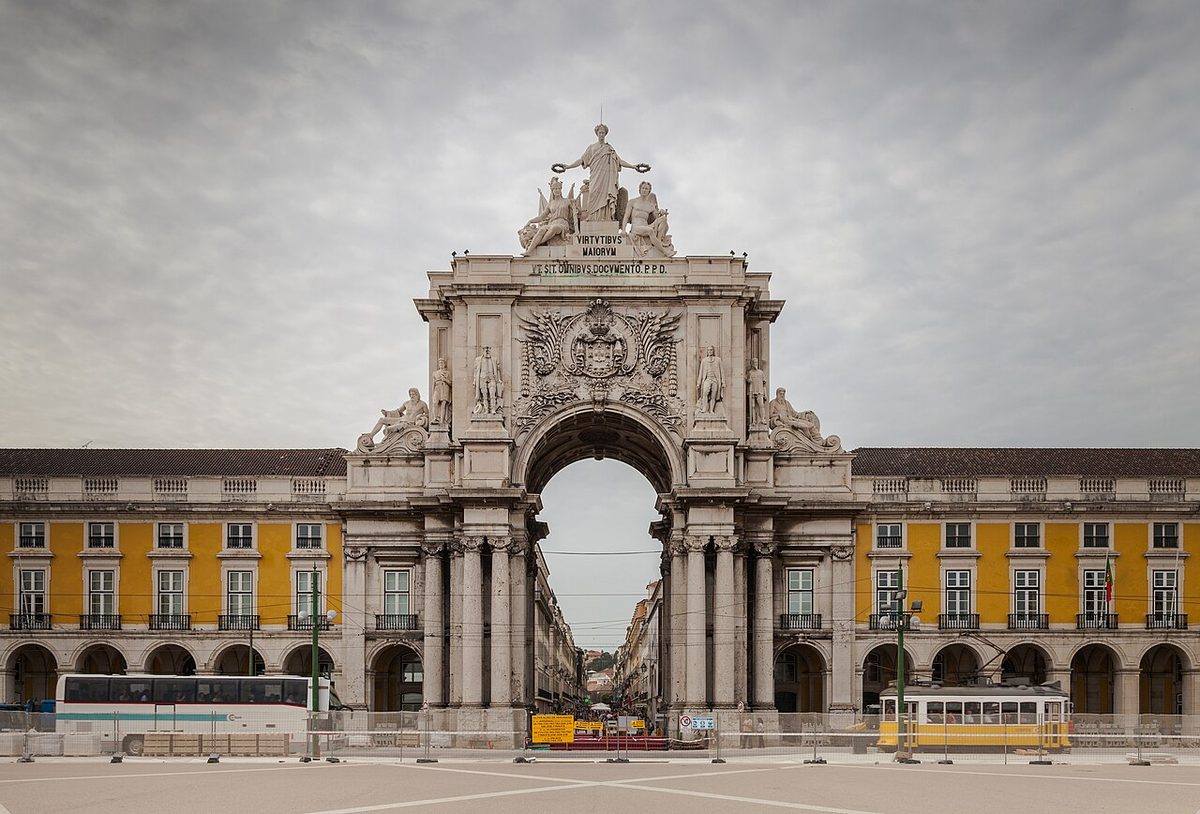
The great riverside square is where Lisbon meets the Tagus, and the Arco da Rua Augusta at its northern end is the formal front door to the rebuilt city. Walk down Rua Augusta, through the arch, and out onto the marble steps of the Cais das Colunas at the water’s edge; that is the sequence the architects intended and it still lands. You can climb the arch for a few euros for a view straight up the grid to Rossio.
Time: 45 minutes. Verdict: free, unavoidable, and far better at 08:00 than at 14:00. The sister site has more on the square and what surrounds it.
Rossio, Restauradores and the wave pavement
Rossio’s black-and-white calçada makes an optical wave across the square, and it is the most photographed paving in Portugal. The square itself is really a transport interchange with cafés round the edge; the ornate neo-Manueline pile on its west side is Rossio station, worth walking into even if you are not catching the Sintra train. Ginjinha — sour cherry liqueur, served in a shot glass with or without a cherry in the bottom — is drunk standing up at two tiny bars near the north-east corner for a couple of euros a glass.
Verdict: a twenty-minute stop rather than a destination, but the ginjinha is a genuine Lisbon ritual and not a tourist invention. The sister site explains where the good ginjinha counters are.
The Santa Justa Lift, and why the queue is optional
The wrought-iron lift connecting Baixa to Chiado is a genuine 1902 curiosity, and the queue at its base routinely runs 45 minutes in summer. Here is the part nobody puts in the listicle: the viewing platform at the top can be reached free, on foot, from Largo do Carmo on the Chiado side. You miss the ride in the wooden cabin, which is charming for roughly ninety seconds. You keep three-quarters of an hour.
Verdict: ride it once if the queue is short and you like Victorian ironwork; otherwise walk up through Chiado, which is a nicer approach anyway. Details in the sister site’s Santa Justa guide.
Chiado, Bairro Alto and Príncipe Real
These three sit on the same hill and behave like three different cities depending on the hour. Chiado is the elegant one: bookshops, theatres, the café where Fernando Pessoa has a bronze seat outside, and the grandest shopfronts in the city. Bairro Alto is a grid of narrow streets, shuttered and residential by day, which turns into an open-air bar crawl after 22:00 with most of the drinking done in the street rather than in the bars. Príncipe Real, up the hill again, has the design shops, the garden square with the spreading cedar, and the calmer restaurants.
Chiado by daylight
A Brasileira is the famous café and it charges famous-café prices for an ordinary coffee; the Pessoa statue outside is the real attraction and it is free. Better use of the same hour: the ruined Carmo Convent, whose roof came down in the 1755 earthquake and was deliberately left open to the sky as a memorial. Gothic arches with clouds where the vault should be, and a small, odd archaeological museum in the apse that includes two Peruvian mummies nobody expects.
Verdict: Carmo is the most atmospheric ruin in the city and takes 40 minutes. The sister site covers the whole Chiado and Bairro Alto hill.
Bairro Alto after dark, and the Pink Street question
Bairro Alto’s drinking culture is genuinely unusual: bars sell you a drink in a plastic cup, you take it outside, and the street is the venue. It is loud, friendly and late. Rua Nova do Carvalho — “Pink Street”, down in Cais do Sodré — is the version of this that has been painted pink and photographed to death. It was the sailors’ red-light street until the early 2010s and is now four bars, a queue and a great many stag parties.
Verdict: Bairro Alto yes; Pink Street once, briefly, for the photograph, then walk two streets to somewhere better. The sister site is blunter about what Pink Street has become and where to drink instead.
Príncipe Real and Avenida da Liberdade
Príncipe Real is a garden square with a 150-year-old cedar trained flat into a green ceiling, ringed by nineteenth-century palacetes that now hold concept stores and good restaurants. Below it, Avenida da Liberdade is Lisbon’s boulevard: ten lanes wide, lined with jacarandas that flower purple in late May, and home to the luxury shopping. Walk the Avenida’s shaded side paths rather than the traffic edge and it becomes pleasant rather than merely grand.
Verdict: the best area in central Lisbon for an unhurried lunch, and the part of town I would base myself in on a repeat visit. See the sister site on Príncipe Real and the Avenida.
Belém: monuments, museums and the original custard tart
Belém is where Portugal went to sea in the fifteenth and sixteenth centuries, and where it spent the proceeds on two of the strangest and best buildings in Europe. It sits about six kilometres west of Praça do Comércio; tram 15E gets you there in around half an hour, the train from Cais do Sodré is quicker, and the riverside cycle path is flat the whole way.
The single most useful piece of advice about Belém is about timing. Every monument here opens mid-morning and every coach tour arrives shortly afterwards. Be at the monastery gate when it opens and you will have the cloister nearly to yourself for twenty minutes; arrive at noon and you will queue for an hour to shuffle round it in a crowd.
The Jerónimos Monastery
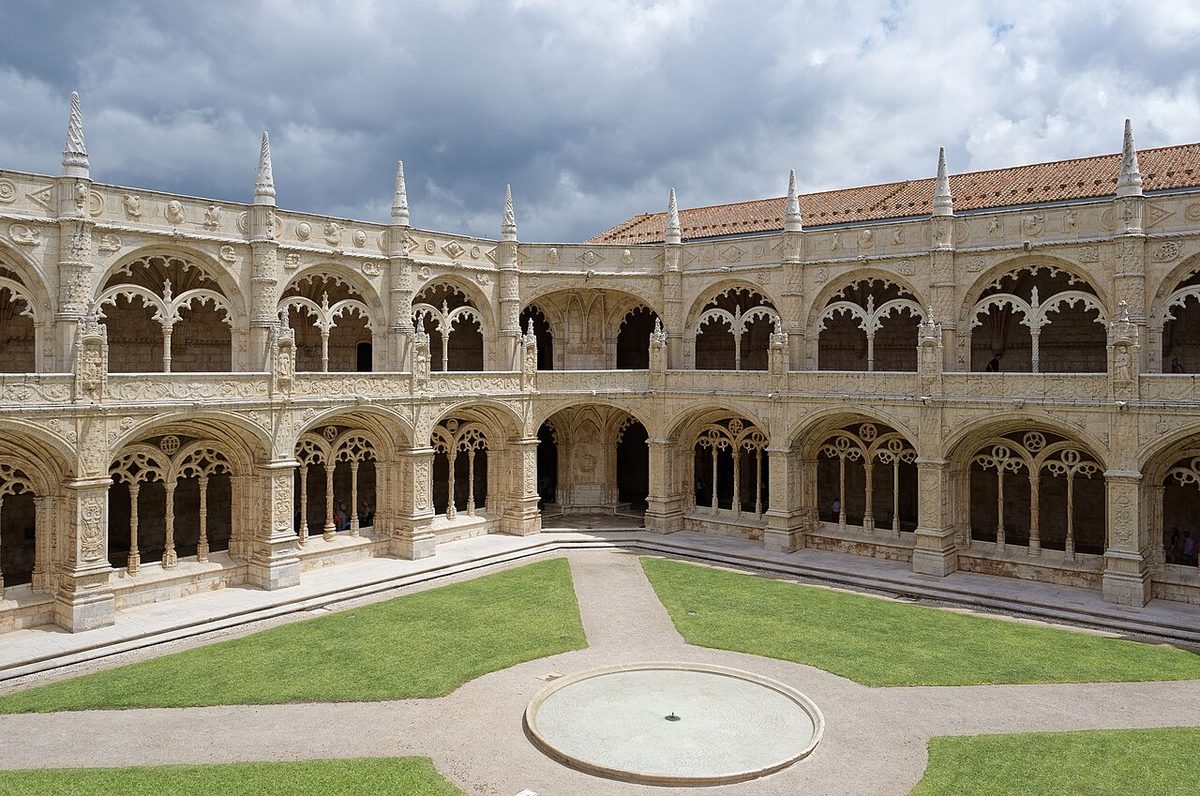
The cloister is the thing. Two storeys of Manueline stone carved with ropes, corals, artichokes and armillary spheres — an architecture invented to celebrate a country that had just worked out how to sail round Africa, and which exists nowhere else. The church next door, where Vasco da Gama and Camões are entombed, is free and takes ten minutes; the cloister is ticketed and takes an hour.
Verdict: the best single building in Lisbon and the one interior I would not skip. Buy the timed ticket online the night before; prices change often enough that it is worth checking the official monument site on the day rather than trusting a figure in any guide, this one included.
The Torre de Belém
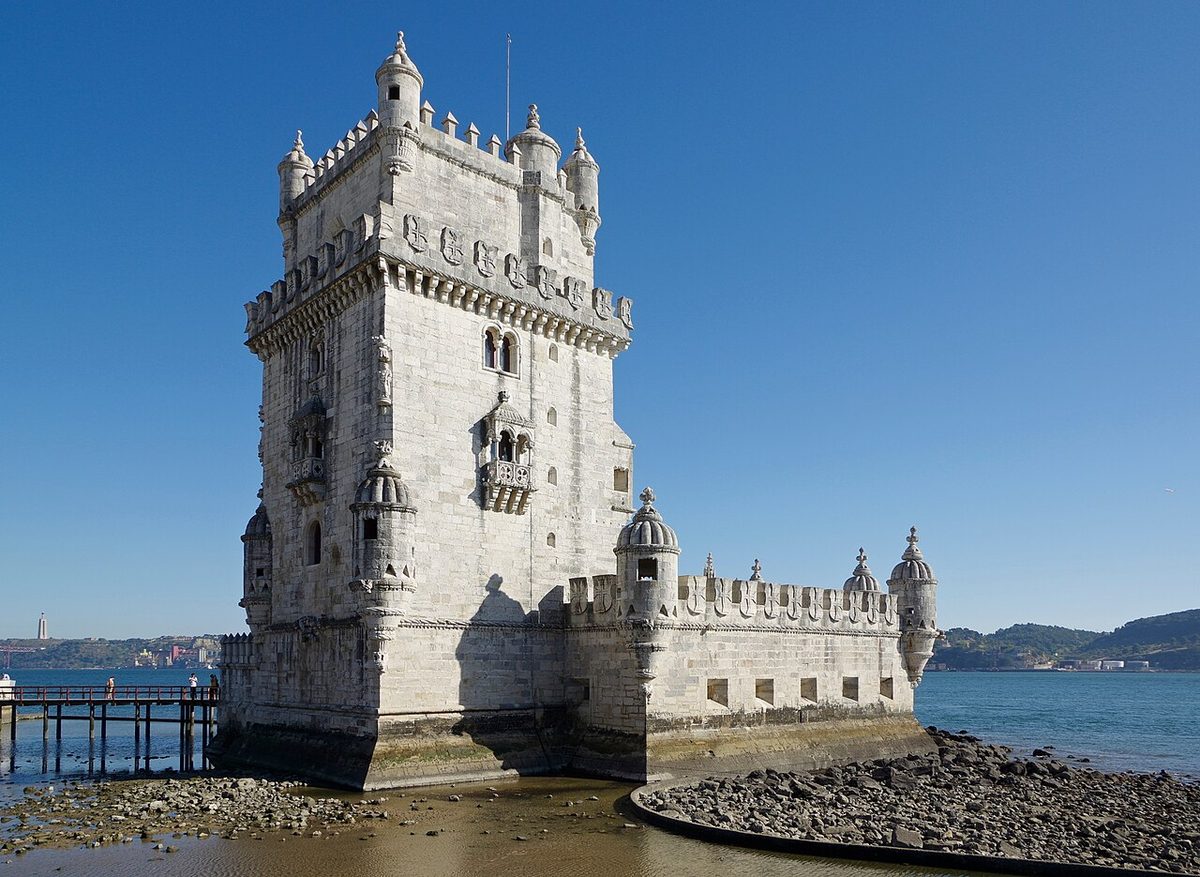
The tower is a small fortified customs post built in the 1510s, sitting out in the river on a rock, and it is beautiful from the outside in a way photographs actually capture. Inside it is a cramped spiral staircase with traffic-light control on the stairs because two people cannot pass. The queue in summer regularly exceeds an hour for perhaps twenty minutes of interior.
Verdict: photograph it, walk round it, skip the inside unless the queue is under fifteen minutes. This is the highest-profile overrated interior in Portugal and I will defend that. The sister site’s Belém Tower guide has the current opening pattern.
Pastéis de Belém
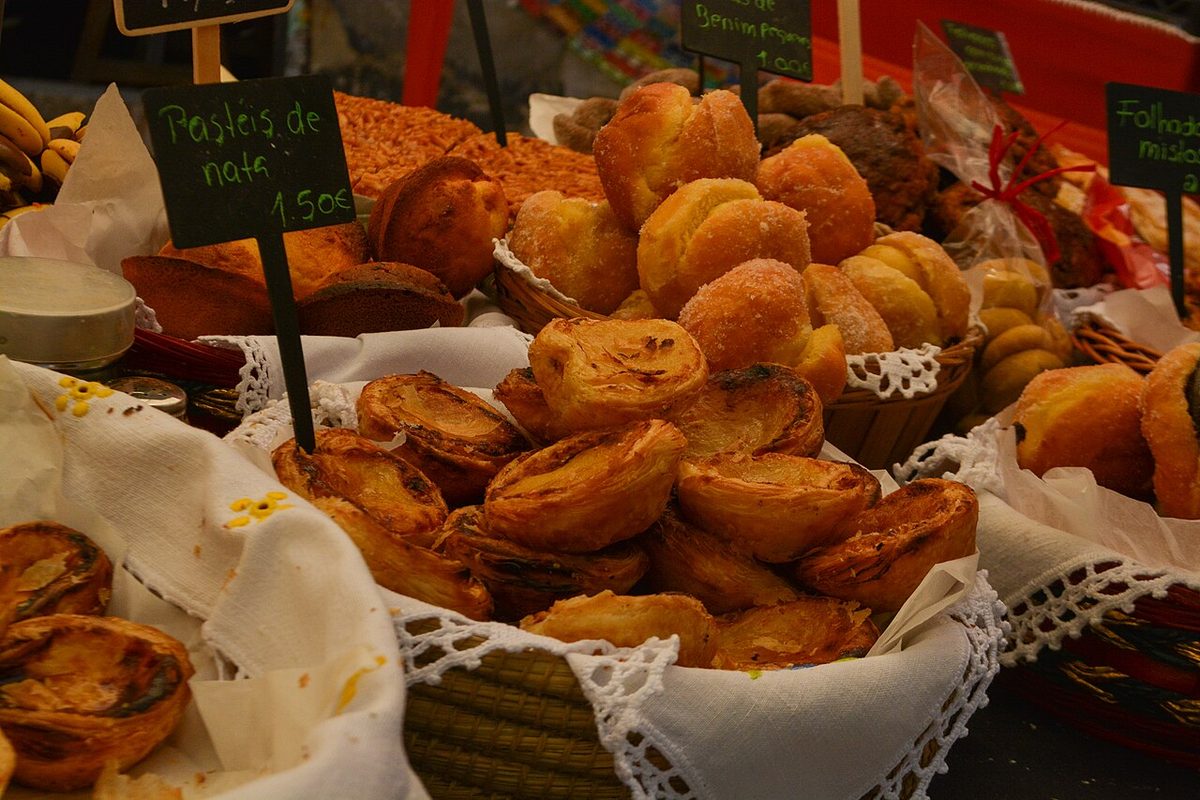
The bakery has been making the recipe on site since 1837, using a formula that came out of the monastery next door, and it is not a tourist trap despite every condition being met for one. Two things to know. First, there are two queues: a long one at the takeaway counter on the street, and a much shorter route through the door into the enormous tiled rooms at the back, where you sit down and are served in minutes. Second, warm from the oven with cinnamon is a different food from the ones that have been sitting out.
Cost: €1.20–€1.50 each across the city; Belém sits at the upper end (checked September 2026). Verdict: eat three. The sister site compares the best pastéis de nata in Lisbon if you want to argue about whether Belém still wins.
The rest of Belém
The Monument to the Discoveries has a lift to a viewing deck and a compass rose in the pavement below; the Coach Museum holds the best collection of state carriages anywhere and is genuinely more interesting than it sounds; MAAT is a low white wave of a building on the river with rotating contemporary art and a roof you can walk on for free. The Ajuda Palace, up the hill and usually empty, is the most underrated interior in the city.
Verdict: pick one of these, not all four, or Belém eats an entire day. The sister site’s half day in Belém sequences them sensibly.
Eating and drinking: what to actually order
Portuguese food in Lisbon is cheaper and better than visitors expect, and the way to get at it is to eat where the menu is handwritten and the room is loud at 13:00. A prato do dia — the day’s dish, usually with soup, bread and a glass of wine — runs €9–€15 in a working tasca and is the best value meal in western Europe (checked September 2026). A mid-range dinner for two lands at €40–€60.
One thing that catches people out: the couvert. The bread, olives, cheese and little dishes that arrive unasked cost €2–€5 and are not free. You are entirely within your rights to wave them away, and nobody will mind.
| Dish | What it is | Typical price | Where to try it |
|---|---|---|---|
| Bacalhau à Brás | Salt cod with shredded potato, egg and olives | €10–€14 | Any tasca; the benchmark dish |
| Bifana | Marinated pork sandwich in a soft roll | €3–€4 | Counter bars in Baixa and Mouraria |
| Sardinhas assadas | Grilled sardines, June to September | €10–€15 | Alfama and Graça, especially around 13 June |
| Ameijoas à Bulhão Pato | Clams with garlic, coriander and white wine | €12–€18 | Cervejarias and seafood houses |
| Pastel de nata | Custard tart, cinnamon optional but correct | €1.20–€1.50 | Everywhere; Belém for the original |
| Vinho verde | Young, faintly fizzy northern white | ~€10 a bottle in a shop | Lunch, on a terrace, in July |
Prices checked September 2026. Two more habits worth copying: coffee is drunk standing at the counter, where a bica costs €0.80–€1.20 against double that at an outside table; and lunch is the big meal, so the best cooking in any tasca happens between 12:30 and 14:30.
The markets
Time Out Market in Cais do Sodré put chef-run stalls in the old Ribeira market hall and it works: the food is genuinely good and the format is convenient. It is also loud, communal, and priced well above the tascas outside. The older half of the same building is still a working produce market and almost nobody crosses the aisle to look at it. Feira da Ladra, the Tuesday and Saturday flea market in Alfama, is the other one worth timing a visit around.
Verdict: one meal at Time Out is worth it, three are not. The sister site covers Time Out Market stall by stall and the city’s other markets.
Tiles and street art: the city’s own decoration
Lisbon wears its decoration on the outside, which is unusual and is a large part of why walking here is more rewarding than the list of attractions suggests. Two traditions are worth understanding rather than just photographing.
Azulejos, and where to see the good ones
The blue-and-white tile is Moorish in origin, Dutch in its blue period and thoroughly Portuguese in what it became: not a decorative accent but a structural cladding, applied to entire building facades because it is waterproof, keeps interiors cool and survives the Atlantic weather. The best free examples are simply the residential streets of Graça, Campo de Ourique and Intendente, where nineteenth and early twentieth-century tiled frontages run for whole blocks and no two houses match.
For the historical sweep, the Museu Nacional do Azulejo sits east of the centre in a former convent and traces five hundred years of the craft, ending with a 23-metre panel showing Lisbon as it looked immediately before the 1755 earthquake — the only picture of the vanished city drawn from life. It is a bus ride out and almost never crowded.
Verdict: the tile museum is the best small museum in Lisbon and the one most visitors miss. If you want to buy rather than look, buy from a maker rather than a souvenir shop, and never buy a tile prised off a building — the trade in stolen azulejos is real and the city has been fighting it for years. The sister site covers reading the tiles and where to buy them honestly.
Street art on an industrial scale
Lisbon commissions its street art through a city programme, which is why so much of it is enormous, legal and permanent rather than furtive. The concentrations are along Avenida Fontes Pereira de Melo, around Graça and Mouraria, and out in Marvila and Beato where the old warehouses have been given over to whole-wall pieces. Some of the best work is on the gable ends of social housing blocks that no tour bus passes.
Verdict: worth a deliberate half day if you like the form, and a pleasant accident if you do not. Details in the sister site’s street art routes.
Beyond the centre: LX Factory, Alcântara and Parque das Nações
Two areas at opposite ends of the riverfront take a half day each and neither is essential, which is exactly why they are pleasant.
LX Factory and the Alcântara riverside
A nineteenth-century industrial complex under the 25 de Abril bridge, converted into bookshops, studios, restaurants and a Sunday market. The bookshop with the ceiling installation is the photograph everyone takes; the better reason to come is that the whole site sits directly beneath the bridge, so you get the steel roaring overhead while you eat. Combine it with the walk east along the docks.
Time: half a day including lunch. Verdict: good, not extraordinary, and best on a Sunday. See the sister site on LX Factory.
Parque das Nações
The 1998 Expo site, rebuilt as a modern waterfront district of wide promenades, a cable car and the Oceanário — one of the largest aquariums in Europe and, unusually, one designed around a single vast central tank you circle on two levels. With children it is the best few hours in Lisbon. Without them it is a pleasant walk in a district that feels like a different country from Alfama.
Verdict: go for the Oceanário or do not go. The sister site’s Oceanário guide and its Parque das Nações walkthrough have the practicalities.
Day trips: Sintra, Cascais and the rest
Lisbon has the best day-trip belt of any capital in Europe, and the choice matters more than the execution. Sintra is the famous one and the most demanding. Cascais is the easy one. Setúbal and Arrábida are the ones almost nobody does and the ones I would pick on a second visit.
| Destination | Getting there | Time | Best for | Verdict |
|---|---|---|---|---|
| Sintra | Train from Rossio, ~40 min | Full day | Palaces, forest, romantic ruins | Extraordinary, and exhausting in summer |
| Cascais | Train from Cais do Sodré, ~40 min | Half to full day | Beach, seafront, an easy afternoon | The lowest-effort good day out |
| Setúbal & Arrábida | Ferry plus bus, or car, ~1h15 | Full day | Dolphins, white-sand coves, cheap fish | The best-value trip from Lisbon |
| Óbidos | Bus, ~1h | Half day | Walled medieval town | Charming; overrun by 11:00 |
| Évora | Bus or train, ~1h30 | Full day | Roman temple, bone chapel, Alentejo wine | Worth an overnight rather than a day |
| Mafra | Bus, ~1h | Half day | Vast baroque palace-convent, huge library | Quiet, monumental, underrated |
Sintra, and the ticket confusion nobody warns you about
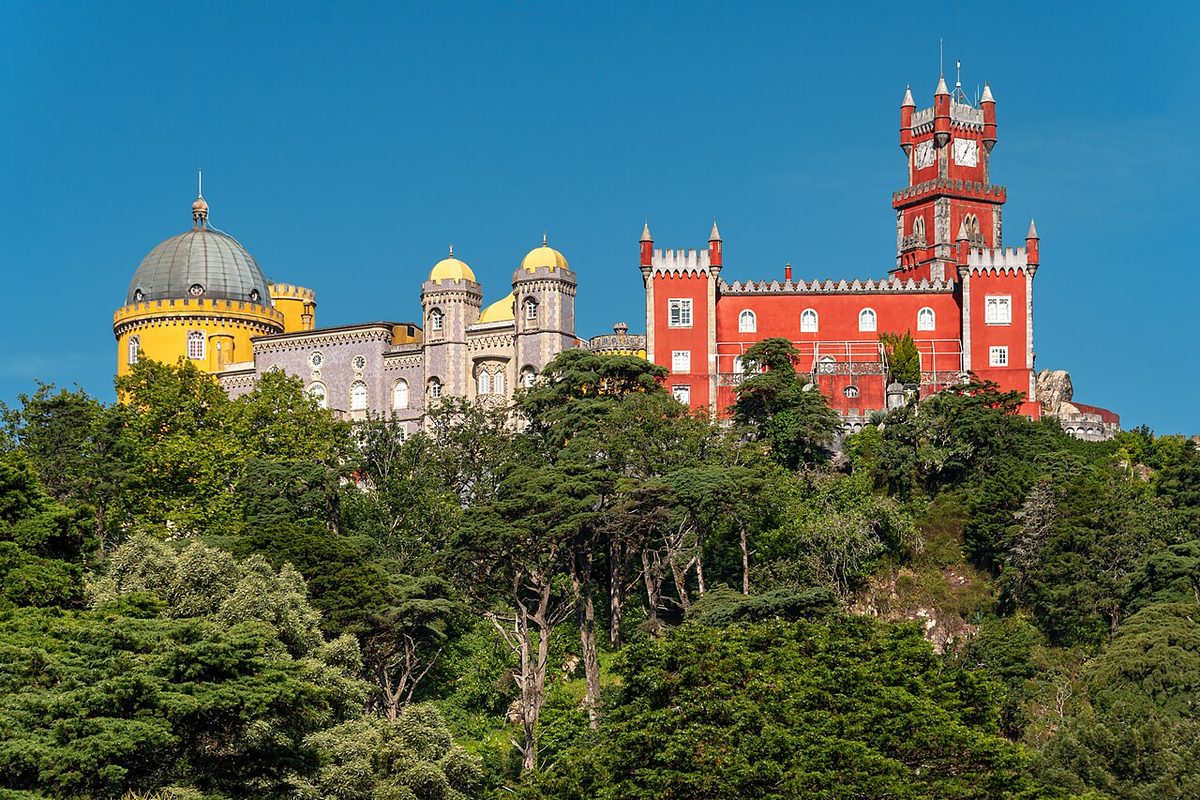
Sintra is a wooded microclimate of palaces built by kings and eccentrics twenty-eight kilometres from the capital, and it is genuinely one of the great sights in Europe. It is also the most mismanaged crowd situation in Portugal, and the ticketing is currently a mess worth spelling out.
Pena Palace pricing, checked September 2026. The official Parques de Sintra site lists an “Essential Visit” to the palace at €20, a “Complete Visit” covering palace and park at €45, and park-only entry at €12. A great many resellers and guides still quote the older structure — €20 for palace and park combined, €10 for the park alone. Those are materially different trips for materially different money, so buy from parquesdesintra.pt and treat any third-party price as out of date until proved otherwise. Palace entry is timed to a specific date and slot.
Opening hours, same check: the park runs 09:00–19:00 with last admission at 18:00; the palace 09:30–18:30 with last ticket at 17:30.
The other Sintra trap is the 434 bus up the hill, where the queue routinely runs 30–40 minutes between 10:00 and 13:00 in summer. The Vila Sassetti footpath climbs the same hill through gardens in about 35 minutes on foot, and is the better option for anyone who can manage a steady uphill walk. The sister site’s Sintra day plan and its Pena Palace guide go deeper, and the train from Rossio is covered separately.
Cascais and the coast road
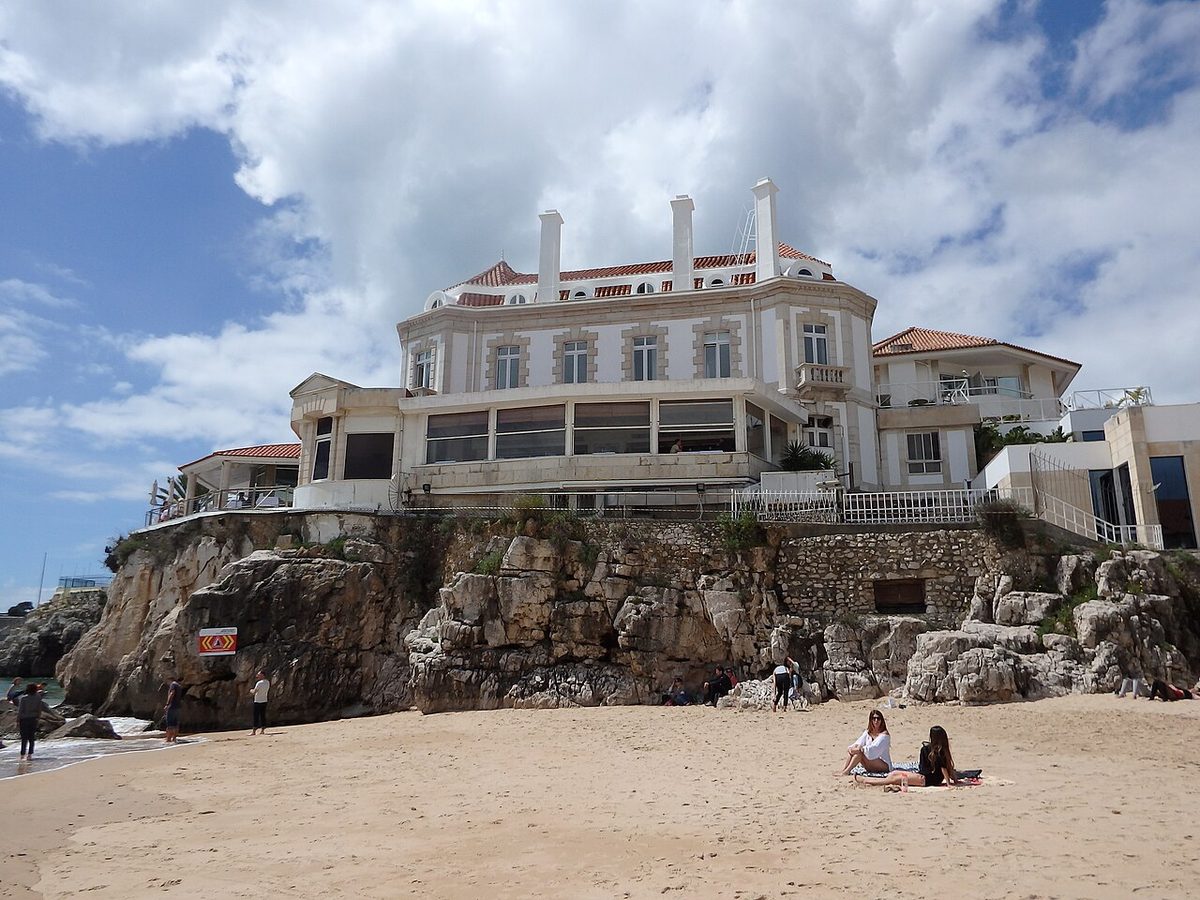
Forty minutes along the estuary on a train that runs beside the water for the last third of the journey, Cascais is a former fishing town turned seaside resort with three small town beaches, a marina, a decent modern art museum and the best ice cream on the coast. Rent a bike on the seafront and ride the flat coastal path to Guincho, a serious Atlantic surf beach with a mountain behind it, then come back for dinner.
Verdict: the easiest good day out from Lisbon and the right choice on a hot day. Cabo da Roca — the westernmost point of continental Europe — is a bus ride away and is, honestly, a cliff with a car park and a certificate you can buy for about €12. Go for the cliff, not the certificate. See the Cascais day trip and how the train works.
Setúbal, Arrábida and the dolphins
South across the Tagus, the Serra da Arrábida drops into water the colour of the Adriatic, and the Sado estuary holds a resident population of about thirty bottlenose dolphins that can be seen year-round from small boats out of Setúbal. The town itself grills the best fish near Lisbon at prices the capital forgot. Almost no day-tripper goes.
Verdict: my pick for a second visit, and better in June than in August. The sister site has the Setúbal and Arrábida trip in full, and rounds up every day tour from the city.
A three-day Lisbon plan that works
If you want the whole thing as a sequence rather than a menu, this is the order I would use, built around the two rules that matter here: start early, and never cross the city twice in a day.
| Day | Morning | Afternoon | Evening |
|---|---|---|---|
| One | Alfama from 09:00, downhill from Portas do Sol; castle or the free viewpoints | Baixa grid, the arch, Cais das Colunas, ginjinha at Rossio | Fado in a small room in Alfama or Mouraria, after 21:30 |
| Two | Belém at opening: monastery cloister, then the tower from the outside | One museum — Coach, MAAT or Ajuda — and pastéis de nata | Cais do Sodré or Bairro Alto; dinner off the main streets |
| Three | Sintra by train from Rossio, timed Pena ticket booked in advance | Quinta da Regaleira or Sintra town, back by late afternoon | Sunset at Santa Catarina or Senhora do Monte, late dinner in Príncipe Real |
| Optional four | Cascais by train from Cais do Sodré, bike to Guincho | Beach, seafood lunch on the front | Back for a last drink on a rooftop |
Two deliberate choices in that plan. Sintra gets a whole day rather than a morning, because the palaces are twenty minutes apart on a slow bus and the classic mistake is trying to fit three of them in. And nothing crosses between Belém and Alfama on the same day — those are the two ends of the city and the transfer costs 45 minutes each way that you will not get back.
Compress it to two days by cutting Sintra and keeping the city; that is the right trade if the weather is poor, because Sintra in heavy rain is a wet queue on a hillside. The sister site has fuller versions as a two-day plan and a combined Lisbon and Sintra itinerary.
What to skip in Lisbon, and what is overrated
This is the section most guides leave out, and it is usually the most useful part of the page. None of the following is bad. All of them cost more time than they return.
Tram 28 as a sightseeing ride
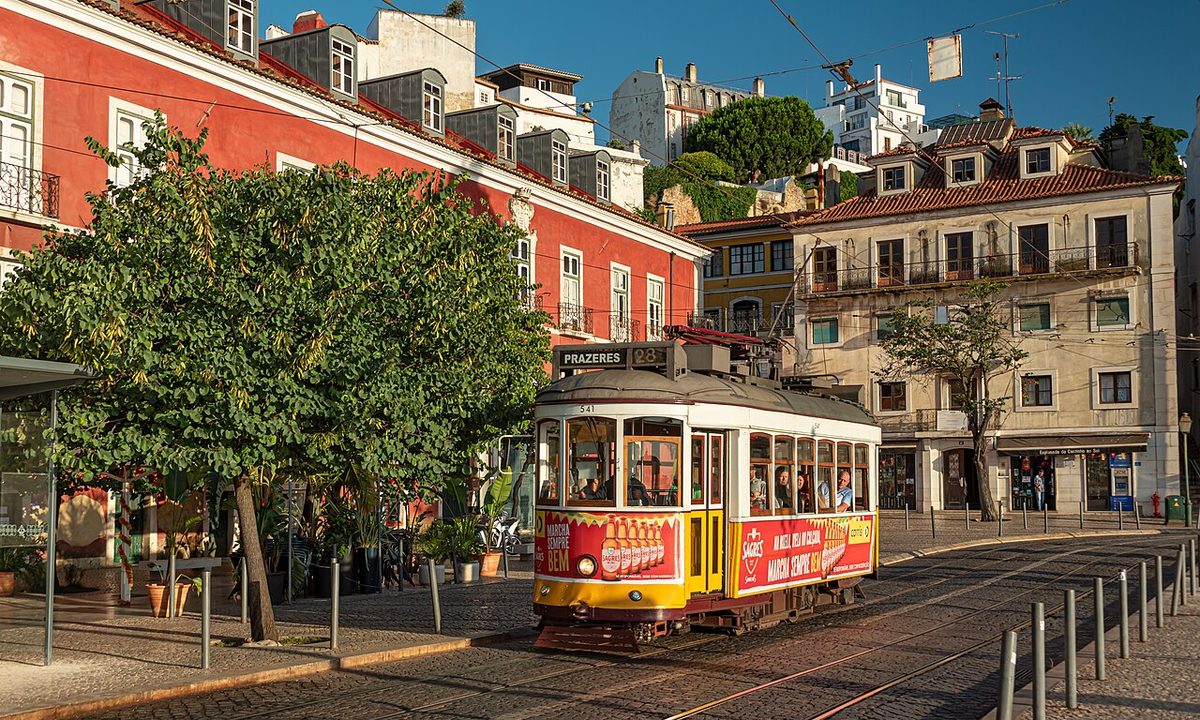
The famous yellow tram is public transport that happens to run a beautiful route, and it has been so thoroughly discovered that in summer you queue 40 minutes at Martim Moniz to stand pressed against a stranger while a pickpocket works the carriage. Two better options: board at the Campo de Ourique end, where the same tram is often half empty and you will get a seat; or ride tram 12, a shorter loop over much of the same ground with a fraction of the crowd.
Verdict: ride it, but not from Martim Moniz and not between 10:00 and 16:00. The sister site’s tram 28 guide has the boarding strategy, and its overview of the tram network covers the alternatives.
The inside of the Belém Tower
Said above, repeated here because it is the mistake I see most often. An hour of queueing for twenty minutes of narrow staircase, when the building’s whole appeal is its exterior silhouette on the water. Photograph it from the riverside lawn and put the hour into the Coach Museum or Ajuda instead.
Tuk-tuks
They cluster at every viewpoint, they cost several times what a taxi or a rideshare costs for the same journey, and in the narrow streets of Alfama they are slower than walking. The one defensible use is if you have limited mobility and want to reach the hilltop viewpoints without the climb — in which case agree the price before you get in. The sister site is more diplomatic than I am about when a tuk-tuk makes sense.
Hop-on hop-off buses in the old town
They cannot enter Alfama, Bairro Alto or most of what you came to see, because the streets are too narrow. What they are good for is the Belém run and Parque das Nações, which are genuinely spread out. Buying a 48-hour ticket to sit in traffic on the Avenida is not a good trade. See the honest assessment of the bus routes.
Booking Sintra as a coach tour with four stops
The standard full-day coach tour does Pena, Sintra town, Cabo da Roca and Cascais. That is four places in eight hours with three transfers, and it delivers about ninety minutes at Pena, which is the only one of the four that needs three hours. Take the train and pick two things.
Eating on Rua Augusta
The pedestrianised main street of Baixa is lined with restaurants with photographs on the menu and men outside inviting you in. Walk one block east or west and the same meal costs a third less and is cooked by someone who is not counting on never seeing you again. This is the most reliable money-saving rule in the city.
Getting around, and what a day actually costs
Lisbon’s transport is a mixed system of metro, buses, trams, funiculars and ferries, all of which take the same rechargeable card, which you buy from a machine at any metro station and top up with either single journeys or a 24-hour pass. Buy one on arrival; paying cash to the driver on a tram costs roughly three times the card fare.
The three funiculars — Bica, Glória and Lavra — are lifts disguised as trams and they save the steepest climbs. The Bica, dropping down towards the river between painted houses, is the one on all the postcards, and unlike tram 28 it is rarely crowded. Ferries across to Cacilhas take ten minutes, cost very little and give you the best view back at the city, which is the cheapest boat trip in Lisbon by a distance.
Is the Lisboa Card worth it?
The Lisboa Card bundles unlimited public transport with entry to a long list of museums and monuments including the Jerónimos Monastery, the Belém Tower and São Jorge Castle. It starts at about €31 for the shortest validity, with a combined version including Pena Palace from about €58 (lisboacard.org, checked September 2026).
The arithmetic is simple and it turns on one question: are you doing Belém properly? If your day includes the monastery, the tower and a museum, plus tram and metro journeys, the card pays for itself. If you are mostly walking Alfama, sitting at viewpoints and eating, it does not, because most of what makes Lisbon good is free. The sister site works through the Lisboa Card break-even in detail.
| Daily budget | What it covers | Per person, per day |
|---|---|---|
| Lean | Hostel bed, prato do dia lunch, market dinner, transport card, free sights | €70–€90 |
| Comfortable (for two) | Mid-range hotel, one ticketed monument, sit-down dinner with wine | €150–€200 for the pair |
| Add a Sintra day | Train, Pena timed ticket, lunch, bus or footpath | €35–€60 extra |
Figures checked September 2026 and excluding August, when accommodation in Lisbon rises sharply. The sister site breaks down what a Lisbon trip really costs line by line.
When to go
May, June, September and early October are the good months, and September is the narrow best: the sea is at its warmest, the crowds have thinned, and prices come off their August peak. July and August are hot, expensive and crowded, though Lisbon’s Atlantic position keeps it more bearable than Seville or Córdoba. Winter is mild — you can sit outside in January in the sun — but the days are short and the rain, when it comes, is heavy.
Two dates worth planning around. Santo António, on the night of 12–13 June, turns Alfama and Graça into an all-night street party with sardine grills on every corner, and is the best single night of the Lisbon year. And if you are here in late May, the jacarandas on the Avenida and around Praça do Príncipe Real are in full purple flower.
Where to stay
Baixa is central and noisy. Alfama is beautiful, steep and hard to reach with a suitcase — genuinely consider this if you have wheels on your luggage, because some addresses are up eighty steps. Chiado is the best compromise between walkability and calm. Príncipe Real and the Avenida are quieter and greener with a short walk downhill to everything. Belém is lovely and too far out to sleep in unless you have a specific reason.
Whatever you choose, look at the contour lines before booking. In this city the difference between a hotel that is “500 m from the castle” and one that is 500 m away and 60 m below it is the difference between a pleasant stroll and a daily climb.
Frequently asked questions
How many days do you need in Lisbon?
Three full days covers the city itself: one for Alfama and the castle, one for Belém, one for Chiado, Bairro Alto and the river. Add a fourth for Sintra and a fifth if you also want Cascais or Setúbal. Two days is doable but means choosing between Belém and a day trip.
What is the best time of year to visit Lisbon?
September, narrowly, followed by May and June. The sea is warmest in September, the summer crowds have gone, and prices drop from their August level. April and October are cheaper again with a real chance of rain. August is hot and expensive; if you come then, start every day at 08:00 and rest in the afternoon.
Is Lisbon expensive?
Less than most western European capitals for food and drink, and no longer cheap for accommodation. A counter coffee is €0.80–€1.20, a set lunch with wine €9–€15, and a mid-range dinner for two €40–€60 (checked September 2026). Hotel prices in the centre have risen steeply and are the part of the budget most likely to surprise you.
Do you need to book Sintra in advance?
Yes for Pena Palace, which sells timed entry slots that go for popular dates. Buy from the official Parques de Sintra site, where the current structure is €20 for the palace, €45 for palace and park, and €12 for the park alone (checked September 2026) — several resellers still advertise an older €20 combined and €10 park-only pricing, so compare carefully before you pay.
Is tram 28 worth it?
The route is worth it; the experience at the wrong hour is not. Board at the Campo de Ourique end rather than Martim Moniz, avoid 10:00 to 16:00, and keep your bag in front of you — this is the one place in Lisbon with a real pickpocket problem. Tram 12 covers much of the same ground with far fewer people.
Is Lisbon walkable?
Yes, with the enormous caveat of the hills. Distances are short and the gradients are not. Use the funiculars and the metro to gain height and walk downhill, wear shoes with grip because the calçada pavement is polished stone, and be realistic about the climbs if you have knees, a pushchair or a suitcase.
What food should I try in Lisbon?
Bacalhau à Brás, a bifana from a counter bar, grilled sardines if you are here between June and September, clams with garlic and coriander, and at least three pastéis de nata. Order the prato do dia at lunch in any tasca with a handwritten board and you will eat better than at most places with an English menu outside.
Is Lisbon safe?
Violent crime is rare and the city is comfortable to walk at night in the central districts. Pickpocketing is the real risk and it is concentrated in exactly three places: tram 28, the metro at rush hour and crowded viewpoints. People will also offer you drugs on Rua Augusta and in Bairro Alto; they are almost always selling something fake and a flat “não, obrigado” ends it.
Can you do Lisbon and Porto in one trip?
Easily. The Alfa Pendular takes 2h39–2h50 city centre to city centre for €35.70 in tourist class or €49.90 in Conforto, with 15–19 departures a day; promotional fares from about €16 are released up to 60 days ahead and sell out (cp.pt, checked September 2026). Give each city three days and take the train rather than flying.
If you are pairing the capital with the north — and the train makes that easy — our guide to Porto does for the second city what this page does for Lisbon: districts, port lodges, the francesinha question, day trips up the Douro, and an honest list of what to leave out.
Heading south afterwards? Faro is 280 kilometres and about three hours from the capital, and our guide to the Algarve covers which of its three coasts to pick, the beaches that suit families rather than photographers, and the cave rules that changed in 2024.
Fitting Lisbon into a longer trip? Our Portugal route planner shows exactly where the capital sits in a five, seven, ten or fourteen-day itinerary, with the train connections and fares to Porto, Coimbra and the Algarve.
The excursion belt around the capital needs more room than a section here allows: our guide to day trips from Lisbon covers every worthwhile destination within ninety minutes, with transport and costs for each, the current Sintra ticket confusion in full, and the pairings that let you do two places in one day.
Lisbon with children means the Oceanarium, the castle, the trams and a lot of cobbled hills. Our guide to Portugal for families has the 2026 prices, the buggy-versus-carrier question and how to combine the city with the beach.
In June, Lisbon turns into one long street party. Santo António, on the night of 12–13 June, brings grilled sardines, pots of basil and the neighbourhood marches down the Avenida da Liberdade. Our Portuguese festival calendar covers it alongside the rest of the year’s celebrations.
Where to go next
Lisbon is one region of seven, and the decision that shapes a Portuguese trip is which of the others you pair it with. Our overview of the country region by region lays out how many days each one needs and which combinations actually work in a week or a fortnight.
For the city itself, our sister site lisbontourism.org goes deeper than a single page can: start with its first-timer’s orientation, then a three-day itinerary or a full week if you have longer. If you are weighing the capital against the north, its Lisbon versus Porto comparison is the honest version of that argument, and its practical tips page covers the small things — tipping, tap water, plug sockets — that this guide has skipped.
Photo credits
- Miradouro de Santa Luzia looking over Alfama and the Tagus — Dale Cruse – 10M views from San Francisco, CA, USA, CC BY 4.0, via Wikimedia Commons
- The Arco da Rua Augusta seen from Praça do Comércio — Diego Delso, CC BY-SA 3.0, via Wikimedia Commons
- The Manueline cloister of the Jerónimos Monastery, Belém — Jakub Hałun, CC BY 4.0, via Wikimedia Commons
- The Torre de Belém at low tide — Berthold Werner, CC BY-SA 4.0, via Wikimedia Commons
- Praia da Conceição below the seafront villas at Cascais — Mike Steele, CC BY 2.0, via Wikimedia Commons
All prices and opening times were checked in September 2026 against the operators’ own sites and will drift; Sintra’s ticketing in particular has changed twice in two years, so confirm on parquesdesintra.pt before you travel. Last updated: 11 September 2026.