Search for things to do in Algarve holidays and you will get, almost without exception, the same forty kilometres of limestone coast between Lagos and Albufeira, photographed from a drone in June. That stretch is genuinely extraordinary and it is also roughly a fifth of the region. Either side of it sit two completely different coastlines — a lagoon and sandbar system in the east, an exposed Atlantic wilderness in the west — plus a hilly interior of cork oak and orange groves that most visitors drive through on the way from the airport without ever stopping.
The short answer: the essential things to do in the Algarve are a boat trip along the limestone cliffs between Portimão and Benagil, a day walking the Seven Hanging Valleys coast path, a sandbar island beach out of Tavira or Olhão in the east, and a wind-blown afternoon at Cape St Vincent in the west. Five days covers one coast properly. Ten covers all three.
What follows is organised by coast rather than by resort, because the choice of which stretch to base yourself on is the decision that shapes the whole holiday, and almost nobody explains the differences. Prices and rules were checked in September 2026 against the operators’ and the authorities’ own documents — including the Benagil cave restrictions, which have changed since 2024 and which a great many guides still describe incorrectly.
One more framing note before the detail. The Algarve is not a single destination that happens to be long; it is three destinations that share an airport. Deciding which of them you actually want — warm shallow water and quiet towns, dramatic cliffs and boat trips, or wind, surf and empty cliff paths — does more for the quality of the trip than any amount of reading about individual beaches. Everything below is arranged to make that choice easy, and the honest verdicts include the places I would not go back to.
The Algarve at a glance: three coasts, not one
The region runs about 150 kilometres from the Spanish border to Cape St Vincent, and it changes character twice along the way. Getting this right is worth more than any list of attractions, because a family that wants warm shallow water and a surfer who wants swell should not book the same town.
| Coast | Roughly | Character | Sea | Best for | Verdict |
|---|---|---|---|---|---|
| Eastern (Sotavento) | Spanish border to Faro | Lagoon, sandbars, salt pans, quiet white towns | Warmest and calmest in the region | Families, birdwatching, slow trips, shellfish | The Algarve people return to |
| Central (Barlavento) | Faro to Lagos | Golden limestone cliffs, coves, caves, resorts | Warm, sheltered, generally swimmable | The photographs, boat trips, first visits | Glorious in June, difficult in August |
| Western & Costa Vicentina | Lagos to Cape St Vincent and north | Cliffs, wind, surf towns, almost no development | Cold, rough, serious Atlantic | Surfing, walking, solitude, sunsets | The best landscape and the worst swimming |
| The interior | Behind all three | Cork oak, orange groves, Moorish hill towns | — | Cheap food, castles, cool air in August | Half a day that most people never take |
Three things fall out of that. The sea temperature difference between the east and the west is real and large — the eastern lagoon shallows warm up in a way the open Atlantic at Sagres never does. The famous cliff scenery is concentrated in the central section and is genuinely worth building a trip around. And the interior is twenty minutes inland from any resort, is ten degrees cooler in August, and is where the food stops being aimed at visitors.
For how the Algarve compares with the rest of the country, our region-by-region guide to Portugal sets it against the north and the islands, and if you are combining it with a city, we have full guides to Lisbon and Porto.
The things to do in Algarve guides all list, and which ones deliver
Four experiences here are genuinely first-rate rather than merely pleasant, and they are all outdoors and mostly on or beside the water.
A boat trip along the limestone coast
Between Portimão and Albufeira the coast is soft yellow limestone that the Atlantic has been carving for millennia into arches, stacks, blowholes and roofless caverns. You cannot see most of it from land. A two-hour small-boat trip along this stretch is the single best thing you can buy in the Algarve, and the smaller the boat the more caves you get into.
There are three broad options. Large catamarans and “pirate ship” cruises carry 60 to 100 people, go faster, stay further out and cannot enter the caves — they are cheap and they are basically a party boat. Rigid inflatables carrying eight to twelve people get into the arches and are the sweet spot for most visitors. Kayak and stand-up paddleboard trips are the slowest, closest and most physical, and they are the only way to reach some of the smaller caves at all.
Cost: guided kayak trips typically €30–€40 per person (checked September 2026); small-boat cave tours vary widely by operator and season. Verdict: take the small boat or the kayak, not the catamaran. Morning trips have calmer water and better light inside the caves.
The Benagil cave, and the rules that changed
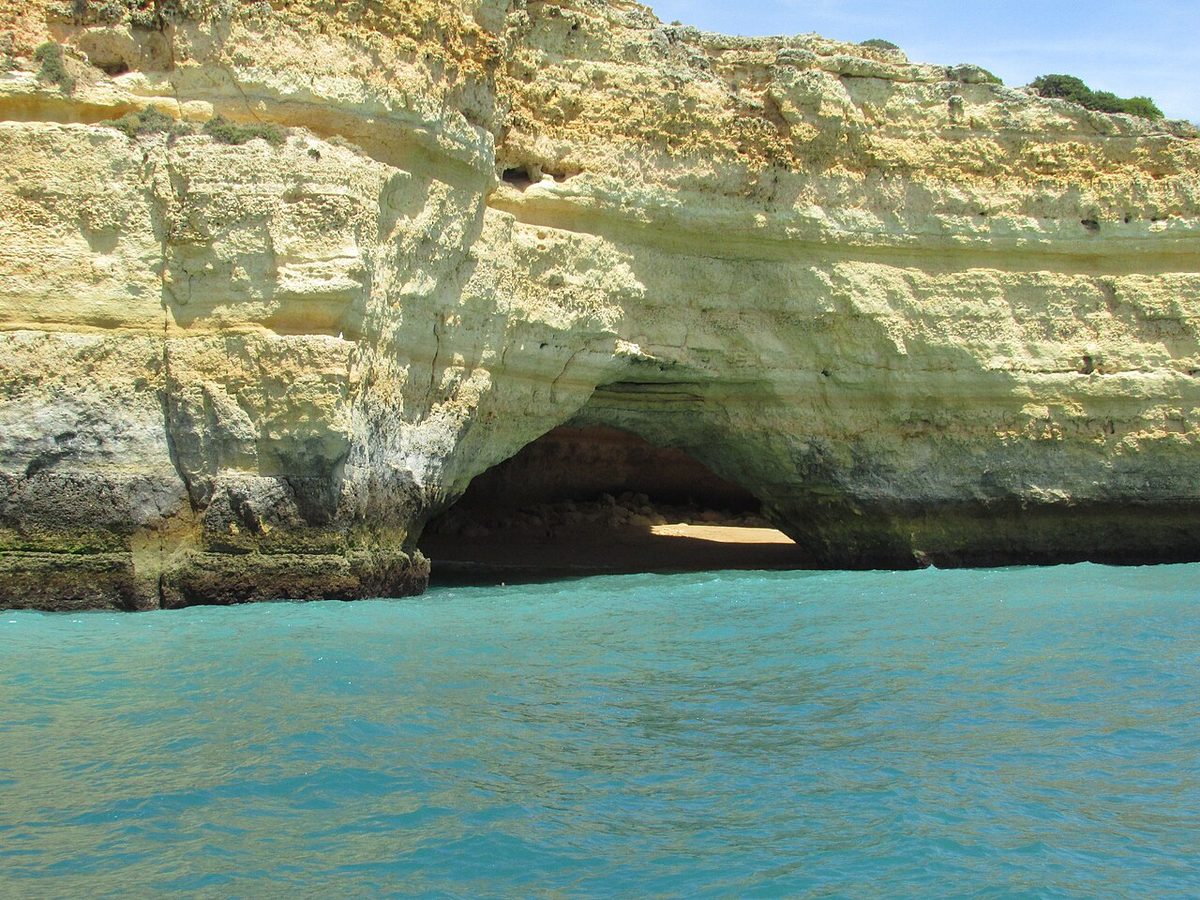
The Algar de Benagil is a domed sea cave with a hole in its roof and a crescent of sand inside, and it is the most photographed thing in Portugal after Pena Palace. It is also now governed by rules that most guides have not caught up with, and which change what is actually possible.
Under the Maritime Authority’s Edital 019/2024, as amended by 009/2025 (checked September 2026): swimming to the cave is banned, with or without a float. Landing on the sand inside is banned. Self-guided kayak and paddleboard rentals into the cave are banned, although entering on your own craft with a lifejacket remains permitted. Guided kayak groups run at one guide per six kayaks. Motorised boats must stay roughly fifteen metres off and enter through the western arch; non-motorised craft use the eastern. Each group gets five to ten minutes inside. Operator fines run from €300 to €216,000.
Which means the famous photograph — one person standing alone on the sand inside the dome — is no longer a legal image to recreate. What you can still do is enter by boat or on a guided kayak and look up through the roof hole, which is the thing worth doing anyway.
Verdict: go, on a guided trip, early in the morning. But do not build a day around it: the cave is five minutes of a two-hour trip and the coastline on either side is at least as good. If you would rather see it from above, the clifftop path from Benagil village passes directly over the roof hole — stand well back, because the edge is undercut and there have been fatal falls.
The Seven Hanging Valleys walk
The Percurso dos Sete Vales Suspensos runs about six kilometres one way along the clifftop between Praia da Marinha and Praia de Vale Centeanes, dipping in and out of seven valleys that end abruptly at the sea. It passes above Benagil, over a collapsed sinkhole, past a lighthouse and along the top of the best cliff scenery in southern Europe. It is not technical, there is no shade, and it is the most rewarding thing you can do here on foot.
Cost: free. Time: three hours one way, plus getting back — there is no useful bus, so either arrange a taxi or walk it as an out-and-back to a turning point. Verdict: do it, early, in spring or autumn. In July it is a furnace by eleven o’clock.
A sandbar island in the east
Off Tavira, Olhão and Faro, the Ria Formosa lagoon is separated from the sea by a chain of low sand islands reached only by small ferries. On the seaward side of each is a beach several kilometres long with warm shallow water, a handful of restaurants and no road. Ilha de Tavira is the easiest, Ilha da Culatra and Ilha da Armona are quieter, and Ilha Deserta has essentially nothing on it at all.
Verdict: the best beach day in the Algarve and the least like the brochure. The last ferry back matters; check it before you settle in for the afternoon.
How the Algarve got like this
Four episodes explain almost everything you will see, and knowing them turns a beach holiday into something more interesting without costing you an hour of beach time.
It was Muslim for five centuries and the name is Arabic. Al-Gharb means “the west” — the western edge of Al-Andalus. Silves, not Faro, was the capital, and under Islamic rule it was a walled city of orchards, irrigation and poets. Almost every crop the region still lives on arrived in that period: oranges, lemons, almonds, figs, carob. The irrigation vocabulary survived too, in words like nora for a waterwheel. When you eat an orange in Silves you are eating the direct legacy of a thousand-year-old agricultural system.
The Atlantic voyages were launched from here. Lagos was the port from which the fifteenth-century caravels went south down the African coast, and it was also where the first slave market in Europe opened in 1444 to sell the people those voyages brought back. The town does not hide this: the market building is now a small, plainly presented museum, and it is worth twenty minutes. Sagres, on the headland, is traditionally described as Henry the Navigator’s school of navigation, though historians have found rather less evidence for a formal school than the tourist boards suggest.
The 1755 earthquake hit here harder than anywhere. The epicentre was offshore south-west of Cape St Vincent, which put the Algarve closest to it. The tsunami that followed destroyed most of the coastal settlements outright — which is why so many Algarve towns have handsome eighteenth-century centres and almost nothing older, and why the surviving medieval fabric is concentrated inland at Silves, Loule and Tavira.
Tourism arrived in 1965 with the runway. Faro airport opened that year and the region changed faster than almost anywhere in Europe. Fishing villages became resorts within a decade, the population of the coastal strip multiplied, and the building that went up between 1970 and 2008 accounts for most of what visitors now complain about. It also lifted one of the poorest corners of western Europe into relative prosperity, which is the part usually left out of the complaint.
The current pressure is water. The Algarve has had a run of dry winters, reservoir levels have been low enough to trigger restrictions, and the combination of agriculture, golf and a population that quadruples in August is a genuine and openly debated problem. You may see restrictions on hosepipes or hotel pool top-ups. Take the short showers; it is not a token gesture here.
Beaches, sorted by what you actually want
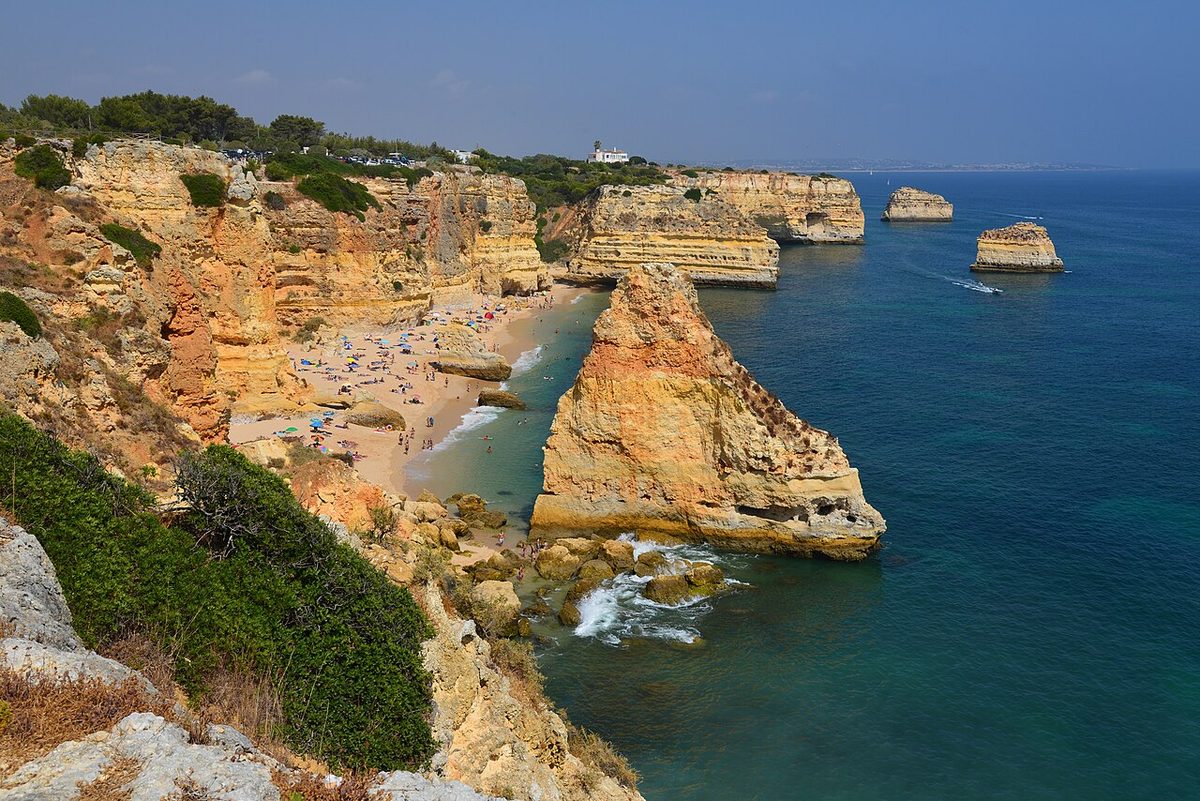
The Algarve has well over a hundred named beaches and ranking them in a list is close to useless, because the right beach depends entirely on whether you want shelter, drama, space or waves. Here is the useful version.
| What you want | Go to | Where | Watch out for |
|---|---|---|---|
| The classic photograph | Praia da Marinha | Central, near Carvoeiro | Car park fills by 10:00; steep steps down |
| Cliffs and stacks close up | Praia Dona Ana, Praia do Camilo | Lagos | Small; arrive early or late |
| Warm, shallow, safe for children | Ilha de Tavira, Praia de Cabanas | Eastern lagoon | Ferry timetable; little shade |
| Miles of empty sand | Praia do Barril, Ilha da Armona | Eastern islands | Facilities are minimal by design |
| Big Atlantic surf | Arrifana, Amado, Bordeira | West coast | Cold water, strong rips, wind |
| A short walk from a town | Praia de Alvor, Meia Praia | Central | Busy in season, but big enough to absorb it |
| Somewhere with almost nobody | Praia da Bordeira, Praia do Amado out of season | Costa Vicentina | No shops; take water |
Two general warnings that apply across the region. Many of the best central-Algarve coves are reached by long wooden staircases cut into the cliff, which rules them out for anyone with mobility problems and makes them hard work with beach kit and small children. And the cliffs themselves are actively eroding — the overhangs collapse without warning, and the “do not sit beneath the cliff” signs are there because people have been killed. Sit out on the open sand.
Lifeguards, flags and the things that actually go wrong
Portuguese beaches are patrolled during a defined bathing season, typically from around June to mid-September, and outside those dates there is generally no lifeguard even on the busiest beaches. The flag system is worth knowing precisely: green means swimming permitted, yellow means wading only and no swimming, red means the water is closed, and a chequered black and white flag means the beach is temporarily unsupervised. Swimming on a red flag is an offence as well as a bad idea.
The two things that genuinely injure visitors here are cliff falls and rip currents, in that order. The limestone overhangs collapse without warning — that is precisely how the coves formed — and people are killed every few years sitting or standing beneath them. On the west coast, rips are strong and constant; if you are pulled out, swim parallel to the beach rather than against the current. Portuguese man o’ war occasionally arrive in numbers on the west coast after westerly winds, and the purple flag warns of them.
Blue Flags, naturist beaches and dogs
The Algarve holds one of the highest Blue Flag counts of any European region, which certifies water quality and facilities rather than beauty — several of the loveliest coves have no flag because they have no lifeguard hut or accessible path. Do not use it as a ranking.
Naturism is legal on a handful of officially designated beaches, of which Praia da Adega near Albufeira and stretches of the Ilha Deserta and Barril are the best known; elsewhere it is tolerated in remote spots and not on family beaches. Dogs are prohibited on most supervised beaches during the bathing season and permitted out of season, with a small number of designated dog beaches operating year-round — the municipal websites list them, and enforcement is real.
The eastern Algarve: lagoons, sandbars and the towns nobody rushes
East of Faro the cliffs stop, the land flattens into salt pans and marsh, and the Algarve becomes a quieter, older, cheaper place. The Ria Formosa Natural Park covers sixty kilometres of lagoon and is one of the most important wetlands in Europe, full of flamingos, spoonbills, and the purple swamphen that is the park’s emblem.
Tavira
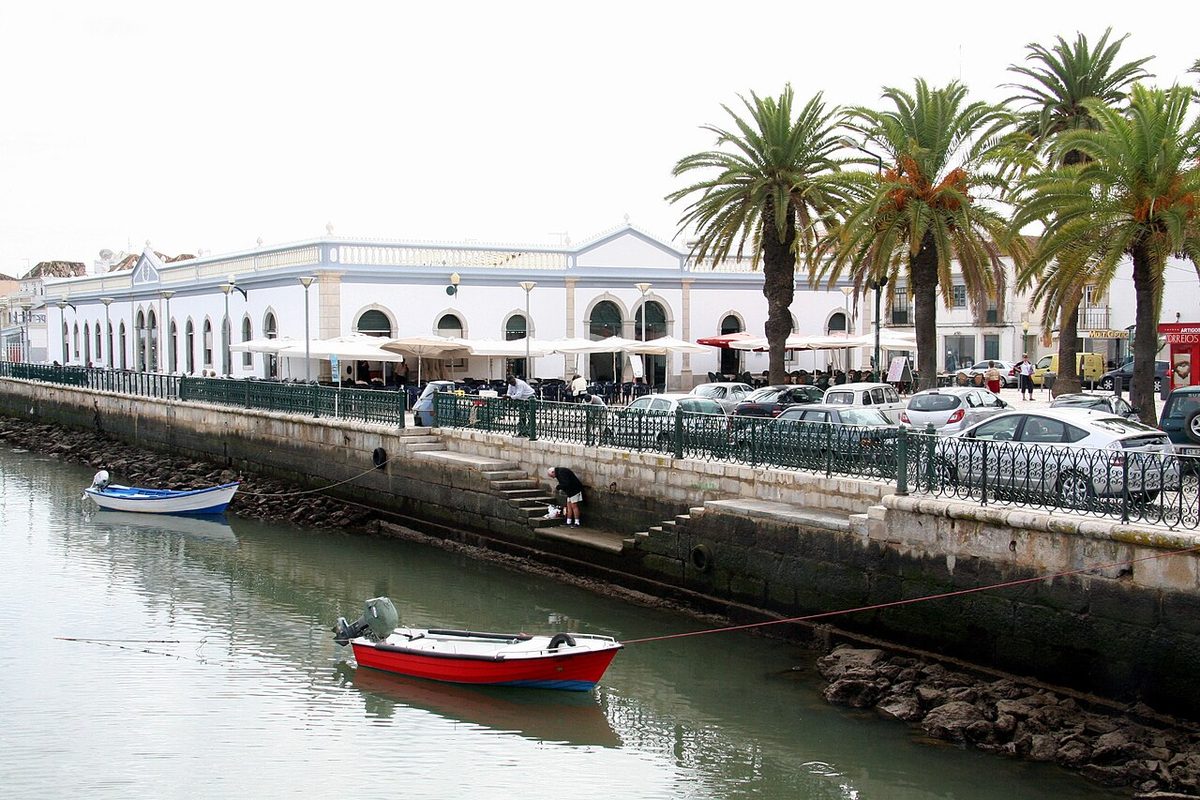
A small town on both banks of the Gilão, with a Roman bridge foundation, a castle, thirty-something churches and a covered market that turned into a row of cafés. It has the best proportions of any town in the Algarve and almost none of the resort infrastructure. The beach is on the island, ten minutes away by ferry or a longer walk over the marsh from Santa Luzia.
Verdict: the best base in the eastern Algarve and the one I would choose for a slow week. Santa Luzia, just down the road, is the octopus capital of Portugal and takes it seriously.
Olhão
A working fishing port with the best market building in the region — two brick halls on the waterfront, fish in one and everything else in the other, busiest on Saturday morning. The old quarter behind it is North African in plan, flat-roofed and cube-shaped, unlike anywhere else in Portugal. It is not pretty in the conventional sense and it is much more interesting than the places that are.
Verdict: go for the Saturday market and the ferries to Culatra and Armona. Stay if you want somewhere with a real economy.
Ria Formosa and the salt
Small-boat tours from Faro, Olhão and Fuseta run through the lagoon channels, and a good one takes you to a bivalve nursery and explains why this coast produces a very large share of Portugal’s clams and oysters. There are also open-air salt pans where salt is still harvested by hand, and a few of them float you in brine dense enough to sit in like the Dead Sea.
Verdict: the flat-bottomed lagoon tour is the best value boat trip in the Algarve and costs a fraction of the cave cruises.
Cacela Velha and the far east
A hamlet on a low bluff — one church, one fort, one café — looking across the lagoon at a sandbar. There is nothing to do there and it is one of the loveliest places in the region. Further east, Vila Real de Santo António is a Pombaline grid town built to the same plan as Lisbon’s Baixa, and the ferry across the Guadiana to Ayamonte in Spain takes fifteen minutes.
The central Algarve: cliffs, caves and the resort belt
This is the Algarve of the advertisements, and it contains both the best scenery in the region and its least appealing development, sometimes within two kilometres of each other.
Lagos
A walled town with a genuine history — it was the base for the Atlantic voyages of the fifteenth century and, less comfortably, the site of the first slave market in Europe, now a small and unflinching museum. The old town inside the walls is compact and good; the beaches to the south and west are among the best in Portugal; Meia Praia to the east is four kilometres long and never full.
Verdict: the best all-round base in the central Algarve, with enough town to be interesting after the beach closes.
Ponta da Piedade
The headland just south of Lagos, where the limestone breaks up into a maze of stacks, arches and tunnels in water that is genuinely turquoise on a calm day. You can see it from a clifftop path and a long staircase, or from a small boat that threads the arches for half an hour.
Verdict: take the boat from Lagos marina; the water-level view is the point and the trip is short and cheap. Sunset is the hour.
Carvoeiro and Benagil
Carvoeiro is a small cliff-sided fishing village that grew into a resort and kept its shape, with a good boardwalk east along the clifftop to the Algar Seco rock formations. Benagil is a hamlet with a car park, a beach and the cave, and it is overwhelmed for most of the day in season.
Verdict: stay in Carvoeiro, visit Benagil at eight in the morning or not at all.
Albufeira, honestly
Albufeira is two towns. The old quarter above the beach is a perfectly pleasant Portuguese seaside town with a good stretch of sand. The Strip at Montechoro is a kilometre of bars, clubs and English breakfasts serving a very specific market, and it does that job well for the people who want it and is miserable for everybody else. The two are far enough apart that you can stay in one and never see the other, but the reputation attaches to both.
Verdict: know which Albufeira you are booking. If your search results show “5 minutes from the Strip”, that is a description, not a selling point, unless it is.
Portimão, Alvor and Praia da Rocha
Portimão is a working town with a good sardine tradition and the marina from which most cave boats leave. Praia da Rocha, below it, is a spectacular beach backed by a wall of high-rise hotels — the sand is genuinely excellent and the setting is not. Alvor, a few kilometres west, is a small former fishing village with a boardwalk over the estuary marsh and a much better balance of the two.
Verdict: Alvor for staying, Portimão for boats and sardines, Praia da Rocha for a walk on a very good beach you would not want to sleep above.
The western Algarve and the Costa Vicentina
West of Lagos, the development thins and then stops. The land rises, the wind gets serious, and the coastline turns north at Cape St Vincent into 100 kilometres of protected Atlantic seaboard where building is essentially prohibited. This is the best landscape in southern Portugal and it is not a beach holiday.
Sagres and Cape St Vincent
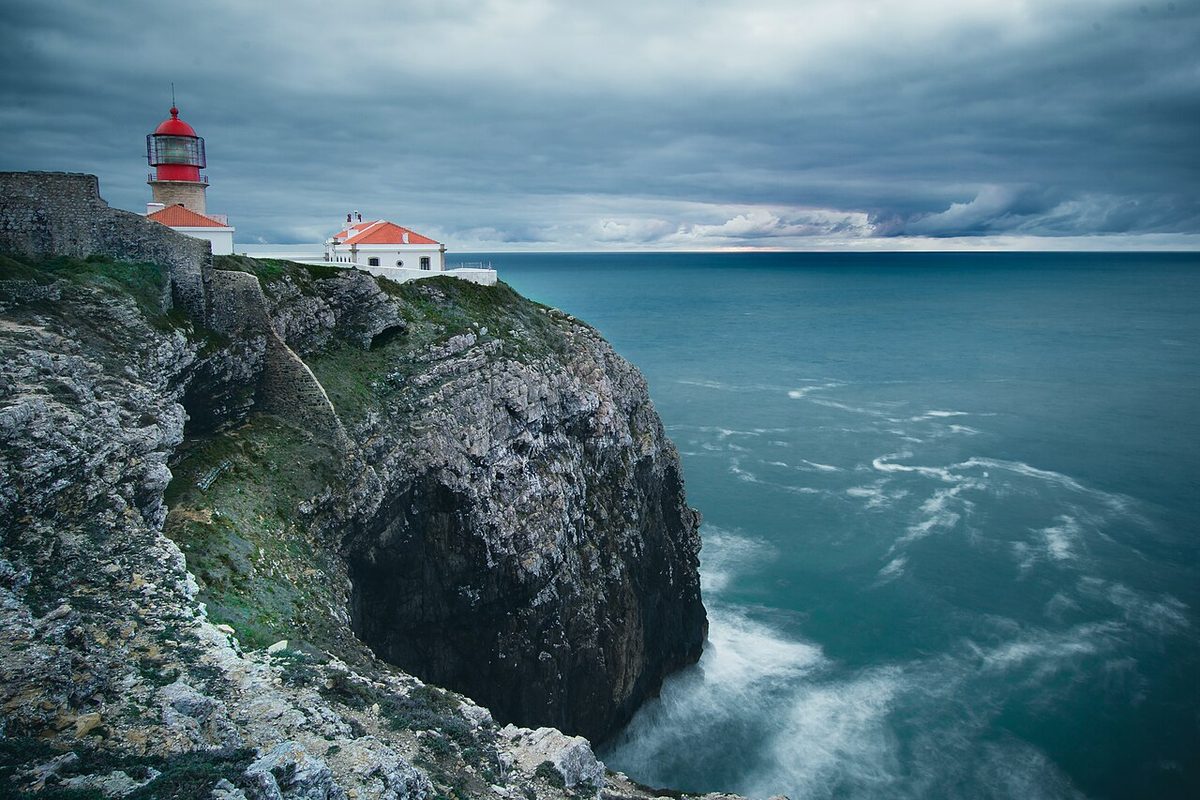
Cabo de São Vicente is the south-western corner of Europe: a lighthouse on a 75-metre cliff with nothing beyond it but ocean, where the sun goes down into the Atlantic and a couple of hundred people gather every evening to watch. It is windy in a way that has to be experienced; there is a van in the car park that has been selling what it calls the last bratwurst before America for years.
Sagres itself, five kilometres east, has a fortress on a flat headland traditionally linked to Henry the Navigator’s school of navigation — a school for which the historical evidence is thin, though the strategic position is obvious. The town is low-rise, wind-battered and full of surfers.
Verdict: go for sunset, take a jacket even in August, and stay a night if you like places that feel like the end of something.
The surf coast
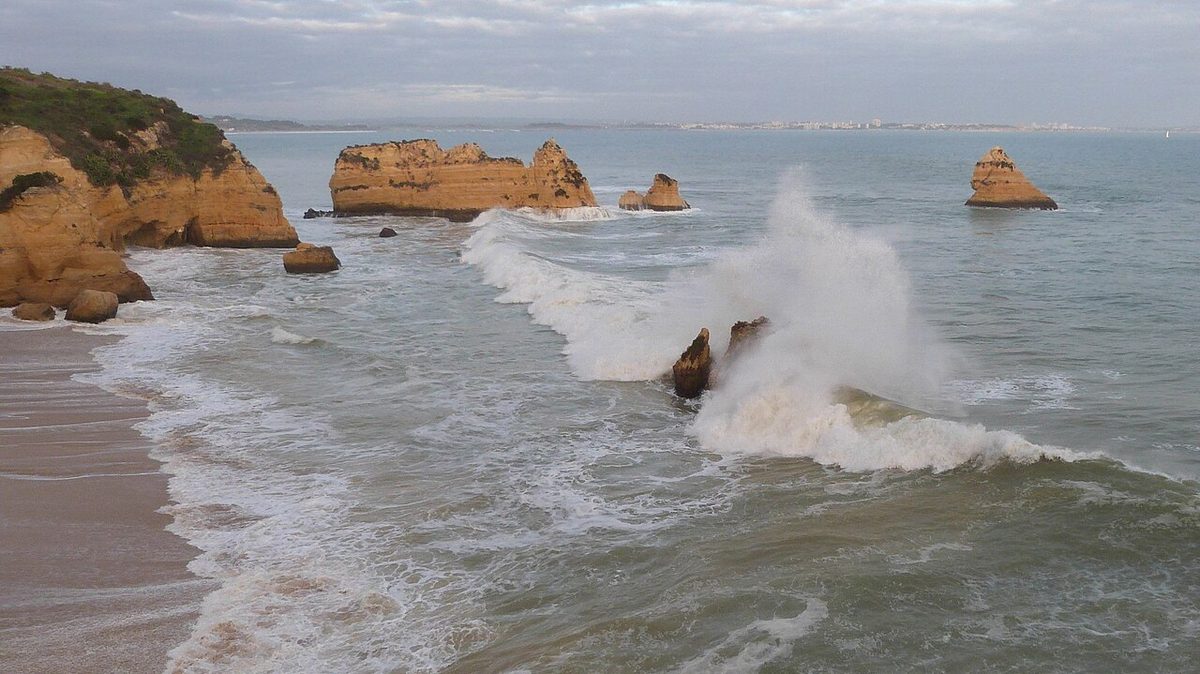
Arrifana, Amado, Bordeira, Monte Clérigo and Odeceixe form one of the most consistent surf coasts in Europe, with schools in Sagres, Carrapateira and Aljezur running beginner lessons year-round. The water is cold — a wetsuit is not optional, even in August — and the rips are strong enough that swimming outside patrolled hours is genuinely dangerous.
Verdict: the best place in the Algarve to learn to surf, and the worst place to assume you can just go for a swim.
The Rota Vicentina
A long-distance path network running north from Cape St Vincent, of which the Fishermen’s Trail follows the cliff edge on paths originally worn by people going down to fish off the rocks. It is sandy, exposed and slow, and the coastal scenery is the finest in Portugal. You can walk a day section without committing to the whole thing.
Inland: the Algarve most people drive past
Twenty minutes from any resort the landscape changes to cork oak, carob, almond and orange, and the villages stop having menus in four languages. In August the interior is meaningfully cooler than the coast in the evenings and dramatically cheaper at all times.
Silves
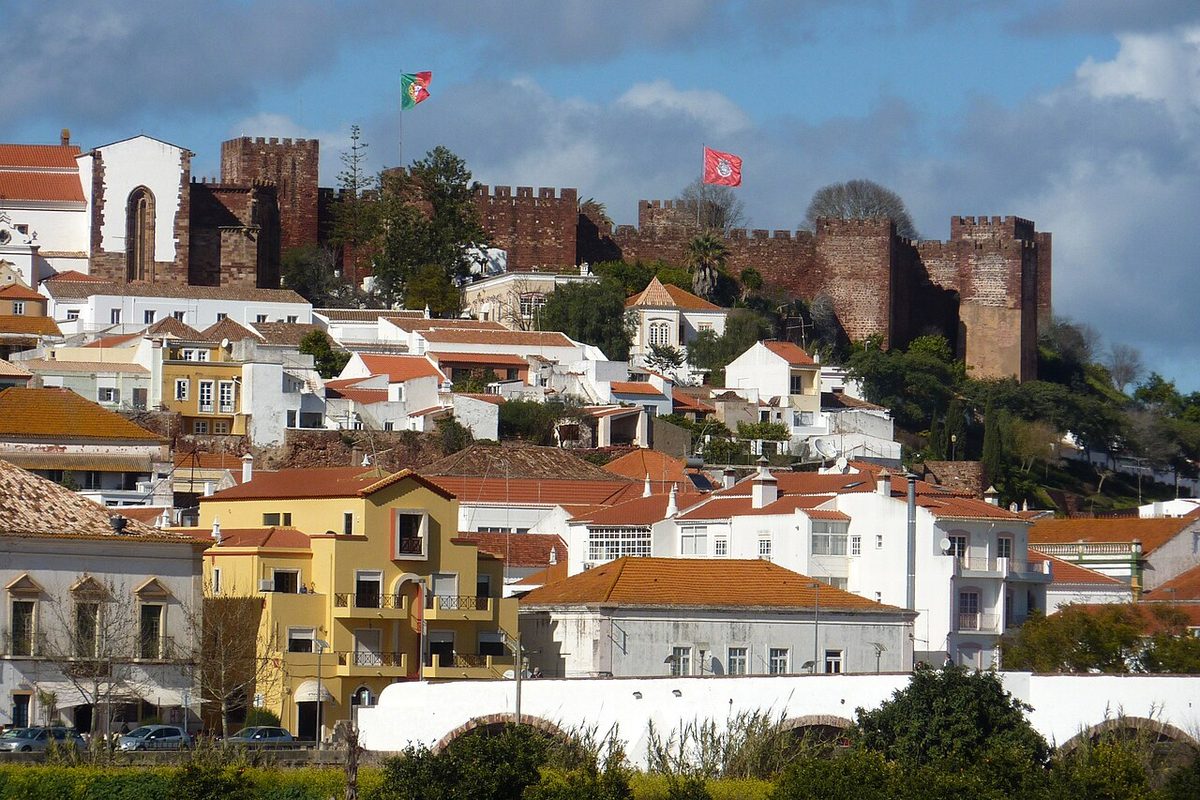
The Moorish capital of the region, on a hill above the river Arade, with a red sandstone castle that is the largest and best-preserved Moorish fortification in Portugal, a Gothic cathedral beside it and a whitewashed town below. Under Islamic rule this was a city of poets and libraries said to rival Córdoba; the Christian conquest in the thirteenth century and the 1755 earthquake between them reduced it to a small country town.
Cost: castle entry is a few euros. Verdict: the best half day inland, and the only place that makes the region’s Islamic centuries legible.
Monchique and Fóia
A spa village in wooded hills, below Fóia at 902 metres — the highest point in the Algarve, with a view on a clear day from the Atlantic to the Alentejo. The area was badly burned in the 2018 wildfires and the regrowth is visible and instructive. Local specialities are medronho, a fierce spirit distilled from strawberry-tree berries, and smoked ham.
Verdict: the best drive in the Algarve, and the coolest place to be in a heatwave.
Loulé, Alte and the market towns
Loulé has a neo-Moorish covered market that trades every morning and a much larger Saturday gypsy market, plus one of the most serious Carnival parades in Portugal. Alte, Salir and Querença are small white hill villages with springs, tiled churches and restaurants where a full lunch costs less than a beachfront sandwich.
Faro, and why almost nobody stays there
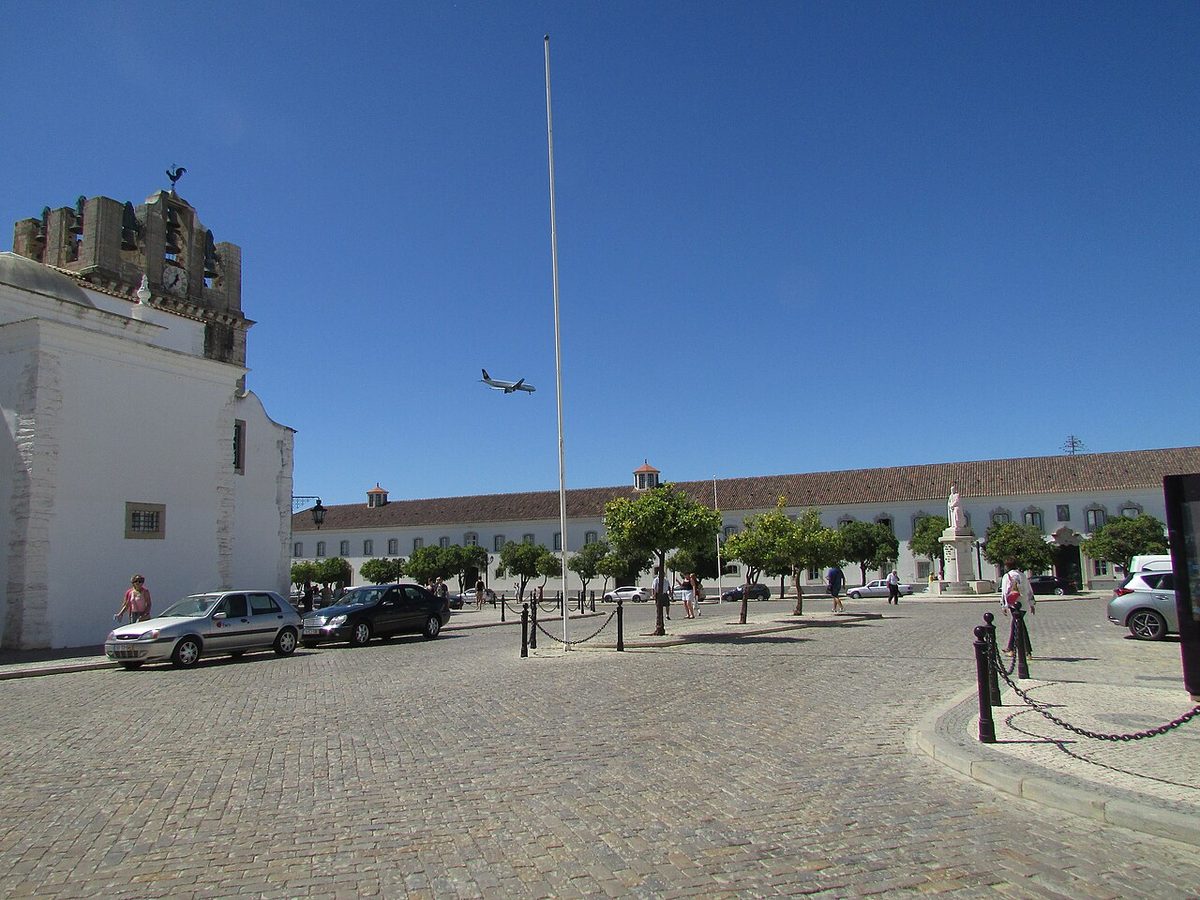
Nearly every visitor to the Algarve passes through Faro airport and about one in fifty stays in the city. That is a mistake, though a small one. Faro has a walled old town of cobbled lanes around a cathedral you can climb, a bone chapel lined with the remains of over a thousand monks, a working marina, and the departure point for the Ilha Deserta ferry. It has no beach of its own, which is the whole explanation.
Verdict: worth an afternoon on the way in or out, particularly if you have an evening flight and a hire car to return. Not worth a week.
The Algarve with children
This is one of the easiest places in Europe to travel with young children, and it is also easy to book the wrong half of it. The relevant variables are water temperature, the length of the walk down to the sand, and how far the nearest supermarket is.
The east is the answer for most families. The lagoon beaches around Tavira, Cabanas, Fuseta and Manta Rota have warm shallow water that stays shallow a long way out, flat access from the ferry or the boardwalk, and towns you can walk across in ten minutes. The ferry crossing to an island beach is itself an event for a five-year-old, and the sandbars are wide enough that you are never crowded.
The central coves need thought. Praia da Marinha, Camilo and Dona Ana are beautiful and are reached by long, steep wooden staircases. With a pushchair, a cool box and beach toys that becomes an expedition. Meia Praia at Lagos, Praia de Alvor and Praia da Rocha are the flat-access alternatives on the same coast, all excellent and all large enough not to feel packed.
The west is not a family swimming coast. Cold water and strong rips. Wonderful for older children who want to learn to surf, and unsuitable for paddling toddlers.
Practicalities that help: Portuguese restaurants are genuinely welcoming to children and nobody minds a toddler wandering between tables; most will do a half portion (meia dose) on request, which is often enough for two small children. Grilled chicken, plain grilled fish, rice and chips are on every menu. Sun is the real hazard rather than anything else — the UV index here in July and August is high enough that the middle of the day is genuinely best spent indoors or under cover, which is also when the beaches are worst anyway.
The water parks and marine parks between Albufeira and Quarteira do their job well on the day when nobody can face more sand. They are also expensive and interchangeable with equivalents anywhere in Europe, so use them as a release valve rather than a plan.
Walking and cycling: the Algarve on foot
Away from the beaches, this is a much better walking region than its reputation allows, and the season for it is the opposite of the beach season — October to May, when it is cool enough to move and the hills are green.
The coast paths
The Seven Hanging Valleys is the famous one, and the rest of the central cliff coast is threaded with shorter linked sections that let you walk between coves for as long as you feel like. On the west, the Fishermen’s Trail component of the Rota Vicentina hugs the cliff edge on sandy paths, is harder work than the distances suggest and is the best coastal walking in Portugal. Day sections around Carrapateira and Odeceixe give you the experience without the logistics of a multi-day route.
The Via Algarviana
A waymarked long-distance route running roughly 300 kilometres across the interior from Alcoutim on the Spanish border to Cape St Vincent, through cork oak forest, abandoned schist villages and the Monchique and Caldeirao hills. It is almost entirely unvisited, accommodation along it is sparse and simple, and it is the closest thing the Algarve has to wilderness walking.
Cycling
The Ecovia do Litoral runs the length of the coast from Cape St Vincent to Vila Real de Santo Antonio — about 214 kilometres, mostly flat, on a mixture of dedicated path and quiet road, with some sections considerably better signed than others. The interior is serious road-cycling country and the professional teams use it for winter training, which tells you something about both the roads and the January weather.
Verdict: if you are here between November and April and wondering what to do, this is the answer. The coast path in February with wildflowers out and nobody on it is a completely different holiday from the same coast in August.
Eating in the Algarve
The regional cooking is coastal and simple: things that came out of the sea that morning, cooked over charcoal, with potatoes and a tomato salad. It gets much better the further you go from the beachfront.
| Dish | What it is | Typical price | Where |
|---|---|---|---|
| Cataplana de marisco | Seafood stewed in a hinged copper pan, for two | €35–€50 for two | Everywhere; better in Olhão and Portimão |
| Sardinhas assadas | Charcoal-grilled sardines, June to September | €10–€15 | Portimão’s riverside grills |
| Amêijoas na cataplana | Clams with garlic, coriander, white wine | €12–€18 | The eastern lagoon towns |
| Polvo à lagareiro | Octopus roasted with olive oil and garlic | €16–€22 | Santa Luzia, which specialises in it |
| Frango piri-piri | Grilled chicken with chilli oil | €8–€12 | Inland churrasqueiras |
| Dom Rodrigo | Egg, almond and cinnamon sweet in foil | €1–€2 each | Any Algarve pastelaria |
Prices checked September 2026. The universal Portuguese rules apply: a bica at the counter is €0.80–€1.20, the prato do dia at lunch is €9–€15 with soup and wine, and the couvert costs €2–€5 and can be declined. The Algarve-specific rule is that fish is often priced by the kilogram rather than the portion, so ask what the piece you are being shown will actually cost before you agree to it. This is not a scam; it is how fish is sold. It does produce a lot of surprised faces at the end of the meal.
Golf, resorts and the other Algarve
The stretch between Vilamoura and Quinta do Lago holds one of the densest concentrations of golf courses in Europe, along with the marinas, gated resorts and high-end restaurants that go with them. It is a genuinely well-run product and it is also almost entirely disconnected from the Portugal outside its gates.
Verdict: if golf is the reason for the trip, this is the right part of the coast and October to May is the right season, because summer is too hot to play well. If it is not, there is no reason to base yourself here — the beaches are good rather than remarkable and everything costs more.
Markets, festivals and the local calendar
Two kinds of market operate here and visitors regularly confuse them. The mercado municipal is a permanent covered food market, open most mornings, busiest on Saturday — Olhao’s twin waterfront halls and Loule’s neo-Moorish building are the two worth travelling for. The monthly or fortnightly open-air market, often called a gypsy market, is a large outdoor affair selling clothes, tools, plants, livestock and household goods, held on fixed dates in each town. The second is more fun and has far less food.
| When | What | Where |
|---|---|---|
| January–February | Almond blossom across the interior hills | Inland, especially around Loule and Tavira |
| February | Carnival parades, the largest in the region | Loule |
| Easter | Mae Soberana procession, a Christian festival with pre-Christian roots | Loule |
| June | Sardine season begins; Santo Antonio and Sao Joao street parties | Coastal towns |
| July–August | Seafood festivals; the big one at Olhao | Olhao, Portimao |
| August | Medieval fair inside the castle walls | Silves |
| September | Harvest, the warmest sea of the year, crowds thinning | Everywhere |
| November | Chestnut and medronho season | Monchique |
The Silves medieval fair in August is the one to plan around if the dates suit: the whole walled town dresses up, the castle grounds fill with stalls and displays, and it is enthusiastically done rather than cynical.
Wine, medronho and what to drink
The Algarve has four small protected wine denominations — Lagos, Portimao, Lagoa and Tavira — and for most of the twentieth century the wine they produced was, politely, for local consumption. That has changed substantially in the last two decades, with a handful of estates now making serious reds from Negra Mole, Touriga Nacional and Syrah, and several open for tasting between Lagoa and Silves.
The regional spirit is medronho, distilled from the fruit of the strawberry tree that grows wild all over the Monchique and Caldeirao hills. Good medronho is clean and faintly fruity at around 45 per cent; bad medronho, of which there is a lot, is homemade and rough. Buy it from a licensed distiller rather than a roadside stall. Amendoa amarga, an almond liqueur, is the sweeter alternative and turns up as a complimentary shot at the end of meals.
Beyond the region, the everyday drinking is the same as the rest of Portugal: vinho verde from the far north at around €10 a bottle in a shop, Alentejo reds from just inland, and beer — Sagres, which is brewed nationally and named after the headland, or Super Bock.
After dark
Algarve nightlife divides cleanly and it is worth knowing which side of the line you are booking. Albufeira’s Montechoro strip and the Vilamoura marina run late, loud and international, and they serve that market efficiently. Lagos has a younger, backpacker-and-surfer bar scene in the old town that is busy without being industrial. Everywhere else — Tavira, Olhao, Carvoeiro, Alvor, the whole interior — the evening consists of a long dinner, a walk along the front and a drink somewhere quiet, which for most visitors is the better arrangement.
Live music is thinner on the ground than in Lisbon or Porto, with two exceptions worth seeking out: the summer festival programmes that most municipalities run in their main squares, which are free and genuinely local, and the fado nights that a handful of restaurants in Tavira, Faro and Lagos put on out of season.
When to go: the Algarve month by month
This is the sunniest region in mainland Europe and the shoulder seasons are unusually long, which means the timing decision has more room in it than in most places.
| Period | Weather | Sea | Crowds & prices | Verdict |
|---|---|---|---|---|
| Nov–Feb | 12–18 °C, sunny spells, some heavy rain | Cold | Very quiet; many resorts shut | Walking, golf, almond blossom in Jan–Feb |
| March–April | 17–21 °C, wildflowers | Cold but improving | Quiet, cheap | The best walking months |
| May–June | 22–27 °C, reliable sun | Warming, swimmable by June | Filling up, prices climbing | The sweet spot with July’s weather |
| July–August | 28–33 °C, sometimes far higher inland | Warmest | Full; prices at peak | Book everything; start days early |
| September | 25–29 °C | Warmest of the year | Thinning after the first week | The best month, narrowly |
| October | 21–25 °C, first rain | Still swimmable | Quiet and cheap again | Excellent value |
September is the narrow winner: the sea is at its annual warmest because it has had all summer to heat up, the August crowds have gone home, and accommodation prices fall off their peak in the second week. May and June are close behind with slightly cooler water.
The Algarve in winter
Winter here is mild, sunny more often than not, and completely different from the summer product. The coast path walking is at its best, the almond trees flower in January and February, the golf courses are playable, and a long lunch outside in the sun in December is entirely normal. What you do not get is a beach holiday: the sea is cold, many beach restaurants and some hotels close from November to March, and the western resorts in particular can feel shuttered.
Rain, when it comes, arrives in concentrated bursts rather than drizzle. A wet week in January is possible; so is a fortnight of unbroken sun.
Verdict: excellent for walkers, golfers and anyone escaping a northern European winter. Poor for anyone whose plan involves swimming.
Across the border, and the Alentejo above
The Guadiana river is the Spanish border, and from Vila Real de Santo Antonio a small ferry crosses to Ayamonte in about fifteen minutes; the road bridge upstream carries the motorway. Spain is on a different clock — one hour ahead — which catches people out on the return ferry more often than you would think. Ayamonte and Huelva province are a genuine day out, and the Spanish tapas price level is noticeably lower than the Algarve’s beachfront.
North of the Algarve, the Alentejo begins almost immediately: cork plantations, wheat, white villages, and the coastal stretch around Zambujeira do Mar and Vila Nova de Milfontes that is effectively a continuation of the Costa Vicentina with fewer people again. If you are driving between the Algarve and Lisbon, going up the coast road rather than the motorway turns a three-hour transfer into a day worth having.
What to skip in the Algarve
None of this is bad. All of it takes more from the trip than it gives back.
Swimming out to Benagil
Not merely inadvisable — banned, with or without a float, under the current maritime edict (checked September 2026). The distance from the nearest beach is longer than it looks, the boat traffic in and out of the arches is constant, and the current along that stretch of coast is stronger than the calm surface suggests. Take a guided kayak.
The big catamaran cave cruises
They cannot enter the caves. That is the entire point of the trip, and the marketing photographs are shot from small craft. If a boat holds eighty people, it will show you the coastline from a hundred metres out and play music at you. Pay a little more for a rigid inflatable.
Booking a hire car and then never leaving the resort
A common and expensive pattern: the car costs €180–€300 a week mid-season plus fuel and tolls, sits in a hotel car park for six days, and does one supermarket run. Either commit to using it — the interior, the west coast, the eastern lagoon towns all need one — or skip it and use taxis and the train, which is cheaper than most people assume.
Praia da Marinha at midday in August
The beach is genuinely one of the best in Europe and its car park holds a few dozen cars. By ten in the morning in high season it is full, the overflow parking is a long walk in full sun, and the sand below is shoulder to shoulder. Go at 08:30 or at 17:00, or walk in along the coast path from Benagil.
Zoos, water parks and the “Portugal experience” evenings
They are competently run and they are the same anywhere. If you have children who need a day off the sand, fine. If you are choosing between a water park and a boat along the cliffs, the boat is not a close call.
Assuming the west coast is a swimming coast
The Atlantic at Sagres and north of it is cold, rough and rip-prone in a way the sheltered central coves are not. People arrive expecting the same sea they had in Albufeira and get a shock, or worse. Beautiful for walking and surfing, dangerous for a casual swim.
Getting around, and what it costs
The Algarve is the one part of Portugal where a car genuinely helps, because the good things are spread along 150 kilometres and the best of them are not on a bus route. But there are alternatives and they are better than their reputation.
The regional train runs the length of the coast from Lagos to Vila Real de Santo António via Faro, is slow, cheap and scenic, and stops in or near most of the towns worth visiting. The A22 motorway runs parallel and is electronic-toll only with no booths — you cannot pay cash, and a hire car without a transponder will generate charges that reach you weeks later with administration fees attached. Take the transponder the rental company offers; it is the single most common Algarve admin mistake.
From Lisbon, Faro is 280 kilometres and about three hours by road, with buses and trains taking a little longer. Faro airport is fifteen minutes from the city and well served by low-cost airlines from across northern Europe.
| Daily budget | What it covers | Per person, per day |
|---|---|---|
| Lean | Guesthouse or hostel, self-catering breakfast, prato do dia, beach, bus or train | €60–€85 |
| Comfortable (for two) | Mid-range hotel or apartment, one boat trip, dinner with wine | €150–€200 for the pair |
| Hire car | Mid-season week, plus fuel and electronic tolls | €180–€300 a week |
| Add a cave boat trip | Small-boat or guided kayak, per person | €30–€40 |
Figures checked September 2026, excluding August, when accommodation on this coast roughly doubles and in some resorts more than that.
Where to stay: matching a base to the trip
Because the region is long and the coasts are different, the base matters more here than almost anywhere else in Portugal.
| If you want | Base yourself in | Why |
|---|---|---|
| The cliffs and cave scenery | Lagos or Carvoeiro | Central, walkable, boats leave from both |
| A quiet family week with warm water | Tavira or Cabanas | Sandbar beaches, shallow sea, low-key towns |
| Surfing and big landscape | Sagres or Aljezur | On the surf coast, ten minutes from several breaks |
| Nightlife | Albufeira | It is where that market is concentrated, for better and worse |
| Golf | Vilamoura or Quinta do Lago | The courses are here and so is everything built for them |
| Cheap, cool and Portuguese | Silves or Loulé | Inland, half the price, twenty minutes from the sea |
Hotel, apartment or villa?
The Algarve sells three quite different products under the same search results, and the price comparison between them is misleading unless you account for what each includes.
Hotels concentrate in the resort strip and around the golf areas, and the large ones are generally good value in shoulder season and priced aggressively in August. Aparthotels and self-catering apartments dominate the market and are the sensible choice for a week or more, because eating breakfast and one other meal in cuts the daily cost substantially and every town has a supermarket. Villas with private pools are widespread inland and behind the resorts, are excellent value for a group of six or eight, and almost always require a car — a villa “ten minutes from the beach” means ten minutes by road.
Two things to check before booking anything. Air conditioning is not universal in older apartments and matters in July and August; and a great many places advertise a pool that turns out to be shared with thirty other units. Ask.
Practical notes worth knowing before you land
Faro airport is small, efficient and gets very congested at the peak summer changeover on Saturdays; allow more time than the airline suggests for a Saturday afternoon departure in August. Hire car desks are in the terminal, and the queue at 22:00 on a Friday in July is long enough to be worth pre-registering for.
Tipping is modest and not obligatory: rounding up, or five to ten per cent for a good meal, is normal and nobody chases you for it. Tap water across the Algarve is safe to drink, though it is heavily chlorinated in some coastal towns and most residents drink bottled by preference rather than necessity. Pharmacies are excellent, widely distributed and can deal with most minor problems without a doctor; the green cross sign shows the rota for the one open overnight.
Mobile coverage is good along the coast and patchy in the Monchique and Caldeirao hills, which matters if you are walking the interior routes. And the region is genuinely safe: petty theft from cars at beach car parks and trailhead laybys is the one realistic risk, so leave nothing visible, including in the boot.
Itineraries that work
The most common Algarve planning mistake is booking one hotel for ten days and then driving ninety minutes each way to see things. Two bases beats one almost every time.
| Length | Plan | Car? |
|---|---|---|
| 5 days | All central: Lagos or Carvoeiro. Cave boat, Seven Hanging Valleys, Ponta da Piedade, two beach days, Silves for a morning | Helpful, not essential |
| 7 days | Four nights central, three east in Tavira. Add an island beach, Olhão market and the lagoon boat | Yes |
| 10 days | Three east, four central, three west at Sagres or Aljezur. All three coasts, plus a day inland at Monchique | Yes |
| Long weekend | Fly to Faro, stay in Tavira, do one island and one lagoon trip and nothing else | No |
If you are combining the Algarve with the rest of the country, note that Lisbon is three hours away by road and that the Alentejo sits between them — which makes a Lisbon-to-Algarve trip with two nights inland a considerably better route than driving it in one go.
Frequently asked questions
What is the best time to visit the Algarve?
September, narrowly, because the sea is at its warmest after a whole summer of heating and the August crowds have gone. May and June are close, with slightly cooler water and reliable sunshine. October is excellent value. July and August are hot, full and expensive, and the inland temperatures during a heatwave can exceed 40 °C.
Can you still swim to the Benagil cave?
No. Swimming to the cave is banned with or without a flotation device, landing on the sand inside is banned, and self-guided kayak or paddleboard rentals may not enter, under the Maritime Authority’s Edital 019/2024 as amended in 2025 (checked September 2026). You can enter by boat or on a guided kayak, with groups limited to five or ten minutes inside.
Do you need a car in the Algarve?
Not for a beach week in one town, and yes for anything that involves seeing the region. The coastal train links Lagos, Portimão, Faro and Tavira cheaply, and taxis fill short gaps. But the interior, the west coast and the best coves are effectively unreachable without one. If you do hire a car, take the electronic toll transponder — the A22 has no cash booths.
Which part of the Algarve is best for families?
The east. The lagoon and sandbar beaches around Tavira, Cabanas and Fuseta have the warmest and shallowest water in the region, the towns are calm, and the ferries to the islands are an event in themselves. The central cliff coves are beautiful and involve long staircases, which is a real consideration with pushchairs and beach gear.
Is the Algarve expensive?
It is Portugal’s most expensive region in August and among its better-value ones in October. A set lunch inland is €9–€15, grilled fish on the coast €15–€25, a hire car €180–€300 a week mid-season, a guided cave kayak €30–€40 (all checked September 2026). Accommodation is what swings: the same apartment can cost three times as much in the first week of August as in the last week of September.
How many days do you need in the Algarve?
Five for the central coast alone, seven to add the eastern lagoon, ten to include the west and a day inland. Fewer than four and you will spend a disproportionate share of the trip on the airport road.
Is the sea warm in the Algarve?
It depends entirely which coast. The eastern lagoon shallows are the warmest water in mainland Portugal and comfortable from June to October. The central coves are sheltered and swimmable from about June. The west coast, from Sagres northwards, is open Atlantic — cold enough for a wetsuit even in August, with strong rips.
What is there to do in the Algarve besides beaches?
Walk the Seven Hanging Valleys coast path or a section of the Rota Vicentina, visit the Moorish castle at Silves, take a lagoon boat through the Ria Formosa, drive up to Fóia at 902 metres, go to the Saturday market at Loulé or Olhão, learn to surf on the west coast, or spend a morning on a working salt pan. The interior in particular is almost entirely undervisited.
Which is better, the eastern or the western Algarve?
Different products. The east is warm, flat, quiet and cheap, with sandbar beaches and lagoon towns. The west is dramatic, windy, cold in the water and almost undeveloped, with the best walking and surfing. The central strip between them has the famous cliffs and most of the crowds. On a first visit, go central; on a second, go east.
Is the Algarve good in winter?
For walking, golf and sunshine, yes — daytime temperatures of 15–18 °C with long sunny spells are normal, and the coast path is at its best. For swimming and beach life, no. Many beachfront businesses close between November and March, particularly in the western resorts, so check what is open where you are staying.
How do I get from Lisbon to the Algarve?
By car it is 280 kilometres and about three hours to Faro. Trains and long-distance buses run the same route and take a little longer. Flying between the two makes no sense once airport time is counted. If you have a spare day, break the drive in the Alentejo rather than doing it in one push.
Is the Algarve too crowded now?
In August, on the central coast, yes — that is a fair description of Albufeira, Praia da Rocha and the Benagil car park. In June or late September the same places are pleasant. And the crowding is extremely uneven: the eastern lagoon towns and the whole interior stay quiet even in high season, and the west coast north of Sagres is empty most of the year. The Algarve has a crowding problem in about a fifth of its area for about six weeks of the year.
What is the best boat trip in the Algarve?
A small rigid inflatable along the cliffs from Portimao, Benagil or Albufeira, holding eight to twelve people, going into the caves rather than past them. Guided kayak trips are typically €30–€40 a head (checked September 2026) and get closer still. The large catamarans are cheaper and cannot enter the caves, which is the whole point of the trip. In the east, the flat-bottomed lagoon boats through the Ria Formosa are a different and equally good experience for less money.
Do I need to worry about tolls on the A22?
Yes, because there are no toll booths at all on the Algarve motorway — charging is entirely electronic. Take the transponder your hire company offers when you collect the car; without it, charges are matched to the number plate later and reach you with administration fees attached, sometimes months afterwards. The parallel N125 is free, slower, and passes through every town.
Can you visit the Algarve without flying into Faro?
Yes. Lisbon to Faro is 280 kilometres and about three hours by road, with trains and long-distance coaches running the route daily, and Seville is a comparable distance from the eastern end. Flying into Lisbon and driving south, with a night in the Alentejo on the way, is a better trip than a direct flight for anyone who wants to see more than the beach.
Is the Algarve worth visiting outside summer?
For walking, cycling, golf and food, it is arguably better. Daytime temperatures between November and March typically sit around 15–18 °C with long sunny spells, the coast paths are at their best, the almond blossom comes out in January and February, and prices fall to a third of the August level. What closes is the beach economy — expect shuttered beach restaurants and some hotels, particularly in the western resorts.
What is the prettiest town in the Algarve?
Tavira, for most people, with its two riverbanks, Roman bridge foundation and covered market. Silves is the most interesting historically, with the red Moorish castle above the whitewashed streets. Cacela Velha — a church, a fort and a cafe on a bluff above the lagoon — is the loveliest place in the region and has essentially nothing in it, which is the point. Lagos has the best combination of a proper old town and outstanding beaches within walking distance.
How far is the Algarve from Seville?
About two and a half hours by road from Seville to Faro, crossing the Guadiana at Vila Real de Santo Antonio. Spain is one hour ahead of Portugal, which is the detail that catches people out on day trips in both directions. Flying into Seville and driving west is a perfectly reasonable alternative to Faro if the fares work out better.
What should I pack for the Algarve?
Sun protection above everything: the UV index in July and August is high enough that a hat and a shirt matter more than sunscreen alone. Shoes with grip if you plan to walk the coast paths, which are sandy and sloping rather than technical. A warm layer regardless of month — Cape St Vincent and the west coast are windy year-round and the evenings cool quickly. A wetsuit is worth renting rather than packing if you are surfing the west. And a European plug adapter and a refillable water bottle; the tap water is safe.
If you are still choosing dates, the numbers behind the seasonal advice on this page are laid out in full in our month-by-month guide to visiting Portugal, including why the sea here is warmest in September and why the west coast never really warms up at all.
The beaches get their own page, because there are well over a hundred of them and ranking photographs is not much help: our guide to the best beaches in the Algarve sorts them by what each is actually good for, with the access and staircase detail most lists omit, and an honest account of a current disagreement over whether Praia do Camilo is open.
Picked a coast already but not a bed yet? Our where to stay in Algarve guide matches a base to your trip — nightlife in Albufeira, golf in Vilamoura, a walkable old town in Lagos or Tavira — with drive times from Faro airport and honest price bands for each.
Travelling with children? Our guide to Portugal with kids picks the calmest family beaches on the south coast, compares Zoomarine and the water parks with 2026 prices, and explains the Benagil cave rules before you promise anyone a swim.
Where to go next
The Algarve is one of seven regions and the one most often visited on its own, which is a shame given how close the rest of the country is. Our guide to Portugal region by region sets out how many days each area needs and which pairings actually work.
The obvious combination is a few days in the capital first: our Lisbon planning guide covers the city district by district, and our sister site lisbontourism.org goes deeper still, with an Évora day trip that makes a natural stop on the drive south and a car hire briefing that covers the Portuguese toll system in detail. If you would rather head north, our Porto guide covers the other end of the country.
Photo credits
- The lighthouse and cliffs at Cabo de São Vicente, the south-western corner of Europe — Rui Glória, CC BY-SA 4.0, via Wikimedia Commons
- The sea entrance to the Algar de Benagil — Kolforn, CC BY-SA 4.0, via Wikimedia Commons
- Winter surf breaking over the stacks at Praia Dona Ana, Lagos — Peter Broster, CC BY 2.0, via Wikimedia Commons
- The riverside market building and moored boats at Tavira — Björn Ehrlich, CC BY 3.0, via Wikimedia Commons
- The red sandstone Moorish castle above the white town of Silves — muffinn from Worcester, UK, CC BY 2.0, via Wikimedia Commons
- Largo da Sé in Faro’s walled old town, with an aircraft on approach to the airport — Kolforn, CC BY-SA 4.0, via Wikimedia Commons
All prices, ferry arrangements and cave rules were checked in September 2026 against the operators’ own sites and the Maritime Authority’s published editais, and will change; the Benagil restrictions in particular have been amended twice since 2024, so confirm the current position with your operator before booking. Last updated: 13 September 2026.