Most “getting around Portugal” guides answer the question for one traveller: the one with a hire car doing a road trip. That leaves out the couple splitting a week between Lisbon and Porto by train, the family flying into Faro and never renting a car at all, and the visitor whose itinerary suddenly includes a domestic flight because Madeira and the Azores simply aren’t reachable any other way. Getting around Portugal properly means matching the mode to the trip, not defaulting to a rental desk because that’s what every guide assumes.
The short version: mainland Portugal’s big cities and the main intercity corridor (Lisbon–Coimbra–Porto) are genuinely well served by train, so a car is optional there and often a hindrance in narrow old-town streets. Anywhere off that spine — the Algarve’s smaller towns, the Douro’s quinta country, most of the Alentejo — a car earns its cost quickly. And two whole regions, Madeira and the Azores, are islands: getting there means a flight, not a decision. Airport-to-city transfers within Lisbon, Porto and Faro are covered in each city’s own planning guide; this one is about the journeys between regions and the decisions — train versus car, fly versus ferry — that shape an itinerary before you’ve booked a single hotel.
Getting around Portugal: the fast answer
The table below compares the main options for the routes most visitors actually need. Details, prices and the exceptions follow it.
| Route or need | Best mode | Time | Typical cost | Book how |
|---|---|---|---|---|
| Lisbon–Porto | Alfa Pendular train | 2h39–2h50 | €35.70 tourist class (promo fares from ~€16) | cp.pt, up to 60 days ahead for promos |
| Lisbon–Faro / Algarve | Intercidades train or bus | ~3h30 by either | Train ~€22–25; bus similar or slightly less | cp.pt or Rede Expressos/FlixBus |
| Porto–Douro Valley (Pinhão) | Regional/Intercidades train | ~2h20 from São Bento | ~€12.45 | cp.pt; only ~2 direct trains/day |
| Within Lisbon or Porto | Metro, tram, bus, on foot | Minutes | ~€1.50–2 per ride; day passes available | Viva Viagem (Lisbon) / Andante (Porto) card |
| Small towns, quintas, coastal villages | Hire car | Varies | €180–300/week plus tolls and fuel | Book ahead for August |
| Mainland–Madeira | Flight | ~1h45 from Lisbon | Varies by season and carrier | TAP, easyJet, Ryanair |
| Mainland–Azores (São Miguel) | Flight | ~2h25 from Lisbon | Varies by season and carrier | TAP, SATA Azores Airlines |
| Between Azores islands | SATA flight or Atlânticoline ferry | Varies by island pair | Ferry cheaper; denser network in summer | sata.pt / atlanticoline.pt |
Trains: the CP network, explained
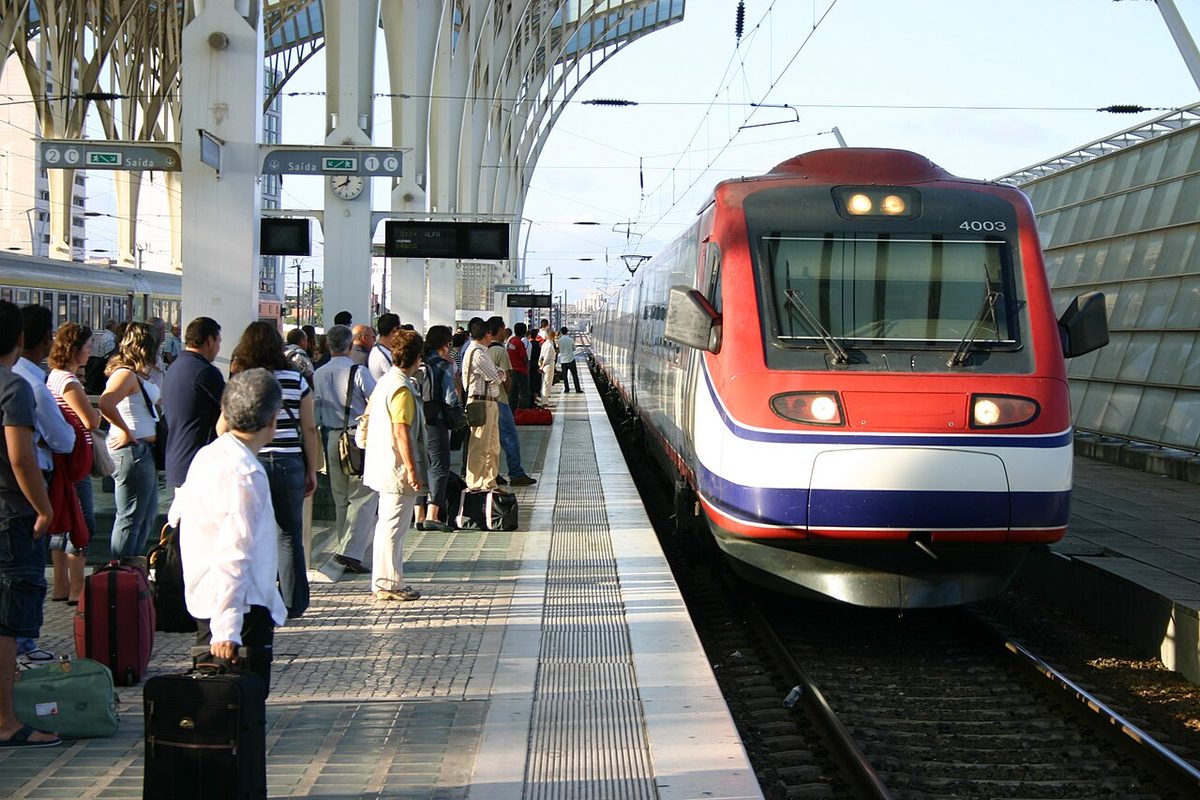
Comboios de Portugal (CP) runs four tiers of service, and knowing which one you’re booking matters more than the timetable itself — the fare difference between tiers on the same route can be substantial, and the slower option is sometimes genuinely more comfortable if it has more legroom or fewer stops than expected. Alfa Pendular is the tilting, air-conditioned flagship, calling at major cities only — Lisbon, Coimbra, Porto, and a branch south to Faro is served by the slower Intercidades tier instead, since there’s no Alfa Pendular service to the Algarve. Intercidades covers the next tier of cities with more stops and a bit less comfort. Regional and Urbano services handle everything else, including the commuter lines around Lisbon and Porto and slower branch lines like the Douro.
Lisbon–Porto is the network’s showcase route: Alfa Pendular covers it in 2h39–2h50 for €35.70 in tourist class or €49.90 in first (Conforto), with 15–19 departures a day from Santa Apolónia and Oriente. Intercidades is roughly 20 minutes slower and about €28.05. Both tiers release promotional fares from around €16 up to 60 days ahead — non-refundable and prone to selling out, but worth checking before defaulting to the standard fare.
Lisbon–Faro runs on Intercidades only, about 3h30 (one measurement gives 3h34), with five direct services a day from Oriente. ⚠ Fares here are inconsistently quoted even by reliable sources — expect somewhere in the €22–25 range in standard class, with the same advance-purchase discounts (up to 65% off) released 60–90 days ahead as the Lisbon–Porto route. Confirm the actual figure on cp.pt on the day, and don’t be surprised if two otherwise reliable booking sites show slightly different numbers for what is nominally the same train and the same fare class.
The Douro line, Porto São Bento to Pinhão, is the network’s most scenic run and its most restrictive: about 2h20, roughly €12.45 one-way, but only around two direct Intercidades departures a day (approximately 09:25 and 13:25). Sit on the right leaving Porto for the river views. Regional trains fill the gaps in the timetable but call at every stop, so budget considerably longer if you take one instead.
A few mechanics worth knowing before your first CP journey: buy tickets through the cp.pt website or app, at a station ticket machine, or at a staffed counter — all three show the same fares, but the app and machines avoid the counter queue that can build up before a popular departure. Alfa Pendular and Intercidades carriages have overhead luggage racks and dedicated space near the doors for large cases, plus at-seat power sockets and onboard Wi-Fi that works reliably in cities and drops out in tunnels and remote stretches. Bicycles travel free on most Regional and Urbano services but need a reservation and a fee on Alfa Pendular and Intercidades, and space is limited, so book the bike space when you book the seat rather than assuming it’ll be available on the day.

Seat reservations are compulsory on Intercidades and Alfa Pendular, so a printed or app ticket without an assigned seat number isn’t valid on its own — check the seat and coach number before boarding. Interrail and Eurail passes cover the CP network, but for a single-region trip the advance promotional fares are usually cheaper than a pass once you’ve counted the actual journeys. Stations themselves vary as much as the trains: Lisbon’s Gare do Oriente and Porto’s São Bento are destinations in their own right, the first a Santiago Calatrava structure of steel and glass, the second lined with azulejo tile panels depicting Portuguese history — arrive a few minutes early at either and it doesn’t feel like wasted time.
Buses: cheaper, slower, and reaching further than the railway
Rede Expressos is the national long-distance operator, with FlixBus running a competing network on the busiest intercity corridors. Lisbon–Porto takes roughly 3h to 3h30 by the fastest services, with fares from a few euros on early-booked promos up to around €20–25 at full price — genuinely cheaper than the train on a like-for-like fare, if a little slower. Lisbon–Faro runs a similar pattern: about 3h30 to 4 hours, priced the same way, with frequent departures in summer.
Where buses actually earn their keep is everywhere the railway doesn’t reach: inland Alentejo towns, most of the Algarve’s hill villages, the Peneda-Gerês approach roads, Sagres and the Costa Vicentina. These regional and local services can’t usually be booked online in advance the way the intercity coaches can — check the timetable posted at the stop or the municipal operator’s own site, and note that a genuine minority of rural routes run on school days only or drop to a skeleton timetable on Sundays.
Both Rede Expressos and FlixBus have their own booking apps and generally hold a printed or app ticket to the same standard as a boarding pass — arrive with time to find the right bay, since larger terminals like Lisbon’s Sete Rios have multiple platforms and companies departing close together. Long-distance coaches have onboard toilets and air conditioning as standard and a single mid-journey stop on longer routes; regional buses generally have neither, which matters more on a hot August afternoon than the timetable suggests. Luggage goes in a hold beneath the coach on the intercity services, loaded and unloaded by the driver rather than left to passengers, which is one small reason the coach can beat the train for a traveller with more bags than seats.
Route by route: the journeys most visitors actually take
Beyond the two headline routes above, a handful of shorter connections come up on almost every itinerary. None of these have a single dominant operator worth quoting a specific fare for months ahead, so treat the numbers below as a planning guide and check cp.pt or the relevant municipal operator nearer the time.
| Route | Mode | Approx. time | Notes |
|---|---|---|---|
| Lisbon (Rossio) – Sintra | CP suburban train | ~40 min | Every 15–20 min; a few euros each way on a Viva Viagem zone fare |
| Lisbon (Cais do Sodré) – Cascais | CP coastal train | ~40 min | Same line continues to Estoril; scenic, runs along the coast |
| Lisbon – Óbidos / Nazaré | Bus or car | ~1–1.5 hr | No direct train; Rede Expressos or a hire car both work |
| Lisbon – Évora | Train or bus | ~1h30 | Regional/Intercidades train or a similar-length coach |
| Porto – Braga | CP urban/regional train | ~1 hr | Frequent; also well served by bus |
| Porto – Guimarães | CP regional train | ~1 hr | Direct line; a common half-day trip from Porto |
| Porto – Aveiro | CP Intercidades/regional train | ~45–60 min | Frequent, on the main Porto–Lisbon line |
Which airport should you fly into?
Lisbon airport suits any itinerary centred on the capital, Sintra, Cascais or a Lisbon-to-Porto train trip, and it’s also the main hub for connecting on to Madeira or the Azores if your international flight doesn’t route there directly. Porto airport is the better choice if the north and the Douro are the priority — it saves a 2h39+ train ride you’d otherwise add at the start of the trip, though it leaves the Algarve a very long way off (Lisbon–Faro by road is about 280 km, roughly 3 hours, and there’s no fast rail link). Faro airport is the obvious choice for an Algarve-only trip and cuts out that same 3-hour transfer entirely; it’s a poor choice if Lisbon or Porto is also on the itinerary, since it sits at the opposite end of the country from both, and an open-jaw ticket (flying into one and out of the other) is often worth the small fare premium for anyone doing a genuine end-to-end mainland trip. For the islands, Funchal (Madeira) and Ponta Delgada (São Miguel, Azores) are self-contained entry points — almost nobody combines a mainland stay with an island one inside a single short trip, given the flight times involved, and it’s worth planning either archipelago as its own trip rather than a bolt-on to a mainland itinerary that’s already full.
Driving: rules, tolls and Via Verde
Portugal drives on the right, and EU driving licences are valid outright; most other nationalities can drive on their home licence for a limited period but should carry an International Driving Permit if their licence isn’t in Latin script. Speed limits are 50 km/h in built-up areas, 90 km/h on ordinary roads and 100–120 km/h on motorways depending on the road class, with signage in kilometres throughout. The legal blood alcohol limit is 0.5 g/L, dropping to 0.2 g/L for drivers with under a year’s experience — noticeably stricter than a beer-with-dinner assumption from home.
The toll system is where visitors most often get caught out, and it changed recently enough that a lot of the advice still online is now wrong. On 1 January 2025 Portugal abolished tolls on the former SCUT motorways, so the A22 across the Algarve (the Via do Infante), the A23 through the Beira Interior, the A24, the A25, the A13 and A13-1, the A4 Transmontana including the Marão tunnel and specified sections of the A28 north of Porto are now free to drive: nothing to pay, nothing to register, no invoice weeks later.
The motorways that still charge are the ones most itineraries actually lean on — in 2026, roughly €25.05 end to end on the A1 from Lisbon to Porto and €23.80 on the A2 from Lisbon to the Algarve for a car — and several of them are electronic-only, with no toll booths at all: the charge is read from a transponder as you drive through, and there is no cash option. A hire car therefore still needs either a fitted transponder or a pre-arranged toll account activated at pickup; an unregistered rental gets billed for those tolls days or weeks later through the rental company, generally with an added administration fee on top. Ask specifically at the counter that the transponder is switched on before you leave the depot.

Parking is the other recurring friction point, specifically in old-town centres built for carts rather than cars: Lisbon’s Alfama, Porto’s Ribeira and pretty much anywhere in the Algarve’s historic cores have narrow, one-way, cobbled streets that a first-time visitor should simply avoid driving into. Park on the edge and walk in; most old towns have a paid car park within a few minutes of the centre, and it will cost far less than the stress of reversing a rental car out of a lane built in the 1600s.
All the major international rental companies operate from Lisbon, Porto and Faro airports and most town centres, alongside Portuguese chains that are often cheaper for the same car class. The excess/deposit on the basic insurance included with a rental is typically several hundred euros, held on a credit card at pickup — a third-party excess-reduction policy bought in advance usually costs a fraction of the rental company’s own top-up cover for the same protection, and it’s worth comparing the two before you’re standing at the counter being offered the upsell. Roundabouts give priority to traffic already on the roundabout, as in most of Europe, and give-way markings at unmarked junctions in villages are not always obvious to a first-time visitor — slow down at an unmarked junction rather than assume you automatically have priority. Electric vehicle charging has expanded quickly along the motorway network and in city centres, but is still noticeably thinner in the Alentejo interior and parts of the Algarve away from the coast, so an EV rental needs a bit more route planning than a petrol or diesel one on a rural itinerary through those areas.
Domestic flights: when they’re worth it
Between mainland cities, flying rarely beats the train once airport transfers and check-in time are counted — Lisbon–Porto is under three hours centre to centre by Alfa Pendular, and a flight adds little beyond noise and a taxi fare at both ends. The exception is genuine: Madeira and the Azores are islands, and flying is not a preference but the only practical way to reach them for the vast majority of visitors. Lisbon–Funchal (Madeira) runs about 1h45; Lisbon–Ponta Delgada (São Miguel, Azores) about 2h25. TAP Air Portugal serves both from Lisbon, with SATA Azores Airlines specialising in the Azores routes and adding connections from Porto and other mainland cities on some schedules.
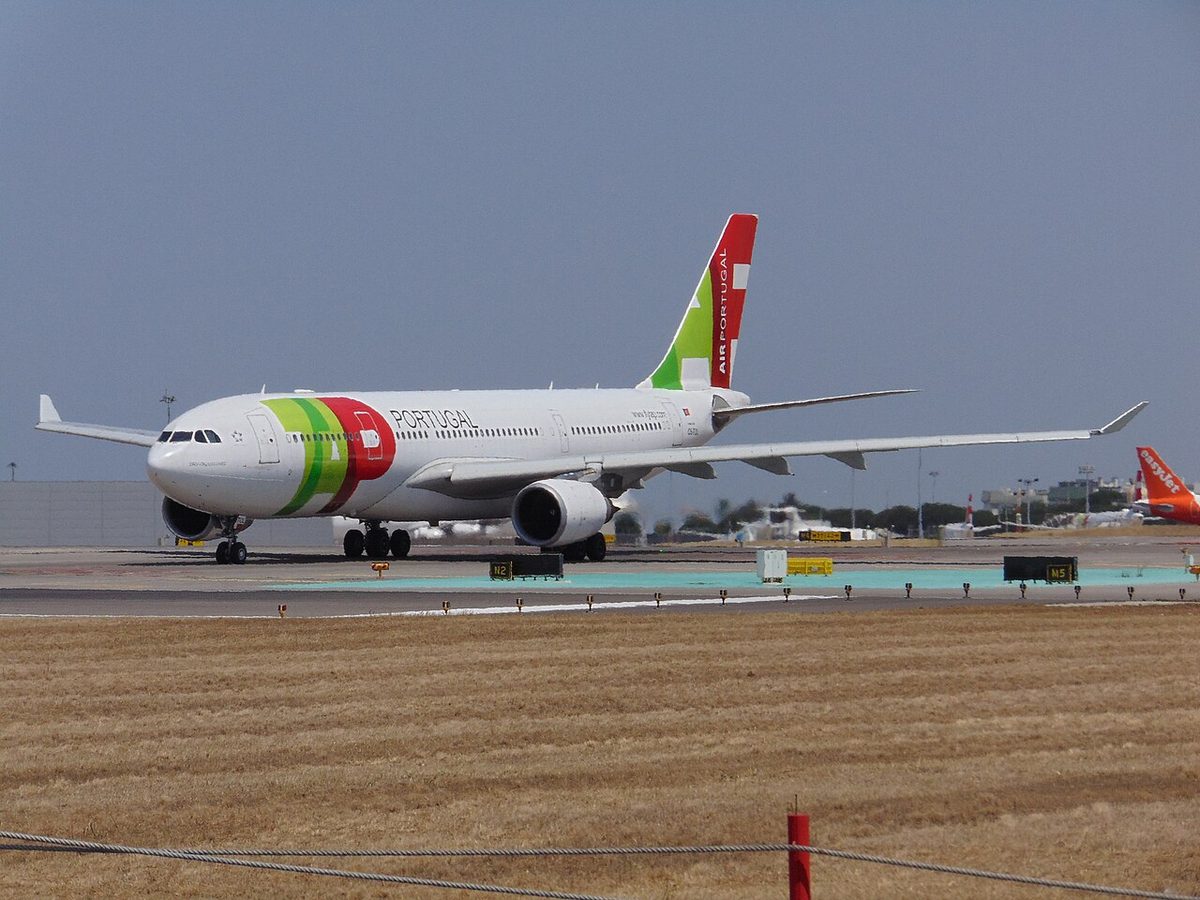
Within the Azores, getting between islands means either a SATA flight or an Atlânticoline ferry, and the choice really is seasonal: the inter-island ferry network is far denser in summer than in winter, when several routes thin out or stop running altogether and flying becomes the only reliable option between some island pairs. Madeira has no equivalent inter-island network in the same sense — Porto Santo is reached by a short flight or a ferry from Funchal, and that’s the only inter-island hop in that archipelago. Budget carriers including easyJet and Ryanair also serve Madeira and, to a lesser extent, the Azores from Lisbon and Porto alongside TAP, and prices swing hard with season and how far ahead you book — treat the flight itself as a line item worth shopping around on rather than assuming TAP’s fare is the only one available.
Ferries
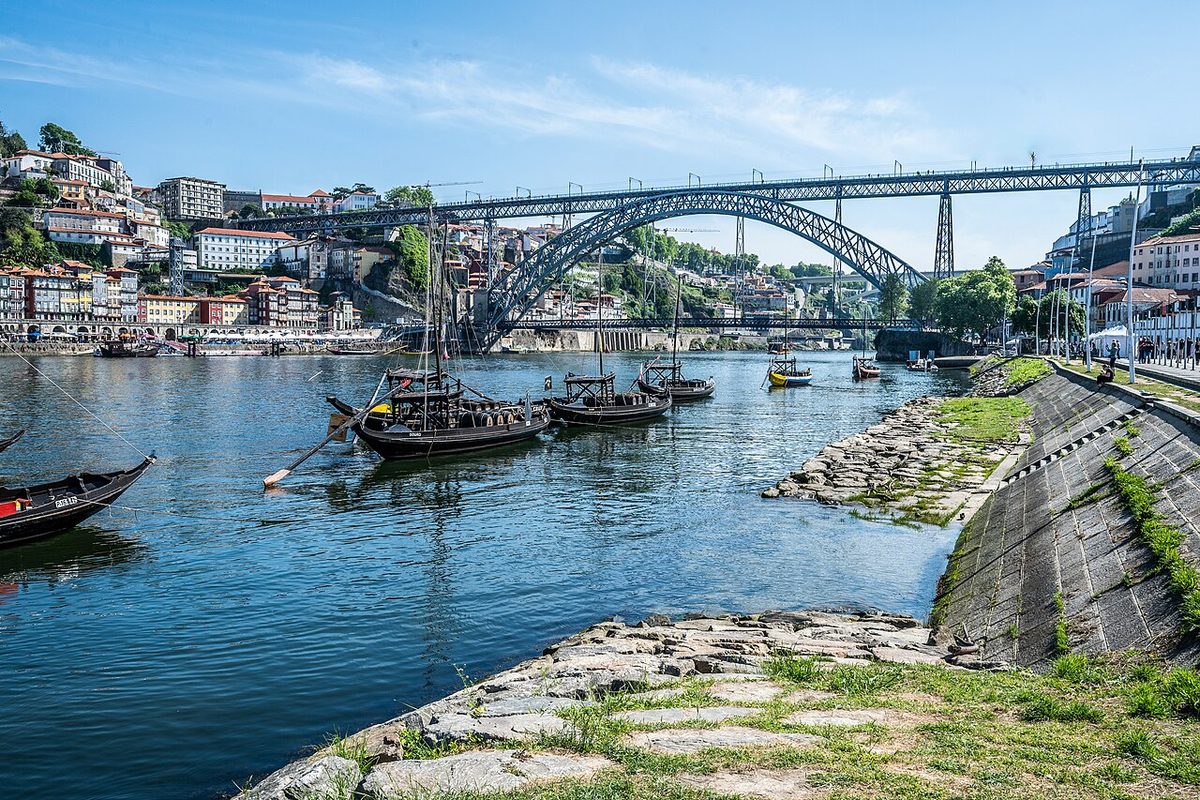
Beyond the Azores’ inter-island network, ferries in Portugal are mostly local rather than intercity. Lisbon’s Tagus crossings — Cacilhas, Seixal, Montijo and others — are genuine commuter routes that also happen to give visitors one of the best skyline views of the city for the price of a transit ticket. Further south, small boats from Setúbal reach the Tróia peninsula and the Sado estuary, home to a resident pod of around 30 bottlenose dolphins — a genuinely useful shortcut across the estuary as well as a wildlife-watching trip in its own right. None of these substitute for intercity travel the way the Azores network does; treat them as short, scenic add-ons rather than a way to cover ground. The Tagus commuter ferries run every 10–30 minutes depending on the route and time of day, cost about the same as a metro ride on the same Viva Viagem system, and need no advance booking — walk up, tap in, and take whichever boat is next. The Douro itself carries almost no scheduled passenger transport any more; the rabelo boats that once moved port wine downriver are now tour vessels rather than a way to travel between towns, and the train or a car remain the practical options along the valley.
Cycling, on your own bike or a rental
Portugal is a genuinely mixed cycling country: flat, well-surfaced river paths and coastal boardwalks in places, and steep, exposed climbs the moment you head inland, particularly around Lisbon and through the Douro. City bike-share schemes operate in Lisbon (Gira, with a strong lean toward electric-assist bikes given the hills) and in several Algarve and Alentejo towns, priced by the ride or the day and unlocked through an app. Longer-distance cycle touring is genuinely popular along the Ecovia do Litoral on the Algarve coast and sections of the Ecovia do Douro, both largely flat, purpose-built paths rather than shared roads. Renting a touring bike for a multi-day route is straightforward in Lisbon, Porto and the larger Algarve towns, and as noted above, taking your own bike on a CP train needs a reservation on the faster services but travels free and unbooked on Regional and Urbano trains.
Ride-hailing, taxis and city transit
Uber and Bolt both operate in Lisbon, Porto, Faro and the larger towns, generally cheaper than a metered taxi for the same trip and the simplest option for an airport run or a late-night return when public transport has stopped. Coverage thins out fast in smaller towns and rural areas, where a metered or fixed-rate taxi rank is often the only option and worth agreeing a price for on longer trips. Portuguese taxis are metered within cities by law, with a visible tariff card in the vehicle; for a longer inter-town trip where the meter isn’t practical, agree the fare before you get in rather than after.
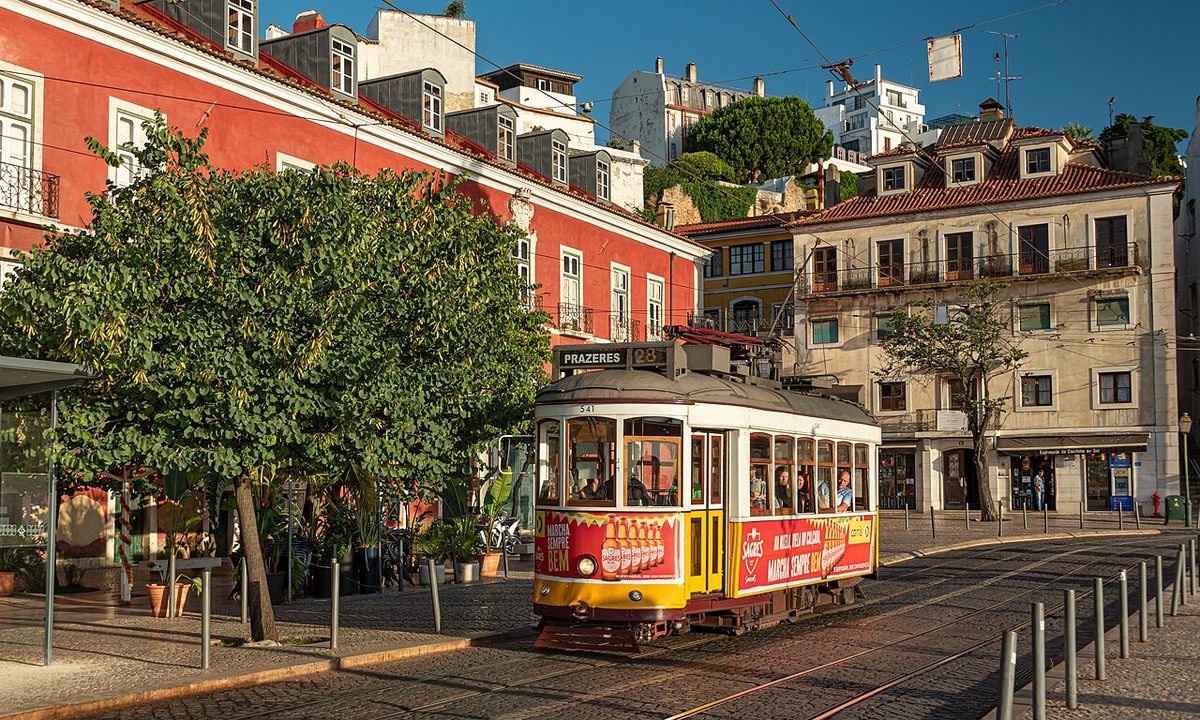
Lisbon’s metro (four lines) and tram network, and Porto’s light metro, cover their respective cities well enough that a car is actively unhelpful for a city-only stay — parking is scarce and expensive, and most sights sit inside the same walkable or metro-linked core. Lisbon’s Viva Viagem card and Porto’s Andante card both cover metro, tram, bus and in Lisbon’s case the funiculars and Santa Justa lift on one rechargeable ticket, at roughly €1.50–2 per journey or a flat-rate day pass if you’re making more than a handful of trips. Both cards are reloadable at station machines with cash or card, work across every mode they cover without needing a separate ticket for each, and are worth buying on arrival even for a short stay — the alternative, a single paper ticket bought from a driver, typically costs noticeably more per ride.
Do you need a car in Portugal?
No, if the trip is Lisbon and Porto with day trips from each — Sintra, Cascais, Óbidos and the Douro’s showcase towns are all reachable by train or an organised tour, and a car adds parking cost and stress without saving meaningful time. Yes, if the plan includes the Alentejo’s back roads, most of the Algarve beyond its handful of railway towns, Peneda-Gerês, or a multi-stop Douro quinta trip — these are exactly the places the CP network and the intercity buses don’t reach well, and a car’s cost is earned back in flexibility within a day or two. Travelling with young children, a lot of luggage, or reduced mobility tips the balance further toward a car even within the well-connected corridor, since a station transfer with bags and a pushchair is a genuinely different proposition from the same walk with a day bag.
The workable middle path, and the one most multi-region itineraries end up taking, is training between the big cities and picking up a car only for the regional legs — collecting it in Porto for the Douro, say, and dropping it before the train back to Lisbon, rather than carrying a rental through two city stays it doesn’t help with. One-way rentals (picked up in one city, dropped in another) are widely available from the major companies but usually carry a drop-off fee that’s worth weighing against simply returning to the pickup city and taking the train onward instead.
Cost is the other half of the decision. A week’s mid-season hire runs roughly €180–300 plus tolls and fuel — genuinely competitive against a family’s worth of train and taxi fares for a multi-stop regional trip, and comfortably beaten by the train for a Lisbon-and-Porto-only itinerary where a car adds parking costs without saving time. Run the actual numbers for your specific stops rather than assuming either answer by default. A rough middle-ground worked example: a couple doing Lisbon (train-only, no car), then a five-day car hire for the Alentejo and the Algarve, then the train back from Faro to Lisbon for the flight home, typically costs less in total than either hiring a car for the entire trip or trying to reach the Alentejo’s back roads by bus and taxi.
What to skip when planning how to get around
Skip renting a car for a Lisbon-and-Porto-only trip — you’ll pay for parking you don’t need and inherit one-way streets built centuries before cars existed. Skip accepting the rental counter’s own excess-reduction cover without comparing it to a third-party policy bought in advance, which usually covers the same deposit for a fraction of the price. Skip assuming a rail pass is automatically cheaper than point-to-point tickets; for a single region and a handful of journeys, CP’s advance promotional fares usually beat a pass once you actually total the trips you’ll take. Skip booking an unregistered hire car onto an electronic-toll motorway without confirming the transponder is active — the toll bill arrives regardless, with an administration fee added for the privilege. And skip treating a domestic flight to Madeira or the Azores as optional research — unlike every mainland decision in this guide, that one has exactly one practical answer.
Frequently asked questions
Do you need a car to get around Portugal?
Not for Lisbon, Porto or the Algarve’s railway towns, all well served by train and bus. A car earns its cost in the Alentejo, Peneda-Gerês, the Douro’s quinta country and most Algarve towns off the main line.
What’s the best way to get from Lisbon to Porto?
The Alfa Pendular train, in 2h39–2h50 for €35.70 in tourist class, with promotional fares from around €16 if booked up to 60 days ahead. It’s faster and more comfortable than driving or the bus, and avoids parking in either city.
How do you get around the Algarve without a car?
The Algarve railway line runs from Vila Real de Santo António to Lagos via Faro, Tavira, Albufeira-Ferreiras, Silves and Portimão — though two of those stations sit several kilometres from their town centres, so budget a taxi for the last leg.
How do you get to Madeira or the Azores?
By flight only, for almost every visitor — there’s no practical ferry option. Lisbon–Funchal takes about 1h45; Lisbon–Ponta Delgada about 2h25, with TAP Air Portugal and, for the Azores, SATA Azores Airlines operating the routes.
Are Uber and Bolt available in Portugal?
Yes, in Lisbon, Porto, Faro and most larger towns, generally cheaper than a metered taxi. Coverage drops off quickly in smaller towns and rural areas, where a taxi rank is often the only option.
What documents do you need to drive a hire car in Portugal?
A valid driving licence — EU licences work outright, most others for a limited period, with an International Driving Permit recommended if your licence isn’t in Latin script — plus a credit card for the deposit and confirmation that the toll transponder is active before you leave the depot.
Is public transport in Lisbon and Porto easy to use as a visitor?
Yes — both cities’ metro, tram and bus networks are covered by a single rechargeable card (Viva Viagem in Lisbon, Andante in Porto), priced per journey or as a day pass, and both networks are compact enough to learn within a day.
Can you take a bike on Portuguese trains?
Yes, generally free and unreserved on Regional and Urbano services, but a paid reservation is required on Alfa Pendular and Intercidades, and space is limited — book the bike space at the same time as the seat rather than assuming it’ll be available.
Which airport should you fly into for the Algarve?
Faro, not Lisbon or Porto. Lisbon to Faro by road is about 280 km and roughly 3 hours with no fast rail link, so flying into Faro directly saves most of a travel day if the Algarve is the whole trip.
Is cycling a practical way to get around Portugal?
For short, flat stretches — the Algarve’s Ecovia do Litoral, parts of the Douro’s Ecovia, and city bike-share in Lisbon and Porto — yes. As a way to cover intercity distances it isn’t practical for most visitors given the hills inland and the distances between regions.
Do Portuguese taxis use a meter?
Within cities and towns, yes, by law, with a visible tariff card in the vehicle. For a longer inter-town journey where a meter isn’t practical, agree the fare with the driver before setting off.
A few of these transport rules are worth knowing before you book anything: our Portugal travel tips guide covers why train seat reservations are compulsory, why an unregistered hire car still gets billed for electronic tolls, and a dozen other practicalities alongside the transport-specific ones above.
If you’re hiring a car for more than a few days, our Portugal road trip guide turns these rules into five routes, from a seven-day Lisbon and Porto loop to the full length of the N2, with driving times, the 2026 toll costs and the places on each route worth slowing down for.
If you want to see small-town Portugal without a car, our guide to Portugal’s best small towns lists which are on the railway (Tavira, Olhão, Lagos, Tomar, Viana do Castelo and others), which are an easy bus ride away, and three week-long plans built around trains.
Where to go next
For how these routes fit into an actual trip, see our Portugal itinerary planning guide, which builds day-by-day routes around the train and flight times above. If you’re weighing whether to base yourself in a single city, things to do in Lisbon and things to do in Porto cover what’s reachable on foot or by metro from each. For the Algarve specifically, where to stay in Algarve matches a base to whether you’ll have a car, and best time to visit Portugal covers how the shoulder-season crowds this guide mentions affect booking trains and hire cars. And for the two archipelagos this guide’s flight times apply to, see things to do in Madeira and the Azores islands guide.
Photo credits
- Featured image: an Alfa Pendular arriving at Lisbon’s Gare do Oriente — António M. L. Cabral, CC BY 2.5, via Wikimedia Commons
- Under the 25 de Abril bridge, Lisbon — Dale Cruse, CC BY 4.0, via Wikimedia Commons
- A TAP Air Portugal Airbus A330 at Lisbon airport — SV, CC BY 4.0, via Wikimedia Commons
Fares, journey times and toll rules checked September 2026 against cp.pt and other operator sources; both change, and the Lisbon-Faro fare in particular was quoted differently by two reliable sources on the same day, so confirm the current figure before booking. Last updated September 2026.