Madeira is sold as a garden island for cruise passengers and it is really a mountain range that happens to have a town on the bottom of it. The island is 57 kilometres long and rises to 1,862 metres, about 600 kilometres off the Moroccan coast, which means the weather at sea level tells you almost nothing about conditions two thousand metres up, and that a drive of twenty kilometres can take an hour. Getting that geography wrong is what turns a good week here into a frustrating one.
The short answer: the essential things to do in Madeira are the Pico do Arieiro to Pico Ruivo ridge walk, one long levada through the laurel forest, a day on the north coast at Porto Moniz and Santana, and an evening in Funchal’s old town. A week covers the island properly. Five days covers it in a hurry. Anything less and you are choosing between the mountains and the coast.
What follows is the island by region, with the walking permit system spelled out in full — it is new enough that a great many guides still describe the trails as free — plus real operator prices, an honest section on the beaches, and what I would now leave off the list. Prices were checked in September 2026 on the operators’ own sites.
Madeira at a glance
The island divides into five zones that behave like different places. The south is dry and sunny, the north is wet and green, the interior is high and frequently in cloud, and the far west is a plateau that generates its own weather.
| Zone | What it is for | Time needed | Weather | Verdict |
|---|---|---|---|---|
| Funchal & the south | The city, gardens, wine lodges, the cable car, restaurants | 2 days | Sunniest and driest | Where you sleep; more interesting than expected |
| The central massif | Pico do Arieiro, Pico Ruivo, the ridge walk | 1 day | Above the cloud as often as in it | The single best day on the island |
| The north coast | Porto Moniz pools, Santana, São Vicente, sea cliffs | 1–2 days | Wetter, greener, cooler | A different island from the south |
| The east | Ponta de São Lourenço, Machico, Caniçal | Half a day | Dry, bare, windy | The one landscape that looks nothing like the rest |
| The west & Paul da Serra | Fanal forest, the high plateau, Calheta’s beach | 1 day | Cloud on the plateau is normal | Atmospheric when misty, blank when not |
Two consequences follow. First, a hire car is close to essential — the bus network exists for residents and the transfer economy is expensive over a week. Second, plan flexibly: if the ridge is in cloud on Tuesday, go to the coast and do the ridge on Thursday. Fixed daily plans do not survive contact with Madeira’s weather.
For how the island fits into a wider trip, our Portugal itinerary hub sets out a fortnight of one week mainland and one week island, and our month-by-month guide has the climate data behind the timing advice below.
The things to do in Madeira that justify the flight
Four experiences here are genuinely first-rate. Everything else on this page is a good way to spend a morning.
The Pico do Arieiro to Pico Ruivo ridge
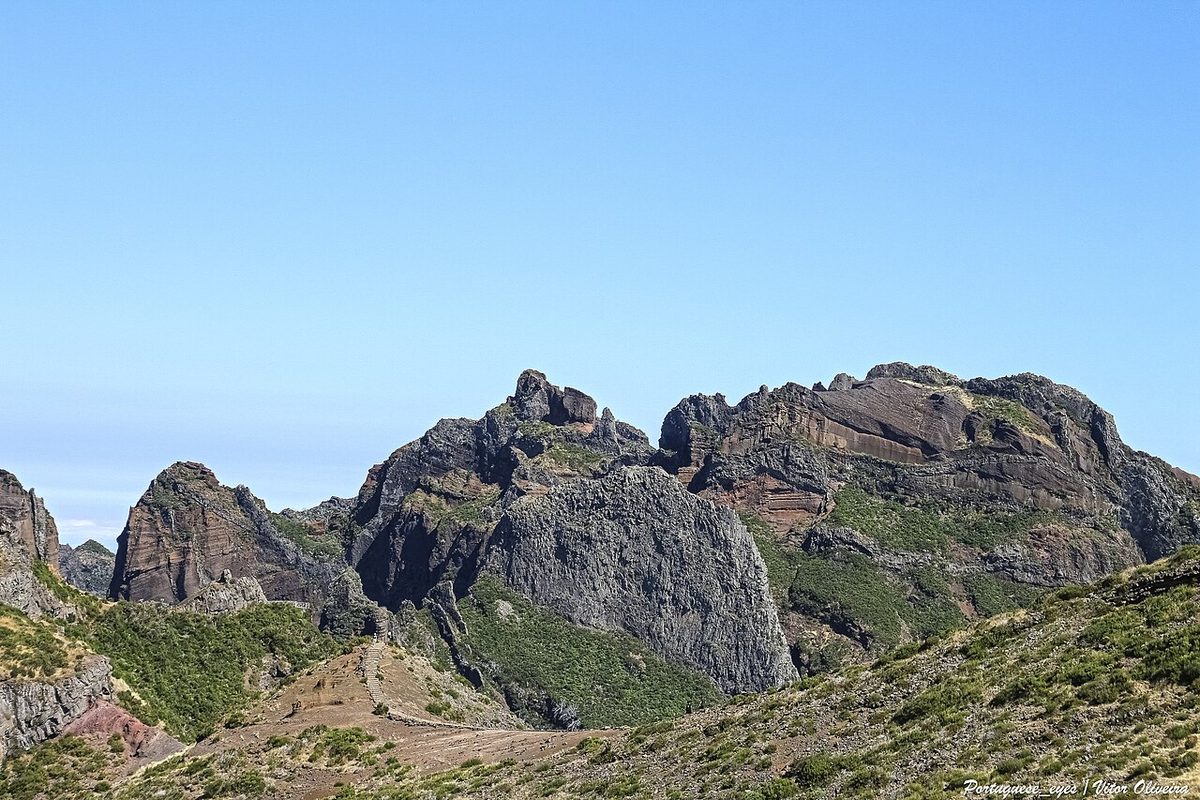
The PR1 runs along the spine of the central massif between the island’s third and first highest peaks, on a path cut into the rock with tunnels, staircases and long exposed sections above cloud that sits in the valleys below. It is the best mountain walk in Portugal and one of the best in Europe, and it does not feel like an Atlantic island at all — it feels like the Alps with subtropical vegetation.
Cost: €10.50 per person, booked in advance (see the permit section below). Time: allow six hours for the full traverse and a transfer back, or three to four out-and-back from Arieiro. Verdict: do it, early, on the first clear morning of your trip rather than saving it for a fixed day. There is real exposure, the tunnels need a torch, and it should not be attempted in high wind or rain.
A long levada through the laurel forest
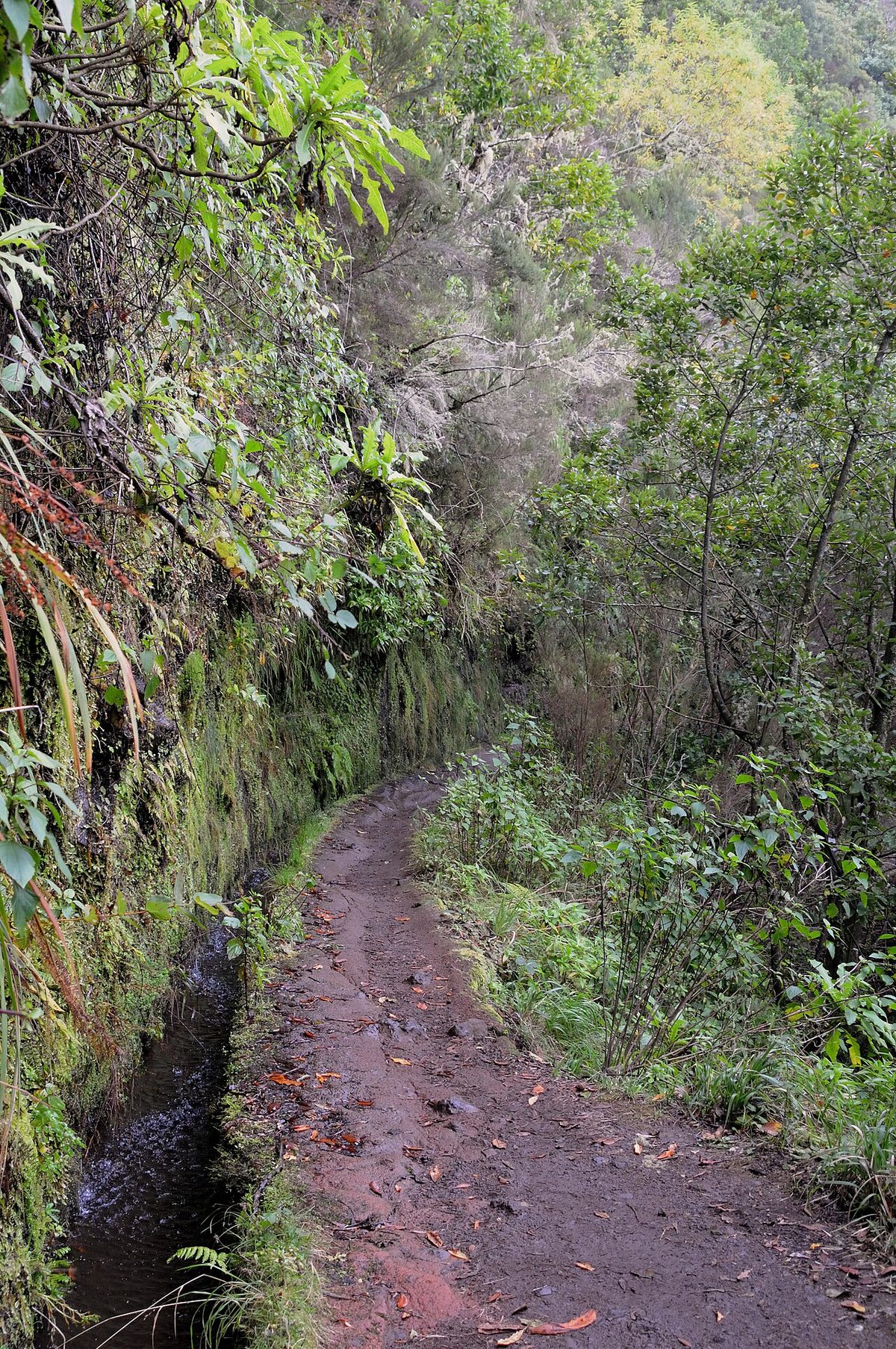
Levadas are irrigation channels, some of them five hundred years old, cut across the island to carry water from the wet north to the dry, cultivated south. Maintenance paths run alongside them, and because water flows gently the paths are almost flat — which is how you get a nearly level walk across the flank of a mountain. Many of them run through laurissilva, the laurel forest that once covered southern Europe and now survives here as a UNESCO-listed relic.
Verdict: the defining Madeiran experience and the reason walkers come back. Levada do Caldeirão Verde and the 25 Fontes are the two most popular; both are ticketed under the permit system and both are busy by mid-morning.
The north coast in a day
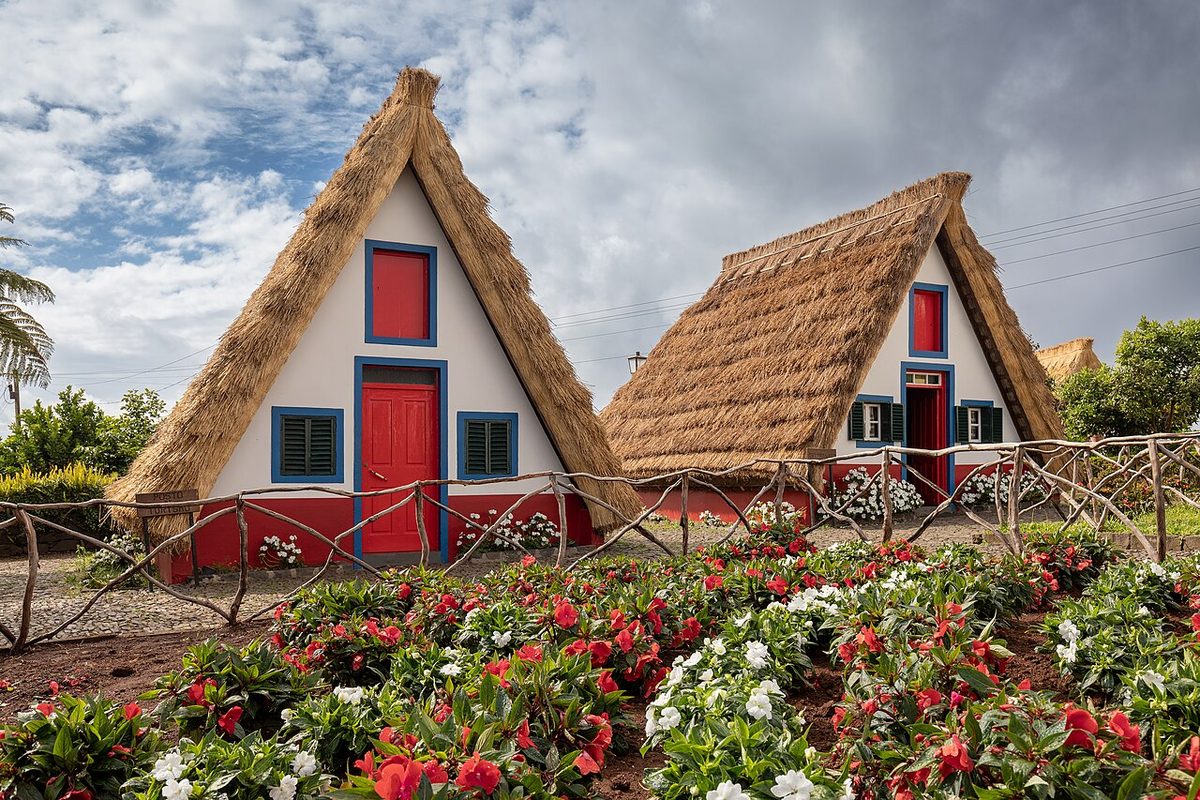
Crossing to the north side is a genuine change of climate. The road hugs cliffs, passes through old tunnels, and delivers you to Porto Moniz, where lava flows have formed natural rock pools that fill and flush with the Atlantic. Santana has the triangular thatched palheiros that appear on every Madeira postcard. São Vicente has caves formed by a lava tube. The old coastal road between them, now partly bypassed, runs under waterfalls that fall directly on to the carriageway.
Verdict: the best full-day drive on the island, and worth doing even if the south is sunny and the north is not.
Whales and dolphins
Deep water starts close to shore here, which means cetaceans are close to shore too. Boats out of Funchal and Calheta find bottlenose and common dolphins year-round, and pilot whales, sperm whales and — less predictably — larger baleen whales through the warmer months. Operators generally work to a code that keeps boats at a distance and limits time with each group.
Verdict: one of the more reliable cetacean trips in the eastern Atlantic, and a good use of a morning when the mountains are in cloud.
The walking permit system, in full
This is the single most important practical change on the island in recent years and it is still described incorrectly in a great many guides, which say the trails are free.
Madeira’s official walking routes now require a paid, timed reservation made through simplifica.madeira.gov.pt, with entry slots of thirty minutes. The costs, checked in September 2026:
| What | Price | Notes |
|---|---|---|
| Standard PR trail, per person | €4.50 | Per trail, per person |
| PR1, Pico do Arieiro to Pico Ruivo | €10.50 | The premium route |
| Three-day pass | €22.50 | Covers multiple trails |
| Seven-day pass | €52.50 | Worth it from about five trails |
| Under-12s | Free | But must be named on the booking |
| Residents and certified disability of 60% or more | Exempt | Proof required |
| Tour operator rate | ~€3 | Which is why guided walks can undercut the gate price |
Three practical consequences. Popular slots on PR1 and the 25 Fontes sell out, particularly for morning starts in summer, so book those before you book anything else about the trip. The slot system means arriving at your allotted half hour rather than whenever you wake up, which fights against Madeira’s weather-driven flexibility — a three or seven-day pass buys some of that back. And enforcement at the trailheads is real; this is not a suggestion.
Trails are also closed after heavy rain and for maintenance, sometimes at short notice, and the official site publishes the current status. Check it the night before rather than driving an hour to a barrier.
Funchal: more interesting than its reputation
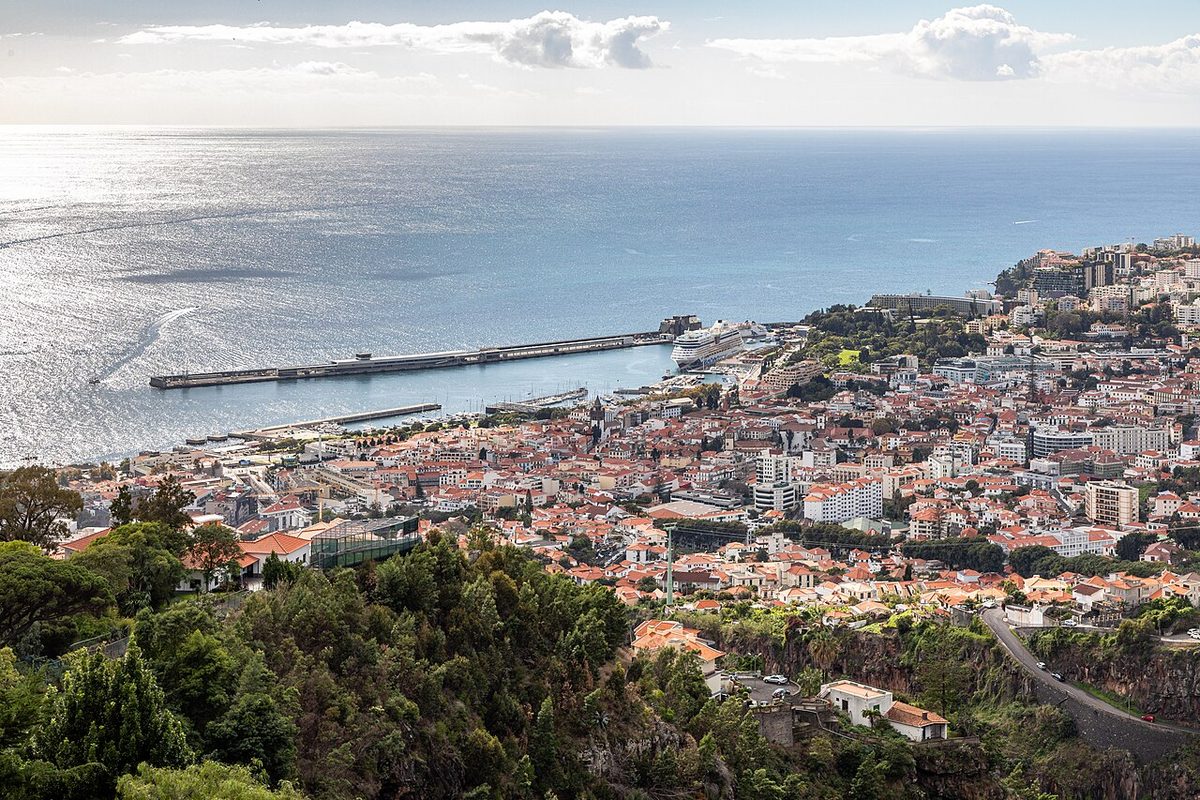
Funchal is a working city of about 100,000 people built up an amphitheatre of hillside, with a cruise terminal at the bottom and villas at the top. It gets written off as a cruise stop, which underestimates it considerably.
The old town and the painted doors
The Zona Velha, east of the centre, was a run-down quarter until an art project in 2010 invited painters to decorate its doorways. Several hundred were painted, the streets filled with restaurants, and the district became the evening centre of the city. It is unashamedly touristic and it also works, because the buildings were saved rather than replaced.
Mercado dos Lavradores
The 1940s market building, with a tiled entrance and a two-level courtyard, sells tropical fruit upstairs and fish downstairs. Two things are worth knowing. The upstairs fruit sellers will offer you slices to taste and then present a bill considerably larger than you expected, so agree the price before you accept anything. And the fish hall is where you meet espada, the black scabbard fish — a long, black, big-eyed deep-water creature that looks alarming and tastes excellent.
Verdict: go in the morning, go downstairs, and be firm upstairs.
The Monte cable car and the toboggan
The cable car climbs from the seafront to Monte, 550 metres above the city, with the whole amphitheatre of Funchal below you. At the top are the Monte Palace Tropical Garden and the church where the last emperor of Austria is buried.
The way down is the island’s oddest attraction: a wicker sledge on wooden runners, steered by two men in white with straw hats who run alongside, pushing and braking with their rubber-soled boots, down two kilometres of public road. It began in the nineteenth century as genuine transport for people coming down the hill.
Prices, checked September 2026 on the operators’ own sites. The cable car is €22 return and €16 one way, with tickets valid for sixty days after purchase (madeiracablecar.com). The toboggan run costs €30.00 for one person, €40.00 for two and €60.00 for three, and operates Monday to Saturday (carreirosdomonte.com).
Verdict: take the cable car up, which is worth the fare on its own. The toboggan is two minutes of genuine fun for the price of a good dinner, and it does not take you back to town — you finish partway down and pay for a taxi. Do it once, knowing that.
Madeira wine
Madeira is a fortified wine that is deliberately heated during ageing, a practice that began by accident when barrels crossed the tropics as ballast in sailing ships and arrived improved. The result is close to indestructible: an opened bottle keeps for months, and the oldest vintages are drinkable after a century. Four grape styles run from dry to sweet — Sercial, Verdelho, Bual and Malmsey — and the lodges in central Funchal run tastings that explain the distinction better than any description.
Verdict: the best hour of indoor time in Funchal, and the thing most visitors skip in favour of a garden.
The gardens
Madeira’s climate grows almost anything, and the island has taken that seriously since Victorian invalids started wintering here. The Botanical Garden has the sweep over the bay; Monte Palace has the koi ponds, the Japanese planting and a good tile collection; Palheiro has the most horticulturally serious layout. All three are reached by cable car or bus and all three take a couple of hours.
Verdict: pick one, not three. They are lovely and they are not why the island is remarkable.
The rest of the island, region by region
The east: Ponta de São Lourenço
The eastern tip is a bare, red-brown volcanic peninsula with almost no vegetation, dropping into the sea on both sides — the exact opposite of the green island in the brochures, and the clue that Madeira is a volcano rather than a garden. A well-made path runs out along it. There is no shade whatsoever and it is fully exposed to the wind.
Verdict: excellent in the morning or late afternoon, punishing at midday in summer. Combine with Machico, the island’s first settlement, and Caniçal, which was a whaling station until 1981 and now has a whale museum that deals honestly with that history.
The north: Santana, São Vicente and Porto Moniz
Santana’s palheiros — small A-framed houses with thatch to the ground, painted white with red doors and blue trim — were the traditional dwellings of the north coast, and a handful are preserved beside the road. It is a photo stop rather than a visit, and it is a genuinely charming one.
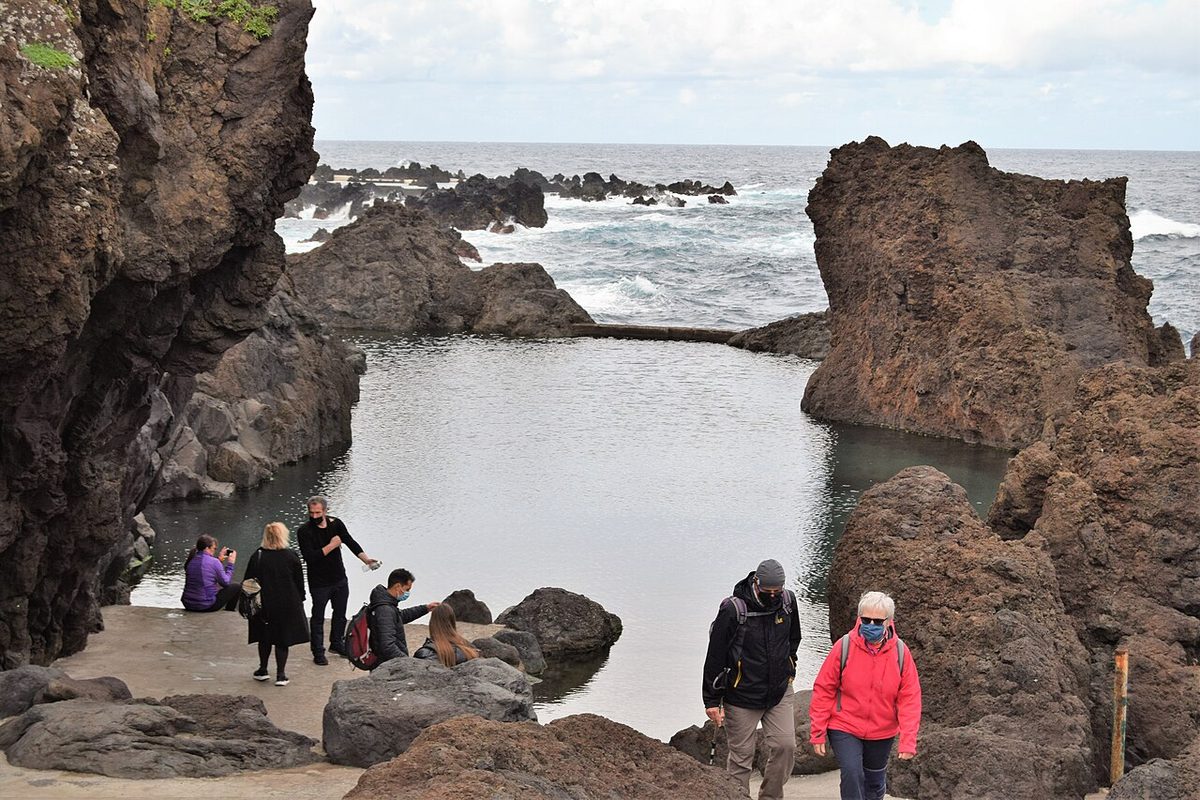
São Vicente sits in a green valley where a lava tube produced a system of caves now open to visitors with a volcanism centre attached. Porto Moniz, at the north-western corner, has the natural pools: basins in solidified lava with the ocean breaking over the outer edge, and a modern lido alongside them for calmer days.
Verdict: the north coast in one day is the second-best drive on the island after the ridge road. Swimming at Porto Moniz depends entirely on the sea state — in a northerly swell the pools are closed and rightly so.
The west: Paul da Serra and Fanal
Paul da Serra is a high plateau, flat and treeless, that catches cloud and generates it. Crossing it in fog is a genuinely strange experience for an Atlantic island. On its northern edge, Fanal is a stand of ancient, twisted laurel trees on open grassland which, when the mist comes in, produces the photographs Madeira is currently famous for on the internet.
Verdict: Fanal is superb in mist and unremarkable in sunshine, which is the reverse of everywhere else and worth planning around. Check the webcams before driving up.
The south-west: Calheta, Ponta do Sol and Jardim do Mar
The sunniest corner of the island, with a run of small towns down the coast, terraced banana plantations, and Calheta’s imported golden-sand beach — one of very few sandy beaches on Madeira. Ponta do Sol has a reputation as the warmest spot in winter and a growing remote-working community. Jardim do Mar is a cliff-foot village with a serious surf break.
Porto Santo, the other island
Forty kilometres north-east of Madeira sits its opposite: a low, dry, sandy island with a single continuous beach running roughly nine kilometres down its southern side. Where Madeira is vertical, green and short of sand, Porto Santo is flat, golden and short of shade. It is reached by ferry from Funchal or by a short flight, and about five thousand people live there.
The sand itself has a local reputation as therapeutic, and burying yourself in it for aching joints is a genuine local practice rather than a spa invention. Beyond the beach there is a golf course, a handful of volcanic peaks to walk up, and a small museum in the house where Christopher Columbus is said to have lived while married to the daughter of the island governor.
Verdict: a day trip is enough to see it and a week is what people who love it actually do. If your travelling companions want a beach holiday and you want mountains, splitting a fortnight between the two islands solves an argument. If you have five days on Madeira, do not spend one of them on the ferry.
Three more things worth knowing
Madeira has no mass tourism season in the way the Algarve does, because the appeal is year-round rather than concentrated into ten weeks. That keeps prices flatter, and it also means the good restaurants stay open all year rather than shuttering from November.
The island is genuinely safe and genuinely quiet after dark, outside Funchal old town and the Lido strip. If your idea of a holiday involves nightlife, adjust expectations: this is an early-to-bed island where the entertainment is the landscape.
Fuel and driving times will surprise you. A twenty-kilometre journey on the map can be forty minutes of hairpins, and the expressway that appears to cross the island quickly runs only along the south. Budget an hour each way for anything on the north coast and plan one region a day.
Beaches and swimming: the honest version
Madeira is a volcanic island with a steep coast and it does not have the beaches people expect from a Portuguese island. What it has instead:
| Type | Where | Verdict |
|---|---|---|
| Imported golden sand | Calheta, Machico | Small, sheltered, family-friendly; the sand was shipped in |
| Natural volcanic pools | Porto Moniz, Seixal | The best swimming on the island when the sea is calm |
| Pebble and shingle | Ponta do Sol, Jardim do Mar, Seixal’s black sand | Fine for a swim, hard on bare feet |
| Lidos and sea platforms | Funchal’s Lido and Barreirinha | Ladders into deep clear water; how the city actually swims |
| A proper 9 km beach | Porto Santo, the neighbouring island | Golden sand the whole way; reached by ferry or a short flight |
If the beach is the point of the holiday, go to Porto Santo or go to the Algarve. If swimming is a pleasant addition to a walking trip, Madeira has plenty of it — just not in the form most people picture.
Levada walks: which one, and how hard
There are hundreds of kilometres of levada path and the choice is less about scenery — most of them are beautiful — than about exposure and length.
| Walk | Character | Effort | Note |
|---|---|---|---|
| PR1 Arieiro–Ruivo | High ridge, tunnels, staircases | Hard | €10.50; real exposure; torch needed |
| Levada do Caldeirão Verde | Laurel forest to a waterfall amphitheatre | Moderate, long | Tunnels; wet underfoot; very popular |
| Levada das 25 Fontes | Forest to a spring-fed pool | Moderate | The busiest walk on the island; book early |
| Levada do Rei | Forest, quieter than the famous two | Moderate | A good substitute when 25 Fontes is full |
| Ponta de São Lourenço | Bare coastal peninsula | Moderate | No shade at all; wind exposed |
| Vereda do Larano | Cliff path with long drops | Moderate | Not for anyone uneasy with heights |
Two universal cautions. Many levada paths have a drop on one side and no barrier, sometimes for long stretches — this is normal here and it genuinely rules the walks out for some people. And several routes go through unlit rock tunnels of a hundred metres or more, so a head torch is not optional. Take a waterproof whatever the forecast says; the north side makes its own weather.
Eating and drinking in Madeira
| Dish or drink | What it is | Verdict |
|---|---|---|
| Espetada | Beef rubbed with garlic and bay, grilled on a laurel skewer, served hanging | The island’s signature dish and worth ordering |
| Bolo do caco | Flat wheat bread cooked on a stone, split and filled with garlic butter | Comes with everything; the best bread in Portugal |
| Espada com banana | Black scabbard fish fried with banana | Sounds wrong, works; the fish is delicate and mild |
| Lapas | Limpets grilled with garlic butter and lemon | Cheap, excellent, eaten with a fork and some effort |
| Poncha | Sugarcane spirit, honey, lemon, mixed with a wooden caralhinho | Stronger than it tastes; one is a drink, three is a decision |
| Madeira wine | Heated, fortified, effectively immortal once opened | Try all four styles at a lodge rather than guessing |
General Portuguese pricing applies: a bica at the counter €0.80–€1.20, a set lunch €9–€15, a mid-range dinner for two €40–€60 (checked September 2026). Funchal’s old town is priced for visitors; walk ten minutes uphill or eat in Câmara de Lobos, Machico or any village and the same food costs meaningfully less.
When to go
Madeira’s whole selling point is that there is no bad month. Funchal’s published climate normals give a mean daily maximum of 20.0 °C in January and 26.8 °C in August — a spread of under seven degrees across the year — with about 2,314 hours of sunshine annually and no month below 150. July and August average under two millimetres of rain each; the wet months are October to March, and even they are moderate at sea level.
| Period | Character | Verdict |
|---|---|---|
| December–February | Mild, some rain, green | Europe’s most reliable winter sun within four hours; New Year fireworks fill the island |
| March–May | Warming, flowers, clear mountain days | The best walking window; the Flower Festival is in spring |
| June–August | Warm, dry, busiest | Book trail slots early; the high ground is often clearer than the coast |
| September–October | Warmest sea, thinning crowds | The best all-round months |
| November | First real rain | Quiet and cheap; trail closures more likely |
The one date to plan around is 31 December. Funchal’s New Year fireworks are enormous, the whole amphitheatre of the city is the viewing gallery, and accommodation books out a long way ahead at a considerable premium.
Getting around
Flights from Lisbon take about 1h45, and Madeira Airport is one of the more famous approaches in Europe: the runway was extended on to a deck supported by concrete columns over the sea, and pilots need a specific certification to land there. Crosswinds do occasionally cause diversions to Porto Santo or back to the mainland, which is worth knowing if you have a tight onward connection.
On the island, a hire car is the practical answer. The road network was transformed by a programme of tunnels and viaducts, so the modern south-coast expressway crosses the island quickly while the old coastal roads survive alongside for the scenery. Two things to expect: gradients steep enough that you will use low gears constantly, and parking in Funchal that is scarce and paid.
Without a car, the options are the public buses — which serve residents on schedules built around school and work rather than sightseeing — and organised transfers or tours, which over a week cost more than car hire. If you are not driving, base yourself in Funchal and buy the days out.
What to skip in Madeira
Three gardens in one trip
They are genuinely good and they are also variations on a theme. One garden, chosen for its setting rather than its plant list, is enough on a week that also includes mountains and coast.
The toboggan as transport
It is fun and it is two minutes long, it costs €30 for one person and €40 for two (checked September 2026), and it deposits you partway down the hill rather than in town, so you then pay for a taxi. Do it as a novelty with your eyes open, not as a way of getting back to Funchal.
Fanal in sunshine
The photographs that made it famous were all taken in mist. On a clear day it is a field with some old trees in it, an hour’s drive from anywhere. Check conditions before committing the morning.
Booking the ridge walk for a fixed day
The permit system pushes you towards fixed slots, and the weather does not cooperate. If you can, buy a multi-day pass and take the ridge on the first clear morning. Doing PR1 in cloud means paying €10.50 to walk through grey.
Expecting a beach holiday
Covered above and worth repeating, because it is the commonest disappointment here. Madeira has volcanic pools, lidos and two small imported-sand beaches. It does not have the Algarve, and people who arrive expecting that spend the week faintly puzzled.
The cliff skywalk as a destination
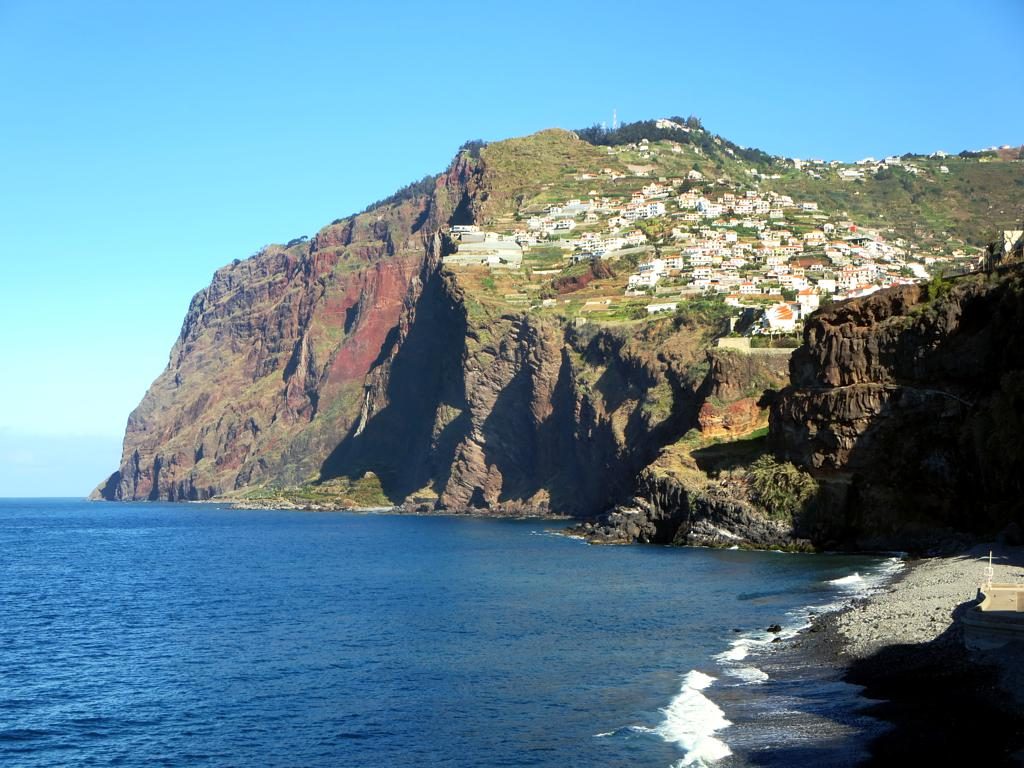
Cabo Girão has a glass platform on one of the highest sea cliffs in Europe, and it is a fifteen-minute stop with a car park attached. Worth pulling in for on the way west. Not worth a special trip, and the cliff is more impressive seen from the water below it.
Where to stay
Funchal for a first visit, without much hesitation: everything on the island is a day trip from it, the restaurants are there, and so are the evening options. Within Funchal, the Lido and Ajuda area west of the centre has the big hotels and sea access; the old town has the atmosphere and the noise; the hills above have views and require a car or the cable car.
Elsewhere, Ponta do Sol and Calheta suit a sun-seeking week in the south-west; São Vicente or Porto Moniz suit a night on the north coast, which is worth doing once to see the difference; and Machico works for a quiet base near the airport with a sandy beach.
The one arrangement I would avoid is four hotels in seven nights. The island is small enough that you do not need to move, and the drives are slow enough that packing costs you real time.
What a week costs
| Item | Lean | Comfortable |
|---|---|---|
| Accommodation, per night | Guesthouse or apartment | Sea-view hotel or a quinta |
| Hire car, per week | Small car plus fuel | Automatic, plus parking |
| Trail permits | Three-day pass, €22.50 | Seven-day pass, €52.50 |
| Cable car | €16 one way | €22 return |
| Toboggan | Skip it | €40 for two |
| Eating | €9–€15 set lunch, village restaurants | €40–€60 dinner for two in Funchal |
Prices checked September 2026. Madeira is broadly cheaper than the Algarve in high summer and dearer over New Year, and the two costs people forget to budget are the trail permits and the parking.
Frequently asked questions
How many days do you need in Madeira?
Seven is right: two for Funchal and the south, one for the ridge walk, one or two for the north coast, one for a long levada and one spare for weather. Five works at a push. Three means choosing between the mountains and the coast, and the mountains are the reason to come.
Do you need a car in Madeira?
Effectively yes. The bus network runs on schedules built for residents rather than visitors, and over a week of transfers and tours you will spend more than car hire costs. If you would rather not drive the island’s gradients and tunnels, base yourself in Funchal and buy organised day trips instead.
Do you have to pay to walk the levadas in Madeira?
Yes, on the official routes. Reservations are made through simplifica.madeira.gov.pt in thirty-minute entry slots, at €4.50 per person per trail, €10.50 for PR1, with three-day passes at €22.50 and seven-day at €52.50. Under-12s are free but must be named on the booking, and residents and people with a certified disability of 60 per cent or more are exempt (checked September 2026). Older guides describing the trails as free are out of date.
What is the best time to visit Madeira?
Any month, genuinely. April to June for flowers and the clearest mountain days, September and October for the warmest sea and thinning crowds, December to February for the mildest winter within four hours of northern Europe. Funchal’s normals run from a 20.0 °C daily maximum in January to 26.8 °C in August, with about 2,314 hours of sunshine a year.
Does Madeira have good beaches?
Not in the conventional sense, and this is the island’s most common disappointment. It has natural volcanic pools at Porto Moniz and Seixal, sea-access lidos in Funchal, pebble beaches, and two small imported-sand beaches at Calheta and Machico. For a proper 9 km golden beach you take the ferry or a short flight to Porto Santo.
How much is the Madeira cable car and the toboggan?
The Funchal to Monte cable car is €22 return and €16 one way, with tickets valid for sixty days after purchase. The wicker toboggan run costs €30.00 for one person, €40.00 for two and €60.00 for three, and runs Monday to Saturday (madeiracablecar.com and carreirosdomonte.com, both checked September 2026). Note the toboggan leaves you partway down the hill, not in the city.
Is the Pico do Arieiro to Pico Ruivo walk difficult?
Yes, moderately. It involves long staircases, unlit rock tunnels for which you need a torch, and exposed sections with substantial drops. It should not be attempted in high wind, rain or poor visibility, and it is not suitable for anyone uncomfortable with heights. Allow six hours for the traverse including getting back to your car, and book the €10.50 permit ahead.
Is Madeira good for children?
For older children who will walk, very. For toddlers, less so — the coast is steep, the beaches are few, and the drives are winding. The reliable wins are the cable car, the volcanic pools at Porto Moniz on a calm day, the whale and dolphin boats, the Calheta and Machico sand beaches, and the São Vicente lava caves.
Can you see whales in Madeira?
Yes, year-round. Deep water starts close to the island, so bottlenose and common dolphins are seen in every month, with pilot whales, sperm whales and occasional larger baleen whales more likely in the warmer part of the year. Boats leave from Funchal and Calheta and most operators work to a distance and time code around the animals.
Is Madeira better than the Azores?
Different rather than better. Madeira has the more dramatic mountain walking, far more reliable weather, better infrastructure and a proper city. The Azores have volcanic caldera lakes, hot springs, resident sperm whales and a landscape that looks like nowhere else — with weather that will cancel some of your plans. On a first island trip, Madeira. Our itinerary guide covers a week on each.
What should I pack for Madeira?
Walking shoes with grip, a waterproof regardless of forecast, a head torch for the levada tunnels, and a warm layer — the ridge at 1,800 metres is ten to fifteen degrees colder than Funchal and often windy. Swimming things year-round, because the lidos and pools work in any month. And a car-friendly bag rather than a large hard suitcase; the boots are small and the roads are steep.
Is Porto Santo worth visiting from Madeira?
If you want a beach, yes — nine kilometres of golden sand, which Madeira simply does not have. It is reached by ferry from Funchal or a short flight. On a five-day Madeira trip, skip it; on a fortnight, give it three or four nights and treat it as a separate holiday from the mountains.
Is Madeira expensive?
Broadly comparable to mainland Portugal and cheaper than the Algarve in high summer, with two costs visitors forget to budget: the trail permits, at €4.50 per trail or €22.50 for a three-day pass, and parking in Funchal. Eating is the reliably cheap part — a set lunch runs €9–€15 and a mid-range dinner for two €40–€60 (checked September 2026). New Year is the exception, when accommodation prices rise sharply.
Weighing Madeira against the other archipelago? Our Azores islands guide covers the caldera lakes, hot springs and resident sperm whales, and is candid about the weather that makes the Azores the less predictable of the two.
Weighing Madeira against the Azores? São Miguel is greener, wetter and quieter, with crater lakes, hot springs and whales all year, while Madeira wins on winter warmth and big mountain walks. Our guide to things to do on São Miguel sets the two islands side by side.
The permit system has changed how walking works here, and our guide to Madeira’s levada walks and peaks goes trail by trail through the 2026 rules: which walks need a slot, what each one costs, how PR1’s new one-way rule affects your transport, and which levadas are worth the early start.
Where to go next
Madeira is one of seven regions in this country and the one most often visited on its own. Our region-by-region guide to Portugal sets it against the mainland and the Azores, and our day-by-day itinerary hub shows how to combine a mainland week with an island week without wasting two days on airports.
If you are pairing the island with a city stop on the way, we have full guides to Lisbon and Porto, and our month-by-month guide to when to visit has the published climate normals for Funchal alongside the mainland stations.
Photo credits
- Traditional thatched palheiro houses at Santana on Madeira’s north coast — Ximonic (Simo Räsänen), CC BY-SA 4.0, via Wikimedia Commons
- Funchal and its harbour seen from the hillside above the city — Dietmar Rabich, CC BY-SA 4.0, via Wikimedia Commons
- The footpath beside the Levada do Caldeirão Verde — Josep M. Gracia, CC BY-SA 4.0, via Wikimedia Commons
- The natural volcanic pools at Porto Moniz on the north coast — Anne and David from Kent, England UK, Public domain, via Wikimedia Commons
- The sea cliff at Cabo Girão with terraced houses above it — David Stanley from Nanaimo, Canada, CC BY 2.0, via Wikimedia Commons
All prices, permit costs and operating days were checked in September 2026 on the operators’ and the regional government’s own sites, and will change. The trail reservation system in particular is new enough that many guides still describe the levadas as free, so confirm on simplifica.madeira.gov.pt before you travel. Last updated: 17 September 2026.