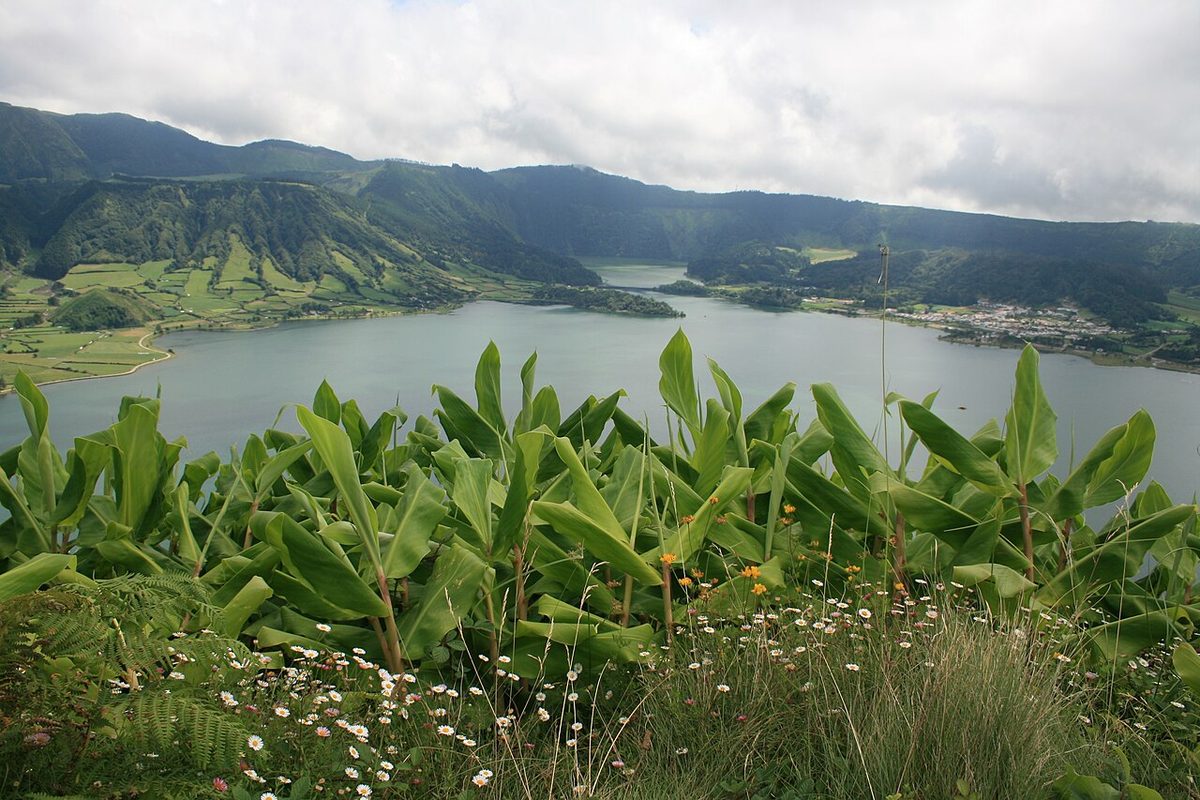
Search “things to do in sao miguel azores” and page one hands you the same dozen photos in a different order: the two-coloured lake at Sete Cidades, a steaming pot of cozido being hauled out of the ground, somebody grinning in an orange pool. None of it is wrong. What those lists rarely tell you is what actually decides whether a day on São Miguel works: the cloud that swallows the crater rims by early afternoon, the shuttle that now controls the road to Lagoa do Fogo in summer, which hot springs need a timed booking, and how long the drives really take on an island that is only about 65 kilometres end to end but feels longer once you’re on its roads. This guide works through the island region by region, from Ponta Delgada outwards, with drive times, what each place costs as of September 2026, and a straight verdict on each.
The short answer: give São Miguel five days. Do Sete Cidades early on a clear morning, spend a night in Furnas for the cozido and the thermal pools after dark, walk down to Lagoa do Fogo, book one whale trip from Ponta Delgada or Vila Franca, and keep a day spare for the weather. Hire a car; the buses won’t get you there.
Things to do in Sao Miguel Azores: the fast answer
Everything worth your time on the island, ranked roughly by how much I’d miss it. Drive times are from central Ponta Delgada in normal traffic and are approximate; prices were checked in September 2026 and the “unconfirmed” ones are explained in the costs section further down.
| Sight | Region | Drive from Ponta Delgada | Time needed | Cost (checked Sept 2026) | Verdict |
|---|---|---|---|---|---|
| Sete Cidades viewpoints and lakes | West | ~30 min | Half a day | Free | The reason most people come. Go first thing |
| Furnas: village caldeiras, lake and cozido | East | ~45–50 min | A full day, ideally a night | Mostly free | The best single day on the island |
| Lagoa do Fogo | Centre | ~35 min | 2–3 hours with the walk down | €5 shuttle in season | The wildest of the lakes. Check the cloud first |
| Terra Nostra garden and pool | Furnas | ~45–50 min | 2–3 hours | Unconfirmed | Worth it for the garden as much as the pool |
| Poça da Dona Beija | Furnas | ~45–50 min | 1–2 hours | Timed online tickets | Go in the evening, not at noon |
| Whale and dolphin watching | Ponta Delgada or Vila Franca | 0–25 min | Half a day | Varies by operator | Book early in the week so the weather can move it |
| Ponta da Ferraria hot spring | West coast | ~30 min | 1–2 hours | Free (the sea pool) | Wonderful at low tide, pointless at high |
| Caldeira Velha | Centre, above Ribeira Grande | ~25 min | 1–1.5 hours | ~€10, timed entry | Pretty, busy, book the day before |
| Ilhéu de Vila Franca | South coast | ~25 min | Half a day | Boat fare, summer only | A swim inside a drowned crater |
| Nordeste viewpoints and waterfalls | Far east | ~1h–1h15 | A full day | Free | The empty side of the island |
| Gorreana tea estate | North coast | ~40 min | 45 min | Free | A good stop, not a destination |
| Mosteiros | North-west tip | ~40 min | 1–2 hours | Free | The best sunset on the island |
| Ponta Delgada old centre | South-west | — | Half a day | Free | Fine for an evening, not a whole day |
How São Miguel is laid out, and why it changes your plan
São Miguel is the biggest of the nine Azores islands, around 745 square kilometres with about 133,000 people living on it, roughly half the archipelago’s population. It is long and thin, about 65 km from the western tip to the eastern one and never more than about 16 km across, and it is really three volcanoes with an older, eroded mountain range bolted on to the eastern end. Once you see it that way the island stops being a list of sights and becomes four regions.
The west is the Sete Cidades volcano, a caldera about five kilometres across with lakes in its floor and the village of Sete Cidades beside them. The centre is the Fogo volcano, with Lagoa do Fogo in its summit crater, Caldeira Velha on its northern flank and the north-coast town of Ribeira Grande below. The east is the Furnas volcano, whose caldera holds the spa village of Furnas and its lake. Beyond that, the far east is the Nordeste and Povoação massif, the oldest, steepest and wettest part of the island, with Pico da Vara at 1,103 m, the highest point on São Miguel.
Ponta Delgada, the capital, sits on the south coast west of centre, which makes it a convenient base for the west and the centre and a slightly long one for Furnas and the far east. The fast roads, known as SCUTs, run along much of the south and north coasts and cost nothing to use, unlike the electronic tolls on the mainland. Off them the roads narrow quickly, climb steeply and share space with dairy cows being walked between fields.
The single most useful thing to understand is that the weather here is local. Cloud forms over the high ground most days, usually building from late morning, while the coast below stays bright. You can sit in sunshine in Ponta Delgada eating lunch while Sete Cidades, 25 km away, is inside a cloud and the viewpoint shows you a white wall. That is why every plan in this guide puts the crater viewpoints early in the day, and why I check the live webcams (SpotAzores runs a network of them across the islands) before driving up to any rim. Plan by region and by the sky, not by a ranked list.
Ponta Delgada and around
Most visitors sleep in Ponta Delgada and treat it as a dormitory. That’s a slight waste. It is a handsome small city of black basalt and white plaster, with pavements in the Portuguese black-and-white mosaic style, and its harbour front comes alive in the evening in a way no village on the island does. It won’t fill a day, but it fills a good evening and a morning before a flight.
The old centre and the city gates
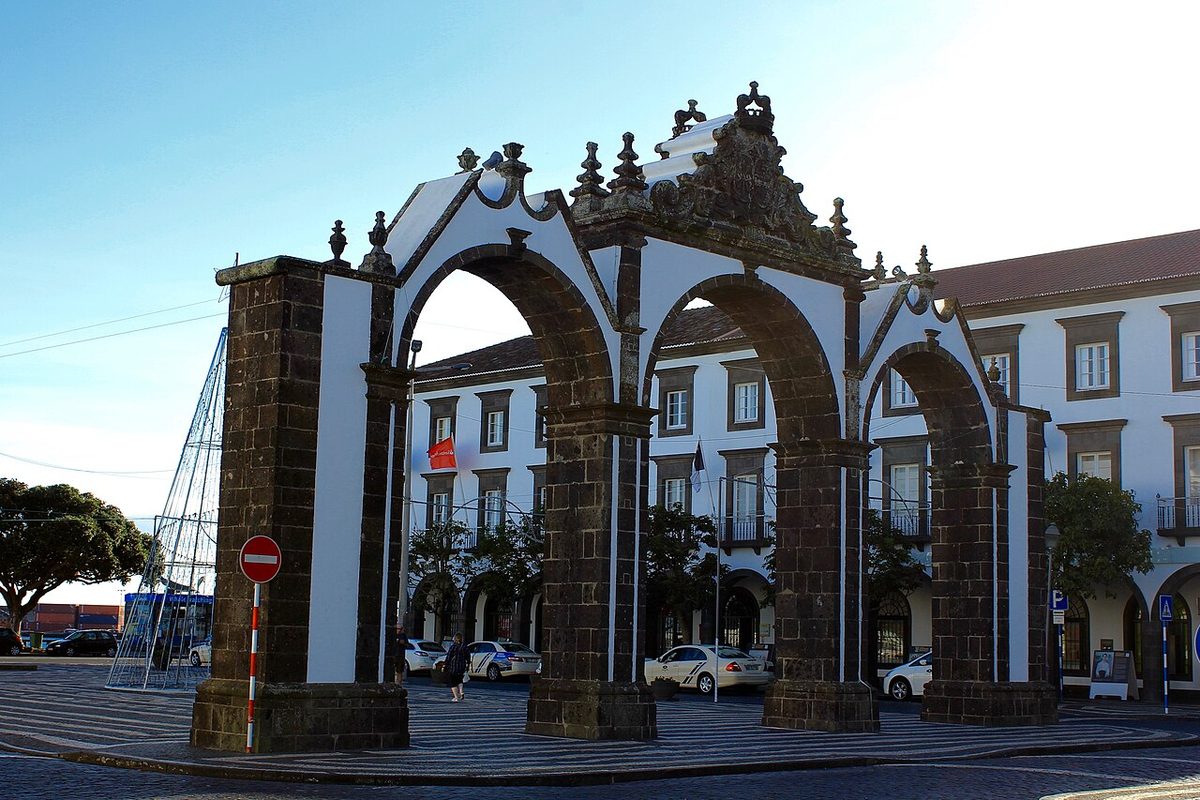
Start at the Portas da Cidade, three basalt-and-plaster arches on the waterfront square, built in 1783 when this was where ships’ passengers came ashore. Behind them, the Igreja Matriz de São Sebastião has a carved Manueline doorway in the same dark stone, and the grid of streets beyond is where the cafés, the better shops and most of the restaurants are. Walk west along the Avenida Infante Dom Henrique to the Forte de São Brás, a sixteenth-century fort that now holds a military museum, and back through the streets behind. Two hours, free, and the easiest way to shake off a flight. Verdict: pleasant, low-effort, best done on arrival day or the evening before you leave.
Mercado da Graça
The covered market is small but it’s the best place on the island to see what people actually eat: Azorean pineapples stacked by size, local cheeses, passion fruit, the morning’s fish, and flat bolo lêvedo muffins from Furnas. Come in the morning and on a weekday; it’s quiet by mid-afternoon. Verdict: thirty minutes, and a good place to buy tea and cheese to take home.
Gruta do Carvão
A lava tube running under the outskirts of the city, visited on guided tours only. It’s a genuinely interesting look at how the island was built, as lava flowed through a crusted-over channel and left a tunnel behind, and it’s a useful card to have up your sleeve on a day when the whole island is under cloud. Book ahead, because group sizes are small. Verdict: good rainy-day option; not worth rearranging a clear day for.
The pineapple glasshouses
São Miguel grows pineapples in whitewashed glasshouses on the edge of Ponta Delgada, a crop that arrived in the nineteenth century when the orange trade collapsed. The fruit takes around two years to ripen, and growers traditionally fill the glasshouses with smoke from burning leaves to make the plants flower all at once. The Arruda plantation at Fajã de Baixo is the one most people visit and has traditionally been free to walk around, with a shop selling pineapple liqueur and jam. Verdict: twenty minutes of curiosity. Go if you are passing, and don’t cross the island for it.
Sete Cidades and the west
If you have one clear morning on São Miguel, give it to Sete Cidades. The volcano’s collapsed summit is a bowl roughly five kilometres across, walled with green ridges and floored with lakes: the linked pair of Lagoa Azul and Lagoa Verde, with a little bridge where they meet, plus the smaller Lagoa de Santiago and Lagoa Rasa. The local legend has a princess with blue eyes and a shepherd with green eyes, forbidden to marry, crying the two lakes into existence when they parted. The duller truth is that the colour difference comes from depth, algae and the sky, and on a grey day the two look much the same. Go when the sun is out.
Vista do Rei and Boca do Inferno
The classic view is from the Miradouro da Vista do Rei on the southern rim, named after King Carlos and Queen Amélia, who came to admire it in 1901. It gives you the twin lakes and the village in one frame, and it’s on the road, so it’s also where every coach stops. The better view is from Boca do Inferno, reached by a short walk of ten to fifteen minutes from the road near Lagoa do Canário, which looks down over Lagoa de Santiago, Lagoa Rasa and the twin lakes together from higher up. Beside Vista do Rei sits the shell of the Monte Palace Hotel, which opened in 1989 and closed within a couple of years. Its future has been argued over ever since. Photographs of it get shared a lot, but it’s a derelict building with open drops: look from the viewpoint and don’t climb in.
Timing: be on the rim before about 10:30. After that, on most days in most seasons, the cloud starts to come over the ridge from the north, and by early afternoon the whole caldera can disappear. If the webcam shows cloud, go to the coast and come back the next morning.
Down at the lakes
The road drops from the rim to the village of Sete Cidades on the lake shore, a quiet place with a neo-Gothic church, a couple of cafés and the bridge between the blue and green lakes. In summer you can hire kayaks and paddleboards on the water, which is the best way to see how big the caldera really is from inside it. There’s a flat lakeside path, good for a gentle hour. Verdict: the lake level is lovely but secondary. The views are the point, and the village is a lunch stop, not a destination.
The crater-rim walk
The best way to see Sete Cidades is on foot along its rim. The popular route follows the ridge from the Vista do Rei side around towards the Mata do Canário forest, roughly 10–12 km depending on where you start and finish, with the lakes below you on one side and the sea on the other for much of the way. It’s not technically difficult, but it’s exposed and pointless in cloud, and you’ll need either two cars, a taxi back or a willingness to walk out and back. Verdict: if you walk one route on São Miguel, walk this one, on a clear morning.
Ponta da Ferraria
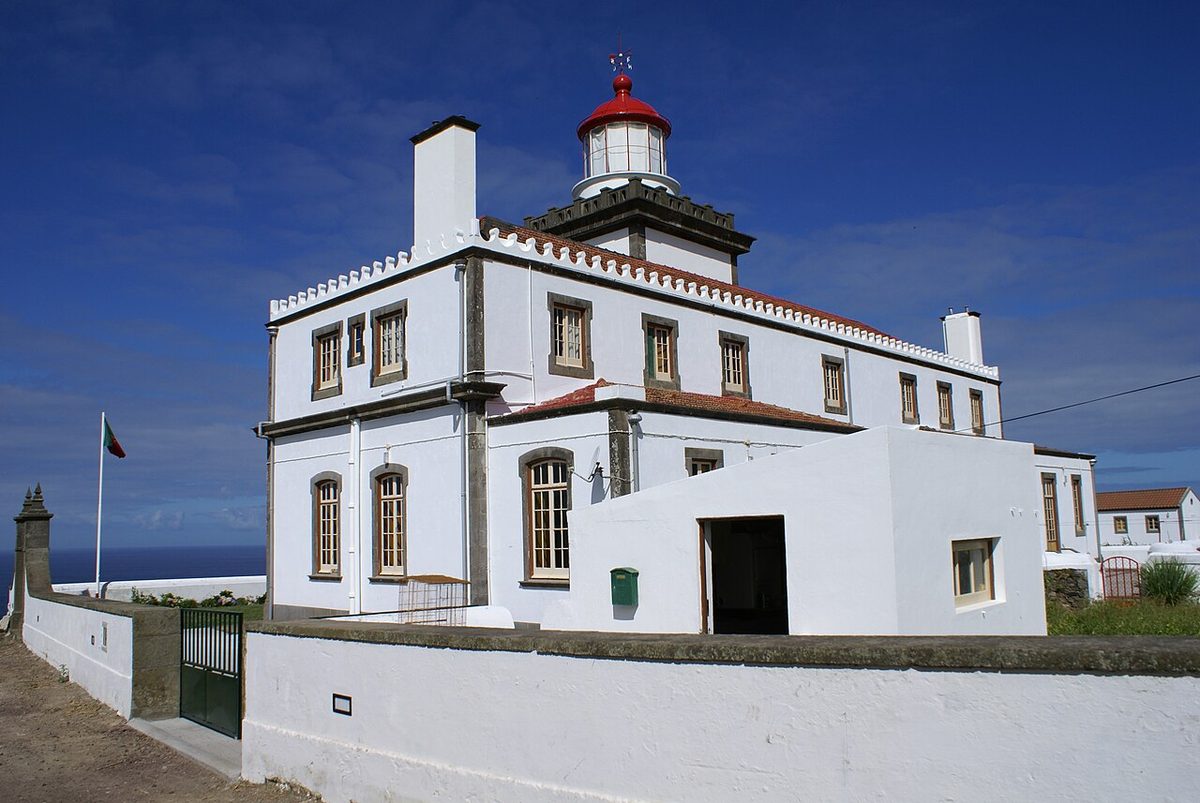
On the far west coast, below a lighthouse at the end of a switchback road, a hot spring vents straight into a rocky cove of the Atlantic. At low tide the water in the cove is warm, like a slightly underheated bath. At high tide the ocean pours in and it’s just cold sea with some warm patches. Ropes are strung across the cove so bathers can hold on against the surge. Check a tide table and aim for an hour either side of low water; in the right window it’s one of the most memorable swims in Portugal. There’s a separate, paid thermal spa beside the cove for anyone who wants the heat without the waves. Verdict: go, but only at the right tide, and not in a big swell.
Mosteiros
The village on the north-western tip has a black-sand beach, rock pools that fill with calm water at low tide and a cluster of basalt sea stacks offshore that the sun sets behind. It’s the best sunset on São Miguel, and a natural way to end a Sete Cidades day: rim in the morning, Ferraria at low tide, Mosteiros for the evening. Verdict: the western day’s full stop.
The centre: Lagoa do Fogo, Caldeira Velha and the north coast
Lagoa do Fogo
Lagoa do Fogo, the Lake of Fire, fills the summit crater of the Fogo volcano, which last erupted in 1563. It’s a nature reserve with no buildings, no café and nothing at the water’s edge but a beach of pale sand, which is exactly why I rate it above Sete Cidades for atmosphere, if not for the famous view. The viewpoints are on the road that crosses the mountain between the south coast and Ribeira Grande, and a steep path drops from beside the road to the shore: allow roughly half an hour down and longer back up, and wear shoes with grip, because the path is often wet.
The summer shuttle, and a disagreement about dates. To deal with overcrowding, the regional government restricts cars on the mountain road in summer. According to the Azores tourism portal, from 15 June to 30 September the 14 km stretch between the Caldeira Velha car park and the Casa da Água car park is closed to non-resident traffic between 09:00 and 19:00, and a shuttle bus runs instead, costing €5 per person (children under six and Azores residents free), with tickets online or on the bus. Outside those hours you can drive up yourself. However, local news outlet Açores 9 reported in 2026 that that year’s shuttle had been cleared to start in August, not June. Both sources were checked in September 2026. The dates evidently move from year to year, so check the regional tourism portal before you plan around it.
Verdict: go on a clear day, either early before the shuttle hours, late after them, or on the shuttle in between. If the lake is in cloud, which it often is, there’s nothing to see and you should come back another day.
Caldeira Velha
On the northern side of the same mountain, a fern-filled gully holds a warm waterfall pool and a couple of man-made thermal pools, with an interpretation centre run by the Azores natural parks service. It’s lovely, and everyone knows it: entry is now by timed slot, booked online, and tickets are typically released for the next day onwards rather than the same day. A 2026 visitor guide quotes the ticket at €10, non-refundable; I could not confirm that against the parks’ own booking site, so treat it as indicative. Verdict: worth it if you book the evening before, and a good pairing with Lagoa do Fogo, since the shuttle starts from its car park. If you are only doing one thermal pool on the island, do Terra Nostra instead.
Ribeira Grande and Santa Bárbara
The north coast’s main town is the island’s second, with an eight-arched bridge over the river, a handsome old centre that few visitors bother to walk and the Arquipélago contemporary arts centre in a converted factory on the edge of town. The liqueur maker Mulher de Capote, known for its passion-fruit liqueur, has a visitor shop here. West of town, Santa Bárbara is a long black-sand beach that hosts international surf contests and is the best place on the island to learn or watch surfing. Verdict: a good half-day between Lagoa do Fogo and the tea estates, and a genuinely good alternative base to Ponta Delgada if you surf.
Gorreana and Porto Formoso tea
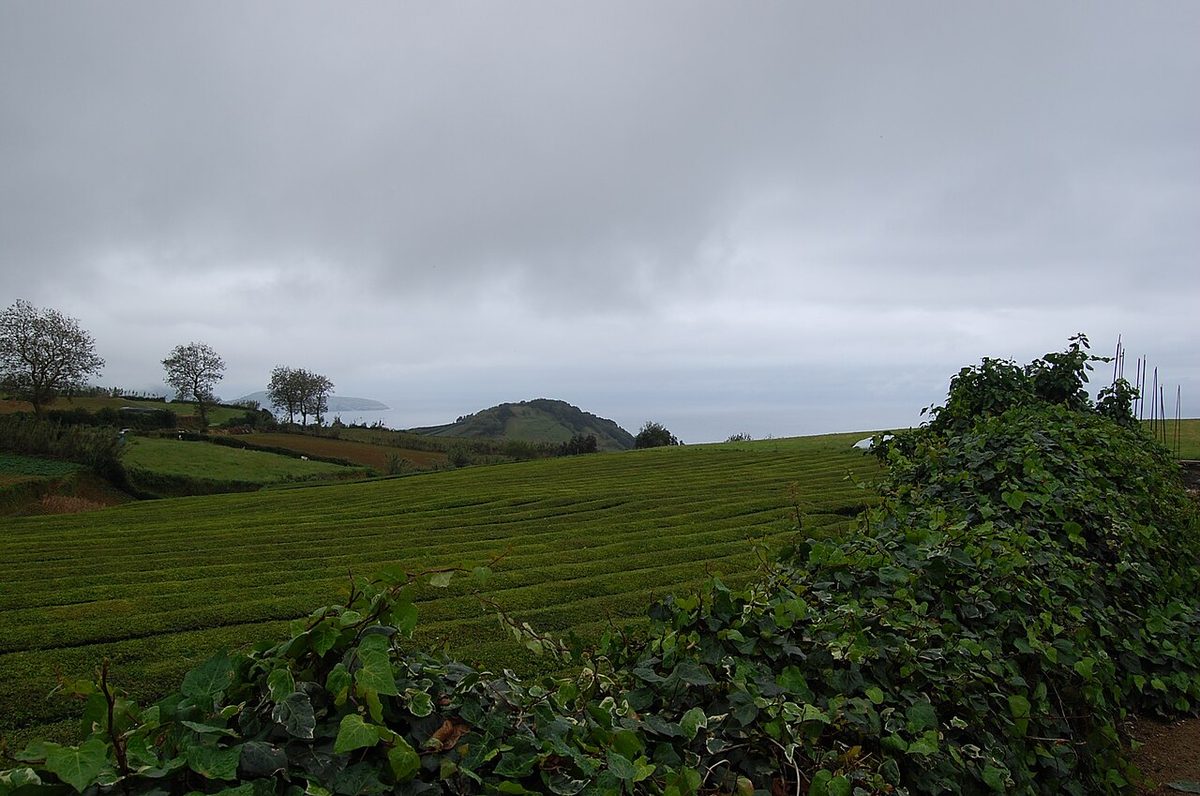
São Miguel grows tea, the only commercial tea plantations in Europe, on the north coast east of Ribeira Grande. Gorreana has been run by the same family since 1883, and its factory, which still uses much of its original machinery, is free to walk through, with free tastings of the green and black teas and a path out through the rows of bushes towards the sea. Porto Formoso, a few minutes west, is smaller and quieter and has a tea room with a view. Verdict: an easy, pleasant, free stop on the north-coast road, forty-five minutes at most. Don’t expect a Sri Lankan hill-country experience; it’s a small factory and some hillsides of tea.
Furnas, the valley that cooks lunch
Furnas is the place I’d least want to miss on São Miguel. The village sits inside an active volcanic caldera, and the volcano hasn’t gone anywhere: boiling springs bubble up between the houses, steam drifts out of the drains, the air smells faintly of sulphur, and a dozen mineral springs pour out water ranging from cold and fizzy to scalding. It’s a nineteenth-century spa town built on top of it all, with a slightly faded, old-fashioned air that suits it.
The caldeiras in the village
In the middle of Furnas, fenced pools of grey water boil and spit next to the road. Vendors cook corn on the cob in the hot springs and sell it hot. Along the stream you’ll find taps and fountains of mineral water you can taste, from the iron-heavy to the naturally carbonated. It’s free, it’s in the centre of the village, and it takes an hour to wander properly. Verdict: the introduction to Furnas; do it on foot.
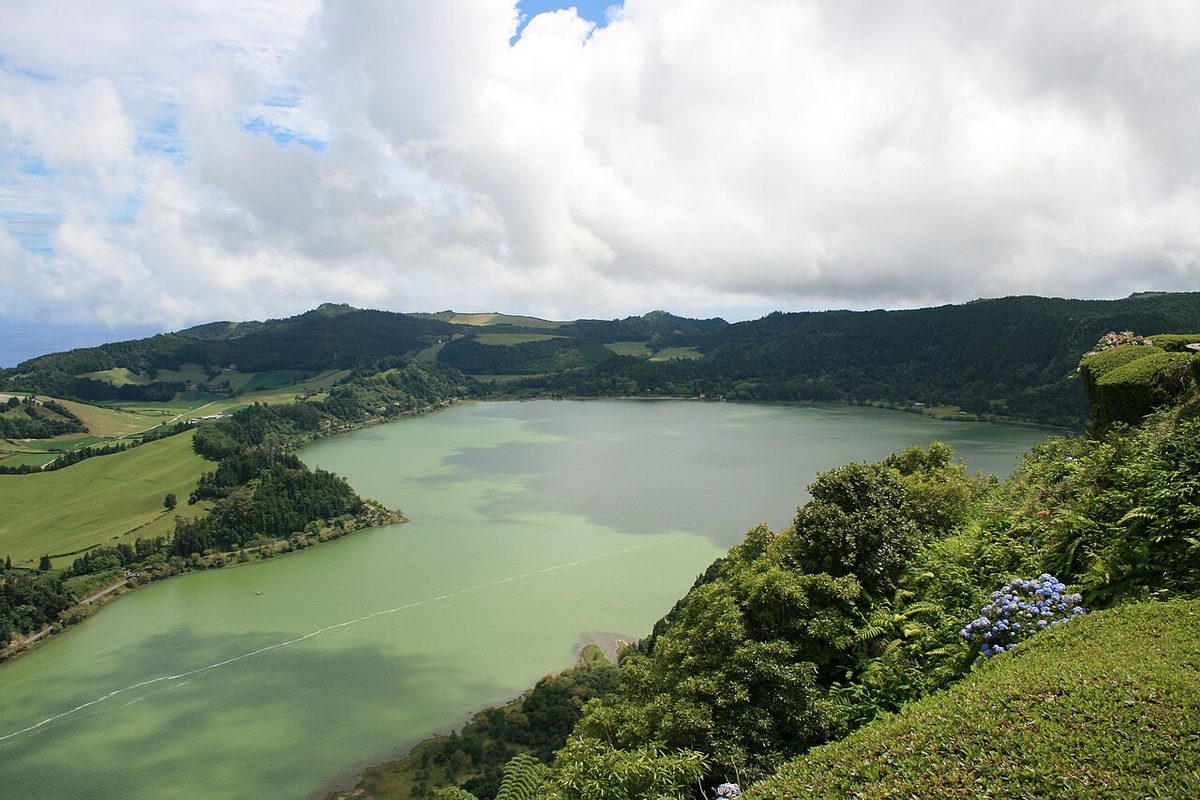
Lagoa das Furnas and the cozido
A few minutes’ drive from the village, the lake has a patch of fumaroles on its northern shore where the cozido das Furnas is cooked. Restaurants bring metal pots of meat, sausage, cabbage and root vegetables down in the early morning, lower them into holes in the hot ground and cover them with earth, and about six hours later they dig them up again. Crowds gather to watch the pots come out late in the morning, which is a fine bit of theatre. Eating it is better. Tony’s in the village is the best-known place for cozido and fills up at lunch, so book or arrive early. On the lake’s southern shore, the Mata-Jardim José do Canto is a nineteenth-century woodland garden with a small Gothic Revival chapel at the water’s edge, and the walk around the lake is an easy few hours.
Terra Nostra Park
The garden began in 1775 as the summer house of Thomas Hickling, a merchant from Boston who had settled on the island, and grew through the nineteenth century into one of the finest botanical gardens in Portugal, with collections of tree ferns, cycads, camellias and hydrangeas along paths and streams. At its heart is a large pool of warm, iron-rich water the colour of strong tea. Swimming in it is the Furnas experience everyone photographs, and it is worth doing. The iron stains pale swimwear permanently, so bring an old costume. The smaller pools near the entrance are hotter.
On price, I have to be straight with you: the park’s ticketing site blocked my check in September 2026, and the most recent figure I could find published elsewhere was €17 for an adult, dating from 2023. Treat that as a floor and check the park’s own site before you go. Verdict: go, and give the garden an hour before you get in the water. Late afternoon is quieter than midday.
Poça da Dona Beija
A cluster of five small, warm pools in the village itself, lit at night and set among plants and stone walls. Tickets are sold online for timed slots, and in July and August you should book a day or more ahead. I couldn’t confirm the 2026 price at source, so check when you book. Verdict: the best evening option on the island. After dark, with the day-trippers gone and steam lifting off the water, it’s a different place from the crowded midday version.
Why you should sleep in Furnas
Almost everyone does Furnas as a day trip from Ponta Delgada. They arrive with the coaches, queue for cozido and leave by 17:00. Stay the night instead and you get the pools in the evening, the village caldeiras quiet in the morning mist, and the lake before anyone else arrives. It also cuts a long drive in half if you’re heading on to Nordeste. One night is enough; two lets you walk around the lake and up to the viewpoints properly. The bolo lêvedo, the slightly sweet flat muffin this valley is known for, is best warm from a bakery at breakfast.
The south coast: Vila Franca do Campo and Caloura
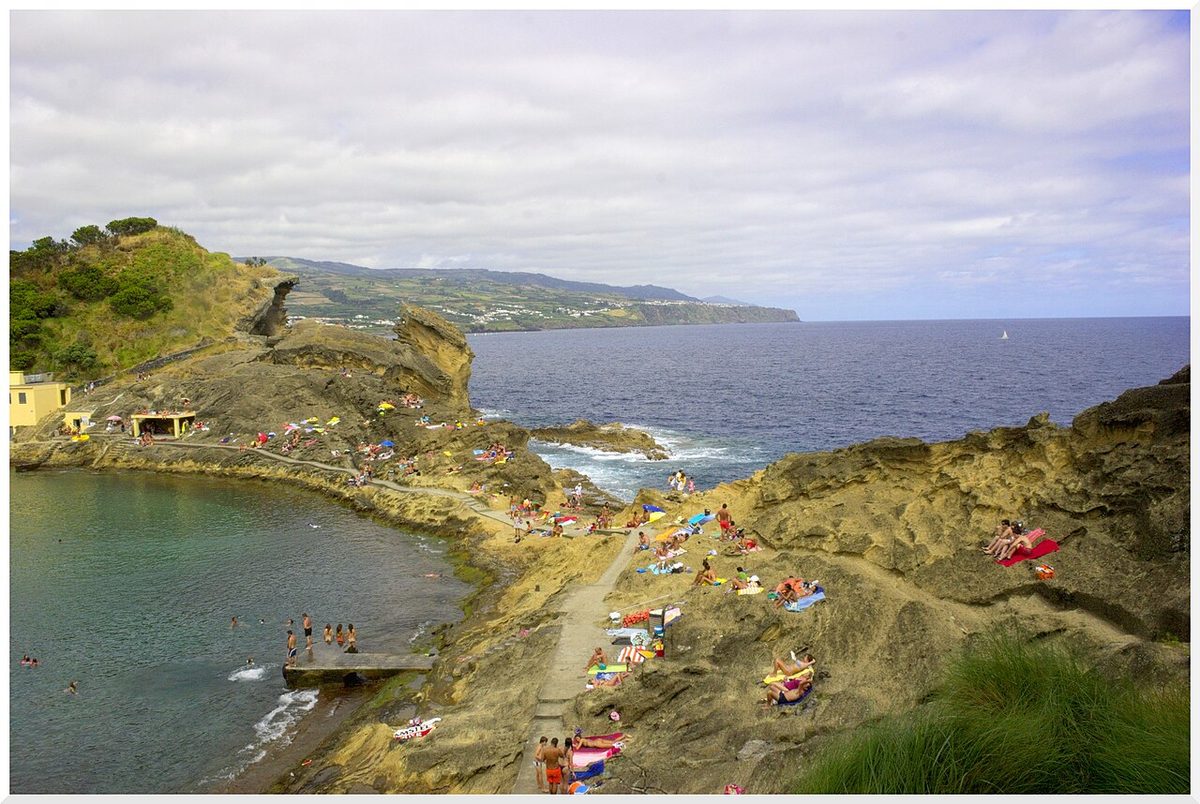
Ilhéu de Vila Franca
About a kilometre offshore from Vila Franca do Campo, a small volcanic crater has been flooded by the sea, leaving a near-circular natural lagoon inside a ring of rock with one narrow opening to the ocean. It’s been used for the Red Bull Cliff Diving series, and it is simply one of the best places to swim in the Azores: calm, clear water in a volcano. Boats run from Vila Franca’s marina in the summer season only, visitor numbers are capped, and in high summer you should buy the boat ticket a day or two ahead. Take food and water, because the islet has no café to speak of. Verdict: a half-day that feels like a holiday inside the holiday. Only in summer.
Vila Franca town and its queijadas
Vila Franca was the island’s first capital until an earthquake and landslide buried much of the town in 1522, after which the centre of gravity moved to Ponta Delgada. Today it’s a quiet harbour town with a pretty main square, a hilltop chapel (Nossa Senhora da Paz) at the top of a zigzag stair that gives a fine view over the islet, and the queijadas da Vila, small, dense, sweet cheese tarts made here and sold across the island. It’s also a whale-watching base, and a quieter one than Ponta Delgada. Verdict: combine with the islet or a whale trip; the queijadas are non-negotiable.
Caloura
West of Vila Franca, the tiny fishing harbour at Caloura has a sea pool cut into the rocks and a harbour bar-restaurant that serves grilled fish at tables beside the water. It’s where Ponta Delgada people go for a long lunch and a swim on a summer Sunday, and it’s a far better version of that than the city’s own seafront. Verdict: a good lunch stop on the way to or from Furnas.
Nordeste, the far east most visitors never reach
The Nordeste municipality used to be called “the tenth island”, because before the fast road was built it took so long to reach from Ponta Delgada that it might as well have been one. It’s still the least-visited part of São Miguel, and it’s the part that most rewards a car: steep green valleys dropping to the sea, the island’s highest mountain, waterfalls, and a series of hillside viewpoints kept like gardens by the local council. Allow a full day, from Furnas if possible rather than from Ponta Delgada, and don’t try to add anything else to it.
Ponta do Sossego and Ponta da Madrugada
Two clifftop viewpoints on the eastern coast, both laid out as flower gardens with picnic tables, hydrangeas and views straight down the coast. Madrugada means dawn, and it’s the place to watch the sun come up out of the Atlantic if you’re staying nearby. Verdict: the loveliest picnic spots on the island.
Ribeira dos Caldeirões
A small natural park on the north-east coast road with a tall waterfall dropping into a pool, restored watermills along the stream and plenty of shade. It’s easy, free and ten minutes from the car. Verdict: a quick, pretty stop, and a good one with children.
Salto do Prego
From the village of Faial da Terra, on the south coast of the eastern massif, a well-signed trail climbs a valley through woods to the Salto do Prego waterfall and back through the restored hamlet of Sanguinho, a loop of about four and a half kilometres that takes two to three hours. It’s the best short walk in the east. Verdict: go, but it’s muddy after rain and the path is steep in places.
Pico da Vara and the priolo
The forested ridge of Pico da Vara, at 1,103 m, is the only place in the world where the priolo lives. It’s the Azores bullfinch, one of Europe’s rarest birds, which was down to a few hundred pairs before a long conservation programme restored the native laurel forest it depends on. The environmental centre that tells its story is on the road through the eastern hills. Climbing the peak itself has been subject to access restrictions to protect the habitat, so check before you set out. Verdict: for birders and walkers, a genuine reason to visit the east.
Farol do Arnel
The oldest lighthouse in the Azores sits at the bottom of a road near Nordeste village so steep it’s become a local legend. Walk down rather than drive, and be honest with yourself about the walk back up. Verdict: nice, but the walk is the attraction, not the lighthouse.
Whale and dolphin watching from São Miguel
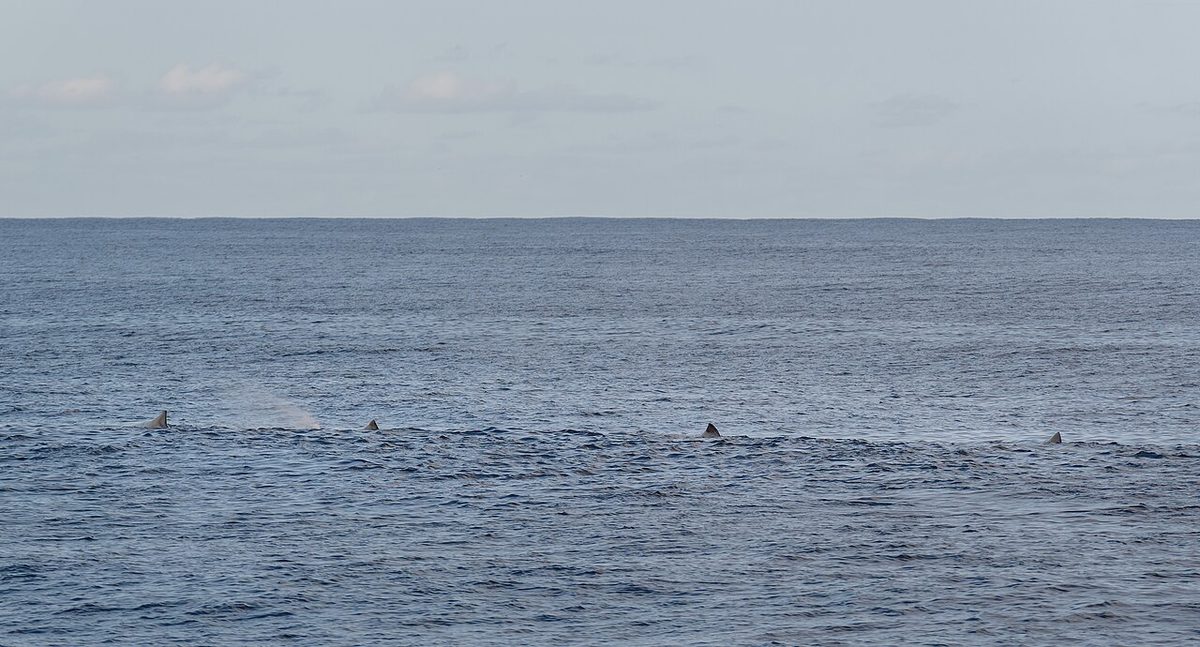
The Azores are among the best places in the world to see whales, and São Miguel has the most operators, sailing from Ponta Delgada and Vila Franca do Campo. Sperm whales live around the islands year-round and are recorded in every month. The big baleen whales pass on migration: blue, fin and sei whales mostly between April and June, strongest from mid-April to mid-May, and most blues have moved north by late June. Common and bottlenose dolphins are seen all year, often in large groups.
| Species | When | How likely |
|---|---|---|
| Sperm whale | All year | Resident; seen in every month |
| Blue whale | April–June, best mid-April to mid-May | Migratory; most gone by late June |
| Fin and sei whales | Spring, roughly April–June | Migratory |
| Common and bottlenose dolphins | All year | Very likely on most trips |
The boats are guided by vigias, clifftop lookouts that were built to spot whales for the hunt and are now used to spot them for tourists. Whaling continued in the Azores into the 1980s (Lajes do Pico was a working whaling port until 1984), so the lookouts’ skills go back generations. A few practical rules. Book for early in your stay, so a trip cancelled for rough sea can be moved. Ask whether the operator offers a free repeat trip if you see nothing, since many do. Choose between a large catamaran, which is steadier, and a rigid inflatable, which is faster and wetter. Take seasickness tablets before you board, not once you feel ill. I haven’t verified 2026 fares for individual operators, so compare them on the operators’ own sites. Verdict: on a first trip, do it. In April or May it’s the best wildlife experience in Portugal.
São Miguel’s hot springs compared
Four thermal waters are worth your time, and they are not interchangeable. Here’s how they compare.
| Hot spring | What it is | Booking | Best time | Verdict |
|---|---|---|---|---|
| Terra Nostra, Furnas | Large iron-rich pool in a historic botanical garden, plus smaller hotter pools | Tickets at the park; price unconfirmed in 2026 | Late afternoon | The one to do if you only do one |
| Poça da Dona Beija, Furnas | Five small warm pools in the village, lit at night | Timed tickets online | Evening | The best after-dark soak |
| Caldeira Velha, centre | Warm waterfall pool and thermal pools in a fern gully | Timed entry online, from the next day; ~€10 reported | First slot of the day | Beautiful but busy |
| Ponta da Ferraria, west coast | Hot spring venting into a sea cove | None; free | Around low tide, calm sea | The wildest, and entirely tide-dependent |
Two general warnings. Iron-rich water stains, so wear dark or old swimwear and remove silver jewellery. And sit out the hottest pools in short spells, especially if you’ve been drinking or it’s a hot day.
Hiking on São Miguel
The island’s official walks are signed with red-and-yellow waymarks and graded by difficulty, and they are the best way to see what the drive-up viewpoints only hint at. My shortlist: the Sete Cidades rim for the views; the Salto do Prego loop from Faial da Terra for the waterfall and the restored village; the path down to Lagoa do Fogo for the wildness; and a loop around Lagoa das Furnas if you’re staying in the valley. None of these needs special kit beyond grippy shoes, a waterproof and water, but all of them turn slippery after rain, which here means most weeks.
Before you go, check the trail’s status on the regional government’s official trails site. Landslips close sections after heavy rain, and access rules for the busiest sites have been changing year to year. Walk in the morning, when the high ground is most likely to be clear, and turn back if the cloud comes down on a ridge route: the views are the reason to be up there, and navigation in thick cloud on an unfamiliar crater rim isn’t fun. For the archipelago-wide picture, including Pico’s summit climb and the walks on Flores and São Jorge, see our guide to the Azores islands.
What to eat on São Miguel
Azorean food is mainland Portuguese cooking made with dairy-country butter and cheese, Atlantic fish and a few things the volcano provides. The dishes to seek out:
Cozido das Furnas
The volcano-cooked stew described above: beef, pork, chicken, blood sausage, chouriço, cabbage, potato, yam and carrot, all steamed in the ground for about six hours. It’s heavy, comforting and more about the method than the flavour. Eat it once, in Furnas, at lunch.
Lapas
Limpets grilled in their shells with garlic, butter and lemon, served sizzling in a metal tray. The best snack on the island, and best eaten by the harbour at Caloura or Ponta Delgada with a cold beer.
Bolo lêvedo and queijadas
The bolo lêvedo is a flat, slightly sweet muffin from Furnas, eaten toasted with butter or used for sandwiches. The queijadas da Vila are small cheese tarts from Vila Franca do Campo. Both are sold all over the island, and both are better where they’re made.
Pineapple, passion fruit and tea
The Azorean pineapple is small, fragrant and sharper than the imported kind; buy one from the Mercado da Graça. Passion fruit turns up in liqueur and in Kima, a local soft drink. Tea from Gorreana or Porto Formoso is the obvious thing to take home.
Cheese, beer and wine
São Jorge cheese, a sharp, hard cow’s milk cheese from the island of that name, is on every menu, and São Miguel has its own milder cheeses. Especial is the local beer, brewed in Ponta Delgada. For wine, drink something from Pico, whose lava-walled vineyards are a UNESCO World Heritage site. For more on the food of the mainland, much of which you’ll also find here, our Portuguese food guide runs through forty dishes region by region.
Ordering works as it does on the mainland: the couvert (bread, butter, sometimes cheese) is optional and charged if you eat it, and the prato do dia at lunch is the best value in any town.
São Miguel itineraries: 3, 5 and 7 days
Every plan below follows three rules: crater viewpoints in the morning, a spare half-day for weather, and at least one night in Furnas once you have five days or more.
Three days
| Day | Plan | Why |
|---|---|---|
| 1 | Sete Cidades early (Boca do Inferno, then the lakes); Ponta da Ferraria at low tide; sunset at Mosteiros | The whole west in one sweep, before the rim clouds over |
| 2 | Lagoa do Fogo early; Caldeira Velha (booked); Gorreana; drive on to Furnas; Poça da Dona Beija in the evening; sleep in Furnas | The centre on the way east, pools after dark |
| 3 | Furnas caldeiras and lake; cozido lunch; Terra Nostra; back to Ponta Delgada via Vila Franca for queijadas | A full Furnas day, finishing near the airport |
Three days works, but it means no whale trip and no spare day. If you have to cut something, drop Caldeira Velha.
Five days
| Day | Plan | Why |
|---|---|---|
| 1 | Arrive; Ponta Delgada old centre, the Portas da Cidade, dinner on the harbour | A soft first day after the flight |
| 2 | Sete Cidades rim walk or viewpoints; Ferraria at low tide; Mosteiros sunset | The west, on the first clear morning |
| 3 | Whale watching in the morning; pineapple glasshouses and the Mercado da Graça in the afternoon | Keeps the middle of the week flexible for the sea |
| 4 | Lagoa do Fogo; Ribeira Grande; Gorreana; on to Furnas; Poça da Dona Beija; sleep in Furnas | The centre and north coast on the way east |
| 5 | Furnas caldeiras and lake, cozido lunch, Terra Nostra; back via Vila Franca; fly out or last night in Ponta Delgada | Ends near the airport |
Seven days
Take the five-day plan and add two days. Spend a second night in Furnas and use the morning for a day in Nordeste: Ponta da Madrugada, Ponta do Sossego, Ribeira dos Caldeirões and the Salto do Prego walk from Faial da Terra. Then add a summer day on the south coast, with the Ilhéu de Vila Franca in the morning and a long lunch at Caloura. In a week you can also afford to let the weather choose the order, which is the real luxury: Sete Cidades on whichever morning is clearest, whales on whichever day is calmest. If you would rather add a second island than a sixth and seventh day on São Miguel, our Azores island-hopping guide explains why Pico and Faial are the best pair to add. For fitting the Azores into a longer trip that includes the mainland, see our Portugal itinerary planner.
Where to stay on São Miguel
| Base | Best for | Downside | My take |
|---|---|---|---|
| Ponta Delgada | Restaurants, evenings, the airport, whale trips, the west and centre | 45–50 min from Furnas, over an hour from Nordeste | The right main base for most people |
| Furnas | Evening pools, early lake walks, the east | Quiet at night, damp in winter, far from the west | One or two nights, always |
| Ribeira Grande and the north coast | Surfing, the centre, fewer crowds | Greyer weather than the south coast | Good for surfers and repeat visitors |
| Sete Cidades and Mosteiros | Early rim walks, sunsets, rural houses | Very quiet, little to eat in the evening | For walkers who want the first light |
| Vila Franca and Caloura | Summer swimming, the islet, a central south-coast location | Few restaurants | A good compromise between Ponta Delgada and Furnas |
| Nordeste | Solitude, walking, sunrise | Far from everything else | Only with a week or more |
My recommendation for a five-day trip is three or four nights in Ponta Delgada and one or two in Furnas, in that order, so the Furnas nights fall on the way to an afternoon flight. Book early for July and August: the island’s hotel stock is limited and prices climb sharply in high summer. Rural houses (turismo rural) outside the towns are often the most characterful places to stay, but you will be driving for every meal.
Getting to São Miguel and getting around
Flights
Ponta Delgada’s airport, a few kilometres west of the centre, gets most of the archipelago’s international traffic. From Lisbon the flight takes about 2h25, with several flights a day on Azores Airlines, TAP and budget carriers; there are also flights from Porto. Direct flights from North America (Boston and Toronto among them, some seasonal) are what brought so many American and Canadian visitors in recent years, and there are seasonal direct services from some other European cities. From the airport to the centre is a short taxi ride. If you’re routing through Lisbon, a night or two there makes a good stopover; our Lisbon travel guide has the highlights.
Car hire
You need a car. The sights are spread across the whole island, the best viewpoints are up mountain roads, and the timing rules that matter (early for the rims, low tide at Ferraria, evening in Furnas) don’t fit any bus timetable. Book well ahead for summer, because the island’s fleet is finite and automatics run out first. The SCUT fast roads are free; the minor roads are narrow, steep and slow, so treat Google’s drive times as optimistic. Park where signs allow at viewpoints rather than on the verge, and expect to meet cows. Our guide to getting around Portugal covers hire-car insurance, fuel and driving rules, which are the same here as on the mainland.
Buses, taxis and tours
Several private operators run buses out of Ponta Delgada. They’re built around commuters rather than visitors, reach Furnas, Sete Cidades and the north coast with a handful of services a day, and don’t serve the crater viewpoints or the times you’d want to be there. Taxis are plentiful in Ponta Delgada and will quote a fixed price for a half-day or full-day tour; agree it before you set off. The other option is a jeep or minibus tour to Sete Cidades or Furnas, which is what I’d do without a licence. It’s the one situation where a tour genuinely makes sense on this island.
Other islands
From São Miguel you can fly to all eight other islands on the regional airline, while the Atlânticoline ferries run a much denser network in summer than in winter, mostly around the central group. São Miguel to Santa Maria is the short hop; the central islands are an hour or so away by air.
When to go: weather, whales and the cloud
São Miguel is mild all year and never truly hot. Ponta Delgada’s average daily high runs from about 17.5 °C in January to about 26 °C in August, and the city gets around 990 mm of rain a year, more than Lisbon and far more than Madeira, with December the wettest month. The cliché that the Azores have four seasons in a day is true: showers blow through and clear, and the high ground makes its own weather.
| Season | Weather | Good for | Watch out for |
|---|---|---|---|
| April–May | Mild, changeable, greening | Blue and fin whales, quiet roads, flowers | Rain, cloud on the rims, cool sea |
| June–September | Warmest, clearest, driest | Lakes, swimming, the islet, hydrangeas (June–August) | High prices, full hotels, Lagoa do Fogo shuttle |
| October | Still mild, more showers | Walking, thermal pools, lower prices | Shorter days, first autumn storms |
| November–March | Mild but wet and windy | Hot springs, sperm whales, cheap flights | Cancelled boat trips, closed trails, grey days |
My pick is the second half of May for whales and flowers, or September for the warmest sea, the clearest lakes and post-August prices. The big local festival, Senhor Santo Cristo dos Milagres, fills Ponta Delgada on the fifth Sunday after Easter and the days around it, with processions, flower carpets and emigrants flying home from North America. It’s worth seeing, but book early. For how the Azores compare with the mainland month by month, see our best time to visit Portugal guide.
What to skip, and what’s overrated
Sete Cidades in the afternoon. It’s the most common mistake on the island. People drive up after lunch, see nothing but cloud and leave thinking the famous view is a myth. It isn’t. It’s just a morning view.
The derelict Monte Palace Hotel. Social media has made it an attraction. It’s a ruin with open drops next to a much better view. Look at the lakes.
Furnas as a midday day trip in July. You’ll arrive with the coaches, queue for cozido, share Terra Nostra’s pool with a crowd and drive back tired. Stay the night.
Lagoa do Fogo in cloud. There’s no view, the path is slippery and there’s nothing else up there. Check the webcams and swap days.
Caldeira Velha if you’re only doing one hot spring. It’s pretty, but it’s the most crowded and the most booked-up, with the smallest pools. Terra Nostra or an evening at Dona Beija is the better single choice.
The pineapple plantation and the tea factory as destinations. Both are nice, short, free stops. Neither is worth a detour.
Beach days. There are decent beaches (Santa Bárbara, Mosteiros, Água d’Alto near Vila Franca), but nobody should fly to São Miguel for them. If sand and sun are the point, the best beaches on the mainland are the better bet. Swim at Ferraria, the islet and the sea pools instead.
Trying to see the whole island in two days. It’s possible, and it’s miserable: most of both days in the car, the rims in cloud and nothing at the right time. Three days is the realistic minimum.
What São Miguel costs (checked September 2026)
| Item | Price | Status |
|---|---|---|
| Lagoa do Fogo shuttle | €5 per person; under-6s and residents free | Regional tourism portal, checked September 2026 |
| Caldeira Velha | ~€10, timed, non-refundable | Reported by a 2026 visitor guide; not confirmed on the parks’ booking site |
| Terra Nostra Park | €17 last published (2023) | Park’s own site not reachable in September 2026. Check before going |
| Poça da Dona Beija | Timed online tickets | Price not confirmed at source |
| Ponta da Ferraria sea pool | Free | The spa beside it is separate and paid |
| Gorreana tea factory | Free, including tasting | Long-standing |
| Whale watching | Varies | Not verified for 2026. Compare operators’ own sites |
| Espresso at the counter / pastry | €0.80–1.20 / €1.20–1.50 | Portugal-wide, September 2026 |
| Prato do dia lunch with a drink | €9–15 | Portugal-wide, September 2026 |
Day to day, São Miguel costs about the same as mainland Portugal outside Lisbon. Where it costs more is in July and August, when flights, hotels and hire cars all get expensive together, and in the fact that you really do need a car. For a full budget breakdown, including flights and hire cars, see our guide to what a Portugal trip costs.
São Miguel or Madeira?
It’s the question I get asked most about Portugal’s islands, and the honest answer is that they suit different trips.
| São Miguel | Madeira | |
|---|---|---|
| January average high | ~17.5 °C (Ponta Delgada) | ~20 °C (Funchal) |
| Annual rain in the main city | ~990 mm | ~575 mm |
| Flight from Lisbon | ~2h25 | ~1h45 |
| Signature landscape | Crater lakes, hot springs, pastoral green | Sea cliffs, high peaks, levada paths |
| Walking | Easy to moderate, weather-dependent | Dramatic; official trails need a paid booking (€4.50, PR1 €10.50) |
| Wildlife | Whales all year, blue whales in spring | Dolphins and some whales |
| Best for | Nature, soaking, a slower pace | Winter sun, big hikes, a proper city |
For winter sun, go to Madeira. For whales, volcanic lakes and thermal pools, and a greener, emptier, more rural island, go to São Miguel. For the full picture on the other island, see our Madeira travel guide.
Frequently asked questions
How many days do you need on São Miguel?
Five days is the right amount for a first visit: enough for Sete Cidades, Lagoa do Fogo, a night in Furnas, a whale trip and a spare day for weather. Three days is the realistic minimum, and a week lets you add Nordeste and the Vila Franca islet.
Do you need a car on São Miguel?
Yes, realistically. The buses are built for commuters and don’t reach the crater viewpoints at the times you want to be there. Without a car, use a jeep or minibus tour for Sete Cidades and Furnas, or hire a taxi for the day at an agreed price.
What is São Miguel best known for?
The twin lakes of Sete Cidades, the volcanic village of Furnas with its hot springs and ground-cooked cozido, Lagoa do Fogo, whale watching, and the only tea plantations in Europe. It’s also the main arrival point for the Azores, with most of the international flights.
When is the best time to visit São Miguel?
June to September for the clearest lakes and warmest sea, with September the sweet spot for prices. Mid-April to mid-May is best for blue whales. Winter is mild but wet and windy, with more cancelled boat trips.
Can you drive to Lagoa do Fogo?
Outside summer, yes. In summer the road is closed to non-resident traffic in the daytime and a €5 shuttle runs from the Caldeira Velha car park. The tourism portal gives the season as 15 June to 30 September, 09:00–19:00, but a 2026 local news report said that year’s service was cleared to start in August, so check the regional tourism portal for the current dates.
Which is the best hot spring on São Miguel?
If you do one, do Terra Nostra in Furnas for the garden and the big iron-rich pool. Poça da Dona Beija is the best in the evening, and Ponta da Ferraria is the most memorable, but only around low tide in a calm sea.
Is Ponta Delgada or Furnas the better base?
Ponta Delgada for most of the trip, because it has the restaurants, the airport and the whale boats, and it’s closest to the west. Add one or two nights in Furnas for the evening pools and quiet mornings.
Can you see whales from São Miguel all year?
Yes. Sperm whales live around the Azores year-round and dolphins are seen in every month. The migrating blue, fin and sei whales pass mainly between April and June, and winter trips are cancelled more often because of the sea.
Is São Miguel expensive?
Day-to-day costs are similar to mainland Portugal outside Lisbon: a counter espresso still costs around a euro and a lunch menu €9–15. July and August push up flights, hotels and hire cars, and the car itself is an unavoidable cost.
Is São Miguel better than Madeira?
Neither is better; they’re different. Madeira is warmer in winter, with bigger mountains and a real city. São Miguel is greener and quieter, with crater lakes, hot springs and year-round whales.
Weighing the two archipelagos for walking? Madeira’s levadas are steeper and more dramatic, and since 2026 every official trail there needs a paid, timed booking. Our Madeira hiking guide explains the system and picks the trails worth booking.
For a closer look at the island’s hot pools, including the disputed Terra Nostra price, Poça da Dona Beija’s online-only tickets and how to time Ponta da Ferraria with the tide, see our guide to hot springs and thermal spas in Portugal, which also covers the mainland’s historic spa towns.
Where to go next
- Which Azores island to add after São Miguel, and how to hop between them
- Madeira, Portugal’s other Atlantic island
- The best things to do across Portugal, mainland and islands
- Practical Portugal travel tips before you fly
- Lisbon for a stopover on the way out or back
- Month-by-month weather for the whole country
Photo credits
- Sete Cidades lakes and village from the crater rim (featured image) — Abspires40 from Cape Town, South Africa, CC BY 2.0, via Wikimedia Commons
- Portas da Cidade, Ponta Delgada — Ravi Sarma, CC BY 2.0, via Wikimedia Commons
- Ponta da Ferraria lighthouse — José Luís Ávila Silveira/Pedro Noronha e Costa, Public domain, via Wikimedia Commons
- Gorreana tea plantation — ristok from Helsinki, Finland, CC BY-SA 2.0, via Wikimedia Commons
- Lagoa das Furnas from above — Abspires40 from Cape Town, South Africa, CC BY 2.0, via Wikimedia Commons
- Ilhéu de Vila Franca — JCNazza, CC BY 3.0, via Wikimedia Commons
- Sperm whales off São Miguel — Jules Verne Times Two, CC BY-SA 4.0, via Wikimedia Commons
Prices and access rules checked September 2026. Where a figure couldn’t be confirmed with the operator, this guide says so; always check the Lagoa do Fogo shuttle dates and the thermal-pool booking systems on their official sites before you travel, as they have changed from year to year. Last updated: September 2026.