Search for the best beaches in Portugal and page one still serves a 2022 list built around a handful of Algarve postcards and barely a thousand words of actual text — nothing on the Alentejo’s empty coastline, nothing on the Silver Coast’s surf towns, nothing on the black-sand beaches Madeira and the Azores actually have. Portugal’s best beaches in Portugal span six genuinely different coastlines, not one, and treating the country as a single beach destination misses most of what’s actually there. Each of those six coasts has its own water temperature, its own crowd pattern, its own facilities and its own idea of what a “good beach day” even looks like — a fact no single ranked top-ten list, built to fit one format, can honestly represent — which is exactly the gap this guide is written to fill, region by region rather than beach by interchangeable beach.
The short version: the Algarve has the postcard coves everyone already knows; the Lisbon coast has surf, cliffs and a Blue Flag beach twenty minutes from the capital; the Silver Coast owns the country’s biggest waves and its emptiest sand; the Alentejo and Costa Vicentina have the wildest, least-developed coastline in mainland Portugal; the north is coldest and least touristed; and the islands run from Madeira’s volcanic-pebble coves to the Azores’ natural ocean pools. This guide covers 30 beaches across all six, five per coast, chosen for genuine variety within each region rather than five versions of the same postcard shot.
Best beaches in Portugal: the coasts at a glance
| Coast | Signature beach | Water | Best for |
|---|---|---|---|
| Algarve | Praia da Marinha | Warmest on the mainland, calm | Cliffs, caves, family swimming |
| Lisbon coast | Praia do Guincho | Cold, Atlantic swell | Surfing, windsurfing, day trips from the capital |
| Silver Coast | Praia do Norte, Nazaré | Cold, powerful | Big-wave surf spectating, wide sandy beaches |
| Alentejo & Costa Vicentina | Praia da Comporta | Cool, clean, uncrowded | Space, wild landscapes, slow travel |
| The north | Praia de Moledo | Coldest on the mainland | Dune landscapes, far fewer tourists |
| Madeira & the Azores | Praia Formosa, Funchal | Mild year-round, often volcanic sand or pebble | Swimming outside the mainland summer season |
The Algarve: the beaches everyone already half-knows
The Algarve owns Portugal’s best-known coastline, and our dedicated best beaches in Algarve guide covers it in full detail — the five below are the ones that belong in any national list. What unites them, and what makes the Algarve the mainland’s warmest, calmest coast, is the region’s south-facing orientation and the limestone geology that carves the coves and stacks visible in almost every photo of the country’s beaches.
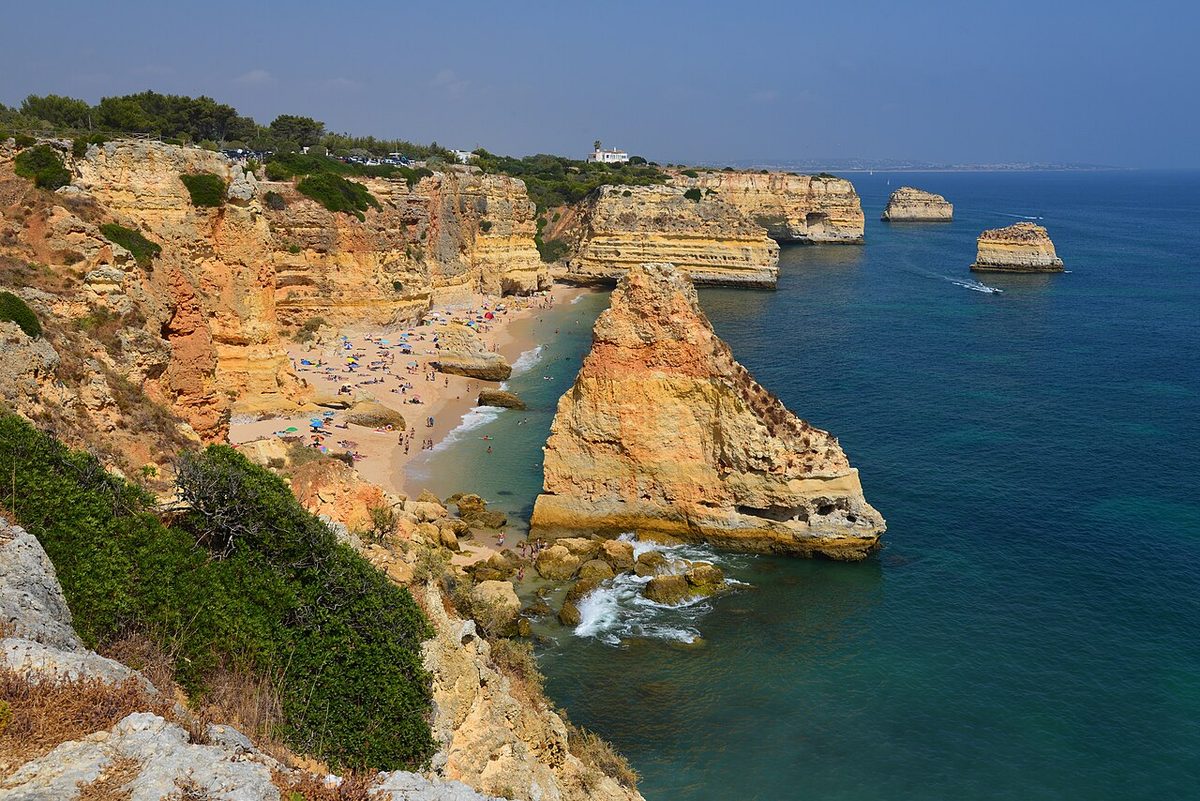
1. Praia da Marinha
The limestone-stack, turquoise-water beach on every Algarve cover, near Carvoeiro. Small, spectacular, and full by 10am in summer — the car park above it holds only a few dozen cars, and a long wooden staircase is the only way down.
2. Praia da Falésia
Six kilometres of ochre cliff and pine-topped sand between Vilamoura and Albufeira — long enough to never feel crowded even in August, with several access points along its length rather than a single crowded entrance.
3. Meia Praia, Lagos
Four kilometres of flat, easy sand a short walk from the Lagos old town, the practical antidote to the region’s staircase-access coves and one of the few Algarve beaches genuinely suited to a pushchair or limited mobility.
4. Ilha de Tavira
A sandbar island reached by ferry from Tavira, with the warmest, calmest water on the mainland and genuine space even in high season — budget the crossing into your day rather than treating it as an afterthought.
5. Praia do Camilo
A small cove near Lagos reached by a long wooden staircase, with the region’s classic stacks-and-arches scenery in miniature and a natural rock tunnel linking it to a second, smaller cove next door.
The Lisbon coast: surf, cliffs and a capital-city day trip
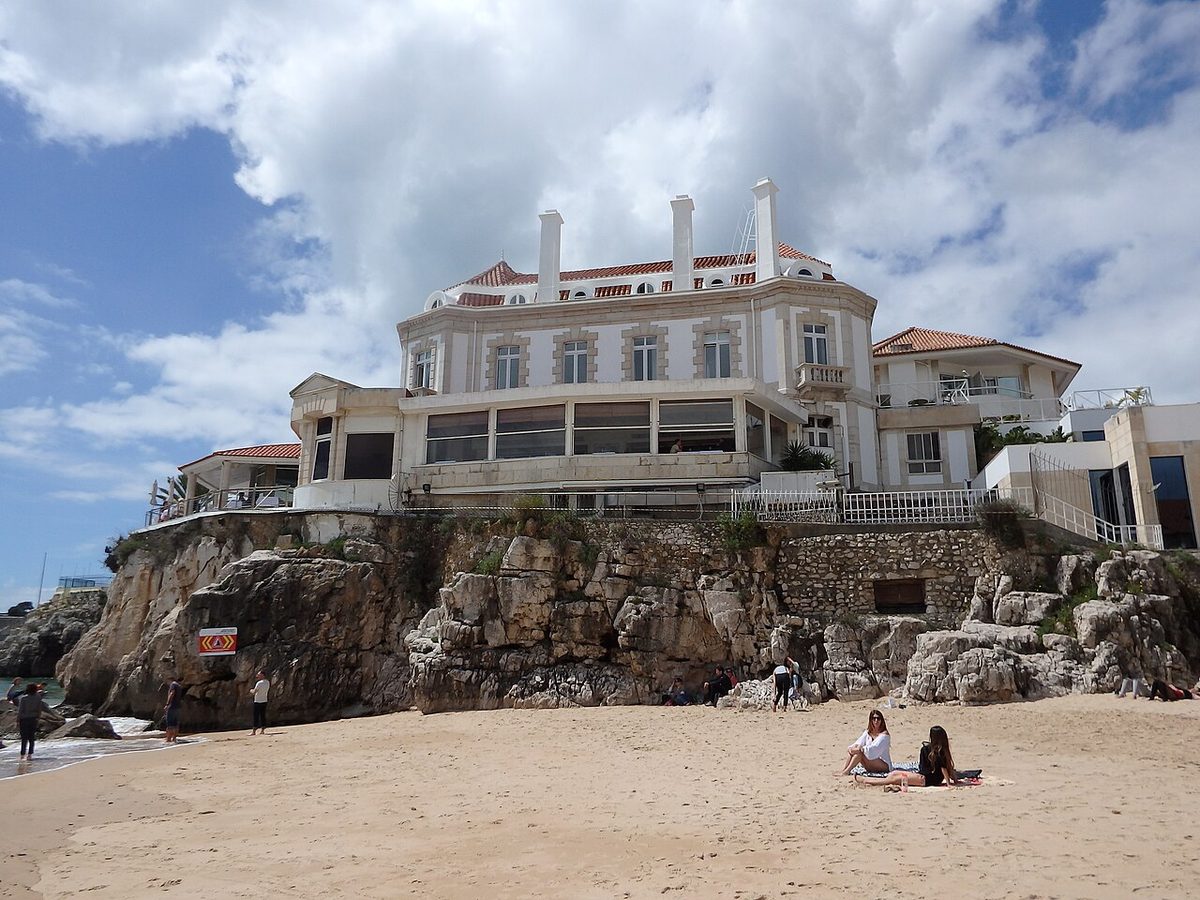
Within 40 minutes of Lisbon, the coastline shifts from the Tagus estuary’s calm water to genuine Atlantic surf and cliff scenery, all reachable by train or a short drive. Cascais and Sintra’s rail lines put five of the country’s most different beaches within a single day’s reach of a visitor with no car at all, which is not something any of the other five coasts in this guide can claim.
6. Praia do Guincho
Wide, dune-backed and permanently windy, Guincho near Cascais is one of Europe’s best windsurfing and kitesurfing beaches, and cold enough year-round that swimming is a secondary activity at best. It’s a short taxi or bus ride from Cascais station, itself under an hour from central Lisbon by train.
7. Praia da Adraga
A dramatic, rock-framed beach below Sintra’s hills, with a striking sea arch and considerably fewer visitors than Cascais despite being just as scenic — no direct public transport reaches it, which is most of why it stays quiet.
8. Costa da Caparica
A long, flat, easy-access strip south of the Tagus, popular with Lisbon locals rather than tourists, with a beachfront tram for the stretches too far to walk and enough length that a crowded northern end still leaves quieter sand further south.
9. Praia de Ribeira d’Ilhas, Ericeira
The signature break inside Ericeira’s World Surfing Reserve, the only one in Europe — a genuine surfers’ beach rather than a swimmers’ one, with surf schools and board rental clustered around the small car park above it.
10. Praia da Figueirinha, Arrábida
Inside the Arrábida Natural Park south of Lisbon, with water that runs a genuinely Mediterranean turquoise against limestone hills — one of the least Atlantic-feeling beaches on the mainland, and one where summer parking fills fast enough to need an early arrival or the park’s own shuttle bus.
The Silver Coast: big waves and empty sand
North of Lisbon, the Costa de Prata trades Algarve-style coves for wide, wild Atlantic beaches, cold water and the country’s biggest waves. The same offshore geography that produces record-breaking surf also keeps this coast noticeably cooler and rougher than the Algarve at the same latitude further south — pack accordingly rather than assuming a Portuguese beach means warm, calm water everywhere.
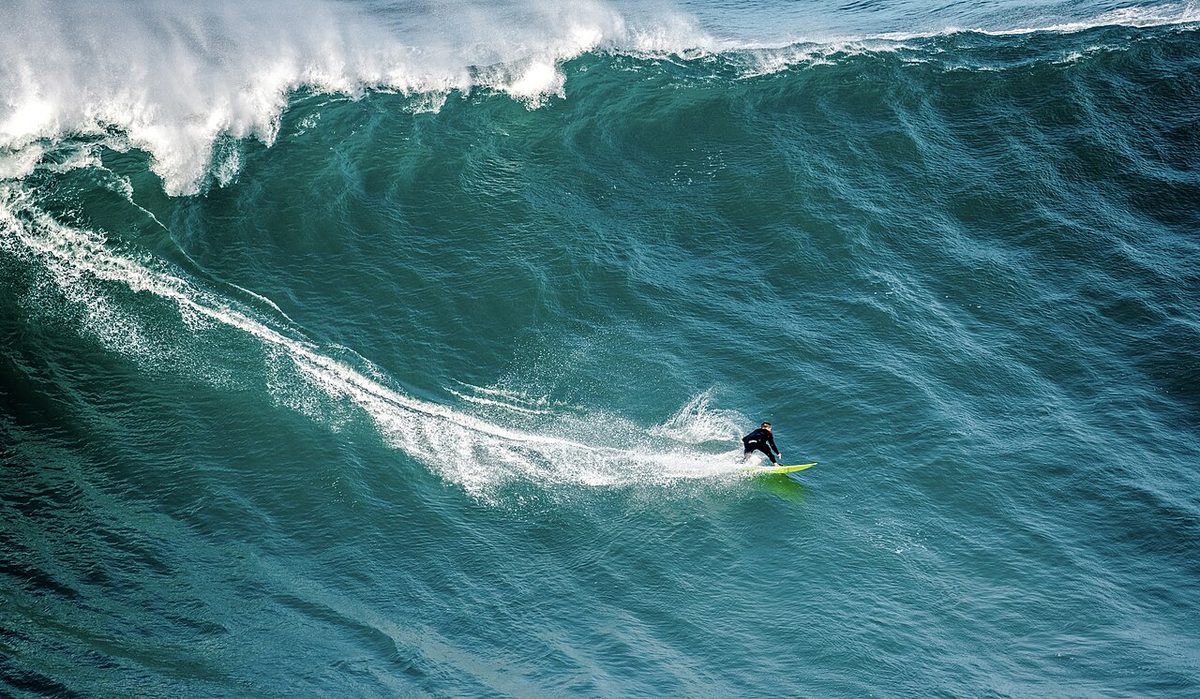
11. Praia do Norte, Nazaré
The beach that hosts the biggest rideable waves ever recorded, generated by an offshore underwater canyon that funnels ocean swell directly at the headland. Genuinely dangerous for swimming in big-wave season (roughly October-March); an ordinary, pleasant beach in summer, with a clifftop fort and viewpoint above it for watching either way.
12. Baleal, Peniche
A tied-island beach town and Portugal’s most consistent year-round surf destination, with breaks suited to complete beginners a short walk from breaks suited to nobody but experts — the reason so many of the country’s surf schools are based here rather than anywhere flashier, and the reason Peniche hosts a regular stop on the professional surfing tour rather than a smaller regional event.
13. Praia de São Martinho do Porto
A near-perfect natural bay shaped like a scallop shell, sheltering genuinely calm water rare on this coast — the Silver Coast’s best option for young children, with a gentle shelving sand bottom that stays shallow well out from shore.
14. Berlenga Grande
A short ferry from Peniche, the main Berlengas island has small granite coves with clear, cold water and a genuinely different feel from the mainland beaches a few kilometres away — book the ferry ahead in summer, since crossings are limited and can sell out.
15. Foz do Arelho
Where the Óbidos lagoon meets the open Atlantic, giving a choice between warm, shallow lagoon water and proper ocean surf within a few minutes’ walk of each other — a rare combination that suits a family with both nervous and confident swimmers in the same group.
Alentejo and the Costa Vicentina: the coastline everyone drives past
South of Lisbon and west of the Alentejo’s wine country, this stretch has the least development of any mainland coast — long protected sections, working fishing villages, and beaches that stay empty deep into summer. Much of this coast falls inside the Southwest Alentejo and Vicentine Coast Natural Park, which has kept large-scale resort development out and left a genuinely wilder shoreline than almost anywhere else in Western Europe within a few hours of a capital city.
16. Praia da Comporta
Wide, dune-backed and increasingly fashionable without losing the emptiness that made it fashionable in the first place — rice paddies and pine forest back the sand rather than hotel towers, and the beach itself is wide enough that fashionable never quite means crowded, even as the village behind it has picked up a genuinely international, design-magazine reputation over the past decade.
17. Praia do Carvalhal
Part of the same Comporta peninsula, quieter again, with a genuinely wild, undeveloped dune landscape running for kilometres in both directions and only a scattering of informal beach bars breaking up the emptiness.
18. Praia de Vila Nova de Milfontes
A river-mouth beach beside a genuinely pleasant, low-key town, and the practical base for exploring the Costa Vicentina’s wilder stretches without actually roughing it — proper restaurants and a choice of guesthouses within walking distance of the sand.
19. Praia do Malhão
Clifftop, undeveloped and reached by a walk down from the Rota Vicentina coast path — no facilities, no crowds, and some of the best surf on this stretch, precisely because reaching it takes more effort than parking directly behind the dunes.
20. Praia de Odeceixe
A river beach on one side, open ocean on the other, right on the border between the Alentejo and the Algarve — genuinely one beach with two different personalities depending which side you choose, and a small, laid-back village a short walk inland.
The north: coldest water, fewest crowds
Portugal’s northern coast, from Porto up to the Spanish border, is the country’s least touristed by beach visitors specifically — colder water, a shorter comfortable swimming season, and a genuinely different, quieter beach culture built around local families and surfers rather than international tourism. It’s also, not coincidentally, the cheapest coastal accommodation in mainland Portugal for exactly that reason.
21. Praia de Matosinhos
Porto’s own city beach, a metro ride from the centre, with a working port at one end and a long, walkable Blue Flag stretch running north from it — one of the country’s best restaurant strips for fresh grilled fish sits right behind it.
22. Praia de Espinho
A purpose-built beach resort south of Porto with a genuinely good surf break and a boardwalk running the length of the town — popular with Porto locals rather than international visitors, and noticeably cheaper to stay in than any comparable Algarve resort town.
23. Praia da Aguda
A quieter fishing-village beach just south of the Douro’s mouth, with a lighthouse and considerably fewer people than the Porto beaches a few kilometres north, reachable easily by local train or a short drive along the coast road.
24. Praia do Cabedelo, Viana do Castelo
Wide, dune-backed sand across the river from Viana do Castelo’s old town, popular with the country’s small but committed surf scene and reached by a short ferry across the Lima estuary rather than a bridge crossing.
25. Praia de Moledo
Right at the Spanish border, backed by pine forest and looking across to Spain’s own coastline — genuinely one of the least crowded beaches on the entire mainland, and a fittingly quiet place to end a beach-by-beach tour of the country.
Madeira and the Azores: a different kind of beach entirely
Both archipelagos sit far enough south and in warm enough currents to offer swimming outside the mainland’s narrow summer window, but their beaches are volcanic in character — pebble, dark sand or engineered pools rather than the pale sand of the mainland. That volcanic origin is also why both archipelagos combine beach time with genuinely dramatic landscape in a way no mainland coast does; a swim here is rarely just a swim — a hot spring meeting the sea, or a crater lagoon a boat ride from the mainland, is a different category of experience from lying on a towel, however good the towel-lying elsewhere in this guide happens to be.
26. Praia Formosa, Funchal
Madeira’s main city beach: dark volcanic sand and pebble rather than the pale Algarve variety, with lidos and natural rock pools filling in where the beach itself runs narrow — a short bus ride or an easy walk from central Funchal.
27. Porto Santo
Madeira’s low-lying neighbouring island has the archipelago’s one genuine stretch of pale golden sand, nine kilometres of it, reached by ferry or a short flight from Funchal — genuinely worth a night or two rather than a rushed day trip.
28. Ponta da Ferraria, São Miguel
A natural rock pool on São Miguel’s coast where a hot spring meets the cold Atlantic directly, creating a genuinely unique warm-water swim as the tide moves the mix around you — best timed to low tide, when the warm pool is most distinct from the sea beyond it.
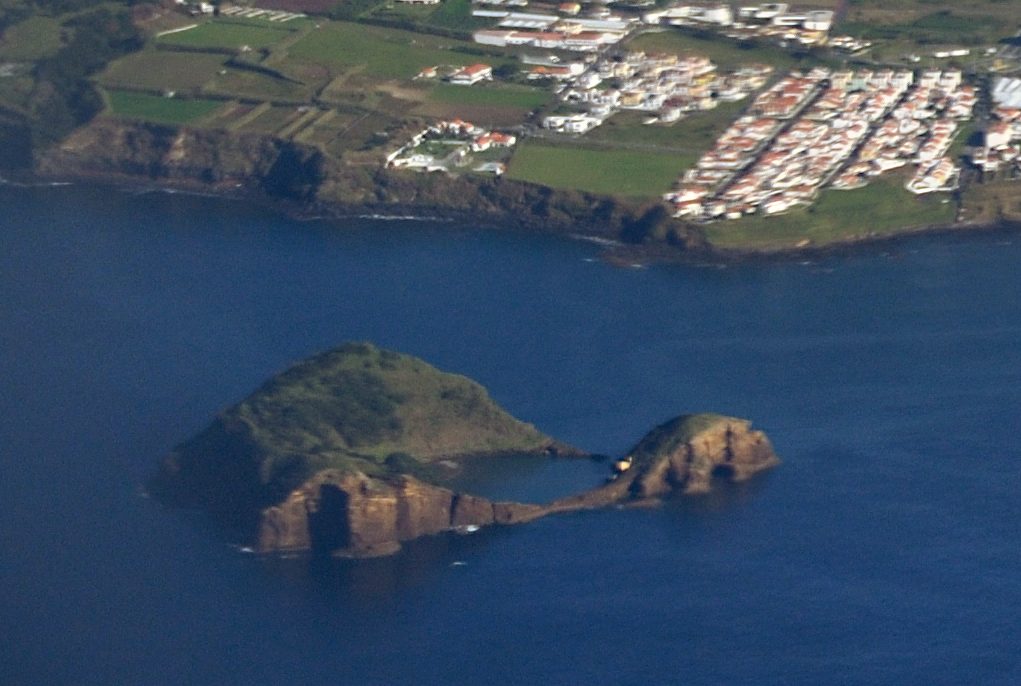
29. Ilhéu de Vila Franca, São Miguel
A crescent-shaped volcanic islet just offshore from Vila Franca do Campo, its flooded crater forming a natural, current-free swimming lagoon reached by a short boat trip in summer — access is seasonal and weather-dependent, so treat it as a bonus rather than a guaranteed plan.
30. Praia dos Moinhos, São Miguel
A black-sand beach near Ribeira Grande, with waterside windmills giving the beach its name and a genuinely different look from every mainland entry on this list — a fitting last stop for a guide that started on the Algarve’s pale limestone coves and ends nearly two thousand kilometres away, on a black volcanic shore in the middle of the Atlantic.
Why Portugal’s beaches feel colder than the same latitude anywhere else
A visitor arriving from a Mediterranean beach holiday is often caught off guard by how cool the Atlantic runs even in August, and the reason is mechanical rather than random. The Algarve’s south coast benefits from a warmer, more sheltered current and the shortest exposure to open ocean, which is why it’s consistently the mainland’s warmest swimming water. The west-facing coasts — Lisbon, the Silver Coast, the Alentejo and the north — sit exposed to the open Atlantic and to seasonal upwelling, where wind pushes surface water offshore and pulls colder water up from depth to replace it, sometimes dropping the sea noticeably even during a hot, sunny week. It’s a genuine mechanism, not bad luck, and it’s why an August heatwave in Lisbon doesn’t guarantee a warm swim at Guincho the same afternoon. Madeira and the Azores sit outside this pattern almost entirely, moderated by the surrounding ocean rather than a coastal current, which is the real reason both stay swimmable well beyond the mainland’s own comfortable season.
Beach flags and basic safety
Portugal uses the standard European flag system at its lifeguarded beaches: green for safe conditions, yellow for caution, red for no swimming, and a chequered flag when the lifeguard is temporarily off duty rather than the beach being closed outright. Atlantic-facing beaches in particular carry real rip-current risk that can look deceptively calm from the sand — swim at a flagged, lifeguarded beach where one is available, and treat a red flag as a hard rule rather than a suggestion. Lifeguard cover is seasonal on most beaches, typically running from June to mid-September, so a beautiful beach in May or October may simply have nobody watching the water at all — a genuinely important distinction on the more exposed Atlantic coasts, where the sand can look identical in April and August while the actual conditions in the water are not.
Blue Flag, naturist beaches and taking a dog
Portugal awards Blue Flag status — an international standard covering water quality, safety and facilities — to a large share of its beaches across every coast in this guide, and it’s a genuinely useful shorthand when comparing two unfamiliar options rather than a marketing label to ignore — a Blue Flag beach guarantees a certain baseline of water testing and basic facilities that an unrated one may or may not actually have. Naturist beaches exist on every coast too, typically at a specific, signed stretch rather than an entire beach; several are well known locally (a section of Costa da Caparica among the most established) without being widely advertised to visitors, so a quick local check before assuming either way avoids surprise for anyone who’d rather know in advance either direction. Dogs are generally welcome on Portuguese beaches outside the main lifeguarded summer season (roughly June to mid-September), when many municipalities restrict or ban them on the most popular stretches — off-season and on quieter beaches year-round, a dog on a beach is a completely normal sight, and a handful of beaches nationwide are specifically designated dog-friendly year-round if a summer visit with a pet matters to your plans.
When to go, coast by coast
“Best time for a beach holiday in Portugal” doesn’t have one answer any more than “best beach” does. The table below matches each coast to its own actual season rather than assuming a single national summer.
| Coast | Best months | Why |
|---|---|---|
| Algarve | May-June, September | Warm sea, thinner crowds than July-August, lower prices |
| Lisbon coast | June-September | Warmest window for a coast that’s genuinely cool outside it |
| Silver Coast | July-September for swimming; October-March for watching big-wave surf | Two different seasons for two different purposes |
| Alentejo & Costa Vicentina | June-September | Short season; spring and autumn run cool and windy |
| The north | July-August | The narrowest comfortable swimming window of any mainland coast |
| Madeira & the Azores | Year-round, mildest June-September | Ocean-moderated climate keeps both usable well outside the mainland summer |
Nazaré is the one entry in this whole guide with two genuinely opposite ideal seasons under one name: come in summer for an ordinary, pleasant swimming beach, and come between roughly October and March, from a clifftop rather than the sand, for the big-wave spectacle that made the town famous — the two visits have almost nothing else in common beyond the name of the beach itself.
Facilities, parking and what to actually pack
Facilities scale roughly with popularity rather than strictly with region, though the two correlate closely enough that it’s worth naming both together: the Algarve’s headline beaches and the Lisbon coast’s easiest ones have lifeguards in season, sunbed and umbrella rental, and a beach bar or restaurant within reach, while the Alentejo’s wilder stretches and most of the north have none of that by design. Parking is the most common practical failure point — arrive before 10am at any well-known beach in July or August, or accept a longer walk from an overflow area, since car parks at Marinha, Adraga, Guincho and Comporta all fill hard on a sunny weekend. A reef-safe sunscreen, a proper hat and a wetsuit rented locally rather than packed from home (if surfing or swimming somewhere genuinely cold) cover most of what a first-time visitor gets wrong about Portuguese beach days specifically. Public toilets and showers are common at the larger, staffed beaches and genuinely rare at the wilder ones — the Alentejo and Costa Vicentina’s best beaches in particular are largely facility-free by design, which is part of what keeps them empty, and part of why bringing your own water and shade matters more on this stretch than anywhere else in this guide.
What to skip
Skip assuming every beach in this list is a swimming beach — Guincho, Ribeira d’Ilhas, Malhão and Praia do Norte in big-wave season are all genuinely dangerous or simply unsuited to casual swimming, and treating them as a generic “beach day” misreads what they’re actually for. Skip driving to a staircase-access Algarve cove at midday in August expecting space; arrive before 9am or accept the crowd, since these beaches are small by geology, not by choice, and no amount of overflow parking changes how much actual sand is down at the bottom of the stairs. The same applies, with a longer drive attached, to Arrábida’s small coves and several of the Costa Vicentina’s clifftop beaches — arrival time, more than any other single factor, decides whether a famous beach feels special or crowded. Skip writing off the north or the islands as “not proper beaches” because the sand isn’t pale and the water isn’t warm — Porto Santo alone disproves that, and the Azores’ natural pools are a genuinely different, equally valid kind of swimming that a purely Algarve-shaped idea of a beach holiday would never think to look for. And skip believing a single “best beach in Portugal” answer exists at all; the honest answer always depends on which of these six coasts you’re actually asking about. Skip, too, assuming lifeguard cover is year-round — most Portuguese beaches run lifeguards only from June to mid-September, and a genuinely beautiful beach in shoulder season can have nobody watching the water at all, which changes how cautiously you should treat an unfamiliar current or a sudden change in the swell.
Frequently asked questions
What is the best beach in Portugal overall?
There’s no single answer across six different coasts. Praia da Marinha usually takes the title for classic scenery; Praia da Falésia for a long, uncrowded stretch; Praia do Norte for spectacle rather than swimming.
What is the warmest beach water in Portugal?
The Algarve and the eastern sandbar islands (Ilha de Tavira, Culatra) run warmest on the mainland, sheltered from the upwelling that cools the west-facing coasts; Madeira and the Azores stay mild for longer into the year than any mainland coast, thanks to the surrounding ocean rather than a coastal current.
Which Portuguese beaches are best for families with children?
Flat, calm, easy-access beaches: Meia Praia (Lagos), São Martinho do Porto’s sheltered bay, Costa da Caparica, and Praia Formosa in Funchal all avoid the staircases and currents that suit older or more experienced swimmers better.
Which beaches in Portugal are best for surfing?
Ericeira’s Ribeira d’Ilhas, Peniche’s Baleal, Guincho near Cascais, and the Costa Vicentina’s Malhão and Odeceixe are the country’s recognised surf beaches, spanning complete beginners to serious swell. Nazaré, despite its fame, is a spectator beach for almost everyone outside a small circle of professional big-wave surfers — watch from the clifftop fort, not the water, unless you genuinely belong in that circle.
Are Portugal’s beaches free to visit?
Yes, beach access itself is free nationwide; sunbed and umbrella rental at the more developed beaches runs a separate, optional daily fee.
Is it safe to swim at Nazaré?
In summer, Praia do Norte is an ordinary beach. In big-wave season (roughly October-March), it is not a swimming beach at all — the same conditions that produce record-breaking waves make it genuinely dangerous.
Do Madeira and the Azores have real sandy beaches?
Some, but most of their coastline is volcanic pebble, dark sand or engineered lidos rather than pale sand. Porto Santo, near Madeira, is the clearest exception, with nine kilometres of genuine golden sand.
What do the beach flags mean in Portugal?
Green means safe conditions, yellow means caution, red means no swimming, and a chequered flag means the lifeguard is temporarily away rather than the beach being closed. Lifeguard cover itself typically runs June to mid-September only.
Why is the sea colder on some Portuguese beaches than others at the same time of year?
Coastal upwelling — wind pushing surface water offshore and pulling colder water up from depth — cools the west-facing Atlantic coasts (Lisbon, the Silver Coast, the Alentejo, the north) more than the sheltered, south-facing Algarve, which explains why the same August week can feel very different depending which coast you’re on. It’s the same mechanism that makes Portugal’s west coast so reliably good for surfing: the same wind and swell that chill the water also generate the waves.
Which Portuguese beaches are quietest, even in August?
Most of the Alentejo and Costa Vicentina coast, the northern beaches beyond Porto (particularly Moledo), and Berlenga Grande all stay meaningfully less crowded than the Algarve or the Lisbon coast at the same time of year, mainly because they’re further from the biggest population centres and international flight routes, and in several cases because reaching them takes a deliberate detour rather than a stop on an obvious main route.
Do you need a car to reach Portugal’s best beaches?
Not for the Lisbon coast, several Algarve towns, or the Porto-area beaches, all reachable by train. The Alentejo, the Costa Vicentina and most of the north’s quieter beaches are genuinely easier, and sometimes only possible, with a car — precisely the trade-off that keeps them as empty as this guide describes.
Are there naturist beaches in Portugal?
Yes, on every coast, typically at one specific, signed stretch of a beach rather than the whole thing — a section of Costa da Caparica is among the best known. A quick local check confirms the exact spot rather than assuming an entire beach is one or the other.
Are dogs allowed on Portuguese beaches?
Generally yes outside the main lifeguarded season, roughly June to mid-September, when many municipalities restrict dogs on the busiest stretches. Off-season and on quieter beaches year-round, dogs are a completely normal sight.
On São Miguel in the Azores, the best swimming isn’t on a beach at all. It’s the hot spring that vents into the sea at Ponta da Ferraria, warm only around low tide, and the flooded crater of the Ilhéu de Vila Franca in summer. Our São Miguel travel guide covers both, with the tide and boat details.
If you’re coming to the coast for the waves rather than the sand, our surfing in Portugal guide goes region by region from Porto to Sagres and the islands, with a season-and-level matrix, 2026 lesson prices and the famous breaks that beginners should leave alone.
Where to go next
For the Algarve’s beaches in full depth, see our best beaches in Algarve guide, and for the region’s accommodation, where to stay in Algarve. If Lisbon’s coastline is on your route, day trips from Lisbon covers Cascais, Sintra and Arrábida in more detail, and things to do in Lisbon and things to do in Porto cover the two cities nearest this guide’s coastal stretches. For the islands, see things to do in Madeira and the Azores islands guide, and best time to visit Portugal covers the seasonal water-temperature and crowd patterns behind this guide’s “best for” calls. If a car is part of the plan, getting around Portugal breaks down how to actually reach the Alentejo’s and the north’s less-connected beaches, and Portugal travel tips covers the sun, safety and etiquette practicalities that apply on any of the six coasts above.
Photo credits
- Featured image: an aerial view of Ilhéu de Vila Franca, the crater islet off São Miguel, Azores — Waldyrious, CC BY-SA 4.0, via Wikimedia Commons
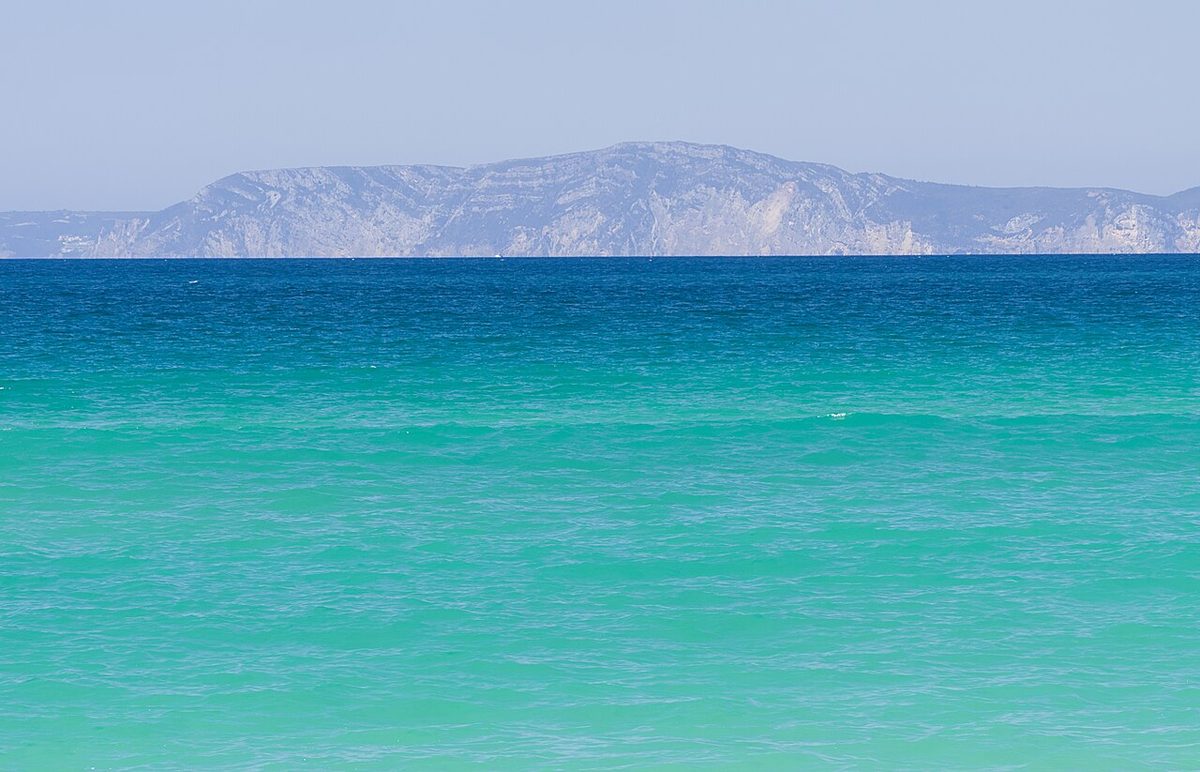
- Turquoise water off Comporta, looking toward Arrábida — Vitor Oliveira, CC BY-SA 2.0, via Wikimedia Commons
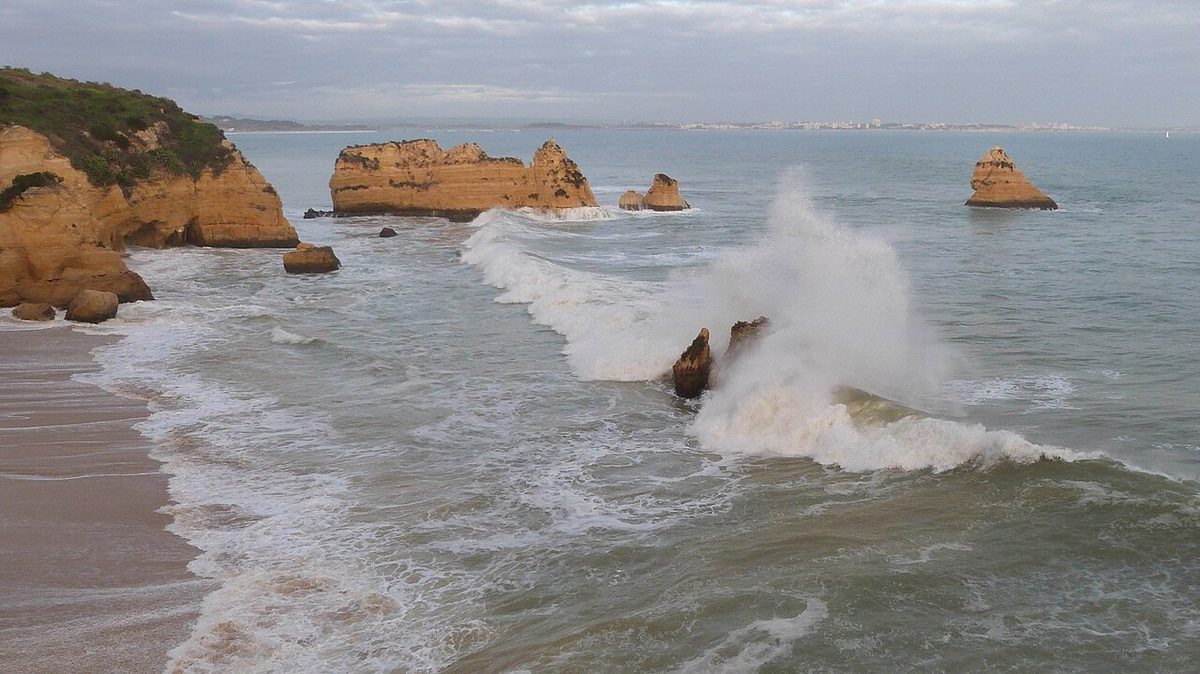
- Winter surf at Praia Dona Ana, Lagos — Peter Broster, CC BY 2.0, via Wikimedia Commons
Sea-temperature and season descriptions checked September 2026 against IPMA climate normals and operator sources; big-wave season dates in particular vary year to year. Last updated September 2026.