Most guides to surfing in Portugal are a list of famous names (Ericeira, Peniche, Nazaré, Sagres) with a paragraph each and a stock line about “waves for every level”. That doesn’t answer the three things you actually need to know: where to go for your level, in the month you can travel, and what it costs now. Portugal is one of the best surf countries in the world precisely because the answer changes so much by region and season. The same beach that’s a gentle learner’s playground in August can be a heaving closeout in January, and the south coast of the Algarve that’s flat all summer comes alive in winter. This guide puts it together region by region, with a season-and-level matrix, 2026 lesson prices, wetsuit advice and an honest view on what’s overrated.
The short answer: beginners should go to Baleal, Ericeira’s beach breaks, Costa da Caparica or the Algarve’s west coast between May and October. Intermediates get the best of Portugal in autumn, from September to November, anywhere from Peniche to Sagres. Experienced surfers should come in winter for Ericeira’s reefs, Supertubos and the north. Everyone should skip paddling out at Nazaré.
Surfing in Portugal at a glance: region, season and level
The matrix below is the heart of this guide. “Good” means there are reliable spots for that level in that region; it doesn’t mean every spot suits everyone.
| Region | Best season | Beginner | Intermediate | Advanced | Crowds | Verdict |
|---|---|---|---|---|---|---|
| Porto and the north | Sept–Nov, spring | Good (Matosinhos) | Good | Good in winter | Low–medium | Cold water, consistent, uncrowded |
| Figueira da Foz and the Silver Coast | Autumn–winter | Fair | Good | Good (long rights on big swells) | Low | Underrated, needs a car |
| Nazaré | Oct–Mar (to watch) | No | No | Big-wave specialists only | Spectators | Watch it, don’t surf it |
| Peniche and Baleal | All year | Excellent (Baleal) | Excellent | Excellent (Supertubos, reefs) | High | The most versatile surf town in Europe |
| Ericeira | Autumn–spring | Good (beach breaks) | Excellent | World-class reefs and points | High | A World Surfing Reserve, and it shows |
| Lisbon coast (Carcavelos, Caparica, Guincho) | Autumn–spring | Excellent (Caparica) | Good | Fair | Very high at weekends | Surf and a capital city in one trip |
| Alentejo coast | Autumn–spring | Fair | Good | Good | Very low | Wild, empty, few facilities |
| Algarve west coast and Sagres | All year | Excellent (Amado) | Excellent | Good | Medium–high | The best all-round region for a first trip |
| Algarve south coast | Winter only | Good in small winter swells | Good | Fair | Low | Flat most of the summer |
| Madeira | Winter | No | Fair | Excellent (heavy points) | Low | For experienced surfers only |
| The Azores | Autumn–spring | Fair (São Miguel) | Good | Good | Very low | Adventurous, weather-dependent |
Why Portugal works: swell, shape and the nortada
Portugal has more than 800 km of Atlantic coastline facing the full force of the North Atlantic’s storm tracks, and it picks up swell almost all year. The magic, though, is the shape of the coast. The long west coast faces the swell head-on, so it’s consistent but often too big and messy in winter. The headlands and peninsulas (Peniche, Ericeira, Cascais, Sagres) create beaches facing north, west and south within a few kilometres of each other. That means on almost any day, with almost any wind, something is working somewhere nearby. The Algarve’s south coast faces away from the usual swells altogether, so it only wakes up when big winter storms send swell wrapping round Cape St Vincent. That’s exactly when the west coast is too big for most people.
Two other forces shape a Portuguese surf trip. The first is the nortada, the steady north wind that blows down the west coast on most summer afternoons. It usually means glassy mornings and choppy, onshore afternoons at west-facing beaches, and it’s why summer surf sessions start early. The second is water temperature. In summer the nortada drives upwelling along the west coast, drawing cold water up from the deep, so the sea off Peniche or Ericeira in August can be noticeably colder than you’d expect from the air temperature. The Algarve’s south coast, sheltered from that upwelling, is the warmest water in mainland Portugal in late summer. In winter the whole coast is cold, and the north coldest of all.
Ericeira: Europe’s first World Surfing Reserve
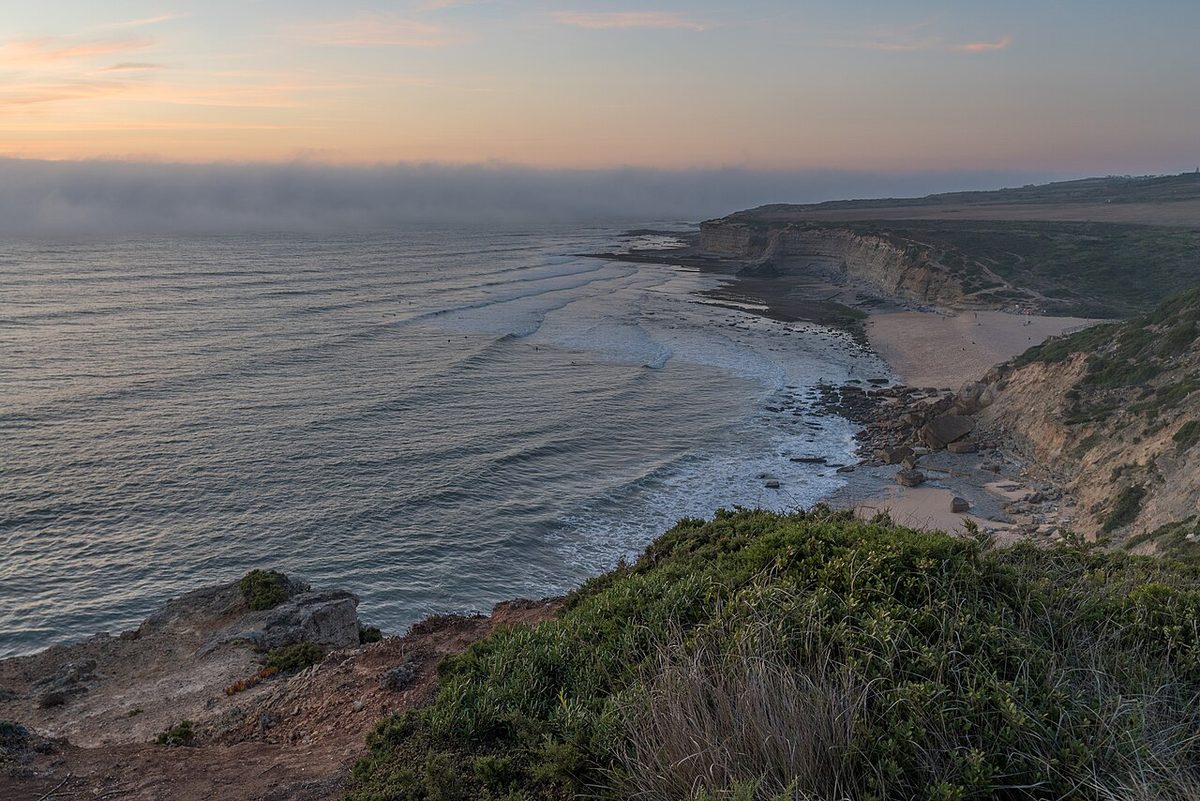
About 50 minutes north-west of Lisbon, Ericeira is a whitewashed fishing town on a clifftop, with a string of reef and point breaks along the coast either side. In 2011 it became the first World Surfing Reserve in Europe, a designation recognising both the quality of its waves and the effort to protect them. The town has become Portugal’s most surf-centred place to stay, with surf schools, board shops, surf houses and good restaurants. It’s at its best from autumn to spring.
The breaks
- Ribeira d’Ilhas. A long, consistent right-hand point break just north of town, and a regular venue for international contests. It’s good for intermediates on an average day and busy whenever it’s working.
- Coxos. A powerful, hollow right-hander over rock, north of Ribeira d’Ilhas. It’s one of the best waves in Europe, and it’s for experienced surfers only, with a crowd that expects you to know what you’re doing.
- Cave. A short, extremely heavy reef wave for experts.
- Pedra Branca and Reef. Reef breaks close to town, better at mid to high tide, for good intermediates and up.
- Foz do Lizandro. A sandy beach break at a river mouth south of town, and the main beginners’ beach, where the surf schools take their groups.
- São Lourenço. A right-hand reef that holds big swells, for experienced surfers.
- The town beaches. Praia do Sul and Praia dos Pescadores in the town itself can have fun waves on the right swell.
Getting there: buses run from Lisbon’s Campo Grande in about an hour, but a car makes it far easier to check different spots. Verdict: the best surf town in Portugal for intermediates and experts, and a good one for beginners who stick to the beach breaks with a school.
Peniche and Baleal: something working every day
Peniche, about an hour north of Lisbon, was once an island and is now a peninsula, so its beaches face in almost every direction. That’s why it’s the most consistent surf destination in Portugal: whatever the swell and wind, there’s usually a sheltered or offshore beach within ten minutes. It’s the surf-camp capital of the country.
The breaks
- Supertubos. A fast, hollow beach break south of the town that turns into powerful barrels on the right swell. It’s home to Portugal’s stop on the professional world championship tour. It’s an expert wave when it’s good, and a crowded one.
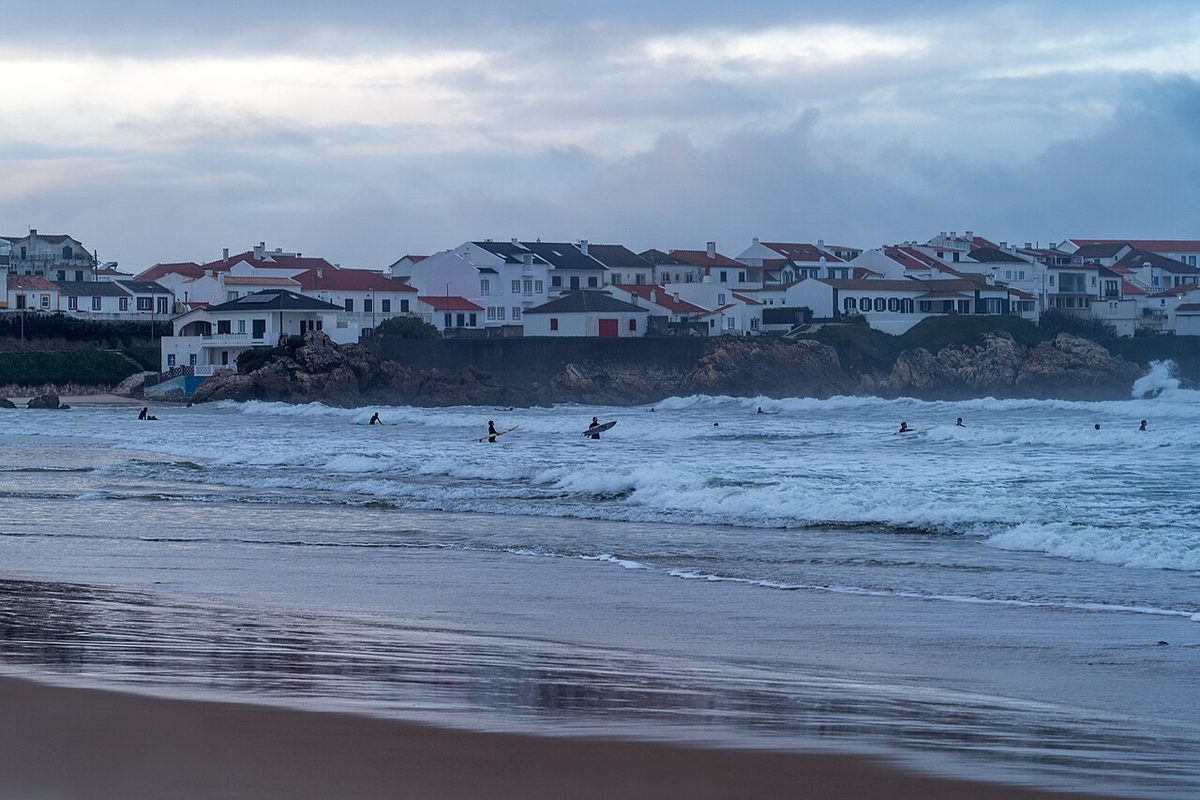
- Baleal. A small island village joined to the mainland by a sandbar, with a sheltered bay on its southern side. It’s one of the best places in Europe to learn, with gentle, rolling waves when the rest of the coast is big. Its northern side picks up more swell.
- Lagide. A reef break at Baleal for intermediates and above.
- Molhe Leste. A beach break beside the harbour wall that can produce good, hollow waves.
- Consolação. Reef and beach breaks south of Supertubos, useful in some wind directions.
Beyond the surf: the fortress in Peniche, once a political prison, is now a moving museum of resistance and freedom. Boats run to the Berlengas nature-reserve islands in summer. Verdict: the best single base in Portugal for a mixed-ability group, a surf camp or a first surf trip. It’s busy in summer, and the water is cold all year. Our Central Portugal guide covers the rest of the Silver Coast.
Nazaré: watch, don’t paddle
Nazaré’s Praia do Norte has the biggest surfable waves ever recorded, thanks to an underwater canyon that focuses and magnifies Atlantic swells as they arrive. Garrett McNamara put it on the map in 2011, and in 2020 Sebastian Steudtner rode a wave recognised as the largest ever surfed, at about 86 feet. The big-wave season runs roughly October to March, most dramatically from November to February. It’s tow-in surfing, with jet skis and rescue teams, by a small group of the world’s best big-wave surfers.
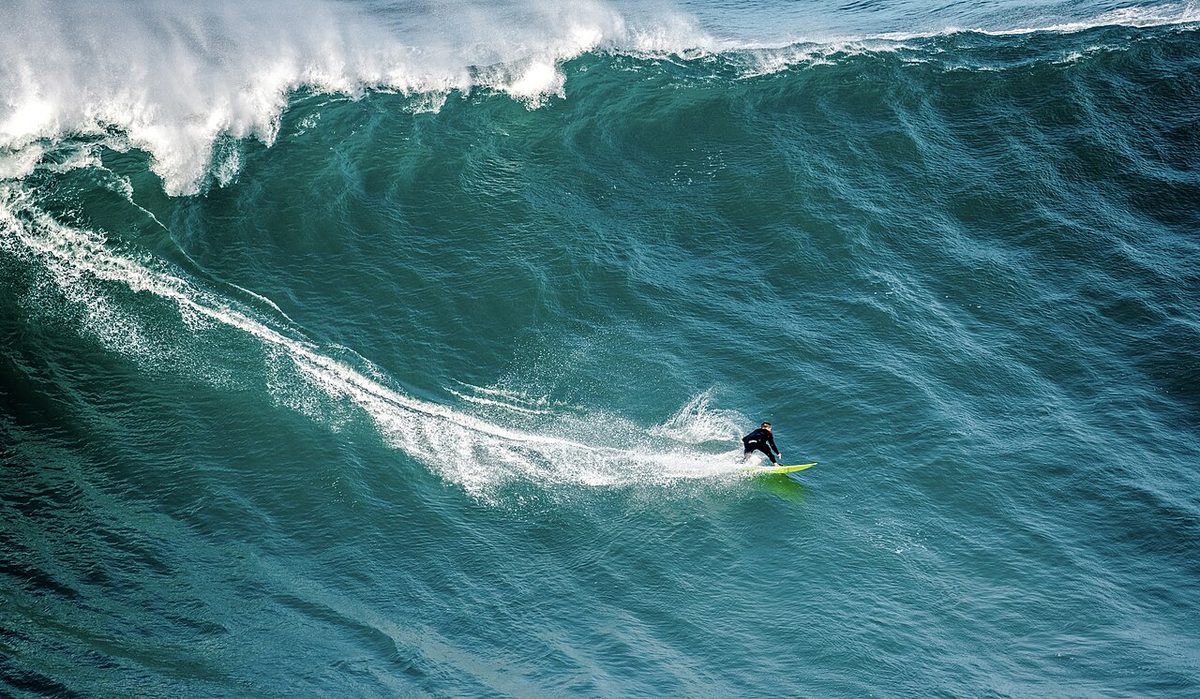
For everyone else, Nazaré is a place to watch. On a big day, go to the fort with the lighthouse on the headland, arrive early and stay behind the barriers. Even in summer, Praia do Norte has strong waves and dangerous currents, and it’s no place for a casual paddle. Nazaré’s sheltered town beach, south of the headland, is fine for swimming. Verdict: a must for surfers in winter, as spectators. See our Central Portugal guide above for how to watch a big day well.
Surfing near Lisbon: Carcavelos, Caparica and Guincho
Lisbon is one of the few European capitals where you can surf before breakfast and be at a museum by eleven.
- Carcavelos. A long beach break on the Cascais railway line, about 20–25 minutes by train from Cais do Sodré. It’s a lively beach and a good all-rounder that works best from autumn to spring, when the Atlantic swells wrap into the river mouth. It gets very crowded at weekends.
- Costa da Caparica. South of the river, a long sweep of beaches with a surf school on almost every stretch. It’s the Lisbon area’s main learning ground, reliable, and 20–30 minutes from the city by car.
- Guincho. Beyond Cascais, a dramatic beach backed by dunes and the Sintra hills. It’s very windy (kite and windsurfers love it), with strong currents, so it’s for experienced surfers, not beginners.
- São Pedro do Estoril and the reefs. Reef breaks along the Cascais line that come alive in winter swells, for experienced surfers.
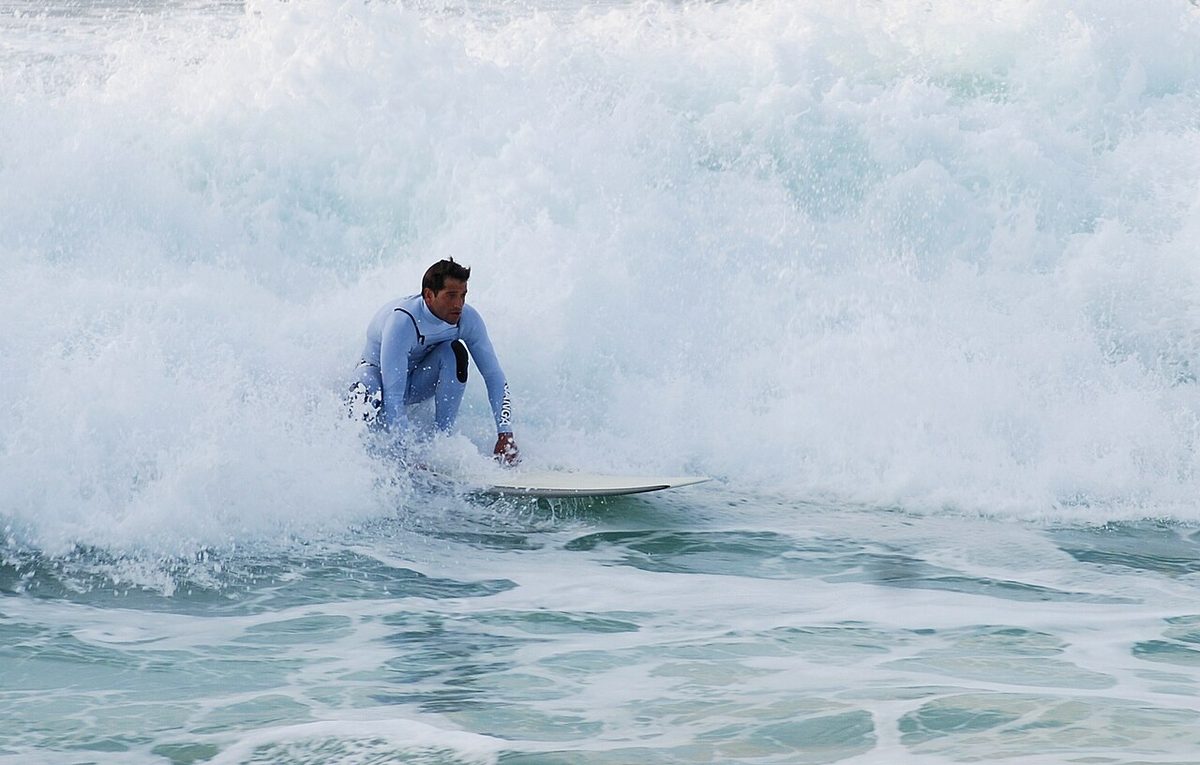
Verdict: great for a city-and-surf trip, and the easiest learning in Portugal without a car. If you’re coming for surf first, stay in Ericeira or Peniche instead. For the Lisbon coast beyond the surf, see our day trips from Lisbon.
Porto and the north
The north coast is colder, greener and far less crowded than the centre and south, and it picks up plenty of swell. The water is chilly year-round, and a good wetsuit is essential.
- Matosinhos. Porto’s beach, at the end of the metro line, is a sheltered beach break protected by the harbour breakwater. It’s the north’s best place to learn, with several surf schools, and it’s reachable without a car.
- Leça da Palmeira and Espinho. Beach and jetty breaks north and south of the city. Espinho can produce strong, hollow waves.
- Póvoa de Varzim and Vila do Conde. Beach breaks along the coast north of Porto.
- Viana do Castelo and Moledo. Further north towards the Spanish border: long, empty beaches, with Cabedelo at the Lima river mouth also popular with kitesurfers.
Verdict: the north is best from September to November and in spring, when swells are consistent and the crowds thin. It suits surfers who want uncrowded waves and are happy in cold water. For the city itself, see our Porto travel guide.
The Silver Coast and Figueira da Foz
Between Porto and Peniche, a long stretch of coast gets little attention from foreign surfers. Figueira da Foz has Cabedelo, a right-hander at the Mondego river mouth, and Buarcos, a right-hand point that can produce long rides on big winter swells. North of it, beaches such as Praia de Mira and the Costa Nova near Aveiro are long, open beach breaks, best on small to medium swells. South, São Pedro de Moel and the beaches near the Pinhal de Leiria forest pick up plenty of swell. Verdict: a rewarding coast for intermediates with a car and a flexible plan, and almost empty outside summer weekends.
The Alentejo coast
South of Lisbon, beyond Setúbal and Comporta, the Alentejo coast is Portugal’s wildest: long beaches, cliffs and coves, very little development and some quality waves. Praia do Malhão near Vila Nova de Milfontes, the beaches around Almograve and Zambujeira do Mar, and the reefs near Porto Covo all work in the right conditions. Facilities are thin, surf schools are few and the beaches can be remote, so it suits self-sufficient surfers. Verdict: an adventure rather than a surf holiday, but the best place in Portugal to surf alone. See our Alentejo guide for where to stay.
The Algarve: the west coast, Sagres and the south
The Algarve is two completely different surf regions.
The west coast and Sagres
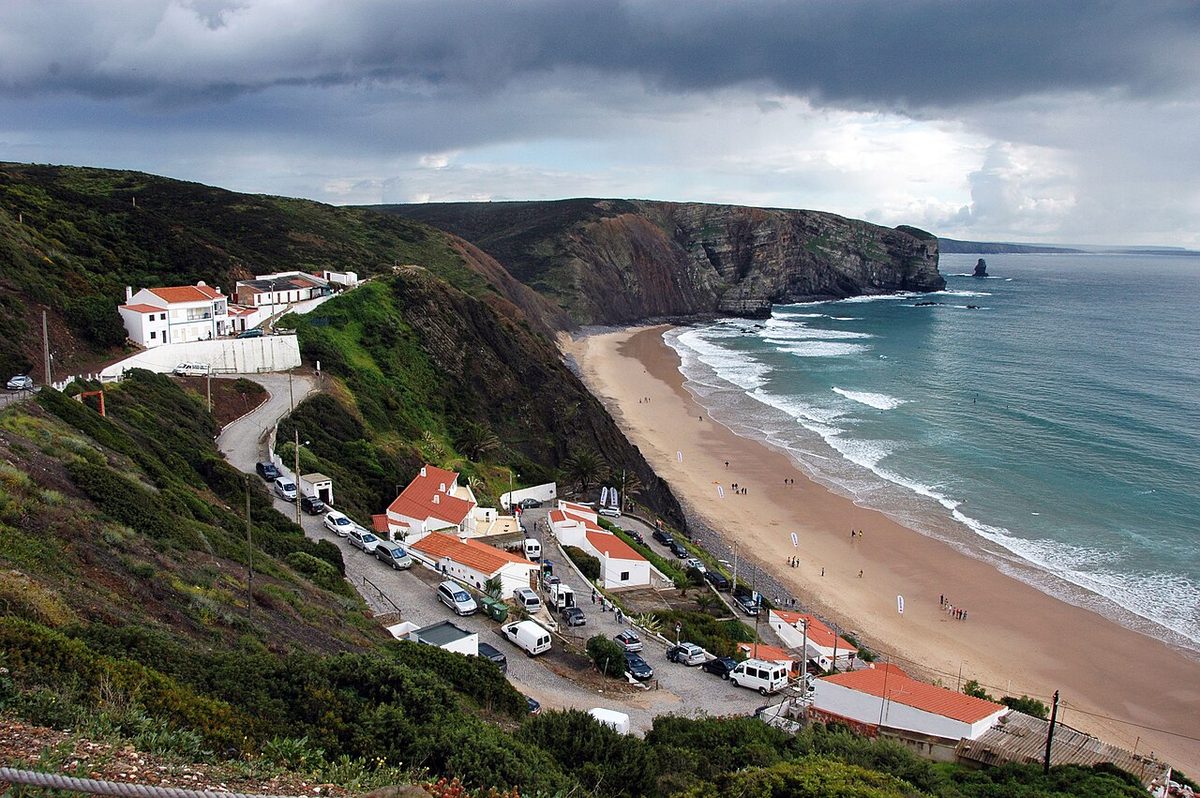
The Costa Vicentina, the protected west coast of the Algarve, is one of the best surf regions in Europe for all levels, and my pick for a first surf trip to Portugal. Arrifana is a cove below a clifftop village, with a beach break and a right-hand point by the rocks at its northern end. Praia do Amado, near Carrapateira, is the Algarve’s surf-school headquarters: a wide beach break with room for everyone. Bordeira, Monte Clérigo, Castelejo and Cordoama are long, powerful beaches under the cliffs.
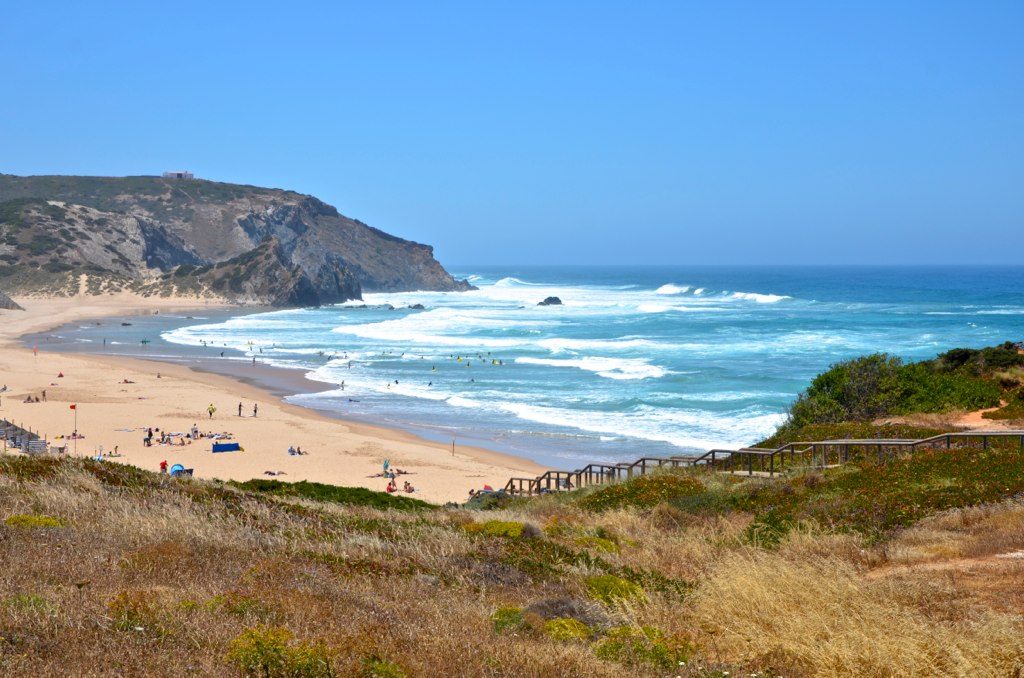
Sagres is the key to the region. On the south-western corner of Europe, it has beaches facing west (Tonel) and south and south-east (Mareta, Beliche, Zavial) within a few minutes of each other. When the west coast is too big or blown out, the south-facing beaches are often clean, and vice versa. Verdict: the best all-round region in Portugal, with warmer water than the centre and north, sunshine and waves for every level. It’s the best choice for a first trip or a mixed-ability group.
The south coast
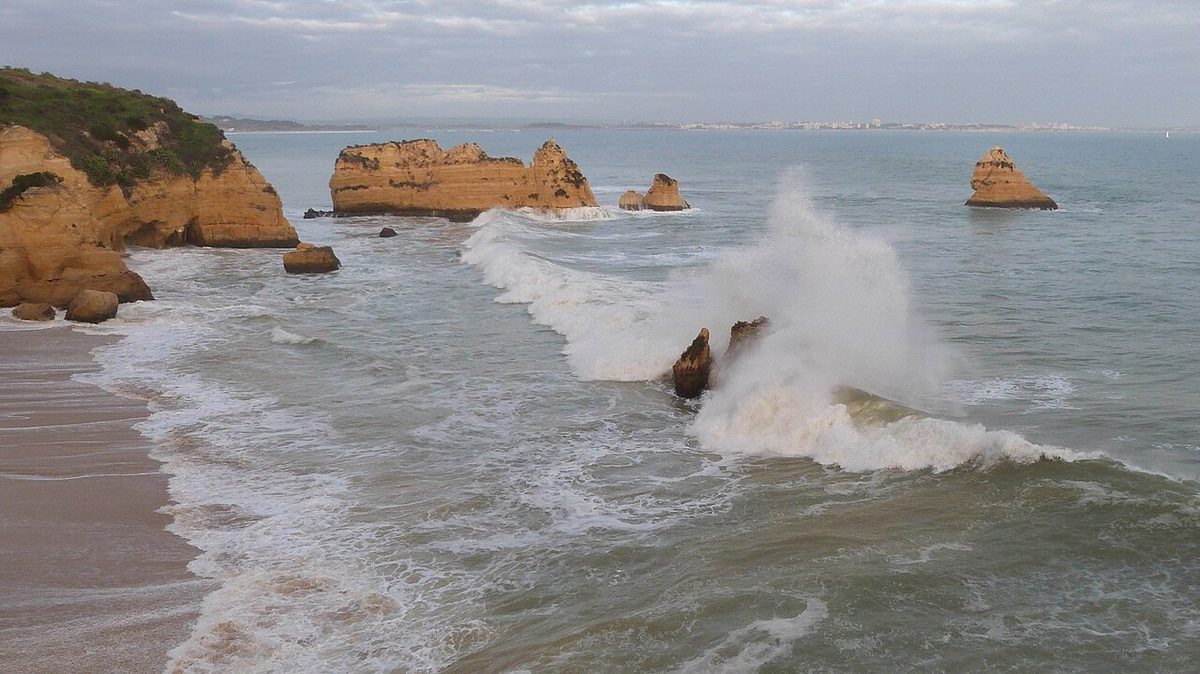
From Lagos east to Faro, the Algarve’s south coast faces away from the usual swells, and it’s flat for most of the summer. It comes alive in winter, when big west or south-west swells wrap round the cape, with beaches near Lagos (Meia Praia, Porto de Mós and Praia Dona Ana) and further east producing good, uncrowded waves. Verdict: don’t plan a summer surf trip around the south coast, but in winter it’s a warm, sunny bonus. For the Algarve’s beaches beyond the surf, see our guide to the best beaches in the Algarve.
Madeira and the Azores
Madeira has some of the most powerful waves in Europe, mostly heavy right-hand points breaking over boulders and reefs below the cliffs of the south-west coast, at Jardim do Mar and Paul do Mar, and on the north coast. They’re for experienced surfers only, at their best in winter, and the entry and exit over rocks is part of the challenge. There’s very little for beginners. For the island beyond the waves, see our Madeira guide.
The Azores are an adventurous, weather-dependent surf destination in the middle of the Atlantic. On São Miguel, Santa Bárbara beach near Ribeira Grande is the main surf beach, hosts international contests and has surf schools. The north coast has reefs and points, and the island of São Jorge has a famous wave below the cliffs at Fajã da Caldeira de Santo Cristo. Swells are plentiful, but the weather changes fast and flights can be disrupted. See our São Miguel guide for the island.
When to surf in Portugal: season by season
| Season | Swell | Wind and weather | Water | Best for |
|---|---|---|---|---|
| Spring (Mar–May) | Variable, often good | Changeable; some storms | Cold | Intermediates; quiet line-ups |
| Summer (Jun–Aug) | Smallest, most gentle | Sunny; afternoon nortada onshore on the west coast | Coolest on the west coast (upwelling), warmest on the Algarve’s south coast | Beginners, surf camps, early-morning sessions |
| Autumn (Sep–Nov) | Consistent, clean, growing | Settled, lighter winds | At its warmest in September | Everyone; the best overall season |
| Winter (Dec–Feb) | Biggest, most powerful | Storms and calm spells | Coldest | Experienced surfers; the Algarve’s south coast |
If you can choose only one month, choose October: the swell is back, the water hasn’t cooled, the summer crowds and prices are gone and the weather is usually kind. September is nearly as good. For beginners, summer is the easiest time, with smaller waves, lifeguards on duty and schools running every day, but surf in the morning before the nortada picks up. For month-by-month weather across the country, see our best time to visit Portugal guide.
What wetsuit you need
| Season | North and centre (Porto to Lisbon) | Algarve |
|---|---|---|
| Winter | 4/3 mm full suit at least; many use a 5/4 with boots in mid-winter in the north | 4/3 mm full suit |
| Spring | 4/3 mm | 4/3 or 3/2 mm |
| Summer | 3/2 mm full suit (upwelling keeps the west coast cool) | 3/2 mm, or a shorty on the south coast in late summer |
| Autumn | 3/2 mm early, 4/3 mm from November | 3/2 mm |
The most common mistake is packing a summer suit for an August trip to Peniche or Ericeira and spending the week shivering. Portugal’s west coast is cold water, even under a hot sun. Surf schools include wetsuits, and they’re usually of the right thickness for the season.
Learning to surf in Portugal: lessons, camps and schools
Portugal is one of the best places in Europe to learn to surf, with hundreds of licensed schools, reliable beginner beaches and reasonable prices. These were the typical prices in September 2026, from schools’ own price lists and booking platforms:
| Option | Typical price | Notes |
|---|---|---|
| Group lesson, Ericeira | ~€30–45 per person | Usually includes board and wetsuit |
| Group lesson, Peniche | ~€50 per person | One school’s listed price, including board, wetsuit and insurance |
| Group lesson, typical range nationally | ~€35–55 | Multi-lesson packs cost less per lesson |
| Private lesson | ~€70 per person and up | Faster progress, especially after the first few lessons |
| Board and wetsuit hire | ~€15–25 a day | Weekly rates are much cheaper per day |
Lessons or a camp? A surf camp bundles accommodation, lessons, transport to the beaches, equipment and often meals, which makes sense if you want a sociable week and don’t want to drive. Staying independently and booking lessons day by day is cheaper and more flexible, and it works well in Ericeira, Baleal and the Algarve’s west coast, where the schools pick up from town. Whatever you choose, pick a school whose instructors are certified, with small groups (no more than about six to eight students per instructor) and a policy of choosing the beach each day according to the conditions. That last point matters more than anything else. Our guide to Portugal’s best beaches covers the non-surf side of the coast.
How long to learn: most people can stand up in whitewater within a lesson or two, and ride small green waves after a week of daily lessons. A week of lessons followed by a week of practice on a soft board is a realistic first surf holiday.
Bringing your own board
If you already surf, you’ll enjoy Portugal more on your own board, but check your airline’s sports equipment fee before you book: it can cost more than the flight. Board bags should be padded, and it’s worth taking fins, wax and a leash in your hand luggage in case the board bag goes astray. The alternative is to hire. The surf towns have plenty of shops renting decent performance boards by the day or week, and buying a second-hand board locally and selling it at the end of a long trip is common. For getting around the coast with boards, a hire car with a roof rack or a van is by far the easiest; public transport and boards don’t mix. See our guide to getting around Portugal for car hire and tolls, and our Portugal road trip guide for a coastal route south from Lisbon to the Algarve.
Etiquette, localism and safety
Etiquette
- Priority. The surfer closest to the peak, the breaking part of the wave, has priority. Don’t drop in on someone already riding.
- Paddle wide. Paddle out through the channel or around the break, not through the line-up where people are riding.
- Know your level. Beginners belong in the whitewater with the schools. Paddling out at Coxos or Supertubos before you’re ready is dangerous for you and everyone else.
- Respect the locals. At the famous reef breaks, especially in Ericeira and Peniche, the line-ups include surfers who’ve been there every day for years. Be patient, be polite, wait your turn and don’t paddle out with a big group of friends.
Safety
- Flags. Portuguese beaches use green (bathing allowed), yellow (bathing not advised; don’t swim out) and red (entering the water prohibited) flags. On lifeguarded beaches, surfing is usually confined to marked areas away from swimmers. Lifeguards generally work from June to mid-September.
- Currents. Rips are common on Portugal’s beach breaks, especially at river mouths and beside rocks. If you’re caught in one, don’t fight it: paddle parallel to the beach to escape, then come in.
- Reefs and rocks. Many of the best waves break over rock. Check the tide, entry and exit points before paddling out, and wear boots at shallow reefs if you have them.
- Cold. Wear the right wetsuit; cold water tires you quickly.
- Big days. On big winter swells, stick to the spots you know and to your level. The Portuguese Atlantic is powerful.
Planning a Portugal surf trip: three sample plans
A beginner’s week
Base yourself in Baleal, Ericeira or the Algarve’s west coast (Aljezur or Carrapateira) between May and October. Book a week of daily group lessons with a school that picks you up and chooses the beach each day. Surf in the mornings and explore in the afternoons: the Berlengas from Peniche, Sintra and Lisbon from Ericeira, or the Costa Vicentina’s clifftop walks from the Algarve.
An intermediate’s autumn road trip (10 days)
| Days | Where | Why |
|---|---|---|
| 1–3 | Peniche and Baleal | Something working every day; Supertubos to watch or surf |
| 4–6 | Ericeira | Ribeira d’Ilhas and the beach breaks; a day in Lisbon |
| 7 | The Alentejo coast | Empty beaches near Milfontes on the way south |
| 8–10 | Aljezur and Sagres | Arrifana, Amado and the Sagres beaches for every wind |
A winter week for experienced surfers
Base yourself in Ericeira for the reefs and points, with Peniche an hour away when Supertubos is firing. Keep an eye on the forecast for a big-wave day at Nazaré, which is worth a day trip just to watch. If the storms get too big for the west coast, drive south to the Algarve, where the south coast comes alive under the sunshine.
What a Portugal surf trip costs (checked September 2026)
| Item | Typical cost | Notes |
|---|---|---|
| Group surf lesson | €30–55 | Equipment usually included |
| Private lesson | From ~€70 | Per person |
| Board and wetsuit hire | €15–25 a day | Cheaper by the week |
| Hire car, mid-size, one week | €180–300 | Mid-season; add a roof rack |
| Fuel | ~€2 a litre | Early September 2026 |
| Prato do dia lunch | €9–15 | The surfer’s best friend |
| Espresso at the counter | €0.80–1.20 | After the dawn session |
Surf-camp prices vary widely with accommodation, meals and the number of lessons, so compare exactly what’s included. Outside July and August, accommodation in the surf towns is good value. For a full trip budget, see our guide to what a Portugal trip costs.
Where to base yourself: Portugal’s surf towns compared
| Base | Best for | Downside | My take |
|---|---|---|---|
| Ericeira | Reefs and points, surf culture, restaurants, 50 minutes from Lisbon | Busy; the best waves suit experienced surfers | The best surf town in Portugal if you already surf |
| Peniche and Baleal | Consistency, surf camps, mixed-ability groups | The town itself is workaday; cold water | The most reliable base for a one-week trip |
| Cascais and Carcavelos | Surf plus Lisbon, no car needed | Crowded line-ups; city prices | For a city break with surf, not a surf trip |
| Costa da Caparica | Learning, cheap schools, long beaches | A sprawling resort with little charm | Good for lessons near Lisbon |
| Porto and Matosinhos | Surf plus a great city, metro to the beach | Cold water; greyer weather | The best city-and-surf combination in autumn |
| Figueira da Foz | Long rights, empty line-ups | Needs a car; few surf-trip facilities | For intermediates exploring |
| Vila Nova de Milfontes | Empty Alentejo beaches, a pretty town | Few schools and rental shops | For self-sufficient surfers |
| Aljezur and Carrapateira | The Costa Vicentina’s beaches, beginners to advanced | Quiet evenings; a car is essential | My pick for a first surf trip |
| Sagres | West- and south-facing beaches for every wind | Windy; small and quiet in winter | The most flexible base in the Algarve |
| Lagos | Nightlife, restaurants, the west coast 30 minutes away | Its own beaches are flat in summer | A good base if not everyone in the group surfs |
For most people, the choice is between Ericeira, Peniche and the Algarve’s west coast. Choose Ericeira if you’re a competent surfer who wants quality waves and a lively town. Choose Peniche if you want the most surfable days in a week, or you’re travelling with a mixed group. Choose Aljezur, Carrapateira or Sagres if you want sunshine, slightly warmer water and a wilder coast, and don’t mind driving to every session.
Reading a Portuguese surf forecast
You don’t need to be an expert to get far more out of a Portuguese surf trip. Four things matter.
- Swell direction. Most of Portugal’s swell arrives from the north-west, generated by storms in the North Atlantic. West-facing beaches catch it head-on. South-facing beaches, such as Sagres’s Mareta and Beliche and the Algarve’s south coast, need a big swell or a more westerly direction to wrap round to them, which is why they’re flat so often in summer.
- Swell period. The number of seconds between waves matters more than their forecast height. A long-period swell (around 12 seconds or more) brings powerful, organised waves from distant storms. A short-period swell brings weaker, messier surf. Beginners should look for small, long-period days; experts wait for big ones.
- Wind. On the west coast, the best wind is an offshore easterly, which usually happens in the early morning, especially in autumn and winter. The summer nortada blows from the north and roughens west-facing beaches by the afternoon, but it’s offshore at some south-facing spots. This is a big part of why Peniche, Ericeira’s coves and Sagres are so useful: there’s always a beach sheltered from the wind.
- Tide. Many of Portugal’s reefs and points work best at a particular stage of the tide, often mid to high, while some beach breaks close out at high tide or get too shallow at low. Local schools and surf shops will tell you which spot works on which tide.
The popular surf-forecast websites and apps all cover Portugal in detail, and the Portuguese weather service issues sea-state warnings for dangerous conditions. The best forecast is still local knowledge: ask at the surf shop in the morning.
Surfing with children and families
Portugal is a good place for a family surf holiday, as long as you choose the right beaches and season.
- When. Summer, from June to September, when the waves are smallest, lifeguards are on duty and schools run daily. Morning lessons avoid the afternoon wind.
- Where. Baleal’s sheltered bay, Costa da Caparica, Matosinhos, Foz do Lizandro near Ericeira and Praia do Amado all have gentle whitewater and schools experienced with children. Many schools run lessons for children from about six or seven years old.
- Wetsuits. Children get cold much faster than adults. Make sure theirs is thick enough, and keep sessions short.
- Non-surfers. River and lagoon beaches nearby, such as the Óbidos lagoon at Foz do Arelho, the Mira estuary at Vila Nova de Milfontes and the Algarve’s south coast, give younger children calm water while older ones surf.
Surf and something else
Part of what makes Portugal special as a surf destination is what’s near the waves. From Ericeira, the vast Mafra National Palace is fifteen minutes inland, and Sintra and Lisbon are within an hour. From Peniche, the walled town of Óbidos is twenty minutes away and the Berlengas islands are a boat ride offshore. From the Algarve’s west coast, the clifftop Fishermen’s Trail runs along the coast between the beaches, and Lagos’s old town and the sea caves of the south coast are half an hour away. From Porto, the Douro Valley’s wine country is an hour inland. And Nazaré, between Peniche and Coimbra, is worth a winter detour just to watch the biggest waves on earth. For more on combining the coast with the rest of the country, see our Portugal itinerary planner.
Bodyboarding, kitesurfing and paddleboarding
Bodyboarding has a big following in Portugal, and many of the country’s heavy, shallow shore breaks and reefs, which are hard work on a surfboard, are ideal for bodyboarders. Boards are easy to hire in every surf town. Kitesurfing and windsurfing thrive on the windy beaches: Guincho near Cascais, the Óbidos lagoon, Viana do Castelo and parts of the Algarve are the best-known spots, with schools and rental. Stand-up paddleboarding is at its best on calm water: estuaries and lagoons such as the Mira at Milfontes, the Óbidos lagoon and the Ria Formosa in the eastern Algarve, and the Algarve’s south coast on flat summer days.
What to skip, and what’s overrated
Paddling out at Nazaré. Even on a “small” day, Praia do Norte is powerful and dangerous. Watch from the fort.
The Algarve’s south coast in summer. Lagos and Albufeira’s beaches are lovely for swimming and mostly flat for surfing from May to September. Surf the west coast instead.
Supertubos and Coxos as learning spots. They’re famous because they’re powerful and hollow. If you’re still learning, you’ll spend the session getting pounded and in the way. Watch the experts, then surf Baleal or Foz do Lizandro.
Guincho for beginners. It looks inviting from the road, but the wind and currents make it a poor place to learn. Caparica and Carcavelos are better.
A summer wetsuit for August in the centre and north. The west coast upwelling makes the summer water colder than people expect. Bring or hire a proper full suit.
Afternoon sessions in summer. The nortada usually blows the west coast out by early afternoon. Surf early, then have lunch.
Big surf camps that stay at one beach. The best schools move with the conditions, and a camp that takes every group to the same beach every day, whatever the swell, is selling convenience, not good surfing.
Frequently asked questions
Is Portugal good for surfing?
Yes. It’s one of the best surf countries in Europe, with consistent Atlantic swell all year, a coastline whose headlands and peninsulas mean something is usually working, and spots for every level from beginner beach breaks to world-class reefs and the biggest waves on earth at Nazaré.
Where is the best place to surf in Portugal for beginners?
Baleal near Peniche, the beach breaks around Ericeira, Costa da Caparica near Lisbon, Matosinhos near Porto and Praia do Amado on the Algarve’s west coast. Go between May and October, and take lessons with a school that chooses the beach according to the conditions.
When is the best time to surf in Portugal?
Autumn, September to November, is the best overall: consistent, clean swell, warm-ish water and fewer crowds. Summer is best for beginners, with smaller waves, while winter brings the biggest, most powerful surf for experienced surfers.
How much is a surf lesson in Portugal?
Group lessons typically cost €30–55 per person in 2026, usually including a board and wetsuit, with Ericeira group lessons from around €30–45 and one Peniche school listing €50. Private lessons start at around €70. Board and wetsuit hire costs about €15–25 a day.
Do you need a wetsuit to surf in Portugal?
Yes, all year on the west coast. A 3/2 mm full suit is standard in summer because upwelling keeps the water cool, and a 4/3 mm is standard from late autumn to spring, with boots in the north in mid-winter. The Algarve’s south coast is warmest in late summer.
Can you surf in Lisbon?
Yes. Carcavelos is a beach break 20–25 minutes by train from central Lisbon on the Cascais line, and Costa da Caparica, south of the river, has dozens of surf schools. Guincho, beyond Cascais, is for experienced surfers.
Is Ericeira or Peniche better for surfing?
Peniche is more versatile, because its peninsula means a sheltered beach is almost always working, and it’s the better choice for beginners and mixed groups. Ericeira has more world-class reef and point breaks for intermediates and experts, and a nicer town to stay in.
Can you surf at Nazaré?
Not on the famous big-wave days, which are for professional tow-in teams. Praia do Norte is powerful and dangerous even in summer. Nazaré’s town beach is a swimming beach, so watch the big waves from the fort on the headland.
Is the Algarve good for surfing?
The west coast is excellent all year, with Arrifana, Amado, Bordeira and the Sagres beaches suiting every level. The south coast, around Lagos and eastwards, is mostly flat in summer and only works in winter swells.
Is surfing in Portugal crowded?
The famous spots in Ericeira, Peniche, Carcavelos and Caparica are crowded, especially on summer weekends. The north, the Silver Coast around Figueira da Foz and the Alentejo coast are much quieter, and autumn and spring are quieter everywhere.
Where to go next
- Things to do in the Algarve between surf sessions
- The best things to do in Portugal
- Portugal travel tips before you go
Photo credits
- Praia da Arrifana and the village above it (featured image) — Hendrik Dacquin from gent, Belgium, CC BY 2.0, via Wikimedia Commons
- Ribeira d’Ilhas, Ericeira — Alexkom000, CC BY 4.0, via Wikimedia Commons
- Surfers at Baleal in January — Alexkom000, CC BY 4.0, via Wikimedia Commons
- A surfer at Costa da Caparica — Alvesgaspar, CC BY-SA 3.0, via Wikimedia Commons
- Praia do Amado — Aires Almeida from Portimão, Portugal, CC BY 2.0, via Wikimedia Commons
Lesson and hire prices checked September 2026 against schools’ own price pages and booking platforms. They vary by school and season, so confirm when you book. Last updated: September 2026.