Most day trips from Porto guides are a tour operator’s brochure with the prices filed off: five or six towns listed in a row, a line about “charming cobblestone streets” for each, and no actual answer to whether you can do it by train, what it costs, or whether two of these towns fit in the same day. Northern Portugal beyond the Douro — Guimarães, Braga, Peneda-Gerês, the Minho’s river towns, the wild interior toward Trás-os-Montes — is exactly the kind of region a proper Portugal itinerary needs to treat on its own terms, and genuinely rewards a transport-first answer, because train and bus coverage varies enormously from one town to the next.
The short version: Guimarães and Braga are both direct, frequent, sub-90-minute train rides from Porto’s São Bento station, and the only two on this list that work easily without a car. Viana do Castelo and Amarante are workable by train with a bit more planning. Ponte de Lima and Peneda-Gerês National Park genuinely need a car. Trás-os-Montes, the wild northeast around Bragança, is honestly a multi-day trip wearing a day-trip’s clothing — further covered below, with the reasoning for why. None of these overlap with the Douro Valley itself, which has its own dedicated guide and its own train line; this one covers the region north and west of it instead, the Minho and the mountains, which most Porto-focused guides either skip entirely or squeeze into a single rushed paragraph.
Why the north feels different from the rest of Portugal
The Minho and Trás-os-Montes carry a genuinely older, more rural Portuguese identity than the coast most visitors see first. This was the country’s founding heartland — the name “Portugal” itself derives from Portus Cale, a settlement at the mouth of the Douro, and the medieval County of Portugal that grew into the kingdom was centred on exactly this stretch between the Minho and Douro rivers. That history shows up today in granite architecture rather than Lisbon’s limestone, in a wetter, greener, more Atlantic-facing landscape, and in small-farm agriculture — the terraced vineyards behind vinho verde, the communal grain stores dotting Gerês’s villages — that never industrialised the way the south’s larger estates did. Visiting the region isn’t a detour from “the real Portugal” on the coast; for a large part of the country’s history, this was it. Even the food carries the marker: the region’s cured meats, bean stews and cabbage soups belong to the same rural tradition covered in our Portuguese food guide, shaped by centuries of small farms feeding themselves well on modest means rather than a court cuisine built for a capital’s palaces.
Day trips from Porto: the fast answer
| Destination | Time from Porto | Best transport | Best for |
|---|---|---|---|
| Guimarães | ~1h05-1h25 | Direct urban train from São Bento | Medieval old town, the birthplace-of-Portugal castle |
| Braga | ~55min-1h15 | Direct urban train from São Bento or Campanhã | Bom Jesus do Monte, Roman and Baroque history |
| Viana do Castelo | ~1h-1h30 | Regional train from Campanhã | Art Nouveau centre, Santa Luzia viewpoint, a real beach |
| Ponte de Lima | ~1h by car | Car (limited direct train/bus) | Portugal’s oldest town, the Roman-medieval bridge, vinho verde |
| Amarante | ~50min-1h | Bus or car; no direct train | The São Gonçalo bridge and church, riverside pastelarias |
| Peneda-Gerês National Park | ~1h-1h30 by car to the edge | Car essential | Waterfalls, granite villages, Portugal’s only national park |
| Trás-os-Montes (Bragança) | ~2h30-3h by car | Car; genuinely a multi-day trip | The wild northeast, a medieval citadel, remote landscapes |
Guimarães: where Portugal actually began
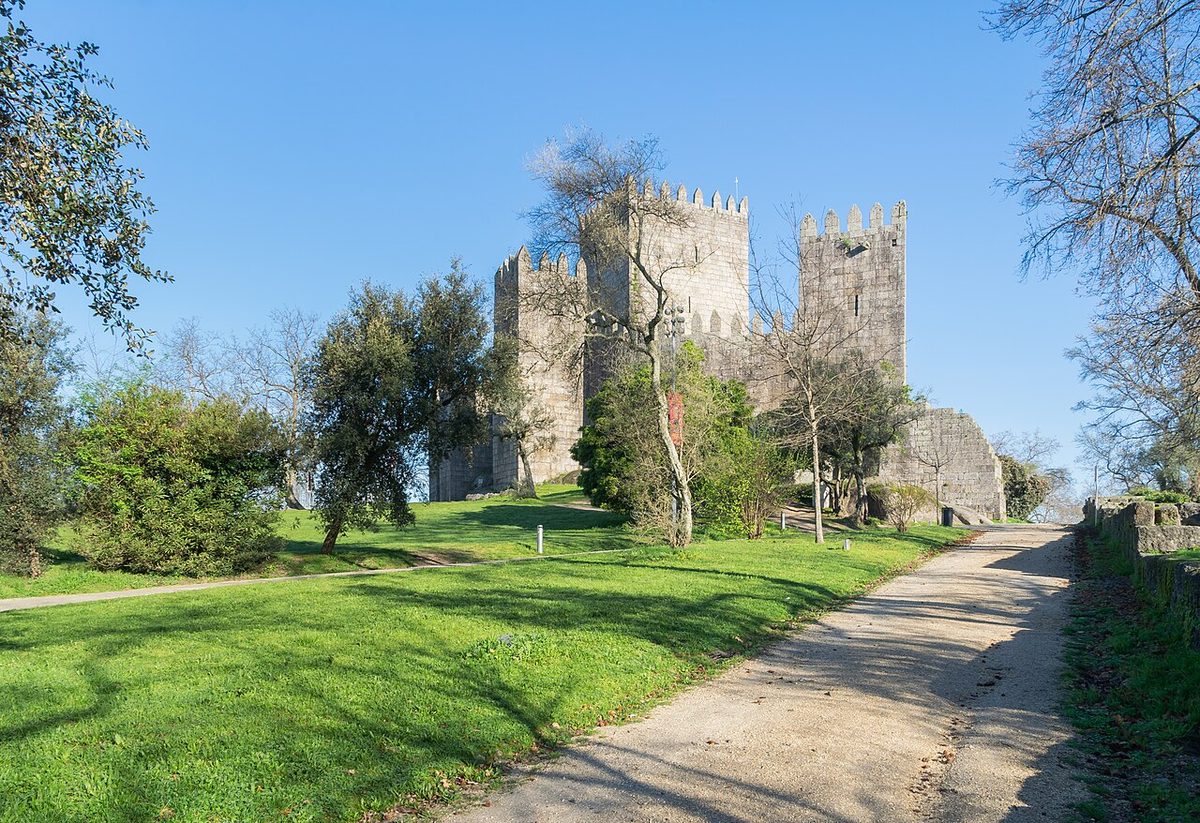
Guimarães calls itself the birthplace of Portugal, and the claim has real weight: the 10th-century castle here is traditionally linked to the country’s first king, Afonso Henriques, and the walled medieval centre around it is one of the best-preserved in the country, UNESCO-listed since 2001. The castle itself is a stark, battlemented granite keep rather than a palace — climb it for the view, then walk down into the Paço dos Duques (Palace of the Dukes of Braganza) next door for the furnished interior the castle itself doesn’t have. The old town’s Largo da Oliveira and the surrounding lanes are genuinely well preserved rather than reconstructed for tourists, and a couple of hours is enough to see the highlights, though a full day lets you add the Penha hill viewpoint by cable car above the town. The cable car climbs to a granite-boulder landscape with sweeping views back over the old town’s rooftops, and a small chapel and picnic area at the top that turns a monument visit into a half-day out in its own right. Guimarães is also a genuine university and student town, home to a well-regarded engineering and design school, which keeps the centre lively into the evening rather than emptying out once the day-trip coaches leave — worth factoring in if your train timing allows a late lunch or an early dinner before heading back.
Getting there is the easiest connection on this whole list: direct urban trains run from Porto’s São Bento station throughout the day, taking roughly 1h05-1h25 depending on the service, with return fares around €7 — cheap enough that our Portugal trip cost guide barely needs to budget for it separately from a normal day’s city transport. No booking ahead is needed for this line — turn up, buy a ticket at the machine, and go.
Braga: older than Porto, and it knows it
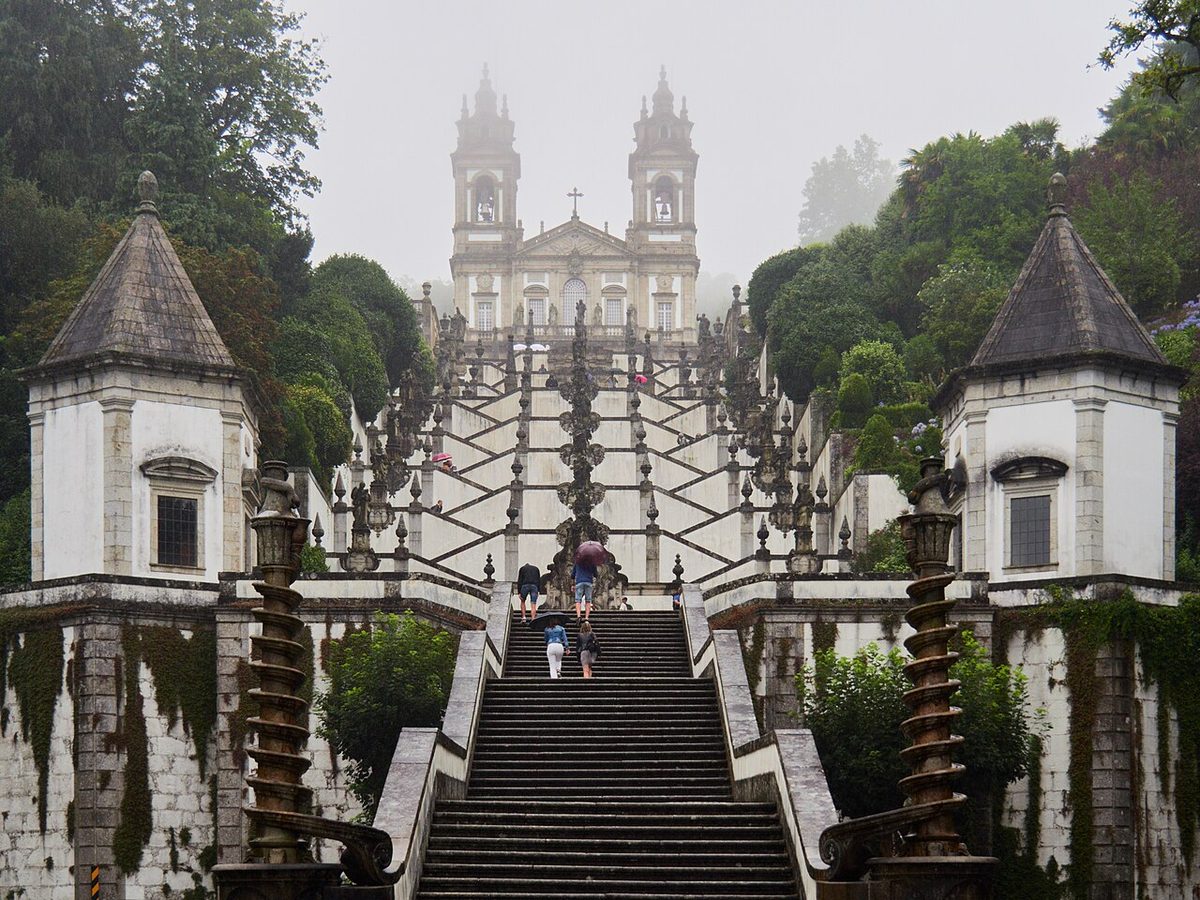
Braga was already a significant Roman city (Bracara Augusta) before Porto existed in any recognisable form, and the city wears that history alongside a genuinely striking religious architecture tradition built up over nearly two thousand years of continuous settlement — Braga is Portugal’s ecclesiastical capital, seat of its senior archbishop, and the baroque cathedral (Sé de Braga) in the centre is one of the oldest in the country, with foundations dating to the late 11th century beneath its later Gothic and Baroque layers. The city takes its religious calendar seriously too — Holy Week (Semana Santa) in Braga is one of the most elaborate in Portugal, with candlelit processions through the old town that draw visitors specifically for the event rather than the everyday sights. The real draw for most visitors, though, sits just outside the city: Bom Jesus do Monte, a hilltop sanctuary reached by a zigzagging Baroque staircase decorated with fountains and statues representing the senses and virtues, one of the most photographed religious sites in Portugal. Walk up (steep, roughly 20-30 minutes) or take the funicular, one of the oldest water-powered funiculars still operating anywhere in the world, running since 1882 on a counterweight system using water tanks rather than an electric motor. Back in the city centre, Braga’s old town is compact enough to cover on foot in a couple of hours, with the Sé’s mix of Romanesque, Gothic and Baroque additions worth a proper look inside rather than a photo from the square, and a lively student population (Braga’s own university sits alongside the historic centre) keeping the surrounding cafés and bars genuinely busy rather than purely tourist-facing.
Direct trains from São Bento or Campanhã run frequently, taking 55 minutes to 1h15 depending on the service, at a similar fare to Guimarães. Bom Jesus itself is a short bus ride or taxi from Braga’s centre, not walkable in a reasonable time.
Viana do Castelo: Art Nouveau, a sanctuary and an actual beach
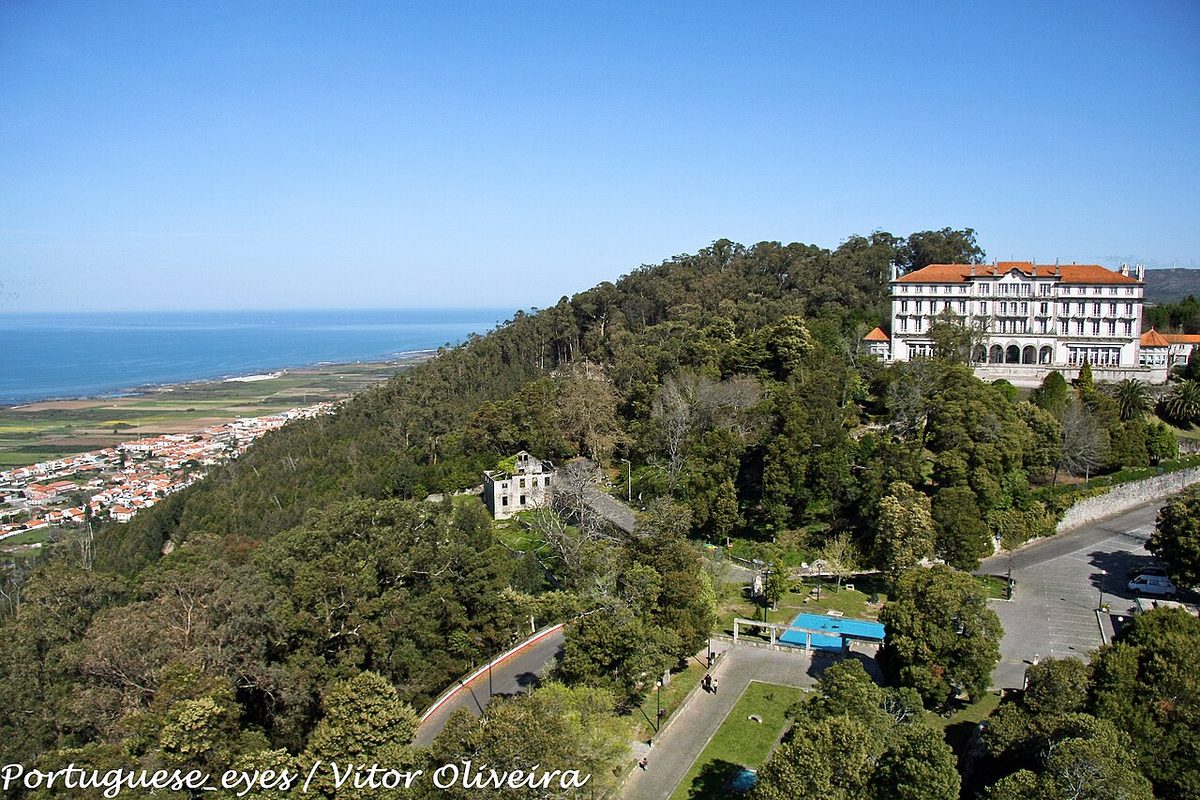
Viana do Castelo sits where the Lima river meets the Atlantic, and combines a genuinely handsome Art Nouveau and Manueline town centre with Monte de Santa Luzia above it — a hilltop basilica and viewpoint reached by funicular, looking out over the river mouth and a long stretch of coastline. Praia do Cabedelo, across the river, gives the town a proper beach, popular with the region’s surf scene, which most of this list’s other stops entirely lack. The old town itself is worth slowing down for rather than treating as a stop on the way to the viewpoint: the central Praça da República and the surrounding streets carry a genuine concentration of early-20th-century Art Nouveau facades, a style Viana do Castelo embraced more fully than almost anywhere else in Portugal, alongside older Manueline-era buildings from the town’s golden age as an Age-of-Discoveries shipbuilding port.
Regional trains from Porto’s Campanhã station run the route in roughly 1 to 1h30, less frequent than the Guimarães or Braga lines, so check the timetable before committing to a tight schedule. It’s also the furthest of the easily train-reachable towns on this list, which makes it a better full-day trip than a rushed half-day one.
Ponte de Lima: Portugal’s oldest town, and the heart of vinho verde country
Ponte de Lima claims the title of Portugal’s oldest chartered town, granted its charter in 1125, and its central feature — a long, low bridge across the Lima river, part Roman, part medieval rebuild — is one of the most photographed river crossings in the country. The riverside promenade, planted with plane trees, hosts a market older than the bridge itself (a Roman-era market tradition, still running every other Monday), and the surrounding countryside is prime vinho verde territory, with quintas open for tastings a short drive from the centre. The town also hosts one of northern Portugal’s most elaborate flower festivals, the Feiras Novas, each September, when the riverside is decorated with elaborate carpets of flower petals for a religious procession — worth checking the dates if a September visit happens to align, since it transforms an already pretty town into something genuinely spectacular for a few days. Ponte de Lima’s designation as a historic town also means its centre has resisted the kind of modern development that’s crept into some of the region’s other river towns — walking its narrow streets away from the bridge itself feels closer to stepping into an unaltered 18th-century market town than a curated tourist experience.
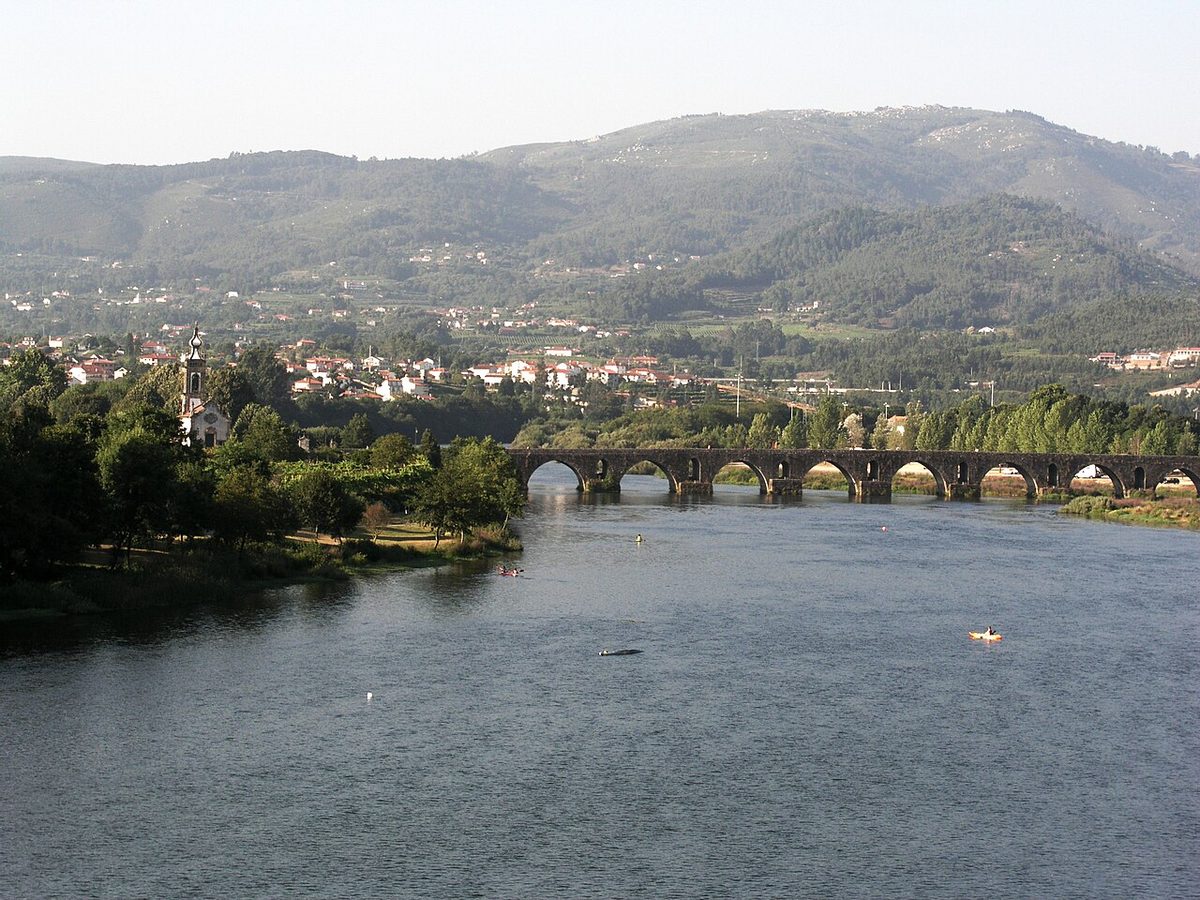
This is the first entry on this list where the honest advice is to hire a car. Direct public transport from Porto is limited to indirect bus connections that can take well over two hours each way; a car covers the same distance in around an hour and lets you continue on to a vinho verde quinta or loop back via Viana do Castelo.
Amarante: a bridge, a saint and a genuinely good pastry
Amarante’s centre sits astride the Tâmega river, crossed by the elegant São Gonçalo bridge, with the São Gonçalo church and monastery — dedicated to a saint associated with matchmaking and marriage — anchoring the riverside. The town’s pastelarias are known nationally for papos de anjo and other egg-yolk-heavy sweets in the same convent-dessert tradition covered in our Portuguese food guide, worth timing a visit around a coffee and a pastry on the riverside terraces. The town’s connection to fertility folklore extends into its baking too: several of the local pastries are shaped suggestively, a centuries-old tradition tied to São Gonçalo’s patronage of marriage that locals treat as a point of gentle humour rather than embarrassment. Amarante’s small museum dedicated to the modernist painter Amadeo de Souza-Cardoso, a native son, is worth the visit if you have an extra half hour beyond the bridge and the church.
No direct train serves Amarante; a bus from Porto’s main terminal or a roughly 50-minute drive are the practical options, and checking the current Rede Expressos timetable before setting out is worth the two minutes, since this route runs less frequently than the Guimarães or Braga lines and a missed connection can add a genuinely long wait to the day. It pairs reasonably with a Douro Valley day if you’re driving rather than training to Pinhão, since Amarante sits on a plausible route between the two.
Peneda-Gerês National Park: waterfalls, granite villages, and the need for a car
Peneda-Gerês is Portugal’s only national park, a granite highland straddling the border with Spain, with waterfalls, natural swimming pools, centuries-old granite villages and genuinely wild scenery unlike anywhere else within reach of Porto. The park is large enough that “visiting Gerês” means picking one area rather than seeing all of it: the Ermida-Homem valley for a classic waterfall-and-swimming-pool combination, the Soajo and Lindoso villages for their communal granite espigueiros (raised grain stores) that look almost prehistoric, or the drive over the Portela do Homem border pass into Spain and back for the scenery alone. The park is also home to Garrano ponies and Barrosã cattle, both semi-wild breeds that graze the higher pastures largely undisturbed, and to wild boar and the occasional Iberian wolf in its remoter corners, though a wolf sighting is a matter of considerable luck rather than something to plan around, and the population here is small enough that most locals themselves have never seen one outside a documentary. Swimming spots along the Homem and Cávado rivers are genuinely cold even in August, fed by granite mountain runoff, which keeps them refreshing rather than merely pleasant on a hot day.
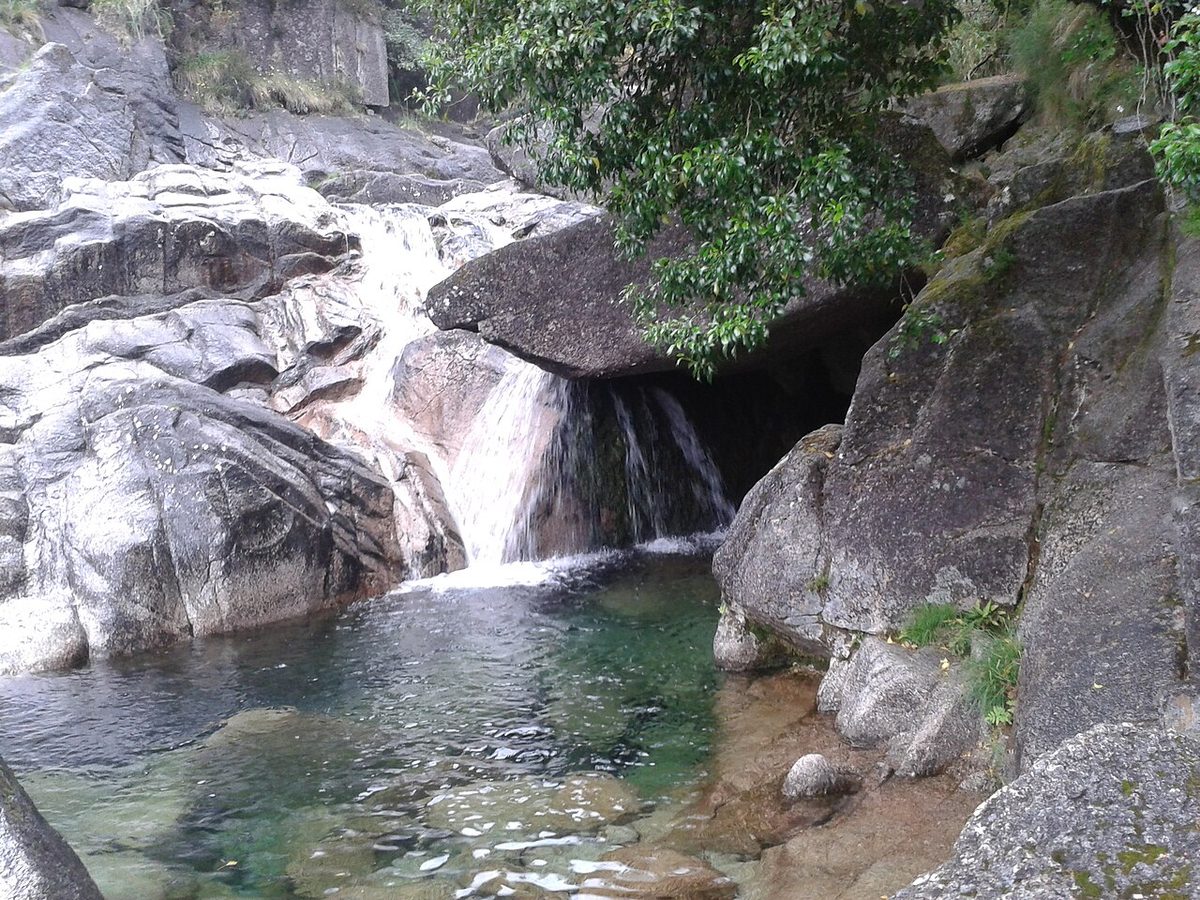
A car is genuinely essential here; there is no practical public transport network inside the park itself, and the villages and trailheads are spread widely enough that a car is the only way to see more than one area in a day. Budget around 1 to 1h30 driving from Porto to reach the park’s southern edge, more to reach its further villages, and treat this as a full-day trip rather than a half-day add-on to something else.
Trás-os-Montes and the wild northeast: an honest word on distance
Bragança, the walled citadel town at the heart of Trás-os-Montes, and the remote Montesinho Natural Park around it are genuinely worth seeing — but they sit roughly 2h30-3h from Porto by car, with no fast train connection at all. Calling this a “day trip from Porto” the way several tour listings do is technically true and practically misleading: by the time you’ve driven there, you have an hour or two before the return drive needs to start. If Trás-os-Montes is genuinely on your list, budget it as an overnight stop on a longer northern Portugal route rather than a single exhausting day from a Porto base. What makes the detour worth it, once you’ve committed to the distance, is precisely how little the region has changed for tourism: Bragança’s citadel still functions as a lived-in neighbourhood rather than an open-air museum, and Montesinho’s villages practise a genuinely old communal farming tradition (the lameiros, or communal hay meadows) found almost nowhere else in Western Europe at this scale. The citadel itself encloses a complete medieval town within its walls — houses, a church, a pillory and the striking, unusual five-sided Domus Municipalis building — rather than a single isolated monument, which is part of why it rewards the extra travel time more generously than a lone castle would.
Best time of year for these day trips
Northern Portugal runs wetter and cooler than the rest of the country year-round, and that shapes when each of these destinations is actually worth the trip more than a generic answer from our national best time to visit Portugal guide would suggest. Spring (April-June) is the strongest window across the board: Peneda-Gerês’s waterfalls run fullest after winter rain, the Minho’s countryside is at its greenest, and temperatures in Guimarães and Braga’s old towns are comfortable for walking without the July-August crowds or heat. Summer brings the best swimming conditions in Gerês’s rivers and the only realistic beach weather in Viana do Castelo, at the cost of the year’s busiest crowds at Bom Jesus and Guimarães castle. Autumn (September-October) pairs well with Ponte de Lima’s Feiras Novas and the wider region’s grape harvest, with rain returning by November. Winter is genuinely wet in this region more than anywhere else in mainland Portugal, Porto itself included, and Gerês’s higher villages occasionally see snow — beautiful if you’re prepared for it, miserable if you’re not. None of this rules winter out entirely: Braga and Guimarães’s indoor sights (the cathedral, the Paço dos Duques) hold up fine on a wet day, and a rainy Bom Jesus staircase, empty of the summer’s crowds, has its own quiet appeal that a sunny August afternoon there simply doesn’t offer.
Combining destinations in one day
Guimarães and Braga are the one genuinely easy pairing on this list: both sit on fast, frequent, direct train lines from Porto, roughly 20-30 minutes apart from each other by a connecting service, which makes a two-town day entirely realistic without a car. Viana do Castelo is a full day on its own given the longer train journey; pairing it with anything else usually means starting very early or seeing one place properly rather than two places rushed. With a car, Ponte de Lima and Viana do Castelo pair naturally along the same river valley, and Amarante sits plausibly on a driving route toward the Douro rather than as a Porto-only day. A genuinely ambitious but workable car-based loop covers Guimarães, Braga and Bom Jesus in a morning, then continues to Ponte de Lima for a late lunch and a walk over the bridge, returning to Porto by early evening — long, but realistic for a single determined day with an early start, in a way that adding Gerês or Viana do Castelo to the same loop would not be.
Practical notes: tickets, timing and driving
Trains to Guimarães and Braga run as part of Porto’s urban and regional network (the same fare system covered in our getting around Portugal guide), buyable at any station machine on the day without advance booking — there’s no need to plan these two around promotional fares the way a Lisbon-Porto Alfa Pendular trip requires. Viana do Castelo’s regional service runs less frequently, so it’s worth checking the return timetable before leaving rather than assuming a train home every hour. For anywhere requiring a car — Ponte de Lima, Gerês, Trás-os-Montes — the electronic toll rules covered elsewhere on this site apply on this region’s motorways too, and a hire car’s transponder should be confirmed active before leaving Porto — the same practical rule our Portugal travel tips guide covers for the rest of the country. Parking in Guimarães and Braga’s historic centres is limited and often paid; both cities have clearly signed car parks just outside the pedestrianised cores, a shorter walk than it looks on a first visit, and following the painted or app-based signage to the nearest one saves circling the historic core looking for street parking that mostly doesn’t exist inside it. Mobile signal is reliable throughout the towns on this list and patchy in Peneda-Gerês’s more remote valleys, worth noting if you’re relying on a phone for navigation or for booking a table ahead — download an offline map of the park before you leave Porto’s coverage behind rather than assuming a signal will reappear when you need it.
What to eat on each trip
Northern Portugal’s food culture, covered in full in our Portuguese food guide, has specific regional strengths worth timing a meal around. Guimarães and the wider Minho are known for a hearty rojões (marinated fried pork) tradition and fresh vinho verde by the jug; Braga is a good base for trying doce de Braga-style convent pastries between sightseeing stops; Amarante’s papos de anjo and other egg-yolk sweets are worth planning an afternoon coffee stop around specifically; and Ponte de Lima’s surrounding quintas offer some of the most accessible vinho verde tastings in the country, often requiring nothing more than a phone call ahead rather than a formal booking process. Portions across this whole region tend to run generous even by Portuguese standards, a legacy of the same rural, working-agricultural food culture that produced the country’s soups and stews — sharing a main course between two is a genuinely normal choice here rather than an unusual request, and asking a waiter whether a dish is meant for one or two before ordering avoids the mild shock of a plate arriving built for a table of four.
What to skip
Skip a guided multi-town tour that promises Braga, Guimarães and Viana do Castelo all in one day unless you’re genuinely comfortable seeing each of the three for well under two hours apiece — the driving alone between all three eats a meaningful chunk of the day, and Braga and Guimarães alone make a fuller, less rushed pairing that leaves genuine time to actually stop and look rather than photograph each square from a moving coach window. Skip treating Bragança and Trás-os-Montes as a realistic single-day trip from Porto; the distance makes it an overnight trip in every honest sense, whatever a tour listing’s day-trip label claims. Skip visiting Peneda-Gerês without a car and expecting to see more than the immediate area around wherever a bus happens to drop you. And skip assuming vinho verde country means one specific town — it’s a whole region’s wine designation, and Ponte de Lima is a good base for tasting it rather than the only place it’s made. Skip, too, expecting Peneda-Gerês to feel like a manicured national park in the North American or Western European sense; trails are less signposted, facilities are sparser, and the reward is genuine wildness rather than a polished visitor-centre experience — treat that as the point rather than a shortcoming.
When a day trip should really be an overnight
Two entries on this list are genuinely better as an overnight than a rushed return trip, and it’s worth saying so plainly rather than forcing every destination into the “day trip” framing this guide’s title uses. Peneda-Gerês rewards staying a night in one of its rural guesthouses or a converted village house — the park’s best light, for both photography and simply experiencing the landscape, comes at dawn and dusk, both of which a same-day Porto round trip misses entirely. Trás-os-Montes, as already covered, is close to unreasonable as a single day given the drive; a night in Bragança turns an exhausting round trip into a genuinely rewarding two-day loop through some of mainland Portugal’s least-visited country. Neither requires an elaborate trip to justify the overnight — a single extra night, with an early start the next morning, is enough to see either properly rather than glimpsing it from a car window on the way back to Porto. Accommodation in both areas runs noticeably cheaper than Porto’s own city-centre rates, which softens the cost of the extra night more than most visitors expect before checking.
Frequently asked questions
Can you visit Guimarães and Braga from Porto without a car?
Yes, easily — both are direct, frequent train rides of roughly an hour from São Bento station, and the two can be combined in a single day using a connecting service between them.
Do you need a car for Peneda-Gerês National Park?
Essentially yes. There’s no practical public transport network inside the park, and its villages and trailheads are spread too widely to see more than one area without a car.
How far is Ponte de Lima from Porto?
About an hour by car. Public transport connections are limited and indirect, taking well over two hours, which makes this one of the destinations on this list genuinely worth a rental car for.
Is Bragança a realistic day trip from Porto?
Not really — it’s roughly 2h30-3h away by car with no fast train link. Treat it as an overnight stop on a longer northern Portugal route rather than a single day from a Porto base.
What is Bom Jesus do Monte?
A hilltop Baroque sanctuary just outside Braga, reached by a famous zigzagging staircase decorated with fountains and statues, or by one of the oldest working water-powered funiculars in the world.
Which northern Portugal day trip is best for a beach day?
Viana do Castelo, the only stop on this list with a genuine beach (Praia do Cabedelo) alongside its historic centre and viewpoint.
Can you do Amarante as a day trip from Porto?
Yes, by bus or car in under an hour, though there’s no direct train. It also works well combined with a driving route toward the Douro Valley.
What’s the best day trip from Porto for someone without a car?
Guimarães or Braga, both reachable by direct, frequent train in about an hour, and easily combined into one day using the connecting service between them without ever needing a rental car.
Is northern Portugal worth visiting beyond Porto and the Douro?
Yes — the Minho and Trás-os-Montes hold much of the country’s founding history and its most rural, least internationally touristed landscapes, genuinely distinct from both Porto’s city experience and the Douro’s wine-region focus.
How many days do you need to see northern Portugal properly?
A minimum of three to four beyond Porto itself: one for Guimarães and Braga together, one for the Minho’s river towns and vinho verde country, and one or two more for Peneda-Gerês, extended to a fifth or sixth if Trás-os-Montes is included.
Does it rain a lot in northern Portugal?
More than the rest of mainland Portugal, yes, particularly November through March. Spring and early summer are the most reliable windows for combining good weather with thinner crowds across this whole region.
Can you see Guimarães, Braga and Bom Jesus do Monte all in one day?
Yes, with an early start — direct trains link Porto to both towns quickly, and Bom Jesus is a short bus or taxi ride from central Braga, though the day runs long rather than leisurely.
Peneda-Gerês is the best mountain walking on the mainland, but some of its trails now need authorisation for groups. Our Portugal hiking guide explains the protection-zone rules and picks the park’s best walks, along with the Paiva Walkways and the Camino Portugués from Porto.
Where to go next
For the city these trips all start from, see our things to do in Porto guide, and for the wine region many of these routes connect toward, Douro Valley covers the vineyards, towns and train line in full. Our getting around Portugal guide covers the national transport picture these regional trains and buses fit into, and Portuguese food covers the north’s cured meats, francesinha and convent pastries in more depth than a single day trip allows.
Photo credits
- Featured image: the Baroque staircase at Bom Jesus do Monte, near Braga — lumoplank, CC0, via Wikimedia Commons
- Guimarães castle — Krzysztof Golik, CC BY-SA 4.0, via Wikimedia Commons
- A natural pool in Peneda-Gerês National Park — Nivasbabus, CC BY-SA 3.0, via Wikimedia Commons
- The bridge over the Lima at Ponte de Lima — Xauxa Håkan Svensson, CC BY-SA 3.0, via Wikimedia Commons
- The view from Monte de Santa Luzia, Viana do Castelo — Vitor Oliveira, CC BY-SA 2.0, via Wikimedia Commons
Train and drive times checked September 2026 against CP’s published schedules and typical road journey times; both vary by specific service and traffic. Last updated September 2026.