Most guides to Portugal nightlife are lists of clubs, half of which have changed names or closed since they were written, and almost none explain the thing that trips visitors up: the rhythm of the night. In Portugal, dinner starts late, the streets matter more than the clubs, a lot of the drinking happens standing outside with a plastic cup, and a club won’t be worth entering until long after you’d normally be in bed. This guide explains what a night out in Portugal actually looks like, then takes the best cities and neighbourhoods one by one, from Lisbon’s Bairro Alto to Albufeira’s Strip, with the festivals, the drinks, the prices and the rules.
The short answer: Lisbon has the best nightlife in Portugal, in Bairro Alto, Cais do Sodré and Príncipe Real, followed by Porto’s bar streets around the Galerias de Paris. For a beach party, Albufeira and Lagos lead the Algarve in summer; Coimbra and Braga are the student cities; and the summer festivals are the real highlight. Nights start late: bars around 11pm, clubs after 1am.
Portugal nightlife at a glance
Prices were checked in October 2026 and are approximate.
| Where | Main areas | Vibe | Best nights | Best season | Verdict |
|---|---|---|---|---|---|
| Lisbon | Bairro Alto, Cais do Sodré, Príncipe Real, Santos, Alfama | Street drinking, bars, clubs, fado | Thursday–Saturday | All year; June for the festivals | The best in Portugal |
| Porto | Galerias de Paris, Cândido dos Reis, Ribeira | Bar-hopping, live music, students | Thursday–Saturday | All year; 23 June for São João | A close second |
| Albufeira | The Strip (Avenida Sá Carneiro), the old town | Package-holiday party, bars and clubs | Every night in summer | June–September | Loud and British |
| Lagos | The old town | Backpacker bars, bar crawls | Every night in summer | May–October | The Algarve’s most fun |
| Vilamoura and Praia da Rocha | The marina; the beachfront | Upmarket marina bars; beach clubs | Weekends | July–August | Polished, pricier |
| Coimbra | Praça da República, the old town | Students, fado, cheap bars | Term time; May | October–May | Best during the Queima das Fitas |
| Braga | The centre | Young, studenty | Thursday | Term time | Lively for its size |
| Funchal | The Zona Velha (Rua de Santa Maria) | Poncha bars, restaurants | Weekends | All year; New Year’s Eve | Relaxed, not a party island |
| Ericeira and Peniche | The centres | Surf bars | Weekends | Summer | Laid-back |
What a night out in Portugal actually looks like
The timing
The single biggest adjustment for visitors from northern Europe or North America is the clock. Dinner is eaten from around 8pm to 10pm, later in summer and at weekends. People meet for drinks after dinner, from about 10:30pm or 11pm, and the bar streets of Lisbon and Porto fill up from midnight. Clubs open around midnight but are empty until 1:30am or 2am, and the busiest hours are 2am to 5am; many close at 6am. If you turn up at a club at 11pm, you’ll be drinking alone with the bar staff.
The street is the bar
In Bairro Alto and Cais do Sodré in Lisbon, and around the Galerias de Paris in Porto, much of the night happens outdoors. People buy a drink at a tiny bar, often a hole in the wall with room for a dozen inside, and drink it standing in the street with the crowd, moving from bar to bar. It’s cheap, sociable and noisy, and it’s been the subject of years of tension with residents, which is why the rules have been tightening (more on that below).
What to drink
- Beer: a small draught beer is an imperial in Lisbon and the south and a fino in Porto and the north; a larger glass is a caneca. In Bairro Alto, an imperial typically costs around €1.50–3, according to a July 2026 guide.
- Ginjinha: sour-cherry liqueur, served in tiny glasses (ask for it com elas, with the cherries) from hole-in-the-wall bars like A Ginjinha in Lisbon’s Largo de São Domingos, open since the nineteenth century.
- Port and tonic: white port with tonic, ice and a slice of orange or a sprig of mint, the classic summer aperitif in Porto.
- Vinho verde: light, slightly fizzy wine from the Minho, cheap and very drinkable on a hot night.
- Poncha: Madeira’s drink, made with sugar-cane spirit, honey and lemon juice, stirred with a wooden caralhinho.
- Licor Beirão: a herbal liqueur that every Portuguese bar stocks, often drunk as a shot or with ginger ale.
How clubs work
Many Portuguese clubs use a drinks card: you’re handed a card at the door, the bar staff mark your drinks on it, and you pay as you leave. Entry is often free or charged as a “minimum consumption” that includes a drink or two. Don’t lose the card: clubs charge a hefty fixed amount for lost cards, usually printed on the card itself. Dress codes are generally relaxed, smart-casual at most, though some upmarket clubs in Lisbon and Vilamoura have choosy door staff, and big groups of men can find it harder to get in.
Lisbon
Lisbon has the most varied nightlife in Portugal, spread across neighbourhoods that each have their own character, all within walking distance or a short taxi ride of each other. Here’s how they compare.
Bairro Alto
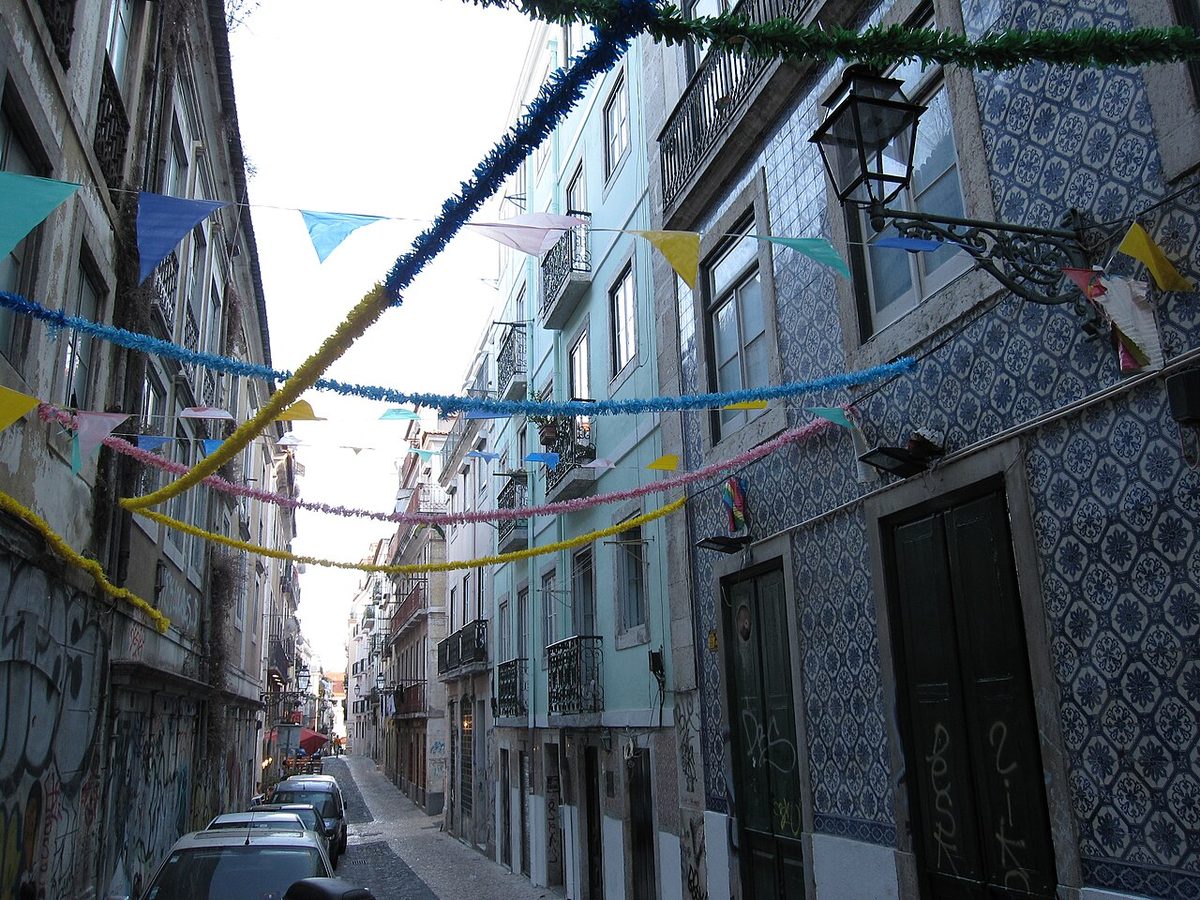
The “upper quarter”, a grid of narrow lanes on the hill above Chiado, is the heart of Lisbon’s night. By day it’s a quiet residential neighbourhood of shuttered shops and graffiti; from about 11pm, its dozens of tiny bars open their doors and the lanes fill with thousands of people drinking in the street. It’s young, cheap and noisy, best from Thursday to Saturday, and at its wildest in June, when the Santo António festivities take over. Start with dinner in Chiado or Príncipe Real, then wander in.
Cais do Sodré and Pink Street
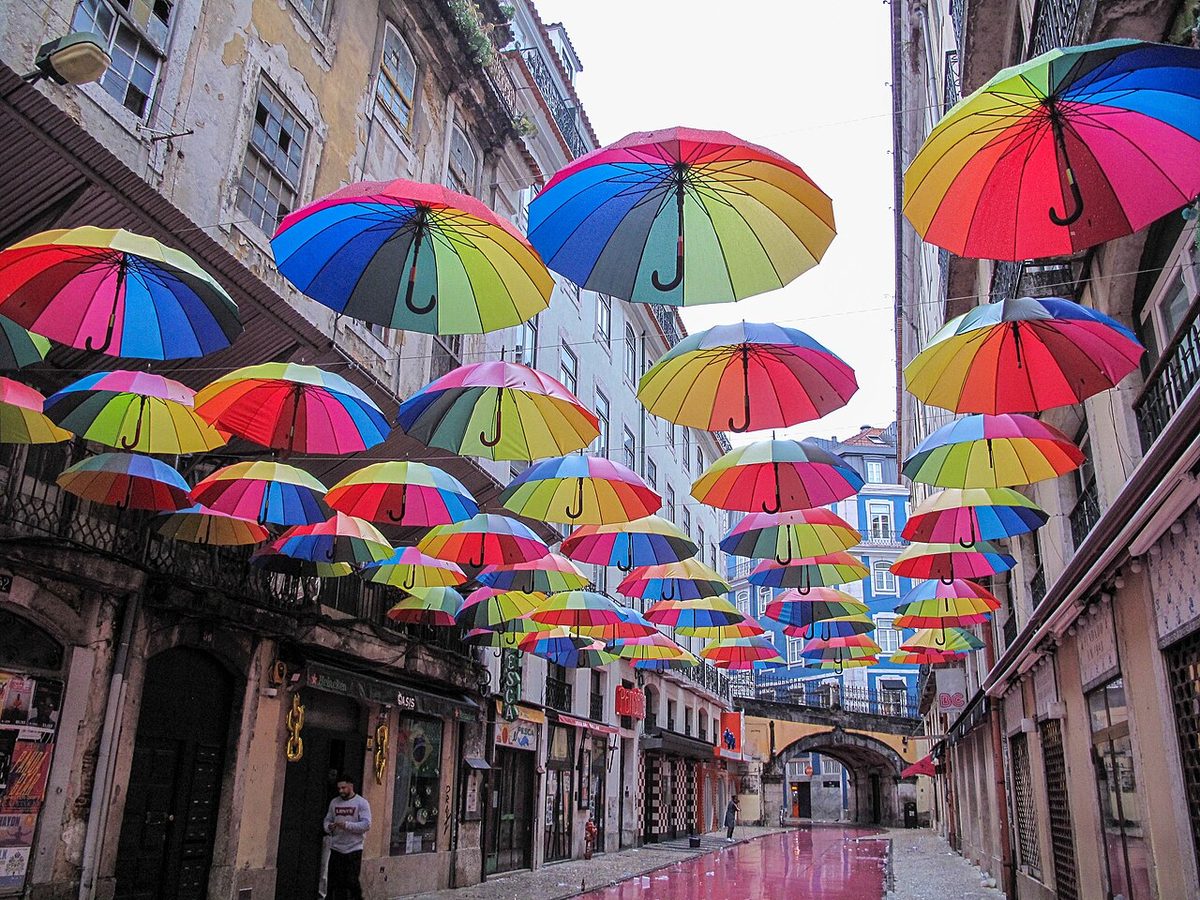
Down by the river, around the train and ferry station, Cais do Sodré was once the sailors’ red-light district, and its old bars, with names taken from the ports their customers came from, have been reborn as the city’s late-night hub. The centre is Rua Nova do Carvalho, nicknamed Pink Street for the colour of its road surface, lined with bars and clubs, among them Musicbox, a long-running live-music club under the arches, and Pensão Amor, a bar in a former brothel. Cais do Sodré stays open later than Bairro Alto, and many people move down the hill as the night goes on.
Príncipe Real
North of Bairro Alto, Príncipe Real is Lisbon’s smartest bar district and the centre of its LGBTQ+ scene, with cocktail bars, gay bars and clubs around the garden square. The Pavilhão Chinês, a bar crammed with collections of toy soldiers, model planes and curios, is one of the most eccentric places to drink in Europe.
Alfama, Mouraria and the fado houses
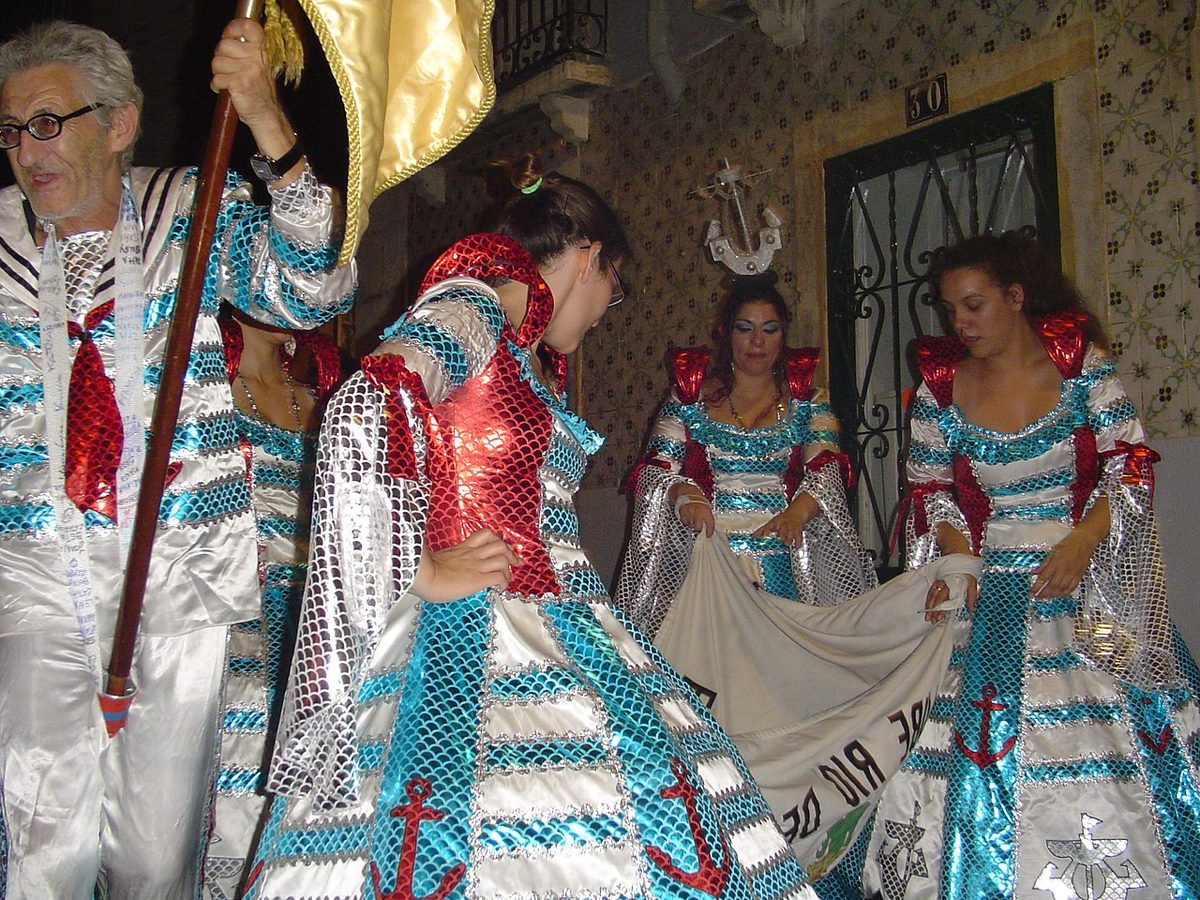
Lisbon’s oldest quarters are quieter at night, except in June, when the Santo António festivities turn every square into a street party of grilled sardines, cheap beer and music, climaxing on the night of 12–13 June. The rest of the year, this is fado territory: small restaurants and bars where fado singers perform, often with a minimum spend. Keep quiet during the songs; it’s taken very seriously.
Rooftops, the riverside and the big clubs
For sunset drinks, the kiosks at Lisbon’s viewpoints (São Pedro de Alcântara, Graça, Santa Catarina) are cheap and lovely, and Park, a bar on the top of a multi-storey car park in Bairro Alto, is the best-known rooftop. Along the river to the west, the old docks at Santo Amaro, under the 25 de Abril bridge, and the LX Factory, a converted industrial complex in Alcântara, have bars and restaurants that stay busy into the night. Lisbon’s most famous club, Lux Frágil, on the riverfront by Santa Apolónia station, has been one of Europe’s best-known clubs since the late 1990s, with a roof terrace over the river for sunrise. For jazz, the Hot Clube de Portugal has been running since 1948.
Lisbon’s rules on street drinking
Lisbon has been trying to calm its nightlife districts for years, and the rules have changed more than once. In recent years the city council has proposed and debated limits on selling alcohol to drink in the street late at night, from around 11pm, aimed at Bairro Alto, Cais do Sodré, Alfama and Mouraria, with stepped-up policing; nearby Cascais has considered limits on drinking in public too. I couldn’t confirm exactly which version is in force as of October 2026, so expect some bars to refuse takeaway drinks late in the evening, and don’t be surprised if the street scene ends earlier than older guides suggest.
Porto
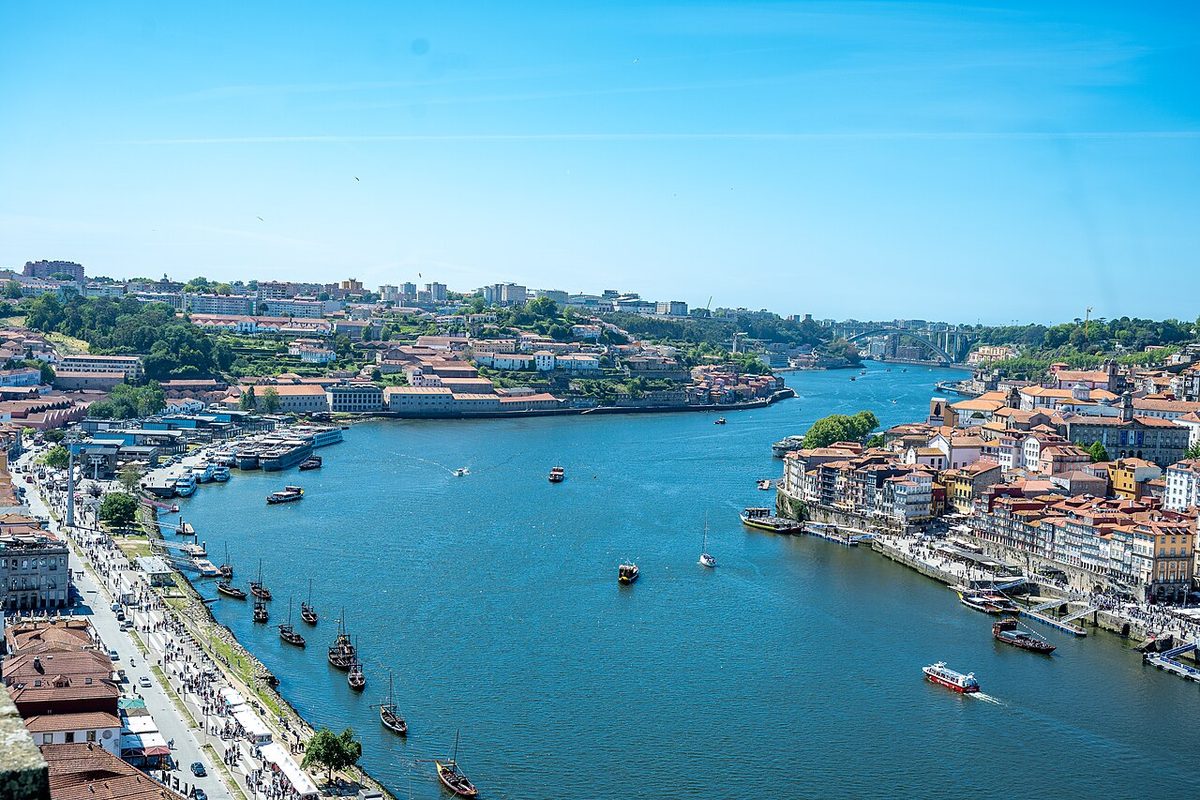
Porto’s nightlife is more compact than Lisbon’s and, many locals would argue, friendlier. The centre of gravity is the grid of streets west of the Clérigos tower: Rua da Galeria de Paris and Rua Cândido dos Reis are lined with bars, many in old shops and warehouses, and on weekend nights the crowd spills into the streets as in Lisbon. Evenings often start with port and tonic or a fino at the riverside bars of Ribeira, or a sunset at the Jardim do Morro on the Gaia side of the Dom Luís I bridge.
For music, Maus Hábitos, an arts venue and club on the top floor of an old building near the Bolhão, is a Porto institution; the Hard Club, in the converted Ferreira Borges market, hosts concerts; and the Casa da Música, Rem Koolhaas’s concert hall, has everything from classical to electronic. The night ends, traditionally, with a francesinha, Porto’s gut-busting sandwich, at a late-opening café. Porto’s biggest night is São João, the night of 23–24 June, when the whole city stays up, hitting each other on the head with plastic hammers, letting off fireworks and eating grilled sardines until dawn. See our Porto guide.
The Algarve
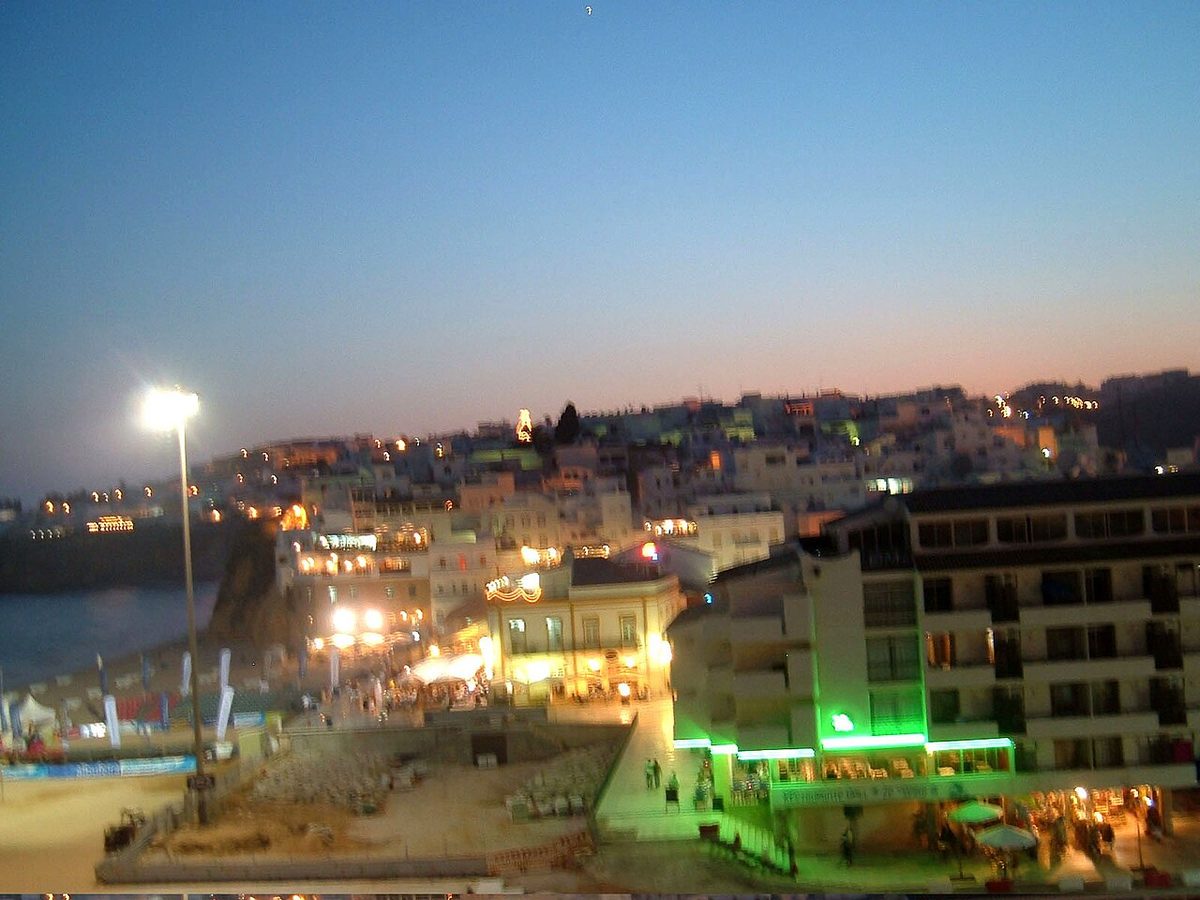
The Algarve’s nightlife is seasonal: from June to September it’s lively all week, and in winter much of it closes. It also divides sharply by town.
- Albufeira is the Algarve’s party capital. The Strip, officially Avenida Sá Carneiro, in the Oura district east of the old town, is a long run of bars, pubs and clubs aimed squarely at British and Irish holidaymakers, stag and hen parties, with drinks promotions and people handing out flyers. The old town around the Largo Engenheiro Duarte Pacheco is calmer, with bars and live music. Love it or hate it, it’s not the Portugal of the rest of this site.
- Lagos has the most fun nightlife in the western Algarve: a young, international crowd, many of them surfers and backpackers, in the bars of the old town, with organised bar crawls in summer. It’s lively but less brash than Albufeira.
- Praia da Rocha, the beach resort of Portimão, has a strip of bars and clubs along the clifftop avenue above its huge beach.
- Vilamoura is the polished, expensive end: marina bars, restaurants and clubs for yachts and golfers.
- Faro, the regional capital, has a student scene around its old town that runs all year, unlike the resorts.
For choosing a base, see our where to stay in the Algarve guide, and for the rest of the region our Algarve travel guide.
Student cities: Coimbra and Braga
Coimbra, home to Portugal’s oldest university, has a nightlife that rises and falls with the academic year. The bars around the Praça da República and in the old town are cheap and packed in term time, and the city’s own style of fado, sung by men in student capes, is performed in small venues. The highlight is the Queima das Fitas in May, a week-long end-of-year student festival of parades, concerts and drinking. Porto has its own Queima in May too. Braga, with a big university and one of the youngest populations in Europe, has a surprisingly lively bar scene for a city of churches, and its students celebrate the end of the year at the Enterro da Gata, also in May. Our central Portugal guide covers Coimbra.
Madeira and the Azores
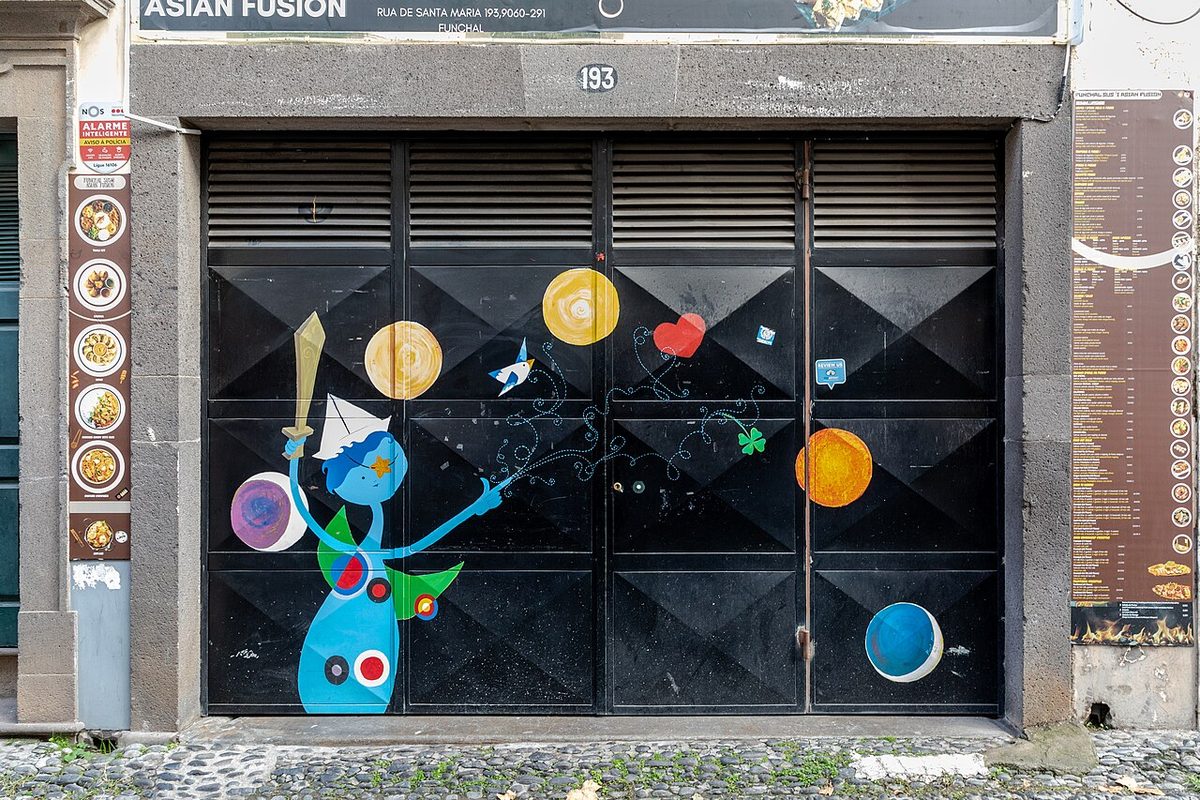
Neither island group is a party destination, but both have pleasant nights out. In Funchal, the evening action is in the Zona Velha, the old town, where the doors along Rua de Santa Maria have been painted by artists and the street is lined with restaurants and small bars serving poncha. Madeira’s big night is New Year’s Eve, when a huge fireworks display lights up the whole amphitheatre of Funchal and the ships in the bay. In the Azores, Ponta Delgada has bars around its marina and old centre, and in Horta, on Faial, Peter Café Sport has been the gathering place for transatlantic sailors for generations. See our Madeira guide.
Surf towns: Ericeira and Peniche
The surf towns north of Lisbon have a relaxed, international nightlife of surf bars, cheap beer and live music, at its liveliest at summer weekends and during surf competitions. Ericeira, a World Surfing Reserve, is the more charming, with bars in its whitewashed old town; Peniche, near the Supertubos break, has a more workaday port-town feel. See our surfing guide.
A Friday night in Lisbon, hour by hour
If you only have one big night out in Portugal, this is how I’d spend it.
- 7:30pm: a glass of wine or a beer at the kiosk on the Miradouro de São Pedro de Alcântara, looking across the Baixa to the castle as the sun goes down.
- 9pm: dinner in a tasca in Bairro Alto or Chiado. Book at the popular places on a Friday, and don’t rush: nobody else is.
- 11pm: into the lanes of Bairro Alto. Buy a drink at one tiny bar, drink it in the street, move on to the next. Try a ginjinha somewhere along the way.
- 1am: walk down the hill to Cais do Sodré, through the crowds on Pink Street, and into one of the bars or Musicbox for live music or a DJ.
- 3am: a taxi or ride-hail east along the river to Lux Frágil, if you have the stamina, where the dance floor is busiest from around 3am.
- 6am: sunrise over the Tagus from Lux’s roof terrace, then a pastel de nata and a bica from the first bakery to open.
And the Porto version
Watch the sunset from the Jardim do Morro on the Gaia side of the Dom Luís I bridge, walk across the upper deck into the city, and eat dinner in the Baixa. From around 11pm, join the crowds in the bars of Rua da Galeria de Paris and Rua Cândido dos Reis, then head to Maus Hábitos or one of the late clubs nearby. Finish, as the city does, with a francesinha.
Nightlife on any budget
| Budget | Where to go | What to expect |
|---|---|---|
| Cheap | Bairro Alto street bars, Lisbon’s miradouro kiosks, Coimbra and Braga student bars, Porto’s Galerias | Small draught beers at around €1.50–3 in Bairro Alto (July 2026), ginjinha by the glass, no entry fees |
| Mid-range | Cocktail bars in Príncipe Real and Porto’s Baixa, live-music clubs in Cais do Sodré, fado houses | Cocktails at several times the price of a beer; fado houses usually with a meal or minimum spend |
| Splurge | Hotel and rooftop bars in Lisbon and Porto, Vilamoura’s marina, big-name clubs | Views and door policies; club entry often includes a drink on a drinks card |
For everyday prices across the country, see our Portugal trip cost guide.
Smaller cities with good nights out
- Évora: a university city as well as a UNESCO one, with bars and terraces around the Praça do Giraldo and late-night student haunts in the old town.
- Aveiro: another university town, with bars along the canals and a relaxed weekend scene.
- Guimarães: on summer evenings the terraces of the Largo da Oliveira and the squares around it fill with students and locals; quieter but lovely.
- Tavira: no clubs to speak of, but riverside bars and a gentle evening promenade, the antidote to Albufeira.
Festivals and the summer party calendar
Portugal’s music festivals are some of the best in Europe and often better value than their equivalents elsewhere. The months below are typical; exact dates and line-ups change every year, so check the organisers’ sites.
| Festival | Where | When | What |
|---|---|---|---|
| Queima das Fitas | Coimbra and Porto | May | Student end-of-year festivals |
| Primavera Sound Porto | Porto, Parque da Cidade | June | Indie, rock, electronic |
| Santos Populares | Lisbon (Santo António, 12–13 June) and across the country | June | Street parties, sardines, marches |
| São João | Porto and Braga | Night of 23–24 June | All-night street party |
| Rock in Rio Lisboa | Lisbon | June, in even-numbered years | Big-name pop and rock |
| NOS Alive | Algés, near Lisbon | July | Rock, indie, pop |
| Super Bock Super Rock | Lisbon area | July | Rock, hip-hop, indie |
| MEO Sudoeste | Zambujeira do Mar, Alentejo coast | August | Pop, dance, a young beach crowd |
| Paredes de Coura | Minho | August | Indie and alternative, in a river valley |
| Neopop | Viana do Castelo | August | Techno |
| Boom Festival | Idanha-a-Nova, Beira Baixa | August, every two years | Psytrance and alternative culture |
For the traditional festivals, see our Portugal festivals calendar.
Fado: the other night out
Not every great night in Portugal involves a bar crawl. Fado, the melancholy song of Lisbon, inscribed by UNESCO as intangible heritage in 2011, is best heard late in the evening in small venues in Alfama, Mouraria and Bairro Alto, where a meal or a minimum spend usually covers the music. The best fado houses are small and intimate, and the singers are often regulars; the worst serve tourist menus while a singer performs a few crowd-pleasers. Coimbra has its own, quite different student fado, and Porto has a handful of fado houses near the Ribeira. Book ahead at the good places, eat lightly, and stay quiet while the music plays.
LGBTQ+ nightlife
Portugal is one of the most LGBTQ+-friendly countries in southern Europe; same-sex marriage has been legal since 2010. Lisbon’s scene is centred on Príncipe Real and the streets around it, with bars and clubs for every taste, and Lisbon Pride, in June, ends with a big street party. Porto has a smaller but lively scene, and the Algarve has gay-friendly bars in the main resorts.
Staying safe and legal
- The drinking age is 18, and you may be asked for ID at clubs.
- Fake drugs. In Lisbon’s Baixa and Bairro Alto, men mutter offers of “hashish, cocaine” to passing tourists. What they sell is usually fake (often bay leaves or flour), and buying it is still illegal: Portugal decriminalised possession of small amounts for personal use in 2001, but it remains an offence, and dealing is a crime.
- Pickpockets work the crowded streets of Bairro Alto and Cais do Sodré and the busiest Algarve strips. Keep phones and wallets in front pockets.
- Watch your drink in clubs, as you would anywhere.
- Getting home. Lisbon’s metro runs until about 1am, and night buses cover the main routes after that; Uber, Bolt and taxis are widely available and inexpensive by western European standards. In Porto, the metro also stops around 1am.
- Don’t drink and drive. The legal limit is 0.5 g/l of blood alcohol, and just 0.2 g/l for new and professional drivers; police run checkpoints on weekend nights.
- Respect the neighbours. People live above the bars of Bairro Alto and Cais do Sodré. Keep the noise down when you leave, and use the bins.
For more practical advice, see our Portugal travel tips.
What to skip, and what’s overrated
- Pink Street as a destination. It’s a short street with a painted road, fun to pass through and photograph, but its bars are no better than Cais do Sodré’s others, and it’s crowded and pricier at weekends. Don’t plan a night around it.
- Albufeira’s Strip, unless that’s your scene. If you want stag-party culture, it delivers; if you came for Portugal, Lagos or Lisbon will suit you better.
- Arriving at a club before 1am. You’ll pay to stand in an empty room.
- Tourist fado dinners. Avoid the places with touts and laminated menus outside; the music is better, and the food often cheaper, in the small houses that locals go to.
- Overpriced rooftop bars. Many charge cocktail prices for the view. The kiosks at Lisbon’s miradouros have the same views for the price of a beer.
- The Algarve resorts in winter. From November to March, much of the Algarve’s nightlife shuts. Lisbon, Porto and Faro carry on.
Frequently asked questions
Which city in Portugal has the best nightlife?
Lisbon, for variety and scale, from the street bars of Bairro Alto and Cais do Sodré to clubs like Lux Frágil and the fado houses of Alfama. Porto is a close second, more compact and friendlier, and in summer Albufeira and Lagos lead the Algarve.
What time do people go out in Portugal?
Late. Dinner is around 8pm to 10pm, bars fill from 11pm to midnight, and clubs don’t get busy until 1:30am or 2am, staying open until around 6am.
How much does a beer cost in Lisbon?
A small draught beer, an imperial, typically costs around €1.50–3 in Bairro Alto bars, according to a July 2026 guide. Cocktails in rooftop and hotel bars cost several times as much.
Can you drink in the street in Portugal?
Drinking in the street is a long-standing part of nightlife in Lisbon and Porto, but Lisbon has been moving to restrict late-night takeaway alcohol sales in districts like Bairro Alto and Cais do Sodré, and some towns have their own bylaws. Check the local rules, and follow what the bars tell you.
Is Albufeira a party town?
Yes. Its Strip, Avenida Sá Carneiro in the Oura district, is the Algarve’s biggest concentration of bars and clubs, aimed mainly at British and Irish holidaymakers, and busiest from June to September.
Is Portugal nightlife safe?
Generally, yes. The main risks are pickpockets in crowded bar districts and street sellers offering fake drugs in Lisbon. Use licensed taxis or ride-hailing apps late at night, and watch your drink in clubs.
What is the drinking age in Portugal?
Eighteen, for all alcoholic drinks. Clubs may ask for ID.
What are the best festivals in Portugal?
For music, NOS Alive and Super Bock Super Rock near Lisbon in July, Primavera Sound in Porto in June, and MEO Sudoeste and Paredes de Coura in August. For street parties, Santo António in Lisbon (12–13 June) and São João in Porto (23–24 June).
Where to go next
- The best things to do in Portugal, our main guide
- Things to do in Lisbon
- What a trip to Portugal costs
- Portugal’s best small towns, for quieter evenings
Photo credits
- Rua Nova do Carvalho, Lisbon’s Pink Street, on a wet morning (featured image) — Forbes Johnston from Winchester, UK, CC BY 4.0, via Wikimedia Commons
- A street in Bairro Alto, Lisbon — Bernt Rostad from Oslo, Norway, CC BY 2.0, via Wikimedia Commons
- Marchas Populares de Lisboa — Béria Lima de Rodríguez, CC BY-SA 3.0, via Wikimedia Commons
- Ribeira and the Douro, Porto — Michael Gaylard, CC BY 4.0, via Wikimedia Commons
- Albufeira old town at dusk — Mok9, CC BY-SA 2.5, via Wikimedia Commons
- A painted door on Rua de Santa Maria, Funchal — Dietmar Rabich, CC BY-SA 4.0, via Wikimedia Commons
Drink prices checked October 2026 against a July 2026 third-party guide to Bairro Alto; Lisbon’s street-drinking rules were still being debated and could not be confirmed. Festival months are typical; check the organisers’ sites for this year’s dates. Last updated: October 2026.