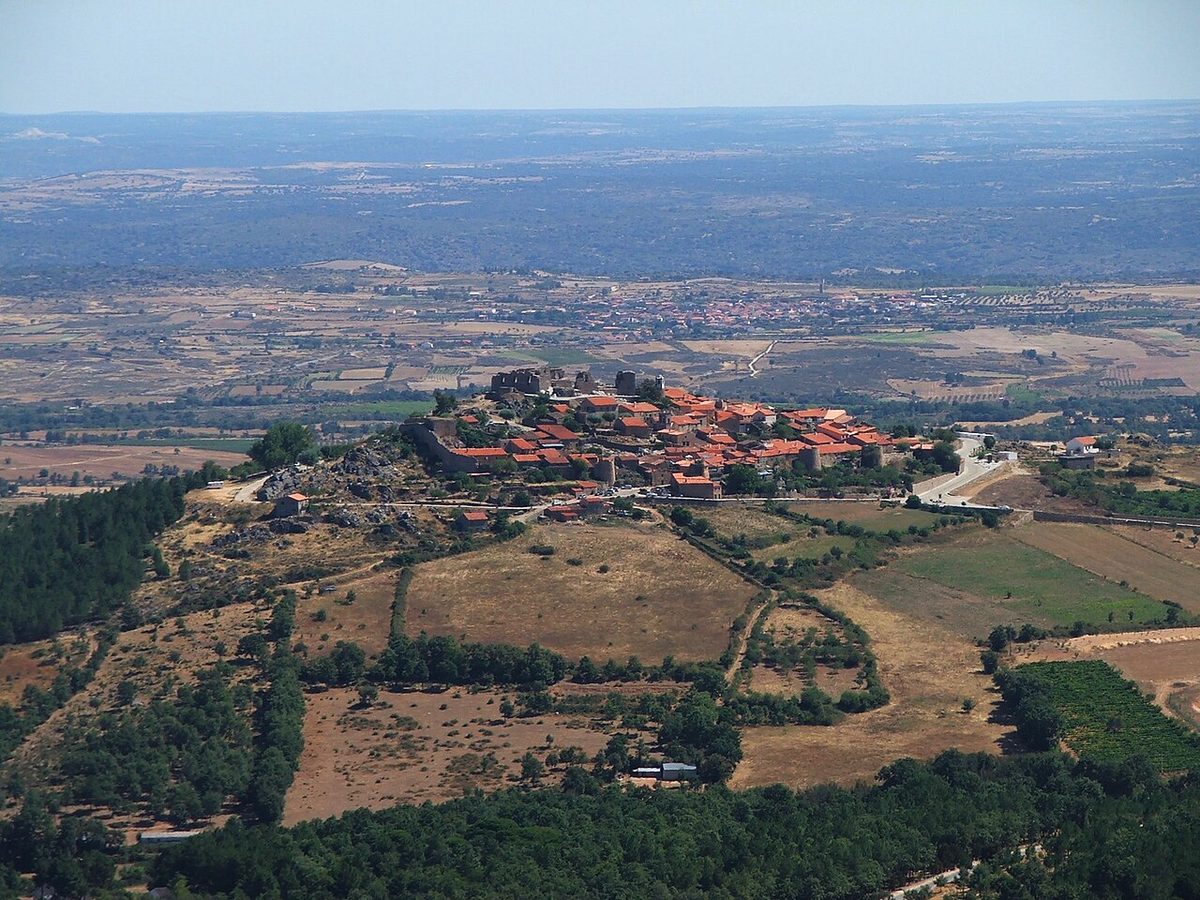
Most lists of the most beautiful villages in Portugal pad themselves out with towns. Sintra, Cascais, Lagos and Ponte de Lima are lovely, but they’re not villages, and including them crowds out the places that actually fit the word: hamlets of a few hundred people or fewer, built of the stone they stand on, where the main road ends and the evenings are silent. This guide ranks 20 genuine villages across the mainland and the Azores, with what makes each beautiful, where to stay, how to get there and an honest verdict, plus the famous names I think are overrated.
The short answer: the most beautiful villages in Portugal are Monsanto, built among giant granite boulders; Marvão, on a clifftop in the Alentejo; Piódão, a schist village stacked up a terraced hillside; Monsaraz, above the Alqueva lake; and Sortelha, inside its medieval walls. Sleep in at least one of them: they’re at their best after the day-trippers leave.
The most beautiful villages in Portugal at a glance
Drive times are approximate and assume a hire car; very few of these villages are reachable by public transport.
| # | Village | Region | Built of | Best for | From Lisbon / Porto | Verdict |
|---|---|---|---|---|---|---|
| 1 | Monsanto | Beira Baixa | Granite boulders | The most extraordinary setting | ~3 h / ~3h15 | Unmissable |
| 2 | Marvão | Alentejo | Whitewash and granite | Clifftop walls and views | ~2h30 / ~3h45 | The finest site |
| 3 | Piódão | Serra do Açor | Schist | A village after dark | ~3 h / ~2h45 | Sleep there |
| 4 | Monsaraz | Alentejo | Whitewash and schist | Sunsets and stars over the lake | ~2 h / ~4 h | The Alentejo’s best |
| 5 | Sortelha | Beira | Granite | Complete medieval walls | ~3h15 / ~2h45 | The most atmospheric |
| 6 | Sistelo | Minho | Granite | Terraced valley | ~4h15 / ~1h30 | Best in spring and autumn |
| 7 | Óbidos | Silver Coast | Whitewash | Walking the walls | ~1 h / ~2h30 | Beautiful; go late |
| 8 | Castelo Rodrigo | Beira | Granite | Border views, almond blossom | ~3h45 / ~2h45 | Best in February–March |
| 9 | Soajo | Minho | Granite | Granaries on the rocks | ~4 h / ~1h30 | The north’s iconic scene |
| 10 | Sete Cidades | São Miguel, Azores | Basalt and whitewash | A village in a crater | Flight + 40 min | Unique |
| 11 | Talasnal | Serra da Lousã | Schist | Forest walks, lunch in a stone house | ~2h30 / ~1h45 | Easiest schist village |
| 12 | Dornes | Ribatejo | Whitewash and stone | A peninsula in a reservoir | ~2 h / ~2h15 | The prettiest riverside village |
| 13 | Pitões das Júnias | Barroso | Granite | Mountain village and waterfall | ~4h30 / ~2 h | Wild and remote |
| 14 | Rio de Onor | Trás-os-Montes | Schist and slate | A village split by the border | ~5 h / ~2h45 | For the curious |
| 15 | Linhares da Beira | Serra da Estrela | Granite | Castle on a rock, paragliders | ~3h15 / ~2h15 | An easy add-on |
| 16 | Cacela Velha | Algarve | Whitewash | Lagoon view at sunset | ~2h45 / ~5h45 | The Algarve’s loveliest |
| 17 | Porto Covo | Alentejo coast | Whitewash | Coves and an island fort | ~1h45 / ~4h45 | Best outside August |
| 18 | Castelo Novo | Beira Baixa | Granite | Quiet lanes, a baroque fountain | ~2h45 / ~3 h | Peaceful |
| 19 | Alte | Algarve | Whitewash | Springs and white chimneys | ~2h45 / ~5h30 | The inland Algarve |
| 20 | Drave | Arouca | Schist | An abandoned village reached on foot | ~3h30 / ~1h30 | For walkers |
What makes a Portuguese village beautiful
Portugal’s villages look the way they do because of geology. In the north and centre, the bedrock is granite, so villages like Monsanto, Sortelha and Soajo are built of great grey blocks, with heavy roofs, outside staircases and granaries on stilts. In the forested hills east of Coimbra and in parts of the north, it’s schist, a dark, flaky slate-like stone, which gives Piódão, Talasnal and Drave their brown and charcoal walls and stone-slab roofs. In the Alentejo and the Algarve, where the stone is poorer and the sun fiercer, houses are whitewashed every year and trimmed in blue or ochre, with tall chimneys in the Algarve and wide, low doorways in the Alentejo. And in the Azores, villages are built of black basalt, often whitewashed, with the stone left bare around doors and windows.
Many of the most beautiful villages belong to one of two networks restored with EU and government money since the 1990s. The twelve Historic Villages of Portugal (Aldeias Históricas), including Monsanto, Sortelha, Castelo Rodrigo, Linhares da Beira, Castelo Novo and Piódão, are fortified villages along the old Spanish border. The Schist Villages (Aldeias do Xisto) are a network of 27 small mountain hamlets in the centre, including Talasnal. Both networks have helped revive places that had been emptying for a century, with guesthouses, restaurants and walking routes, though many of these villages still have more stones than people. The interior has lost much of its population to Lisbon, Porto and emigration, and that’s part of the reason these places look as they do.
The 20 most beautiful villages, ranked
1. Monsanto
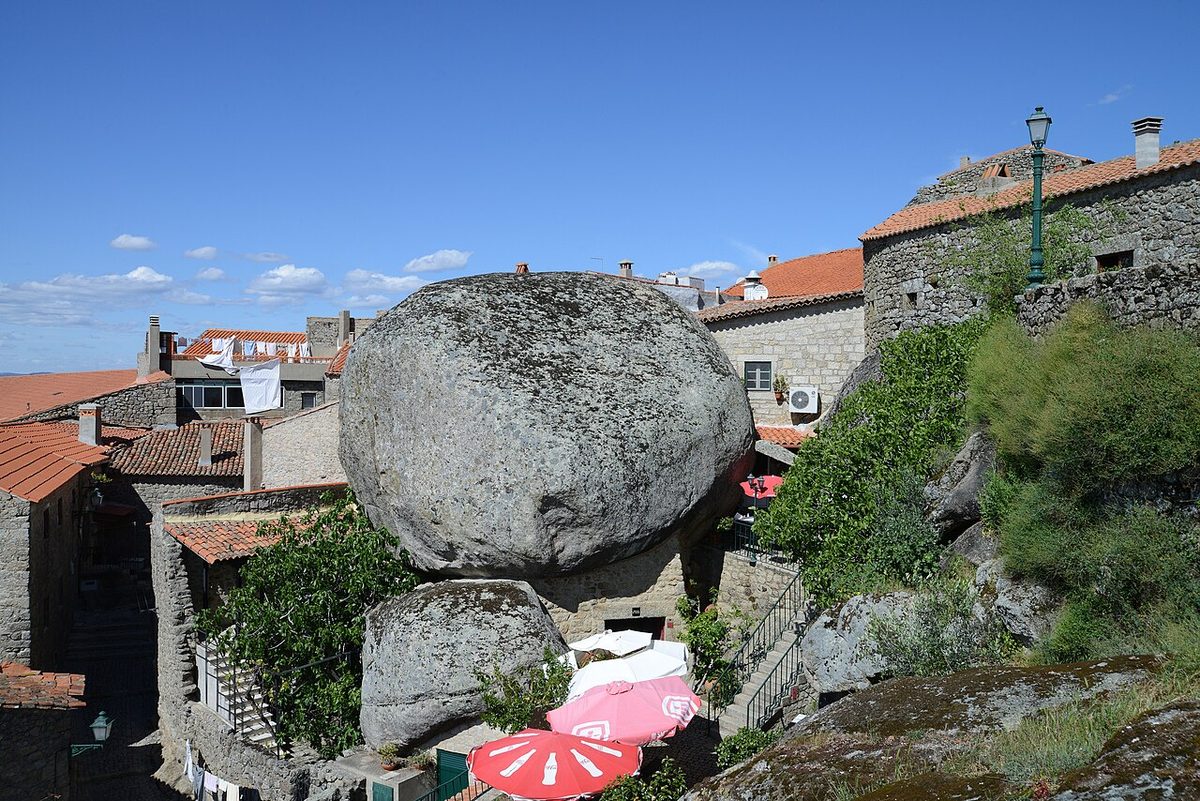
No village in Portugal looks like Monsanto. It climbs a lone granite hill that rises out of the plains near the Spanish border, and its houses are wedged between, against and underneath enormous boulders, some the size of the houses themselves: in places a single rock forms a wall, in others a roof. The lanes are steep, cobbled and narrow, opening onto views over a plain that seems to stretch forever. A path climbs through the boulders above the village to the ruins of the castle, where the view takes in the whole frontier. In 1938 Monsanto won a national competition as “the most Portuguese village in Portugal”, and the trophy, a silver rooster, still sits on top of its clock tower.
On 3 May, at the Festa das Cruzes, women carry rag dolls called marafonas and a clay pot of flowers is thrown from the castle walls, recalling a legend in which the starving defenders hurled their last calf at the besiegers to convince them they could hold out forever. Stay: one of the village guesthouses built into the rock. Don’t miss: the castle path at sunset; Idanha-a-Velha’s Roman walls and the fossil trail at Penha Garcia nearby. Verdict: the most extraordinary village in Portugal. Our Serra da Estrela and Historic Villages guide covers the region.
2. Marvão
Marvão sits at around 860 metres on a granite crag at the top of the Serra de São Mamede, close to the Spanish border in the Alentejo, and its medieval walls run right around the edge of the cliff. Inside them is a village of whitewashed houses with granite door frames and wrought-iron balconies, a few small churches and, at the highest point, a castle rebuilt by King Dinis in the thirteenth century. The name is said to come from Ibn Marwan, a ninth-century rebel lord who held out here. From the castle keep, the view takes in a vast sweep of the Alentejo, the hills of the Beira and Spain, and on autumn mornings the valleys below fill with mist so that the village seems to float.
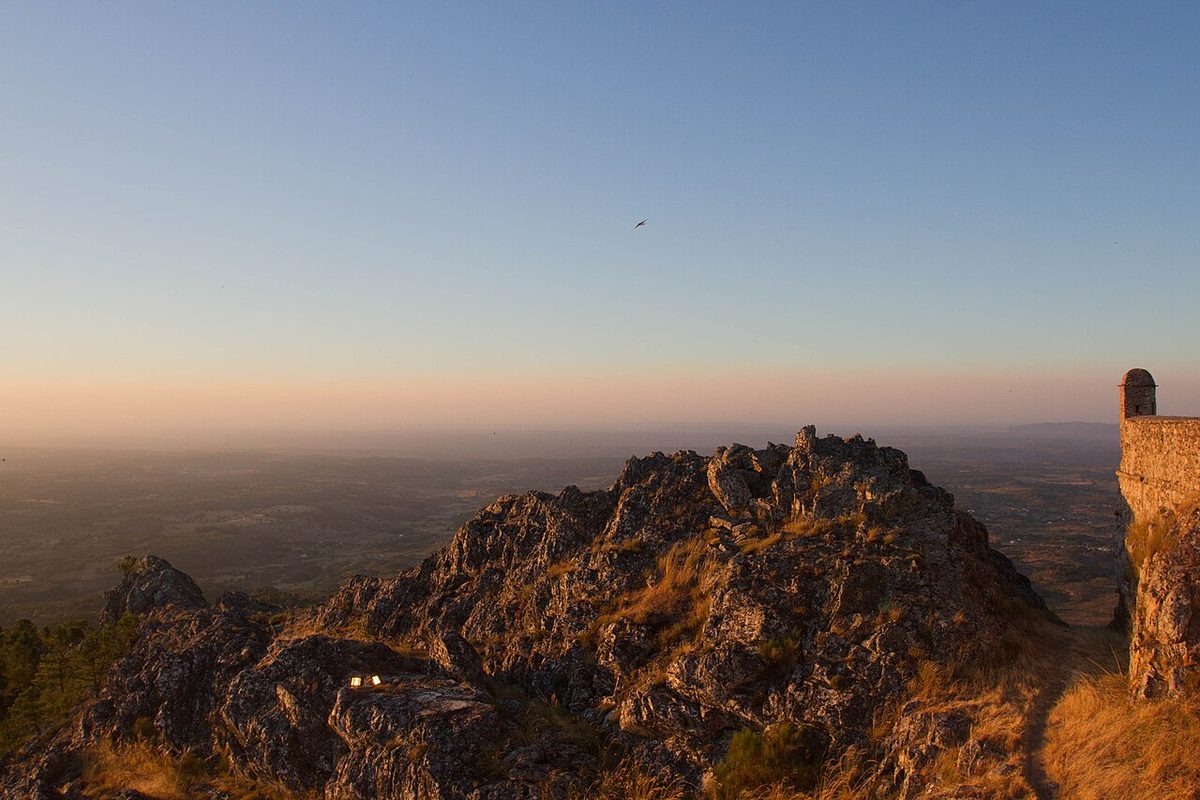
Stay: inside the walls, for the sunset and the silence once the day visitors leave. Don’t miss: the November chestnut fair; the Roman town of Ammaia in the valley below; Castelo de Vide, a larger white hill town a few kilometres away, with a medieval Jewish quarter. Getting there: about 2h30 by car from Lisbon. Verdict: the most beautiful setting of any village in Portugal. See our Alentejo travel guide.
3. Piódão
Piódão, in the Serra do Açor east of Coimbra, is a village of dark schist houses with slate roofs, stacked up a steep, terraced hillside like an amphitheatre around a white church. The doors and window frames are painted blue, and the story is that blue was the only colour the village shop ever sold. For centuries it was so isolated, at the end of mountain tracks, that it was said to be a refuge for fugitives. Today a road reaches it, but it’s still a long, winding drive from anywhere, which keeps the crowds manageable outside weekends.
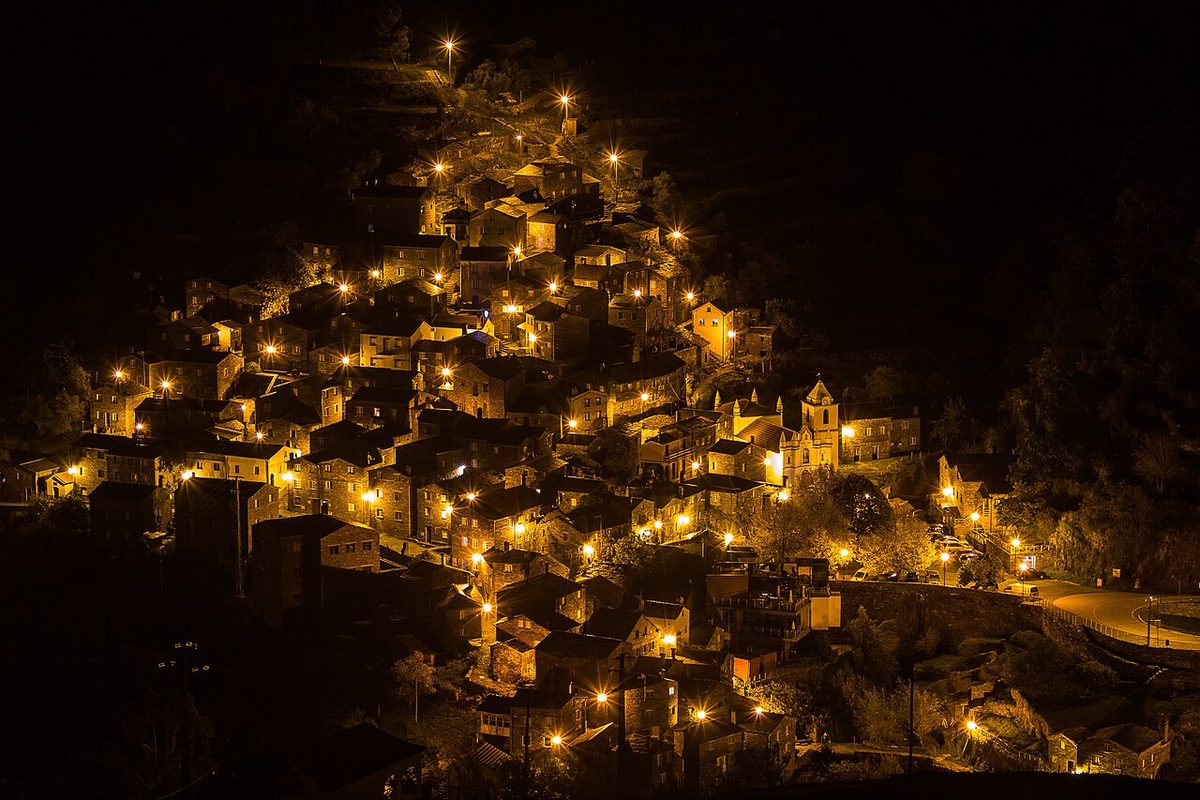
By day it’s beautiful; after dark, when the lamps come on, the whole village glows against the black hillside, and that’s the moment to stay for. Stay: one of the village guesthouses or the hotel just outside. Don’t miss: the walk up the hill opposite for the classic view, and the river beach at nearby Foz d’Égua, where a stone bridge crosses a pool. Getting there: about an hour on winding roads from Seia or Arganil. Verdict: spectacular, if you sleep there.
4. Monsaraz
Monsaraz is a tiny walled village of whitewashed houses and schist-paved lanes on a hilltop above the Alqueva reservoir, the largest artificial lake in western Europe, which flooded the Guadiana valley around it in the early 2000s. The village is little more than two streets and a castle, but from the walls the view spreads over the lake’s islands and inlets, olive groves and the plains of Spain, and at sunset it all turns gold. In the old courthouse, a fifteenth-century fresco of the Good Judge and the Bad Judge, showing the honest and the corrupt magistrate side by side, is one of the most memorable paintings in the Alentejo.
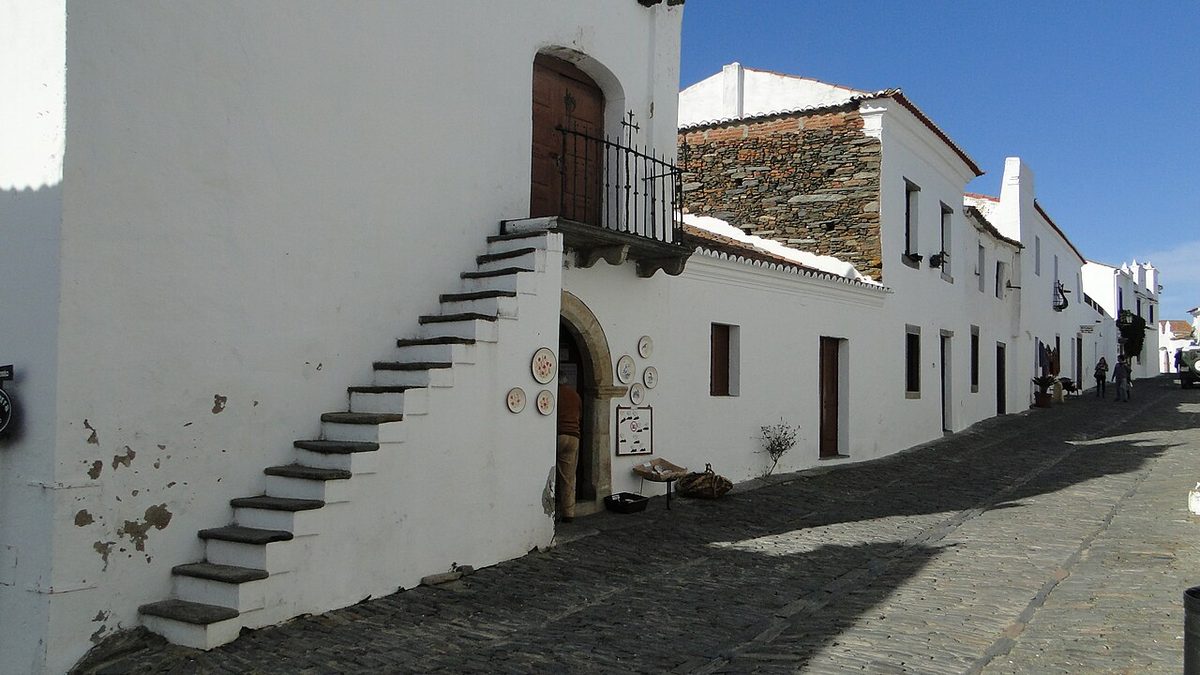
After dark, Alqueva is one of the darkest places in Europe, the world’s first certified Starlight Tourism Destination. Stay: inside the village or at a wine estate nearby. Don’t miss: the megaliths around the village, including the relocated Xerez cromlech; the pottery workshops at São Pedro do Corval. Getting there: about 50 minutes from Évora. Verdict: the most beautiful village in the Alentejo, and magical at night.
5. Sortelha
Sortelha, near Sabugal in the Beira, is the most complete walled village in Portugal: a ring of medieval walls built straight onto the granite, a small castle at the high point and, inside, granite houses with red roofs, many of them restored as guesthouses. It sits on a rocky ridge above a wide, empty plateau near the Spanish border, and in the early evening, when the few day visitors have gone and the stone turns gold, it has an atmosphere that more famous places have lost. There’s very little to do except walk the walls, sit outside a café and watch the light change, which is exactly the point.
Stay: inside the walls. Don’t miss: Belmonte, 35 minutes away, with its Jewish museum and Cabral’s castle. Getting there: about 3h15 from Lisbon on the toll-free A23. Verdict: the most atmospheric village in Portugal at dusk.
6. Sistelo
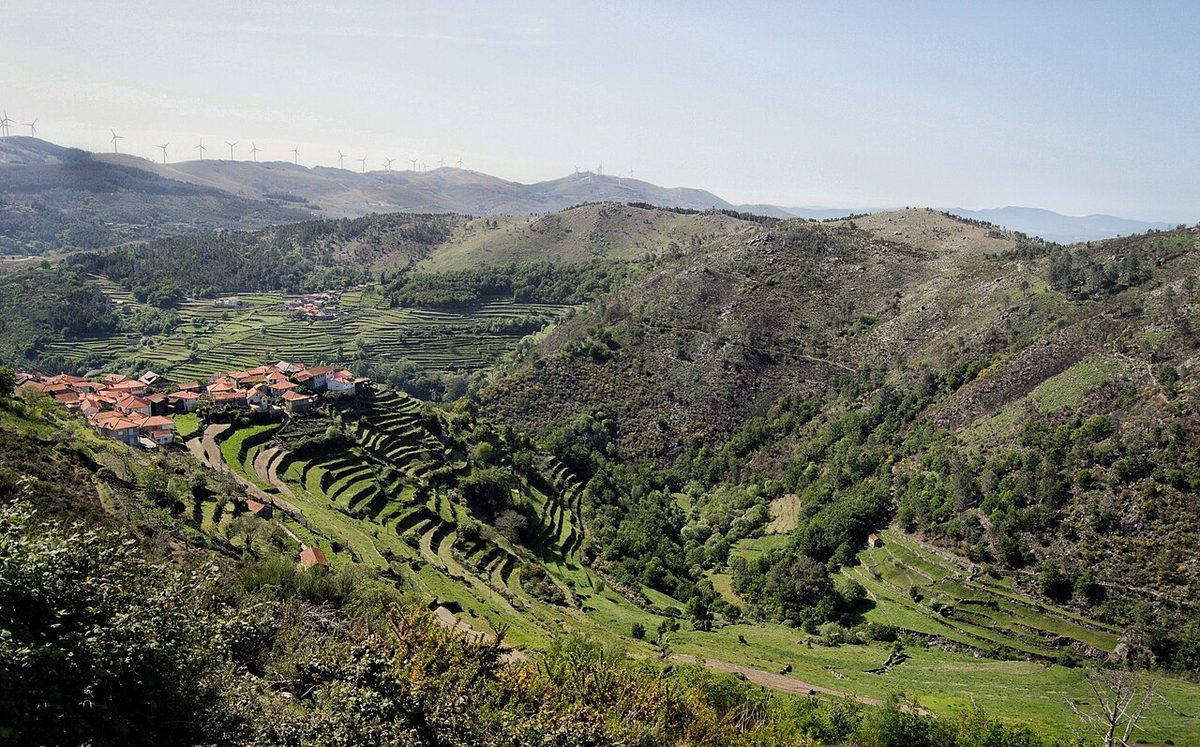
Sistelo, in the hills of Arcos de Valdevez in the Minho, is a small granite village on the river Vez whose fame comes from its setting: generations of farmers carved the steep hillsides around it into hundreds of narrow terraces, which climb the valley in steps and give it the nickname “the little Portuguese Tibet”. In 2018 the landscape became the first in Portugal to be classified as a national monument as a cultural landscape. The terraces are green in spring, golden in autumn, and the riverside path along the Vez, the Ecovia do Vez, makes a lovely walk.
Stay: a rural guesthouse in the valley. Don’t miss: the viewpoint above the village; Soajo and the Peneda-Gerês National Park nearby. Getting there: about 1h30 by car from Porto. Verdict: the most beautiful farming landscape in the north.
7. Óbidos
Strictly speaking Óbidos is a small town, but no list would be honest without it. It’s a complete medieval town of whitewashed houses edged in blue and yellow, with bougainvillea over the doorways, inside castle walls you can walk right round. King Dinis gave it to his queen, Isabel, as a wedding present in 1282, and for centuries it passed from queen to queen. The castle is now a pousada, and the town’s speciality is ginja, sour-cherry liqueur served in little chocolate cups.
The problem is that Óbidos is an hour from Lisbon and on every coach-tour itinerary, so between late morning and mid-afternoon the main street is packed. Stay: inside the walls. Don’t miss: the walls at sunset; the Foz do Arelho lagoon beach nearby. Verdict: beautiful, but only early or late. Our central Portugal guide covers the region.
8. Castelo Rodrigo
Castelo Rodrigo is a tiny walled village on a hilltop above the plains near the Spanish border in the north-east of the Beira, with a ring of walls and towers around a few dozen granite houses and, at the top, the ruins of a palace. Its owner, Cristóvão de Moura, backed Philip II of Spain’s claim to the Portuguese throne in 1580, and when Portugal regained its independence in 1640, the villagers burned his palace in revenge. From the walls, the view runs deep into Spain and down over almond orchards that turn white and pink in February and March, when the area celebrates the almond blossom.
Stay: one of the village guesthouses, or in Figueira de Castelo Rodrigo below. Don’t miss: the Côa Valley’s Palaeolithic rock art, within an hour. Getting there: about 2h45 by car from Porto. Verdict: lovely all year, and at its very best in blossom season.
9. Soajo
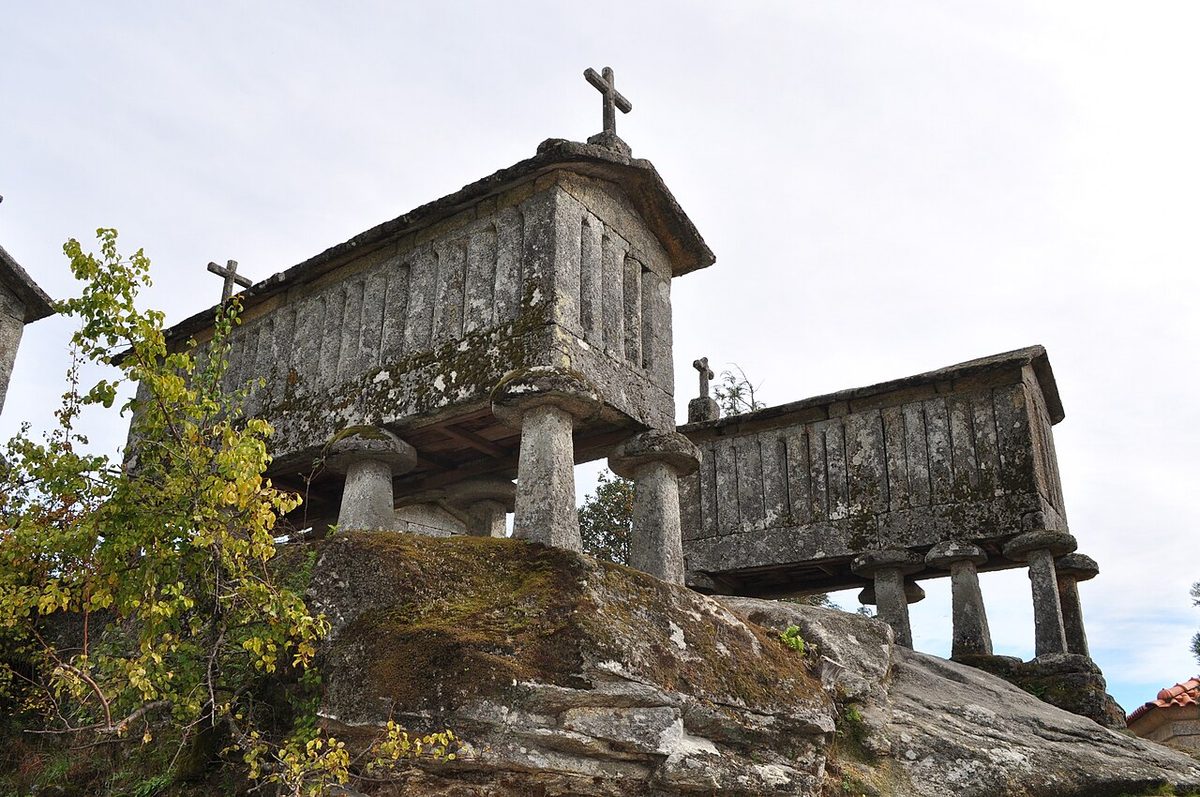
Soajo is a granite village on the edge of the Peneda-Gerês National Park, and it’s famous for its espigueiros: granite granaries on stone stilts, each topped with a cross, which stand together on a great dome of bare rock above the village like a little city of tombs. They were built to dry and store maize, and some are still used. The village pillory in the square has a crudely carved face that seems to be smiling, and Soajo has a proud history: the story goes that its medieval charter forbade any nobleman from staying in the village longer than it took a loaf of bread to cool.
Stay: a village house in Soajo, or in Ponte da Barca. Don’t miss: Lindoso, a few kilometres away, with more granaries below a castle; the walks into the national park. Getting there: about 1h30 by car from Porto. Verdict: the most photographed rural scene in northern Portugal, and still a real village. Our hiking guide covers the national park’s trails.
10. Sete Cidades
Sete Cidades, on the western end of São Miguel in the Azores, is a village on the floor of a volcanic crater five kilometres across, between two lakes, one blue and one green, joined by a narrow bridge. It’s a quiet farming village of whitewashed basalt houses, with a neo-Gothic church, São Nicolau, at the end of an avenue of trees, and the crater walls rising green on every side. The famous view is from the rim above, but the village itself, with cows in the fields and mist on the lakes, is the place to stop for lunch and a walk along the shore.
Don’t miss: the Miradouro da Boca do Inferno on the rim, the best view of all the lakes; the walk around the crater rim. Getting there: about 40 minutes by car from Ponta Delgada. Verdict: the most beautifully set village in the Azores. Check the webcams before driving up; the crater is often in cloud. Our São Miguel guide has the whole island.
11. Talasnal
Talasnal, in the chestnut and pine woods of the Serra da Lousã, is the best known of the schist villages: a hamlet of dark stone houses that was almost abandoned in the twentieth century and has been restored by new residents, with a couple of places to eat. Footpaths link it through the woods to its neighbours, Casal Novo and Chiqueiro, and down to Lousã, past a castle and the shrine of Nossa Senhora da Piedade, with its river beach. The 2017 wildfires burned much of the surrounding hills, but the villages survived and the forest is returning.
Stay: a schist-house guesthouse in the village. Getting there: about 45 minutes by car from Coimbra. Verdict: the easiest schist village to reach, and the prettiest.
12. Dornes
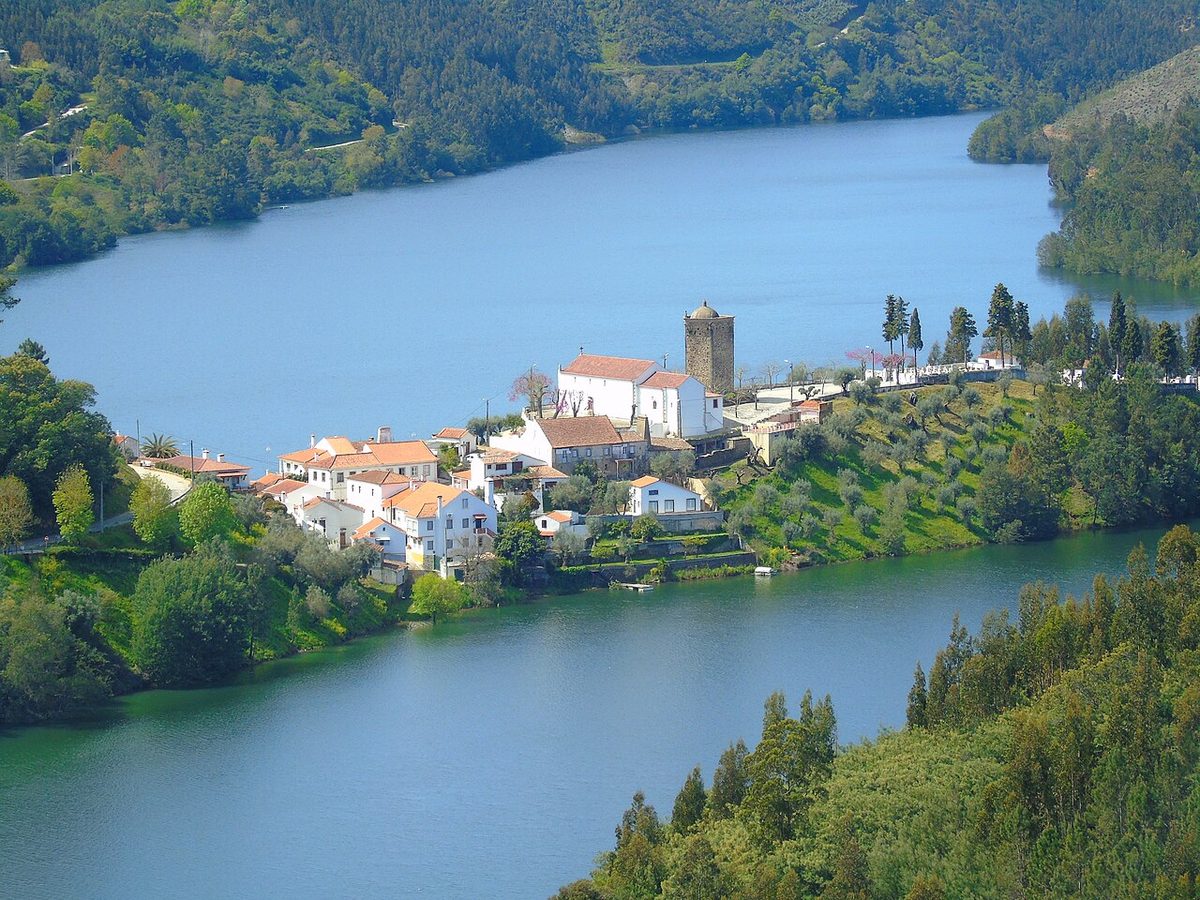
Dornes is a tiny white village on a peninsula almost surrounded by the waters of the Castelo do Bode reservoir on the Zêzere, with a pentagonal stone tower, said to have been built by the Templars in the twelfth century, beside its pilgrimage church of Nossa Senhora do Pranto. In 2017 it was voted one of the seven wonders of Portugal in the riverside villages category. The setting, among wooded hills reflected in still water, is lovely, and the reservoir has river beaches and boating.
Getting there: about 30 minutes by car from Tomar. Don’t miss: Almourol castle, on its island in the Tagus, half an hour away. Verdict: the prettiest riverside village in Portugal, and a perfect detour from Tomar.
13. Pitões das Júnias
On a high plateau at the eastern edge of Peneda-Gerês, Pitões das Júnias is one of the highest villages in Portugal, a cluster of granite houses with communal ovens and threshing floors under a jagged skyline of peaks. Below it are the moss-covered ruins of a medieval monastery and a waterfall reached by a trail and wooden walkway. It’s the heart of the Barroso, a highland whose traditional farming has been recognised by the UN’s Food and Agriculture Organization as a globally important agricultural heritage system, so eat the Barrosã beef.
Getting there: about two hours by car from Porto. Verdict: the wildest village on this list, best in late spring and autumn; it’s bitterly cold in winter.
14. Rio de Onor
In Montesinho Natural Park in the far north-east, Rio de Onor is a village of schist and slate houses on both banks of a small river, split down the middle by the Spanish border: half of it is Portuguese, half is Rihonor de Castilla in Spain. For centuries the two halves lived as one community, sharing ovens, mills, pastures and herds managed by a council of neighbours. It’s a quiet, working village, best explored on foot along the river.
Getting there: about 30 minutes by car from Bragança. Verdict: one of the strangest places in Portugal, and a good excuse to visit Bragança’s walled citadel. Our map of Portugal’s off-the-beaten-path places covers more of the north-east.
15. Linhares da Beira
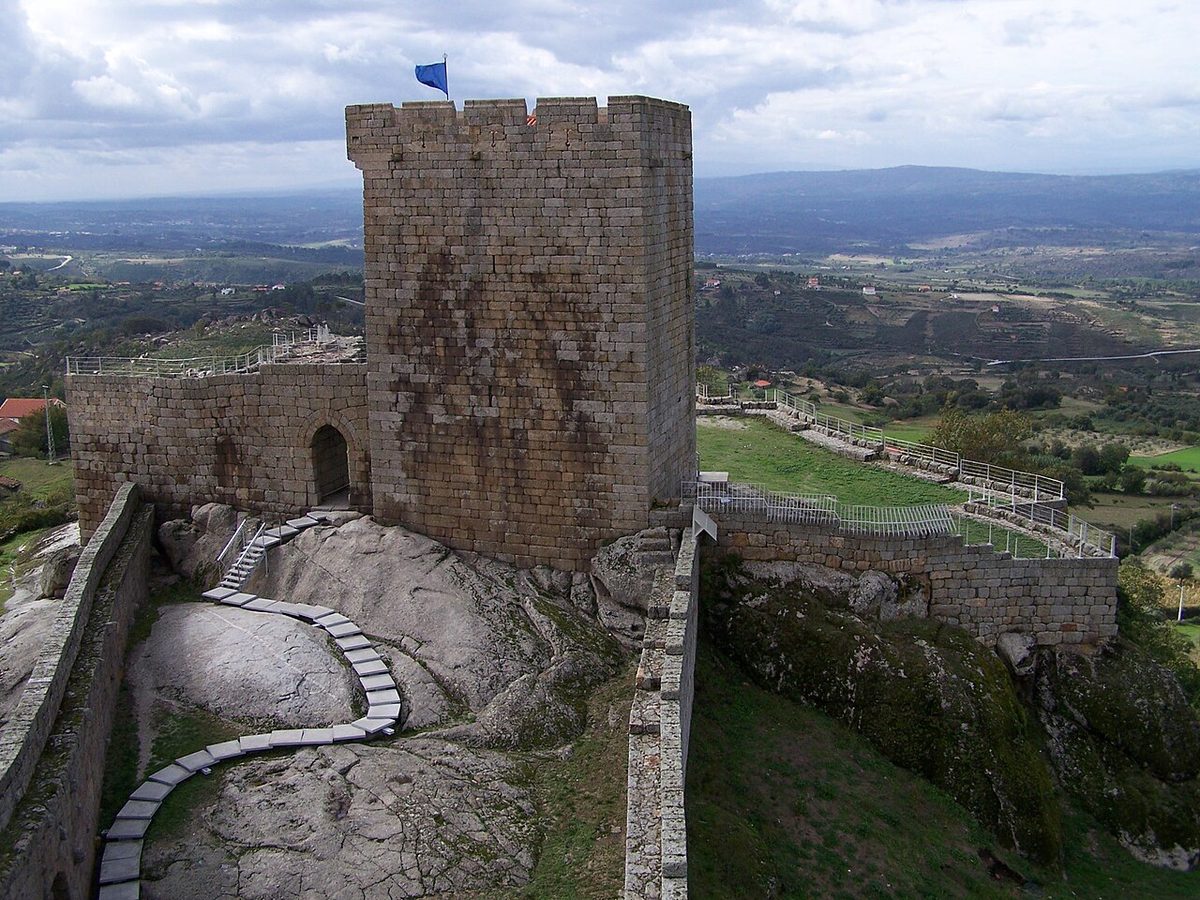
Linhares da Beira, on the north-western slopes of the Serra da Estrela, is one of the twelve Historic Villages: a granite village of manor houses, a pillory and narrow lanes under a castle built straight onto a granite outcrop, with views over the Mondego valley. It’s also one of the best-known paragliding launch sites in Portugal, so on summer afternoons the sky above is full of wings. Getting there: about 20 minutes from Gouveia or Celorico da Beira. Verdict: an easy and rewarding add-on to the Serra da Estrela.
16. Cacela Velha
Cacela Velha is a handful of white houses, a church and a small fort on a low bluff above the eastern end of the Ria Formosa lagoon in the Algarve, and the view from its churchyard over the lagoon, the sandbar and the sea is one of the loveliest on the coast. At low tide you can wade across to the beach on the sandbar; at high tide, boats ferry people over. A couple of restaurants serve oysters and clams from the lagoon.
Getting there: about 20 minutes by car from Tavira. Verdict: the most beautiful village on the Algarve coast; go at sunset. Our Algarve guide covers the rest of the eastern coast.
17. Porto Covo
Porto Covo, on the Alentejo coast south of Sines, is a village of low white houses trimmed in blue around a square, above a series of little coves in dark rock. Just to the south, the Ilha do Pessegueiro, a small island with a ruined seventeenth-century fort, faces another fort across a beach. Porto Covo is the northern start of the Fishermen’s Trail along the clifftops of the Costa Vicentina.
Getting there: about 1h45 by car from Lisbon. Verdict: the prettiest village on the Alentejo coast, crowded only in August.
18. Castelo Novo
Castelo Novo, one of the Historic Villages, is a quiet granite village climbing the slopes of the Serra da Gardunha south of Fundão, with a small castle at the top, a handsome baroque fountain from the reign of João V in the square, and the Alardo spring, whose water is bottled and sold across Portugal. Cherry orchards fill the valley below, and they flower in spring and fruit in late May and June.
Getting there: about 2h45 by car from Lisbon, near the A23. Verdict: peaceful and pretty, best combined with Monsanto or Belmonte.
19. Alte
Alte, in the hills inland from Loulé, is often called one of the most typical villages of the Algarve, and it shows the region the coast has forgotten: whitewashed houses with ornate chimneys, a sixteenth-century parish church with azulejos, and, on the edge of the village, the springs of the Fonte Grande and Fonte Pequena, where locals picnic and swim in the stream under the trees. A short walk away, the Queda do Vigário is a small waterfall with a pool.
Getting there: about 30 minutes by car from Albufeira or Loulé. Verdict: the best quick escape from the coast in the central Algarve.
20. Drave
Drave, in the Arouca Geopark south-east of Porto, is a schist village at the bottom of a deep valley that can only be reached on foot, by a path of about 4 km from the village of Regoufe, itself known for the ruins of wartime wolfram mines. Drave was abandoned by its last inhabitants at the end of the twentieth century and is now looked after by the Portuguese scouts, who use it as a base. Its stone houses, terraces and stream, with no road and no electricity cables, make it the most magical village in this guide, if you’re willing to walk.
Getting there: about 1h30 by car from Porto to Regoufe, then the walk. Allow half a day, and don’t attempt the path in heavy rain. Verdict: for walkers, unmissable. Combine it with the Paiva walkways nearby.
Eight more villages worth a detour
These didn’t make the 20, usually because they’re smaller or harder to reach, but each is worth the drive if you’re nearby.
- Lindoso, Minho. Fifty-odd granite granaries gathered below a thirteenth-century castle on the Spanish border, a few kilometres from Soajo.
- Montesinho, Trás-os-Montes. A granite village with wooden balconies and slate roofs high in the natural park north of Bragança, with walks to an old dam and through oak woods.
- Aldeia da Pena, Serra de São Macário. A tiny schist village at the bottom of a deep valley near São Pedro do Sul, reached by a steep, narrow road, with only a handful of residents.
- Gondramaz, Serra da Lousã. A single lane of schist houses above Miranda do Corvo, with small sculptures tucked into its walls.
- Marialva, Beira. A ruined citadel on a rocky hill near Mêda, with a lived-in village below. Romantic, and quickly seen.
- Castelo Mendo, Beira. A tiny walled village on a ridge above the Côa, with a medieval gate, a pillory and very few people.
- Ferragudo, Algarve. A fishing village of white houses across the Arade river from Portimão, with a little castle at the river mouth and a waterfront of fish restaurants.
- Fajã dos Cubres, São Jorge, Azores. A handful of houses and a lagoon on a flat tongue of land at the foot of 400-metre cliffs, the start of the walk to the Fajã da Caldeira de Santo Cristo.
Villages by region: three routes
The most beautiful villages in Portugal cluster in a few areas, so the best way to see them is a slow road trip with nights in two or three of them. Our Portugal road trip guide has driving tips and longer routes.
The Beira frontier (4–5 days)
From Lisbon, drive the A23 to Castelo Novo, then Monsanto for a night. Continue to Sortelha for a second night, via Belmonte, then north to Castelo Rodrigo and the Côa Valley, and back south-west via Linhares da Beira and the Serra da Estrela. Add Piódão on the way back to Coimbra.
The Alentejo (3–4 days)
From Lisbon, drive to Marvão for a night, with Castelo de Vide; then south via Estremoz to Évora and on to Monsaraz for a night above the lake. Return via the coast at Porto Covo, or continue south to the Algarve’s Cacela Velha and Alte.
The north (3–4 days from Porto)
From Porto, head north to Soajo and Sistelo on the edge of Peneda-Gerês, then east via Montalegre to Pitões das Júnias. Walk to Drave on a separate day from Arouca, and if you have time, drive to Bragança for Rio de Onor.
What to skip, and what’s overrated
- Óbidos at midday. It’s on this list for a reason, but between 11am and 4pm in summer it’s a queue with walls around it. Go early, late or stay the night.
- Towns sold as villages. Many lists include Sintra, Cascais, Lagos, Ericeira or Ponte de Lima. All are worth visiting, but they’re towns, often busy ones, and you won’t find a village’s quiet in them.
- Monsanto and Piódão on a summer weekend afternoon. Both are now firmly on the tour-bus circuit. Sleep there and see them at dawn and dusk.
- Comporta as a village. Once a fishing and rice-farming hamlet, now a chic, expensive beach escape. The beaches are lovely; the village itself is small and unremarkable.
- Trying to see all twelve Historic Villages. They’re spread over a huge area, and a few, like Castelo Mendo and Marialva, take less than an hour. Choose three or four.
- Village festivals in August if you want quiet. August is when emigrants come home, and even remote villages fill with families, music and fireworks. It’s wonderful, but it isn’t peaceful.
Tips for visiting Portugal’s villages
- Park outside. Most of these villages have car parks at the entrance and lanes too narrow or steep for cars. Don’t try to drive in.
- Stay the night. The single best piece of advice. Almost every village on this list is at its best at dusk, after dark and early in the morning.
- Eat Sunday lunch. Village restaurants often close one day a week and may only serve lunch; Sunday lunch is the big family meal, and worth booking.
- Carry cash. Small cafés and guesthouses don’t always take cards, and cash machines can be far away.
- Respect the residents. These are homes, often of elderly people. Keep your voice down, don’t photograph people without asking, and don’t climb on walls, granaries or roofs for a shot.
- Wear proper shoes. Cobbles, steps and granite slabs are slippery, especially in Monsanto, Marvão and Piódão.
- Hire a car. Very few of these villages have useful public transport; see our getting around Portugal guide.
When to visit
| Season | Best villages | Why |
|---|---|---|
| February–March | Castelo Rodrigo, Alte | Almond blossom |
| April–June | Sistelo, Soajo, Talasnal, Monsaraz, Marvão | Green terraces, wildflowers, mild weather |
| July–August | Porto Covo, Cacela Velha, Dornes, Sete Cidades | Swimming and long evenings; the interior is very hot |
| September–November | Marvão, Piódão, Sistelo, Monsanto | Autumn colour, chestnut fairs, misty mornings |
| December–January | Óbidos, Monsaraz | Óbidos’s Christmas village; clear, starry nights in the Alentejo |
For month-by-month weather across the country, see our guide to the best time to visit Portugal.
Frequently asked questions
What is the most beautiful village in Portugal?
Monsanto, built among and under giant granite boulders on a hill near the Spanish border, is the most extraordinary. Marvão, on a clifftop in the Alentejo, has the most beautiful setting, and Piódão is the loveliest at night.
What is the prettiest village in the Algarve?
Cacela Velha, a tiny white village on a bluff above the Ria Formosa lagoon, is the prettiest on the coast. Inland, Alte, with its springs and white chimneys, is the most typical.
What are the Historic Villages of Portugal?
Twelve restored fortified villages along the old Spanish border: Almeida, Belmonte, Castelo Mendo, Castelo Novo, Castelo Rodrigo, Idanha-a-Velha, Linhares da Beira, Marialva, Monsanto, Piódão, Sortelha and Trancoso.
What are the schist villages?
The Aldeias do Xisto are a network of 27 small mountain villages in central Portugal built of schist, a dark, slate-like stone, restored as places to stay, eat and walk. Talasnal, in the Serra da Lousã, is the best known.
Can you visit Portugal’s villages without a car?
Very few. Óbidos is reachable by bus from Lisbon, and Sete Cidades has an infrequent bus from Ponta Delgada, but most villages on this list need a car or a tour.
Which village is closest to Lisbon?
Óbidos is about an hour away. Further afield, Porto Covo is about 1h45 and Monsaraz and Dornes about two hours. Marvão is about two and a half hours.
Which villages are best near Porto?
Soajo and Sistelo, on the edge of Peneda-Gerês, and Drave, near Arouca, are each about 1h30 from Porto. Pitões das Júnias is about two hours away.
Is it worth staying overnight in a village?
Yes. Most of these villages are at their best after the day visitors leave, and staying lets you see them at sunset, after dark and in the early morning. Village guesthouses are usually good value.
Where to go next
- The best things to do in Portugal, our main guide
- The 25 most beautiful places in Portugal
- Portugal’s best castles
- Where to go in Portugal, ranked
Photo credits
- Castelo Rodrigo on its hill above the plain (featured image) — Armando Ferreira, CC BY-SA 3.0, via Wikimedia Commons
- Monsanto — Alvesgaspar, CC BY-SA 4.0, via Wikimedia Commons
- Marvão castle at sunset — Axismundi 000, CC BY-SA 4.0, via Wikimedia Commons
- Piódão at night — Tercio Leal, CC BY 2.0, via Wikimedia Commons
- A street in Monsaraz — Rafael Tello, CC BY-SA 4.0, via Wikimedia Commons
- The terraces of Sistelo — AJSL48, CC BY-SA 4.0, via Wikimedia Commons
- The espigueiros of Soajo — Lídia Maria Faria, CC BY-SA 4.0, via Wikimedia Commons
- Dornes — JoaoCostaFZZ, CC BY-SA 4.0, via Wikimedia Commons
- Linhares da Beira castle — Lusitana, CC BY 2.5, via Wikimedia Commons
Drive times are approximate. Festival dates and opening hours in small villages change from year to year, so check with the local tourist office before a special trip. Toll status checked September 2026. Last updated: October 2026.