Search for hidden gems in Portugal and half the results are Sintra, Óbidos and the Benagil cave, which between them get millions of visitors a year. That isn’t a secret; it’s a queue. This guide is different in two ways. Every one of these 30 places is somewhere most foreign visitors never reach, usually because there’s no train, it’s a long drive from the coast, or it’s small enough to miss. And every one is plotted on the map below, with a link to its exact location, how long to give it and an honest verdict on whether it’s worth the detour.
The short answer: the best hidden gems in Portugal are in the interior and on the smaller islands: Pitões das Júnias and Rio de Onor in the far north, the Côa Valley’s rock art, Sortelha and Belmonte on the old Spanish border, Dornes on its reservoir, Mértola and the abandoned Mina de São Domingos in the Alentejo, and Graciosa and Santa Maria in the Azores.
The map: 30 hidden gems in Portugal
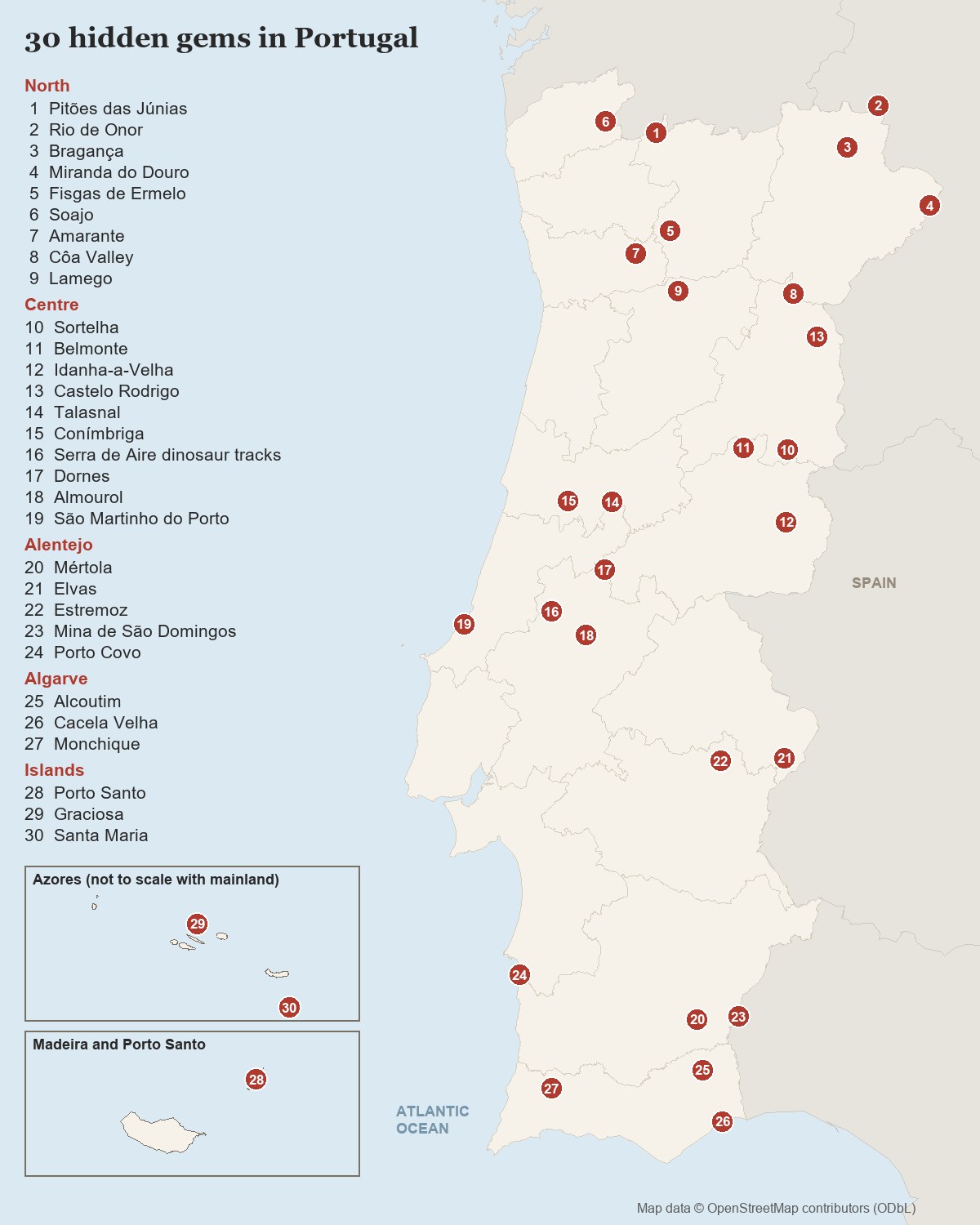
The numbers on the map match the numbered headings below, running from the far north to the Algarve and then out to the islands. Every entry ends with a “map” link that opens the exact spot in OpenStreetMap, which you can then send to your phone’s navigation.
Hidden gems in Portugal at a glance
| # | Place | Region | Why go | Nearest base | Time |
|---|---|---|---|---|---|
| 1 | Pitões das Júnias | Barroso, North | Mountain village, waterfall, ruined monastery | Montalegre | Half a day |
| 2 | Rio de Onor | Trás-os-Montes | A village split by the Spanish border | Bragança | 2 h |
| 3 | Bragança | Trás-os-Montes | Walled citadel, mask museum | Bragança | A day |
| 4 | Miranda do Douro | Trás-os-Montes | Canyon cruise, Portugal’s second language | Miranda | A day |
| 5 | Fisgas de Ermelo | Alvão, North | One of Portugal’s highest waterfalls | Mondim de Basto | Half a day |
| 6 | Soajo and Lindoso | Minho | Granite granaries on the rocks | Ponte da Barca | Half a day |
| 7 | Amarante | North | River town, matchmaking saint, modern art | Amarante | Half a day |
| 8 | Côa Valley | Douro Superior | Palaeolithic open-air rock art (UNESCO) | Vila Nova de Foz Côa | A day |
| 9 | Lamego | Douro | Baroque staircase, sparkling wine | Lamego or Régua | Half a day |
| 10 | Sortelha | Beira | The most complete walled village | Sortelha or Belmonte | 2 h |
| 11 | Belmonte | Beira | Crypto-Jewish history, Cabral’s birthplace | Belmonte | Half a day |
| 12 | Idanha-a-Velha and Penha Garcia | Beira Baixa | Roman town, trilobite fossils | Monsanto | Half a day |
| 13 | Castelo Rodrigo | Beira | Border views, almond blossom | Figueira de Castelo Rodrigo | 2 h |
| 14 | Talasnal | Serra da Lousã | Restored schist village in the woods | Lousã | Half a day |
| 15 | Conímbriga | Centre | Portugal’s best Roman ruins | Coimbra | 2–3 h |
| 16 | Serra de Aire dinosaur tracks | Centre | Sauropod trackways in a quarry floor | Fátima or Tomar | 2 h |
| 17 | Dornes | Ribatejo/Centre | Templar tower on a reservoir peninsula | Tomar | 2 h |
| 18 | Almourol | Ribatejo | Castle on an island in the Tagus | Tomar or Constância | 2 h |
| 19 | São Martinho do Porto | Silver Coast | A shell-shaped, sheltered bay | São Martinho | Half a day |
| 20 | Mértola | Alentejo | Islamic heritage above the Guadiana | Mértola | A day |
| 21 | Elvas | Alentejo | UNESCO border fortress and aqueduct | Elvas | Half a day |
| 22 | Estremoz and Vila Viçosa | Alentejo | Marble towns, Saturday market | Estremoz | A day |
| 23 | Mina de São Domingos | Alentejo | Abandoned copper mine, river beach | Mértola | Half a day |
| 24 | Porto Covo and Ilha do Pessegueiro | Alentejo coast | White village, island fort | Porto Covo | Half a day |
| 25 | Alcoutim | Algarve | Border village, cross-border zip line | Alcoutim | Half a day |
| 26 | Cacela Velha | Algarve | Clifftop village above the Ria Formosa | Tavira | 2–3 h |
| 27 | Monchique | Algarve | Mountains, spa village, the Algarve’s top | Monchique | Half a day |
| 28 | Porto Santo | Madeira | Nine kilometres of golden sand | Vila Baleira | 2–4 days |
| 29 | Graciosa | Azores | A lake inside a lava cave | Santa Cruz da Graciosa | 2–3 days |
| 30 | Santa Maria | Azores | White-sand beaches, red desert, vineyards | Vila do Porto | 2–3 days |
What counts as a hidden gem here
I’ve used three tests. A place qualifies if most first-time foreign visitors to Portugal don’t go there, if it’s genuinely worth the effort rather than merely obscure, and if it still feels like itself rather than like a stage set for visitors. That rules out the famous names, and it also rules out a few places that appear in every “off the beaten path” list (Monsanto, Piódão, Comporta) because they’ve become well known in their own right; they’re in our guides to the best places to visit and the most beautiful places in Portugal instead. Most of these 30 are in the interior and need a car. That’s precisely why they’re quiet.
The north: Barroso, Trás-os-Montes, the Minho and the Douro
1. Pitões das Júnias
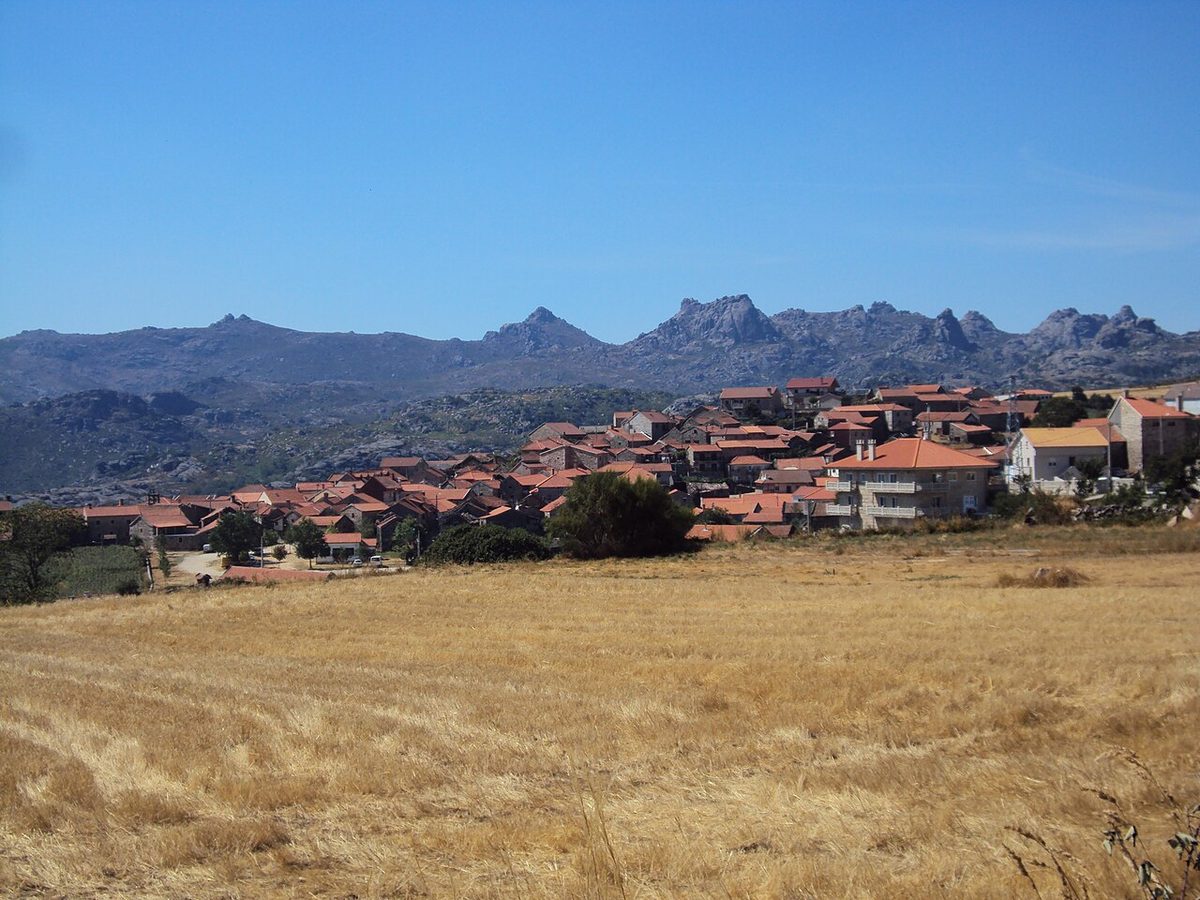
On a high, windswept plateau at the eastern edge of Peneda-Gerês, Pitões das Júnias is one of the highest villages in Portugal, a cluster of granite houses with communal ovens and threshing floors under a jagged skyline of mountain peaks. A short walk below the village are the moss-covered ruins of the Mosteiro de Santa Maria das Júnias, a medieval monastery abandoned in the nineteenth century, and beyond it a trail and wooden walkway lead to the Pitões waterfall, which drops into a gorge. This is the Barroso, a highland region whose traditional farming system of communal grazing, rye fields and long-horned Barrosã cattle has been recognised by the UN’s Food and Agriculture Organization as a globally important agricultural heritage system. Eat the beef, or a cozido barrosão, in the village.
Getting there: about two hours by car from Porto, via Braga and Montalegre. Time needed: half a day; a night in a village guesthouse is better. Verdict: the most atmospheric village in the far north. Map.
2. Rio de Onor
In the north of Montesinho Natural Park, Rio de Onor is a village of schist and slate houses on both banks of a small river, and it’s split by the Spanish border: half of it is the Portuguese village, half is Rihonor de Castilla in Spain, and a stone marker in the street is the only sign of the frontier. For centuries the two halves lived as one community, with communal ovens, mills, pastures and herds managed by a council of neighbours, and even a dialect of their own. It’s a working village rather than a museum, so walk quietly, then follow the river path among the alders.
Getting there: about 30 minutes by car from Bragança. Time needed: two hours, or a day combined with Montesinho’s other villages. Verdict: one of the strangest and most peaceful places in Portugal. Map.
3. Bragança
Bragança, capital of the remote north-east, is the city that gave its name to Portugal’s last royal dynasty, and its old citadel is a complete walled village on a hilltop, with a tall castle keep (home to a small military museum) and, beside the church, the Domus Municipalis, a Romanesque civic building that is the only one of its kind to survive in the Iberian Peninsula. Down in the town, the Museu Ibérico da Máscara e do Traje displays the extraordinary carnival masks and costumes of Trás-os-Montes and neighbouring Zamora, and the Graça Morais contemporary art centre is excellent. Bragança is also the place to eat alheira, a sausage of bread and poultry said to have been invented by Jews who needed to appear to be eating pork.
Getting there: about 2h15 by car from Porto on the A4, which has been toll-free since January 2025, including the Marão tunnel. Time needed: a day. Verdict: the best base for the far north-east. Map.
4. Miranda do Douro
At the far eastern tip of Portugal, Miranda do Douro stands on a cliff above the Douro where the river is the border and runs through a granite canyon hundreds of metres deep. Boat trips run into the gorge from just below the town, where griffon and Egyptian vultures nest on the cliffs of the Douro International Natural Park. Miranda is also the home of Mirandese, a language related to the old Leonese of Spain, which was recognised as Portugal’s second official language in 1999; street signs are bilingual. Look out for the pauliteiros, men in skirts who dance with sticks, the local breed of shaggy donkey, and the posta mirandesa, a thick veal steak grilled over coals.
Getting there: about an hour from Bragança, three from Porto. Time needed: a day including the boat trip. Verdict: the most distinctive town in the north. Map.
5. Fisgas de Ermelo
In the Alvão Natural Park, between Vila Real and Mondim de Basto, the river Olo tumbles off the edge of a quartzite plateau in a series of cascades, the Fisgas de Ermelo, which together make one of the highest waterfalls in Portugal. A viewpoint looks across the gorge to the falls, and above them the river forms a chain of clear natural pools where people swim in summer. The schist village of Ermelo below is worth a wander, and nearby the perfect cone of Monte Farinha, topped by the Senhora da Graça sanctuary at 947 metres, is a classic finish for cyclists in the Volta a Portugal.
Getting there: about 1h30 by car from Porto. Time needed: half a day. Verdict: the best waterfall in mainland Portugal that nobody abroad has heard of. Take care at the pools; the rocks are slippery. Map.
6. Soajo and Lindoso
Two villages on the edge of Peneda-Gerês are famous in Portugal for their espigueiros, granite granaries on stilts built to keep maize dry and safe from rodents, each topped with a cross. At Soajo, a group of them stands together on a great dome of bare granite above the village like a little necropolis; the village pillory has a carved face that seems to be smiling. At Lindoso, dozens more cluster below a small castle on the Spanish border. Both are working villages, with good walks into the national park.
Getting there: about 1h30 by car from Porto, via Ponte da Barca. Time needed: half a day for both. Verdict: the most photogenic rural scene in the north. See our hiking guide for the park’s trails. Map.
7. Amarante
Amarante is a handsome old town on the river Tâmega, east of Porto, built around a monastery church and a fine granite bridge where townspeople held off Napoleon’s army for two weeks in 1809. The church is dedicated to São Gonçalo, the patron saint of marriages, and single people still come to touch his tomb in the hope of finding a partner; in June, bakeries sell the frankly phallic bolos de São Gonçalo. The Amadeo de Souza-Cardoso museum is devoted to the town’s own modernist painter, a friend of Modigliani who died young in 1918, and the old railway line along the Tâmega is now a cycling and walking path. Amarante is also famous for its convent sweets.
Getting there: about 50 minutes by car from Porto. Time needed: half a day. Verdict: the best small town near Porto; our day trips from Porto guide has the alternatives. Map.
8. The Côa Valley
In the 1990s, engineers building a dam on the river Côa discovered thousands of engravings pecked into the schist rocks of the valley: horses, aurochs, ibex and deer drawn by Palaeolithic hunters more than 20,000 years ago. After a national campaign, the dam was abandoned in 1995, and the Côa Valley rock art became a UNESCO World Heritage Site in 1998. It’s one of the largest collections of open-air Palaeolithic art in the world. You visit the main sites (Canada do Inferno, Penascosa and Ribeira de Piscos) on guided 4×4 tours, including night visits at Penascosa, when the low light of a lamp brings the figures out of the rock. The Côa Museum, a striking concrete building on the hill above the river, is the place to start.
Getting there: Vila Nova de Foz Côa is about 2h30 by car from Porto. Time needed: a day. Book visits through the Côa Parque foundation in advance. Best time: February and March, when the almond trees around Foz Côa blossom white and pink. Verdict: the most important site in Portugal that hardly anyone visits. Map.
9. Lamego
At the western edge of the Douro wine country, Lamego is a small episcopal city that climbs to the sanctuary of Nossa Senhora dos Remédios by a monumental baroque staircase of 686 steps, zigzagging through landings decorated with azulejos, fountains and statues. Pilgrims climb it on their knees during the big festival in late August and early September. Lamego is also home to the Raposeira cellars, which make Portugal’s best-known sparkling wine, and the countryside around it hides two medieval gems: the fortified bridge and tower at Ucanha, and the Cistercian monastery of Salzedas.
Getting there: 15 minutes from Peso da Régua, about 1h20 from Porto. Time needed: half a day. Verdict: combine it with the Douro; our Douro Valley guide has the routes. Map.
The centre: Beira, the Ribatejo and the Silver Coast
10. Sortelha
Sortelha, near Sabugal, is the most complete walled village in the Beira: a ring of medieval walls built straight onto the granite, a small castle at the top, and inside, a village of granite houses with red roofs, many restored as guesthouses. The setting, on a rocky ridge above a wide plateau close to the Spanish border, is wild and beautiful, and when the few day visitors have left and the stone turns gold in the evening light, it’s one of the most atmospheric places in the country.
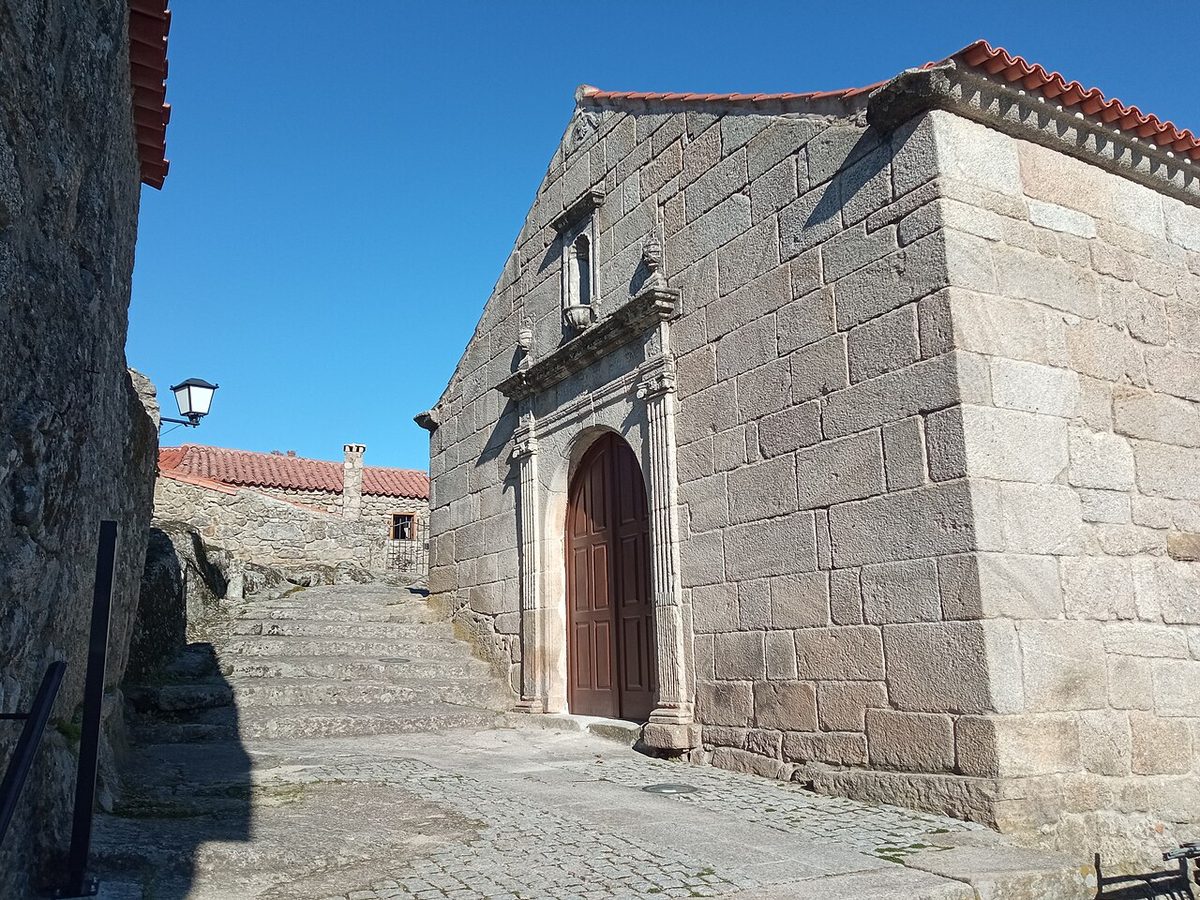
Getting there: about 3h15 by car from Lisbon; 35 minutes from Belmonte. Time needed: two hours, ideally at the end of the day. Verdict: the best of the twelve Historic Villages after Monsanto. Our Serra da Estrela and Historic Villages guide covers all twelve. Map.
11. Belmonte
Belmonte, a small hill town above the Cova da Beira, has two remarkable stories. Pedro Álvares Cabral, whose fleet reached Brazil in 1500, was born here. And after Portugal forced its Jews to convert in 1497, a group of families in Belmonte kept their faith in secret for more than four centuries, marrying among themselves and praying in their homes, until a Polish mining engineer, Samuel Schwarz, documented them in 1917. The community returned openly to Judaism in the late twentieth century, built a synagogue in the 1990s, and the town’s Jewish Museum tells the story. There’s also a museum of the discoveries, a castle, and a Roman tower, the Centum Cellas, just outside town.
Getting there: about three hours by car from Lisbon on the toll-free A23. Time needed: half a day. Verdict: the most moving history of any small town in Portugal. Map.
12. Idanha-a-Velha and Penha Garcia
Idanha-a-Velha looks like a sleepy hamlet of a few dozen people, but it was the Roman town of Civitas Igaeditanorum and then the Visigothic bishopric of Egitania, and it’s still ringed by its Roman walls, with an old cathedral standing on Roman and Visigothic foundations and carved stones from every period lying around the village. Half an hour to the north-east, Penha Garcia has a fossil trail through a quartzite gorge where the tracks of trilobites, sea creatures that lived nearly 500 million years ago, are preserved in the rock. The trail ends at a small dam pool where people swim in summer. Both are inside the Naturtejo UNESCO Global Geopark, close to Monsanto.
Getting there: about three hours by car from Lisbon. Time needed: half a day for both. Verdict: pair them with a night in Monsanto. Map.
13. Castelo Rodrigo
Castelo Rodrigo is a tiny walled village on a hilltop above the plains near the Spanish border, crowned by the ruined palace of Cristóvão de Moura, a nobleman who backed Philip II of Spain’s claim to the Portuguese throne in 1580; when Portugal regained its independence in 1640, the villagers burned his palace. From the walls, the view runs deep into Spain and down over almond orchards, which flower in a sea of white and pink in February and March, when the surrounding area holds its almond-blossom festivities. The Côa Valley’s rock art is within easy reach.
Getting there: about 2h45 by car from Porto. Time needed: two hours. Verdict: lovely, especially in blossom season. Map.
14. Talasnal
In the chestnut and pine woods of the Serra da Lousã, Talasnal is the best known of the schist villages, a hamlet of dark stone houses that was almost abandoned in the twentieth century and has been lovingly restored, with a couple of places to eat. Footpaths link it to its neighbours, Casal Novo and Chiqueiro, and down to the town of Lousã, past a castle and the shrine of Nossa Senhora da Piedade with its river beach. The region was badly burned in the 2017 wildfires, and you’ll see the scars on the hills, but the villages have recovered.
Getting there: about 45 minutes by car from Coimbra. Time needed: half a day. Verdict: the easiest schist village to reach and the prettiest. Map.
15. Conímbriga
Conímbriga is the best Roman site in Portugal and one of the least crowded major Roman sites in Europe. The town was a prosperous place on the road from Lisbon to Braga, and its ruins include a forum, baths, a stretch of town wall hastily built against barbarian raids, and above all the floors of its great houses, many still covered with intricate mosaics of hunting scenes, labyrinths and sea creatures. At the House of the Fountains, a garden of pools and water jets has been restored. The site museum is good. A modest ticket covers both; check the current price at the gate.
Getting there: about 20 minutes by car from Coimbra. Time needed: two to three hours. Verdict: unmissable if you like the ancient world, and easy to add to a Coimbra stay. Our central Portugal guide covers the region. Map.
16. The Serra de Aire dinosaur tracks
In 1994, workers in a limestone quarry near Fátima noticed rows of large round prints in the rock floor. They turned out to be the trackways of sauropods, giant long-necked dinosaurs, walking across a tidal flat around 175 million years ago, and they include some of the longest sauropod trackways ever found. The quarry is now the Natural Monument of the Dinosaur Footprints of the Serra de Aire, where you walk across the old quarry floor following the footprints, with a small visitor centre. Nearby are the Mira de Aire caves, the largest cave system in Portugal, with underground rivers and galleries.
Getting there: about 1h30 by car from Lisbon, 15 minutes from Fátima. Time needed: two hours, more with the caves. Verdict: a great family stop, and a much better reason to come this way than Fátima alone. Map.
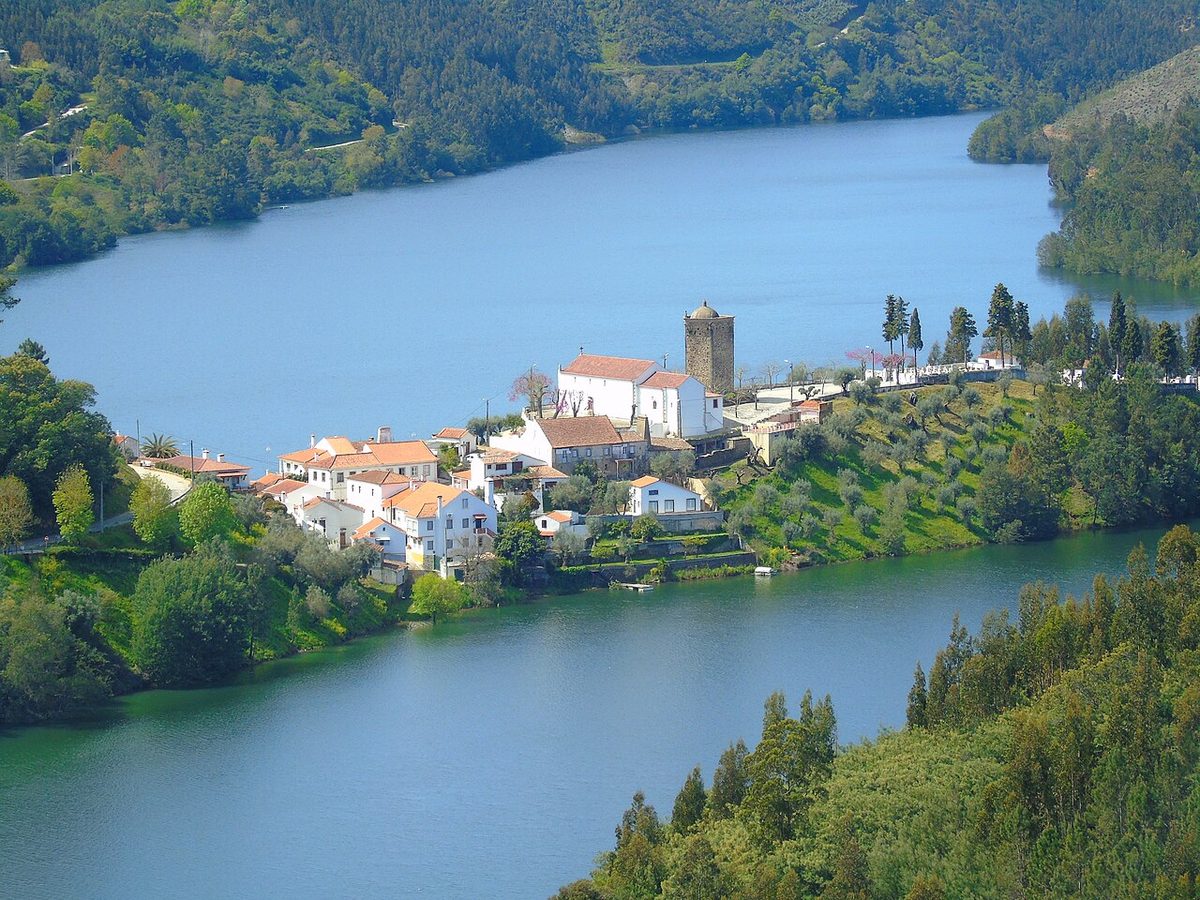
17. Dornes
Dornes is a tiny white village on a peninsula almost surrounded by the waters of the Castelo do Bode reservoir on the Zêzere, with a pentagonal stone tower, said to have been built by the Templars in the twelfth century, standing beside its pilgrimage church of Nossa Senhora do Pranto. The setting, among wooded hills reflected in still water, is one of the loveliest in central Portugal, and the reservoir has river beaches and boating. It takes its time to reach, along winding roads, which keeps it quiet.
Getting there: about 30 minutes by car from Tomar, two hours from Lisbon. Time needed: two hours, or a lazy afternoon with a swim. Verdict: the best detour from Tomar. Map.
18. Almourol
Almourol is the castle every child draws: a ring of crenellated walls and towers on a small rocky island in the middle of the Tagus, rebuilt by the Templar master Gualdim Pais in the twelfth century. A small boat ferries visitors across from the riverbank in a couple of minutes, and you can climb the keep for the view along the river. It’s small and quickly seen, but the approach, with the castle seeming to float on the water, stays with you.
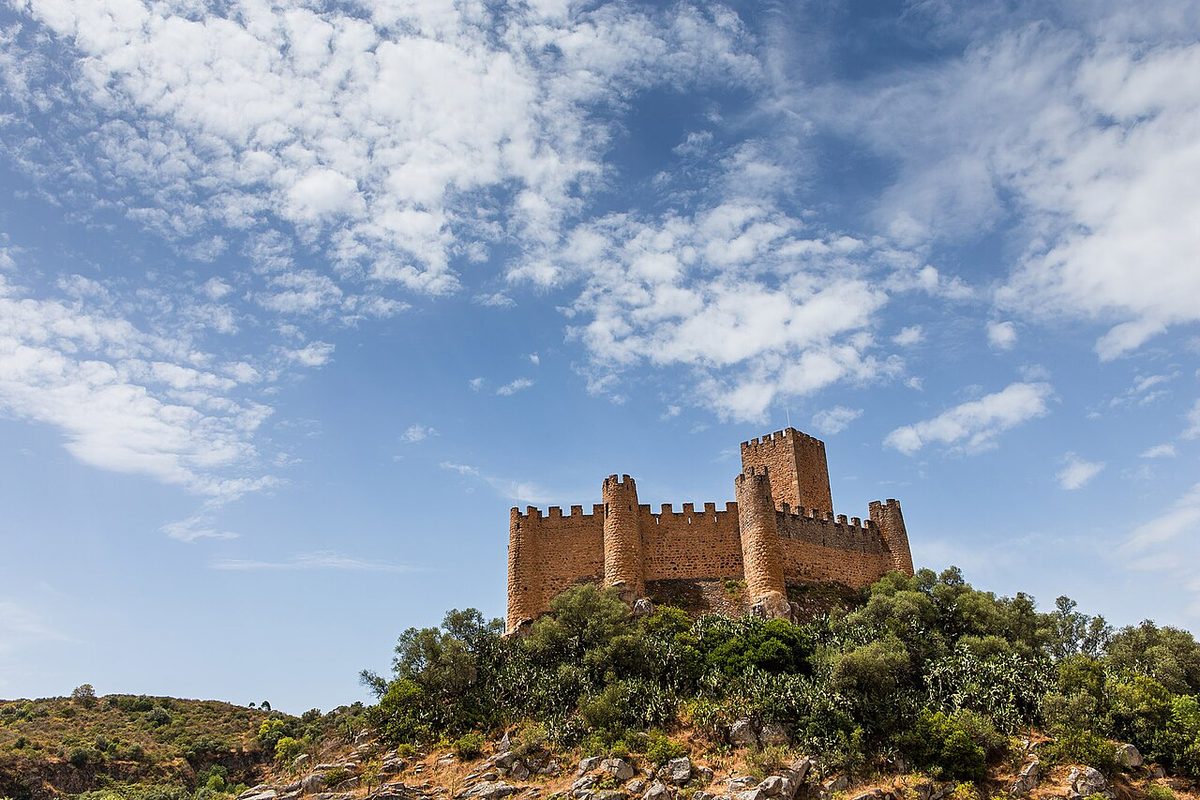
Getting there: about 1h30 by car from Lisbon, 30 minutes from Tomar. The boat may not run when the river is high, so check before a special trip. Time needed: an hour or two. Verdict: a perfect add-on to Tomar or Dornes; our ranking of Portugal’s best castles puts it in context. Map.
19. São Martinho do Porto
On a coast of big Atlantic surf, São Martinho do Porto is the exception: a bay almost enclosed by two headlands, so that the sea comes in through a narrow mouth and fills a near-perfect shell-shaped lagoon of calm water. It’s the best place on the Silver Coast to swim with children, and the old resort town, with its promenade and a few faded villas, is a pleasant, unshowy place to spend a summer afternoon. Climb the headland on the south side of the entrance for the view over the shell.
Getting there: about 1h15 by car from Lisbon, 15 minutes from Nazaré. Time needed: half a day. Verdict: a quiet alternative to Nazaré in summer. Map.
The Alentejo
20. Mértola
Mértola is a white town on a hill above the meeting of the Guadiana and the Oeiras rivers in the deep south of the Alentejo, and it has the strongest Islamic heritage in Portugal. Its parish church is a former mosque, still with its horseshoe arches, its mihrab and its forest of columns inside; the castle above has views down the river; and the town calls itself a “museum town”, with small museums of Islamic art, Roman remains and early Christian finds scattered through its streets. Every two years in May it holds an Islamic festival with a souk in the streets. Twenty kilometres north, at the Pulo do Lobo, the Guadiana squeezes through a narrow rock gorge in a roaring waterfall.
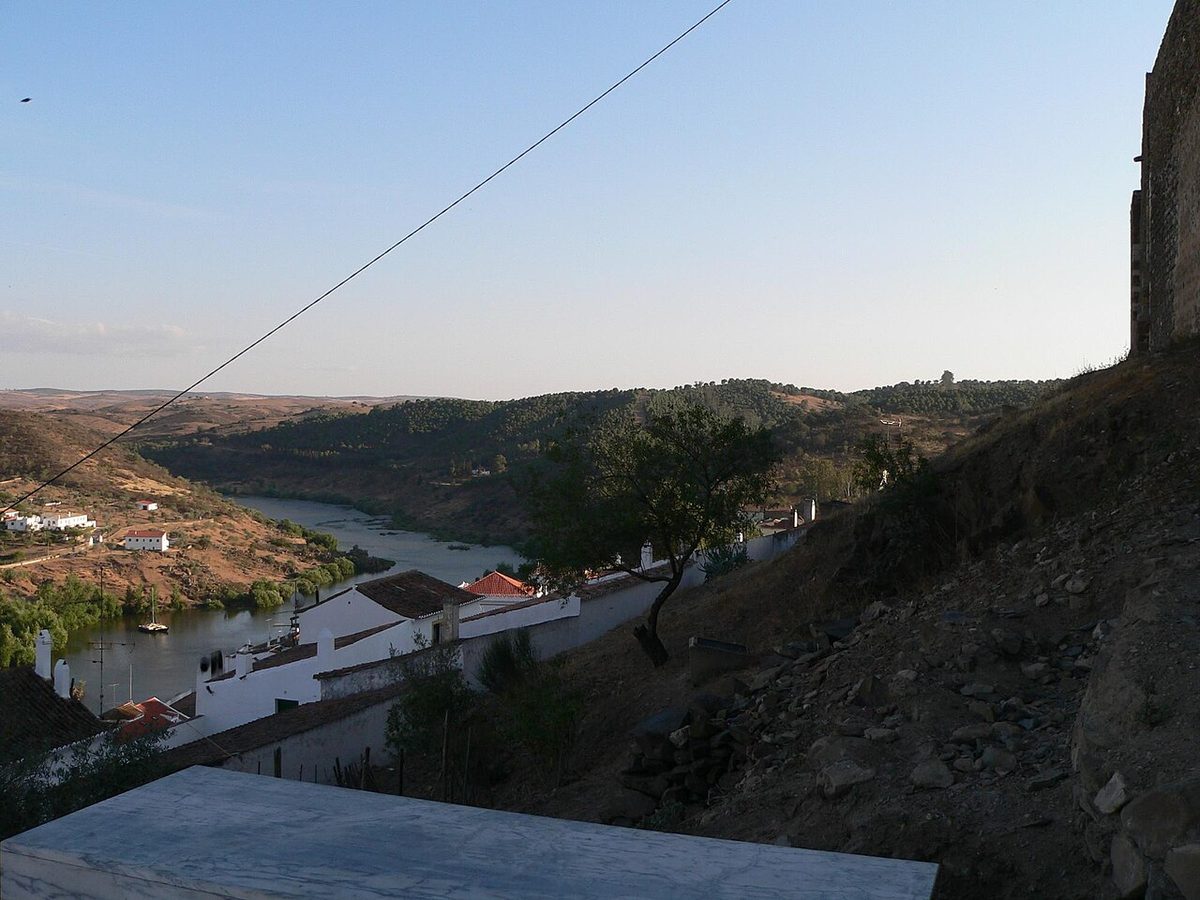
Getting there: about 2h30 by car from Lisbon, an hour from the Algarve coast. Time needed: a day, including the mine at São Domingos. Verdict: the most interesting small town in the south. Our Alentejo guide has more. Map.
21. Elvas
Elvas, ten minutes from the Spanish city of Badajoz, was the key to Portugal’s border defences, and its fortifications are a UNESCO World Heritage Site: a star-shaped ring of walls, bastions and moats around the old town, described by UNESCO as the largest bulwarked dry-ditch system in the world, plus two forts on the hills outside, including the eighteenth-century Forte da Graça. The Amoreira aqueduct, completed in the seventeenth century, strides across the plain into town on several tiers of arches. Inside the walls, Elvas is a quiet, handsome town with a good market square. Buy a box of ameixas d’Elvas, sugared green plums, before you leave.
Getting there: about 2h15 by car from Lisbon. Time needed: half a day. Verdict: a World Heritage Site almost no foreign tourists see. Map.
22. Estremoz and Vila Viçosa
The Alentejo’s marble towns are built, paved and even kerbed in the local white and pink marble. Estremoz has a hilltop castle where the sainted Queen Isabel died in 1336 (its keep is now part of a pousada), a big Saturday market on the main square, and a tradition of painted clay figurines, the bonecos de Estremoz, recognised by UNESCO as intangible cultural heritage in 2017. Twenty minutes away, Vila Viçosa was the seat of the dukes of Bragança, and their long marble-fronted ducal palace faces a huge square. Around both towns you can see the vast marble quarries cut into the landscape.
Getting there: about 1h45 by car from Lisbon. Time needed: a day for both. Verdict: best on a Saturday morning, for the market. Map.
23. Mina de São Domingos
Near the Spanish border east of Mértola, the copper mine at São Domingos was worked since Roman times, then on an industrial scale by a British company from the 1850s until it closed in 1966. What’s left is one of the strangest landscapes in Portugal: the ruins of ore-processing buildings standing in rust-red, orange and purple ground, and a lake of acidic water coloured by the minerals. The miners’ terraced houses in the village are now lived in again, and just above it, the Tapada Grande reservoir has one of the best river beaches in the Alentejo, with clean water for swimming.
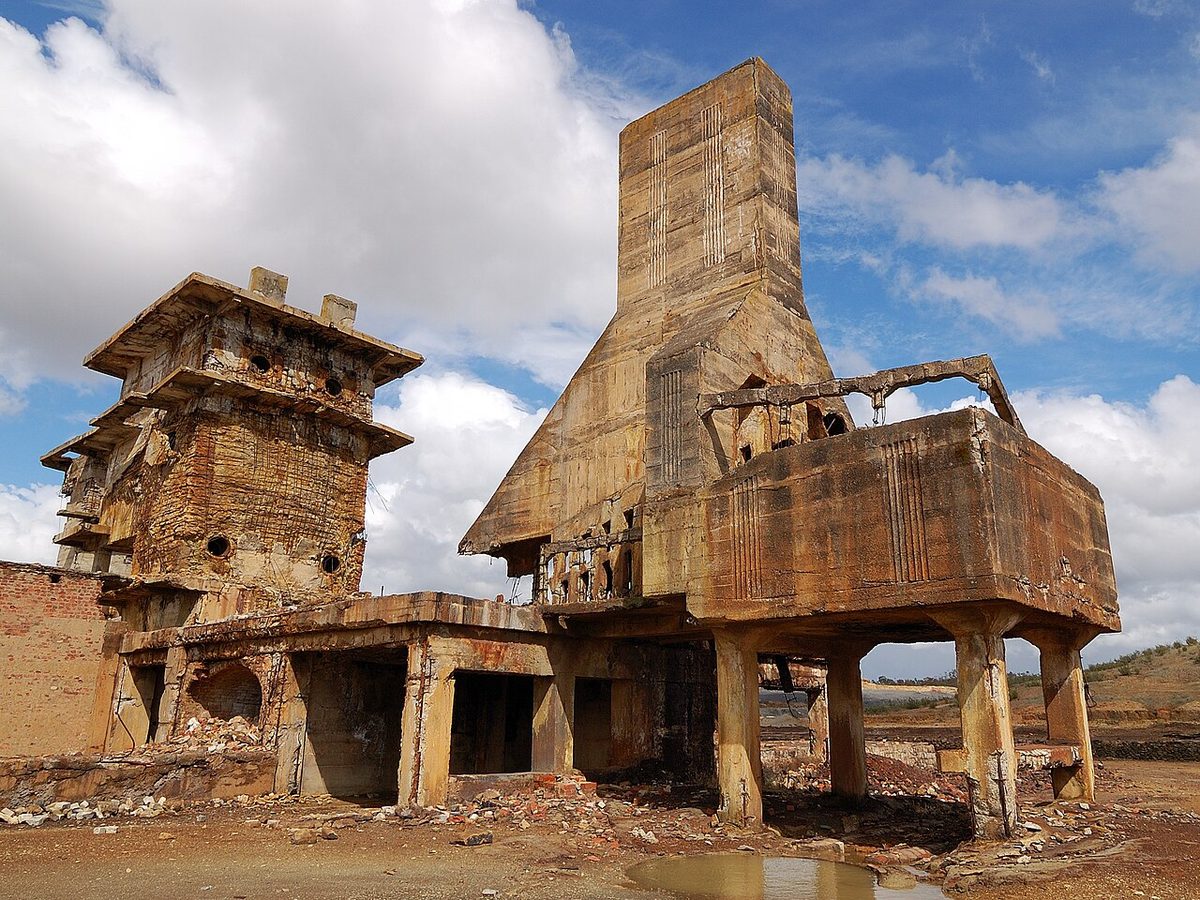
The ore was carried by railway to the river port of Pomarão on the Guadiana and shipped downriver to the sea; you can follow the old line. Getting there: about 20 minutes by car from Mértola. Time needed: half a day with a swim. Verdict: unique, especially for photographers. Don’t swim in the coloured water. Map.
24. Porto Covo and the Ilha do Pessegueiro
Porto Covo, on the Alentejo coast south of Sines, is a small village of white houses with blue trim around a square, perched above a series of little coves in the dark rocks. Just south of it, offshore, the Ilha do Pessegueiro is a small island with the ruins of a seventeenth-century fort, facing another fort on the mainland across a beach. Porto Covo is the northern start of the Fishermen’s Trail, which runs 226.5 km along the cliffs to the Algarve, and the first stage south to Vila Nova de Milfontes is one of the loveliest.
Getting there: about 1h45 by car from Lisbon. Time needed: half a day, or a night. Verdict: the prettiest village on the Alentejo coast, busy only in August. Map.
The Algarve’s quiet corners
25. Alcoutim
Alcoutim is a whitewashed village on the Guadiana in the north-eastern corner of the Algarve, facing the Spanish village of Sanlúcar de Guadiana across the river, with a small castle and a river beach at the Pego Fundo. It’s sleepy and peaceful, and its claim to fame is a cross-border zip line, which launches from a hill above Sanlúcar in Spain and carries you across the river into Portugal. Because Spain is an hour ahead of Portugal, you arrive an hour before you left. Boats cross between the two villages too.
Getting there: about 45 minutes by car from Castro Marim, 1h15 from Faro. Time needed: half a day. Verdict: the inland Algarve at its most peaceful. Map.
26. Cacela Velha
Cacela Velha is a handful of white houses, a church and a small fort on a low bluff above the eastern end of the Ria Formosa lagoon, and the view from its churchyard over the lagoon, the sandbar and the sea is one of the loveliest on the Algarve coast. At low tide you can wade across the channel to the long beach on the sandbar; at high tide, small boats ferry people over. The village has a couple of restaurants serving oysters and clams from the lagoon.
Getting there: about 20 minutes by car from Tavira. Time needed: two or three hours. Verdict: go at sunset, and check the tide times if you want the beach. Our Algarve guide covers the rest of the eastern coast. Map.
27. Monchique
The Serra de Monchique rises behind the western Algarve coast to 902 metres at Fóia, the Algarve’s highest point, from which you can see the whole coast from Sagres to Portimão on a clear day. The hills are greener and cooler than the coast, covered in cork oaks, eucalyptus and arbutus, whose berries are distilled into medronho, a fiery local brandy. Monchique town is a pleasant hill town with handicrafts, and in a wooded valley below, Caldas de Monchique is an old spa village of pastel buildings around a shady square, with thermal waters used since Roman times. The walk up the second peak, Picota, is the best in the hills. Large areas burned in 2018 and are regrowing.
Getting there: about 30 minutes inland from Portimão. Time needed: half a day. Verdict: the best escape from the beach in the western Algarve. Map.
The islands nobody visits
28. Porto Santo
Madeira’s little sister island, 40-odd kilometres to the north-east, is everything Madeira isn’t: low, dry and fringed by a nine-kilometre beach of soft golden sand along its southern shore. The sand is said to be good for rheumatism, and some locals bury themselves in it. The capital, Vila Baleira, has the house where Christopher Columbus is said to have lived after marrying the daughter of the island’s governor, now a museum. Otherwise it’s a place to do very little: swim, walk to the island’s peaks for the views, play golf, and eat fish.
Getting there: about 2h15 by ferry from Funchal, or a short flight. Time needed: two to four days. Best time: June to September; the island is very quiet in winter. Verdict: the best beach in the Madeira archipelago. Our Madeira guide covers the main island. Map.
29. Graciosa
Graciosa, the “white island” of the central Azores, is one of the smallest and quietest islands in the archipelago, a gentle landscape of vineyards, pastures and windmills with red, onion-shaped caps. Its great sight is the Furna do Enxofre: inside the island’s caldera, a stone tower with a spiral staircase leads down into a huge lava cave, at the bottom of which lies a lake, with a fumarole bubbling at its edge. The whole island is a UNESCO Biosphere Reserve, and at Carapacho, on the south coast, there’s a small thermal spa.
Getting there: flights from Terceira and Ponta Delgada, and summer ferries. Time needed: two or three days. Verdict: the Azores at their slowest. Our Azores islands guide compares all nine. Map.
30. Santa Maria
Santa Maria, the southernmost and easternmost of the Azores, was the first island to be settled, and it’s the odd one out: drier, sunnier and warmer than the rest, with the only proper white-sand beach in the archipelago at Praia Formosa, a patch of red clay “desert” at the Barreiro da Faneca, and, at São Lourenço, a bay ringed by steep terraced vineyards falling to the sea. Christopher Columbus’s crew stopped here in 1493 on the way back from his first voyage to give thanks at the chapel of Nossa Senhora dos Anjos. The island is small enough to drive around in a few hours, and on a summer day you’ll have most of it to yourself.
Getting there: a short flight from Ponta Delgada, or a summer ferry. Time needed: two or three days. Verdict: the best Azorean island for a beach. Map.
Three off-the-beaten-path routes
Most of these places are in clusters, and the best way to see them is a slow road trip. These three routes each link several of the 30. For driving tips and longer routes, see our Portugal road trip guide.
The far north-east (5–6 days from Porto)
Porto → Amarante (lunch) → Bragança (2 nights: the citadel, the mask museum, Rio de Onor and Montesinho) → Miranda do Douro (1 night: the canyon cruise) → Vila Nova de Foz Côa (1 night: the rock art, Castelo Rodrigo) → Lamego and the Douro (1 night) → Porto. Add Pitões das Júnias and Soajo on a separate loop north of Braga.
The Beira frontier (4–5 days from Lisbon or Coimbra)
Lisbon → Almourol and Dornes (1 night in Tomar) → Belmonte and Sortelha (1 night in Sortelha) → Monsanto, Idanha-a-Velha and Penha Garcia (1 night in Monsanto) → Castelo Rodrigo and the Côa (1 night) → back via Coimbra and Conímbriga. Our Serra da Estrela guide adds the mountains in the middle.
The Alentejo frontier and the Guadiana (4–5 days)
Lisbon → Estremoz and Vila Viçosa (1 night) → Elvas (half a day) → Mértola (2 nights: the town, Pulo do Lobo and Mina de São Domingos) → Alcoutim → Cacela Velha and the eastern Algarve. Or start on the coast at Porto Covo and cut inland.
What to skip, and what’s overrated
Some places sold as hidden gems in Portugal stopped being hidden years ago. They may still be worth seeing, but go with the right expectations.
- The Benagil cave. The most photographed “secret” in Portugal is visited by hundreds of boats and kayaks a day, and since 2024 you can no longer swim to it or land on its beach.
- Quinta da Regaleira’s initiation well. Beautiful, but the queue to descend it on a summer afternoon can be very long. It’s in every guidebook.
- Comporta. Once a secret fishing and rice-farming village, now the most expensive beach escape in Portugal, with prices to match. The beaches are still lovely.
- “Secret” Algarve beaches. Any cove that appears on social media as undiscovered will be full by 11am in August. The quiet beaches are on the Costa Vicentina, or at the far ends of the Ria Formosa.
- Monsanto and Piódão as secrets. Both are extraordinary and deserve a visit, but they’re now firmly on the tour-bus circuit at weekends. Stay the night to see them at their best.
- Anywhere described as “untouched” in August. Portugal’s own holiday month fills even remote villages with returning emigrants and their families. That’s lovely in its own way, but not quiet.
How to travel off the beaten path in Portugal
- Hire a car. Almost none of these places are on a railway, and rural buses run for schoolchildren, not visitors. The ex-SCUT motorways that cross the interior (the A4, A23, A24 and A25) have been toll-free since January 2025. See our getting around Portugal guide.
- Mind the opening hours. Museums in small towns often close on Mondays and at lunchtime, and village restaurants may open only for lunch, or close one day a week. Sunday lunch is the big meal; book it.
- Carry cash. Cards are widely accepted in towns, but not in every village café or guesthouse, and cash machines can be far apart.
- Learn a few words of Portuguese. English is less widely spoken in the interior than on the coast, and “bom dia”, “obrigado/obrigada” and “a conta, por favor” go a long way.
- Stay in rural guesthouses. The interior has excellent turismo rural in restored manor houses and village homes, usually far cheaper than the coast. Our Portugal trip cost guide has typical budgets.
- Watch the seasons. The interior is very hot in July and August, with wildfire risk at its highest, and cold in winter, with snow on the northern plateaus. Spring and autumn are best almost everywhere on this list; see our best time to visit Portugal guide.
- Eat locally. These regions have some of the best food in the country, from Barrosã beef and Bragança’s alheira to Alentejo black pork and Mértola’s game. Our guide to Portuguese food explains the regional dishes.
- Respect the places. Many of these villages are home to a handful of elderly residents. Park outside, keep noise down, don’t photograph people without asking, and close farm gates behind you.
Frequently asked questions
What are the best hidden gems in Portugal?
For a first off-the-beaten-path trip: the Côa Valley rock art, Sortelha and Belmonte on the old Spanish border, Mértola and the abandoned mine at São Domingos in the Alentejo, Dornes on its reservoir, and the Azorean islands of Graciosa and Santa Maria.
Which part of Portugal is least touristy?
The interior, especially Trás-os-Montes in the north-east, the Beira along the Spanish border, and the inland Alentejo. They’re far from the airports and the coast, with few trains, and see a fraction of the visitors of Lisbon, Porto or the Algarve.
Is Portugal’s interior worth visiting?
Yes. It has the country’s most traditional villages, its best castles, the Serra da Estrela mountains, the Côa Valley’s Palaeolithic art and some of its best food, at lower prices than the coast. You’ll need a car and a few days.
What is the most underrated city in Portugal?
Bragança, in the far north-east, with its walled citadel and mask museum, and Elvas, a UNESCO-listed fortress town on the Spanish border, are the most underrated. Among bigger cities, Coimbra and Guimarães are often skipped by visitors in a hurry.
Can you visit Portugal’s hidden gems without a car?
Only a few. Amarante, Coimbra (for Conímbriga by local bus), Elvas and Estremoz have bus connections, and Porto Santo is reachable by ferry, but most of the places on this list are impossible or impractical without a car or a tour.
What are some secret beaches in Portugal?
The beaches of the Costa Vicentina south of Porto Covo, the sandbar beach below Cacela Velha at the eastern end of the Ria Formosa, Santa Maria’s Praia Formosa in the Azores, and Porto Santo’s long golden beach are the quietest good beaches in Portugal.
When is the best time to visit Portugal’s hidden gems?
Spring (April to June) and autumn (September to November). The interior is very hot in July and August, and cold in winter, while the islands are at their best from June to September. February and March bring almond blossom in the Côa Valley and around Castelo Rodrigo.
How do I see the map of the hidden gems?
The map at the top of this page numbers all 30 places by region, and each entry ends with a “map” link that opens its exact location on OpenStreetMap, which you can send to your phone’s navigation app.
Where to go next
- The best things to do in Portugal, our main guide
- The Serra da Estrela and the Historic Villages
- The Alentejo, region by region
- Portugal’s best walks
Photo credits
- Dornes on its peninsula in the Castelo do Bode reservoir (featured image) — JoaoCostaFZZ, CC BY-SA 4.0, via Wikimedia Commons
- Map of the 30 hidden gems — portugaltourism.org, drawn from OpenStreetMap data, © OpenStreetMap contributors (ODbL)
- Pitões das Júnias — Bhavagati, CC BY-SA 3.0, via Wikimedia Commons
- Sortelha — 80kmh, CC BY 4.0, via Wikimedia Commons
- Almourol castle on its island in the Tagus — isogood, CC BY-SA 4.0, via Wikimedia Commons
- The Guadiana below Mértola — Nuno Sequeira André, CC BY-SA 2.0, via Wikimedia Commons
- Ruins at Mina de São Domingos — Rosino, CC BY-SA 2.0, via Wikimedia Commons
Map locations geocoded from OpenStreetMap in October 2026. Toll status checked September 2026; opening hours, boat crossings and visits to the Côa and the dinosaur tracks change by season, so check before a special trip. Last updated: October 2026.