Lists of the most beautiful places in Portugal tend to recycle the same handful of photographs: Pena Palace, the Benagil cave, a tram in Lisbon. They rarely tell you where to stand, what time of day the place actually looks like the picture, or which famous views are fogged in half the year. This guide picks 25 places for their beauty alone, not their history or their nightlife, and for each one gives the exact viewpoint, the best light and season, how to get there and what it costs in 2026, plus the views I think are overrated.
The short answer: the most beautiful places in Portugal are the terraced Douro Valley, Madeira’s mountain ridges and north coast, the crater lakes of Sete Cidades and Lagoa do Fogo in the Azores, the island of Flores, the Algarve’s cliffs at Ponta da Piedade and Praia da Marinha, the hill villages of Monsanto and Marvão, and Sintra’s palaces in the forest.
The most beautiful places in Portugal at a glance
Times and seasons are my recommendations for the best light and conditions, not opening hours. Prices were checked in September and October 2026.
| # | Place | Type | Where to stand | Best time |
|---|---|---|---|---|
| 1 | Ponta da Piedade, Lagos | Sea cliffs and stacks | From a kayak at water level; the lighthouse staircase | Early morning, calm sea |
| 2 | Praia da Marinha and the Seven Hanging Valleys | Cliffs and coves | The clifftop path east of the beach | Morning; May–June, September |
| 3 | The Costa Vicentina | Wild Atlantic coast | Cabo Sardão; Odeceixe from the cliff road | Spring, late afternoon |
| 4 | Arrábida | Mountains into turquoise sea | The ridge road above Portinho | Weekday mornings, June–September |
| 5 | The Berlengas | Island fort in clear water | The causeway to the fort | Calm summer days |
| 6 | Nazaré | Fishing town and giant waves | The Sítio and the lighthouse fort | A big swell, November–February |
| 7 | The Douro Valley | Terraced wine valley | Casal de Loivos above Pinhão | Late September to October |
| 8 | Peneda-Gerês and Sistelo | Granite mountains, terraces | Pedra Bela; the Sistelo terraces | May–June, October |
| 9 | The Serra da Estrela | Glacial valley and high plateau | The N338 hairpins above Covão d’Ametade | October; snow January–February |
| 10 | The Paiva gorge, Arouca | River gorge and walkways | The 516 Arouca bridge | Spring and autumn |
| 11 | Pico do Arieiro to Pico Ruivo, Madeira | Volcanic ridges above the clouds | Arieiro at sunrise | Dawn, clear mornings |
| 12 | Madeira’s north coast | Sea cliffs, waterfalls, black sand | Seixal; the old coast road viewpoints | Afternoon light, spring |
| 13 | Sete Cidades, São Miguel | Twin crater lakes | Miradouro da Boca do Inferno | Early morning, clear days |
| 14 | Lagoa do Fogo, São Miguel | Wild crater lake | The roadside miradouro | Early morning, outside shuttle hours |
| 15 | Flores, Azores | Waterfalls and basalt cliffs | Rocha dos Bordões; Poço da Ribeira do Ferreiro | June–September |
| 16 | The fajãs of São Jorge | Coastal flats under cliffs | The trail down to Caldeira de Santo Cristo | Summer |
| 17 | Pico, Azores | Volcano and lava-walled vineyards | Criação Velha; Madalena at sunset | June–September |
| 18 | Monsanto | Boulder village | The castle path | Sunset and dawn |
| 19 | Marvão | Clifftop walled village | The castle keep | Sunset; misty autumn mornings |
| 20 | Piódão | Schist village on terraces | The road above the village | After dark |
| 21 | Monsaraz and Alqueva | Walled village above a lake | The castle walls | Sunset, then the stars |
| 22 | Óbidos | Walled medieval town | The ramparts | Early evening |
| 23 | Porto from the river | River city | Upper deck of the Dom Luís I bridge; Serra do Pilar | Sunset |
| 24 | Lisbon’s viewpoints | Hill city over a river | Senhora do Monte; Santa Luzia | Golden hour |
| 25 | Sintra | Palaces in a forest | Pena’s terraces; Cruz Alta | Opening time, after rain |
How I chose them
This list is about beauty, and beauty in Portugal mostly means landscape. The country’s grandest buildings get a section of their own near the end, as rainy-day alternatives, but the 25 are places that look extraordinary from the outside: coast, mountains, river valleys, islands and the villages that grew out of them. I’ve leaned towards places that still look like their photographs when you get there, and away from those that only work at dawn in February with nobody else around. Where a famous view depends on luck (the Azores’ crater lakes are in cloud on many days), I say so. Our companion guide to where to go in Portugal ranks destinations on everything else, from food to ease of access.
Coast and cliffs
1. Ponta da Piedade, Lagos
Just south of Lagos, the Algarve’s limestone breaks into a cluster of golden sea stacks, arches and grottoes around a headland lighthouse, and on a calm, clear morning the water between them goes every shade from jade to deep blue. A long wooden staircase drops down the cliff from near the lighthouse to a small landing stage, and the views from the clifftop paths either side are superb. But the place is at its most beautiful from the water: small boats and guided kayaks from Lagos marina slip through the arches and into caves you can’t reach from land, and from water level the rock towers look twice the size.
Where to stand: the top of the lighthouse staircase for the overview, then a kayak at sea level. Best time: early morning, when the sea is calmest and the cliffs catch the sun. Getting there: a 30-minute walk or short drive from Lagos; boat trips leave from the marina. Verdict: the most beautiful stretch of the Algarve. For the rest of the coast, see our Algarve travel guide.
2. Praia da Marinha and the Seven Hanging Valleys
Praia da Marinha, between Carvoeiro and Albufeira, is the beach that appears in half the Algarve brochures: a crescent of fine sand under honey-coloured cliffs, with a double arch and a sea stack rising out of clear water. From it, the Seven Hanging Valleys Trail follows the clifftops east for about 6 km to Vale Centianes, past sinkholes, natural bridges and coves, and passes above the famous sea cave at Benagil, whose collapsed roof you can look down into from the path.
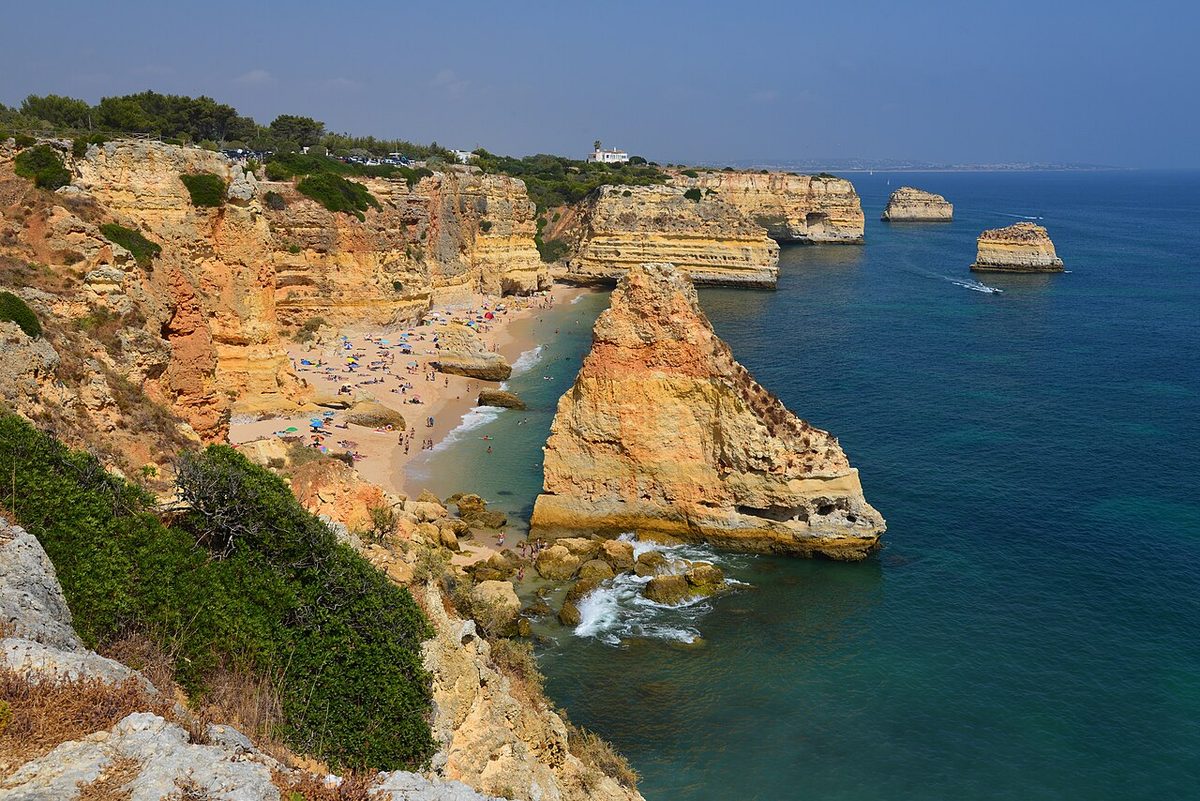
Since July 2024 you can no longer swim into the Benagil cave or land on its beach, and self-guided kayak rentals into it are banned; guided kayaks (typically €30–40 per person, checked September 2026) and boats still visit, for 5–10 minutes per group. The clifftop view is free and arguably better. Where to stand: the path just east of the Marinha car park, looking back at the arch. Best time: morning, before the beach car park fills; May, June and September. Verdict: the best clifftop walk in southern Portugal. Our ranking of the Algarve’s best beaches covers Marinha and its neighbours.
3. The Costa Vicentina
From Sines down to Cabo de São Vicente, Portugal’s south-west coast is a natural park and the wildest shoreline in southern Europe: dark schist cliffs streaked with ochre, Atlantic rollers, long empty beaches backed by dunes, and white storks nesting on top of sea stacks, which is said to happen nowhere else in the world. The most beautiful spots are Cabo Sardão, where the storks nest beside a lighthouse; the cove at Zambujeira do Mar; the river mouth at Odeceixe, where the Seixe meanders across the beach into the sea; and the cliffs around Arrifana and Bordeira, further south.
It’s best seen on foot: the Fishermen’s Trail runs 226.5 km along the clifftops in 13 one-day stages, but even a short stretch around Cabo Sardão gives you the essence. Where to stand: the clifftop at Cabo Sardão in nesting season (spring), and the viewpoint above Odeceixe beach. Best time: spring, when the heath flowers and the storks are on their nests, or late afternoon in any season, when the low sun lights the cliffs. Verdict: the most beautiful coast in mainland Portugal for anyone who prefers wild to manicured. See our hiking guide for the trail.
4. Arrábida
Forty-five minutes south of Lisbon, the Serra da Arrábida is a limestone ridge cloaked in dense Mediterranean scrub that drops almost vertically into a sea so clear and turquoise it looks transplanted from the Caribbean. The beaches tucked under it (Portinho da Arrábida, Galapinhos, Creiro, Figueirinha) are some of the loveliest near Lisbon, and the white sixteenth-century Arrábida convent clings to the hillside above. The road that runs along the top of the ridge gives views over the whole coast and, on clear days, across the Sado estuary to the Tróia peninsula.
The catch is popularity: in summer, road access to the beaches is restricted and the car parks fill early at weekends, with shuttle buses running from Setúbal in high season. Where to stand: the viewpoints on the ridge road above Portinho. Best time: a weekday morning in June or September. Verdict: the most beautiful coast within an hour of Lisbon.
5. The Berlengas
Ten kilometres off Peniche, the Berlenga Grande is a pink granite island with a lighthouse, a handful of fishermen’s huts and, on a rock at the end of a stone causeway, the seventeenth-century Fort of São João Baptista, which looks like something from a pirate film. The water around it is the clearest on the mainland coast, and you can kayak or snorkel into sea caves and coves. The archipelago is a nature reserve and a UNESCO Biosphere Reserve, with a cap on daily visitor numbers and a seabird colony on the cliffs.
The boat crossing from Peniche can be rough, so take seasickness pills if you’re prone, and check that the boats are running: they don’t sail in heavy seas. Where to stand: the causeway to the fort. Best time: calm days from June to September. Verdict: a beautiful day out, if the sea lets you.
6. Nazaré
Nazaré has two kinds of beauty. On a calm summer evening, the long crescent of the town beach curving below the clifftop quarter of the Sítio, with the fishing boats drawn up and fish drying on racks, is lovely. But on a big winter day, when a deep underwater canyon focuses Atlantic swells into the biggest waves ever surfed, Praia do Norte becomes one of the most dramatic sights in Europe, and the headland around the lighthouse of the Forte de São Miguel Arcanjo fills with people watching walls of water explode against the cliffs.
Where to stand: the Miradouro do Suberco in the Sítio for the town and bay; the lighthouse fort for the waves. Best time: a big swell between November and February, which can be forecast only a few days ahead; summer for the town. Getting there: about 1h15 by car from Lisbon; a funicular links the town and the Sítio. Verdict: unique on a big day. Our surfing guide explains the canyon.
Rivers, valleys and mountains
7. The Douro Valley
For many people, me included, the Douro is the most beautiful place in mainland Portugal: a river winding through steep hills terraced from the waterline to the skyline with vineyards, the oldest demarcated wine region in the world, defined in 1756. The terraces, built by hand over centuries, follow every contour, and from above the valley looks like a vast fingerprint. Quintas sit by the river with their names painted in huge letters on the walls; trains crawl along the bank; rabelo boats, once used to carry port barrels downriver, are moored by the quays.
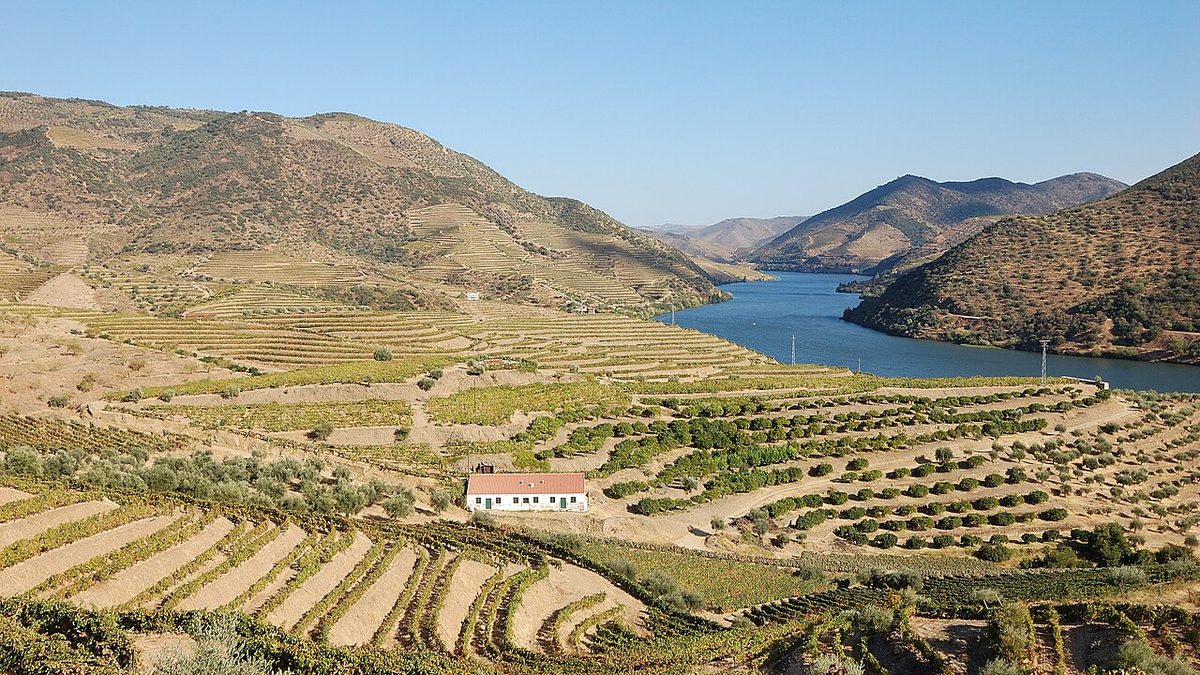
Where to stand: the viewpoint at Casal de Loivos, on the hill above Pinhão, looks down on a great bend of the river and is the classic panorama; São Leonardo de Galafura, above Régua, and São Salvador do Mundo, near São João da Pesqueira, are the other two. Best time: late September and October, when the harvest is in and the vine leaves turn red and gold; spring is green and fresh. Getting there: the train from Porto to Pinhão takes about 2h20 and costs around €12.45, with only about two direct services a day. Verdict: stay at least a night. Our Douro Valley guide has the quintas and the logistics.
8. Peneda-Gerês and Sistelo
Portugal’s only national park is a granite wilderness on the Spanish border, and its beauty is in the combination of wild and worked: bare mountain tops and boulder fields, oak woods and rushing rivers with clear green pools, and villages where stone granaries on stilts stand on the rocks in rows. The Pedra Bela viewpoint, above the village of Gerês, looks over the Caniçada reservoir and the forested valleys; the waterfalls of the Arado and the Rio Homem are the summer swimming spots; and in the north of the park, the granaries of Soajo and Lindoso are among the most photographed rural scenes in the country.
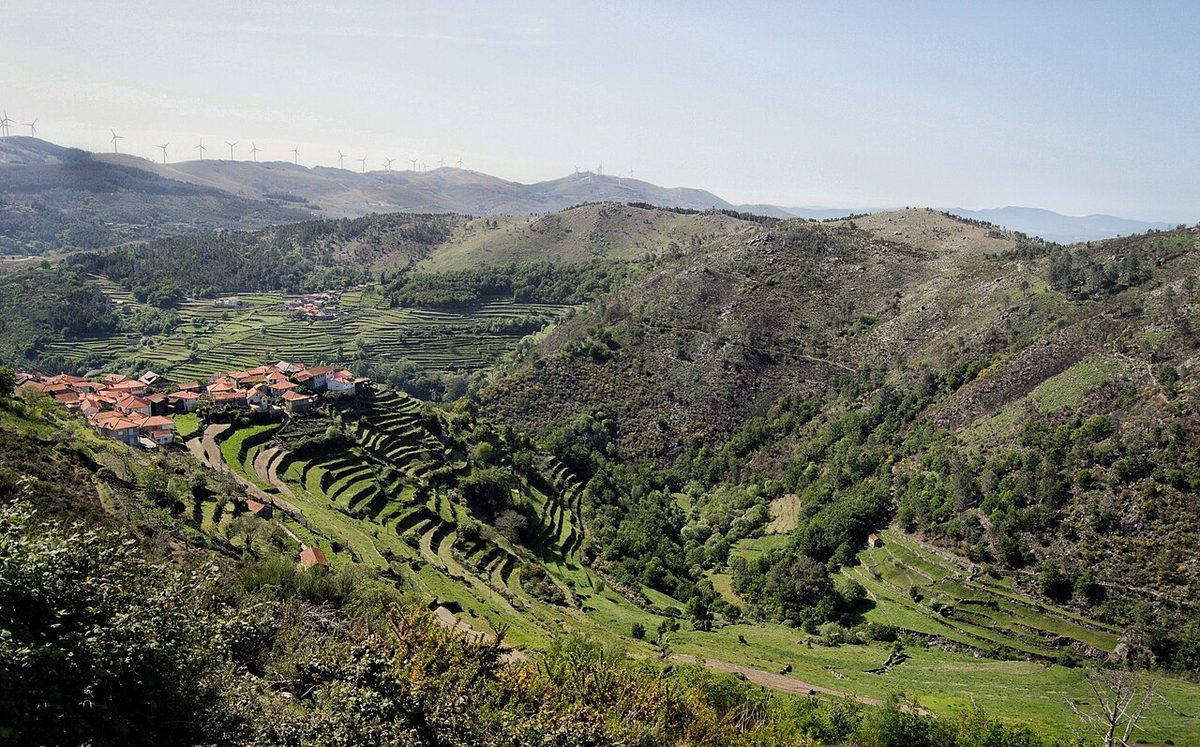
On the edge of the Serra da Peneda, Sistelo, in the hills of Arcos de Valdevez, is called “the little Portuguese Tibet” for the terraces that climb its valley in steps, green in spring and gold in autumn. Where to stand: Pedra Bela for the park; the signposted terrace viewpoint above Sistelo. Best time: May and June for green, October for autumn colour. Verdict: the most beautiful corner of the north. See our guide to hiking in Portugal for the trails.
9. The Serra da Estrela
Mainland Portugal’s highest mountains look nothing like the rest of the country. The plateau around Torre (1,993 m) is a bare, boulder-strewn upland of small glacial lakes, and on its eastern side the Zêzere glacial valley is a textbook U-shaped trough, carved by an ice-age glacier, with sheer granite walls and a flat floor. At its head, the meadow of Covão d’Ametade is ringed with silver birches under the granite tower of the Cântaro Magro, and on the western plateau, Covão dos Conchos is a lake with a perfectly round spillway in its middle that looks like a hole punched in the water.
Where to stand: the hairpins of the N338 as it climbs out of the head of the glacial valley, looking back towards Manteigas. Best time: October, when the birches turn, or January and February for snow (check the road status first; the high roads close). Verdict: the most surprising landscape on the mainland. Our Serra da Estrela guide covers the roads and walks.
10. The Paiva gorge and the 516 Arouca bridge
East of Porto, the river Paiva runs through a deep, wooded gorge of quartzite and granite, with white-water rapids and pools, and since 2015 the Passadiços do Paiva, 8 km of wooden walkway and staircase, have followed it along the cliffs. Halfway along, the 516 Arouca, a pedestrian suspension bridge named for its length in metres, hangs high above the gorge. Walking the boards, with the river below and the walkway snaking ahead along the cliff, is one of the most photogenic walks in Portugal.
The combined ticket costs €12, is sold online only at 516arouca.pt, is valid for the same day and has a daily cap, with no sales on site (checked September 2026). Starting at the Areinho end puts the stretch towards Vau downhill rather than up. Where to stand: the middle of the 516 bridge, if you have the nerve. Best time: spring and autumn; it’s very hot in the gorge in summer. Verdict: one of the best day trips from Porto.
The islands
11. Pico do Arieiro to Pico Ruivo, Madeira
Madeira is the most beautiful island in Portugal for most people, and its most spectacular place is the ridge that links its third-highest peak, Pico do Arieiro, to its highest, Pico Ruivo (1,862 m), past the second, Pico das Torres. From the road’s end at Pico do Arieiro (1,818 m), the view is of jagged volcanic ridges and pinnacles plunging into ravines, often with a sea of cloud below you, and the PR1 trail threads along them through tunnels and on staircases cut into the rock. At sunrise, with the cloud lit pink beneath the peaks, it’s the most beautiful view in the country.
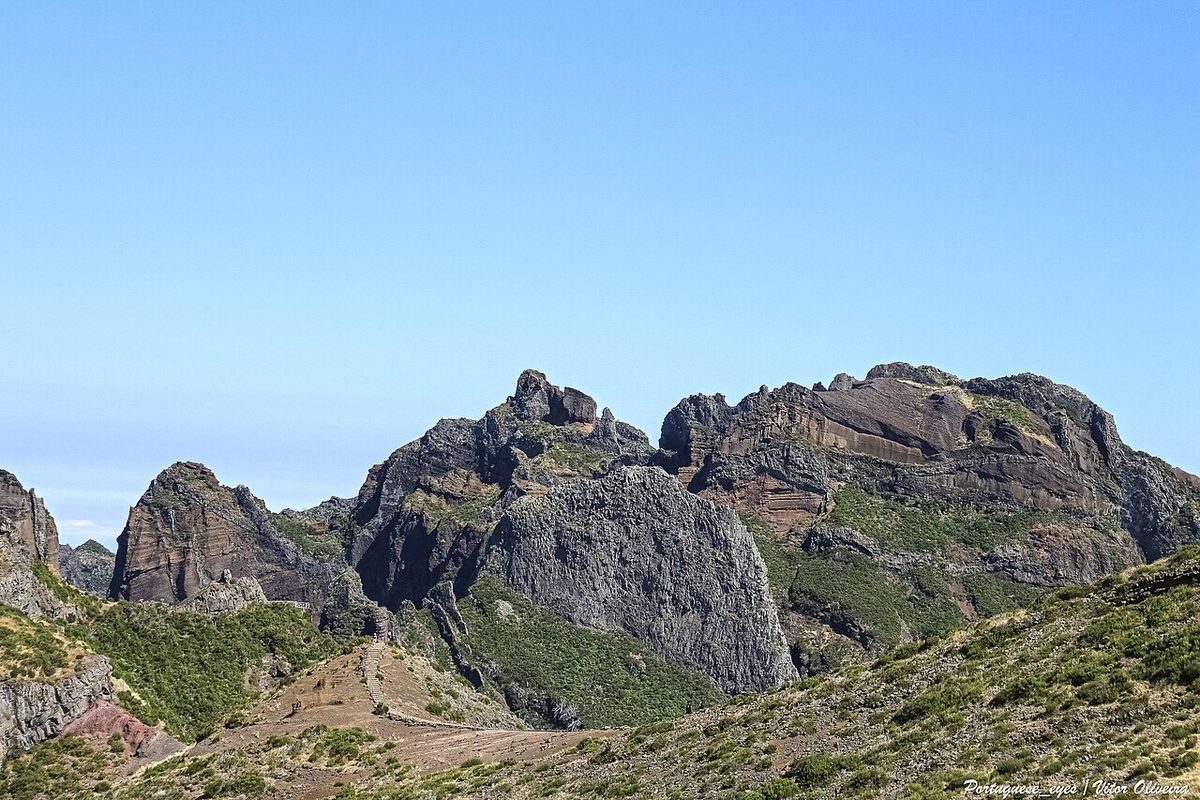
The PR1 reopened on 27 April 2026 after damage in the 2024 wildfires, but only the first 1.2 km to the Pedra Rija viewpoint is two-way; beyond the gate it’s one-way, Arieiro to Ruivo. Booking on SIMplifica is compulsory, at €10.50 for PR1 (€4.50 for other trails), in 30-minute slots (checked September 2026). Where to stand: the Arieiro summit platform at dawn; the Ninho da Manta viewpoint ten minutes along the trail. Best time: sunrise on a clear morning. Verdict: the view I’d cross Portugal for. See our guide to Madeira’s best levada walks.
12. Madeira’s north coast
Madeira’s north coast is greener, wetter and wilder than the south, and its beauty is in the meeting of mountains and sea: cliffs hundreds of metres high, coated in laurel forest, with waterfalls dropping straight into the Atlantic. Seixal has a black volcanic sand beach under green cliffs and natural pools; Porto Moniz, at the north-western tip, has pools in the black lava rock filled by the tide; São Vicente sits in a deep valley with lava caves; and around Santana, little triangular thatched houses stand in flower gardens. The old coast road, now partly closed and replaced by tunnels, has viewpoints where you can stop and look along the cliffs.
Inland, the laurel forest, the laurissilva, is a UNESCO World Heritage Site, the largest surviving area of a forest that once covered much of southern Europe. Walks like the Caldeirão Verde levada go deep into it. Where to stand: the Seixal beach, the Véu da Noiva waterfall viewpoint near Seixal, and the pools at Porto Moniz. Best time: spring, when the waterfalls run full, and afternoons for light on the cliffs. Verdict: drive it slowly. Our Madeira guide has a full island loop.
13. Sete Cidades, São Miguel
The view down into the crater of Sete Cidades, on the western end of São Miguel, is the defining image of the Azores: a caldera five kilometres across, its steep walls covered in green, with a village on the crater floor and two lakes joined by a narrow bridge, one blue and one green. Local legend says they’re the tears of a princess and a shepherd, one with blue eyes and one with green. The colours come from the depth and the algae, but the effect is the same.
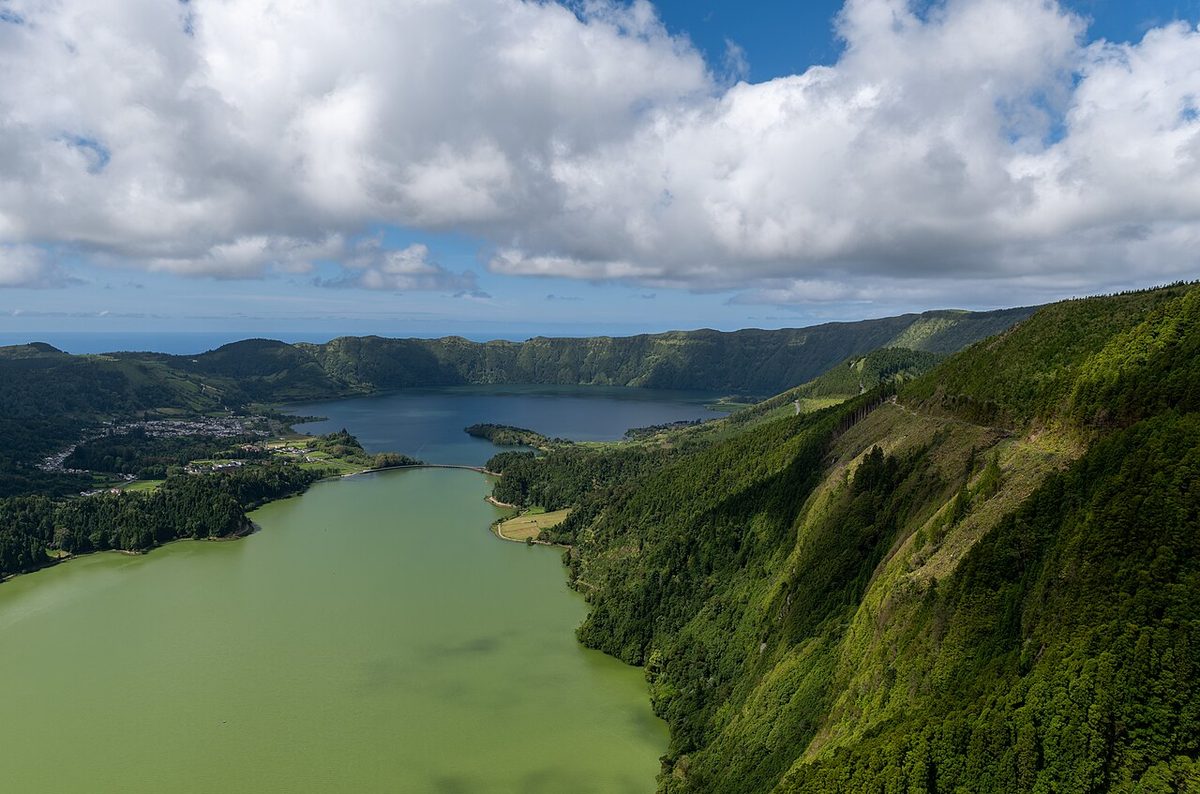
Where to stand: the Miradouro da Boca do Inferno, a short walk from the rim road, has the best view of all the lakes; the Vista do Rei viewpoint, by the road, is the classic one. Best time: early morning on a clear day. The crater is often in cloud, so check the SpotAzores webcams before you drive up, and be ready to change your plans. Verdict: the most beautiful view in the Azores when the weather allows. Our São Miguel guide covers the whole island.
14. Lagoa do Fogo, São Miguel
In the middle of São Miguel, Lagoa do Fogo, the “lake of fire”, fills another crater, but where Sete Cidades has a village and farmland, this one is wild: a lake with white sand beaches in a crater ringed by steep, untouched green walls, within a nature reserve. The view from the miradouro on the road above is the best on the island after Sete Cidades, and a steep trail leads down to the shore.
In summer, private cars are kept off the crater road during the day and a shuttle runs from Caldeira Velha for €5. The Azores tourism portal gives the shuttle dates as 15 June to 30 September, 9:00 to 19:00; local news in 2026 reported the shuttle being prepared to start in August. Check the portal before you go. Where to stand: the main miradouro on the crater rim. Best time: early morning, before cloud and before the shuttle starts. Verdict: wilder and quieter than Sete Cidades, and just as beautiful.
15. Flores, Azores
Flores, the westernmost island of the Azores and of Europe, is the island the Azoreans themselves say is the most beautiful, and they’re right. It’s small, wet and covered in green, and its west coast is a wall of cliffs streaked with dozens of waterfalls. At Poço da Ribeira do Ferreiro, a short walk through the woods leads to a pool at the foot of a cliff with a curtain of waterfalls falling into it; at Poço do Bacalhau, near Fajã Grande, a single waterfall drops into a swimming pool; and the Rocha dos Bordões is a cliff of giant basalt columns rising out of the green pastures.
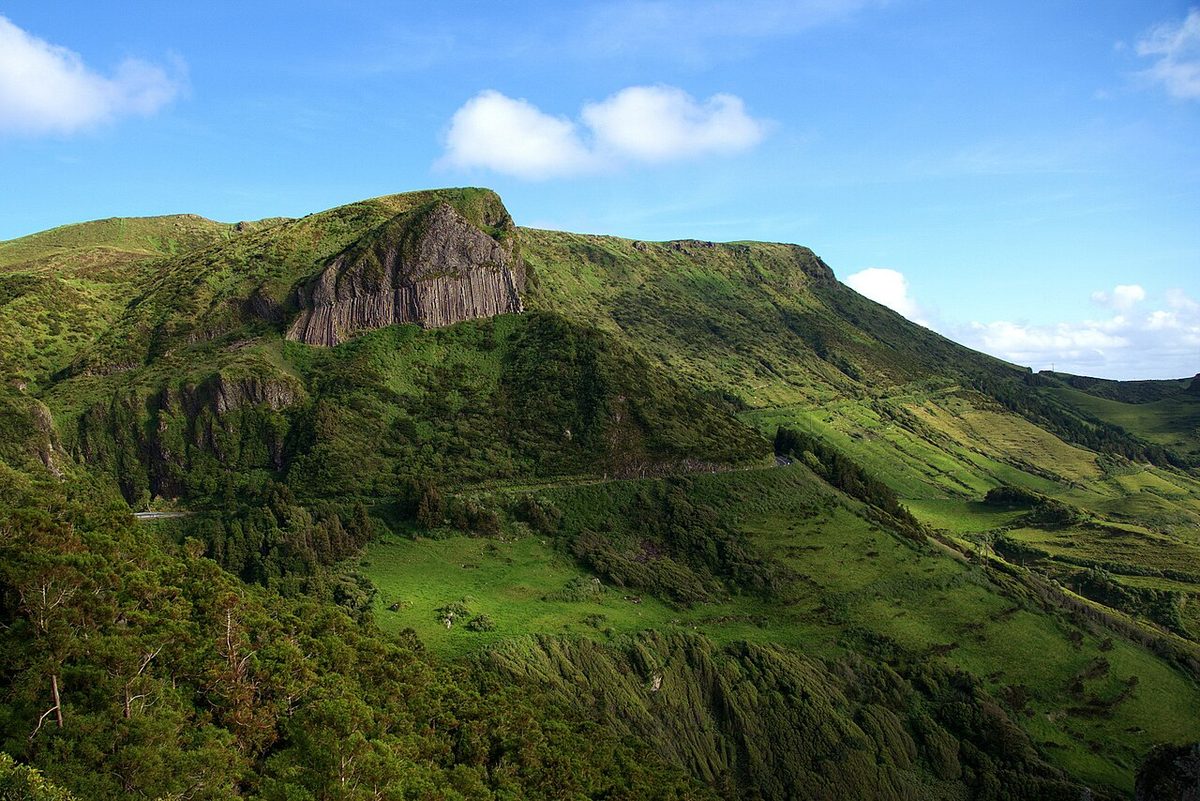
The island’s crater lakes, especially Lagoa Negra and Lagoa Comprida side by side, add to the effect, and in summer the roadsides are lined with hydrangeas. Flores is a UNESCO Biosphere Reserve. Getting there: flights via Ponta Delgada, Terceira or Horta; the island is a long way from anywhere, and flights are weather-dependent. Best time: June to September. Verdict: the most beautiful island in Portugal, for those who make the effort. Our Azores islands guide compares all nine.
16. The fajãs of São Jorge
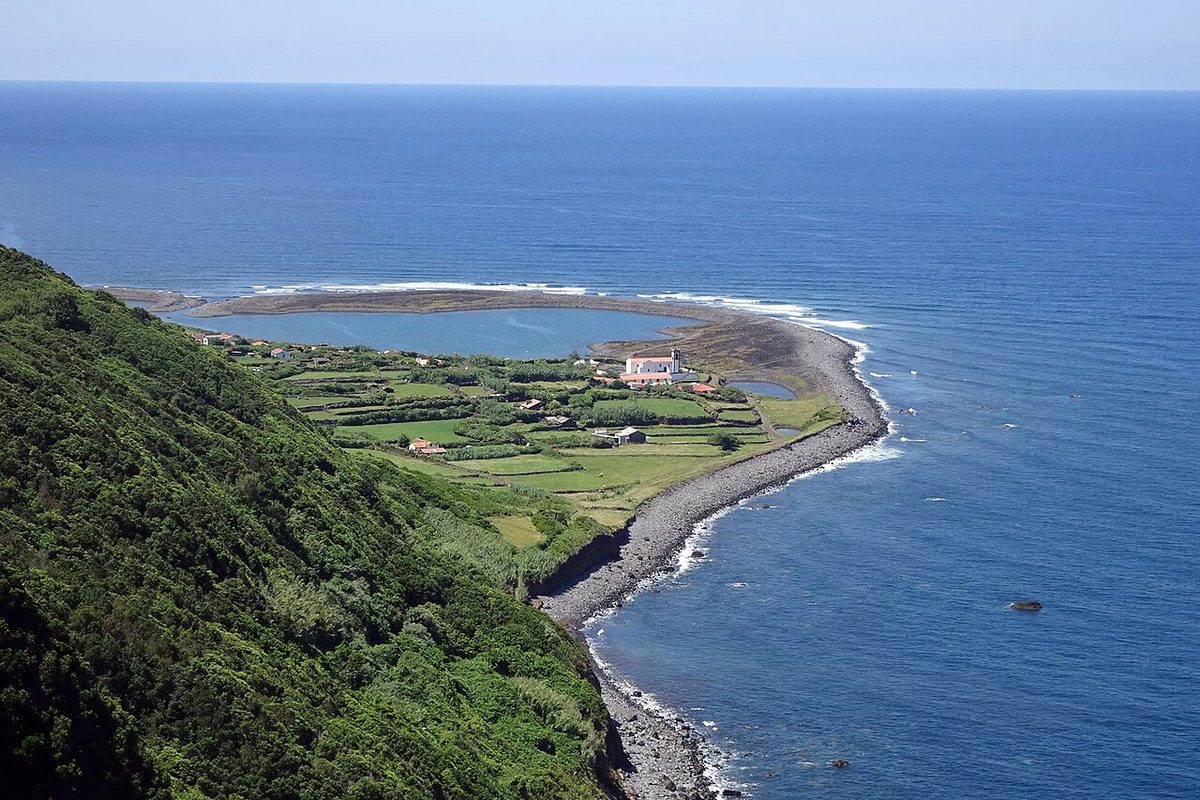
São Jorge is a long, thin ridge of an island in the central Azores, with cliffs hundreds of metres high on both sides, and at their feet, here and there, are the fajãs: flat tongues of land formed by landslides or lava flows, where people built tiny villages and farmed with the sea on one side and the cliff on the other. The most beautiful is the Fajã da Caldeira de Santo Cristo, with a lagoon (the only place in the Azores where clams grow), a white chapel and a handful of houses, reachable only on foot or by quad bike. Its neighbour, the Fajã dos Cubres, has another lagoon and is reachable by road.
The walk down from the Serra do Topo to Santo Cristo and on to the Fajã dos Cubres follows an old path along the bottom of the cliffs. Where to stand: the viewpoint above the Fajã dos Cubres, and the path above Santo Cristo. Best time: summer. Verdict: the most unusual landscape in the Azores; the featured image at the top of this page shows why.
17. Pico, Azores
Pico is a near-perfect volcanic cone rising straight out of the Atlantic to 2,351 metres, the highest point in Portugal, and it dominates the views from the neighbouring islands of Faial and São Jorge. At its feet, the vineyards of Criação Velha and the west coast are planted in a lattice of thousands of tiny walled plots, the currais, built of black lava stone to shelter the vines from the wind and salt spray, a UNESCO World Heritage landscape. The contrast of black walls, green vines, the blue sea and the mountain behind is extraordinary.
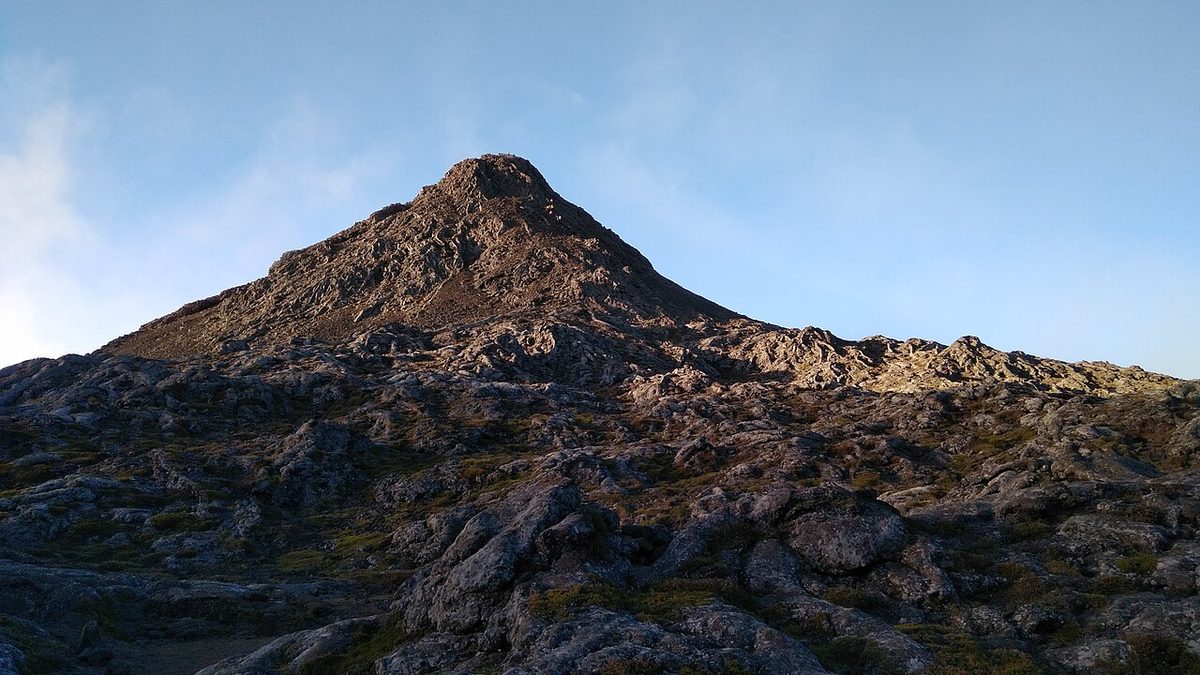
Where to stand: among the Criação Velha vineyards with the mountain behind; Madalena’s waterfront at sunset, looking across the channel to Faial. Best time: June to September, when the summit is most often clear. Climbers must register at the Casa da Montanha; I couldn’t confirm the current fee at source. Verdict: the most dramatic island in the Azores.
Villages and small towns
18. Monsanto
Monsanto, near the Spanish border in the Beira interior, is built among and under giant granite boulders on a lone hill above the plains. Houses wedge themselves between the rocks, use them as walls, or shelter beneath them, so that in places a boulder the size of a house forms the roof. A steep path climbs through the village and the boulders to the ruined castle, with views over the plain towards Spain. In 1938 Monsanto won a contest for “the most Portuguese village in Portugal”.
Where to stand: the castle path, about halfway up, looking back over the roofs and boulders. Best time: sunset and early morning, after the coaches have gone and before they arrive. Verdict: the most extraordinary village in Portugal. Sleep there.
19. Marvão
Marvão sits at around 860 metres on a granite crag at the top of the Serra de São Mamede in the Alentejo, a village of white houses inside medieval walls that run around the edge of the cliff. The castle keep, at the highest point, looks over a huge sweep of country: the Alentejo plain, the hills of the Beira and Spain. On autumn mornings, the valleys below fill with mist and the village floats above it.
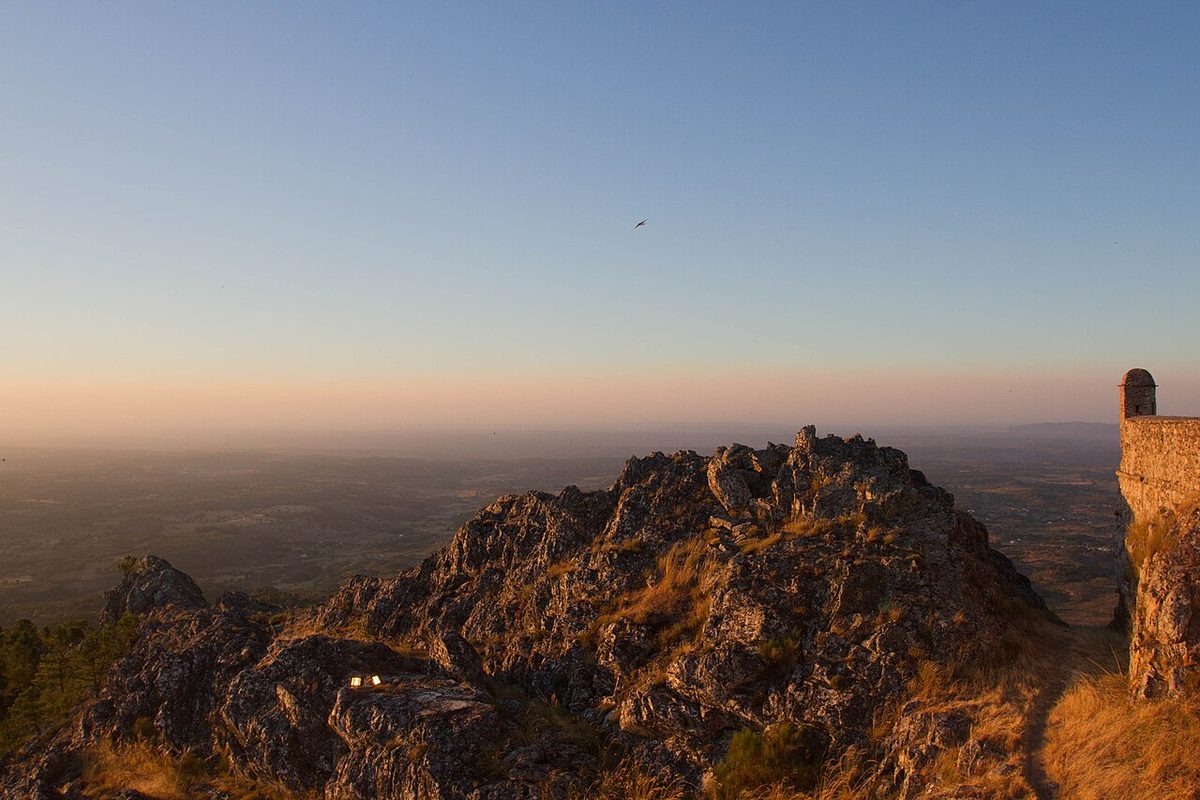
Where to stand: the castle keep and the walls beside it. Best time: sunset, and misty mornings in autumn. Verdict: the most beautiful site of any village in Portugal. Our Alentejo guide covers Marvão and nearby Castelo de Vide.
20. Piódão
Piódão, in the Serra do Açor east of Coimbra, is a village of dark schist houses with slate roofs and blue-painted doors and window frames, stacked up a steep terraced hillside around a white church. By day it’s beautiful; after dark, when the lamps come on, the whole village glows against the black hillside like a nativity scene, which is the comparison everyone makes.
Where to stand: the road above the village as you arrive. Best time: after dark, which means staying the night. Getting there: about an hour on winding mountain roads from Seia or Arganil. Verdict: worth the drive if you sleep there.
21. Monsaraz and Alqueva
Monsaraz is a tiny walled village of white houses and schist lanes on a hilltop above the Alqueva reservoir, the largest artificial lake in western Europe. From the castle walls, the view spreads over the lake’s islands and inlets, the olive groves and the plains to Spain, and at sunset the whole landscape turns gold. Then the stars come out: Alqueva was the world’s first certified Starlight Tourism Destination, and the night sky here is among the darkest in Europe.
Where to stand: the castle walls. Best time: sunset, then a moonless night for the stars. Verdict: the most beautiful village in the Alentejo, and magical after dark.
22. Óbidos
Óbidos is a complete medieval town of whitewashed houses edged in blue and yellow, with bougainvillea over the doorways, inside castle walls you can walk right round. From the ramparts, the red roofs, the church towers and the green countryside beyond look much as they have for centuries. The problem is that everyone knows: by late morning the main street is shoulder to shoulder with day-trippers from Lisbon.
Where to stand: the ramparts at the northern end, by the castle. Best time: early evening, when the coaches have gone and the light is warm. Verdict: lovely, if you time it. Our central Portugal guide has more.
Cities and palaces
23. Porto from the river
Porto’s beauty is all in its setting: a dense, dark granite city tumbling down a steep hillside to the Douro, with the iron arches of the Dom Luís I bridge spanning the gorge and the port lodges’ red roofs on the opposite bank. Ribeira, the old riverside quarter, is a UNESCO World Heritage Site, and its tall, narrow houses in faded tiles and pastel colours are best seen from across the water.
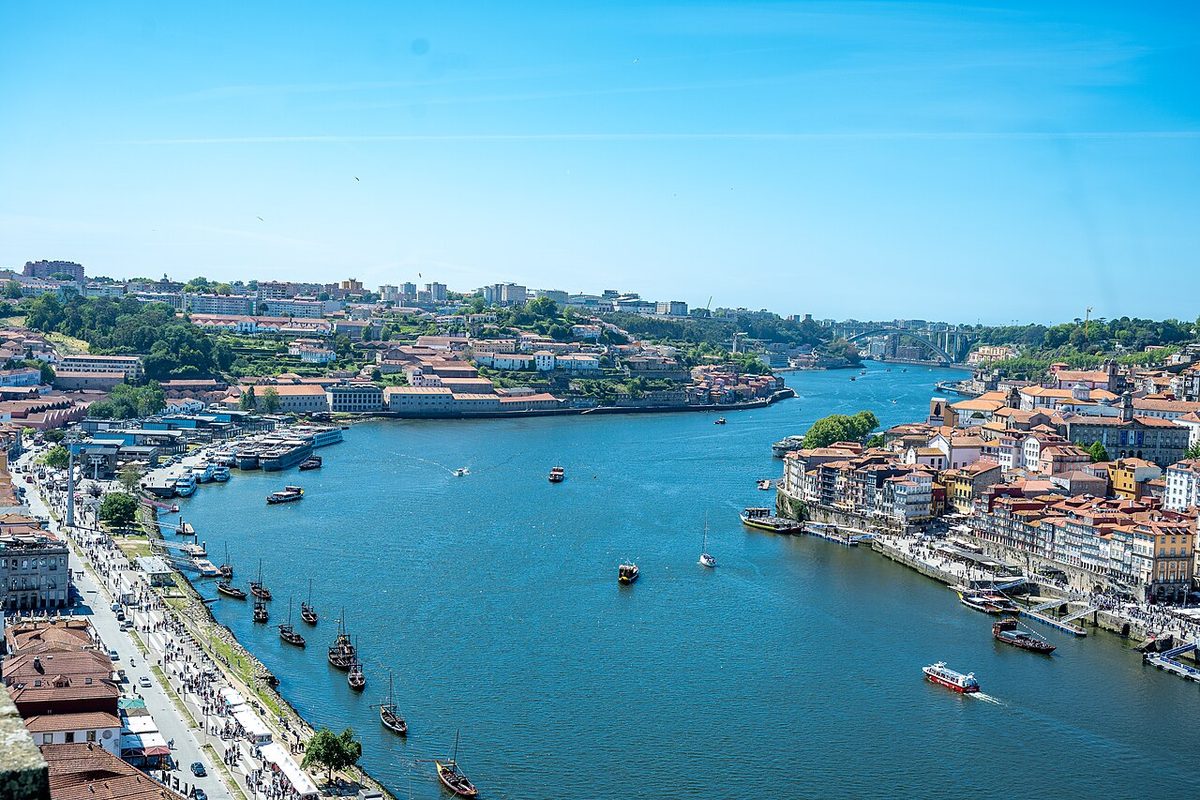
Where to stand: the upper deck of the Dom Luís I bridge, which you can walk across, and the terrace of the Serra do Pilar monastery on the Gaia side; in the city, the Miradouro da Vitória. Best time: sunset, when the city glows. Verdict: one of the most beautiful city views in Europe. See our Porto guide.
24. Lisbon’s viewpoints
Lisbon is built over hills above the wide estuary of the Tagus, and its beauty is in the views from the top of them: terracotta roofs, church domes, laundry and palm trees tumbling towards the water, with the river so wide it looks like the sea. The city has dozens of miradouros, viewpoints with benches and often a kiosk café. Senhora do Monte is the highest and has the widest view, over the castle and the whole of the old city; Santa Luzia and Portas do Sol look over Alfama’s roofs to the river; and São Pedro de Alcântara faces the castle across the Baixa.
Best time: the hour before sunset. In late May and June, the jacaranda trees flower purple all over the city. Verdict: the best way to see Lisbon.
25. Sintra
Sintra is a range of forested granite hills above the Atlantic, wrapped in mist and covered with palaces, castles and romantic gardens built by kings and nineteenth-century dreamers. The red and yellow Pena Palace on its peak is the famous image, but the forest is what makes Sintra beautiful: tree ferns, giant rhododendrons and moss-covered boulders, with the walls of the Castelo dos Mouros snaking along the ridge and the exotic gardens of Monserrate on the slopes below.
Pena’s tickets were restructured and resellers still quote old prices: officially €20 for the palace, €45 for palace and park, and €12 for the park alone, while resellers advertise €20 combined and €10 park (checked September 2026). Book on the official Parques de Sintra site, where palace entry is tied to a time slot. Where to stand: Pena’s terraces, and Cruz Alta, the highest point of the hills, with a view back to the palace. Best time: opening time, and the day after rain, when the forest glows. Verdict: the most beautiful day trip from Lisbon. Our day trips from Lisbon guide has the logistics.
Beautiful interiors for a rainy day
Portugal’s grandest buildings could fill a list of their own. These are the interiors I’d plan a rainy day around.
- The Biblioteca Joanina, Coimbra. A baroque library of gilded and lacquered wood, among the most beautiful rooms in the world, guarded at night by a colony of bats. €25 with the Paço das Escolas, timed slots.
- The Charola, Tomar. The round Templar church at the heart of the Convent of Christ, painted and gilded from floor to vault. The convent costs €15.
- The Unfinished Chapels, Batalha. A roofless Gothic octagon of carved limestone, open to the sky. From €15.
- São Bento station, Porto. A railway hall lined with some 20,000 azulejo tiles telling Portugal’s history. Free.
- The Palácio da Bolsa, Porto. The stock exchange’s Arab Room, a nineteenth-century fantasy of Moorish plasterwork and gold.
- The library at Mafra. A long baroque hall of 36,000 books in the palace-convent near Lisbon, also with resident bats.
- Livraria Lello, Porto. The neo-Gothic bookshop with the twisting red staircase. Voucher entry; sellers quote €8/€16 or €10/€15.95, so check the shop’s site.
A calendar of Portugal’s most beautiful moments
Portugal’s landscapes change more with the seasons than most visitors expect. These are the moments worth planning around.
| When | Where | What you’ll see |
|---|---|---|
| January–February | Serra da Estrela | Snow on the plateau and the glacial valley |
| Late January–early March | Algarve hills; Castelo Rodrigo | Almond blossom |
| November–February | Nazaré | The biggest waves |
| March–May | Alentejo; Costa Vicentina | Wildflowers in the meadows and on the clifftops; storks on their nests |
| April–May | Madeira | Spring flowers and the Festa da Flor (29 April–30 May in 2027) |
| May–June | Serra da Estrela; the north | Yellow broom on the hillsides; waterfalls running full |
| Late May–June | Lisbon | Purple jacarandas |
| June–August | Azores, especially Flores and Faial | Hydrangea hedges in flower |
| September | Douro Valley | The grape harvest |
| October–November | Douro; Serra da Estrela; Peneda-Gerês | Vineyards and birches turning red and gold |
| Year-round, clear mornings | Pico do Arieiro, Madeira | Sunrise above a sea of cloud |
For month-by-month weather, see our guide to the best time to visit Portugal.
What to skip, and what’s overrated
- The Benagil cave photo. The famous shot of one person alone on the sand under the hole in the roof can no longer be taken legally: landing inside has been banned since 2024. The clifftop view from above, on the Seven Hanging Valleys Trail, is free and beautiful.
- Cabo da Roca. The westernmost point of mainland Europe is a windswept headland with a monument and a car park. The cliffs are fine; the Costa Vicentina’s are better. Pass through on the way from Sintra to Cascais.
- Pena Palace on a foggy day. Sintra’s hills are often in cloud, and Pena in the mist is a red smudge. If the forecast is grey, swap the day.
- The crater lakes in cloud. Sete Cidades and Lagoa do Fogo are in cloud on many days. Check the webcams and keep your schedule flexible.
- Aveiro as the “Venice of Portugal”. It has a few pretty canals and painted boats, but it isn’t Venice. The striped houses at the Costa Nova, ten minutes away, are the beautiful part.
- Óbidos at midday. The prettiest walled town in Portugal disappears under the crowds between late morning and mid-afternoon.
- Lisbon’s Pink Street. A painted street in the nightlife district, not a beauty spot. The miradouros are far better.
Photography tips and etiquette
- Get up early. Nearly every place on this list is at its best in the first two hours after sunrise, when the light is soft, the sea calmer and the crowds absent.
- Watch the weather on the islands. In Madeira and the Azores, the mountains and craters are often in cloud while the coast is sunny, and vice versa. Use the webcams and move your plans around.
- Drones. Portugal applies the EU drone rules, which require most camera-drone operators to register (in Portugal, with the aviation authority, ANAC), and flying is restricted near airports and banned or limited over many monuments and parts of the natural parks. Check before you fly.
- Respect the villages. Places like Monsanto, Piódão and Marvão are people’s homes. Don’t climb on walls or into gardens for a shot, and keep your voice down at night.
- Stay safe on the cliffs. The Algarve’s limestone cliffs collapse without warning; stay back from the edges and don’t sit under them on the beach.
Planning a trip around the views
The most beautiful places in Portugal are spread across the mainland and two archipelagos, so decide first what you’re after: coast, mountains or islands. On the mainland, a route from Lisbon via Sintra and Óbidos to Porto and the Douro, then inland to the Serra da Estrela and Monsanto, covers seven of the 25 in a week to ten days by car; our Portugal road trip guide has the routes. Add the Algarve’s cliffs and the Costa Vicentina for a second week. For the islands, a week on Madeira covers Arieiro and the north coast, while the Azores need a week for São Miguel and one or two of Pico, Faial, São Jorge or Flores.
If you’re not sure where to start, our pillar guide to the best things to do in Portugal pulls the whole country together, and our best beaches in Portugal guide covers the coast in more detail.
Frequently asked questions
What is the most beautiful place in Portugal?
On the mainland, the Douro Valley’s terraced vineyards are hard to beat. Across the whole country, Madeira’s mountain ridges between Pico do Arieiro and Pico Ruivo and the island of Flores in the Azores are the strongest contenders.
What is the most beautiful village in Portugal?
Monsanto, built among giant granite boulders, is the most extraordinary; Marvão, on a clifftop in the Alentejo, has the most beautiful setting; and Piódão, a schist village on a terraced hillside, is the loveliest at night.
Which part of Portugal has the best scenery?
The islands: Madeira and the Azores have the most dramatic landscapes in the country. On the mainland, the Douro Valley, Peneda-Gerês and the western Algarve’s cliffs are the most scenic.
What is the most beautiful beach in Portugal?
Praia da Marinha in the Algarve is the most famous, with its arches and sea stacks. For wilder beauty, the beaches of the Costa Vicentina, such as Odeceixe, or the coves of Arrábida near Lisbon, are hard to beat.
Is Madeira or the Azores more beautiful?
Both are extraordinary. Madeira has the more dramatic mountains and the levada walks; the Azores have the crater lakes, the greener pastures and, on Flores, the waterfalls. Madeira is easier to visit; the Azores are wilder.
What is the most beautiful city in Portugal?
Lisbon and Porto are both beautiful for their settings, Lisbon over its hills and estuary and Porto over the Douro gorge. Among smaller cities, Évora, Coimbra and Guimarães have the finest historic centres.
When is Portugal at its most beautiful?
Spring (April to June) for wildflowers, waterfalls and green hills, and autumn (late September to November) for the Douro’s harvest colours and the clearest light. Winter brings almond blossom in the south, snow in the Serra da Estrela and the big waves at Nazaré.
Can you see the most beautiful places in Portugal without a car?
Some of them: Lisbon, Porto, Sintra and the Douro (by train to Pinhão) are easy. Most of the coast, the villages, the mountains and the islands’ viewpoints are far easier with a car or a tour.
Where to go next
- Things to do in Portugal, our main guide
- The 25 best places to visit, ranked
- Day trips from Lisbon, including Sintra and Arrábida
- Portugal’s best castles
Photo credits
- The Fajã da Caldeira de Santo Cristo, São Jorge (featured image) — Alacoolwiki, CC BY-SA 4.0, via Wikimedia Commons
- Praia da Marinha, Algarve — Tobi 87, CC BY-SA 3.0, via Wikimedia Commons
- Terraced vineyards, Douro Valley — Rosino, CC BY-SA 2.0, via Wikimedia Commons
- The terraces of Sistelo — AJSL48, CC BY-SA 4.0, via Wikimedia Commons
- Between Pico do Arieiro and Pico Ruivo, Madeira — Vítor Oliveira, CC BY-SA 2.0, via Wikimedia Commons
- Lagoa das Sete Cidades, São Miguel — Jules Verne Times Two, CC BY-SA 4.0, via Wikimedia Commons
- Rocha dos Bordões, Flores — Fbatistaphoto, CC BY-SA 4.0, via Wikimedia Commons
- The Piquinho summit cone on Montanha do Pico — Daniel Pinto, CC BY-SA 4.0, via Wikimedia Commons
- Marvão castle at sunset — Axismundi 000, CC BY-SA 4.0, via Wikimedia Commons
- Ribeira and the Douro, Porto — Michael Gaylard, CC BY 4.0, via Wikimedia Commons
Prices checked September and October 2026 against the operators’ own sites (Parques de Sintra, SIMplifica, 516 Arouca, CP and the University of Coimbra); where sellers disagree, both figures are given. Seasons and times are recommendations, not guarantees: the Atlantic weather decides. Last updated: October 2026.