Type “Alentejo Portugal” into a search engine and you’ll find one of two things: a long Évora guide last updated several years ago, or a quick list of “charming villages” that gives each town a paragraph and the whole region a single afternoon. Neither helps you plan the part of Portugal that covers roughly a third of the country. It’s the Alentejo, the rolling, cork-studded south between the Tagus and the Algarve, with Roman ruins, marble towns, hilltop castles, a lake so big it has its own dark-sky reserve, some of Portugal’s best wine and food, and a stretch of Atlantic coast wilder than anything in the Algarve. This guide covers all of it: the interior and the coast, how long each place needs, what it costs as of September 2026, where to stay, and what to skip.
The short answer: give the Alentejo five days at least. Spend two nights in Évora, one in Monsaraz above the Alqueva lake for the stars, one in Marvão, and one on the coast at Vila Nova de Milfontes. Hire a car, come in spring or autumn rather than high summer, and eat lunch like the locals: late, long and with wine.
Alentejo Portugal at a glance: where to go
| Place | Area | From Lisbon by car | Time needed | Best for | Verdict |
|---|---|---|---|---|---|
| Évora | Central | ~1h30 | 2 nights | Roman temple, cathedral roof, Chapel of Bones, food | The essential base |
| Almendres cromlech | Near Évora | ~1h45 | 1 hour | Neolithic standing stones among cork oaks | Unmissable and free |
| Monsaraz and the Alqueva | Central, on the Spanish border | ~2h | 1 night | A walled village, the lake, the darkest skies in Portugal | The most memorable night in the region |
| Estremoz, Borba, Vila Viçosa | Central | ~1h45 | A day | Marble towns, a ducal palace, a Saturday market | A good day between Évora and the north |
| Marvão and Castelo de Vide | North (Alto Alentejo) | ~2h30 | 1–2 nights | An eagle’s-nest castle village, a spa town | Portugal’s most dramatic village |
| Elvas | North-east, on the border | ~2h | Half a day | UNESCO star fort, aqueduct | Impressive, easy stop en route |
| Mértola | South (Baixo Alentejo) | ~2h45 | 1 night | A castle over the Guadiana, an Islamic past | The south’s best town |
| Comporta | Coast | ~1h15 | 1–2 days | Enormous beaches, rice fields, slow luxury | Beautiful and expensive |
| Vila Nova de Milfontes | Coast | ~2h | 2 nights | River and ocean beaches, the Fishermen’s Trail | The best coastal base |
| Zambujeira do Mar and the south-west coast | Coast | ~2h30 | 1–2 days | Clifftop villages, surf, walking | The wildest coast in mainland Portugal |
Understanding the Alentejo
The name means “beyond the Tagus”, além do Tejo, and that’s what it was to medieval Lisbon: the big, dry, thinly peopled country across the river. It still is. The Alentejo covers about a third of mainland Portugal and holds only around 700,000 people, which is why you can drive for twenty minutes here without meeting another car. The three historic capitals are Évora in the centre, Beja in the south and Portalegre in the north. The region splits naturally into four parts: the Alto Alentejo in the hilly north around Portalegre and the Serra de São Mamede; the Alentejo Central around Évora and the marble towns; the Baixo Alentejo, the flat, hot south around Beja and Mértola; and the Alentejo Litoral, the Atlantic coast from Tróia down to the Algarve border.
The landscape you’ll remember is the montado: open pasture scattered with cork oaks and holm oaks, grazed by sheep, cattle and the black Iberian pigs that eat the acorns and become some of the best pork in Europe. Portugal produces about half the world’s cork, most of it here. The oaks are stripped by hand about every nine years, and the last digit of the year is painted on the trunk after each harvest, so a tree marked “2” in white was stripped in 2022. You’ll see the numbers everywhere once you know to look.
The other things that define the Alentejo are heat and time. Évora’s average daily high is around 33 °C in July and August, and heatwaves push the interior past 40 °C. In January the high is about 14 °C, with cold, clear nights. Life adjusts: shops close for the afternoon, lunch starts after one and runs long, and towns come back to life in the evening. In 2014 UNESCO added cante alentejano, the slow, unaccompanied group singing of the region’s farmworkers, to its list of intangible heritage. If you hear it in a village tavern, you’ve found the Alentejo.
Évora
The Alentejo’s capital is a walled university city of about 50,000 people, and one of the most complete historic centres in Portugal. It has been a UNESCO World Heritage Site since 1986. It’s compact, flat by Portuguese standards and entirely walkable, with Roman, Moorish, medieval and Renaissance layers stacked in a few hundred metres. It’s the natural base for the central Alentejo, and it deserves two nights rather than the day trip most visitors give it.
The Roman temple
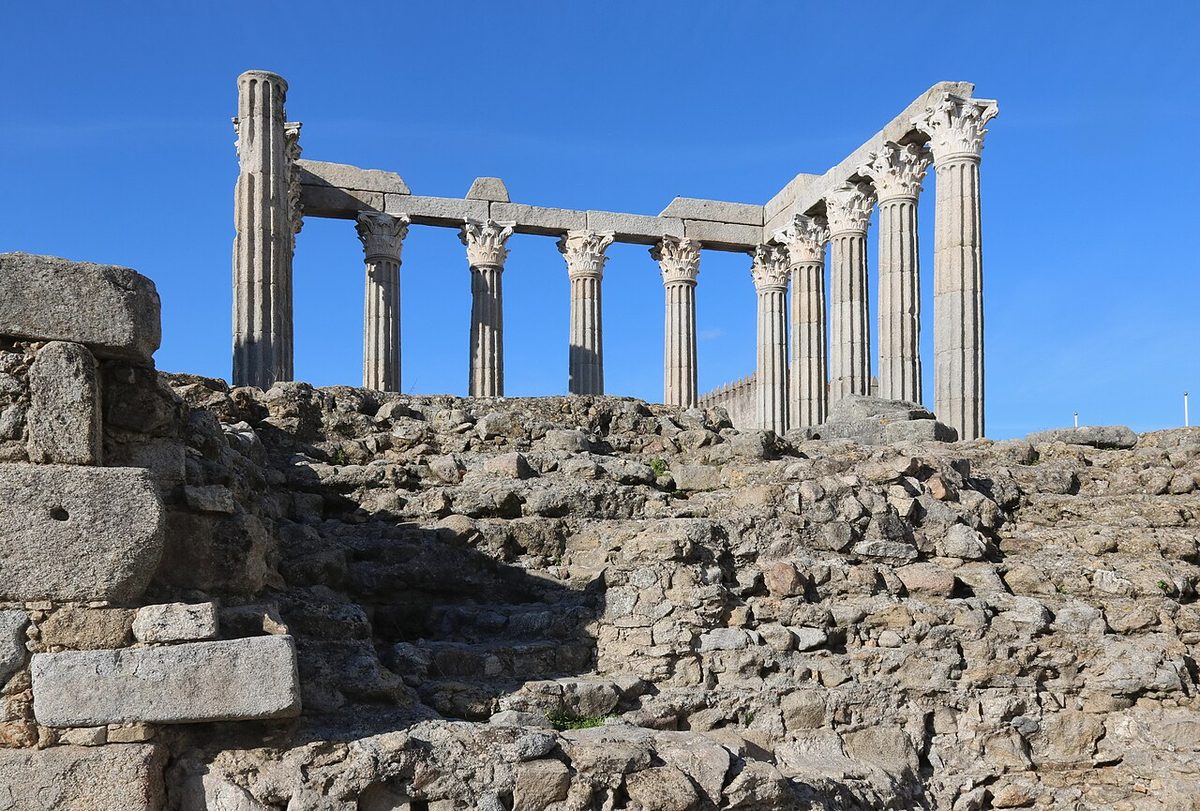
Fourteen granite columns with marble capitals still stand on their podium at the top of the town, the remains of a first-century temple long mis-named the Temple of Diana. It survived because it was walled up and used for other purposes for centuries, including, at one point, as a slaughterhouse. It stands in the open, so it’s free and always visible, and it’s at its best at dusk when the stone turns gold. Verdict: the image of Évora, and a five-minute stop you’ll come back to.
The cathedral and its roof
The Sé, begun in the twelfth century, is a fortress-like Romanesque-Gothic cathedral with a cloister and a museum of sacred art. The best part is going up onto the roof, where you can walk among the turrets with a view over the whole town and the plain beyond. Check the current ticket options at the door, since the roof, cloister and museum have been sold in different combinations. Verdict: go up. It’s the best view in Évora.
The Capela dos Ossos
Inside the Church of São Francisco, the Chapel of Bones is lined floor to ceiling with the bones and skulls of more than 5,000 people, exhumed from the town’s overflowing cemeteries in the sixteenth century by Franciscan friars who wanted to encourage some reflection on mortality. The inscription over the door says, roughly, “We bones that are here are waiting for yours.” It’s genuinely striking rather than ghoulish, and it’s small, so it’s crowded at midday.
Tickets (listed September 2026): €6 for adults; €4 for over-65s and under-25s; a €15 family ticket for two adults and young people; free for children under 12. The ticket also covers the church’s museum spaces, including a large collection of nativity scenes. Hours: 09:00–18:30 from late March to late October, 09:00–17:00 in winter. It’s closed on 1 January, Easter Sunday, the afternoon of 24 December and on 25 December. Verdict: go first thing or late in the day.

Praça do Giraldo, the aqueduct and the university
The main square, the Praça do Giraldo, is where the town gathers, with a marble fountain and arcaded cafés. The sixteenth-century Água de Prata aqueduct strides into town from the north-west, with houses built between its arches where it reaches the streets, a charming bit of urban recycling. The University of Évora, founded by the Jesuits in 1559, closed when they were expelled and revived only in the 1970s. Its Baroque cloister is lined with azulejo panels on which each classroom’s tiles illustrate its subject. You can usually look in during term. Verdict: an evening wander, a café in the square, and the aqueduct streets.
The Almendres cromlech and the megaliths
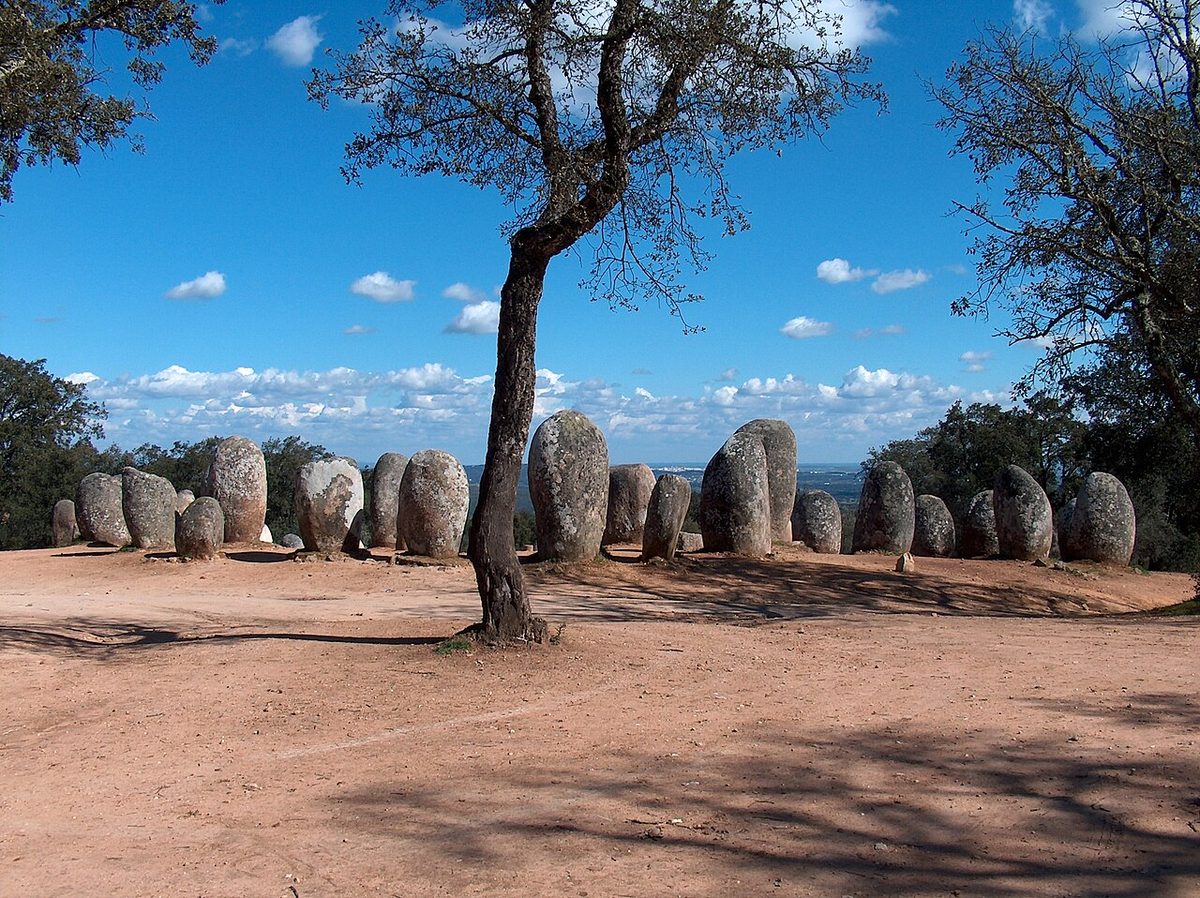
Twenty minutes west of Évora, down a dirt road through cork oaks, nearly a hundred granite standing stones stand in a rough oval on a gentle slope. The Cromeleque dos Almendres is one of the largest megalithic monuments in Iberia, and its oldest stones are older than Stonehenge. Some carry faint carvings and cup-marks. There’s no fence, no ticket and usually hardly anyone there, which makes it one of the most atmospheric places in Portugal early in the morning or at sunset. The single tall Menir dos Almendres stands a short walk away, and the Anta Grande do Zambujeiro, one of the biggest dolmens in the Iberian peninsula, is a short drive further. Verdict: the best free thing in the Alentejo. The road is unpaved but fine for a normal car if you take it slowly.
If you’re only coming for the day from Lisbon, our day trips from Lisbon guide compares Évora with the other options.
A day in Évora, hour by hour
| Time | What to do | Why then |
|---|---|---|
| 09:00 | The Capela dos Ossos as it opens | The chapel is small and the tour groups arrive mid-morning |
| 10:00 | The cathedral, cloister and roof | The roof is best before the heat of the day |
| 11:30 | The Roman temple, the university cloister and the lanes towards the aqueduct | An easy walk through the centre, with a coffee in the Praça do Giraldo |
| 13:00 | A long lunch: the prato do dia, or açorda and black pork | Lunch is the Alentejo’s main meal, and the kitchens are at their best |
| 15:00–17:00 | A rest, the hotel pool or a wine estate just outside the walls | The town slows down in the afternoon, especially in summer |
| 18:00 | Drive out to the Almendres cromlech | The stones are at their best in low evening light, and usually empty |
| 20:30 | Back to the temple at dusk, then dinner | The old town is lovely and cool after dark |
In winter, shift everything a little earlier: the chapel closes at 17:00 from late October to late March, and the sun sets over the Almendres stones not long afterwards. On a second day, add a wine estate in the morning and drive on to Monsaraz for the evening.
Monsaraz, the Alqueva and the dark sky
An hour east of Évora, the land drops towards the Guadiana river and the Spanish border, and the view opens onto an enormous sheet of water: the Alqueva reservoir, created when the Alqueva dam was completed in the early 2000s. It’s the largest artificial lake in western Europe, with a shoreline so long and indented that it has created dozens of new islands and peninsulas out of former hilltops. It has also transformed the local economy with irrigation, vineyards and olive groves.
Monsaraz
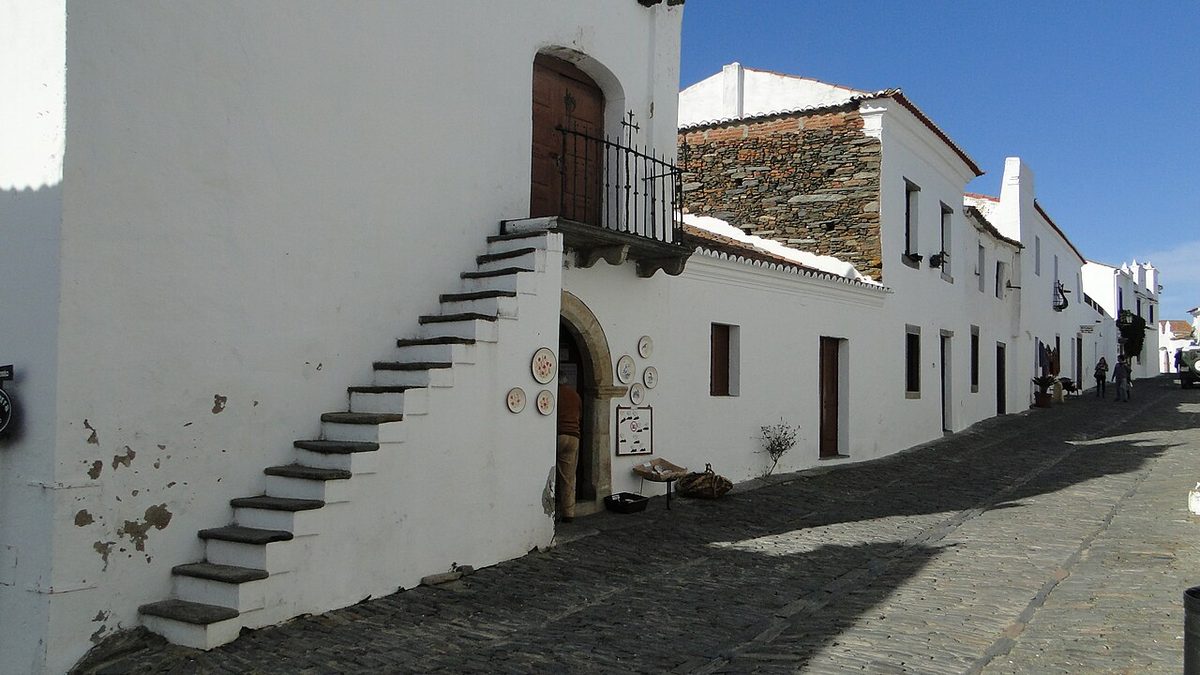
On a hill above the lake, Monsaraz is a medieval walled village with one main street of whitewashed houses, two gates, a small castle whose keep you can climb, and a view over the water into Spain. Fewer than a hundred people live inside the walls, and in the evening, after the day visitors leave, it’s one of the most peaceful places in Portugal. Park outside the walls: the village is too narrow for cars. Verdict: stay the night. The day-trip version, at noon in August, misses everything that makes it special.
The dark sky
The area around the Alqueva was the first place in the world to be certified as a Starlight Tourism Destination, thanks to its very low light pollution, dry climate and a large number of cloudless nights. On a clear, moonless night the Milky Way is plainly visible from the walls of Monsaraz, which is something most visitors from European cities haven’t seen in years. There’s an observatory near Monsaraz, and several local operators run guided stargazing sessions with telescopes. I haven’t confirmed their 2026 prices or schedules, so check the operators’ own sites and book ahead in summer. Timing: plan your night around the new moon if you can; a full moon washes out all but the brightest stars.
On and around the lake
You can swim at the lake’s official river beaches, including the Praia Fluvial de Monsaraz below the village, hire kayaks or paddleboards, take a boat trip, or rent a houseboat from the Amieira marina and spend a few days cruising, which needs no licence. The pottery village of São Pedro do Corval, just below Monsaraz, has dozens of workshops, and Reguengos de Monsaraz is one of the Alentejo’s major wine areas, with several estates open for tastings. Verdict: one night for the village and the stars, two if you want a lake day.
The marble towns: Estremoz, Borba and Vila Viçosa
North-east of Évora, a band of land is so rich in white and pink marble that it’s used for kerbstones, doorsteps and pavements. You’ll see the quarries beside the road, huge white holes in the ground stepped like inverted pyramids.
Estremoz
A hilltop castle and a lower town built around a vast square, the Rossio, where a big Saturday market sells everything from cheese and live chickens to antiques and the town’s traditional painted clay figurines. The figurines are on UNESCO’s list of intangible heritage. The Pousada in the castle has one of the best views in the region. Verdict: time it for a Saturday morning if you can.
Vila Viçosa and Borba
Vila Viçosa was the seat of the Dukes of Bragança, who became Portugal’s last royal family, and their long marble-fronted Paço Ducal is one of the grandest palaces in the country, visited on guided tours. The town is quiet, elegant and entirely built of marble. Borba, between the two, is known for its wine cooperative and its marble fountain. Verdict: the ducal palace is a proper sight, and the three towns fill a good day between Évora and Marvão.
The Alto Alentejo: Marvão, Castelo de Vide and Elvas
Marvão
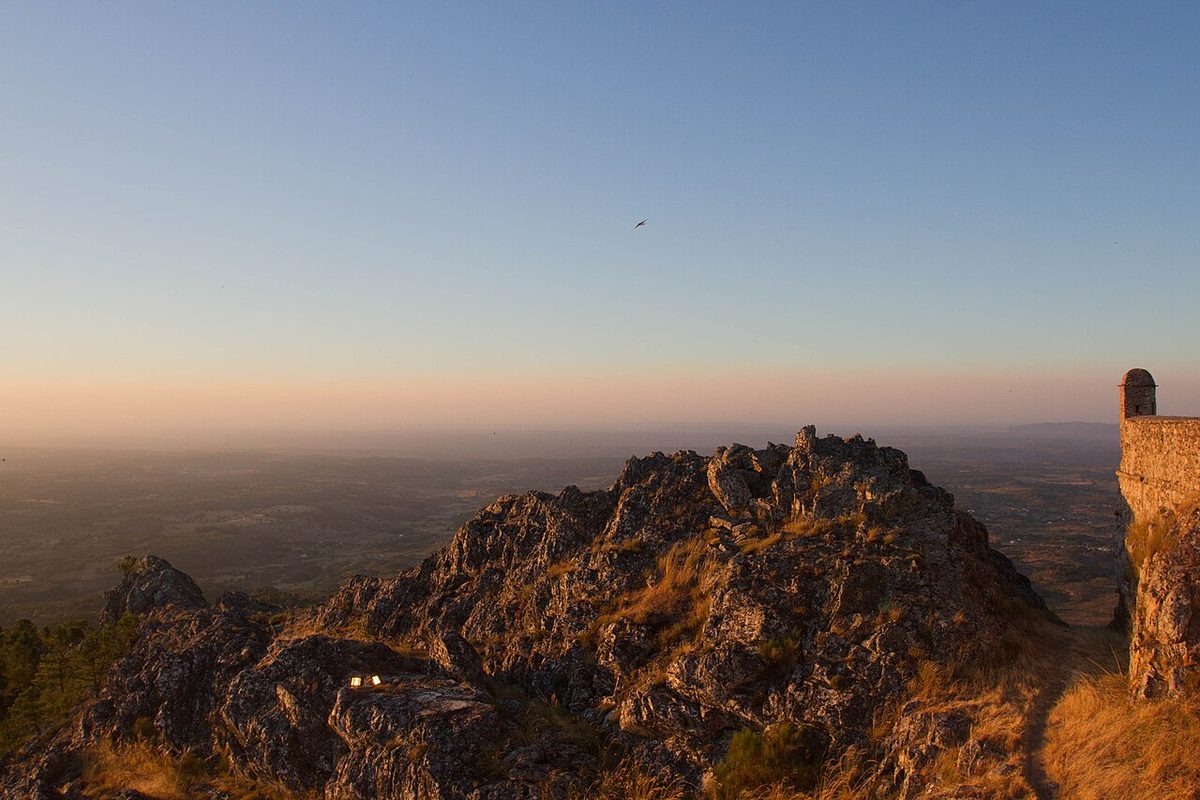
On a granite crag at around 860 metres in the Serra de São Mamede, Marvão is the most dramatic village in Portugal: a complete ring of walls on a clifftop, a castle at the highest point, and a view across the Alentejo into Spain. From the castle keep, the whole of the Alto Alentejo seems to lie below you. The village has a couple of hotels and guesthouses and very few cars. Verdict: the best sunset in the Alentejo. If the drive allows, sleep here.
Castelo de Vide
Ten minutes away, Castelo de Vide is a gentle, green spa town of whitewashed lanes with one of the best-preserved medieval Jewish quarters in Portugal, where a small house believed to have been a synagogue is now a museum. The Fonte da Vila, a Renaissance fountain at the bottom of the Jewish quarter, is the spring the town is named for. Verdict: a lovely half-day, and a quieter base than Marvão.
Elvas
Elvas, 15 km from the Spanish city of Badajoz, is ringed by the largest bulwarked dry-ditch fortifications in the world: seventeenth-century star-shaped walls with two outlying forts, now a UNESCO World Heritage Site. The long Amoreira aqueduct brings water into town across the plain. Elvas is also famous for its sugared plums, which appear in sericaia, the Alentejo’s signature pudding. Verdict: impressive, and an easy stop between the marble towns and Marvão. The A6 motorway from Lisbon to Elvas is tolled.
The Baixo Alentejo: Beja, Mértola and the Guadiana
South of Évora the land flattens into the Baixo Alentejo: the hottest, emptiest part of Portugal, with wheat fields and olive groves to the horizon, and a few towns worth crossing it for.
Beja
The capital of the south has a tall castle keep, a Roman past and the Convento de Nossa Senhora da Conceição, now the regional museum, with a cloister of azulejos. The convent was home to Mariana Alcoforado, the nun traditionally credited with the Letters of a Portuguese Nun, one of the most famous love stories in European literature. Verdict: a pleasant stop for lunch and the museum, not usually a place to stay.
Mértola
The best town in the south. Mértola climbs a hill above the Guadiana river, crowned by a castle, with a whitewashed church that was once a mosque; its horseshoe arches and prayer niche still survive. The town calls itself a “museum town”, with small museum sites across the centre covering its Roman, Islamic and Christian layers. Every two years in May it holds an Islamic festival that fills the streets with a souk. The river below was navigable by sea-going boats in Roman times, when Mértola was a major port for the minerals of the interior. Verdict: stay a night, and see the river and the castle at sunset.
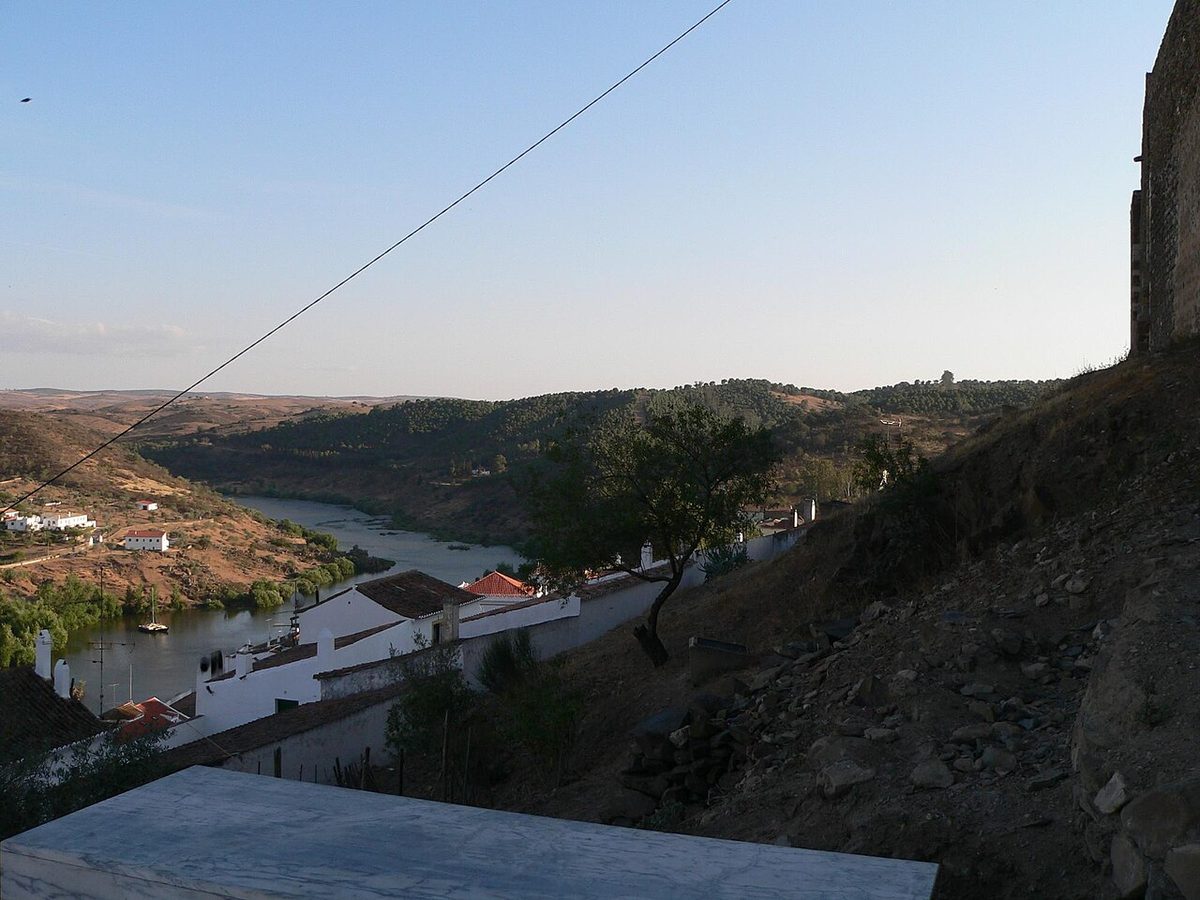
Around Mértola: the Guadiana valley
The town sits inside the Vale do Guadiana Natural Park. A short drive north, the Pulo do Lobo is a narrow gorge where the whole river squeezes through rocks and drops in a waterfall. To the east, the abandoned copper mine at Mina de São Domingos is a strange, rust-coloured industrial landscape, with a reservoir beside it that’s used as a river beach in summer. Serpa and Moura, to the north, are quiet whitewashed towns, and Serpa’s soft sheep’s cheese is one of Portugal’s best. Verdict: a slow, empty, rewarding corner. Avoid it in the heat of July and August.
The Alentejo coast
The Alentejo’s Atlantic coast is one of the least developed in western Europe: long beaches backed by dunes and pine forest in the north, then cliffs, coves and fishing harbours in the south, most of it protected as part of the Southwest Alentejo and Vicentine Coast Natural Park. It’s where Portuguese families from Lisbon go in summer, and it feels nothing like the Algarve, just to the south.
Comporta and Tróia
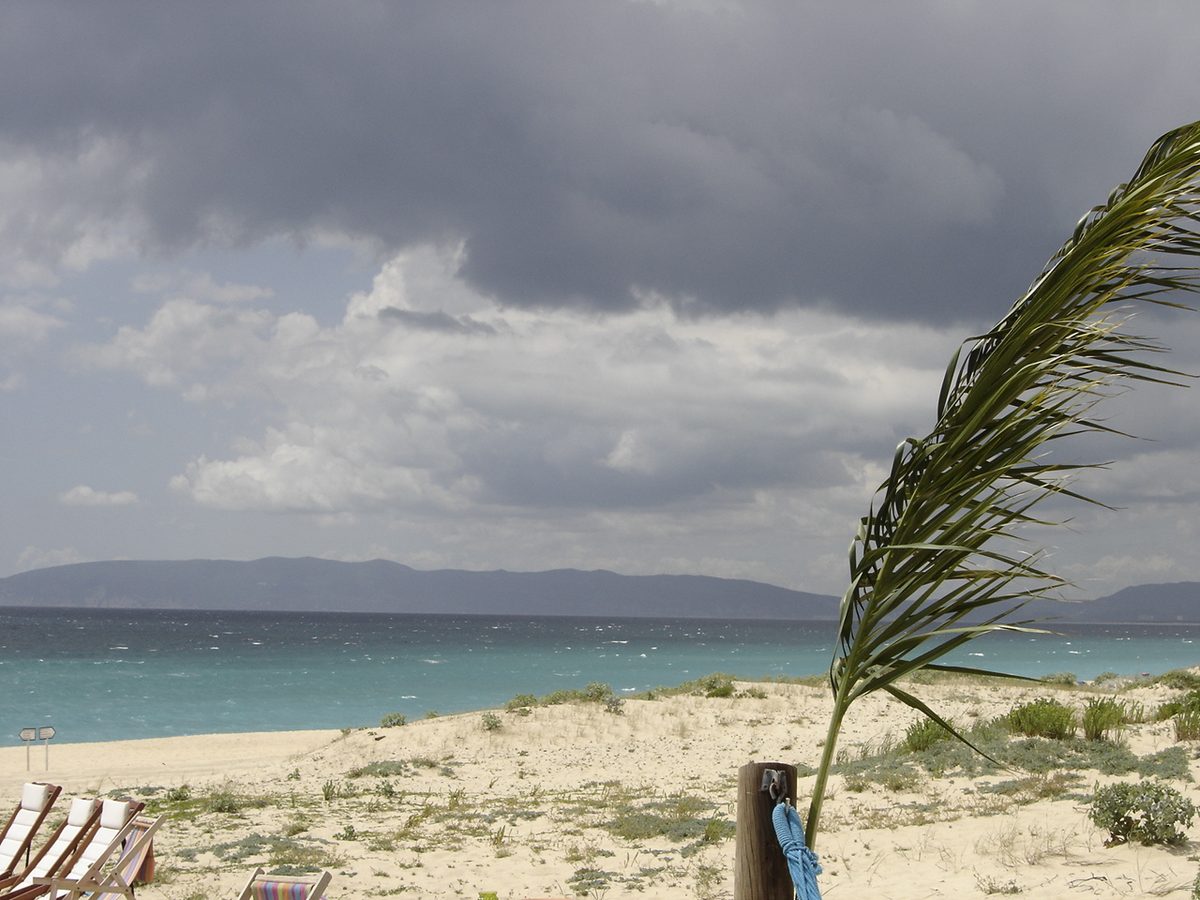
The car ferry from Setúbal crosses the Sado estuary to the Tróia peninsula in about twenty minutes. The peninsula has a resort at its tip and the remains of a large Roman fish-salting factory along its inner shore. South of it, Comporta is a scatter of small villages among rice paddies, storks’ nests and pine forest behind one of the longest beaches in Portugal. Over the last decade it has become a byword for barefoot luxury, with designer hotels and beach restaurants to match, and prices well above the rest of the Alentejo. The beach, though, is still vast enough to feel empty a few hundred metres from any car park. Verdict: lovely, especially out of season. Go for the beach and the rice fields, not for the scene.
Sines, Porto Covo and the Ilha do Pessegueiro
Sines is an industrial port with a pretty old centre and a castle; Vasco da Gama was born here. Just south, Porto Covo is a tiny whitewashed village above small, sheltered coves, and offshore the Ilha do Pessegueiro has the ruins of a fort facing another on the mainland. Verdict: Porto Covo is a charming place for a night; Sines is a lunch stop at most.
Vila Nova de Milfontes
The best base on the coast. Milfontes sits where the Mira river meets the sea, with calm, warm river beaches that are perfect for children, ocean beaches for everyone else, a small fort at the river mouth and a lively summer evening scene. The Mira estuary is good for kayaking and paddleboarding. Verdict: two nights, and the obvious place to walk a section of the Fishermen’s Trail.
Almograve, Zambujeira do Mar and the south-west
South of Milfontes the coast becomes all cliffs and coves. Almograve has a big beach and dunes; Cavaleiro has a lighthouse on the clifftop and a fishing harbour below; Zambujeira do Mar is a whitewashed village perched on a cliff above a sandy cove, busy in summer and very quiet otherwise; and Odeceixe, where the Seixe river marks the border with the Algarve, has a beach where river and ocean meet. Verdict: the wildest stretch of coast in mainland Portugal. For surfers and walkers, it’s the best part of the Alentejo.
The Rota Vicentina
The coast is threaded by the Rota Vicentina, a network of waymarked walking routes. The Fishermen’s Trail follows the paths local fishermen used to reach the rocks, running along the clifftops for more than 200 km in stages from Porto Covo to the Algarve, often on soft sand, which is harder going than it sounds. The Historical Way runs inland through villages and cork forest. You can walk a single section as a day hike, or the whole route over a couple of weeks, with luggage transfers available between villages. Verdict: even one stage, say Almograve to Zambujeira, is one of the best coastal walks in Europe. Start early, as there’s no shade.
Alentejo wine
The Alentejo is one of Portugal’s biggest and most popular wine regions, known above all for ripe, generous reds and increasingly good whites. The Alentejo DOC has eight sub-regions: Borba, Évora, Granja-Amareleja, Moura, Portalegre, Redondo, Reguengos and Vidigueira. Each has its own soils and style, from the cooler, higher vineyards of Portalegre in the north to the hot plains of the south. Grapes to look for include Aragonez (Spain’s Tempranillo), Trincadeira, Alicante Bouschet and Touriga Nacional for reds, and Antão Vaz and Arinto for whites.
The Alentejo’s most distinctive wine tradition is vinho de talha: wine fermented and aged in huge clay amphorae, a technique brought by the Romans and never abandoned. It’s centred on Vila de Frades near Vidigueira, where taverns still serve it straight from the pot in the months after the harvest. Today it has its own official designation.
Many of the big estates, the herdades, are open for tours and tastings, and the regional wine route (the Rota dos Vinhos do Alentejo) lists them by sub-region. Book ahead, especially at weekends, and don’t try to fit more than two or three into a day if you’re the driver. Wine at an Alentejo restaurant is also remarkably good value: a decent bottle of local red on a restaurant list costs a fraction of the same wine in Lisbon.
Estates worth the drive
There are hundreds of producers, and these are a few that make a visit worthwhile for the setting, the story or the wine. I haven’t listed tour prices, because they change by season and by tasting, so check each estate’s own site and book ahead.
- Herdade do Esporão, Reguengos de Monsaraz. One of the region’s largest and best-known producers, on a huge estate with a medieval tower, olive groves and a restaurant with a serious reputation. It sits on the road between Évora and Monsaraz, which makes it the obvious lunch stop on that drive.
- Cartuxa, Évora. Run by the Eugénio de Almeida Foundation on the edge of the city, and famous for Pera-Manca, one of Portugal’s most celebrated and expensive reds. Tours visit the old cellars of a former Jesuit retreat house, and the foundation also runs a wine shop in town. It’s the easiest serious estate to reach without a long drive.
- Adega Mayor, Campo Maior. A winery near Elvas designed by the Pritzker Prize-winning architect Álvaro Siza Vieira, for the family behind Delta, Portugal’s biggest coffee brand. Campo Maior also has a museum devoted to coffee, so the town makes an unexpectedly good half-day.
- Herdade do Rocim, Vidigueira. A modern estate known for its talha wines, and a good way into the amphora tradition, together with the taverns of nearby Vila de Frades.
- The cooperatives. Borba, Redondo, Reguengos and Vidigueira all have long-established wine cooperatives. Their shops sell good, honest bottles direct at very low prices, and they’re the best place to buy a case.
How to visit. Book tours and tastings in advance, especially at weekends and during the harvest in September and October, when estates are busiest. Most charge for tours and tastings. Plan one estate in the morning and one after lunch, not four in a day, and agree on a driver before you start: Portugal’s alcohol limit is 0.5 g/L, and the police do breathalyse on country roads. Spitting at a tasting is normal and nobody will think less of you. If you’re flying home, ask about shipping: many estates will send wine abroad, which saves carrying bottles in your luggage. And eat at an estate restaurant at least once, because a long Alentejo lunch with a bottle from the vines outside the window is one of the best things you can do in Portugal.
What to eat in the Alentejo
Alentejo cooking is peasant food made with extraordinary ingredients: bread, olive oil, pork, lamb, herbs and whatever the land provides. It’s rich, hearty and some of the best in Portugal.
Açorda alentejana and migas
Açorda is a soup of bread, garlic, coriander and olive oil, poured over a poached egg. It sounds like nothing and tastes wonderful. Migas are fried breadcrumbs cooked with garlic and olive oil, usually served with pork. Both use the dense, long-keeping Alentejo bread.
Porco preto
The black Iberian pig, fattened on acorns under the cork oaks, gives the region’s best meat: secretos and plumas (prized cuts), grilled simply, and cured ham. Carne de porco à alentejana, pork with clams, is the dish everyone knows, even if the Algarve has a fair claim to it too.
Lamb, cheese and soups
Ensopado de borrego is a lamb stew served over bread; sopa de cação is a dogfish soup with coriander and vinegar. The cheeses are superb: soft, spoonable Serpa and Évora sheep’s cheeses, and the stronger Nisa. Olives and olive oil are everywhere.
Sweets
Sericaia, an eggy cinnamon pudding baked in a clay dish and served with Elvas plums, is the regional dessert. The convents that once filled the region left a long list of egg-and-sugar sweets, and pão de rala from Évora is one of the best.
How to eat: lunch is the main meal, from about 13:00 until well into the afternoon. The prato do dia, the daily lunch menu with a drink, costs roughly €9–15 and is where Alentejo cooking is at its best. Evening service in small towns can start late and finish early, so don’t arrive at 22:00 expecting a kitchen. For the rest of Portugal’s food, see our Portuguese food guide.
How long to spend, and three ways to plan it
Three days: Évora and Monsaraz
| Day | Plan |
|---|---|
| 1 | Lisbon to Évora; the Roman temple, cathedral roof and Chapel of Bones; dinner in the old town |
| 2 | Almendres cromlech early; a wine estate; drive to Monsaraz for sunset and the stars |
| 3 | The Alqueva lake in the morning; back to Lisbon, or on to the Algarve |
Five days: the interior
| Day | Plan |
|---|---|
| 1–2 | Évora, with the Almendres cromlech and a wine estate |
| 3 | Monsaraz and the Alqueva; stay the night |
| 4 | Estremoz, Vila Viçosa and Elvas; on to Marvão for sunset |
| 5 | Marvão and Castelo de Vide; back to Lisbon (about 2h30) |
Seven to ten days: interior and coast
| Days | Plan |
|---|---|
| 1–2 | Évora and Almendres |
| 3 | Monsaraz and the Alqueva |
| 4 | Mértola via Beja, or Marvão via the marble towns |
| 5–6 | Across to the coast: Vila Nova de Milfontes, with a Fishermen’s Trail stage |
| 7 | Zambujeira do Mar and Odeceixe; on into the Algarve, or north to Comporta |
| 8–10 | Comporta and Tróia, then the ferry to Setúbal and Lisbon; or extend into the Algarve |
The Alentejo also slots naturally into a longer drive. Our Portugal road trip guide has an Alentejo interior loop and a Lisbon-to-Algarve route down this coast, with driving times and tolls for each leg.
Where to stay in the Alentejo
| Base | Best for | Downside |
|---|---|---|
| Évora | History, restaurants, day trips in every direction | Hot in summer; parking inside the walls is difficult |
| Monsaraz or around the Alqueva | The village at night, stargazing, the lake | Very quiet; few restaurants |
| Marvão or Castelo de Vide | Views, walking, cooler summer nights | Far from the coast and the south |
| Mértola | The south, the Guadiana, total quiet | Remote; very hot in July and August |
| Vila Nova de Milfontes | Beaches, walking, family holidays | Busy and pricier in August |
| Comporta | Beaches and style | The most expensive place in the Alentejo |
The most characteristic places to stay are the montes, the whitewashed farmhouses that stand on every estate, many converted into rural guesthouses with a pool, a few rooms and a view of nothing but oaks. They make a perfect base for two or three nights if you’re happy to drive to dinner. The state-founded pousadas are at their best here: the Pousada in the Lóios convent in Évora, and the castles at Estremoz and Alvito, are among the most memorable in the country. Book the coast and the pousadas early for July and August, which is the only time the Alentejo gets properly busy.
Getting there and getting around
By train and bus. Évora is about 1h30 from Lisbon by Intercidades train from Oriente or by Rede Expressos bus from Sete Rios, and Beja also has trains. That’s enough for an Évora stay, but beyond it public transport thins out fast: buses to the villages are infrequent and timed for schoolchildren, and some places, such as the Almendres cromlech, Monsaraz at night and the coast between villages, are realistically car-only.
By car. The right answer for everything except a pure Évora trip. The A2 (tolled) runs south from Lisbon towards the Algarve through the western Alentejo, and the A6 (tolled) runs east to Évora and Elvas. Beyond the motorways the national roads are straight, well surfaced and almost empty. Fill up when you can in the south, where petrol stations are far apart, and keep water in the car in summer. For hire-car advice, tolls and driving rules, see our guide to getting around Portugal.
From the Algarve. Mértola is about an hour from the eastern Algarve, and the Alentejo coast runs straight on from the Algarve’s west coast. It’s easy to combine the two in one trip; see our Algarve guide for the southern half.
When to go: heat, spring flowers and the harvest
| Season | What it’s like | Good for |
|---|---|---|
| March–May | Green, full of wild flowers, 20–25 °C | The best time for the interior: walking, driving, towns |
| June | Warm, long evenings | Everything; the coast starts to warm up |
| July–August | Évora averages ~33 °C, with heatwaves above 40 °C inland | The coast only; the interior is punishing at midday |
| September–October | Hot then warm, golden fields, the grape harvest | Wine, towns, a warm sea on the coast |
| November–February | Cool, often clear, cold nights (~4.5 °C January lows in Évora) | Stargazing, empty towns, log fires, the talha wine season |
Spring is my favourite season here: the fields are green and full of flowers, the storks are nesting on every chimney and pylon, and it’s warm without being oppressive. September and October are a close second for the harvest and the light. High summer is for the coast, not the plains. Winter is underrated: clear, crisp days, the best stargazing and almost no other visitors, though some coastal businesses close. For the whole country month by month, see our best time to visit Portugal guide.
Towns on the road from Lisbon: Montemor-o-Novo, Arraiolos and Évoramonte
Most visitors drive straight down the A6 from Lisbon to Évora, and miss three good stops within half an hour of the motorway.
Montemor-o-Novo
The first real Alentejo town after the Tagus valley, about an hour from Lisbon, with the ruins of a large hilltop castle above a working market town. It’s the birthplace of São João de Deus, Saint John of God, founder of the Hospitaller order that runs hospitals around the world. Verdict: a leg-stretch and a first coffee in the Alentejo, and a good view from the castle hill.
Arraiolos
A small whitewashed town with an unusual round castle, whose walls form an almost perfect circle on the hilltop, and a centuries-old tradition of hand-embroidered wool carpets. The Arraiolos rugs, stitched in wool on linen or jute in dense floral and geometric patterns, are still made in workshops around the town, and an interpretation centre explains the craft. A genuine handmade rug is expensive, because it takes weeks of stitching, so be wary of cheap imitations. Verdict: an hour for the castle and the workshops, on the way to Évora or Estremoz.
Évoramonte
A tiny walled village on a ridge between Évora and Estremoz, crowned by a squat castle keep decorated with carved stone knots. It was here, in 1834, that the agreement ending Portugal’s civil war between liberals and absolutists was signed. The view from the walls takes in half the central Alentejo. Verdict: a short, rewarding detour between Évora and the marble towns.
Crafts worth bringing home
- Estremoz clay figures. Brightly painted figurines of saints, farmworkers and village scenes, made in Estremoz for centuries and now on UNESCO’s intangible heritage list. Buy them at the Saturday market or from the town’s workshops.
- Pottery from São Pedro do Corval. The village below Monsaraz is one of the largest pottery centres in Portugal, with dozens of workshops selling painted plates, bowls and serving dishes.
- Arraiolos rugs. The real thing is a serious purchase; a small one is a lovely souvenir.
- Nisa pottery. Red clay pieces inlaid with small white stones in intricate patterns, from the northern Alentejo.
- Cork. Bags, hats, wallets and homeware made from the region’s cork, from shops across the Alentejo. It’s light, durable and it packs well.
- Food and wine. Olive oil, Serpa cheese, black-pork sausages and a few bottles of Alentejo red. The cheese and sausages travel well if vacuum-packed; check your own country’s import rules for meat and dairy.
The Alentejo with children
The Alentejo is an easy place to travel with children: quiet roads, space, castles to climb, and beaches with calm water. It’s also a good antidote to the Algarve’s theme parks.
- Beaches. The river beaches at Vila Nova de Milfontes, on the calm, warm Mira estuary, are ideal for small children. On the Alqueva, the official river beaches at Monsaraz, Mourão and Amieira have lifeguards in summer and no waves at all.
- Castles. Monsaraz, Marvão, Mértola and Évoramonte all have walls and keeps to climb. Hold hands, because the walls rarely have railings.
- The standing stones. The Almendres cromlech is an adventure for children, who can run between the stones among the oaks.
- Badoca Safari Park, near Vila Nova de Santo André on the coast, has African animals in large enclosures, a safari ride and bird shows. It makes a good day out.
- The Lousal mine, an old mining village in the Serra de Grândola with a hands-on science centre in the former mine buildings.
- A warning about Évora. The Chapel of Bones is fascinating for older children but can upset young ones. It’s small enough to judge from the door.
The practical advice is the same as for adults, only more so: avoid the interior in the July and August heat, keep the midday hours for the pool or a long lunch, and choose a monte or hotel with a pool.
Festivals and events through the year
| When | What | Where |
|---|---|---|
| Easter | Holy Week and Easter celebrations, including Castelo de Vide’s famous Easter festivities | Castelo de Vide and across the region |
| May, in odd-numbered years | The Islamic Festival: a souk, music and food in the old town | Mértola |
| Late June | The Feira de São João, Évora’s big summer fair | Évora |
| Late July | Festival Músicas do Mundo, a world-music festival in the castle and on the beach | Sines and Porto Covo |
| August | MEO Sudoeste, one of Portugal’s biggest music festivals | Zambujeira do Mar |
| September–October | The grape harvest, with estates offering harvest experiences | Wine estates across the region |
| From St Martin’s Day, 11 November | The new vinho de talha is traditionally opened from the clay pots | Vila de Frades and Vidigueira |
| Every Saturday | The big weekly market | Estremoz |
Two of these change the character of a place. The MEO Sudoeste festival fills Zambujeira do Mar, normally a sleepy clifftop village, with tens of thousands of young festival-goers for a week in August, and accommodation for miles around books up months ahead. If you want Zambujeira quiet, avoid that week. Mértola’s Islamic Festival transforms a small town in a lovely way, but book well ahead for those days too. Check the exact dates with the organisers each year.
Driving the Alentejo: practical notes
- Distances are bigger than they look. Évora to Mértola is about two hours; Marvão to Milfontes is about three. Plan one long drive a day at most.
- The roads are easy. Straight, well surfaced and empty, with the occasional tractor. The motorways are tolled; the national roads are free and often almost as fast.
- Storks. White storks nest on church towers, chimneys and electricity pylons all over the Alentejo, many of them now staying all year. Their huge nests are one of the region’s sights. Don’t stop on the hard shoulder to photograph them.
- Hunting. Much of the countryside is private hunting reserve, signed zona de caça. In the hunting season, roughly autumn and winter, stay on marked paths and tracks.
- Gravel tracks. Many montes and wine estates are reached by unpaved farm tracks. They’re fine for a normal car driven slowly, but check your hire agreement, since some exclude damage off tarmac.
- Night driving. Unlit roads, animals and the occasional unlit farm vehicle. Arrive before dark if you can.
- Sundays and afternoons. Shops and many cafés in small towns close in the afternoon and on Sundays, and some restaurants close one day a week. Fuel stations are sparse in the south, so fill up in the bigger towns.
- Heat. In summer, park in the shade, carry water and never leave anyone, or anything that melts, in the car.
What the Alentejo costs (checked September 2026)
| Item | Typical cost | Notes |
|---|---|---|
| Espresso at the counter | €0.80–1.20 | Portugal-wide; often at the lower end here |
| Prato do dia (lunch menu with a drink) | €9–15 | The best-value meal in the region |
| Mid-range dinner for two, with wine | €40–60 | Less in villages, more in Comporta |
| Capela dos Ossos, Évora | €6 adult | €4 concessions, €15 family, under-12s free |
| Almendres cromlech, Monsaraz, Marvão’s streets | Free | Some castles and museums charge small fees |
| Hire car, mid-size, one week | €180–300 | Mid-season, before fuel and tolls |
| Fuel | ~€2 a litre | Early September 2026; trackers vary by a few cents |
| Budget day, per person | €70–90 | Excluding the car |
| Comfortable day for two | €150–200 | Outside August; more on the coast in summer |
Outside Comporta, the Alentejo is one of the best-value regions in Portugal for food, wine and characterful accommodation. The biggest extra is the car, which you’ll need. For a full trip budget, see our guide to what a Portugal trip costs.
The Alentejo’s story, briefly
You’ll enjoy the region more knowing a little of how it got its shape.
Stones and Romans. People were raising megaliths here thousands of years before the pyramids: the oldest stones at Almendres may be around 7,000 years old, and the region is scattered with dolmens and menhirs. The Romans built farming estates and towns: Ebora (Évora), Pax Julia (Beja) and Myrtilis (Mértola), a river port that shipped out the minerals of the interior. The temple in Évora and the villa ruins across the region date from that time.
The Islamic centuries. From the early eighth century the Alentejo was part of al-Andalus for about five hundred years. Mértola was briefly the capital of its own small kingdom, and the Moorish period left its mark on place names, irrigation, whitewashed architecture and food. The Christian reconquest came in the twelfth and thirteenth centuries. Évora fell in 1165 to Geraldo Sem Pavor, “Gerald the Fearless”, who gives his name to the main square, and Mértola in 1238.
A frontier. For centuries afterwards the Alentejo was Portugal’s front line against Castile, which is why every hilltop along the border carries a castle: Marvão, Monsaraz, Elvas, Mourão, Serpa. When Portugal broke away from Spanish rule in 1640, the Duke of Bragança, from the palace at Vila Viçosa, became King João IV, and the long war that followed was fought largely across these plains. The great star fortifications at Elvas are its monument.
Big estates and the revolution. Much of the land was held in huge estates, the latifúndios, worked by landless labourers for very low wages. It’s the world that cante alentejano comes from, and it made the Alentejo the heartland of the Portuguese left. After the Carnation Revolution of 1974, labourers occupied many estates in the agrarian reform of 1975, before most of the land was returned to its owners in later years. Emigration and depopulation followed, and many villages have lost most of their young people.
Water and olives. The Alqueva dam, completed in the early 2000s, brought irrigation to a large part of the region and changed the landscape: vast new olive groves and vineyards now line the roads where there was once only wheat and cork. Tourism, wine and food have followed, but for the most part the Alentejo remains what it has always been: big, quiet and slow.
What to skip, and what’s overrated
Évora as a rushed day trip. It’s the most common way to see it and the worst: three hours on a coach, an hour in the Chapel of Bones queue and back to Lisbon before the town comes alive. Stay the night.
The interior in August. At 40 °C in the shade, walking around a hill town at 15:00 is miserable and potentially dangerous. If August is your only option, spend it on the coast and visit towns only early and late.
Comporta’s scene. The beach and the rice fields are wonderful. The designer shops, the celebrity-chef beach clubs and the prices that go with them aren’t what the Alentejo is about. Enjoy the beach, and eat in a village café instead.
Monsaraz at noon. The village is tiny, the streets shadeless and the coaches all arrive at once. Early morning or evening only.
Beja as a base. It’s a pleasant town with a good museum, but Mértola, Évora and Serpa all make better places to sleep.
Walking the Fishermen’s Trail in the midday sun. No shade, soft sand and steep descents to the coves make midday stages harder than they look on the map. Start at dawn, carry plenty of water and stop at lunch.
Trying to cover the whole region in three days. The Alentejo is huge, and its pleasure is slowness. Pick two or three bases, not seven.
Alentejo or Algarve?
| Alentejo | Algarve | |
|---|---|---|
| Feel | Rural, slow, uncrowded | Resort coast, busy, very well organised |
| Beaches | Long, wild, backed by dunes and cliffs; cooler water on the west coast | Famous golden coves and sea caves; warmer, calmer sea on the south coast |
| Culture | Roman and medieval towns, megaliths, castles | Some good old towns, but the coast comes first |
| Food and wine | Among the best in Portugal, and cheap | Excellent seafood, more tourist menus |
| Summer heat | Very hot inland, pleasant on the coast | Hot but tempered by the sea |
| Best for | Road trips, food, walking, quiet | Beach holidays, families, golf, nightlife |
The honest answer is to do both. The Alentejo coast runs straight into the Algarve’s west coast, and a week split between Évora and Monsaraz and the western Algarve is one of the best trips in Portugal. For more coast, see our guide to Portugal’s best beaches, which covers the Alentejo’s beaches alongside the Algarve’s.
Frequently asked questions
Is the Alentejo worth visiting?
Yes. It’s the least touristy big region in mainland Portugal, with Évora, Monsaraz, Marvão, Mértola and a wild Atlantic coast, plus some of the country’s best food and wine. It suits travellers who like driving, eating well and slowing down.
How many days do you need in the Alentejo?
Three days covers Évora and Monsaraz, five covers the interior properly, and a week or more lets you add the coast. It’s a big region, so choose two or three bases rather than moving every night.
Do you need a car in the Alentejo?
For anything beyond Évora, yes. Trains and buses reach Évora and Beja, but the villages, megaliths, wine estates and coastal beaches are realistically car-only.
What is the Alentejo famous for?
Cork (Portugal produces about half the world’s supply), wine, black pork, olive oil, whitewashed hill towns, the Roman temple and Chapel of Bones in Évora, and the Alqueva lake, whose area was the world’s first Starlight Tourism Destination.
How much does the Chapel of Bones in Évora cost?
€6 for adults in September 2026, €4 for over-65s and under-25s, €15 for a family, and free for under-12s. It opens 09:00–18:30 from late March to late October and 09:00–17:00 in winter.
When is the best time to visit the Alentejo?
Spring (March to May) and early autumn (September and October). July and August are extremely hot inland, often above 40 °C in heatwaves, so summer is better spent on the Alentejo coast.
Is Évora worth an overnight stay?
Yes. Day-trippers see it at its busiest and leave before evening, when the old town is at its best. Two nights also gives you time for the Almendres cromlech and a wine estate.
Where is the best place to stay on the Alentejo coast?
Vila Nova de Milfontes, for its mix of river and ocean beaches, restaurants and access to the Fishermen’s Trail. Comporta is more stylish and much more expensive; Zambujeira do Mar and Porto Covo are smaller and quieter.
Can you see the stars at Alqueva?
Yes. The Alqueva area has very little light pollution and many clear nights, and it was the first place certified as a Starlight Tourism Destination. Plan around the new moon and book a guided session with a local operator for telescopes and a guide.
Is the Alentejo cheaper than the Algarve?
Generally, yes, especially for food, wine and rural accommodation. Comporta is the big exception, with prices to match the smartest parts of the Algarve.
For the Rota Vicentina in more detail, including the 13 stages of the Fishermen’s Trail, the inland Historical Way and the best seasons to walk them, see our guide to the best hikes in Portugal.
The Alentejo’s border towns are castle country. For Marvão, Monsaraz, Elvas and Évoramonte alongside the best of the rest of Portugal, including where to sleep inside castle walls, see our guide to Portugal’s castles and heritage.
For the Alentejo’s least-visited corners (Elvas’s UNESCO fortifications, the marble towns of Estremoz and Vila Viçosa, the abandoned copper mine at São Domingos and the island fort off Porto Covo), see our guide to hidden gems in Portugal, with a numbered map and a route along the Guadiana.
Where to go next
- The best things to do in Portugal, region by region
- Portugal itineraries from 5 to 14 days, with the Alentejo in them
- What a trip to Portugal costs
Photo credits
- The Cromeleque dos Almendres near Évora (featured image) — unknown photographer, Public domain, via Wikimedia Commons
- Skulls and bones in the Capela dos Ossos — tetedelart1855 from Paris, France, CC BY 2.0, via Wikimedia Commons
- The Guadiana from Mértola castle — Fotografada por Nuno Sequeira André 05/05 User:nsandre, CC BY-SA 2.0, via Wikimedia Commons
- Comporta beach in May — augustoptm, CC BY-SA 3.0, via Wikimedia Commons
Prices and opening hours checked September 2026. The Chapel of Bones prices are as listed that month; stargazing and wine-estate prices weren’t confirmed at source and are left to the operators’ own sites. Last updated: September 2026.