Most guides to the UNESCO World Heritage sites Portugal has on the list either stop at a dozen, give each one a paragraph lifted from the UNESCO citation, or both. None of them answers the practical questions: which are worth a special trip, what they cost to enter in 2026, how long each needs, and how to string them together. This guide covers all 17, on a numbered map, with what’s actually inscribed, what to see, the prices I could confirm, and a two-week driving route that takes in all 14 on the mainland.
The short answer: Portugal has 17 UNESCO World Heritage Sites, 16 cultural and one natural, the Laurisilva laurel forest of Madeira. Fourteen are on the mainland, most of them between Lisbon and Porto, and three are on the islands. You can see all 14 mainland sites in two weeks by car on the loop described below.
The UNESCO World Heritage sites Portugal has, at a glance
Numbers follow the route order used on the map and through this guide. Adult prices were checked in September and October 2026; “not confirmed” means I couldn’t verify a current price at source.
| # | Site | Inscribed | Where | Time needed | Adult entry (2026) |
|---|---|---|---|---|---|
| 1 | Jerónimos Monastery and Belém Tower | 1983 | Lisbon | Half a day | Not confirmed; both included in the Lisboa Card (from ~€31) |
| 2 | Cultural Landscape of Sintra | 1995 | Sintra | 1–2 days | Pena €20 (palace) or €45 (palace and park); Moorish Castle €12 |
| 3 | Royal Building of Mafra | 2019 | Mafra | 2–3 h | Not confirmed |
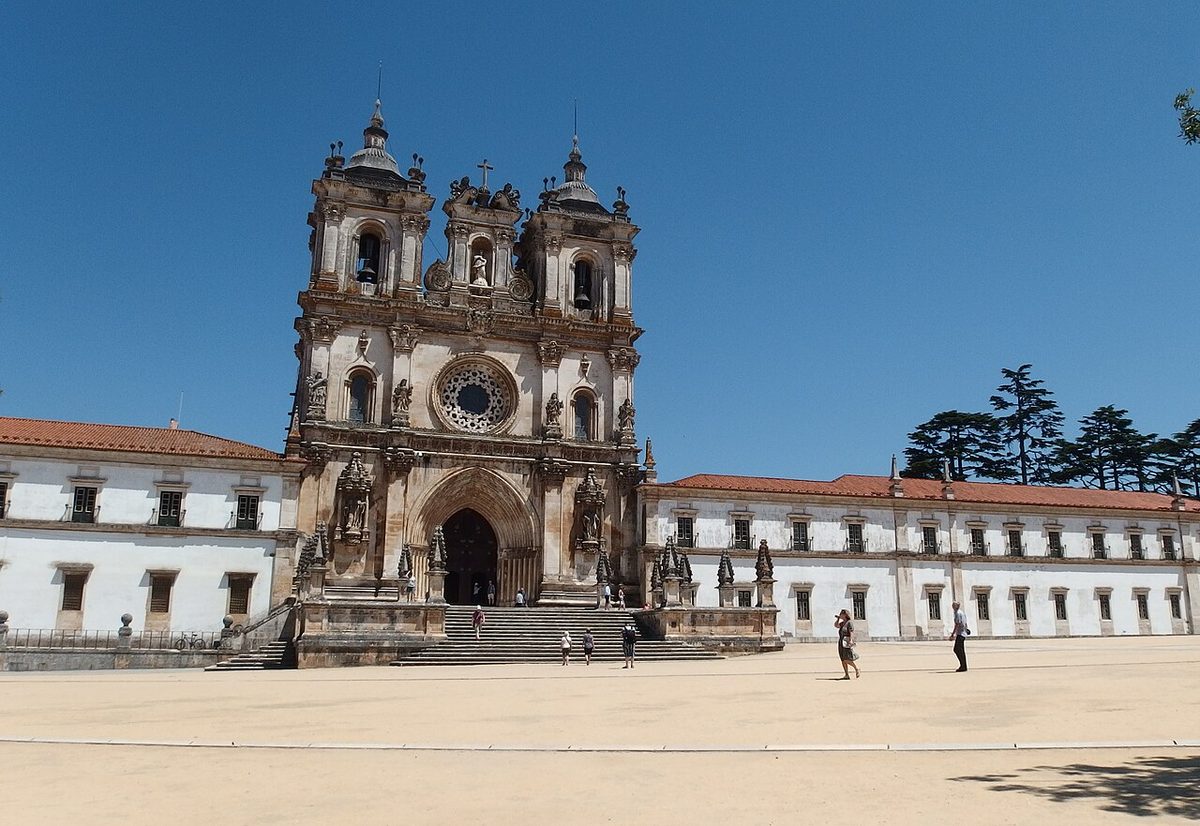
| 4 | Monastery of Alcobaça | 1989 | Alcobaça | 1–1.5 h | Church free; cloisters €15 |
| 5 | Monastery of Batalha | 1983 | Batalha | 1.5 h | From €15 |
| 6 | Convent of Christ | 1983 | Tomar | 2–3 h | €15 |
| 7 | University of Coimbra, Alta and Sofia | 2013 | Coimbra | Half a day | €25 (library and palace, timed) |
| 8 | Historic Centre of Porto, Luiz I Bridge and Serra do Pilar | 1996 | Porto | 1–2 days | Free to walk |
| 9 | Sanctuary of Bom Jesus do Monte | 2019 | Braga | 1–2 h | Free; small fare for the funicular |
| 10 | Historic Centre of Guimarães and Couros Zone | 2001 (extended 2023) | Guimarães | Half a day | Free to walk; ducal palace and castle €8 |
| 11 | Alto Douro Wine Region | 2001 | Douro Valley | 1–2 days | Free; tastings extra |
| 12 | Prehistoric Rock Art of the Côa Valley and Siega Verde | 1998 (extended 2010) | Vila Nova de Foz Côa | A day | Guided visits; not confirmed |
| 13 | Garrison Border Town of Elvas | 2012 | Elvas | Half a day | Free to walk; forts not confirmed |
| 14 | Historic Centre of Évora | 1986 | Évora | 1 day | Free to walk; Chapel of Bones €6 |
| 15 | Laurisilva of Madeira | 1999 | Madeira | 2–4 days | Trail booking €4.50 per trail |
| 16 | Central Zone of Angra do Heroísmo | 1983 | Terceira, Azores | 1 day | Free to walk |
| 17 | Landscape of the Pico Island Vineyard Culture | 2004 | Pico, Azores | 1 day | Free; tastings extra |
The map
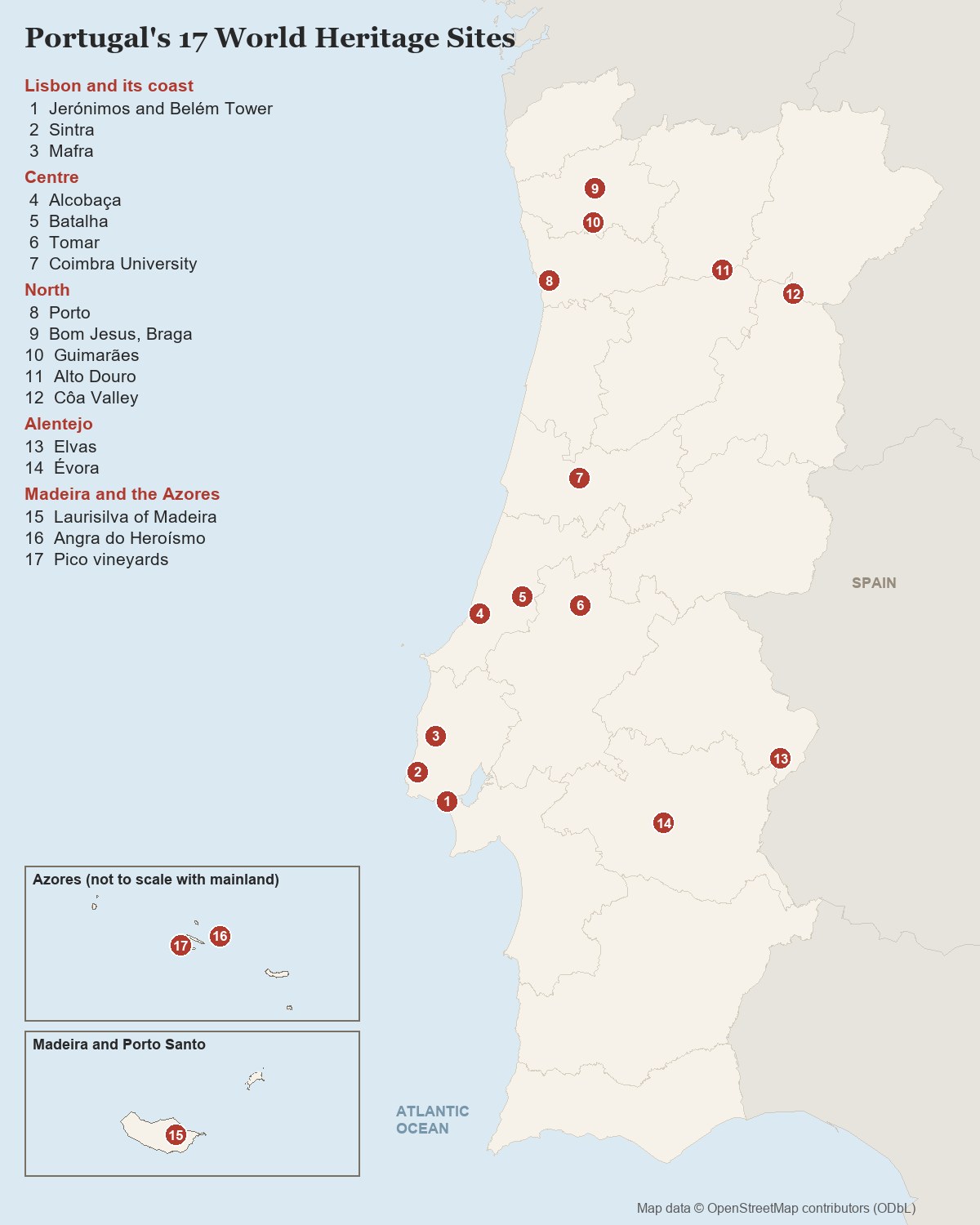
The mainland sites fall into four clusters: Lisbon and its coast (1–3), the monastery country and Coimbra between Lisbon and Porto (4–7), Porto and the north (8–12) and the Alentejo (13–14). Three quarters of them are within an hour of the A1 motorway, which is why a single loop can take them all in.
Portugal’s history in 17 sites
Taken together, the World Heritage Sites tell the story of the country almost from beginning to end, which is one of the best reasons to see several of them.
It starts in prehistory, with the engravings of the Côa Valley, made by hunters on the edge of the ice age. The Romans left their mark most visibly in Évora, whose temple still stands in the main square. The Moors built the first walls of the Castelo dos Mouros in Sintra, and when the Christian kings pushed south in the twelfth century, they rewarded the military and monastic orders that helped them: the Templars got Tomar, where they built the Convent of Christ, and the Cistercians got Alcobaça. Guimarães is where the first king, Afonso Henriques, began.
Independence from Castile was secured at Aljubarrota in 1385, and Batalha was built to celebrate it. The university was settled in Coimbra in 1537 and made the city the intellectual capital of the Portuguese-speaking world. The voyages of discovery paid for the Manueline splendour of the Jerónimos and the Belém Tower, and the fleets returning from Asia and the Americas stopped at Angra do Heroísmo in the Azores. In the seventeenth century, after Portugal broke away from Spain again in 1640, the border was fortified, most spectacularly at Elvas.
Then Brazilian gold arrived, and the eighteenth century built big: the palace-convent of Mafra, the staircase of Bom Jesus and much of baroque Porto. In 1756 the Marquis of Pombal drew the boundaries of the Alto Douro, the world’s first demarcated wine region. And two of the sites are about the land itself: the vineyards of Pico, carved out of lava by generations of islanders, and the Laurisilva of Madeira, a forest older than any building on the list.
The 17 sites, one by one
1. Jerónimos Monastery and Belém Tower, Lisbon (1983)
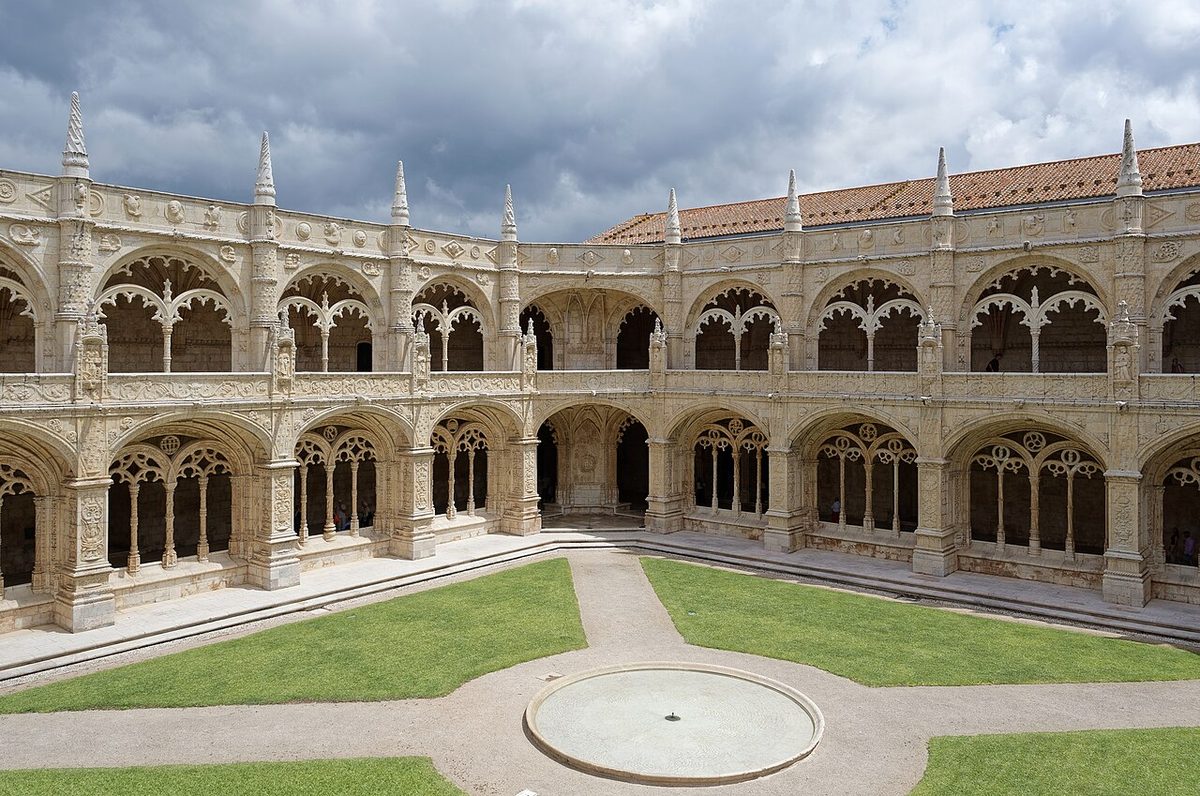
The two monuments of Belém, on the Tagus west of central Lisbon, are the finest examples of the Manueline style, Portugal’s own exuberant late Gothic, carved with ropes, sea creatures, armillary spheres and exotic plants that celebrate the voyages of discovery. King Manuel I began the Jerónimos Monastery in the early 1500s, paid for largely by a tax on the spice trade, and Vasco da Gama is buried in its church. Its two-storey cloister is one of the most beautiful in Europe. The Belém Tower, built a few years later on a rock in the river, guarded the harbour entrance and was the last thing the explorers saw as they sailed out.
Visiting: I couldn’t confirm the 2026 admission prices at source, because the official monuments site doesn’t publish them in a readable form; the Lisboa Card (from around €31) includes both, plus Lisbon’s public transport. The church at Jerónimos is free; the cloister is ticketed. Both monuments are usually closed on Mondays, and the queues are long from mid-morning, so arrive at opening. The tower’s interior is small and cramped; its exterior, from the riverside, is the point. Verdict: unmissable. Our Lisbon travel guide covers Belém and the rest of the city.
2. The Cultural Landscape of Sintra (1995)
Sintra was the first site in Europe to be inscribed as a cultural landscape: not a single monument but a whole range of forested hills above the Atlantic, where kings, aristocrats and nineteenth-century romantics built palaces, castles, convents and exotic gardens among the granite boulders. The inscription covers the hills and their buildings: the Romantic Pena Palace on the highest peak, the ninth-century walls of the Castelo dos Mouros, the National Palace in the town with its twin conical chimneys, the gardens of Monserrate, the cork-lined Convento dos Capuchos and the mystical Quinta da Regaleira.
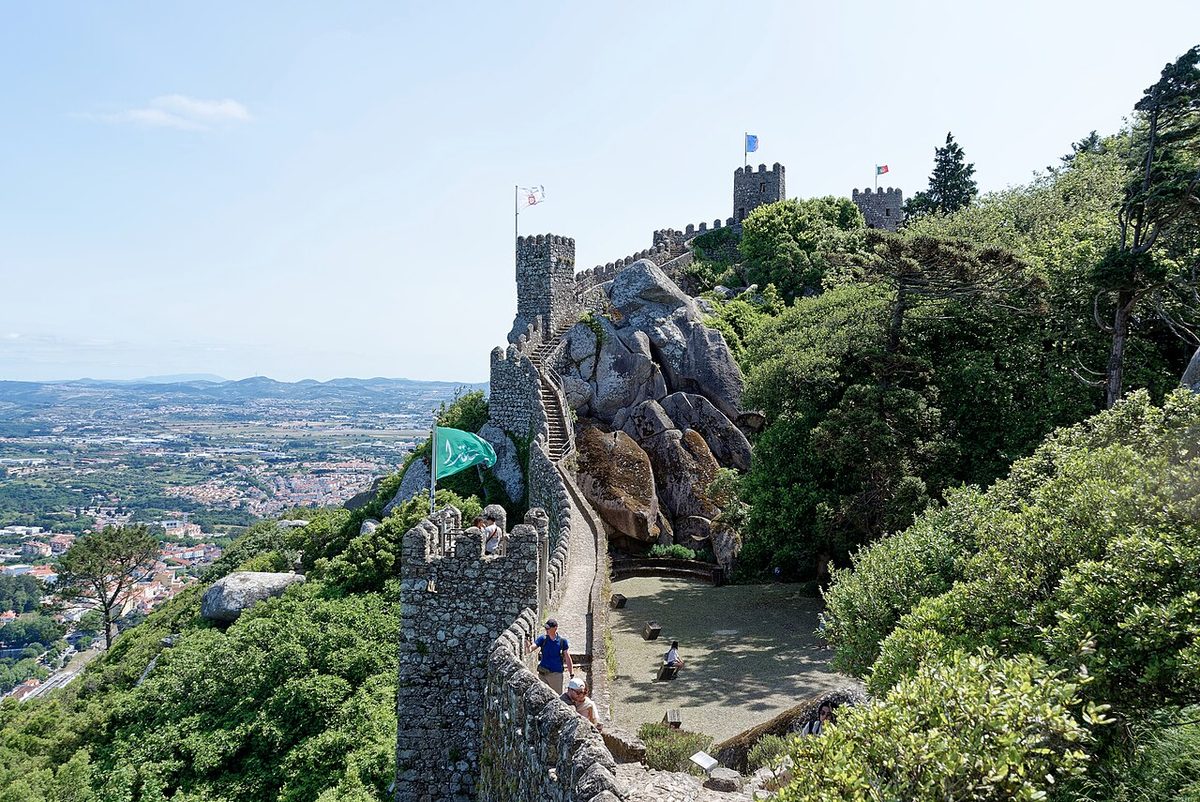
Visiting: Parques de Sintra restructured Pena’s tickets, and resellers still quote the old prices. Officially, it’s €20 for the palace (“Essential”), €45 for the palace and park (“Complete”) and €12 for the park alone; resellers still advertise €20 combined and €10 for the park. The Moorish Castle and Monserrate are €12 each, the National Palace €13 and the Capuchos €11 (adult prices, September 2026). Book Pena on the official site, where palace entry is tied to a time slot. Verdict: give it two days if you can. Our day trips from Lisbon guide has the logistics.
3. The Royal Building of Mafra (2019)
Half an hour north of Sintra, the palace-convent of Mafra is one of the largest buildings of its kind in Europe, a baroque complex of palace, basilica and Franciscan convent begun in 1717 by King João V and paid for with Brazilian gold. Its facade stretches for over 200 metres. The inscription includes the basilica, with six historic organs and two carillons in its towers, the formal Cerco garden and the walled royal hunting park, the Tapada, where deer and boar still roam. The highlight is the library: a long, light-filled rococo hall of some 36,000 books, protected, like the one at Coimbra, by a colony of bats.
Visiting: I couldn’t confirm the 2026 ticket price at source; check the palace’s own site. Allow two to three hours, more with the Tapada. Verdict: the library alone justifies the stop; the rest of the palace is vast and can feel repetitive.
4. The Monastery of Alcobaça (1989)
Alcobaça was founded in 1153 by Cistercian monks, on land given by Portugal’s first king, Afonso Henriques, and its church, the largest in Portugal, was the first truly Gothic building in the country. Inside, it’s austere, white and immensely tall, and it holds one of the great love stories of Europe: the carved tombs of King Pedro I and Inês de Castro, the lady-in-waiting he loved, who was murdered on his father’s orders and, legend says, crowned queen after her death. The tombs face each other so that, on the Day of Judgement, the lovers will see each other first. The monks’ kitchen, with a stream channelled through it, is another highlight.
Visiting: the church, with the tombs, is free; the cloisters and monastic buildings cost €15 (September 2026). Verdict: the tombs are essential; the cloisters are lovely but optional if you’re also visiting Batalha.
5. The Monastery of Batalha (1983)
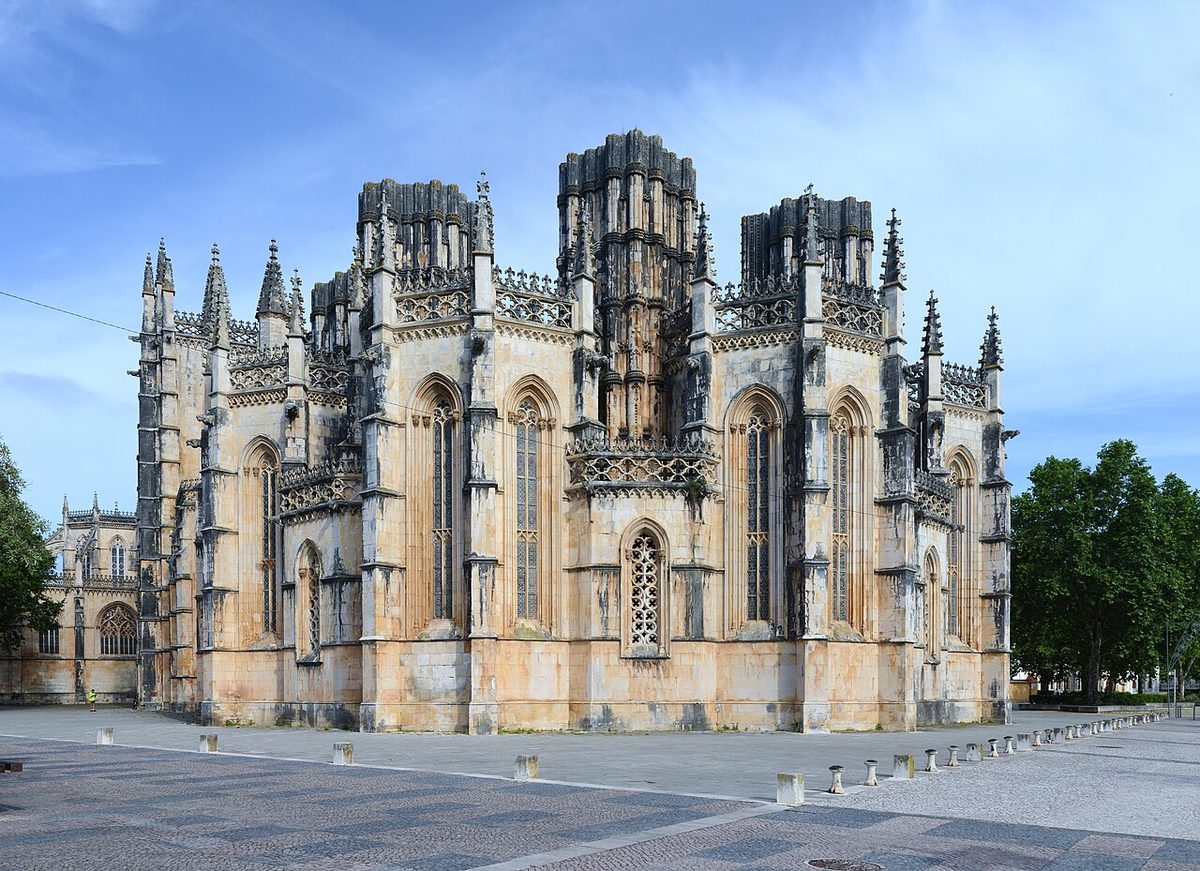
Batalha means “battle”, and the monastery was built to give thanks for the victory over Castile at Aljubarrota in 1385, which secured Portugal’s independence. It’s a masterpiece of late Gothic, with flamboyant tracery and pinnacles. The Founder’s Chapel holds the tombs of King João I and his English queen, Philippa of Lancaster, lying hand in hand, and of their son Henry the Navigator. The chapter house has a vast unsupported vault and the tomb of two unknown soldiers of the First World War, with an honour guard. Behind the church, the roofless octagon of the Unfinished Chapels is the most extraordinary space of all.
Visiting: from €15 (the price varies slightly by sales platform, September 2026). Verdict: the finest Gothic building in Portugal.
6. The Convent of Christ, Tomar (1983)
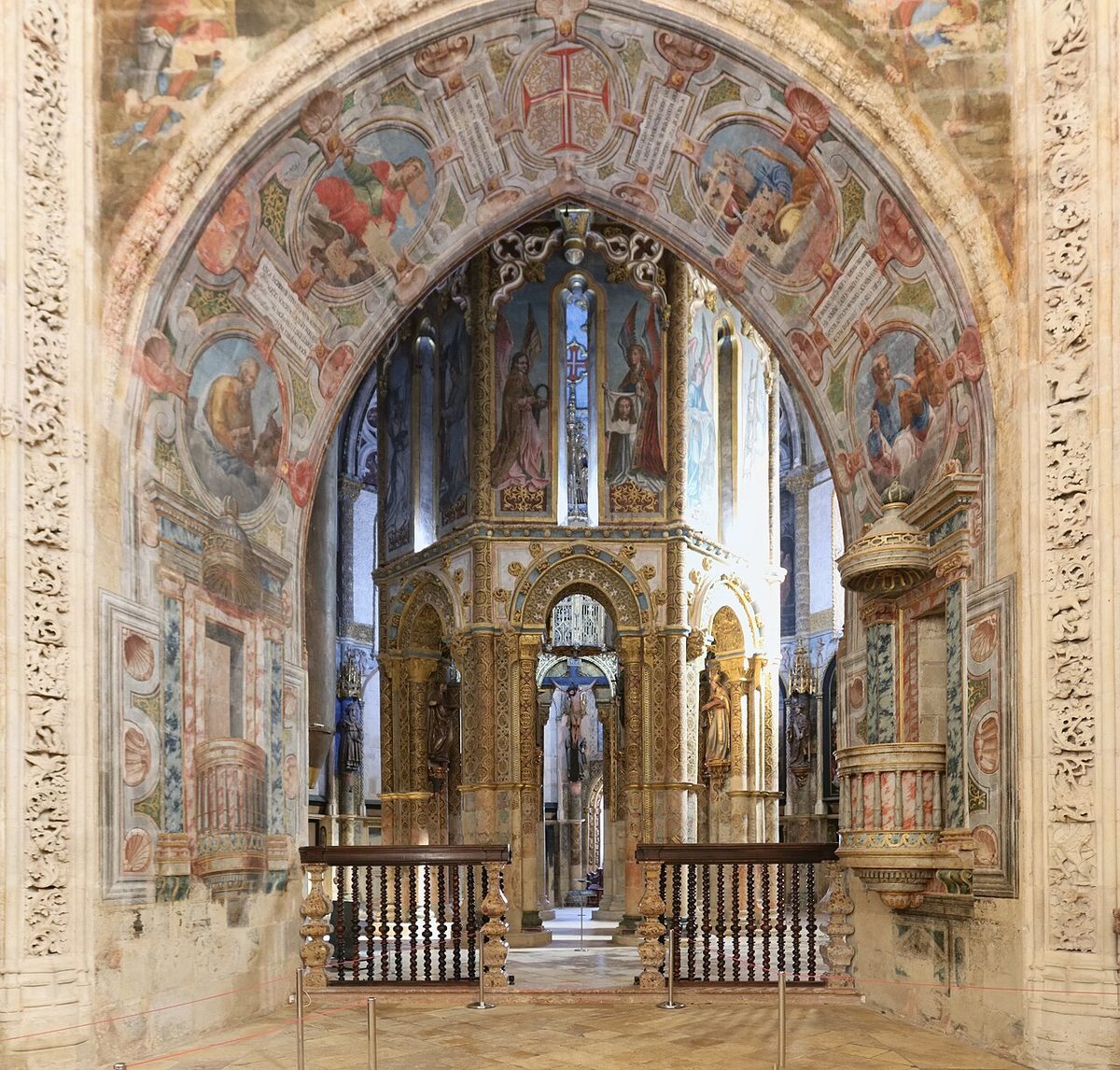
The Knights Templar built a castle on the hill above Tomar in 1160, and at its heart a round church, the Charola, modelled on the Church of the Holy Sepulchre in Jerusalem. When the Templars were suppressed in the fourteenth century, Portugal reconstituted them as the Order of Christ, whose wealth helped fund the voyages of discovery, and over the next centuries they wrapped the Charola in cloisters, dormitories and a Manueline nave whose great window, carved with ropes, coral and seaweed, is the most famous piece of carving in Portugal.
Visiting: €15, with 50% off for over-65s, 13–24s and families with a minor (September 2026). Allow two to three hours; the complex is huge. Verdict: if you see one monument between Lisbon and Porto, make it this.
7. The University of Coimbra, Alta and Sofia (2013)
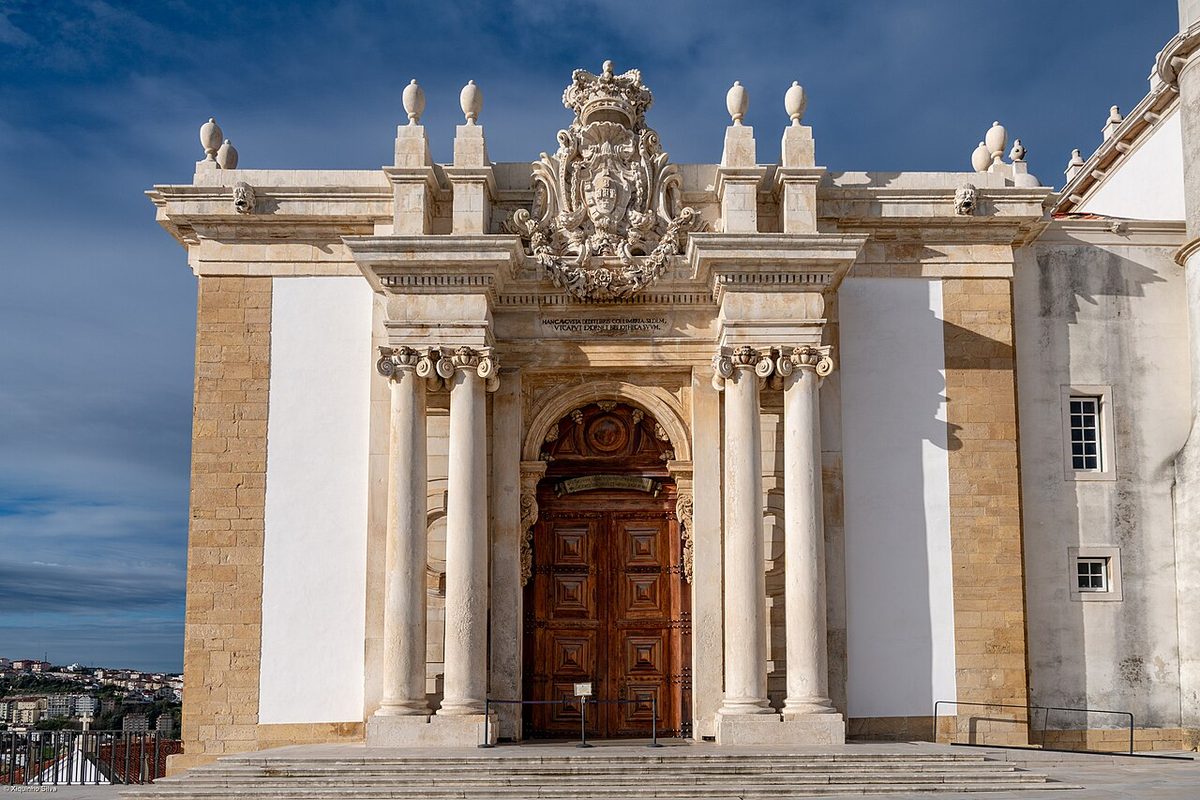
Founded in 1290 and settled for good in Coimbra in 1537, the university occupies the old royal palace on the hilltop of the Alta, the upper town, and its buildings shaped universities across the Portuguese-speaking world. The inscription covers the palace courtyard of the Paço das Escolas, its chapel and ceremonial hall, the eighteenth-century Biblioteca Joanina, a baroque library of gilded and lacquered wood guarded at night by bats, and Rua da Sofia, the street of sixteenth-century colleges in the lower town.
Visiting: €25 for the library and the Paço das Escolas, with timed entry to the library; book ahead in busy months (September 2026). Verdict: essential. Our central Portugal guide covers the rest of the city.
8. The Historic Centre of Porto, Luiz I Bridge and Monastery of Serra do Pilar (1996)
Porto’s old centre, a dense, steep tangle of granite houses, churches and stairways tumbling from the cathedral down to the Ribeira waterfront, was inscribed for its two thousand years of continuous urban life. The listing includes the double-decker iron Luiz I bridge, opened in 1886, and the round-cloistered Monastery of Serra do Pilar on the Gaia bank, whose terrace has the best view of the city.
Visiting: free to walk. Walk across the bridge’s upper deck to the monastery terrace at sunset, then down to the port lodges in Gaia, where a tour and tasting costs around €20–30. Verdict: one of the great city views in Europe. See our Porto guide.
9. The Sanctuary of Bom Jesus do Monte, Braga (2019)
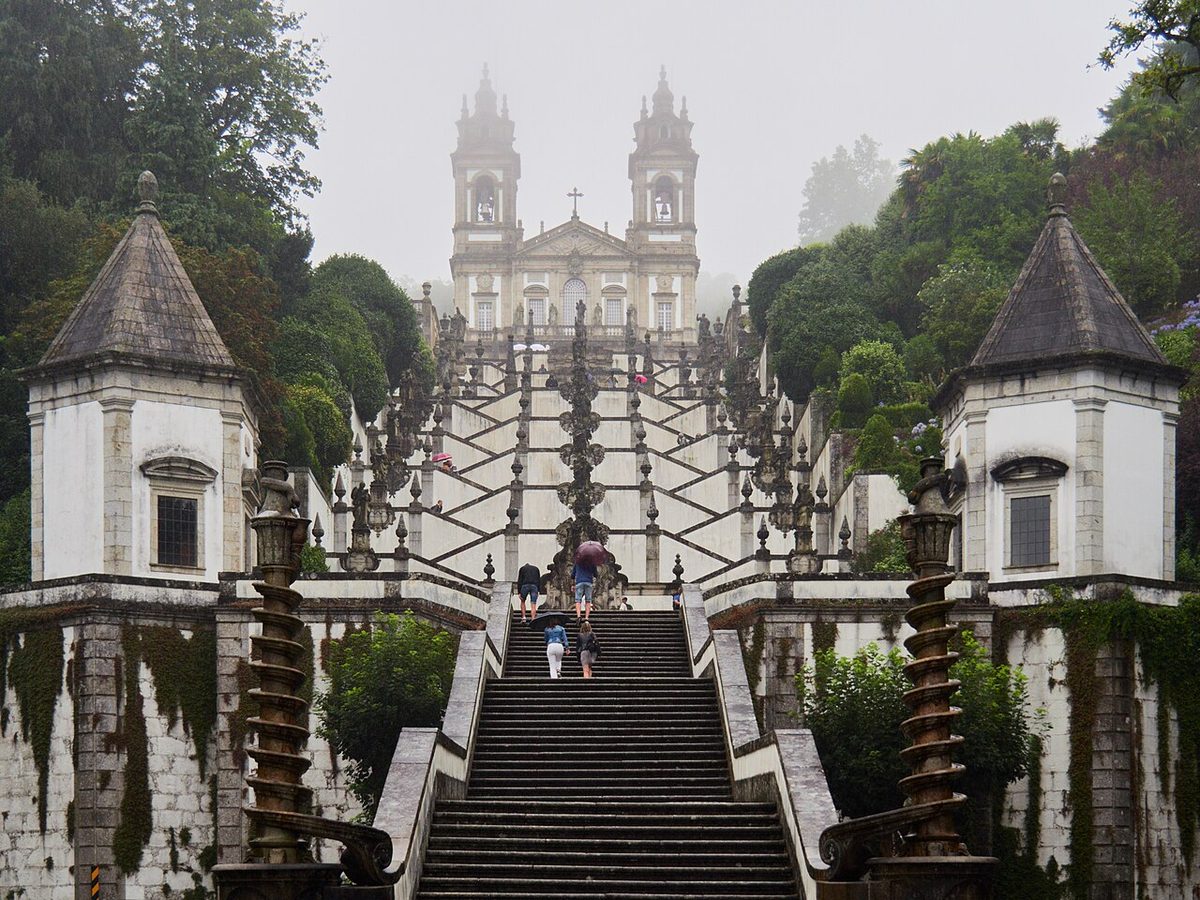
On a wooded hill above Braga, the sanctuary of Bom Jesus is reached by a monumental zigzag baroque staircase of fountains, chapels and statues, built over the eighteenth century as a “sacred mountain”, a route to Jerusalem recreated in stone. The staircases represent the five senses, the three virtues and the Way of the Cross, and pilgrims still climb them on their knees. Alongside runs a water-powered funicular from 1882, one of the oldest of its kind still working.
Visiting: free; the funicular costs a small fare. Verdict: walk up, ride down, and pair it with Guimarães.
10. The Historic Centre of Guimarães and Couros Zone (2001, extended 2023)
Guimarães is the “birthplace of Portugal”, where the first king, Afonso Henriques, was born and from where he set out to found the kingdom. Its medieval centre of granite arcades, balconied houses and squares like the Largo da Oliveira is one of the best preserved in the country, and in 2023 the inscription was extended to the Couros zone, the old tanneries quarter by the river. On the hill above stand the small tenth-century castle and the fifteenth-century Paço dos Duques de Bragança.
Visiting: free to walk; the ducal palace and castle cost €8 together (September 2026). Verdict: the best medieval town in the north. Our day trips from Porto covers both Guimarães and Braga.
11. The Alto Douro Wine Region (2001)
Upriver from Porto, the Douro winds through hills terraced from the waterline to the skyline with vineyards, the source of port wine and the oldest demarcated wine region in the world, defined in 1756. The inscription covers the landscape itself, shaped by two thousand years of winemaking, with its terraces, quintas, villages and chapels.
Visiting: free; quinta tastings and river cruises are extra. The Linha do Douro train from Porto São Bento to Pinhão takes about 2h20 and costs around €12.45, with only about two direct services a day. Verdict: stay at least a night. Our Douro Valley guide has the details.
12. The Prehistoric Rock Art of the Côa Valley and Siega Verde (1998, extended 2010)
In the 1990s, engineers building a dam on the river Côa found thousands of figures pecked and scratched into the schist rocks of the valley: horses, aurochs, ibex and deer, engraved by Palaeolithic hunters over many thousands of years, the oldest more than 20,000 years ago. A national campaign stopped the dam in 1995, and the valley became one of the most important open-air Palaeolithic art sites in the world. In 2010 the inscription was extended across the border to Siega Verde in Spain.
Visiting: the rock-art sites are visited only on guided tours, by 4×4, booked through the Côa Parque foundation; I couldn’t confirm 2026 prices at source. Start at the Côa Museum above Vila Nova de Foz Côa. Night visits to the Penascosa site, when lamplight brings out the engravings, are the most atmospheric. Verdict: the most important site in Portugal that few visitors see. Our map of Portugal off the beaten path covers the area.
13. The Garrison Border Town of Elvas and its Fortifications (2012)
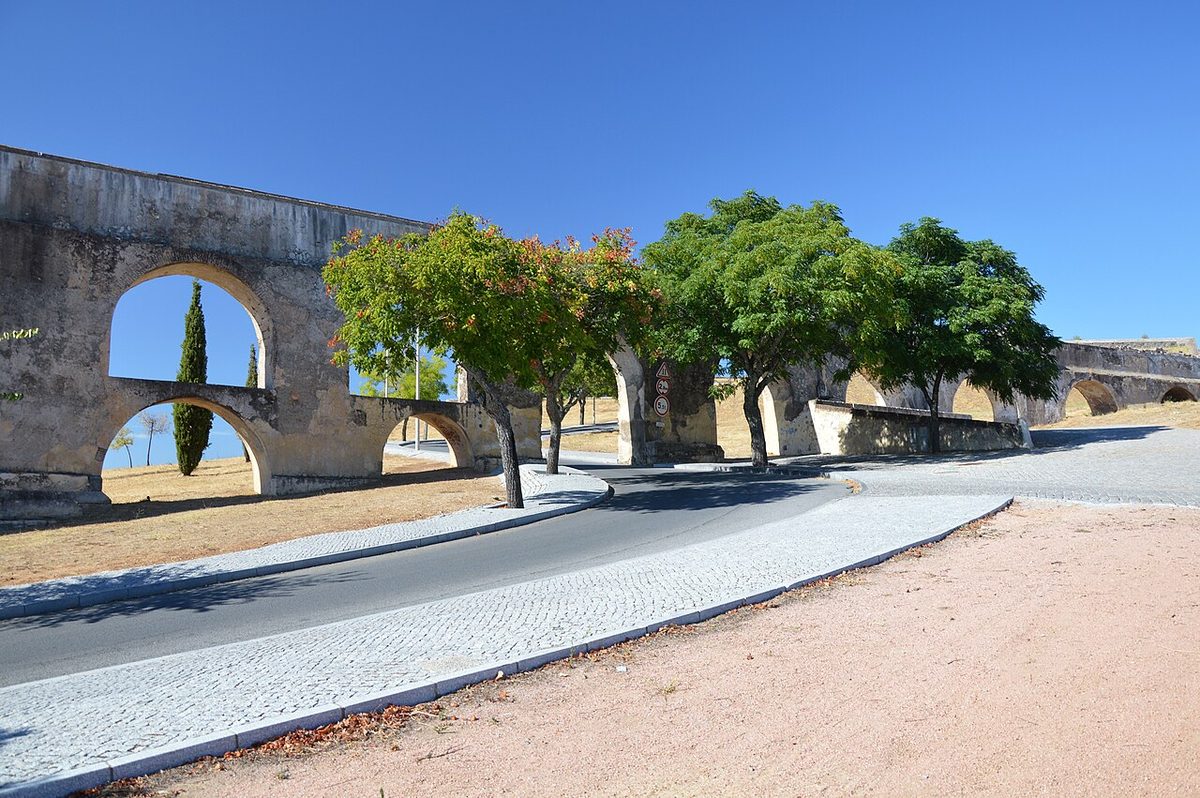
Elvas, ten minutes from the Spanish city of Badajoz, was the key to Portugal’s border defences from the seventeenth century, and UNESCO describes its star-shaped ring of walls, bastions and moats as the largest bulwarked dry-ditch system in the world. The inscription includes the forts on the hills outside town, among them the eighteenth-century Forte da Graça, and the Amoreira aqueduct, which strides across the plain into town.
Visiting: free to walk the town and walls; I couldn’t confirm current prices for the forts. Verdict: fascinating if fortifications interest you, and a handsome, quiet town either way. See our Alentejo guide.
14. The Historic Centre of Évora (1986)
Évora, the capital of the Alentejo, is a walled city that has been continuously inhabited since Roman times, and its centre is a museum of every period: a Roman temple standing in the main square, a Romanesque-Gothic cathedral whose roof you can walk on, sixteenth-century palaces and churches, an aqueduct with houses built into its arches, and the whitewashed lanes that influenced colonial towns in Brazil. Its most memorable sight is the Capela dos Ossos, the Chapel of Bones, lined with the bones of around 5,000 people.
Visiting: free to walk; the Chapel of Bones costs €6 for an adult, €4 for over-65s and under-25s (September 2026). Verdict: the best historic city in the south; stay the night.
15. The Laurisilva of Madeira (1999)
Portugal’s only natural World Heritage Site is the laurel forest that covers the steep valleys of Madeira’s north side, the largest surviving area of a type of forest that covered much of southern Europe millions of years ago. It’s dense, damp and green, full of mosses, ferns and endemic species, and the best way to see it is on foot along the levadas, the irrigation channels whose paths thread through it, such as the Caldeirão Verde walk.
Visiting: since January 2026, every official PR trail must be booked on the SIMplifica site in 30-minute slots, at €4.50 per person per trail (checked September 2026). Verdict: the best walking in Portugal. See our guide to Madeira’s best levada walks.
16. The Central Zone of Angra do Heroísmo, Terceira (1983)
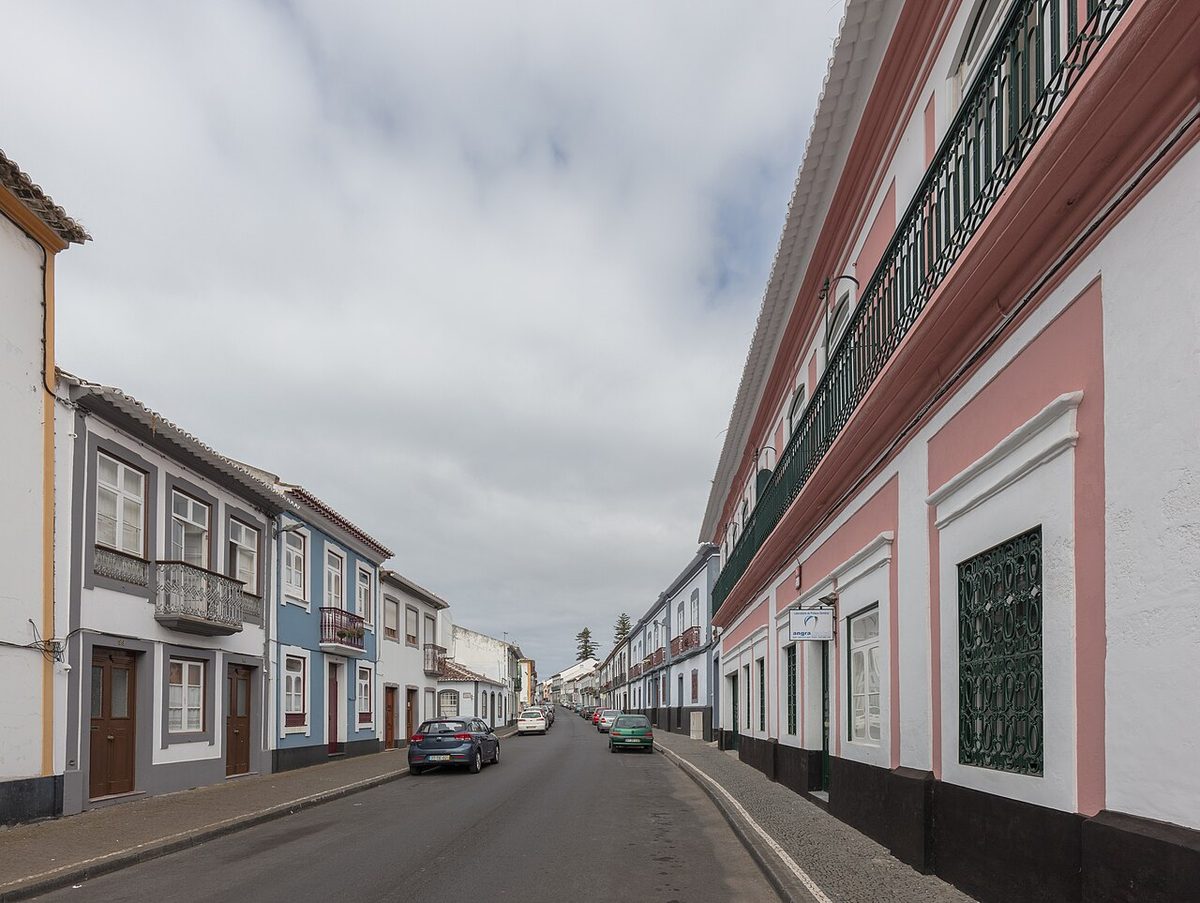
Angra, on the island of Terceira, was the mid-Atlantic port of call for the fleets returning from the Indies and the Americas for three centuries, and its Renaissance grid of streets, churches and palaces, under the forts of Monte Brasil, reflects that wealth. An earthquake on 1 January 1980 damaged much of the town, and its careful reconstruction is part of its story.
Visiting: free to walk; climb Monte Brasil for the view. Getting there: flights to Terceira from Lisbon and Ponta Delgada. Verdict: the finest town in the Azores. Our Azores islands guide covers Terceira.
17. The Landscape of the Pico Island Vineyard Culture (2004)
On the volcanic island of Pico, below Portugal’s highest mountain, farmers built a lattice of thousands of small walled plots, the currais, from black lava stone to shelter their vines from the wind and salt spray. The inscribed landscape, around Criação Velha and the west and north coasts, includes the walls, the manor houses, wine cellars, small harbours and the ramps used to roll barrels down to the sea. The vines produce Verdelho, a fortified wine once drunk at the Russian imperial court.
Visiting: free to walk; tastings at the wine cooperative and producers are extra. Getting there: flights to Pico, or the half-hour ferry from Horta on Faial. Verdict: one of the most unusual landscapes in Europe.
A two-week route through all 14 mainland sites
This loop starts and ends in Lisbon and takes in every mainland site in 14 days by car, with no driving day longer than about four hours. Times are approximate driving times in normal traffic. For general driving advice, tolls and car hire, see our Portugal road trip guide.
| Day | Sites | Drive | Sleep |
|---|---|---|---|
| 1 | 1. Jerónimos and Belém Tower | None | Lisbon |
| 2 | 2. Sintra: Pena, the Moorish Castle, the town | ~40 min | Sintra |
| 3 | 3. Mafra, then 4. Alcobaça | ~30 min + ~1h15 | Alcobaça or Nazaré |
| 4 | 5. Batalha, then 6. Tomar | ~25 min + ~40 min | Tomar |
| 5 | Morning in Tomar, then to Coimbra | ~1 h | Coimbra |
| 6 | 7. University of Coimbra | None | Coimbra |
| 7 | To Porto; afternoon in Ribeira | ~1h15 | Porto |
| 8 | 8. Historic Porto, the bridge, Serra do Pilar | None | Porto |
| 9 | 9. Bom Jesus, then 10. Guimarães | ~50 min + ~30 min | Guimarães |
| 10 | 11. The Douro: Pinhão and the N222 | ~1h45 | A quinta in the Douro |
| 11 | 12. The Côa Valley (book the tour) | ~1 h | Vila Nova de Foz Côa |
| 12 | Long drive south via the A25 and A23 | ~4 h | Elvas |
| 13 | 13. Elvas, then 14. Évora | ~1 h | Évora |
| 14 | Évora in the morning, back to Lisbon | ~1h30 | Lisbon |
A few practical notes. The ex-SCUT motorways used on day 12, the A25 and A23, have been toll-free since January 2025; the A1 between Lisbon and Porto is tolled (€25.05 end to end for a car in 2026). Book Pena’s time slot, the Biblioteca Joanina and the Côa tour before you set off. If you don’t drive, the Lisbon, Sintra, Coimbra, Porto, Guimarães, Braga and Douro sites are all reachable by train; for the rest, a car or tour is easier. Our getting around Portugal guide has the train times and fares.
Shorter versions
- One week: days 1–8, ending in Porto: Belém, Sintra, Mafra, the three monasteries, Coimbra and Porto, nine sites in seven days.
- Five days from Porto: Porto, Bom Jesus, Guimarães, the Douro and the Côa.
- Three days from Lisbon: Belém, Sintra and a day trip to Évora, or Belém, Sintra and Mafra.
Seeing the sites without a car
Most of the mainland sites are reachable by public transport, though the route above is far easier by car. These are the best options, with approximate journey times; check CP’s timetables and the coach operators before you travel.
| Site | From | How | Approx. time |
|---|---|---|---|
| Jerónimos and Belém Tower | Central Lisbon | Tram 15E, or the Cascais line train from Cais do Sodré | 20–30 min |
| Sintra | Lisbon (Rossio) | Suburban train | ~40 min |
| Mafra | Lisbon (Campo Grande) | Bus | ~1 h |
| Alcobaça and Batalha | Lisbon | Coach | ~2 h |
| Tomar | Lisbon | Train | ~2 h |
| Coimbra | Lisbon or Porto | Alfa Pendular or Intercidades, then the short link to Coimbra station | Under 2 h from Lisbon; ~1 h from Porto |
| Porto | Lisbon | Alfa Pendular (€35.70) | 2h39–2h50 |
| Guimarães | Porto | Train | ~1h10 |
| Bom Jesus, Braga | Porto | Train to Braga, then a city bus | ~1h30 |
| Alto Douro | Porto (São Bento) | Linha do Douro train to Pinhão (~€12.45) | ~2h20 |
| Côa Valley | Porto | Douro line to its terminus at Pocinho, then a taxi to Vila Nova de Foz Côa | 3h30–4 h |
| Évora | Lisbon | Train | ~1h30 |
| Elvas | Lisbon | Coach | ~3 h |
The Douro line is one of the great train rides in Europe in its own right; sit on the right leaving Porto for the river views after Régua.
Adding the islands
The three island sites need their own trips. Madeira is an hour and three-quarters’ flight from Lisbon; give it four or five days, with at least two walks in the Laurisilva. In the Azores, Angra do Heroísmo (Terceira) and the Pico vineyards are in the central group, about 40 minutes apart by plane, or linked by summer ferries via São Jorge; a week covers both islands plus Faial, across the channel from Pico. Lisbon has direct flights to Terceira, Pico and Faial as well as to São Miguel.
Tickets, passes and free days
- The Lisboa Card (from around €31) includes the Jerónimos Monastery and the Belém Tower, plus Lisbon’s public transport. It pays off if you do Belém properly on a day it covers.
- Parques de Sintra sells combined tickets for its palaces; book on the official site rather than through resellers, whose prices are often out of date.
- The monastery triangle (Alcobaça, Batalha and Tomar) costs €15 each after the 2026 price rises, with discounts for over-65s and young people at Tomar. Alcobaça’s church is free.
- Portuguese residents get 52 free days a year at national monuments. Visitors don’t, but it’s worth knowing why some days are busier.
- Many sites are free: the historic centres of Porto, Guimarães, Évora and Angra, the Douro and Pico landscapes, and Bom Jesus cost nothing to explore.
Portugal’s intangible heritage and tentative list
UNESCO also recognises Portugal’s living traditions on its intangible cultural heritage lists. They include fado, Lisbon’s urban song (2011); cante alentejano, the Alentejo’s polyphonic choral singing (2014); the painted clay figurines of Estremoz (2017); the winter festivities of the Carnival of Podence, with its masked Caretos (2019); and the Mediterranean diet, shared with other countries (2013). For a calendar of the festivals behind them, see our Portugal festivals guide.
Portugal’s tentative list, the sites it may nominate in future, includes the architecture of Álvaro Siza, the Porto architect, among others. UNESCO’s own page for Portugal still lists 17 inscribed properties, as of October 2026. UNESCO Global Geoparks such as Arouca, Naturtejo and the Serra da Estrela, and Biosphere Reserves such as the Berlengas and Flores, are separate designations and aren’t World Heritage Sites.
What to skip, and what’s overrated
- The inside of the Belém Tower. The tower is beautiful from the outside, but its interior is small, with a narrow spiral staircase and long queues. If time is short, admire it from the riverbank and spend your time in the Jerónimos cloister instead.
- Sintra in one rushed day. The inscribed landscape covers half a dozen palaces and gardens on steep hills. Trying to see them all in a day means spending it in queues and on the 434 bus. Choose two or three, or stay overnight.
- Alcobaça’s cloisters if you’re also seeing Batalha. The free church, with Pedro and Inês’s tombs, is the essential part. Save the €15 if you’re short of time or budget.
- The Côa without booking. You can’t visit the rock art independently; arrive without a tour booked and you’ll see only the museum.
- Mafra as a full day. The library is magnificent; the rest of the palace is vast and repetitive. Two or three hours is enough.
- Collecting every site for the sake of it. Elvas’s fortifications and the Côa are wonderful for some travellers and of little interest to others. Read the entries above and skip what doesn’t appeal; the route works without them.
Frequently asked questions
How many UNESCO World Heritage Sites does Portugal have?
Seventeen: 16 cultural sites and one natural site, the Laurisilva laurel forest of Madeira. Fourteen are on the mainland and three are on the islands (Madeira, Terceira and Pico).
What was Portugal’s first UNESCO World Heritage Site?
Four were inscribed together in 1983: the Jerónimos Monastery and Belém Tower in Lisbon, the Monastery of Batalha, the Convent of Christ in Tomar and the centre of Angra do Heroísmo in the Azores.
What are the newest UNESCO sites in Portugal?
The Royal Building of Mafra and the Sanctuary of Bom Jesus do Monte in Braga, both inscribed in 2019. In 2023 the Guimarães site was extended to include the old tanneries quarter, the Couros zone.
Can you see all of Portugal’s UNESCO sites in one trip?
The 14 mainland sites can be seen in two weeks by car, on the loop in this guide. The three island sites need separate trips to Madeira and the Azores; a combined three-week trip could cover all 17.
Which UNESCO sites in Portugal are best?
For a first trip: the Jerónimos Monastery in Lisbon, Sintra, the Convent of Christ in Tomar, the University of Coimbra, historic Porto and the Douro Valley. The Côa Valley rock art is the most important site that few visitors see.
How much does it cost to visit Portugal’s UNESCO sites?
Many are free, including the historic centres of Porto, Guimarães, Évora and Angra. Paid sites in 2026 include Pena Palace (€20 for the palace), the Convent of Christ, Batalha and Alcobaça’s cloisters (€15 each) and the University of Coimbra (€25).
Is Lisbon a UNESCO World Heritage Site?
Not as a whole city. Only the Jerónimos Monastery and the Belém Tower, in the Belém district, are inscribed. Sintra, 40 minutes away by train, is a separate World Heritage Site.
Which UNESCO sites can you visit from Lisbon on a day trip?
Belém is in the city; Sintra and Mafra are each under an hour away; Évora is about 1h30 by train or car; and the monasteries of Alcobaça and Batalha are about 1h15 by car.
Where to go next
- The best things to do in Portugal, our main guide
- Portugal’s best castles, including Guimarães and Sintra
- Portugal itineraries for one and two weeks
- The 25 best places to visit in Portugal
Photo credits
- The facade of the Monastery of Alcobaça (featured image) — Palickap, CC BY-SA 4.0, via Wikimedia Commons
- Map of Portugal’s World Heritage Sites — portugaltourism.org, drawn from OpenStreetMap data, © OpenStreetMap contributors (ODbL)
- The cloister of the Jerónimos Monastery — Jakub Hałun, CC BY 4.0, via Wikimedia Commons
- Castelo dos Mouros, Sintra — Jakub Hałun, CC BY 4.0, via Wikimedia Commons
- The Unfinished Chapels, Batalha — Alvesgaspar, CC BY-SA 4.0, via Wikimedia Commons
- Inside the Charola, Tomar — Ingo Mehling, CC BY-SA 4.0, via Wikimedia Commons
- The Biblioteca Joanina, Coimbra — xiquinhosilva, CC BY 2.0, via Wikimedia Commons
- The staircase at Bom Jesus do Monte, Braga — lumoplank, CC0, via Wikimedia Commons
- The Amoreira aqueduct, Elvas — Ricardo Manuel Aguiar Santos, CC BY-SA 4.0, via Wikimedia Commons
- Rua de São Pedro, Angra do Heroísmo — Diego Delso, CC BY-SA 4.0, via Wikimedia Commons
The list of 17 inscribed properties was checked against UNESCO’s page for Portugal in October 2026. Prices checked September 2026 against Parques de Sintra, the Convent of Christ, Batalha Monastery, the University of Coimbra, the Paço dos Duques and the Évora listings; where I couldn’t confirm a price at source, the table says so. Last updated: October 2026.