Most Portugal road trip guides are one person’s itinerary with the dates filed off: a single route, a list of towns, and a line saying tolls “can add up”. That’s not much help if you’re deciding which route suits your ten days, or if you’ve heard (correctly) that the Algarve motorway no longer charges and want to know what still does. This guide sets out five tested routes, from a seven-day Lisbon-to-Porto drive to the full length of the N2, each with leg-by-leg driving times and the 2026 toll picture. It also covers the practical layer that decides how the trip feels: when to pick up the car, what fuel costs this month, which towns to park outside, and which famous drives aren’t worth the detour.
The short answer: the best Portugal road trip for a first visit is seven to ten days from Lisbon to Porto through Óbidos, Nazaré, the monasteries and Coimbra, then the Douro Valley. With two weeks, add the Alentejo and drive down to the Algarve. Pick the car up as you leave Lisbon, not on arrival, and budget for tolls on the A1 and A2 only.
Portugal road trip routes at a glance
Distances and driving times are approximate totals for each route as described below, driven at a relaxed pace without motorway-only shortcuts. The toll column says which roads you’ll pay on, not a total, because it depends on how many motorway stretches you choose over the national roads.
| Route | Days | Approx. distance | Total driving | Tolls | Best for |
|---|---|---|---|---|---|
| 1. Lisbon to Porto through the centre | 7 | ~450 km | ~7–8 h | Some: A8, A1 and A17 sections if you use them | A first trip: castles, monasteries, the coast |
| 2. Lisbon to the Algarve by the wild coast | 5–7 | ~400 km | ~7 h | Few: the A2 to Setúbal; the A22 is free | Beaches, clifftops, surf towns, slow days |
| 3. The Alentejo interior loop | 5–6 | ~550 km | ~8 h | Some: the A6 towards Elvas | Hill towns, wine, empty roads, dark skies |
| 4. Porto, the Douro and the Minho | 5–7 | ~500 km | ~8 h | Few: the A24 and the Marão tunnel are free; the A3 is tolled | Vineyards, granite towns, Gerês |
| 5. The N2, Chaves to Faro | 7–10 | ~739 km | ~14–16 h | None on the N2 itself | The drive as the destination |
| Two weeks: Porto to the Algarve | 14 | ~1,100 km | ~18–20 h | A1 or A2 stretches, depending on the variant | The whole country, north to south |
Before you set off: car, tolls, fuel and rules
When and where to pick up the car
Don’t have a car in Lisbon or Porto. Both cities are hard to drive and harder to park in, and public transport covers them well. The right shape for almost every route is to spend your city days car-free, then collect the car on the morning you leave: from an airport desk (a short taxi or metro ride out) or a city office. If you’re finishing somewhere other than where you started, check the one-way fee before booking, because it can be large and it varies a lot between companies and routes; Lisbon to Porto and Lisbon to Faro are the most common one-way pairs and usually the cheapest. A mid-sized hire car costs roughly €180–300 a week in mid-season, checked September 2026, before tolls, fuel and any extra insurance; August costs more and sells out, and automatics are always scarcer and dearer than manuals. Taking the car into Spain is usually possible, but needs to be declared at booking and often carries a fee.
Tolls in 2026: what’s free now, and what isn’t
This is the part most road-trip guides have wrong. On 1 January 2025 Portugal abolished tolls on the former SCUT motorways, the ones that used to be electronic-only and caught visitors out. That means the A22 across the Algarve is now free, along with the A23 (through the Beira Interior), A24 (Viseu to Chaves, including the Douro), A25 (Aveiro to the Spanish border), A13/A13-1, the A4 Transmontana including the Marão tunnel, and specified sections of the A28 north of Porto. Other motorways still charge. These are the class 1 (car) prices for the two long runs most road trips use, from 2026 toll calculators:
| Road | Toll status (2026) | Class 1 car |
|---|---|---|
| A1, Lisbon to Porto, end to end | Tolled, booths and Via Verde | €25.05 |
| A2, Lisbon to the Algarve | Tolled, booths and Via Verde | €23.80 |
| A22, Algarve (Via do Infante) | Free since 1 January 2025 | €0 |
| A23, A24, A25, A13, A4 Marão | Free since 1 January 2025 | €0 |
| A28, Porto to Viana do Castelo | Partly free since 2025; some gantries remain | Varies |
| 25 de Abril and Vasco da Gama bridges | Charged northbound, into Lisbon, only | Small fee |
How to pay. Some motorways still have electronic-only gantries with no booths, so the simplest thing is a hire car with a Via Verde transponder switched on (ask at the desk, and check the daily fee). Drivers of foreign-registered cars can register a card against their number plate with EASYToll at the border, or buy a prepaid TOLLCard. Unpaid electronic tolls on a hire car are billed later through the rental company, usually with an administration charge on top.
Fuel
Portuguese fuel is expensive by European standards. In early September 2026 the price trackers disagreed a little: fuel-prices.eu put petrol (gasolina 95) at €1.95 a litre and diesel at €2.03, dailyfuels at €2.015 for both, and prix-carburant.eu at €2.076 and €2.116. Call it roughly €2 a litre either way. Motorway service areas charge more than supermarket forecourts in towns, and in the interior petrol stations can be far apart and close early, so fill up when the tank is half empty rather than waiting for the light. Electric cars are practical on the main routes, using the national MOBI.E public charging network, but plan charging stops carefully in the Alentejo and the far north-east.
Rules that matter
Drive on the right. Speed limits are 50 km/h in towns, 90 km/h on ordinary roads and 100–120 km/h on motorways. The alcohol limit is 0.5 g/L, and 0.2 g/L for drivers in their first year. On multi-lane roundabouts the rule is to use the outside lane to exit, and Portuguese drivers expect you to know it. For licences, insurance and the rest of the driving rules, see our guide to getting around Portugal.
Route 1: Lisbon to Porto through the centre (7 days)
This is the route I’d give almost anyone on a first trip, because it strings together the best of the country between the two cities that most itineraries connect by train in three hours. It takes in a walled medieval town, a big-wave surf town, three UNESCO monasteries, the Templar castle at Tomar, Portugal’s oldest university and the canal town of Aveiro, over a week of short drives.
| Day | Drive | Approx. time | What to do |
|---|---|---|---|
| 1 | Lisbon to Óbidos, via Sintra if you haven’t done it | ~1 h direct | Walk the walls at sunset; sleep inside them |
| 2 | Óbidos to Nazaré | ~35 min | Sítio clifftop, the Praia do Norte lighthouse, fish lunch |
| 3 | Nazaré to Alcobaça, Batalha and Tomar | ~1h15 in total | Two monasteries in the morning, Tomar’s Convent of Christ in the afternoon |
| 4 | Tomar to Coimbra | ~1 h | The university and the Biblioteca Joanina; fado in the evening |
| 5 | Coimbra, with a morning at Conímbriga’s Roman ruins | ~20 min each way | Mosaics in the morning, old town in the afternoon |
| 6 | Coimbra to Aveiro and the Costa Nova | ~50 min | Canals, striped beach houses, ovos moles |
| 7 | Aveiro to Porto; drop the car | ~1 h | Return the car before you reach the centre |
Óbidos
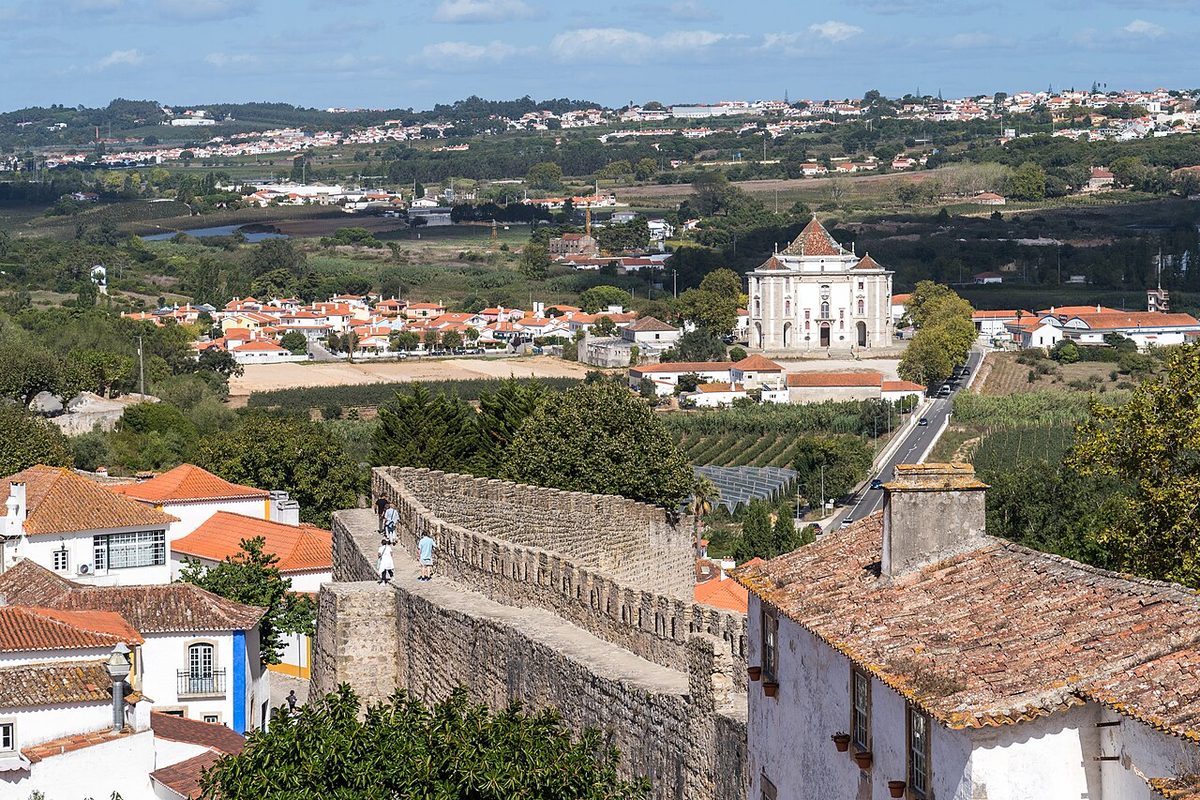
A complete walled town about an hour north of Lisbon, with whitewashed houses trimmed in blue and yellow inside a circuit of medieval walls you can walk along (there are no railings, so hold small children’s hands). By day it’s packed with visitors from Lisbon and stalls selling ginjinha, the sour-cherry liqueur, in chocolate cups. By evening, when the coaches leave, it’s lovely. That’s the argument for sleeping inside the walls, and the Pousada in the castle is the famous way to do it. Park outside the walls; nobody should drive into Óbidos.
Nazaré
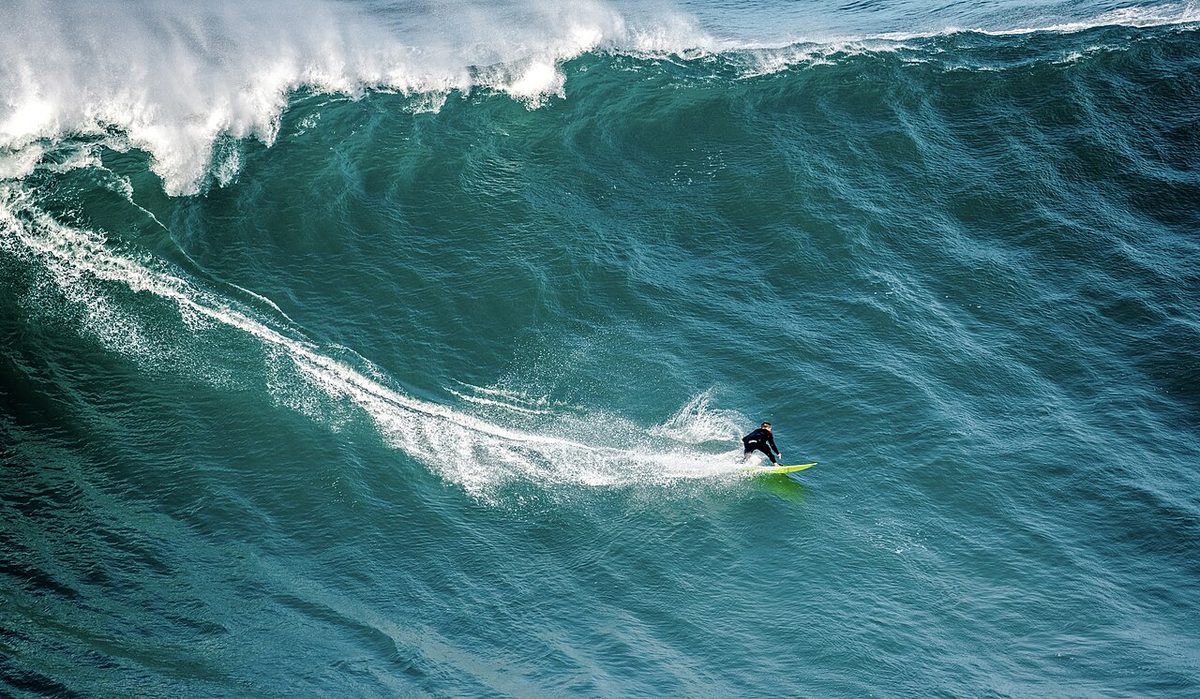
A fishing town with a long town beach, a clifftop quarter called the Sítio reached by a funicular, and, north of the headland, Praia do Norte, where an underwater canyon focuses Atlantic swells into some of the biggest surfable waves on the planet. That only happens roughly October to March, biggest from November to February, and even then it’s unpredictable more than a few days out. In summer Praia do Norte is an ordinary, if powerful, beach. Verdict: worth the night in winter if a big swell is forecast; otherwise a fine lunch stop.
Alcobaça, Batalha and Tomar
Three UNESCO-listed religious buildings sit within an hour’s drive of each other, and a road trip is the easiest way to see them. Alcobaça is a vast, austere Cistercian monastery holding the carved tombs of King Pedro I and Inês de Castro, the subject of Portugal’s great romantic tragedy. Batalha is a Gothic masterpiece built to celebrate a victory over Castile in 1385, with the famous “Unfinished Chapels” open to the sky. Tomar‘s Convent of Christ was the headquarters of the Knights Templar in Portugal and is the most extraordinary of the three, with a round Templar church at its heart and the carved Manueline window on the chapter house. Entry is €15 each at Batalha and at Tomar’s Convent of Christ, while Alcobaça’s church is free and its cloisters and monastic buildings cost €15 (checked September 2026; Tomar halves the price for over-65s and 13–24s). Verdict: if you only have time for one, Tomar. If two, add Batalha. Fátima, twenty minutes from Batalha, is one of the world’s major Catholic pilgrimage sites; go if that means something to you.
Coimbra and Conímbriga
Portugal’s third city climbs a hill above the Mondego river to its university, founded in 1290 and one of the oldest in Europe. The Biblioteca Joanina, a gilded Baroque library, keeps a resident colony of bats that eat the insects that would otherwise damage the books, which is a better story than most palaces manage. Book a timed ticket, because it’s small. Conímbriga, 20 minutes south, is the best-preserved Roman town in Portugal, with floor mosaics still in place. Verdict: give Coimbra two nights, and hear Coimbra fado, sung by men in academic capes, in the old town.
Aveiro and the Costa Nova
Aveiro gets called “the Venice of Portugal”, which oversells it: it’s a pleasant town with a few canals, painted moliceiro boats and a sweet egg-yolk pastry called ovos moles. The real reason to stop is 15 minutes away at the Costa Nova, a beach village of red-, blue- and yellow-striped wooden houses beside a lagoon. It’s an easy half-day on the way to Porto.
For the Lisbon end of this route (Sintra, Cascais and the rest), our day trips from Lisbon guide covers the Pena Palace’s restructured 2026 tickets. For more on Porto once you’ve dropped the car, see our Porto travel guide.
Route 2: Lisbon to the Algarve by the wild coast (5–7 days)
The A2 gets you from Lisbon to the Algarve in under three hours. This route takes most of a week and it’s much better: south over the Arrábida hills, across the Sado estuary by ferry, down the Alentejo coast through surf villages and clifftop fishing harbours, then along the Costa Vicentina, the protected, undeveloped west coast of the Algarve, to Sagres and Lagos.
| Day | Drive | Approx. time | What to do |
|---|---|---|---|
| 1 | Lisbon to Setúbal via the Arrábida coast road | ~1 h | Arrábida beaches, a dolphin boat on the Sado, grilled cuttlefish in Setúbal |
| 2 | Setúbal to Tróia by car ferry, then Comporta | ~20 min crossing + 30 min | Rice fields, long empty beaches, a slow lunch |
| 3 | Comporta to Vila Nova de Milfontes | ~1h15 | The Mira estuary, river beaches, clifftop walks |
| 4 | Milfontes to Zambujeira do Mar and Odeceixe | ~50 min | Clifftop fishing harbours, the river-mouth beach at Odeceixe |
| 5 | Odeceixe to Aljezur and Sagres | ~1 h | Arrifana and Bordeira beaches, sunset at Cabo de São Vicente |
| 6–7 | Sagres to Lagos | ~35 min | Ponta da Piedade by kayak, the Lagos old town; drop the car in Faro or Lagos |
Arrábida and Setúbal
The coast road over the Serra da Arrábida, a limestone ridge dropping into turquoise water, is one of the loveliest short drives near Lisbon. In summer, access to the beaches below it is restricted and served by shuttle buses to cut traffic, so check before you go. Setúbal itself is a working port with the best fried cuttlefish (choco frito) in Portugal, and the Sado estuary has about thirty resident bottlenose dolphins that small boats visit all year.
Comporta and the Alentejo coast
The car ferry from Setúbal to the Tróia peninsula takes about twenty minutes and saves a long drive round the estuary. South of it, Comporta is a scatter of villages among rice paddies and pine forest behind an enormous beach; it’s become fashionable and expensive, but the beach is still vast enough to feel empty. Vila Nova de Milfontes, on the Mira estuary, is the best base on the Alentejo coast, with river beaches for children and ocean beaches for everyone else. Zambujeira do Mar is a whitewashed village on a cliff, and Odeceixe, on the Algarve border, has a beach where the river meets the sea in a sandy bend.
The Costa Vicentina, Sagres and Lagos
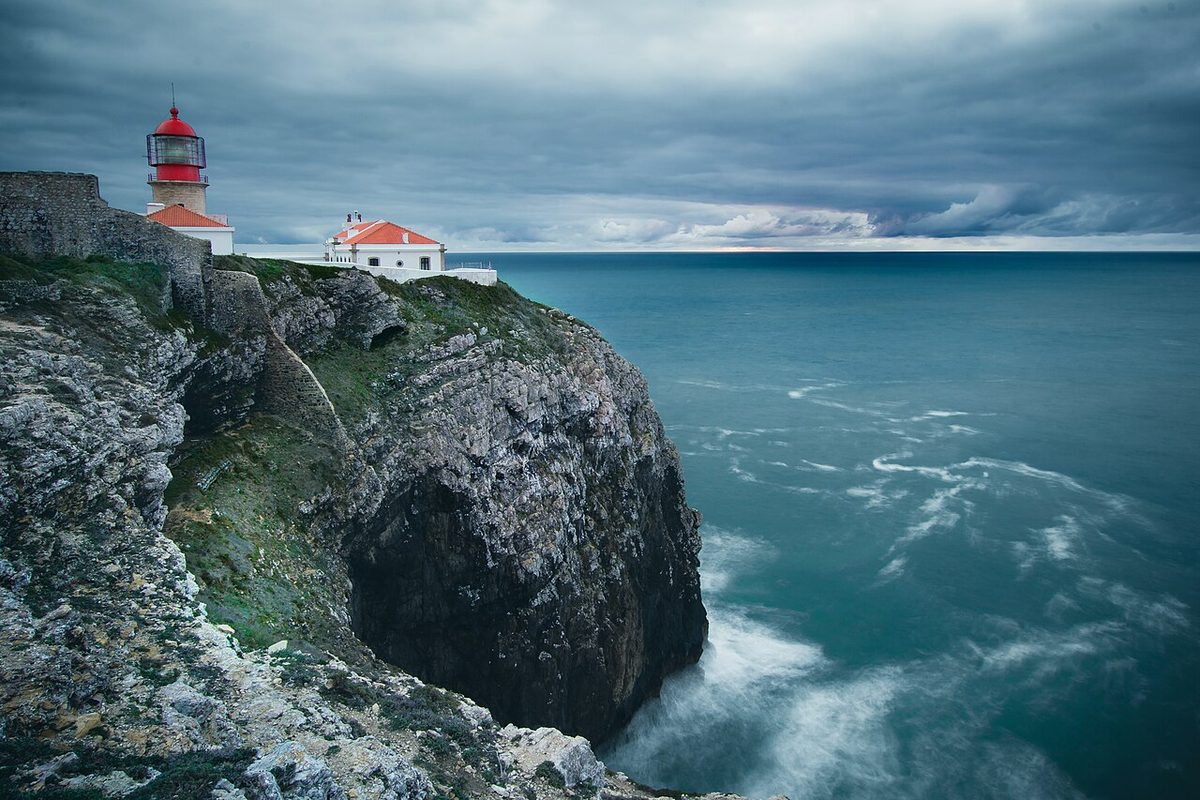
The west coast of the Algarve is a natural park, and it looks nothing like the resort south coast: high cliffs, surf beaches at Arrifana, Amoreira and Bordeira, and almost no building. At the south-western corner, Cabo de São Vicente, near Sagres, is the most south-westerly point of mainland Europe, with a lighthouse on sheer cliffs and the best sunset on the route. Then it’s half an hour to Lagos and the start of the Algarve proper, where the A22 is now free to drive. For the Algarve’s beaches, see our guide to the best Algarve beaches, which covers the Benagil cave rules that changed in 2024.
Route 3: The Alentejo interior loop (5–6 days)
The Alentejo is the big, hot, rolling region between Lisbon and the Algarve, and it’s the best driving country in Portugal: long, straight, almost empty roads between cork oaks and wheat fields, with a whitewashed hilltop town every forty minutes. This loop from Lisbon covers the highlights of the interior; you can also run it one-way and finish in the Algarve.
| Day | Drive | Approx. time | What to do |
|---|---|---|---|
| 1 | Lisbon to Évora | ~1h30 | The Roman temple, the cathedral roof, the Chapel of Bones |
| 2 | Évora, with the Almendres cromlech | ~20 min each way | Neolithic standing stones in the morning, a wine estate in the afternoon |
| 3 | Évora to Monsaraz | ~50 min | The walled village above the Alqueva lake; stargazing at night |
| 4 | Monsaraz to Elvas and Marvão | ~2 h | Elvas’s star-shaped fortifications, then Marvão for sunset |
| 5 | Marvão and Castelo de Vide | ~15 min | Walk the walls, the Jewish quarter in Castelo de Vide |
| 6 | Back to Lisbon, or south via Estremoz | ~2h15 | Estremoz’s Saturday market if the day is right |
Évora
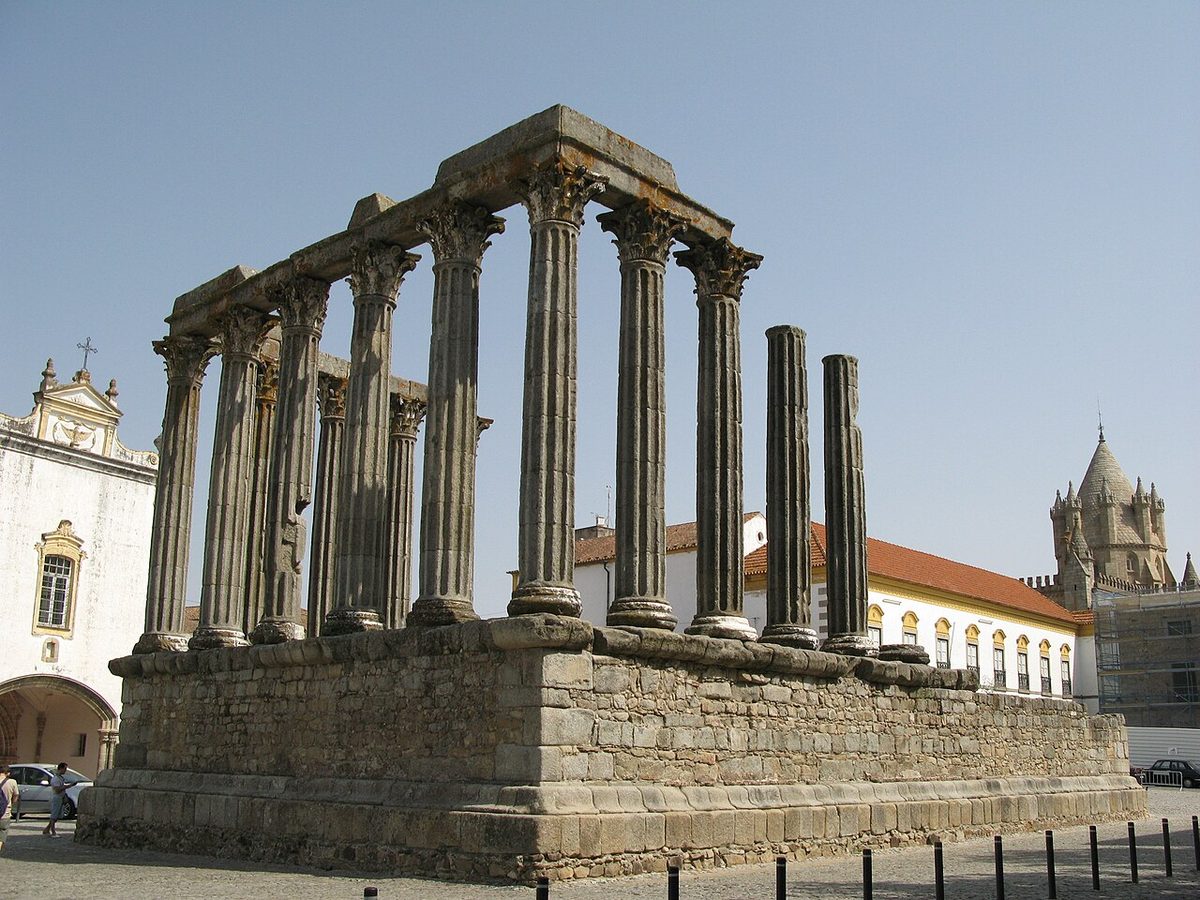
The Alentejo’s capital is a UNESCO-listed walled city with a first-century Roman temple in its main square, a cathedral whose roof you can walk on, and the Capela dos Ossos, a chapel lined with the bones of about 5,000 people and inscribed with a cheerful reminder that yours will join them. It’s a good base for two nights. Nearby, the Cromeleque dos Almendres is a field of nearly a hundred Neolithic standing stones among cork oaks, older than Stonehenge and usually almost empty.
Monsaraz and the Alqueva
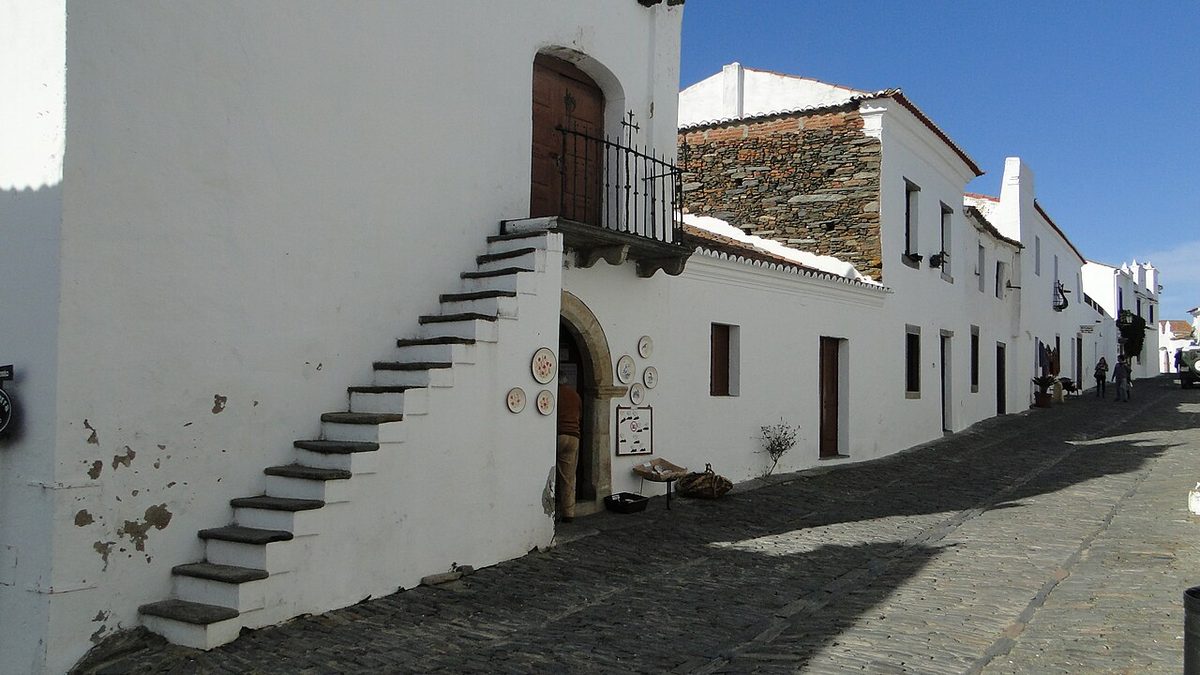
A tiny walled village on a hill above the Alqueva reservoir, the largest artificial lake in western Europe. It has one main street of whitewashed houses, a castle and a view across the water into Spain. The Alqueva area was the world’s first certified Starlight Tourism Destination, and on a clear, moonless night the sky here is the darkest you’ll see in Portugal. Sleep in or near Monsaraz and look up.
Elvas, Marvão and Castelo de Vide
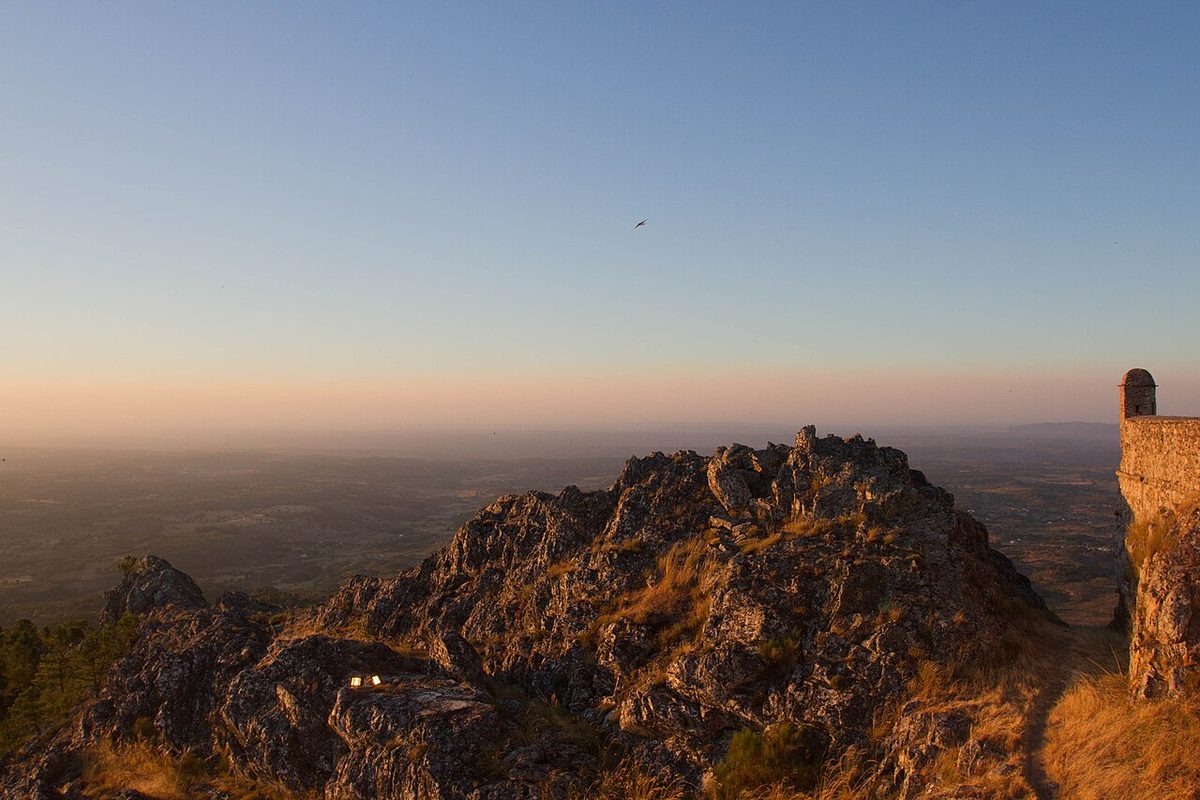
Elvas, on the Spanish border, is ringed by the largest bulwarked fortifications in the world, star-shaped seventeenth-century walls that earned it a UNESCO listing, plus a long aqueduct. Marvão is the most dramatic village in Portugal, a walled eyrie on a granite crag at around 860 metres with views across half the Alentejo and into Spain, and at sunset it’s hard to leave. Castelo de Vide, a few minutes away, is a gentle spa town with a well-preserved medieval Jewish quarter.
Driving note: the Alentejo is where Portugal gets properly hot. In July and August the interior regularly passes 40 °C in heatwaves, so drive in the morning, stop in the afternoon and keep water in the car. For the region in full, from Évora’s food to the Alentejo coast, see our day trips from Lisbon guide, which covers Évora as a single day too.
Route 4: Porto, the Douro and the Minho (5–7 days)
The north is green, granite and wine-soaked, and it rewards a car more than anywhere else in Portugal. This route runs east from Porto up the Douro Valley to Pinhão on the N222, then back west through Amarante and north into the Minho: Guimarães, Braga, the Peneda-Gerês National Park, Ponte de Lima and Viana do Castelo.
| Day | Drive | Approx. time | What to do |
|---|---|---|---|
| 1 | Porto to Peso da Régua | ~1h15 | The Douro Museum, a first quinta tasting |
| 2 | Régua to Pinhão on the N222, and back via Casal de Loivos | ~40 min driving | The N222 river road, quintas, the Casal de Loivos viewpoint |
| 3 | Douro to Amarante and Guimarães | ~1h30 | Amarante’s bridge and pastries; Guimarães’s castle and old town |
| 4 | Guimarães to Braga and Bom Jesus | ~30 min | The Baroque staircase at Bom Jesus, Braga’s cathedral |
| 5 | Braga to Peneda-Gerês | ~1 h | Waterfalls, granite villages, a river swim in summer |
| 6 | Gerês to Ponte de Lima and Viana do Castelo | ~1h15 | The Roman bridge, vinho verde, Santa Luzia at sunset |
| 7 | Viana to Porto; drop the car | ~1 h | A last beach stop on the way south |
The Douro and the N222
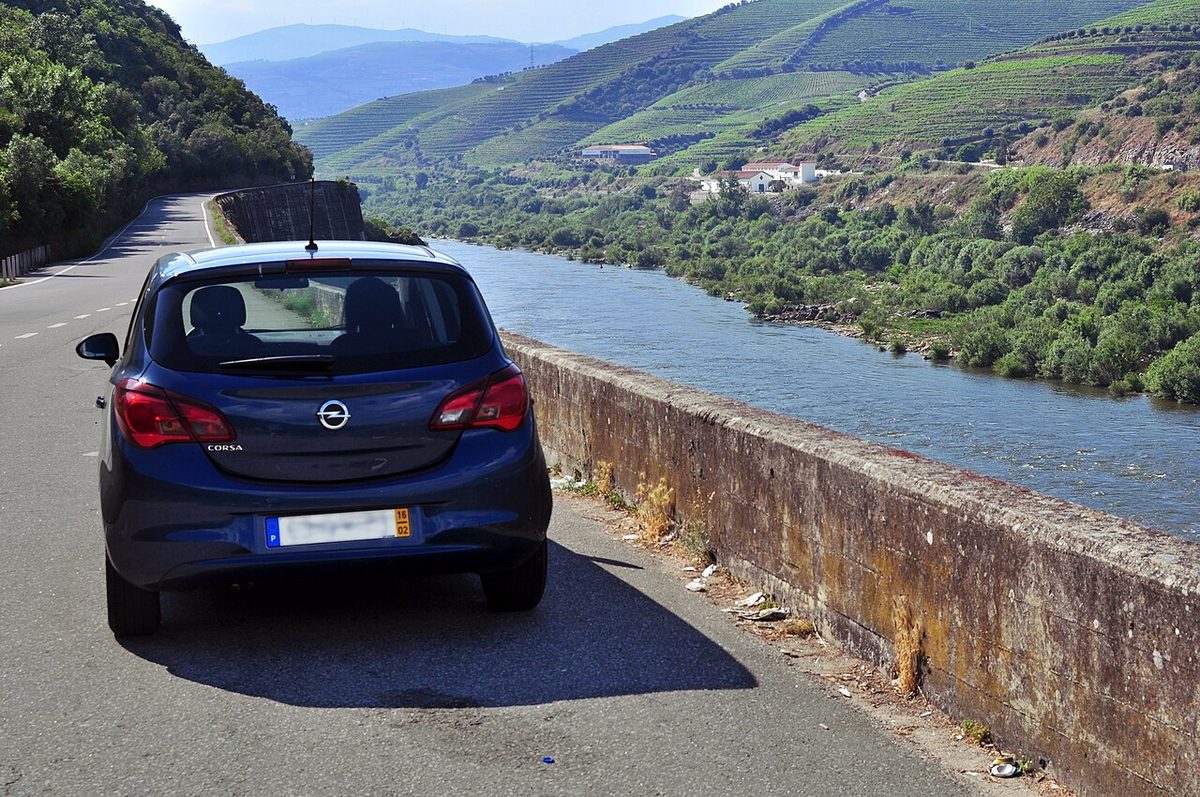
The Alto Douro has been a demarcated wine region since 1756, the oldest in the world, and its terraced hillsides above the river are one of Portugal’s great landscapes. The stretch of the N222 between Peso da Régua and Pinhão, about 27 km, follows the south bank of the river through vineyards and quintas, and a much-quoted car-hire study once named it the best driving road in the world. That’s overselling a short, narrow road with tour buses on it, but it’s a beautiful drive, especially in the late-September harvest. The A24 and the Marão tunnel, which get you from Porto to the Douro fast, have been free since January 2025. For quintas, tastings and where to stay, see our full Douro Valley guide.
Guimarães, Braga and Gerês
Guimarães, where Portugal’s first king was born, has a castle and one of the loveliest medieval centres in the country. Braga, 30 minutes away, is the religious capital, with the zigzag Baroque staircase of Bom Jesus do Monte on a hill above the city. The Peneda-Gerês National Park, Portugal’s only national park, is where you need the car most: waterfalls, granite villages, wild ponies and Roman milestones along the old road, none of it reachable by public transport in any useful way. Our guide to day trips from Porto covers all three in more depth, with train times for those you can do without a car.
Route 5: The N2, Chaves to Faro (7–10 days)
The Estrada Nacional 2 is Portugal’s longest road, about 739 km from kilometre zero in Chaves, near the Spanish border in the far north, to Faro on the Algarve coast. It runs the entire length of the interior through some 35 municipalities, and it has become Portugal’s answer to Route 66: numbered kilometre stones, a “passport” you can have stamped at tourist offices along the way, and a steady flow of motorcyclists and classic cars.
The honest case for the N2 is that it shows you the Portugal most visitors never see. You’ll pass through granite villages in Trás-os-Montes, the Douro at Peso da Régua, the forested hills of the Beiras (still recovering in places from the fires of recent years), the cork plains of the Alentejo, and the Serra do Caldeirão before you drop down to Faro. The honest case against it is that parts are dull, some stretches are slow and twisting for no great view, and it avoids nearly every famous sight.
| Stage | Approx. distance | Highlights |
|---|---|---|
| Chaves to Peso da Régua | ~110 km | Kilometre zero, Vila Pouca de Aguiar, the drop into the Douro |
| Régua to Viseu | ~85 km | Lamego’s Baroque stairway, the Beira uplands |
| Viseu to Abrantes | ~200 km | Santa Comba Dão, the Zêzere river, forest roads |
| Abrantes to Ferreira do Alentejo | ~190 km | Ponte de Sor, Montemor-o-Novo, cork country |
| Ferreira do Alentejo to Faro | ~155 km | Castro Verde, Almodôvar, the Serra do Caldeirão, São Brás de Alportel |
Verdict: the N2 is a great second or third trip to Portugal, and a poor first one. Give it at least a week. Driven in four days, it’s just a very long road. It pairs naturally with the Douro in the north and the Algarve in the south, and our advice is to drive it south in spring or autumn, never in July and August in the interior.
The two-week Portugal road trip: Porto to the Algarve
With fourteen days you can drive the whole country, north to south, and this is how I’d do it. Fly into Porto and out of Faro (or the reverse), spend two car-free days in Porto, collect the car and go.
| Days | Where | Nights |
|---|---|---|
| 1–2 | Porto, car-free | 2 |
| 3–4 | The Douro via the A4 and the N222 | 2 |
| 5 | Coimbra (via Viseu, or back via Porto and the A1) | 1 |
| 6 | Tomar and Batalha | 1 |
| 7 | Óbidos and Nazaré | 1 |
| 8–9 | Lisbon: drop the car, or park it and go car-free | 2 |
| 10–11 | Évora and Monsaraz | 2 |
| 12 | Vila Nova de Milfontes and the Alentejo coast | 1 |
| 13–14 | Costa Vicentina to Lagos; fly out of Faro | 2 |
Two versions of this work. The simpler one keeps a single car for the whole fortnight and pays for parking in Lisbon. The better one drops the car in Lisbon, spends two days car-free, and picks up a second car for the south. It costs a little more in hire and admin, and it’s much less stressful. For the train-based alternative and shorter versions, see our Portugal itinerary planner.
Scenic drives worth a detour
- The N222, Régua to Pinhão. Short, famous and beautiful: 27 km of river, terraces and quintas. Drive it early, before the tour buses.
- The N339 over the Serra da Estrela. Portugal’s highest road crosses the mountains between Covilhã and Seia, climbing close to Torre, at 1,993 m the highest point on the mainland. It’s spectacular, but in winter snow closes it, so check before you go.
- The Arrábida coast road. Limestone cliffs and turquoise coves just south of Lisbon; mind the summer access restrictions to the beaches.
- The Costa Vicentina’s national roads. The N120 and N268 between Odeceixe, Aljezur and Vila do Bispo, with side roads out to clifftop beaches.
- The N266 to Monchique. From Portimão up into the Algarve’s mountains, cool and green in summer, with the viewpoint at Fóia.
- The Historic Villages. A loop through some of the twelve fortified villages along the old Spanish border: Monsanto among its boulders, Sortelha, Almeida’s star fort, Castelo Rodrigo.
Driving times between the main stops
| From | To | Approx. distance | Approx. time |
|---|---|---|---|
| Lisbon | Porto | ~310 km | ~3 h on the A1 |
| Lisbon | Faro | ~280 km | ~3 h on the A2 |
| Lisbon | Évora | ~135 km | ~1h30 |
| Lisbon | Óbidos | ~85 km | ~1 h |
| Óbidos | Coimbra | ~130 km | ~1h30 |
| Coimbra | Porto | ~120 km | ~1h15 |
| Porto | Peso da Régua | ~110 km | ~1h15 |
| Évora | Monsaraz | ~50 km | ~50 min |
| Évora | Lagos | ~230 km | ~2h45 |
| Sagres | Faro | ~115 km | ~1h15 on the free A22 |
These times assume no traffic. Leaving Lisbon or Porto at rush hour, or driving the Algarve in August, adds a lot, and national roads through villages are much slower than the kilometres suggest.
Where to stay on a road trip
A road trip is the best excuse Portugal offers for staying somewhere memorable. The state-founded Pousadas de Portugal chain runs hotels in converted castles, convents and palaces along most of these routes, including the castle at Óbidos, the Lóios convent in Évora and the monastery of Santa Marinha above Guimarães. They’re not cheap, but one or two nights in a pousada is a highlight of many trips. In wine country, stay at a quinta: many Douro and Alentejo estates have rooms, and waking up among the vines is the whole point. Turismo rural (rural houses and farm stays) is everywhere in the interior, often with a pool and always with free parking, which matters more than you’d think.
Two practical rules. Choose hotels with parking, and in walled towns check exactly where: “parking” in Óbidos or Monsaraz means a car park outside the walls and a walk with your luggage. And don’t move every night. Two-night stops in Coimbra, Évora and the Douro make the trip feel like a holiday rather than a relay race.
What a Portugal road trip costs
| Item | Cost (checked Sept 2026) | Notes |
|---|---|---|
| Hire car, mid-size, one week | €180–300 | Mid-season; more in August; automatics dearer |
| Fuel | ~€1.95–2.08/litre petrol, ~€2.02–2.12 diesel | Sources disagree slightly; service areas charge more |
| A1 Lisbon–Porto toll | €25.05 | Class 1 car, end to end |
| A2 Lisbon–Algarve toll | €23.80 | Class 1 car |
| A22 Algarve, A23, A24, A25 | Free | Since 1 January 2025 |
| Monastery entries (Alcobaça, Batalha, Tomar) | €15 each (Alcobaça’s church is free) | Worth two of the three |
| Budget day, per person | €70–90 | Excluding the car |
| Comfortable day, for two | €150–200 | Outside August |
As a rough guide, a seven-day trip with a mid-size hire car, around 500 km of driving and one long motorway run adds roughly €300–450 to a trip, depending on the car and the season, before accommodation and food. For a full budget, see our guide to what a Portugal trip costs.
When to go
The best months for a Portugal road trip are May, June, September and early October: warm enough for the coast, cool enough for the interior, and before or after the August crowds and prices. September is the narrow best, with the warmest sea, the Douro harvest and post-August prices. July and August are hot and expensive, with interior temperatures above 40 °C in heatwaves and wildfire season in the forests, which can close roads at short notice. Winter is mild in the south and wet in the north, and it’s the only season for Nazaré’s giant waves; mountain roads in the Serra da Estrela can close with snow. For month-by-month detail, see our best time to visit Portugal guide.
Driving in Portugal: what nobody warns you about
- Satnav and medieval streets. Your GPS will happily route you into lanes built for donkeys in Sintra, Óbidos, Monsaraz and every hill town. Park outside the old centre and walk.
- Tailgating. Portuguese drivers sit close behind at speed on national roads. Pull over and let them pass; it isn’t a comment on your driving.
- Roundabout lanes. Use the outer lane to exit. Cutting across from the inner lane is illegal and a common cause of scrapes.
- Cobbles and gradients. Old-town streets are steep, polished and slippery in rain. A small car is a blessing.
- Village roads at night. Unlit, twisting and shared with farm vehicles and the occasional dog. Plan to arrive before dark.
- Speed cameras. There’s a national speed-camera network, and fines on hire cars follow you home through the rental company.
- Petrol stations in the interior. They’re far apart and can close early or on Sundays. Keep the tank above half.
- Sunday lunch. In small towns everything but the restaurants closes on Sunday afternoon, and the restaurants are full of families. Book, or eat early.
What to skip, and what’s overrated
Driving in Lisbon and Porto. Hills, trams, one-way systems, tunnels and almost no parking. Do the cities without a car.
The whole N2 in a long weekend. It’s 739 km of mostly slow national road. In three or four days you’ll see the tarmac and not much else. Do a section properly, or give it a week.
The Algarve by car in August. The A22 is free now, but it’s also full, and so is every beach car park. If you’re in the Algarve in August, base yourself in one place and walk to the beach.
Aveiro as a destination. A nice couple of hours and a boat ride, not a two-night stop. The Costa Nova is the better half.
Avoiding every toll. Setting the satnav to “avoid tolls” on a long run can add hours on slow roads through town centres. Pay for the A1 or A2 when you’re covering distance, and use the national roads when the drive is the point.
The N222 as a pilgrimage. It’s lovely, but it’s 27 km. The quintas and the river are the reason to go to the Douro, not the road. Drive it as part of a stay, not as a trip in itself.
Changing hotels every night. Too many one-night stops is the commonest way to ruin a good route. Two nights in the right places beats seven one-nighters.
Frequently asked questions
How many days do you need for a Portugal road trip?
Seven days covers Lisbon to Porto through the centre, or the Alentejo and the wild coast. Ten days lets you add the Douro Valley, and two weeks takes you from Porto to the Algarve with time to stop. Fewer than five days is better spent on one region than on the road.
Is it easy to drive in Portugal?
Yes, outside Lisbon and Porto. The motorways are modern and quiet, the national roads are well surfaced, and signage is good. The difficulties are narrow old-town streets, fast local drivers and electronic tolls, which a hire car’s transponder solves.
Is the A22 in the Algarve still a toll road?
No. Tolls on the A22 were abolished on 1 January 2025, along with the A23, A24, A25, A13, the A4 Marão tunnel and parts of the A28. The A1 and A2 still charge: in 2026, €25.05 from Lisbon to Porto and €23.80 from Lisbon to the Algarve for a car.
How do tolls work in a hire car in Portugal?
Most hire cars come with, or can add, a Via Verde transponder that pays tolls automatically; ask for it to be activated at pickup and check the daily fee. Without one, unpaid electronic tolls are billed to you later through the rental company, usually with an admin charge.
What is the N2 road in Portugal?
The Estrada Nacional 2 is Portugal’s longest road, about 739 km from Chaves in the north to Faro on the Algarve, running through the interior and some 35 municipalities. It has become a popular road trip in its own right, with a stampable passport and numbered kilometre stones.
Should I drive from Lisbon to Porto or take the train?
If you’re going straight between the two, take the train: the Alfa Pendular takes about 2h40 and costs from €35.70. Drive if you want to stop on the way. Óbidos, Nazaré, the monasteries and Coimbra are the reason to take a week over it.
How much does fuel cost in Portugal?
About €2 a litre in early September 2026: trackers put petrol at €1.95–2.08 and diesel at €2.02–2.12. It’s among the dearer fuel in Europe, and motorway service areas charge more than town forecourts.
Can you take a Portuguese hire car into Spain?
Usually, yes, but you have to declare it when you book and pay a cross-border fee, and some companies restrict it. Driving without permission can void your insurance.
What is the best time of year for a road trip in Portugal?
May, June, September and early October. July and August bring heat above 40 °C inland in heatwaves, wildfire-season road closures, crowds and high prices.
Do I need an International Driving Permit in Portugal?
EU licences are valid outright. Most other licences are accepted for visitors for a limited period, but an International Driving Permit is recommended, and needed if your licence isn’t in the Latin alphabet. Hire companies set their own rules too, so check when you book.
For everything along the Alentejo loop and the wild-coast route in more depth, from the Chapel of Bones prices to the best stargazing nights at the Alqueva, see our guide to the Alentejo.
For more on the stops along the Lisbon-to-Porto route, including the 2026 monastery and university ticket prices, the Silver Coast beyond Nazaré and the mountain villages inland, see our Central Portugal travel guide.
If you’d like to build a drive around overnight stays in small places, our guide to twenty beautiful Portuguese villages suggests three village-to-village routes, through the Beira frontier, the Alentejo and the north.
Where to go next
- The Algarve, where most south-bound road trips end
- Portugal’s best beaches, coast by coast
- What to eat on the road, region by region
- The best things to do in Portugal
Photo credits
- A car on the N222 beside the Douro (featured image) — pedrik, CC BY 2.0, via Wikimedia Commons
- The walls of Óbidos — Alexkom000, CC BY 4.0, via Wikimedia Commons
- Évora’s Roman temple — ho visto nina volare from Italy, CC BY-SA 2.0, via Wikimedia Commons
- A street in Monsaraz — Rafael Tello, CC BY-SA 4.0, via Wikimedia Commons
- Marvão castle at sunset — Axismundi 000, CC BY-SA 4.0, via Wikimedia Commons
Tolls, fuel and hire-car prices checked September 2026. Toll figures come from 2026 toll calculators and fuel from three price trackers that disagree by a few cents; both change, so check before you travel. Distances and driving times are approximate. Last updated: September 2026.