The Azores islands sit in the middle of the North Atlantic, about 1,400 kilometres west of Lisbon and further still from anywhere else, and most of what goes wrong on a trip there comes from treating them as one destination. There are nine islands in three groups spread across 600 kilometres of ocean, they are genuinely different from each other, the flights between them are weather-dependent, and the single biggest decision — how many islands, and which — is the one that almost nobody explains properly.
The short answer: on a first trip, go to São Miguel for a week, or São Miguel plus one of the central islands if you have ten days. São Miguel has the caldera lakes, the hot springs, the whales and the flights. Pico and Faial are the best second pair. Come between June and September for the weather, or between mid-April and mid-May for the blue whales, and accept that the Atlantic will cancel at least one of your plans.
What follows is every island with an honest verdict, the practical logistics of getting there and moving between them, the whale calendar in detail, and a section on the things that are overrated. Prices and schedules were checked in September 2026, and where something could not be confirmed at source I have said so rather than guessing.
The Azores at a glance: nine islands, three groups
The archipelago divides naturally into an eastern pair, a central group of five and a remote western pair, and the groups are far enough apart that each is effectively its own trip.
| Island | Group | What it is for | Days | Verdict |
|---|---|---|---|---|
| São Miguel | Eastern | Caldera lakes, hot springs, tea, whales, the best food | 5–7 | The right first island for almost everyone |
| Santa Maria | Eastern | Sandy beaches, the warmest and driest island | 2–3 | The Azores’ only real beach island |
| Terceira | Central | Angra do Heroísmo, festivals, lava caves | 2–3 | The best town in the archipelago |
| Pico | Central | Portugal’s highest mountain, vineyards on lava, whale history | 2–4 | The most dramatic island |
| Faial | Central | Horta’s yachting harbour, the Capelinhos volcano, the caldera | 2–3 | Pairs perfectly with Pico across the channel |
| São Jorge | Central | Fajãs — coastal platforms below enormous cliffs — and cheese | 2–3 | The best walking island |
| Graciosa | Central | A cave inside a caldera, quiet farmland | 1–2 | For completists and people who want silence |
| Flores | Western | Waterfalls, lakes, the wildest landscape | 3–4 | The most beautiful island, and the hardest to reach |
| Corvo | Western | One village, one caldera, fewer than 500 people | 1 | A day trip from Flores |
The practical rule: one island a week, or two if they are connected by a short ferry. Pico and Faial are thirty minutes apart by boat; São Jorge is close to both. Every other combination involves a flight, and flights here are the thing most likely to disrupt a trip.
For how the Azores fit into a wider Portuguese route, our day-by-day itinerary hub sets out a fortnight of one week mainland and one week island, and our region-by-region guide compares the archipelago with Madeira and the mainland.
The Azores islands worth building a trip around
São Miguel: the obvious first island, and rightly so
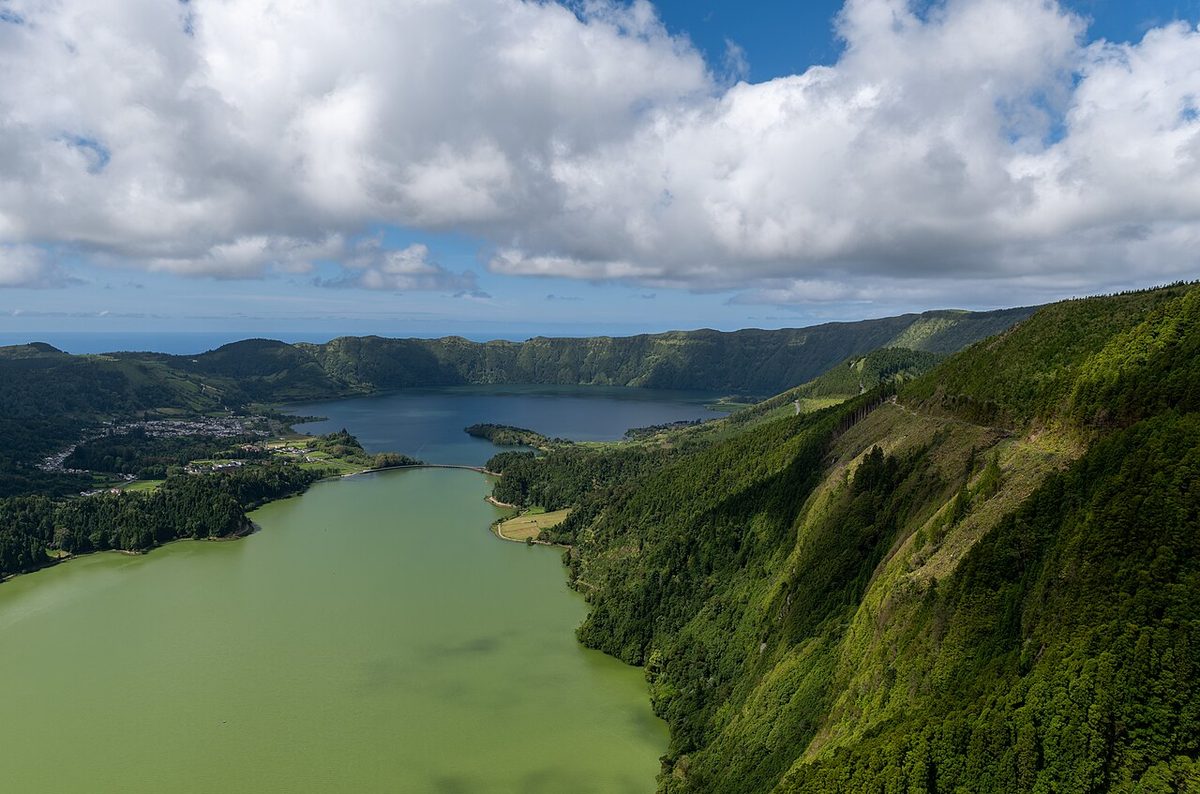
The largest island, home to about half the archipelago’s population, the capital at Ponta Delgada and most of the international flights. It is also, conveniently, the island with the widest range of things to do: two caldera lake systems, a geothermal valley, the only commercial tea plantations in Europe, the best restaurants in the archipelago and whale-watching from two harbours.
Sete Cidades is the image on every Azores poster: a vast collapsed volcano on the western end of the island with two lakes in its floor, one green and one blue, separated by a narrow causeway. The viewpoint at Vista do Rei on the rim gives you the whole thing; the Boca do Inferno viewpoint, a short walk further, is better. Go early, because cloud builds over the rim most afternoons and the view simply vanishes.
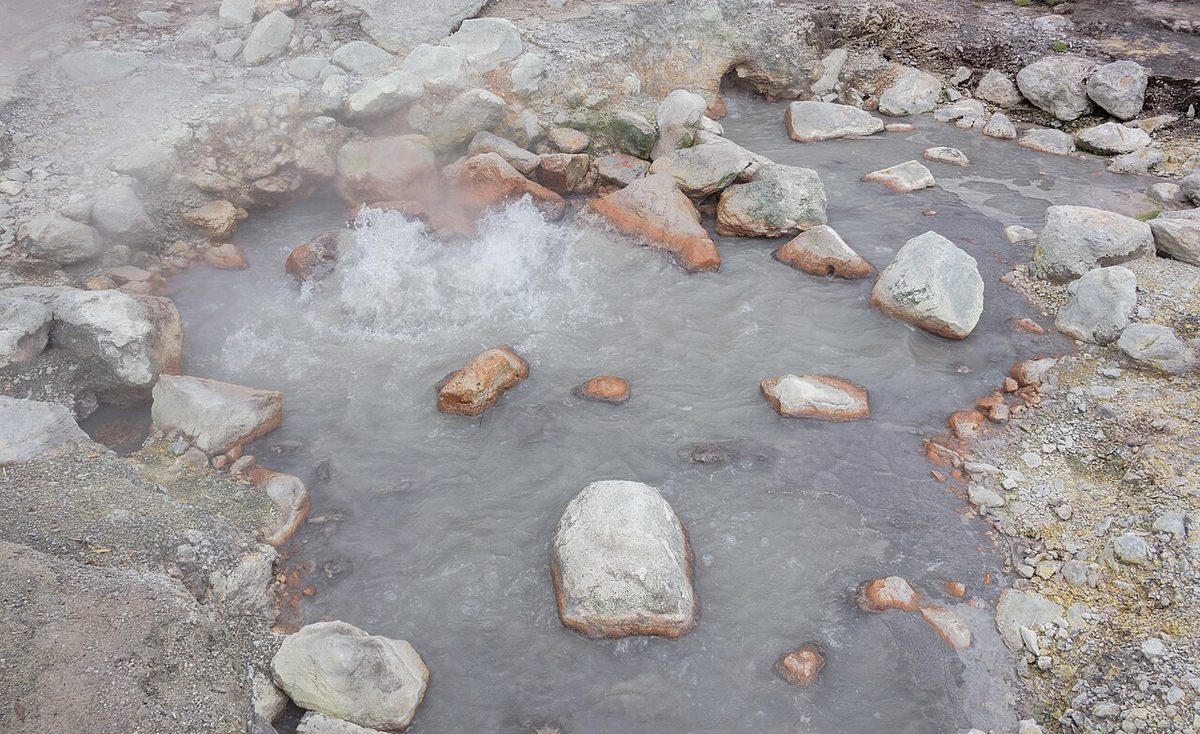
Furnas, at the eastern end, is a village inside an active volcanic caldera, with boiling springs and steaming fumaroles in the middle of the streets. The local dish, cozido das Furnas, is a meat and vegetable stew lowered into holes in the volcanic ground beside the lake and left to cook in the earth’s heat for about six hours. The Terra Nostra garden has a thermal pool of warm, iron-rich orange water that you can swim in, and it stains swimwear permanently, so bring an old costume.
Lagoa do Fogo, in the centre of the island, is a crater lake in a nature reserve with no development at all, reached by a mountain road and a steep path down to the shore. Gorreana on the north coast grows and processes tea on estates that have operated since the nineteenth century, and the factory can be visited free.
Verdict: a week on São Miguel is a complete trip on its own, and it is the right first visit for almost everyone. Our itinerary guide sets out a seven-day São Miguel plan day by day.
Pico: the mountain and the vineyards
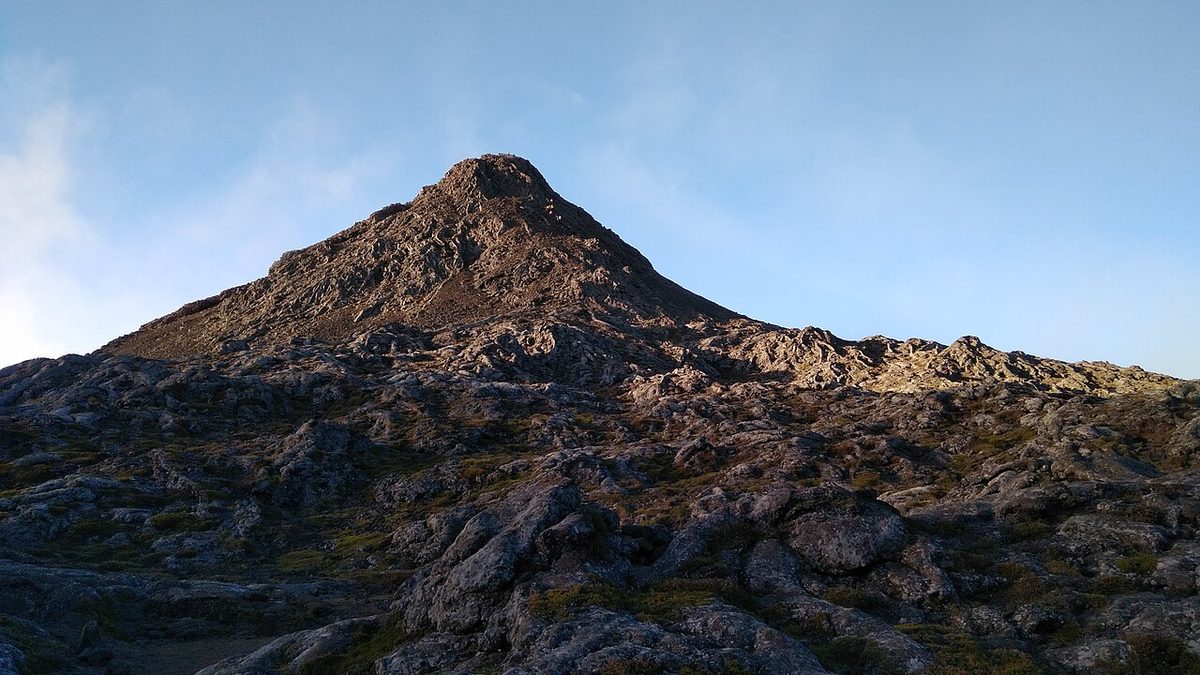
Pico is a single volcano rising out of the sea to 2,351 metres — the highest point in Portugal — with the rest of the island draped around its base. The mountain dominates everything, including the weather, and when the summit clears it is visible from Faial, São Jorge and Terceira.
The climb is a serious mountain day: about 1,100 metres of ascent from the Casa da Montanha on a steep, unstable volcanic path, finishing at the Piquinho, a small secondary cone on the summit crater rim. Registration at the Casa da Montanha is compulsory, a GPS tracker is issued, and a fee is charged — I could not confirm the current rate at source, so check with the regional parks service before you go. The weather can turn quickly and people have died on this mountain.
The vineyards are the other reason to come, and they are unlike any other wine landscape in the world. Vines are planted in small enclosures called currais, walled with black basalt stones to protect them from the Atlantic wind and salt, in a grid that covers the coastal lava fields. The landscape was inscribed as a UNESCO World Heritage site in 2004, and the wine it produces — historically a fortified verdelho shipped as far as the Russian imperial court — is being revived.
Lajes do Pico on the south coast was a whaling port until 1984, and the Museu dos Baleeiros in the old boat sheds tells that story without sentimentality. It is also one of the best whale-watching bases in the Atlantic, and the old whaling lookouts — vigias — on the headlands are still used, now to spot whales for the tour boats.
Verdict: the most dramatic island, and the one to pair with Faial.
Faial: Horta, the harbour and the volcano
Thirty minutes across the channel from Pico by ferry, Faial is known as the blue island for the hydrangea hedges that line every road and flower in June and July. Its town, Horta, has one of the most famous yachting harbours in the world: every transatlantic sailor stops here, and the tradition is to paint a picture of your boat on the harbour wall before you leave, for luck. The walls and quays are now covered in thousands of them, decades deep.
Peter Café Sport, on the harbour front, has been the sailors’ bar since the early twentieth century, runs a scrimshaw museum upstairs, and makes a gin that everyone orders once.
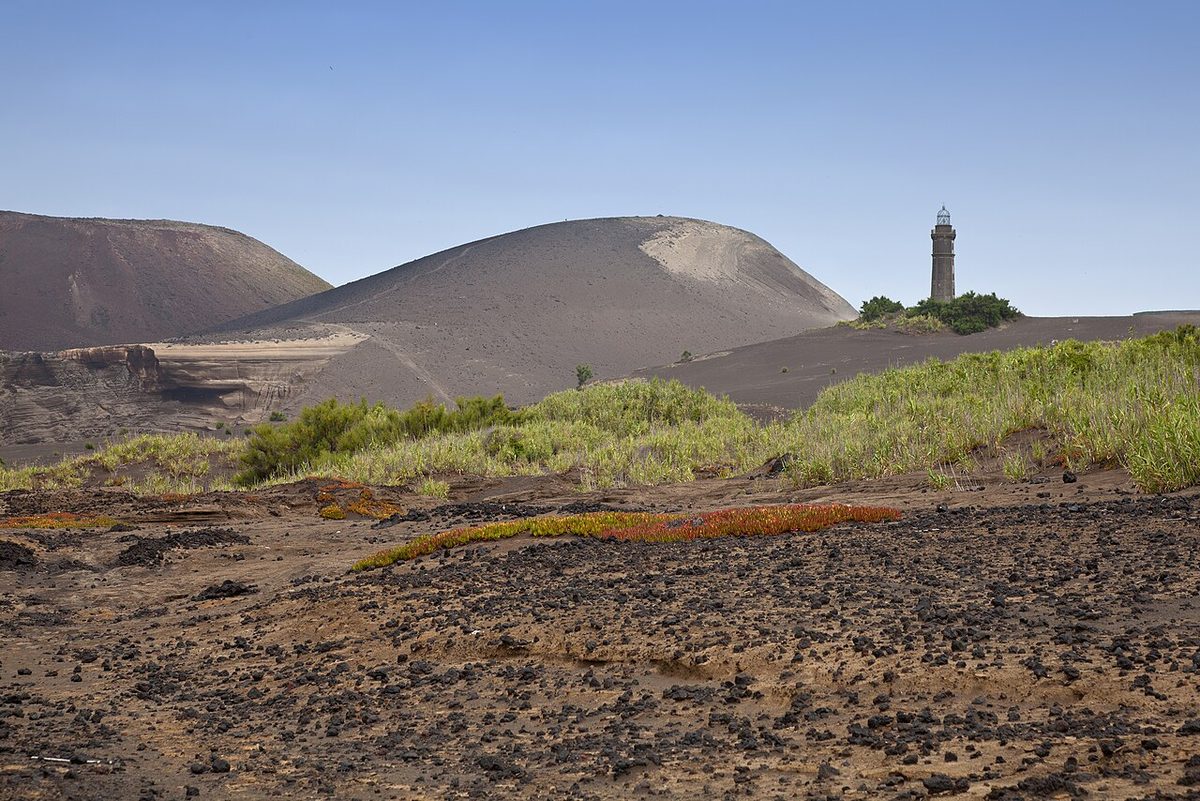
Capelinhos, at the western tip, is where a submarine volcano erupted in 1957 and 1958, adding new land to the island and burying a lighthouse to its upper storey in ash. The landscape is still raw: grey ash dunes, a half-buried lighthouse, and an excellent underground interpretation centre built into the new ground. The Caldeira, in the centre of the island, is a crater two kilometres across that you can walk around on the rim.
Verdict: the best island for a slower pace, and the natural partner to Pico.
Terceira: the best town in the Azores
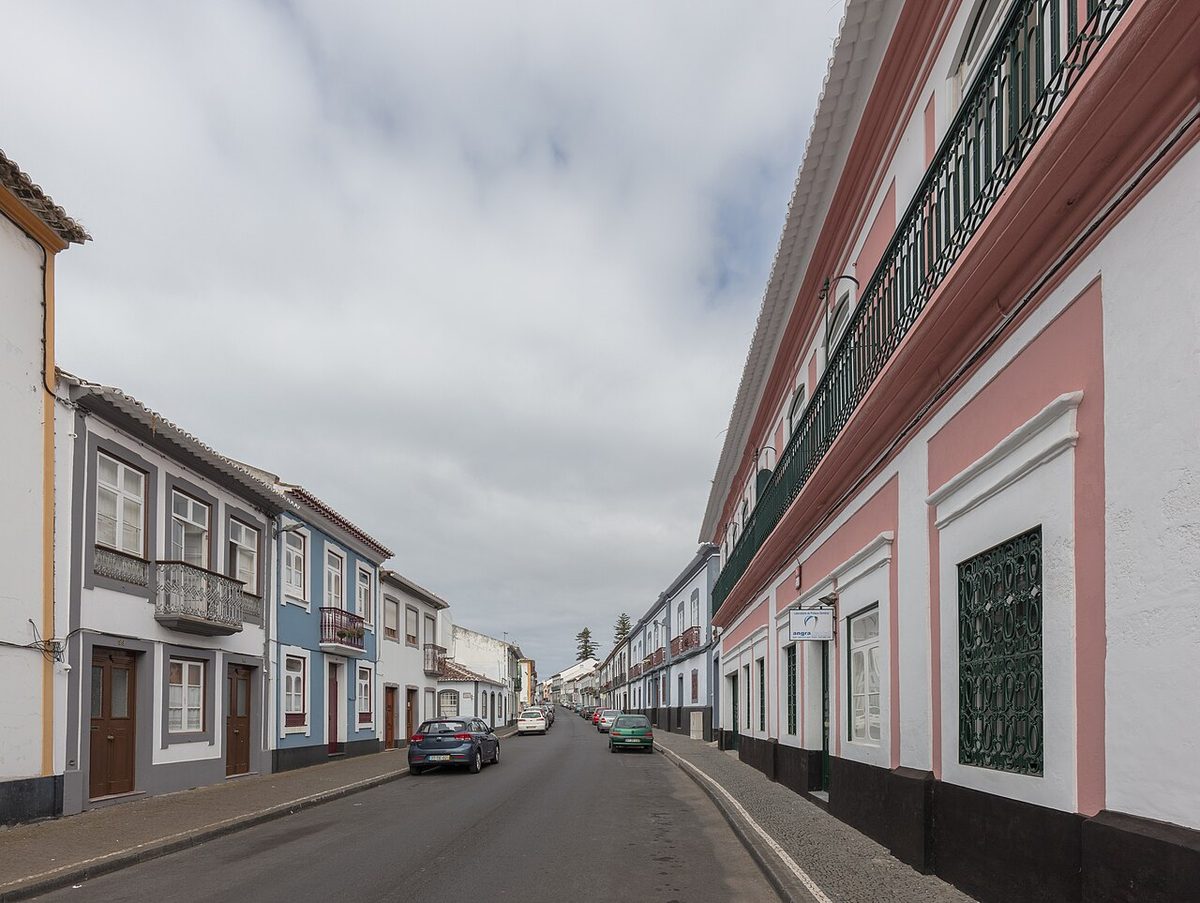
Terceira’s capital, Angra do Heroísmo, was the first European city in the Atlantic laid out on a Renaissance grid, and for three centuries it was the stopping point for fleets returning from the Americas and the Indies. The historic centre was inscribed as a UNESCO World Heritage site in 1983, badly damaged by an earthquake in 1980 and carefully rebuilt, and it is the most handsome town in the archipelago: colourful façades, wrought-iron balconies and a harbour below a fortress.
Beyond Angra, the island has the Algar do Carvão — a volcanic chimney you can descend into, one of very few in the world open to visitors — and a festival calendar built around the Holy Spirit and around tourada à corda, a street bull-running with the bull on a long rope that is Terceira’s own tradition. Bulls are not killed, and the event is very much a village affair.
Verdict: the best island for towns, history and festivals, and a good second island after São Miguel.
São Jorge: the fajãs
A long, narrow ridge of an island, fifty-five kilometres long and barely eight wide, with cliffs that drop hundreds of metres to the sea. At the foot of the cliffs are the fajãs: flat platforms of land formed by landslides and lava flows, some reached only on foot, where people still farm and fish in hamlets with no road. The Fajã da Caldeira de Santo Cristo, reached by a long walk down from the ridge, has a lagoon where clams grow that are found nowhere else in the archipelago.
São Jorge also produces the Azores’ best-known cheese, a hard, spicy cow’s milk cheese with a protected designation, and the dairies can be visited.
Verdict: the best walking island, and ideal if you want to do the fajã routes. It is close to Pico and Faial by ferry in summer.
Flores and Corvo: the far west
Flores, on the North American tectonic plate rather than the Eurasian one, is the wettest and greenest island and many visitors think the most beautiful: waterfalls pouring off cliffs, seven crater lakes, and an almost empty landscape. It is also a long way from everything else and flights are frequently disrupted by weather, so a Flores trip needs slack in the schedule.
Corvo, a short boat ride north, is the smallest island: one village, a single road up to a collapsed caldera with lakes in its floor, and fewer than 500 residents. It works as a day trip from Flores when the sea allows the crossing.
Verdict: the Azores at their wildest. Not for a first visit, and never for a trip with a tight onward connection.
Santa Maria and Graciosa
Santa Maria is the oldest and southernmost island, the driest and warmest, and the only one with proper golden-sand beaches — the bay of São Lourenço, with vineyards terraced down to the water, is the prettiest spot. Graciosa is small, flat and quiet, and its main sight is the Furna do Enxofre, a cavern inside a caldera containing a lake beneath a vaulted roof, reached by a spiral staircase in a stone tower.
Verdict: Santa Maria for a beach week in the Azores, which is otherwise a contradiction in terms. Graciosa for people who have seen the rest.
How the islands came to be the way they are
The Azores make more sense once you know four things about their past, and none of them takes long.
They were empty when the Portuguese arrived. Unlike the Canaries, the Azores had no native population. Portuguese navigators reached them in the fifteenth century and settlement began in the 1430s, with farmers from mainland Portugal and, on Faial and Terceira in particular, a significant number of Flemish settlers. That Flemish strand is why some islands have windmills that look like nowhere else in Portugal and why certain surnames and place names are not Portuguese at all.
For three centuries they were the Atlantic’s service station. Fleets returning from Brazil, the Caribbean and the Indies needed water, food and repairs at the halfway point, and Angra on Terceira became one of the most important ports in the Atlantic world. The fortresses around its bay were built to protect treasure fleets from pirates and rival navies. That wealth is why a small island town has a cathedral, a Renaissance street grid and a UNESCO listing.
Then came whaling, and emigration. In the nineteenth century, American whaling ships working the mid-Atlantic began recruiting Azorean crews, and many of those men settled in New England. The islands developed their own shore-based whaling industry, hunting sperm whales from open boats with hand harpoons until 1984. The emigration continued long after the whalers, which is why there are more people of Azorean descent in Massachusetts, Rhode Island and Canada than on the islands themselves, and why so many islanders speak excellent English.
And since 1976 they have governed themselves. The Azores are an autonomous region of Portugal with their own regional government and parliament, which is why regulations — on trails, whale-watching, parks and fishing — are set locally, and why the islands feel distinctly their own place rather than a province of Lisbon. Terceira also hosts the Lajes air base, a transatlantic staging post since the Second World War, which is part of why that island has the archipelago’s most international feel.
Hold those four facts and the landscape reads differently: the whaling lookouts on every headland, the fortresses above Angra, the Flemish windmills on Faial, and the American accents in Ponta Delgada’s cafés all fit together.
How many islands, and which combination?
This is the decision that makes or breaks the trip.
| Trip length | Islands | Why |
|---|---|---|
| 5 days | São Miguel only | Enough for both calderas, Furnas, a whale trip and Ponta Delgada |
| 7 days | São Miguel only, or São Miguel plus Terceira | One island properly is better than two in a hurry |
| 10 days | São Miguel plus Pico and Faial | The ferry between Pico and Faial means the second pair is effectively one base |
| 14 days | São Miguel, Pico, Faial, São Jorge | The central triangle is linked by summer ferries |
| 21 days | Add Flores and Corvo, or Terceira and Graciosa | Only with slack for weather delays |
The mistake to avoid is four islands in a week. Every island change costs half a day of transfers, airports and car-hire desks, and in the Azores it also carries a real risk of a weather cancellation. Three islands in ten days is ambitious; five in fourteen is a logistics exercise.
Two sample plans: São Miguel, and Pico with Faial
Five days on São Miguel
| Day | Plan | Why this order |
|---|---|---|
| 1 | Arrive; Ponta Delgada’s old centre, the black-and-white church fronts, dinner on the harbour | A soft first day after the flight |
| 2 | Sete Cidades early, then the Ponta da Ferraria hot spring at low tide | The west end in one sweep, before the cloud builds on the rim |
| 3 | Whale-watching from Ponta Delgada or Vila Franca in the morning; pineapple glasshouses in the afternoon | Keeps a flexible day for the sea state |
| 4 | Drive east to Furnas: fumaroles, a cozido lunch, Terra Nostra; overnight in Furnas | The pools are best in the evening when the day visitors leave |
| 5 | Lagoa do Fogo and Gorreana tea on the way back west; fly out | The centre and north coast on the return leg |
Two deliberate choices there. The whale trip sits in the middle of the week, so a rough-sea cancellation can move a day in either direction. And the night in Furnas saves a long drive and gives you the thermal pools in the evening, which is the best time to use them.
Three days on Pico and Faial
| Day | Plan |
|---|---|
| 1 | Arrive on Faial; Horta harbour, the painted walls, a drink at Peter Café Sport; the Caldeira rim if the weather is clear |
| 2 | Capelinhos and its interpretation centre in the morning; the thirty-minute ferry to Madalena on Pico in the afternoon; the vineyard landscape at Criação Velha |
| 3 | Whale-watching from Lajes do Pico and the whalers’ museum, or the mountain if you have registered and the forecast is good |
If you intend to climb Pico, give it a day of its own with a spare day behind it, because the mountain is frequently in cloud and there is no point climbing into fog.
Island hopping: the logistics in one table
| Connection | How | Reliability |
|---|---|---|
| Pico ↔ Faial | Ferry, about thirty minutes | The most reliable link in the archipelago; runs year-round |
| Pico/Faial ↔ São Jorge | Ferry | Good in summer; reduced or suspended in winter |
| São Miguel ↔ Terceira | Flight | Frequent, short, generally reliable |
| São Miguel ↔ Pico or Faial | Flight | Good; occasionally disrupted by weather |
| São Miguel ↔ Santa Maria | Flight; summer ferry | Short and usually straightforward |
| Anywhere ↔ Flores | Flight | The most weather-affected route; build in slack |
| Flores ↔ Corvo | Small boat | Depends entirely on sea conditions |
Operators are SATA Azores Airlines for flights and Atlânticoline for ferries, and both publish seasonal timetables that change between summer and winter; check them for your dates rather than relying on any guide. The general rule survives every timetable change: short central-group ferries are dependable, long-distance hops are flights, and the western group is where the weather has the final say.
Festivals and the Azorean calendar
The islands’ festival year is dominated by religious celebrations that are community events rather than tourist attractions, and being there for one is among the best things that can happen on a trip.
The Holy Spirit festivals run from Easter through the summer on every island, centred on small chapels called impérios — Terceira has dozens, painted in bright colours — with processions, a crowning ceremony and free meals of soup, bread and meat shared with anyone who turns up. They are the most distinctively Azorean tradition and almost entirely unadvertised.
Senhor Santo Cristo dos Milagres in Ponta Delgada, in spring several weeks after Easter, is the largest religious festival in the archipelago, drawing emigrants back from North America and filling the city.
The Sanjoaninas in Angra do Heroísmo in June is Terceira’s big summer festival, with parades, music and touradas à corda — the rope bull-runnings that take place in villages across the island through the summer.
Semana do Mar in Horta in August is a week of sailing, music and seafood that fills Faial’s harbour.
If your dates coincide with any of these, book accommodation early. If they do not, ask locally — a village Holy Spirit festival is happening somewhere most weekends between Easter and August.
The Azores with children
The islands suit children who like animals, water and being outdoors, and suit less well children who need beaches, attractions and short journeys. The reliable wins are the whale-watching catamarans (steadier than zodiacs, with shade and toilets), the thermal pools, the cozido being dug out of the ground in Furnas, the Algar do Carvão on Terceira, and the cows, which are everywhere. The things to plan around are the winding roads, which make some children carsick, the lack of sandy beaches outside Santa Maria, and the weather, which means indoor fallbacks are useful.
Getting there, and getting between the islands
From mainland Portugal, the UK and the US
Most international arrivals land at Ponta Delgada on São Miguel, which has the most direct flights, including from the US East Coast and mainland Portugal. From Lisbon the flight takes about 2h25. Terceira’s airport at Lajes also receives some international and mainland services, and Horta on Faial and Pico have mainland connections that vary by season.
The Azores sit roughly halfway between Europe and North America, which makes them an unusually good stopover on a transatlantic trip — several carriers allow a free or low-cost stop in Ponta Delgada on a Lisbon routing.
Between the islands
Inter-island travel is by SATA Azores Airlines, which flies small turboprops between all nine islands, and by the Atlânticoline ferries. The two networks behave very differently by season: the summer ferry network is far denser than the winter one, and outside summer several routes do not run at all.
The routes that work reliably are the short central-group crossings — Pico to Faial takes about thirty minutes and runs year-round, and São Jorge connects to both. Longer crossings between the island groups are long, can be rough, and in practice most people fly.
The honest warning: inter-island flights are cancelled or delayed by weather more often than on the mainland, particularly in winter and particularly to the western group. Build a spare day into any itinerary with more than one island, and do not schedule an island hop on the day before an international departure.
On each island
A hire car is close to essential everywhere except perhaps Corvo. Buses exist but run on schedules built around residents, and the best sights — caldera rims, lake shores, fajã trailheads — are nowhere near a bus stop. Roads are generally good, narrow in the villages, and frequently blocked for a few minutes by cattle being moved between fields, which is simply part of the Azorean road experience.
Whales and dolphins: the calendar in detail
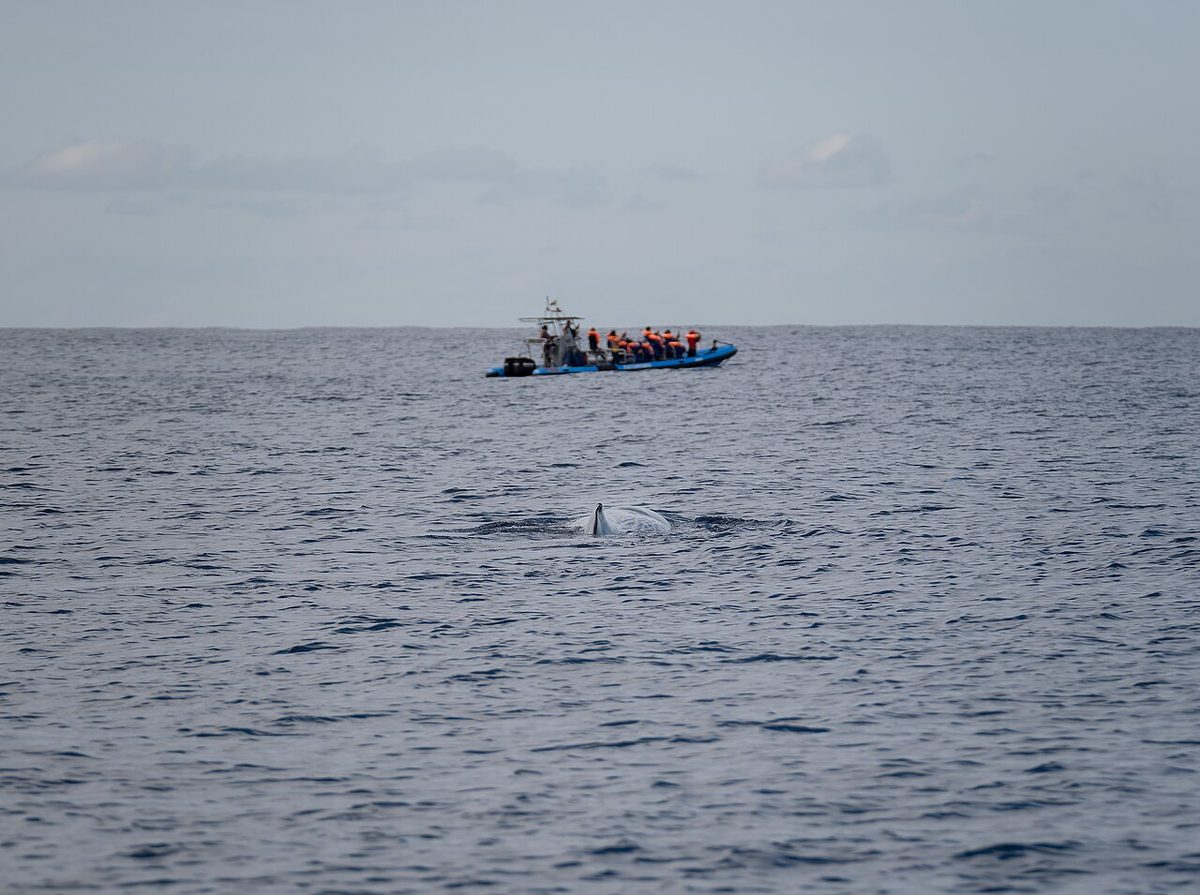
The Azores are among the best places in the world to see whales, and the reason is geology: the islands are the summits of undersea mountains, so deep water — two or three thousand metres — lies very close to shore. Whales that feed at depth come close to land.
| Species | When | Notes |
|---|---|---|
| Sperm whale | Every month of the year | Resident; the reliable sighting in any season |
| Blue whale | Roughly April to June | Strongest mid-April to mid-May; most gone north by late June |
| Fin whale | Roughly April to June | Passing on migration with the blues |
| Sei whale | Roughly April to June | Also migratory; less predictable |
| Bottlenose and common dolphins | Year-round | Seen on almost every trip |
| Risso’s dolphin | Year-round | Resident around several islands |
The best bases are Ponta Delgada and Vila Franca do Campo on São Miguel, and Lajes do Pico, whose old whaling lookouts on the headlands are still used to spot animals and radio positions to the boats. That spotting system is why sighting rates here are high, and it is a direct inheritance from the whaling industry that ran until 1984.
The tension to understand: the migrating blue, fin and sei whales pass in April, May and June, when the weather is still unsettled. The settled summer weather arrives in July, August and September, when the giants have largely gone north. Sperm whales and dolphins are there in every month. So you choose: the rarest animals, or the best conditions.
Boat or zodiac? Rigid inflatables are faster and closer to the water, and the ride can be rough. Larger catamarans are steadier, have shade and toilets, and suit families and anyone prone to seasickness. Operators work to a regional code that limits approach distances and time with each group.
When to go, and the four-seasons problem
The Azores are mild all year and settled almost never. Ponta Delgada’s published 1991–2020 climate normals give a mean daily maximum of 17.5 °C in January and 26.0 °C in August — a narrow range, because the ocean moderates everything — with about 987.5 mm of rain a year. What the averages hide is how quickly the weather changes. “Four seasons in a day” is a cliché about many places and a literal description of these islands.
| Month | Ponta Delgada mean daily max | Rainfall | What it means |
|---|---|---|---|
| January | 17.5 °C | 102.1 mm | Mild, wet, windy; inter-island flights most often disrupted |
| April | 18.8 °C | 79.6 mm | Green, unsettled; the start of the blue whale window |
| June | 22.4 °C | — | Hydrangeas flowering; whales still passing |
| July | 24.7 °C | 26.0 mm | The most settled month; the summer ferries are running |
| August | 26.0 °C | — | Warmest; busiest; still breezy rather than hot |
| October | 22.6 °C | 118.0 mm | Warm sea, returning rain, thinning crowds |
| December | 18.3 °C | 152.8 mm | The wettest month; short days; quiet |
Climate figures are the official normals for the Afonso Chaves observatory in Ponta Delgada; rainfall is shown only for the months where I have the published figure.
The practical answer: July, August and September for the most settled weather, the warmest sea and the full summer ferry network. Mid-April to mid-May if the blue whales are the point. June is a good compromise — the hydrangeas are out, the whales are still passing and the weather is improving. December to February are wet and windy enough that flights cancel, and are only worth it if you want the islands to yourself and can absorb delays.
How to live with the weather: check the webcams before driving up to a caldera rim, because the view from Vista do Rei or Lagoa do Fogo is either spectacular or a wall of white, and there is no middle. Keep the itinerary loose, so that a cloudy morning at Sete Cidades becomes a hot-spring morning in Furnas. And pack a proper waterproof in every month. Our month-by-month guide to Portugal sets the Azores against the mainland and Madeira.
Nature, birds and the green that is not native
The Azores look like untouched wilderness and are in fact one of the most heavily modified landscapes in the Atlantic, which is worth understanding before you spend a week admiring it.
The hydrangeas are an introduction. The blue hedges that line the roads and give Faial its nickname were planted, largely in the nineteenth and twentieth centuries, as field boundaries and windbreaks, and they have since spread widely. They are beautiful in June and July and they are also treated as an invasive species that crowds out native plants. The dark forests of tall, straight conifers on the hillsides are mostly Japanese cryptomeria, planted for timber.
The native forest survives in fragments. The original vegetation was laurel forest, a relic of the subtropical woodland that once covered much of southern Europe, similar to what survives on Madeira. On the Azores it has been reduced to patches on the high, wet ground, and several of the walking routes on São Miguel, Flores and Terceira pass through the best remaining stands.
One of Europe’s rarest birds lives here. The Azores bullfinch, or priolo, is found only in a small area of native forest around Pico da Vara at the eastern end of São Miguel, and conservation work there has been one of the region’s notable successes. Seeing one takes patience and luck; the visitor centre in the area explains the project.
The seabirds are the other spectacle. Cory’s shearwaters nest on the cliffs in huge numbers through the summer, and after dark their calls — a strange, wailing, almost human sound — carry across every coastal village. Stand on a harbour wall on a summer night and you will hear them long before you work out what they are.
Hot springs and thermal pools
Volcanic heat is close to the surface on several islands, and bathing in it is one of the defining Azorean experiences.
| Where | What it is | Verdict |
|---|---|---|
| Terra Nostra, Furnas | A large iron-rich thermal pool in a historic botanical garden | The famous one; the orange water stains swimwear for good |
| Poça da Dona Beija, Furnas | Several smaller stone-lined thermal pools, open into the evening | Better after dark, when the day visitors have gone |
| Caldeira Velha, São Miguel | A warm pool below a waterfall in thick forest | The most atmospheric; entry is capped |
| Ponta da Ferraria, São Miguel | A hot spring emerging into a rocky tidal pool in the sea | Only works around low tide; hold the ropes |
| Carapacho, Graciosa | A small spa with thermal waters | Quiet, and a reason to visit Graciosa |
Entry fees are modest at the managed pools; I have not quoted figures because they change by season and I could not confirm them at source, so check on the day. Two practical rules apply everywhere: bring a dark or old swimsuit, because the iron-rich water stains, and remove jewellery, which the mineral water tarnishes.
Walking the Azores
Every island has a network of official walking routes, signposted and graded, and the walking is the best way to see a landscape that roads mostly skirt. The routes range from gentle lakeside loops to serious mountain days, and conditions change fast enough that a route which is easy in the morning can be unpleasant by lunchtime.
| Walk | Island | Character |
|---|---|---|
| Sete Cidades crater rim | São Miguel | Long, high, views into both lakes; nothing if the cloud is down |
| Lagoa do Fogo descent | São Miguel | Steep path down to an undeveloped crater lake shore |
| Fajã da Caldeira de Santo Cristo | São Jorge | Down the cliffs to a lagoon hamlet with no road |
| Caldeira rim | Faial | A loop around a two-kilometre crater |
| Montanha do Pico | Pico | A serious mountain day; registration compulsory |
| Rocha dos Bordões and the lakes | Flores | Waterfalls, crater lakes, basalt columns |
Three cautions. The trails get muddy and slippery, even in summer, so proper footwear matters more than on the mainland. Some routes are linear, which means arranging a taxi at the far end. And on Pico, the mountain is a genuine hazard in bad weather, with fog that reduces visibility to a few metres and a path that is easy to lose; the compulsory registration and GPS tracker exist for good reason.
Eating and drinking in the Azores
Azorean food is simple, abundant and built on cattle, fish and volcanic soil. The islands have far more cows than people, which is why the beef, the dairy and the cheese are all excellent.
| Dish or drink | What it is | Where |
|---|---|---|
| Cozido das Furnas | Meat, sausage and vegetables cooked in volcanic ground for about six hours | Furnas; order ahead in the smaller restaurants |
| Alcatra | Beef braised slowly in wine in an earthenware pot | Terceira’s signature dish |
| Lapas | Grilled limpets with garlic butter | Every coastal restaurant |
| Queijo de São Jorge | Hard, spicy, aged cow’s milk cheese | São Jorge, and every Azorean table |
| Pineapple | Grown in glasshouses on São Miguel for more than a century | The plantations near Ponta Delgada can be visited |
| Chá Gorreana | Green and black tea from the only commercial tea estates in Europe | The factory on São Miguel’s north coast |
| Pico wine | Whites grown in basalt-walled vineyards on lava | Pico, and increasingly good |
General Portuguese pricing broadly applies: a coffee at the counter around €0.80–€1.20, a set lunch with wine around €9–€15, and a mid-range dinner for two around €40–€60 (checked September 2026). Ponta Delgada’s best restaurants cost more, and the villages cost less.
Driving the islands, and getting to know Ponta Delgada
What the roads are actually like
São Miguel is about 65 kilometres end to end, and a modern expressway runs along much of its south and north coasts, so crossing the island is quicker than its winding interior suggests. Off the main roads, the lanes are narrow, walled with volcanic stone and hedged with hydrangeas, and the mountain roads up to the caldera rims climb steeply through forest. None of it is difficult driving, but all of it is slower than a map implies.
Three things will happen on almost every Azorean drive. You will meet cattle being moved along the road by a farmer on foot, and you will wait. You will drive into cloud on a mountain road, often suddenly, and visibility will drop to a few metres. And you will stop far more often than planned, because there is a miradouro — a signposted viewpoint, usually with a picnic table and flowerbeds — around almost every bend. Budget accordingly.
Ponta Delgada in half a day
The capital is a working town rather than a showpiece, and it repays a slow half day. The Portas da Cidade, three arches that once opened on to the harbour, are the city’s symbol. The old centre is a grid of black basalt and whitewash, the churches are framed in dark volcanic stone, and the pavements are the black-and-white calçada familiar from Lisbon. The Mercado da Graça sells the islands’ produce — cheeses, pineapples, passion fruit, fish — in a covered market that still serves residents. The marina and the Portas do Mar waterfront are where the whale-watching boats leave and where the town goes in the evening.
On the edge of town, the pineapple glasshouses are one of the islands’ odder sights: pineapples have been grown under glass on São Miguel for more than a century, in whitewashed greenhouses where the plants were traditionally forced into fruit with smoke. Several plantations can be visited, and the fruit turns up in liqueurs, jams and desserts across the island.
Where to stay
| Island | Base | Why |
|---|---|---|
| São Miguel | Ponta Delgada, plus one night in Furnas | Ponta Delgada for restaurants and whale boats; Furnas for the pools after dark |
| Pico | Madalena or Lajes do Pico | Madalena for the Faial ferry; Lajes for whales and the museum |
| Faial | Horta | The harbour, the restaurants and the ferry to Pico |
| Terceira | Angra do Heroísmo | The UNESCO town is the reason to come |
| São Jorge | Velas or Calheta | Close to the ferries and the fajã trailheads |
| Flores | Santa Cruz or Lajes das Flores | Near the airport, because the weather sometimes decides your departure |
Rural tourism is well developed across the islands, with farmhouses, quintas and converted stone cottages available on every island, and they are often better value and better located than town hotels. On São Miguel in particular, splitting the week between Ponta Delgada and a night or two at the eastern end saves a great deal of driving.
What a week costs
| Item | Guide |
|---|---|
| Flight from Lisbon | About 2h25 to Ponta Delgada; fares vary sharply by season |
| Hire car | Close to essential; book early for July and August when island fleets are small |
| Whale-watching trip | A half-day outing; prices vary by operator and boat type |
| Thermal pools | Modest entry at managed pools; free at Ponta da Ferraria |
| Eating | €9–€15 set lunch, €40–€60 dinner for two (checked September 2026) |
| Inter-island flight or ferry | Ferries are cheaper and summer-only on most routes; flights are quicker |
The Azores are not cheap to reach but are reasonable once there, and the two costs people forget to budget are car hire, which rises steeply in high summer because fleets on the smaller islands are limited, and the extra night or two of accommodation that a weather delay can produce.
What to skip, and what is overrated
Four islands in a week
The most common planning mistake. Every island change costs half a day and carries a weather risk. One island in a week is a holiday; four is a series of airports.
Sete Cidades in the afternoon
Cloud builds over the crater rim on most days, and after lunch the famous view is frequently just white. Go early, check the webcam first, and if it is clouded in, go to Furnas and come back tomorrow.
Expecting beaches
The Azores are volcanic islands with rocky, black-sand coastlines, and outside Santa Maria there is little of what most people mean by a beach. Swimming happens in natural rock pools, sea platforms and thermal pools. If sand is the priority, go to Santa Maria — or to the Algarve.
Winter trips with a tight connection
Flights between islands, and occasionally to the mainland, are cancelled or delayed by weather more often in winter. Never schedule an island hop the day before an international departure, and never plan a Flores trip without slack.
The Pico climb as an afterthought
It is a serious mountain, not a viewpoint. People set out late, in poor weather, in trainers, and get into trouble. If you want to climb it, make it the centre of a day, start early, register at the Casa da Montanha and turn back if the fog comes down.
Whale-watching in July expecting blue whales
The migrating giants pass roughly April to June and most blues have gone north by late June. A July trip will almost certainly deliver sperm whales and dolphins, which are wonderful, but not the largest animal on earth. Choose the month accordingly.
Visiting lightly
The Azores have built their tourism around nature rather than resorts, and several of the rules you will meet exist because the places they protect are small and fragile.
Whale-watching is regulated by a regional code that limits how close boats may approach, how many may be with a group of animals at once and for how long. Reputable operators follow it without being asked, and a skipper who races up to a whale or stays long after the others have left is a skipper to avoid next time.
Some sites cap numbers. Caldeira Velha on São Miguel limits entry, and the islet off Vila Franca do Campo restricts daily visitors in summer. That is why they still feel like places rather than queues, and why booking or arriving early matters.
Stay on the marked trails, particularly on crater rims and in the remaining laurel forest, where erosion and trampling do lasting damage, and close the cattle gates behind you on farm tracks, because the cows are somebody’s living.
Buy local. The islands produce their own cheese, butter, tea, pineapples, wine and fish, and the money spent in a village restaurant or at the Mercado da Graça stays on the island in a way that an all-inclusive package never does.
None of this is onerous. It is simply the arrangement that keeps the Azores looking the way they did when you booked.
Practical notes
Driving is easy but slow: the island roads are well surfaced, winding and frequently blocked for a few minutes by cattle being moved between fields. Budget more time than the map suggests, and never drive a crater road in dense fog.
Weather apps and webcams are more useful here than anywhere else in Portugal. Check the live cameras at the main viewpoints before committing a morning to a caldera.
Cash is still useful in the villages and at smaller cafés, though cards are widely accepted in towns.
Clothing: layers and a genuine waterproof in every month. A sunny morning at sea level can be a cold, wet afternoon on a rim at 900 metres.
Mobile coverage is good in towns and patchy on the high ground and the fajã paths, so download maps before walking.
Frequently asked questions
Which Azores island is best to visit first?
São Miguel, for almost everyone. It has the most international flights, both caldera lake systems at Sete Cidades and Lagoa do Fogo, the geothermal village of Furnas, whale-watching from two harbours and the best restaurants in the archipelago. A week there is a complete trip on its own.
How many days do you need in the Azores?
Five days for São Miguel alone, seven to do it properly, ten to add Pico and Faial, and two weeks to add São Jorge as well. Allow a spare day on any multi-island trip for weather delays, which are common.
How do you get to the Azores?
Most visitors fly into Ponta Delgada on São Miguel, which has the most direct international connections, including from the US East Coast and mainland Portugal; the flight from Lisbon takes about 2h25. Terceira, Faial and Pico also receive some mainland services, which vary by season.
How do you travel between the Azores islands?
By SATA Azores Airlines, which flies small turboprops to all nine islands, or by the Atlânticoline ferries. The summer ferry network is far denser than the winter one, and several routes run only in summer. The short Pico–Faial crossing, about thirty minutes, is the most reliable connection in the archipelago.
When is the best time to see whales in the Azores?
Mid-April to mid-May for the migrating blue whales, which pass roughly April to June alongside fin and sei whales, with most blues gone north by late June. Sperm whales are resident and recorded every month, and dolphins are year-round. The best whale months and the best weather months do not overlap, so you have to choose.
What is the weather like in the Azores?
Mild and changeable. Ponta Delgada’s mean daily maximum runs from 17.5 °C in January to 26.0 °C in August, with about 987.5 mm of rain a year, concentrated from October to March. The weather changes hourly, cloud frequently covers the caldera rims, and a waterproof is needed in every month.
Do you need a car in the Azores?
Yes, on almost every island. Buses serve residents rather than sightseers, and the calderas, lake shores, viewpoints and trailheads are far from any bus stop. Book early for July and August, when the limited island fleets sell out.
Are there beaches in the Azores?
A few. Santa Maria has genuine golden-sand beaches and is the driest, warmest island. São Miguel has some black-sand beaches and many natural rock pools. Elsewhere the coast is mostly rock, and swimming happens in natural pools, sea platforms and volcanic thermal pools rather than from sand.
Can you climb Mount Pico?
Yes, and it is a serious mountain day: about 1,100 metres of ascent on steep, loose volcanic ground from the Casa da Montanha, where registration is compulsory, a fee is charged and a GPS tracker is issued. I could not confirm the current fee at source, so check with the regional parks service. Start early and turn back if fog descends.
Is the Azores or Madeira better?
Madeira has more reliable weather, more dramatic mountain walking, a proper city and better infrastructure. The Azores have caldera lakes, hot springs, resident sperm whales and a quieter, greener, less developed landscape, with weather that will cancel some plans. For a first island trip with limited time, Madeira is the safer choice; our Madeira guide covers it in the same detail.
Is the Azores expensive?
Reaching the islands can be, depending on season. Once there, costs are broadly in line with mainland Portugal: a set lunch around €9–€15 and a mid-range dinner for two around €40–€60 (checked September 2026). Car hire in high summer and weather-delay nights are the costs people underestimate.
What should I pack for the Azores?
A genuine waterproof, layers, walking shoes with grip, a dark or old swimsuit for the iron-rich thermal pools, and seasickness remedies if you are prone to it on a whale-watching zodiac. Sunscreen too, because the ocean breeze hides how strong the sun is.
Is the Azores safe?
Very. Crime against visitors is rare and the islands are among the safest places in Portugal. The realistic hazards are natural: fog on the mountain roads and on Pico, rough seas, slippery trails, and the Atlantic’s habit of changing the weather within an hour. Respect those and the islands are an easy place to travel.
Can you visit the Azores in winter?
You can, and it is quiet, green and mild — Ponta Delgada’s mean daily maximum stays around 17–18 °C — but it is also the wettest and windiest season, with December averaging about 152.8 mm of rain. Inter-island flights are disrupted more often, several ferry routes do not run, and the caldera views are frequently clouded. Stick to one island and build in slack.
Do people in the Azores speak English?
Widely, and often very well, partly because of the long history of emigration to New England and Canada and the strong family links that remain. In the smaller villages and on the less-visited islands a few words of Portuguese are appreciated, but you will rarely be stuck.
Which Azores island is best for hiking?
São Jorge for the fajã routes down the cliffs to coastal hamlets, Flores for waterfalls and crater lakes in the wildest landscape, and Pico for the one serious mountain in the archipelago. São Miguel has excellent walking too, around the Sete Cidades rim and down to Lagoa do Fogo, and it is the easiest to combine with everything else.
Is Flores worth the effort?
For many visitors it is the most beautiful island of the nine, with waterfalls pouring off basalt cliffs and seven crater lakes. It is also the most remote and the most affected by weather, so flights there and back are disrupted more often than anywhere else. Go on a second trip, give it three or four days, and leave slack at both ends.
Can you swim in the sea in the Azores?
Yes, mostly in natural rock pools, harbour swimming areas and concrete sea platforms rather than from beaches, because most of the coast is rock. Santa Maria has proper sandy beaches, and São Miguel has some black-sand ones. The Atlantic is mild rather than warm, at its best in late summer and early autumn, and the thermal pools are the warm option in any month.
What are the Azores known for?
Volcanic crater lakes, whales, hot springs and cows — the islands have far more cattle than people, which is why the beef, butter and cheese are so good. Also for the only commercial tea estates in Europe, glasshouse pineapples, the painted harbour walls of Horta, and weather that changes by the hour.
São Miguel has more than enough for a week on its own, and our São Miguel island guide goes through it region by region: when to be on the Sete Cidades rim before the cloud comes in, the summer shuttle to Lagoa do Fogo, which hot springs need a timed booking, and three-, five- and seven-day plans.
Three of the nine islands feature among Portugal’s 25 most beautiful places: São Miguel for its crater lakes, Flores for its waterfalls and basalt cliffs, and São Jorge for the fajãs at the foot of its cliffs, with where to stand and when to go for each.
São Miguel’s hot springs are the best in the country, but Graciosa has a small seaside thermal spa and Terceira a field of fumaroles. Our guide to thermal spas and hot springs across Portugal covers every island where you can bathe.
Where to go next
The Azores work best as their own trip or as the island half of a Portuguese fortnight. Our day-by-day itinerary hub shows how to pair one mainland week with one island week, and our region-by-region guide to Portugal compares the archipelago with Madeira and the mainland regions.
If you are flying via the mainland, we have full guides to Lisbon and its day-trip belt, to Porto and the Douro Valley, and to the Algarve.
Photo credits
- The Piquinho summit cone on Montanha do Pico — Daniel Pinto, CC BY-SA 4.0, via Wikimedia Commons
- A boiling fumarole pool at Furnas, São Miguel — Diego Delso, CC BY-SA 4.0, via Wikimedia Commons
- A sperm whale surfacing near a whale-watching boat off São Miguel — Jules Verne Times Two, CC BY-SA 4.0, via Wikimedia Commons
- Ash cones and the half-buried lighthouse at Capelinhos, Faial — Unukorno, CC BY-SA 3.0, via Wikimedia Commons
- Rua de São Pedro in Angra do Heroísmo, Terceira — Diego Delso, CC BY-SA 4.0, via Wikimedia Commons
Prices, schedules and climate figures were checked in September 2026 and will change; inter-island ferry timetables in particular change by season, and the Pico climb fee could not be confirmed at source. Check with SATA, Atlânticoline and the regional parks service before you travel. Last updated: 20 September 2026.