Lisbon has the best set of day trips of any capital in Europe, and the reason is geography rather than luck: a wooded mountain with palaces on it forty minutes west, an Atlantic beach coast forty minutes beyond that, a limestone sierra dropping into turquoise water an hour south, and a walled Roman city an hour and a half east. The problem is not finding one. It is that almost everybody does the same one, on the same day, at the same hour.
The short answer: the best day trips from Lisbon are Sintra for palaces, Cascais for an easy seaside afternoon, and Setúbal and the Arrábida for white-sand coves and resident dolphins. Sintra is the famous one and the most demanding. Cascais is the lowest-effort good day out. Arrábida is the one almost nobody takes and the one I would pick on a second visit.
Below is every worthwhile trip within about ninety minutes of the city, with how to get there, how long it takes, what it costs and an honest verdict — including which of the famous ones are not worth the journey. Prices and ticketing were checked in September 2026 against the operators’ own sites, and where sources disagree I have printed both figures.
Every day trip from Lisbon at a glance
Sorted roughly by how far you have to go. “Time” means the one-way journey, not the day.
| Destination | Getting there | Time | Best for | Car? | Verdict |
|---|---|---|---|---|---|
| Sintra | Train from Rossio | ~40 min | Palaces, forest, romantic ruins | No — parking is a nightmare | Extraordinary, and exhausting in summer |
| Cascais | Train from Cais do Sodré | ~40 min | Beaches, seafront, cycling | No | The easiest good day out |
| Costa da Caparica | Ferry plus bus, or bus | ~45 min | Long sandy beach, surf schools | No | Lisbon’s own beach; fine, not special |
| Setúbal & Arrábida | Ferry plus bus, or car | ~1h15 | Coves, dolphins, cheap fish | Helpful | The best value trip from Lisbon |
| Sesimbra | Bus, or car | ~1h | Fishing town, sheltered beach, castle | Helpful | Quieter Cascais with better fish |
| Ericeira | Bus from Campo Grande | ~1h10 | Surf, cliffs, seafood | Helpful | A World Surfing Reserve and a real town |
| Mafra | Bus from Campo Grande | ~1h | Enormous baroque palace-convent | No | Quiet, monumental, undervisited |
| Óbidos | Bus from Campo Grande | ~1h | Complete walled medieval town | No | Lovely at 09:00, overrun by 11:00 |
| Nazaré | Bus, or car | ~1h40 | Big waves Oct–Mar, fishing town | Helpful | Go in winter or do not go |
| Évora | Bus or train | ~1h30 | Roman temple, bone chapel, wine | No | Worth an overnight rather than a day |
| Alcobaça & Batalha | Car, or a tour | ~1h20 | Two UNESCO monasteries | Yes | Hard without a car; excellent with one |
| Fátima | Bus | ~1h30 | Major Catholic pilgrimage site | No | Only if it means something to you |
The pattern to notice: the four best trips — Sintra, Cascais, Arrábida and Ericeira — are all within about seventy minutes, and three of the four are reachable on public transport. Everything beyond ninety minutes starts to eat the day, and the three-hour round trips are usually better as overnight stops on a longer route. Our Portugal itinerary hub shows where each of them fits into a five, seven or ten-day route.
The day trips from Lisbon that deserve a whole day
Three trips are genuinely first-rate, and they are quite different from each other. If you have three spare days, take one of each.
Sintra: palaces, forest, and a ticketing mess
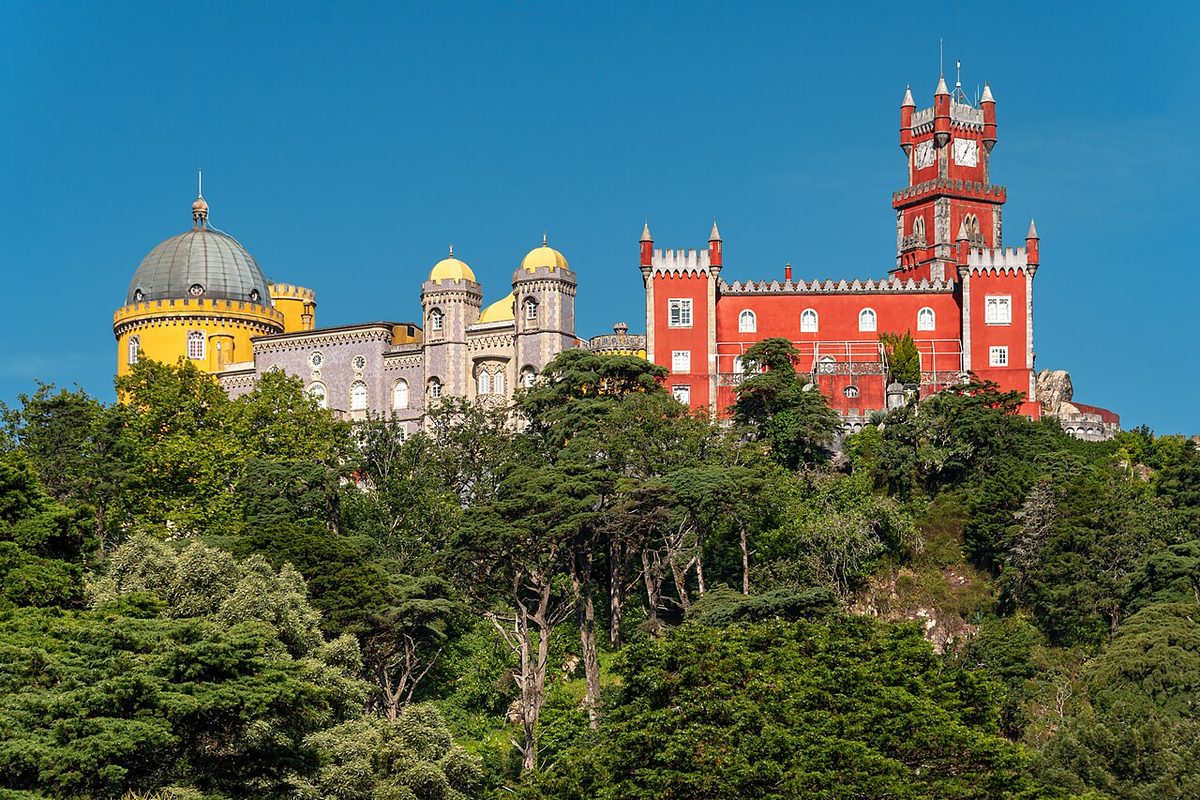
Sintra is a wooded microclimate twenty-eight kilometres west of the capital, cooler and wetter than the plain below it, where Portuguese kings and nineteenth-century eccentrics built a collection of palaces that has no real parallel in Europe. It is a UNESCO World Heritage landscape and it is also the most badly managed crowd situation in Portugal.
The ticketing, which changed and which most guides have not updated. The official Parques de Sintra site currently lists Pena Palace as an “Essential Visit” to the palace at €20, a “Complete Visit” covering palace and park at €45, and park-only entry at €12. Numerous resellers still advertise the older structure — €20 for palace and park combined, and €10 for the park alone. Those are materially different trips for materially different money, so buy from parquesdesintra.pt and treat any third-party figure, including one in a guide like this, as out of date until proved otherwise. Palace entry is timed to a specific date and slot (checked September 2026).
Opening hours, same check: the park runs 09:00–19:00 with last admission at 18:00; the palace 09:30–18:30 with the last ticket at 17:30.
The hill. The 434 bus that loops up to the castle and Pena has a queue that routinely runs 30–40 minutes between 10:00 and 13:00 in summer, and you pay for the privilege of standing in it. The Vila Sassetti footpath climbs the same hill through gardens in about 35 minutes on foot and is the better option for anyone who can manage a steady uphill walk. Tuk-tuks and taxis wait at the station and will quote you a price; agree it before you get in.
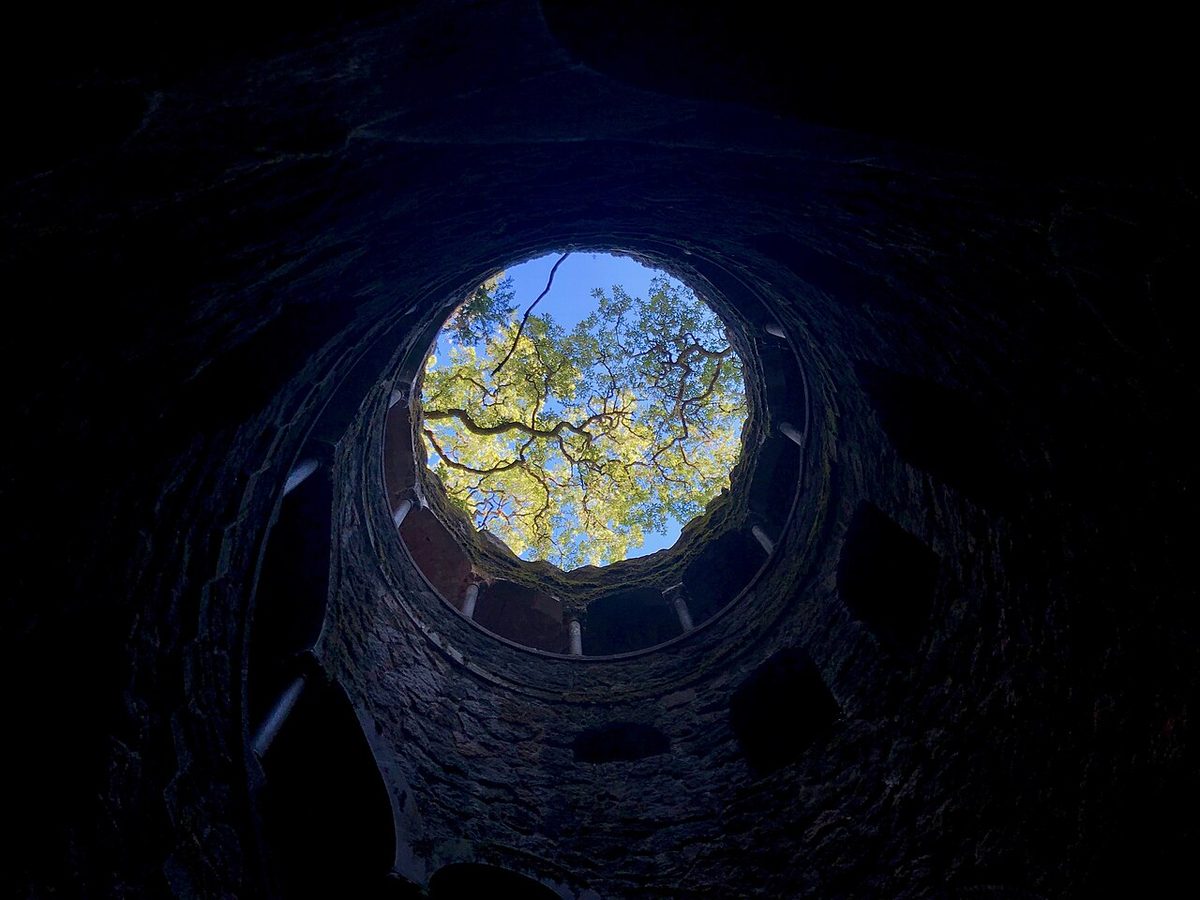
Pick two things. Pena and Quinta da Regaleira is the standard pairing and it is enough for a day. Regaleira is a Gothic-revival estate built by a wealthy collector of esoteric symbolism, whose famous initiation well is an inverted tower of nine spiral levels descending into the ground, connected to the gardens by tunnels. The Moorish castle walls, the National Palace in the town and Monserrate are all good and each costs you another bus queue.
Verdict: unmissable and best done on a weekday, out of season, starting at opening time. Our sister site’s full Sintra day plan and Pena Palace guide go into more detail, and the train from Rossio is covered separately.
Cascais and the Estoril coast
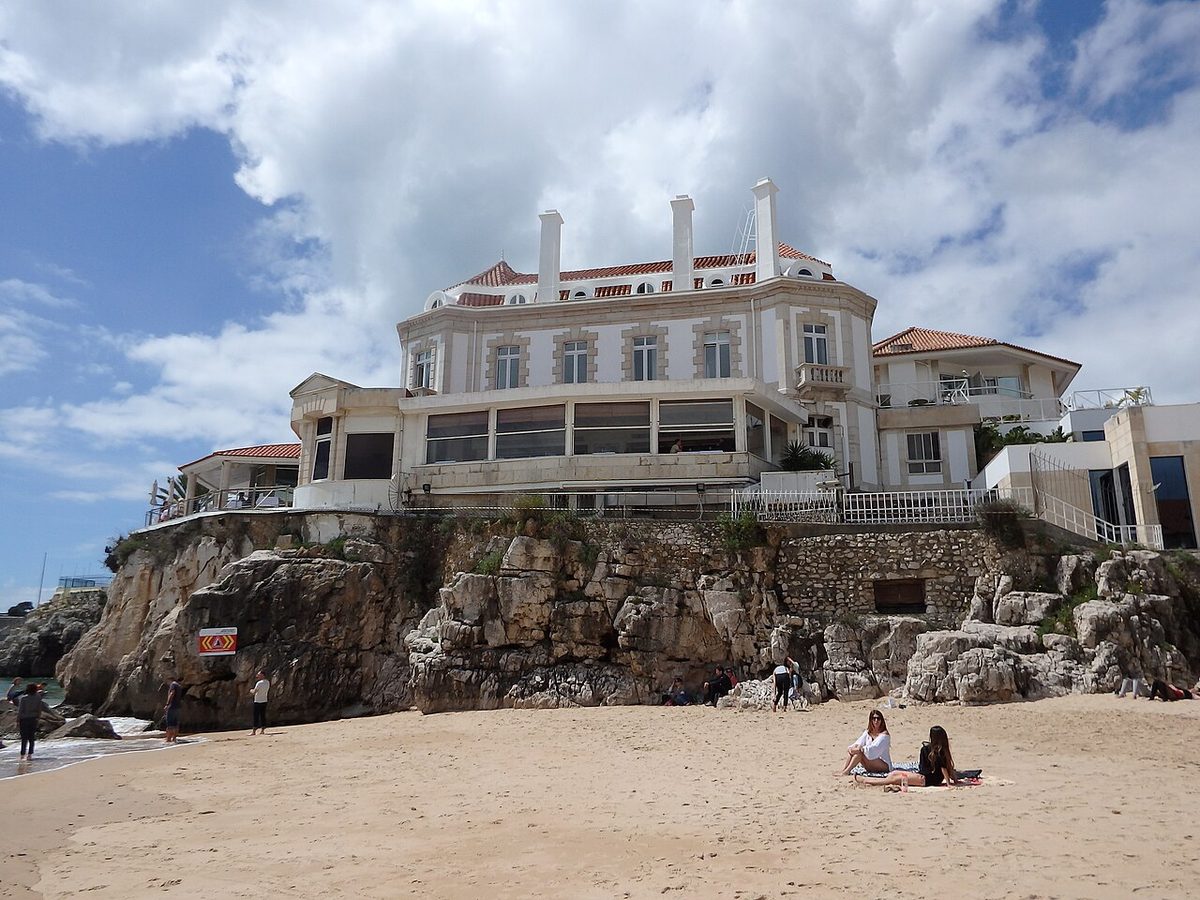
Forty minutes west on a train that runs beside the water for the last third of the journey — one of the more pleasant commuter rides in Europe, and cheap. Cascais is a former fishing town turned seaside resort with three small beaches within five minutes of the station, a marina, a good modern art museum in a converted mansion, and a citadel that now houses galleries.
The thing to do is rent a bicycle on the seafront and ride the flat coastal path west past the Boca do Inferno blowhole to Guincho, a serious Atlantic surf beach with the Sintra mountain behind it. That is about nine kilometres of car-free path along a rocky coast, and it is the best hour on this side of Lisbon.
Cabo da Roca, the westernmost point of continental Europe, is a bus ride from Cascais or Sintra. It is a cliff, a car park, a lighthouse and a shop selling certificates at around €12. The cliff is genuinely fine, the wind is serious and the detour takes twenty minutes. Go for the cliff, not the certificate.
Verdict: the lowest-effort good day out from Lisbon and the right choice on a hot day, with children, or when you cannot face another palace. See the Cascais day trip and how the train works.
Setúbal, Arrábida and the Sado dolphins
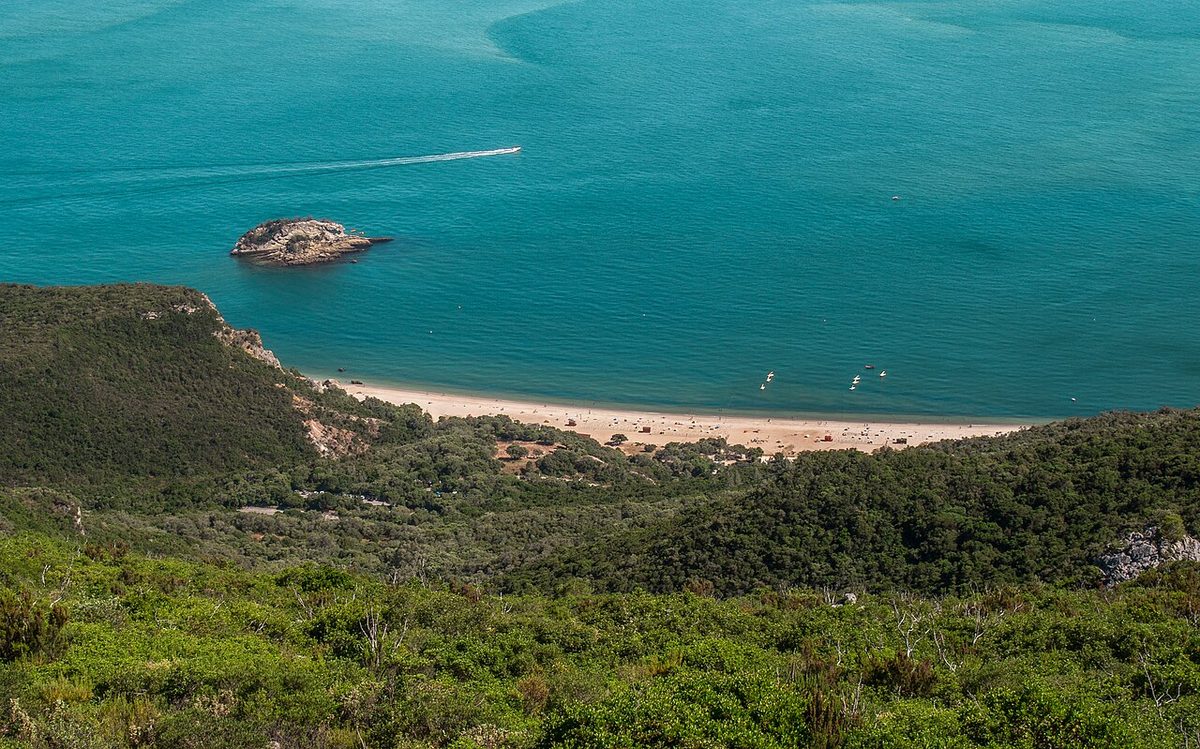
South across the Tagus, the Serra da Arrábida is a limestone ridge that drops straight into water the colour of the Adriatic, with a string of small white-sand beaches at its foot — Portinho da Arrábida, Galapinhos, Figueirinha — and a sixteenth-century convent halfway up the slope. On the other side of the ridge, Setúbal is a working port that grills the best fish within an hour of Lisbon at prices the capital has forgotten.
The Sado estuary holds a resident population of about thirty bottlenose dolphins, present year-round, and small boats out of Setúbal go looking for them. Unlike most dolphin trips this one is not seasonal, and the animals are genuinely resident rather than passing through.
Getting there without a car takes some planning: the ferry across the Tagus from Cais do Sodré or Belém, then a train or bus onward, roughly an hour and a quarter in total. With a car it is under an hour, and the road over the Arrábida ridge with the sea below it is one of the best drives in Portugal. In peak summer, access to Portinho da Arrábida is restricted and a shuttle runs from Setúbal — check before you drive down.
Verdict: my pick for a second visit, and better in June than in August. The sister site has the whole Setúbal and Arrábida trip in detail.
The coast: beaches within an hour
Ericeira
A whitewashed fishing town on a clifftop about seventy minutes north-west by bus, and the only World Surfing Reserve in Europe — a designation covering four kilometres of coast with several distinct breaks, of which Ribeira d’Ilhas is the best known. The town itself is genuinely a town rather than a resort, with a working harbour, a run of excellent seafood restaurants and a square that fills in the evening.
Verdict: the best combination of beach and real place within reach of Lisbon, and the right day trip for anyone who wants to try surfing. The water is cold, and a wetsuit is standard even in August.
Costa da Caparica
Lisbon’s own beach: a long strip of Atlantic sand immediately south of the river, reachable by ferry and bus in about forty-five minutes, with a little summer train that runs down the dunes to the quieter southern stretches. It is where the city goes at weekends, and it is exactly as good and as ordinary as that sounds.
Verdict: good if you want a beach afternoon without a proper excursion. Not a reason to spend a day. The sister site covers which stretch of Caparica to aim for.
Sesimbra
On the south side of the Arrábida ridge, a fishing town in a sheltered south-facing bay with calm water — unusual on this coast — a castle on the hill above and some of the best fish restaurants in the region. About an hour by bus from Lisbon.
Verdict: Cascais without the crowds and with better lunch. Pair it with Cabo Espichel, a wind-scoured headland with an abandoned pilgrimage complex and dinosaur footprints in the cliff face.
North: walled towns, monasteries and big waves
Óbidos
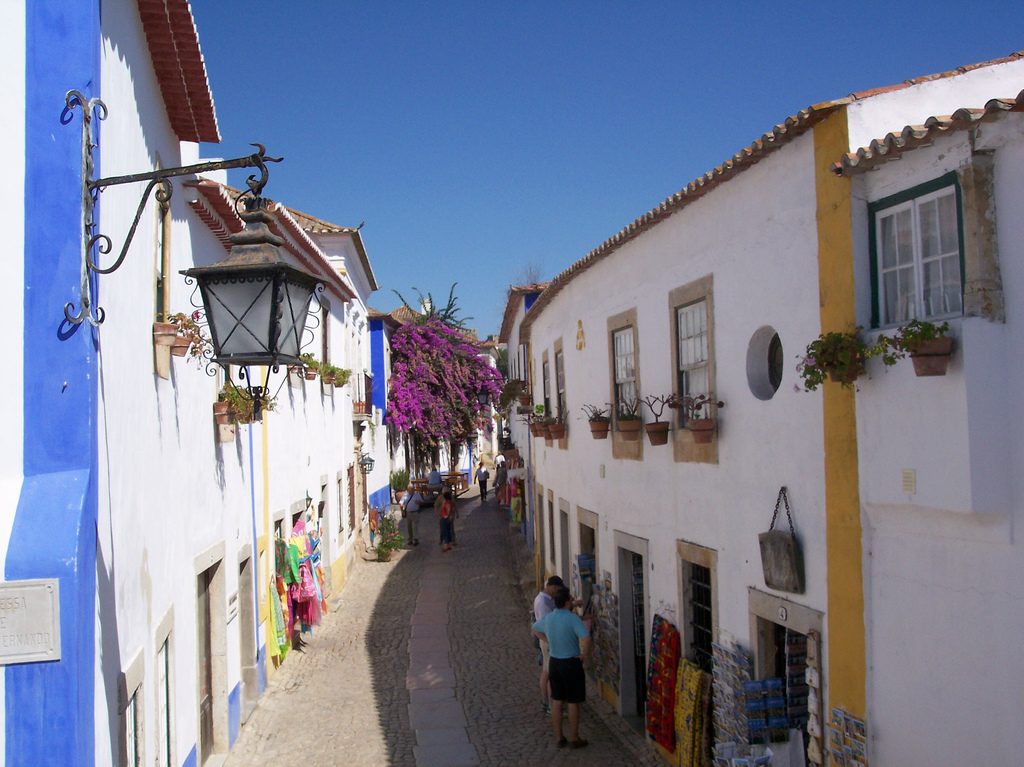
A complete walled medieval town about an hour north by bus, given as a wedding present to Portuguese queens for four centuries. Inside the walls it is one street of whitewashed houses with blue and yellow borders, bougainvillea and a castle at the top that is now a hotel. You can walk the top of the walls, which have no handrail on the drop side and are not for anyone uneasy with heights. Ginja — sour cherry liqueur — served in a small chocolate cup is the local ritual, and it is a genuine one rather than a tourist invention.
Verdict: genuinely lovely before 10:00 and comprehensively overrun after 11:00, when the coach parties arrive. It is small: two hours covers it. Pair it with Nazaré or the monasteries rather than making it the whole day. See the Óbidos day trip.
Mafra
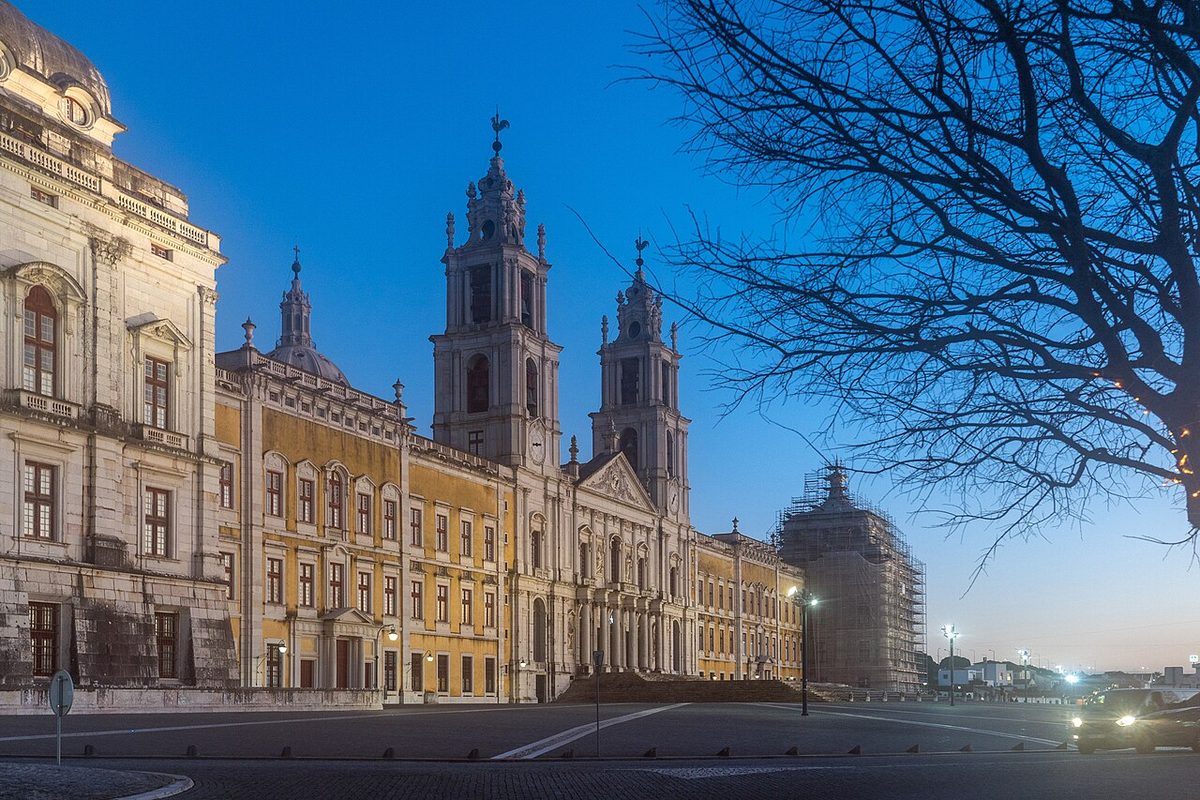
An hour north-west, and one of the most underrated buildings in Portugal. The Mafra National Palace is an enormous eighteenth-century palace-convent-basilica complex built with Brazilian gold, containing a library of some 36,000 volumes in a barrel-vaulted hall — protected, like Coimbra’s, by a colony of bats that emerges at night to eat the insects that would otherwise eat the books — and two carillons of nearly a hundred bells between them. It is vast, it is magnificent, and it is usually almost empty.
Verdict: the best quiet monument within an hour of Lisbon. Combine it with Ericeira, fifteen minutes further on. The sister site covers Mafra in detail.
Nazaré
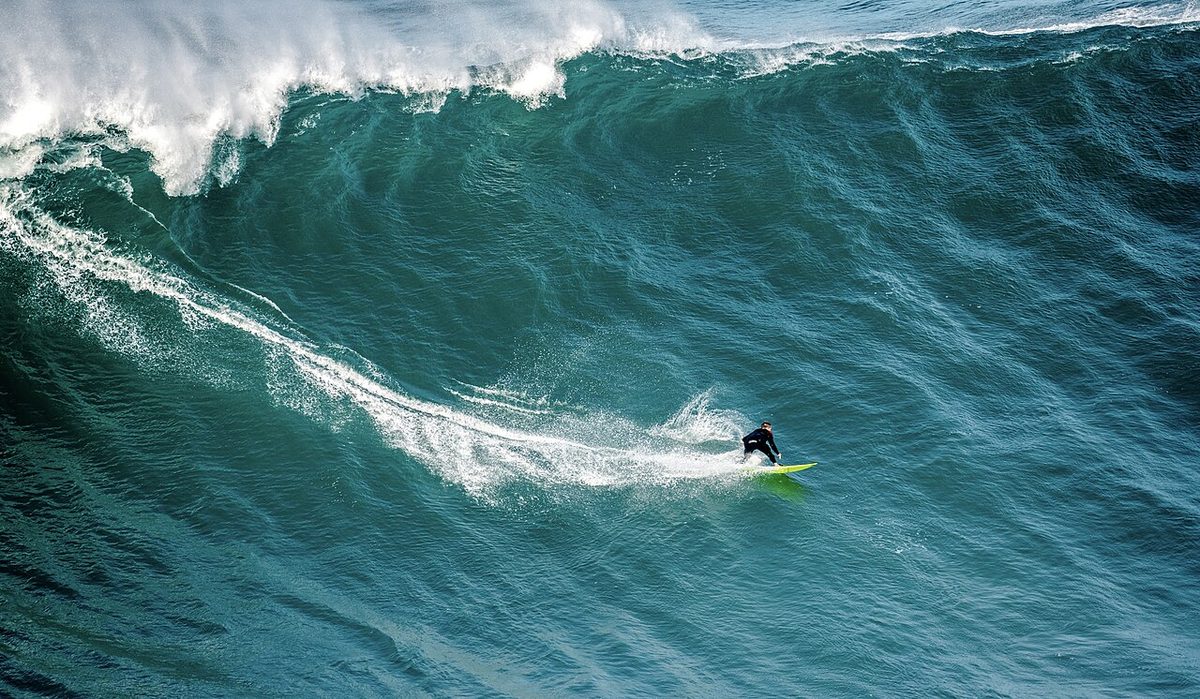
An hour and forty minutes north, a fishing town with a funicular up to the Sítio headland and a lighthouse fort above Praia do Norte. The big-wave season runs roughly October to March and peaks between November and February, when North Atlantic storms funnel swell up an underwater canyon that runs almost to the beach and produces the largest surfable waves ever ridden.
Verdict: a genuine spectacle in winter and an ordinary beach town in summer, when the fort becomes a museum of photographs of waves that are not there. The swell is unpredictable more than a few days out, so watch the forecast rather than committing weeks ahead.
Alcobaça, Batalha and Tomar
Three UNESCO monasteries within an hour of each other, about eighty minutes north of Lisbon, with entry at €15 each (checked September 2026; Alcobaça’s church itself is free). Alcobaça is the largest church in Portugal and holds the tombs of Pedro and Inês, placed foot to foot so that, according to the story, they will see each other first at the resurrection. Batalha has the Unfinished Chapels, an octagonal mausoleum whose vault was never built and which has stood open to the sky since the sixteenth century. Tomar’s Convent of Christ was the Portuguese headquarters of the Knights Templar, with a round church modelled on the Holy Sepulchre.
Verdict: outstanding, and awkward as a day trip from Lisbon without a car — two of the three in a day is realistic, three is a forced march. This cluster is better as an overnight stop on a route north than as a return trip from the capital.
Fátima
One of the largest Catholic pilgrimage sites in the world, built around the spot where three shepherd children reported Marian apparitions in 1917, and receiving millions of visitors a year. The sanctuary is enormous and modern, and the atmosphere on the pilgrimage dates of 13 May and 13 October is unlike anything else in the country.
Verdict: profoundly moving if it means something to you and architecturally unrewarding if it does not. Be honest with yourself about which applies.
East: the Alentejo within reach
Évora
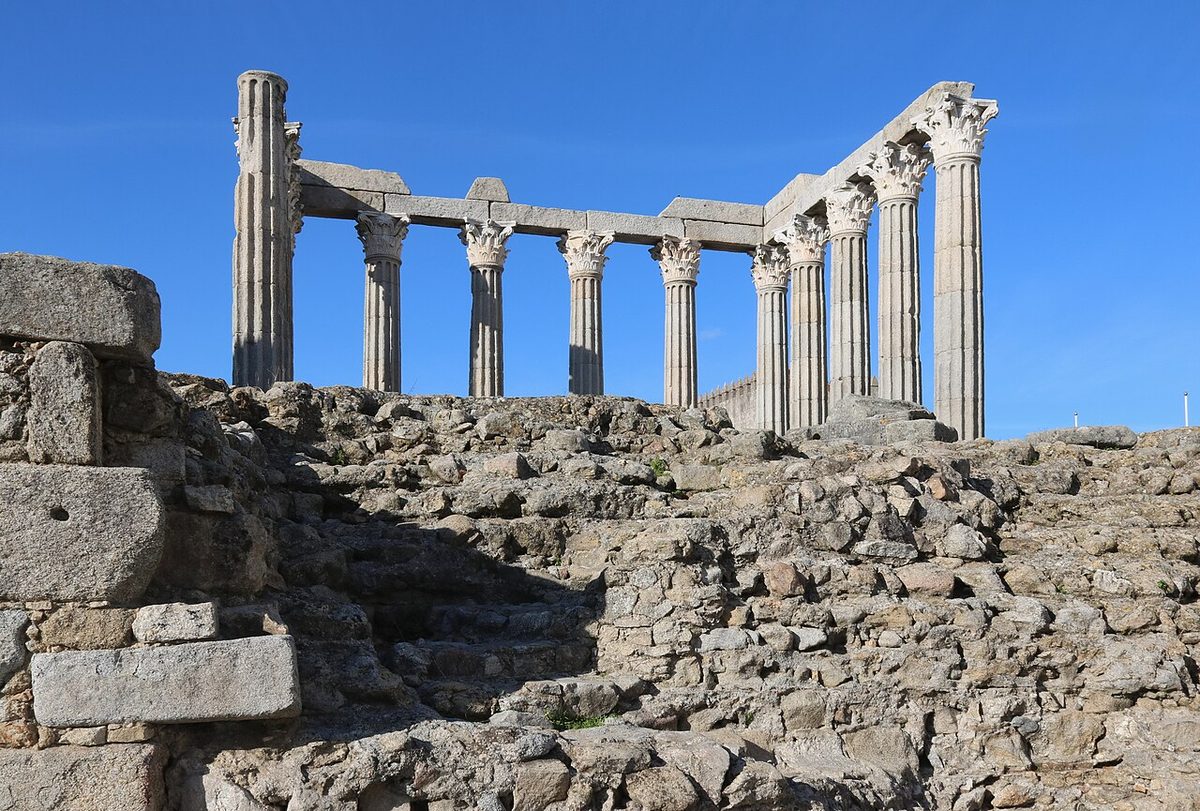
An hour and a half east by bus or train, a walled Alentejo town with a Roman temple standing in the middle of it, a cathedral whose roof you can walk on for a view over the plain, and the Capela dos Ossos — a chapel lined with the bones of about 5,000 people, with an inscription at the door telling visitors that the bones inside are waiting for theirs.
Around it are megalithic stone circles older than Stonehenge, cork plantations, and the best red wine and heaviest cooking in Portugal at a fraction of Lisbon prices.
Verdict: an excellent day and a better overnight. Three hours of return travel to see a walled town properly is tight, and the Alentejo’s whole appeal is that nothing is hurried. See the Évora day trip for the timings.
Azeitão and Palmela
Half an hour south, on the way to Setúbal: Azeitão makes a soft sheep’s cheese sold in small ceramic pots, produces Moscatel dessert wine at estates open for tasting, and has an eighteenth-century azulejo workshop still making tiles by hand. Palmela’s castle sits on a ridge with a view over the whole peninsula and is now partly a pousada.
Verdict: a good half-day add-on to an Arrábida trip rather than a destination on its own.
How to choose: matching the trip to the day
| If you want… | Go to | Because |
|---|---|---|
| The single most impressive thing | Sintra | Nothing else near Lisbon compares, crowds notwithstanding |
| Minimum effort, maximum pleasure | Cascais | Forty minutes on a train, three beaches, a bike path |
| To get away from other visitors | Arrábida and Setúbal | Almost no day-tripper crosses the river |
| A beach with a proper town attached | Ericeira | Working harbour, surf breaks, good seafood |
| History without the queues | Mafra | An enormous palace-convent that is usually near-empty |
| Wine and slow food | Évora | The Alentejo’s capital, and lunch at half the Lisbon price |
| A winter spectacle | Nazaré | The big-wave season runs October to March |
| Somewhere with children | Cascais or Costa da Caparica | Flat, sandy, short journeys, easy food |
By season
In July and August, take the coast rather than the interior: Sintra’s bus queues are at their worst and Évora is genuinely hot, while Cascais, Ericeira and Arrábida are at their best. In winter, reverse it — Sintra in the mist is atmospheric and empty, Évora is comfortable, Nazaré has its waves, and the beach trips lose their point. Spring and autumn everything works, and April and October are the best months for Sintra by a distance. Our month-by-month guide has the underlying weather data.
With or without a car
Sintra, Cascais, Óbidos, Mafra, Ericeira, Évora and Fátima are all comfortably reachable by public transport, and for Sintra and Cascais the train is genuinely better than driving — Sintra’s parking is a well-known ordeal. A car earns its keep for the Arrábida coves, the monastery cluster, Cabo Espichel and anywhere you want to combine two stops in a day.
Pairings that work, and one that does not
Several of these destinations sit close enough together to combine, which is how you cover more without adding days. The trick is to pair places on the same road, not places that merely look near each other on a map.
| Pair | How | Why it works |
|---|---|---|
| Mafra + Ericeira | Bus or car; 15 minutes apart | An enormous palace in the morning, seafood and cliffs in the afternoon |
| Óbidos + Nazaré | Car; 40 minutes apart | Óbidos needs two hours, Nazaré needs three; together they make a day |
| Alcobaça + Batalha | Car; 20 minutes apart | Two UNESCO monasteries without the forced march of adding Tomar |
| Setúbal + Arrábida | Car or bus; adjacent | Dolphins in the morning, a cove in the afternoon, fish in between |
| Sesimbra + Cabo Espichel | Car; 15 minutes apart | A sheltered beach town and an abandoned pilgrimage complex on a cliff |
| Cascais + Cabo da Roca | Bus; 30 minutes | The cape is a 20-minute stop, which is exactly what it deserves |
| Azeitão + Palmela | Car; 15 minutes | Cheese, Moscatel and a hilltop castle in half a day |
The pairing that does not work is Sintra with anything. Sintra alone is a full day, the bus queues are unpredictable, and every attempt to bolt Cascais or Cabo da Roca on to the end produces a rushed version of both. The tour companies do it because a four-stop day sells better than a one-stop day, not because it is a good idea.
What each day trip costs
Rough per-person costs, excluding lunch, checked September 2026.
| Trip | Transport | Entries | Realistic day total |
|---|---|---|---|
| Sintra, two palaces | Train return, a couple of euros each way | Pena from €12 park-only to €45 complete, plus Regaleira | €35–€70 |
| Cascais | Train return, a couple of euros each way | None needed; bike hire optional | €10–€25 |
| Setúbal & dolphins | Ferry and bus, or fuel and tolls | Dolphin boat trip | €45–€70 |
| Óbidos | Bus return | Free to walk; ginja a couple of euros | €20–€30 |
| Mafra | Bus return | Palace entry | €25–€35 |
| Monastery pair | Car or tour | €6–€10 each | €30–€90 depending on transport |
| Évora | Bus or train return | Cathedral roof, bone chapel | €35–€50 |
The pattern is that transport is cheap and entries are not. Sintra is the outlier on both counts, and the single biggest variable in a Lisbon day-trip budget is which Pena ticket you buy.
Tour or independent?
Organised day tours from Lisbon are abundant, competent and, for most of these destinations, unnecessary. The train to Sintra or Cascais costs a couple of euros and runs every twenty minutes; a tour costs many times that and delivers less time on the ground.
There are three cases where a tour genuinely wins. The monastery triangle, because Alcobaça, Batalha and Tomar are awkward to link by bus. Any itinerary combining two or three places in different directions in one day. And accessibility — if steps and hills are a problem, a driver solves several at once.
The tour to avoid is the standard full-day Sintra package: Pena, Sintra town, Cabo da Roca and Cascais, which is four places in eight hours with three transfers and delivers about ninety minutes at Pena — the only one of the four that needs three hours. Take the train and pick two things. The sister site rounds up the tours that are actually worth booking.
What to skip, and what is overrated
The four-stop Sintra coach tour
Covered above and worth repeating, because it is the single most commonly booked bad decision in Lisbon. Four destinations, three transfers, ninety minutes at the only one that matters.
Cabo da Roca as a destination
The westernmost point of mainland Europe is a fine cliff with a car park, a monument and a shop selling certificates for about €12. It is a twenty-minute stop on the way between Sintra and Cascais. It is not a day, and structuring one around it produces a lot of bus time for a view of some water.
Óbidos after 11:00
One street, comprehensively full. Either be there at opening or go somewhere else. The same applies to Sintra’s Pena terrace and, in July, to Portinho da Arrábida’s small car park.
Fátima, if you are not Catholic
An enormous modern sanctuary that is meaningful as a place of pilgrimage and architecturally unremarkable as a sight. It appears on day-trip lists because it is famous, not because it repays a secular visit.
Trying to combine Sintra and Cascais in one day
People do it because the map makes it look easy and the bus between them exists. In practice it means three hours at Sintra, which is not enough, and two in Cascais, which is not enough either, plus a coastal bus that is slow and crowded. Two separate days, both starting early, is a much better trade.
Évora as a return day trip
Not overrated — genuinely one of the best towns in Portugal — but poorly served by the format. Three hours of travel to spend four hours in a town whose whole character is unhurried is the wrong shape. Sleep there.
Practical notes for any of these
The suburban lines to Sintra and Cascais take the same rechargeable card as Lisbon’s metro and buses, bought from any station machine and topped up with single journeys or a day pass. Trains run frequently from early morning to late evening; the Sintra line leaves from Rossio and the Cascais line from Cais do Sodré, both central.
Long-distance buses to Óbidos, Mafra, Ericeira, Nazaré and Fátima leave from Sete Rios or Campo Grande rather than from the central stations, which catches people out. Buses and trains to Évora go from Sete Rios and Oriente respectively.
Three habits that improve any of these days. Start early: almost every destination on this page is transformed by arriving before 10:00. Check the last departure before you settle in for dinner, because rural bus services thin out sharply in the evening. And carry water in summer — Sintra’s hill, Óbidos’s walls and the Arrábida beaches all have very little shade.
Frequently asked questions
What is the best day trip from Lisbon?
Sintra, if you only take one — nothing else within reach compares, and the palaces are genuinely extraordinary. Cascais if you want the easiest good day out, forty minutes on a train with three beaches at the end. Setúbal and the Arrábida if you would rather avoid other visitors, which almost nobody does because it means crossing the river.
How do you get from Lisbon to Sintra?
By train from Rossio station in about forty minutes, running frequently through the day on the same rechargeable card as the metro. Do not drive: Sintra’s parking is notoriously difficult and the town’s roads are narrow and congested in season. From Sintra station, the 434 bus loops up the hill, or the Vila Sassetti footpath climbs it in about 35 minutes.
Do I need to book Sintra in advance?
Yes for Pena Palace, which sells timed entry slots that go for popular dates. Buy from parquesdesintra.pt, where the current structure is €20 for the palace, €45 for palace and park, and €12 for the park alone (checked September 2026). Several resellers still advertise an older €20 combined and €10 park-only pricing, so compare carefully before paying.
Can you do Sintra and Cascais in one day?
Technically yes and practically no. Sintra needs a full day to do two palaces properly, and squeezing Cascais on to the end leaves you three rushed hours at each plus a slow coastal bus. Take them as two separate days, both starting early.
How many day trips from Lisbon should I do?
On a four-day city stay, one — Sintra. On five or six days, two. Beyond that you are spending more of the trip outside Lisbon than in it, which is a legitimate choice but should be a deliberate one. Lisbon itself repays three full days before you start leaving it; our Lisbon guide sets out how.
Which day trips from Lisbon are possible without a car?
Sintra, Cascais, Costa da Caparica, Óbidos, Mafra, Ericeira, Sesimbra, Évora and Fátima are all reachable by train, bus or ferry. Setúbal is reachable and the Arrábida coves beyond it are harder. The monastery triangle at Alcobaça, Batalha and Tomar is the one that genuinely wants a car or a tour.
What is the closest beach to Lisbon?
Costa da Caparica, immediately south across the river and about forty-five minutes by ferry and bus, is the closest proper Atlantic beach. Cascais and Estoril, forty minutes west by train, have small town beaches and are the better day out. Guincho, beyond Cascais, is the serious surf beach and is cold and windy.
Is Óbidos worth visiting?
Yes, for two hours, before eleven in the morning. It is a complete walled medieval town and it is very small, and by late morning in season one street is carrying several coachloads of people. Pair it with Nazaré, Mafra or the monasteries rather than treating it as a full day.
Is Évora worth a day trip from Lisbon?
It is worth going to, and the day-trip format does not suit it: three hours of return travel leaves four or five hours in a town whose appeal is that nothing is hurried. If you can, sleep there and use the evening, when the day visitors have gone and the restaurants get serious.
When should I go to Nazaré for the big waves?
Between October and March, with the biggest swells from November to February. It depends on North Atlantic storms and is unpredictable more than a few days out, so watch the forecast rather than booking weeks ahead. In summer, Praia do Norte is an ordinary beach.
Are organised day tours from Lisbon worth it?
For Sintra and Cascais, no — the train is cheap, frequent and faster than a coach. For the monastery triangle, for combining places in different directions, and for anyone who finds hills and steps difficult, yes. Avoid the four-stop Sintra package, which spends more time transferring than sightseeing.
Which day trip from Lisbon is best with children?
Cascais, for the flat access, the short train ride, the three small beaches and the bike path. Costa da Caparica works for the same reasons and is closer. Sintra is magnificent and involves a long uphill and a bus queue, which is a hard sell for anyone under about eight. The Setúbal dolphin boat is the one that reliably impresses older children.
Can you visit the Algarve as a day trip from Lisbon?
No, in any useful sense. Faro is 280 kilometres and about three hours each way by road, which leaves perhaps four hours on the coast for six hours of travel. The Algarve needs four nights minimum; our Algarve guide explains why, and our itinerary hub shows where it fits into a longer route.
Beyond Cascais and Arrábida, our best beaches in Portugal guide covers the rest of the country’s coastline coast by coast, from the Algarve’s coves to Madeira’s volcanic sand.
If Évora makes you want more of the south, our Alentejo travel guide covers the rest of the region: Monsaraz and the Alqueva dark sky, Marvão, Mértola, the wine estates and the wild coast from Comporta to Zambujeira, with where to stay and how long each place needs.
If Óbidos, Nazaré or the monasteries whet your appetite, they’re better as a few nights than a day. Our central Portugal guide covers the whole band between Lisbon and Porto, from the Silver Coast and Tomar’s Convent of Christ to Coimbra and Aveiro, with the 2026 monument prices and routes of three to seven days.
Lisbon is one of the few capitals where you can surf before breakfast. Carcavelos is a short train ride away, Costa da Caparica has dozens of surf schools and Ericeira is under an hour north. Our Portugal surf guide explains which beach suits which level and season.
Where to go next
These trips are the belt around the capital; the country beyond it is a different set of decisions. Our region-by-region guide to Portugal compares the areas on days needed and season, and our day-by-day itinerary hub shows where each of these towns fits into a longer route — several of them are better as overnight stops on the way north than as return trips from Lisbon.
For the city itself, our Lisbon planning guide covers the districts, and our sister site lisbontourism.org goes deeper on every destination named here, including which organised tours are worth the money and a first-timer’s orientation to the capital.
Photo credits
- A beach at the foot of the Serra da Arrábida seen from the ridge road — Diogoworld, CC BY-SA 3.0, via Wikimedia Commons
- Looking up the initiation well at Quinta da Regaleira, Sintra — Sonse, CC BY 2.0, via Wikimedia Commons
- The west front of the Mafra National Palace at dusk — Alexkom000, CC BY 4.0, via Wikimedia Commons
All prices, ticketing arrangements and opening hours were checked in September 2026 and will change; Sintra’s pricing in particular has changed twice in two years, so confirm on parquesdesintra.pt before you travel. Last updated: 16 September 2026.