Almost every answer to the question of the best time to visit Portugal is some version of “spring or autumn”, which is true, unhelpful, and treats a country with four distinct climates as though it were one place. Lisbon in February and Ponta Delgada in February are not comparable. Neither are Évora in July, where 33 °C is the ordinary daily maximum, and Porto in July, where it is 25 °C.
The short answer: the best time to visit Portugal is late September, when the sea is at its annual warmest, the August crowds have gone and prices have come off their peak. May and June are the close second with cooler water. For Madeira, any month works. For the Azores, July to September. For the interior, avoid July and August entirely.
Below is the version with actual numbers: monthly climate normals for six places across the mainland and both island groups, a crowd and price index, what each month is genuinely good for, and the honest cases where the conventional advice is wrong. Climate figures are the official 1991–2020 normals published for each station (1981–2010 for Porto); prices were checked in September 2026.
The best time to visit Portugal, by the kind of trip you want
Before the tables, the practical shortcut. What you want to do matters more than the calendar.
| If your trip is about… | Go in | Avoid | Why |
|---|---|---|---|
| Beaches and swimming | Late June to early October | November–May | Sea takes all summer to warm; September is the peak |
| Cities: Lisbon and Porto | April–June, September–October | August | Comfortable walking temperatures, thinner queues |
| Walking and hiking | March–May, October | July–August | Shade is scarce and inland heat is serious |
| Wine and the Douro | September (the vindima) | January–February | Harvest, colour on the terraces, quintas open |
| Madeira | Any month; April–June for flowers | Nothing, really | Funchal averages 20 °C in January |
| The Azores and whales | April–June for blue and fin whales; July–September for weather | December–February | Winter is wet and windy; the Atlantic decides |
| Big-wave watching at Nazaré | November–February | Summer | The swell season; in July it is an ordinary beach |
| Budget travel | Late October to March | August | Accommodation can be a third of the August price |
Portugal’s four climates
The country is small and its weather is not uniform. Four zones behave differently enough to change the advice completely.
The Atlantic north. Porto and the Minho are green because it rains — Porto records around 1,237 mm a year against Faro’s 455 mm. Summers are warm rather than hot and winters are genuinely wet, with December averaging 181 mm of rain in Porto.
The Atlantic centre. Lisbon and the Estremadura coast sit in a mild maritime band: 793 mm of rain a year, almost all of it between October and April, with a July average maximum of 28.2 °C tempered by the sea breeze off the estuary.
The interior and the south. Évora, in the Alentejo, has a continental summer: mean daily maxima of 33.3 °C in July and 33.5 °C in August, with heatwave peaks far above that, and winter nights down to a mean minimum of 4.5 °C in January. The Algarve coast at Faro is hot but moderated by the sea, at 29.4 °C in July.
The Atlantic islands. Madeira and the Azores are subtropical oceanic: mild all year, with a very narrow annual range. Funchal’s coldest month averages 16.8 °C and its warmest 23.7 °C — a spread of under seven degrees across the entire year.
Month-by-month temperatures across Portugal
These are mean daily maximum temperatures in °C, from the official climate normals for each station. Lisbon, Faro, Évora, Funchal and Ponta Delgada are 1991–2020; Porto is 1981–2010.
| Month | Lisbon | Porto | Faro (Algarve) | Évora (interior) | Funchal (Madeira) | Ponta Delgada (Azores) |
|---|---|---|---|---|---|---|
| January | 15.1 | 13.8 | 16.3 | 14.1 | 20.0 | 17.5 |
| February | 16.4 | 15.0 | 17.0 | 15.7 | 19.9 | 17.4 |
| March | 18.9 | 17.4 | 18.9 | 18.7 | 20.6 | 17.9 |
| April | 20.4 | 18.1 | 20.7 | 20.7 | 21.0 | 18.8 |
| May | 23.1 | 20.1 | 23.5 | 25.0 | 22.0 | 20.2 |
| June | 26.1 | 23.5 | 26.8 | 30.2 | 23.7 | 22.4 |
| July | 28.2 | 25.3 | 29.4 | 33.3 | 25.4 | 24.7 |
| August | 28.8 | 25.7 | 29.2 | 33.5 | 26.8 | 26.0 |
| September | 26.6 | 24.1 | 26.4 | 29.5 | 26.6 | 25.0 |
| October | 22.8 | 20.7 | 23.3 | 24.1 | 25.2 | 22.6 |
| November | 18.1 | 17.1 | 19.6 | 17.6 | 22.8 | 19.9 |
| December | 15.4 | 14.4 | 17.1 | 14.6 | 21.0 | 18.3 |
Three things in that table are worth pausing on. Évora is nine degrees hotter than Porto in July and slightly colder in January — that is the difference between a maritime and a continental climate inside one small country. Funchal in January is warmer than Lisbon in April. And the Azores in August are cooler than Lisbon in June, which surprises people who assume “Atlantic islands” means “hot”.
And where the rain falls
Average monthly rainfall in millimetres, same stations and periods. This is the number that actually decides a winter trip.
| Month | Lisbon | Porto | Faro | Ponta Delgada |
|---|---|---|---|---|
| January | 103.8 | 147.1 | 49.3 | 102.1 |
| April | 71.8 | 117.6 | 39.0 | 79.6 |
| July | 2.6 | 20.4 | 0.9 | 26.0 |
| October | 110.6 | 158.3 | 56.0 | 118.0 |
| December | 108.5 | 181.0 | 90.0 | 152.8 |
| Year | 793.6 | 1,237 | 455.1 | 987.5 |
Mainland Portuguese summers are genuinely, reliably dry: Faro records under a millimetre of rain in an average July and Lisbon under three. That is not “usually sunny”, it is close to no rain at all. The corollary is that the rain has to fall somewhere, and it falls between October and March in concentrated bursts rather than as drizzle.
The sea, and why September wins
The single most misunderstood thing about Portuguese weather is the water. The Atlantic here does not behave like the Mediterranean, for two reasons.
The first is thermal lag. The sea takes months to absorb summer heat, which is why the warmest water of the year arrives in late August and September rather than in July, and why May can be brilliantly sunny with water that is still uncomfortably cold. If swimming matters to you, September beats June even though June has better beach weather on land.
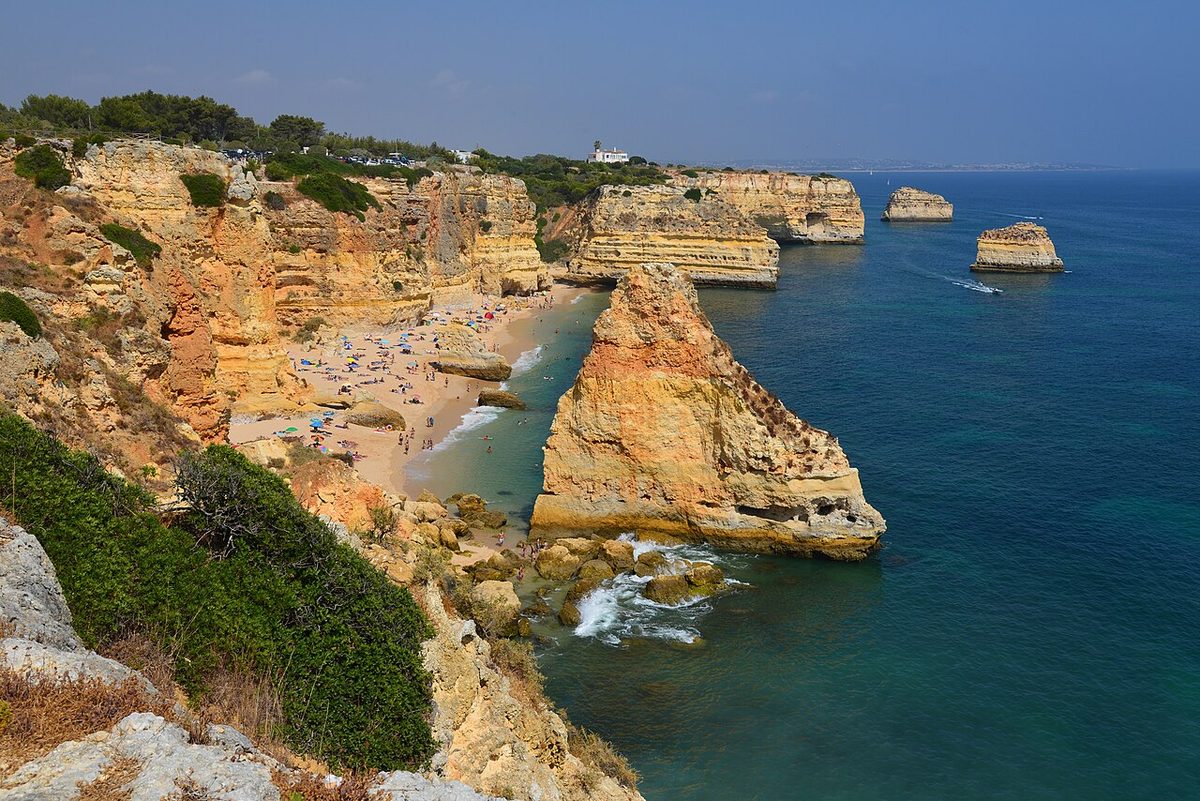
The second is upwelling. Along the west-facing coast — from the Algarve’s western corner all the way north past Nazaré and Porto — the prevailing summer northerlies push surface water offshore and cold water rises from the deep to replace it. That is why the west coast can be startlingly cold on a 30 °C day, and why surf schools issue wetsuits in August. The south-facing Algarve coast is sheltered from this and is consistently warmer; the eastern Algarve’s shallow lagoons are warmer again.
Practical translation, without pretending to a precision the published data does not support: on the mainland, the sea is cold from November to May, bracing in June, comfortable from July, and at its best in late August and September. The eastern Algarve is swimmable earliest and latest. The west coast north of Sagres is never really warm. Madeira and the Azores are mild year-round and warmest in September and October.
Daylight, sunshine and the thing nobody checks
Temperature is the number everyone looks at and daylight is the one that actually shapes a winter trip. Portugal sits at the western edge of its time zone, which pushes both sunrise and sunset late relative to the clock, and the difference between a June day and a December day is dramatic in practice.
In late June, light lasts from roughly a quarter past six in the morning until nine at night in Lisbon, and the usable evening runs later still. In late December it is a shade under nine and a half hours, and the sun is gone by about half past five. That is the same city and effectively two different holidays: in June you can see a monument, swim and eat outdoors on the same day; in December you are choosing between the monument and the daylight walk.
Sunshine hours tell a similar story with more regional variation. Porto, the wettest of the mainland cities, still records around 2,468 sunshine hours a year, ranging from 124 in December to 308 in July. Funchal manages about 2,314, spread far more evenly — from 151 in December to 237 in August — which is precisely why Madeira works as a winter destination in a way that northern Portugal does not.
The practical rule: from November to February, plan one main outdoor thing a day and put the museums and the long lunches around it. From May to August, the constraint is heat rather than light, so plan around the middle of the day instead.
When Europe arrives: school holidays and the price curve
Portuguese accommodation prices track northern European school calendars almost exactly, and knowing the dates is worth more than knowing the weather.
The three spikes are Easter, which moves; the second half of July through August, when British, French, German, Dutch and Portuguese holidays all overlap; and the Christmas and New Year fortnight. Between them, the two troughs are the second half of September into October, and mid-January to mid-March.
The single most useful piece of timing advice on this page: shift a summer trip from the second week of August to the third week of September. The land temperature drops by perhaps two degrees, the sea is warmer, and the accommodation cost can halve. Portuguese schools return in mid-September, and the coast empties within days of it.
One counter-example worth knowing. The Azores and Madeira do not follow this curve neatly — Madeira’s peak is New Year, when the Funchal fireworks fill every bed on the island, and the Azores fill in July and August because that is when the weather is reliable rather than because of school terms.
What to pack, by season
Summer: lighter than you think for the daytime and warmer than you think for the evening. The Atlantic breeze drops the temperature quickly after sunset on any coast, and a linen shirt or a light jumper gets used every night. Sun protection matters more here than the latitude suggests.
Spring and autumn: layers and a light waterproof. April and October both produce genuine rain, and both also produce 22 °C afternoons. Walking shoes with grip, because the calcada pavement in the cities is polished stone.
Winter: a proper coat rather than an umbrella if you are going north — the wind off the Atlantic destroys umbrellas — and something warm for indoors. Portuguese buildings are poorly insulated and frequently unheated, and a 14 °C day can feel colder in an apartment than on the street.
Any season, in the mountains or on the islands: a windproof layer. Madeira’s ridges, the Serra da Estrela and every Azorean caldera rim are ten to fifteen degrees colder than the coast below them, and the cloud arrives without warning.
Crowds and prices, month by month
The weather table is only half the decision. Here is the other half, based on how the season actually behaves rather than on averages. The crowd and price ratings are my own assessment, not published data.
| Month | Crowds | Accommodation prices | What is open | Verdict |
|---|---|---|---|---|
| January | Very low | Lowest of the year | Cities fully open; some Algarve beach businesses closed | Excellent value; Madeira at its best relative to Europe |
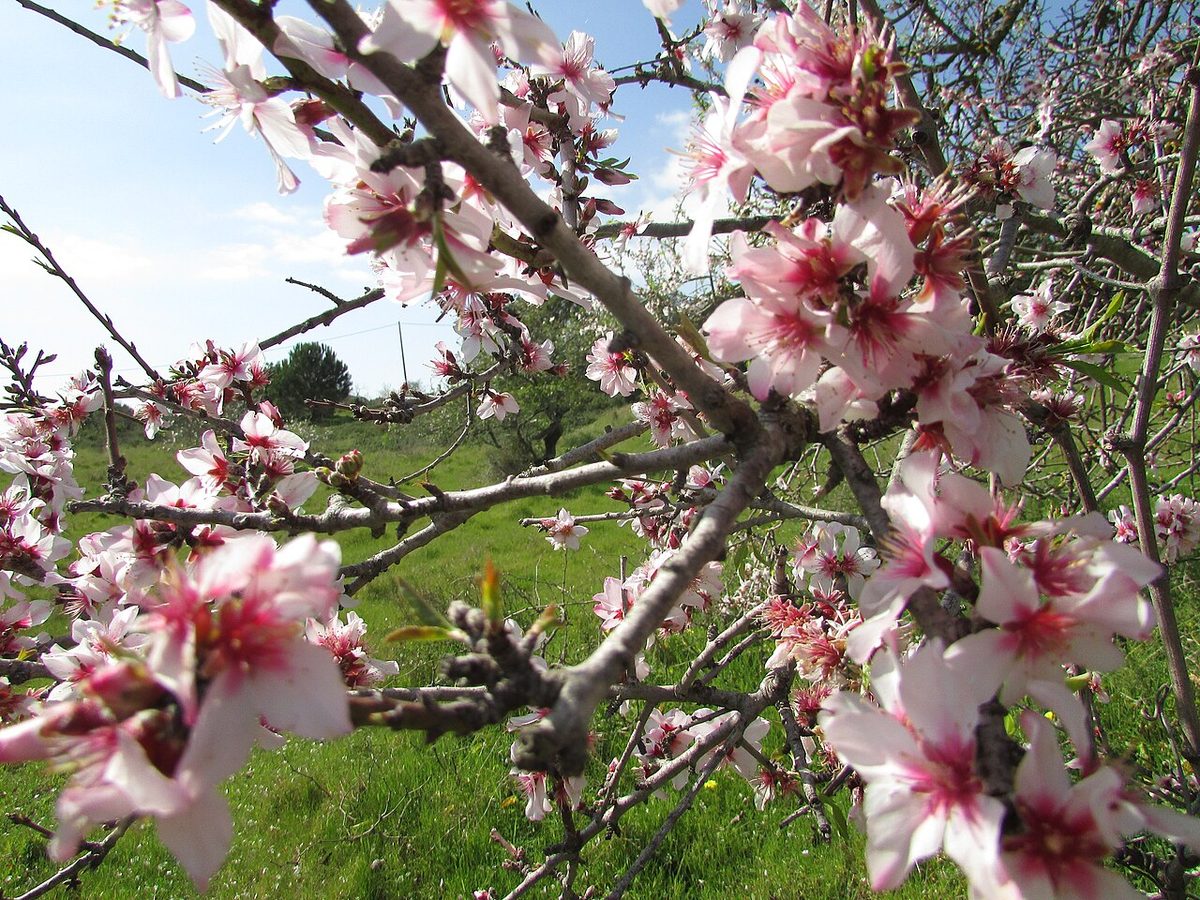
| February | Very low | Low | As January; Carnival week is an exception | Almond blossom in the Algarve interior |
| March | Low | Low, rising at Easter | Everything reopening | The best walking month |
| April | Moderate | Rising; Easter spikes | All open | Wildflowers, warm days, cold sea |
| May | Moderate | Climbing steadily | All open | Arguably the best all-round month on land |
| June | Busy from mid-month | High | All open | Festival month; sea finally swimmable |
| July | Very busy | Very high | All open | Hot; interior uncomfortable |
| August | Peak | Peak; often double June | All open, all full | Portuguese holidays too; book everything |
| September | Busy, then quiet after week one | Falls through the month | All open | The best month, narrowly |
| October | Low | Low again | Most open; some coastal closures late in the month | Outstanding value, sea still swimmable |
| November | Very low | Low | Cities open; Algarve winding down | Nazaré big-wave season begins |
| December | Low, spiking at Christmas and New Year | Low except the holidays | Cities festive; islands busy at New Year | Madeira’s New Year fireworks fill the island |
The pattern worth exploiting: the second half of September and the first half of October give you almost July’s weather at almost March’s prices, and are the single best value in the Portuguese calendar. The reason is simply that European school holidays have ended.
Season by season, and what each one is actually for
Spring: March to May
The countryside is green, which it will not be again until November, and the wildflowers in the Alentejo and the Algarve interior are genuinely worth a detour in late March and April. Daytime temperatures are ideal for walking and city sightseeing — Lisbon averages 18.9 °C in March and 23.1 °C in May. The sea is cold. Easter is the one crowd and price spike, and Braga’s Holy Week processions are the most serious in Portugal.
Best for: walking the Algarve coast paths and the Rota Vicentina, the Douro before the crowds, city breaks, Madeira’s flower season and its Flower Festival, birdwatching in the Ria Formosa.
Watch out for: April rain — Porto averages 117.6 mm — and water too cold for swimming almost everywhere.
Summer: June to September
June is the transition month: hot enough, sea finally swimmable, and stacked with festivals. Santo António in Lisbon on the night of 12–13 June and São João in Porto on 23–24 June are the two great street parties of the Portuguese year, and both fill their cities completely.
July and August are peak season in every sense. The coast is hot and busy, the interior is genuinely severe — Évora’s mean daily maximum is 33.5 °C in August, and heatwaves push well past 40 °C — and August adds Portuguese holidaymakers to the foreign ones because much of the country takes its own holiday then. This is also wildfire season in the forested centre and north.
September is the month I would choose. The sea is at its warmest, the schools go back, prices soften from the second week, and the Douro harvest begins.
Best for: beaches, islands, festivals, the Douro vindima, long evenings.
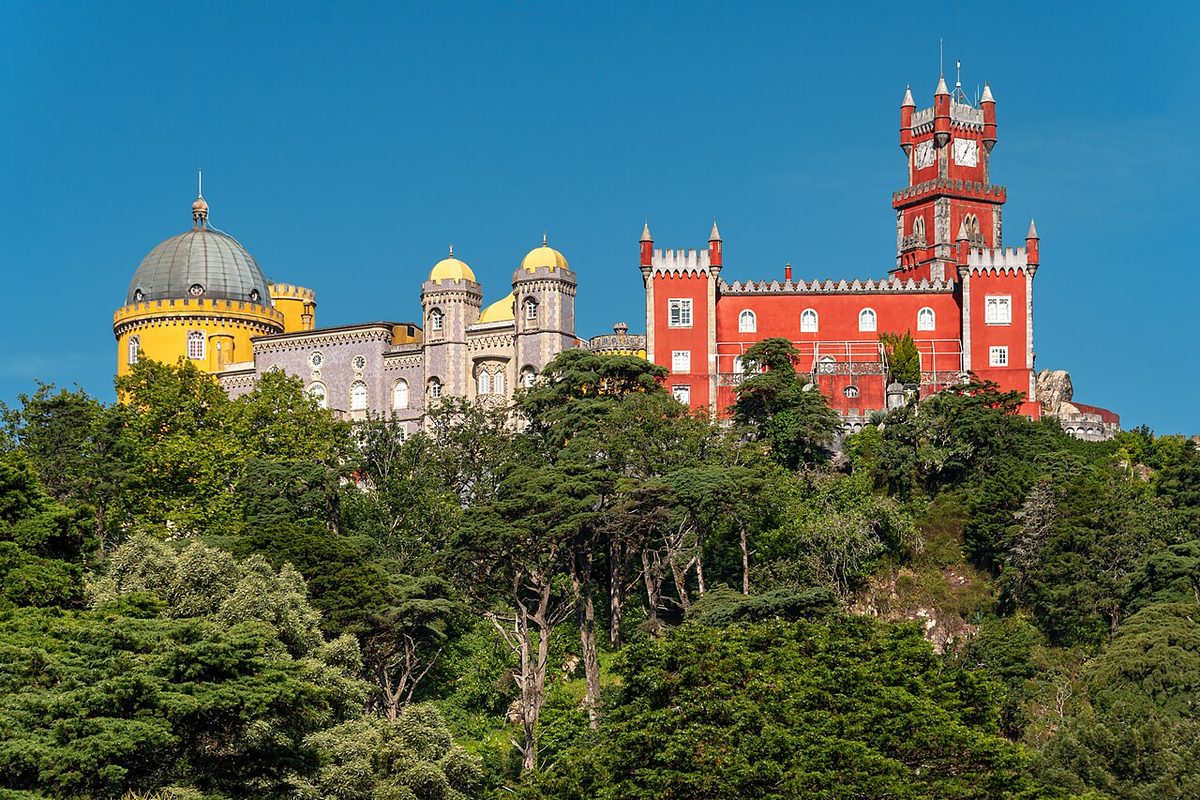
Watch out for: August prices, the interior heat, and the need to book Sintra, Pena and the popular boat trips well ahead.
Autumn: October to November
October is the quietly excellent month: Lisbon still averages 22.8 °C, the sea remains swimmable, and both crowds and prices have collapsed. The rain returns properly during the month — Porto averages 158.3 mm in October — but in the south it is still mostly dry, with Faro at 56 mm.
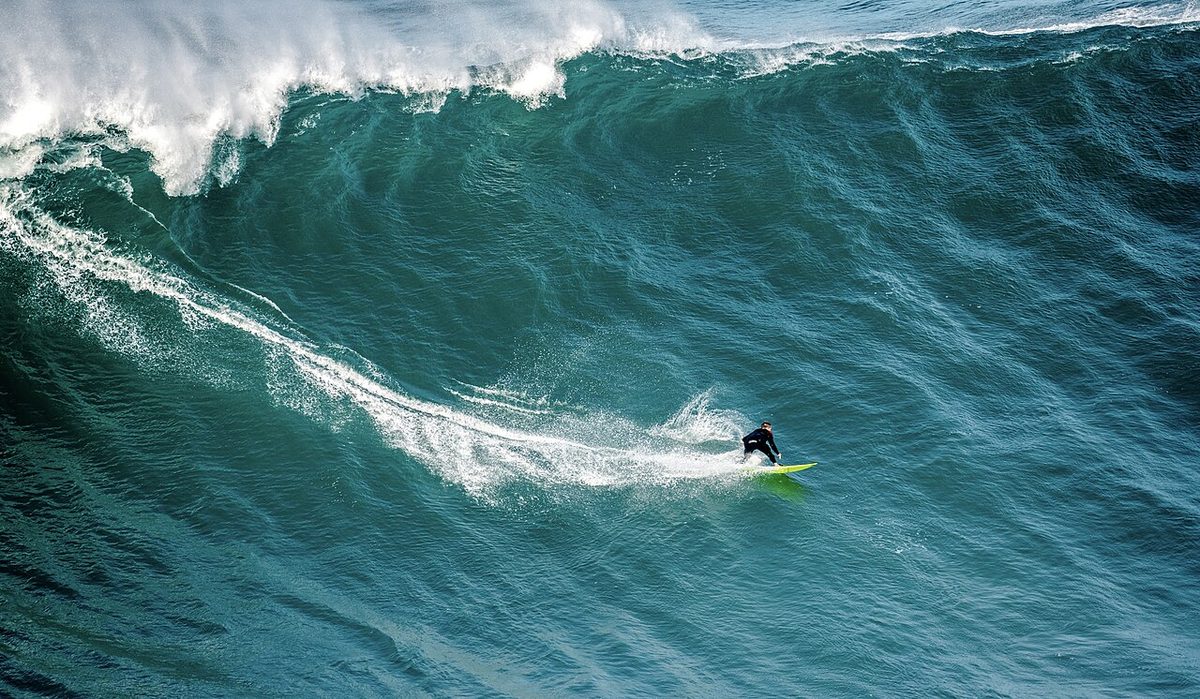
November brings the first real Atlantic weather, and with it the Nazaré big-wave season, which runs roughly October to March and peaks between November and February. That is a genuine spectacle and it is also unpredictable more than a few days out, so treat it as a bonus rather than a plan.
Best for: value, walking, wine, the last swimmable weeks, big-wave watching.
Watch out for: beach businesses starting to close from late October, and shorter days.
Winter: December to February
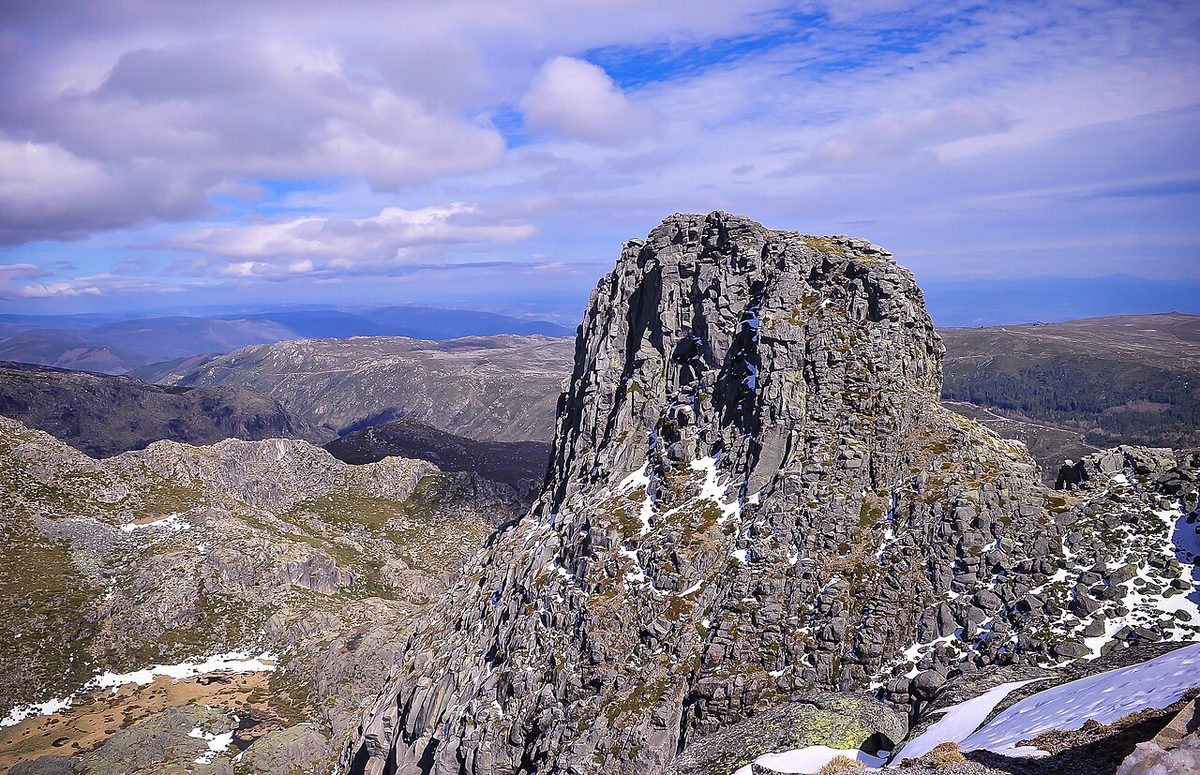
Mainland winter is mild rather than warm, and it varies enormously by region. Lisbon and the Algarve get sunny spells, daytime temperatures in the mid-teens and long lunches outside; Faro averages 16.3 °C in January. Porto is properly wet at 147.1 mm in January. The interior is cold at night, with Évora’s mean January minimum at 4.5 °C, and the Serra da Estrela at 1,993 metres carries snow and Portugal’s only ski runs.
The reliable option is Madeira, where the coldest month still averages a daily maximum of 19.9 °C. That is the reason Funchal fills with northern Europeans in January, and it is the correct decision.
Best for: Madeira, city breaks at low prices, walking the Algarve coast, almond blossom in January and February, Madeira’s New Year fireworks.
Watch out for: genuine rain in the north, short days, and shuttered resorts on the coast.
The islands need their own answer
Applying mainland seasonality to Madeira and the Azores is the most common planning mistake in Portugal, and it produces two opposite errors.
Madeira: there is no bad month
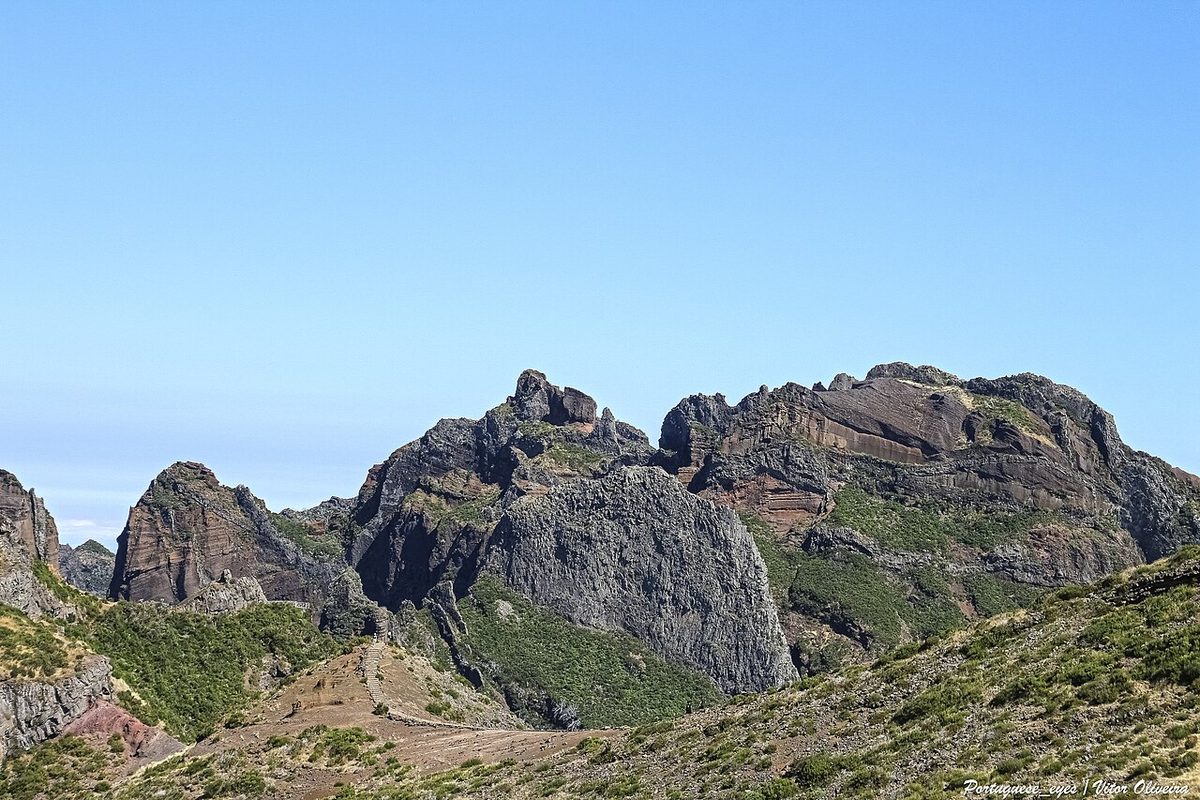
Funchal’s annual temperature range is under seven degrees. January averages a daily maximum of 20.0 °C and August 26.8 °C, and the rain falls mostly between October and March, with July and August averaging under two millimetres each. The island is also vertical: it rises to 1,862 metres, and the north coast and the high ground are meaningfully wetter and cooler than Funchal on the south. It is entirely normal to be in cloud at Pico do Arieiro and in sunshine at sea level an hour later.
Best months: April to June for flowers and the clearest mountain days, September and October for the warmest sea. December for the New Year fireworks, if you book far ahead.
A note on the trails: the popular walking routes now require a paid reservation through simplifica.madeira.gov.pt with 30-minute entry slots — €4.50 per person per trail, €10.50 for PR1, with three-day and seven-day passes at €22.50 and €52.50 (checked September 2026). That applies year-round and is worth building into any Madeira plan whatever the season.
The Azores: the weather is the constraint
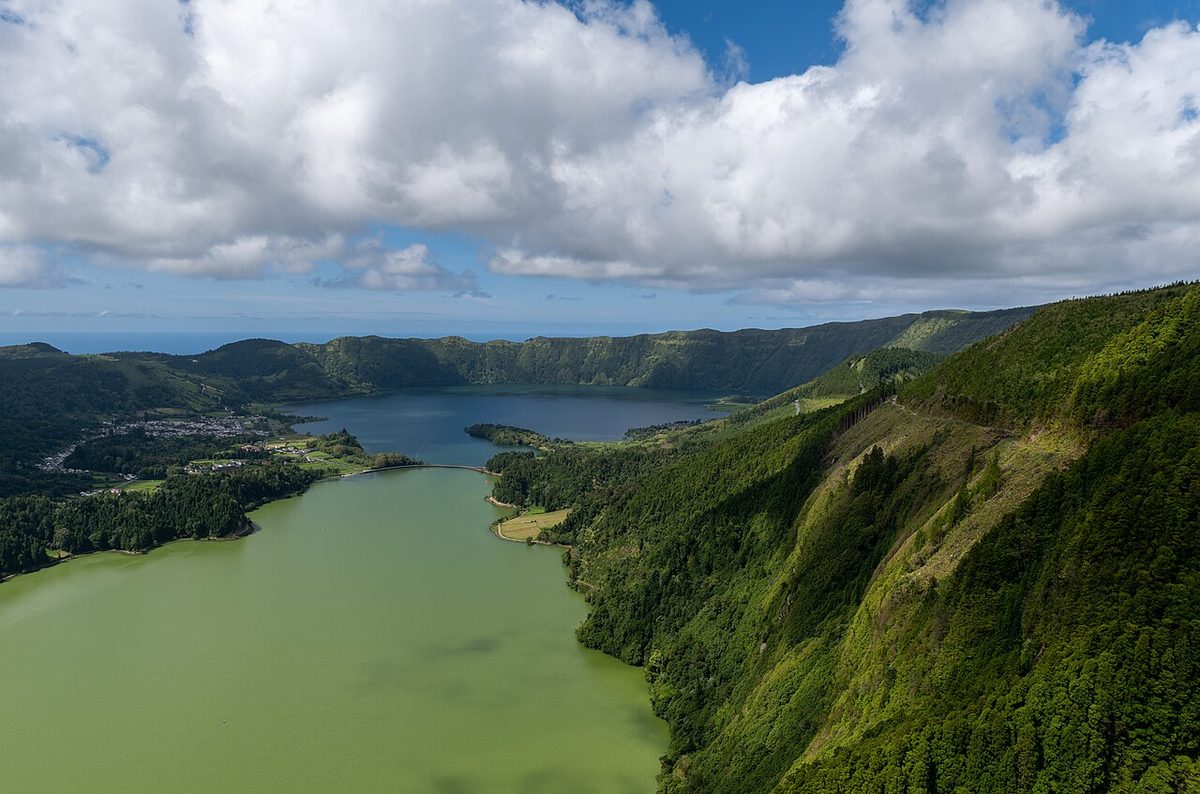
Ponta Delgada is mild — 17.5 °C in January, 26.0 °C in August — but mildness is not the point. The Azores sit in the middle of the North Atlantic and the weather changes hourly; four seasons in a day is a cliché there because it is a description. Winter is wet and windy enough that flights between islands are cancelled with some regularity, and the ferry network between the islands is far denser in summer than in winter.
Best months: July to September for the most settled weather and the warmest sea. Late April to early June if whales are the priority.
On whales: sperm whales are resident and recorded in every month of the year, and dolphins are year-round. The migrating giants — blue, fin and sei — pass roughly April to June, strongest from mid-April to mid-May, and most blue whales have moved north by late June. So the whale-watching calendar and the good-weather calendar do not overlap, and you have to choose.
Festivals and dates worth planning around
| When | What | Where | Plan around it? |
|---|---|---|---|
| January–February | Almond blossom | Algarve interior | A bonus rather than a reason |
| February | Carnival | Loulé, Torres Vedras, Madeira | Book if you want it; prices spike locally |
| March–April | Holy Week processions | Braga | Yes — the most serious in Portugal |
| April–June | Flower Festival | Funchal, Madeira | Worth timing a Madeira trip to |
| 12–13 June | Santo António | Lisbon, all night | Yes, and book months ahead |
| 23–24 June | São João | Porto, all night | Yes — or deliberately avoid the date |
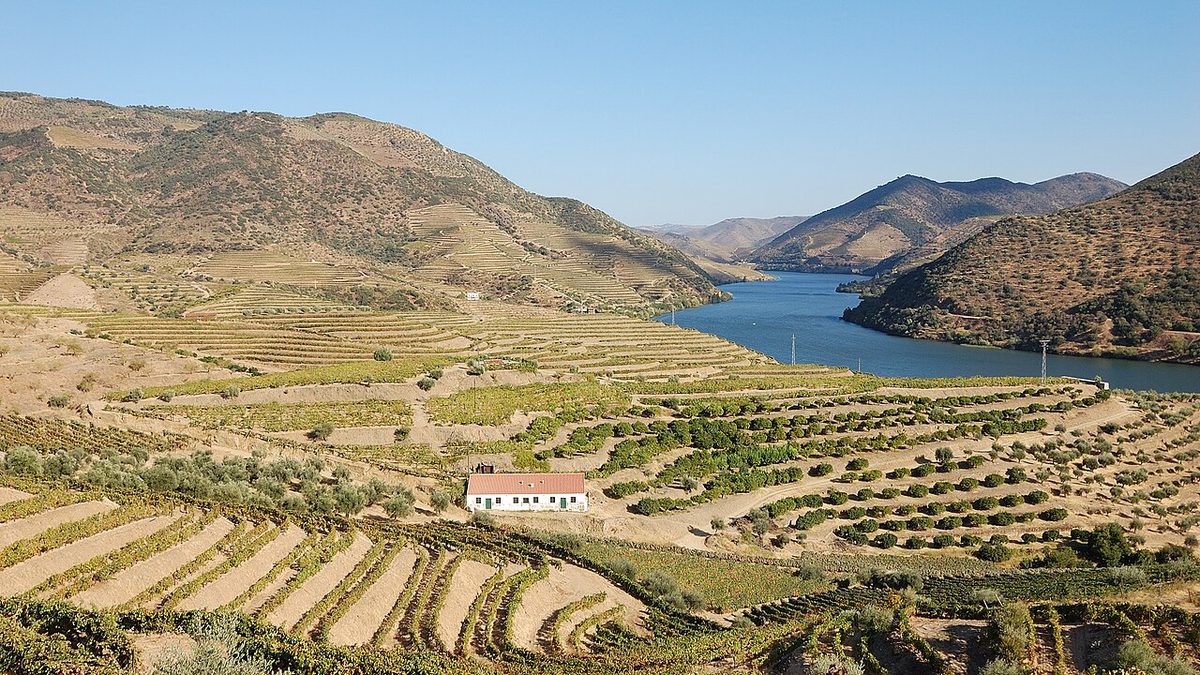
| September | Vindima (grape harvest) | Douro valley | The best month to visit the quintas |
| Oct–March | Big-wave season | Nazaré, Praia do Norte | Peaks Nov–Feb; unpredictable |
| 31 December | New Year fireworks | Funchal, Madeira | Enormous, and books out very early |
What the usual advice gets wrong: the overrated months and what to skip
“Avoid August” — mostly right, with exceptions
August is hot, full and expensive on the coast and in the cities, and unpleasant in the interior. But the Azores in August are 26 °C, breezy and at their most settled, and Porto in August averages 25.7 °C, which is a perfectly civilised summer. If August is your only option, go north or go to the islands.
“Portugal is warm in winter” — depends entirely where
This gets repeated as though it applies to the whole country. Faro in January averages 16.3 °C by day and Porto 13.8 °C with 147 mm of rain, and Évora drops to a mean minimum of 4.5 °C at night. Portuguese houses are also famously poorly insulated and often unheated, which makes a cold snap feel colder indoors than out. “Mild” is accurate; “warm” is not.
“May is the best month” — better on land, worse in the water
May has the best combination of temperature, light and low crowds for walking and cities. It also has a sea that has spent the winter cooling and has not caught up. If your holiday involves swimming, September is straightforwardly better. If it involves boots, May wins.
“Go in the shoulder season to avoid crowds” — check which shoulder
The two shoulders are not equivalent. Spring is greener, cooler in the water and prone to April rain. Autumn is drier in the south, warmer in the sea and cheaper. For most trips the autumn shoulder is the better one, and the second half of September is its sweet spot.
“The Algarve is a summer destination” — only if you swim
The Algarve’s winter is one of the best-kept propositions in Europe: 15–18 °C by day, long sunny spells, the coast path at its best, golf courses playable and prices at a third of August. What you do not get is a beach holiday, and a good number of beachfront businesses close from November to March.
Building a trip around the calendar
If your dates are fixed and you are choosing the destination rather than the other way round, this is the decision tree.
| You can only travel in… | Go to | Skip |
|---|---|---|
| December–February | Madeira; Lisbon and Porto as city breaks; the Algarve for walking | The Azores; interior nights; any beach plan |
| March–April | The Algarve coast path, the Alentejo, Lisbon and Sintra, Madeira | Swimming; the Azores’ unsettled spring, unless whales are the point |
| May–June | Everywhere; the Douro, the cities, the islands | Nothing — this is the flexible window |
| July–August | The Azores, Porto and the north, the Atlantic coast | Évora and the interior; the central Algarve at midday |
| September | Everywhere, and especially the Douro and the Algarve | Nothing; book the first week ahead |
| October–November | The Algarve, Lisbon, Madeira, Nazaré for the waves | The Azores as the weather turns; northern hill walking in heavy rain |
Frequently asked questions
What is the best month to visit Portugal?
September, narrowly, and specifically the second half of it. The sea reaches its annual warmest after a full summer of heating, European school holidays have finished, accommodation prices fall through the month, and the Douro harvest is under way. May and June are the strong alternatives if you care more about walking than swimming.
What is the cheapest time to visit Portugal?
January and February, followed by November and early December, excluding Christmas and New Year. Accommodation in the Algarve in particular can run at a third of its August rate. The trade-off is short days, cold water and a proportion of coastal businesses closed for the season.
When is it too hot in Portugal?
July and August in the interior, where Évora averages a daily maximum of 33.3 °C in July and 33.5 °C in August, and heatwaves take that well past 40 °C. The coast is much more tolerable — Lisbon 28.2 °C in July, Porto 25.3 °C — because of the Atlantic breeze. If you are visiting inland towns in high summer, do it early in the morning and rest through the afternoon, which is what the residents do.
When can you swim in the sea in Portugal?
Comfortably from July to early October on the south and central coasts, with late August and September the warmest because the Atlantic warms slowly. June is bracing. The west-facing coast stays cold all summer because of upwelling — cold water rising to replace surface water pushed offshore by the summer northerlies — and needs a wetsuit even in August. The eastern Algarve’s shallow lagoons are the warmest water in mainland Portugal.
Does it rain a lot in Portugal?
It depends entirely on where and when. Porto records about 1,237 mm a year and Faro about 455 mm. Almost all of it falls between October and April: Lisbon averages 2.6 mm in July and 108.5 mm in December. A summer trip to the mainland is effectively rain-free; a winter trip to the north is not.
Is Portugal good in winter?
Madeira, yes, unreservedly — Funchal’s coldest month averages 19.9 °C by day. The Algarve, yes for walking, golf and sunshine, no for swimming. Lisbon and Porto, yes as city breaks at a third of the summer price, with the caveat that Porto is genuinely wet and that Portuguese buildings are poorly heated. The Azores, no.
When is the best time to visit Madeira?
Almost any month. April to June gives the clearest mountain weather and the flower season; September and October give the warmest sea. Winter is mild and busy with northern European visitors, and the New Year fireworks in Funchal are enormous and book out very early. Remember that the walking trails now need a paid online reservation regardless of season.
When is the best time to see whales in the Azores?
Mid-April to mid-May for the migrating blue, fin and sei whales, which pass roughly April to June with most blues gone north by late June. Sperm whales are resident and recorded every month, and dolphins are year-round. July to September has much better weather and fewer of the giants, so the choice is genuinely between the animals and the conditions.
Should I avoid Portugal in August?
On the mainland coast and in the interior, if you can. August is peak price, peak crowd and peak heat, and Portuguese holidaymakers add to the foreign ones. If August is fixed, go to the Azores, to Porto and the green north, or to the Atlantic west coast, and start every day early.
When is the Nazaré big-wave season?
Roughly October to March, biggest between November and February, driven by North Atlantic storms funnelling swell up an underwater canyon. It is unpredictable more than a few days ahead, so watch the forecast rather than booking months out. In summer, Praia do Norte is an ordinary beach.
How many days do you need in Portugal?
Nine days covers two regions properly — a city and a coast, say. Fourteen covers three. The islands need their own week rather than a few nights spliced on to a mainland trip, because the flights alone eat two days. Our region-by-region guide sets out how long each area actually needs.
Is September or October better in Portugal?
September for the sea and the Douro harvest, October for value and for walking. The sea stays swimmable well into October on the south coast, and the rain does not really arrive in the Algarve until the end of the month — Faro averages 56 mm in October against Porto’s 158 mm. If your trip is coastal and southern, either works; if it is northern, take September.
What is the sunniest part of Portugal?
The Algarve, by a clear margin: Faro records about 455 mm of rain a year against Porto’s 1,237 mm, and its summers are effectively rainless. Madeira has the most evenly distributed sunshine across the year, at roughly 2,314 hours with no month below 150.
Dates settled? The next decision is the route. Our day-by-day Portugal itineraries cover five, seven, ten and fourteen days, including how each route changes by season and which two of them should not be attempted in August.
Madeira is the answer to a Portuguese winter, and our guide to the island explains what to do there in any month, including the trail permits that apply year-round and the New Year fireworks that fill every bed in Funchal.
Sea temperature is the number that decides a Portuguese beach holiday, and our Algarve beaches guide explains why the eastern lagoon is warm, why summer upwelling keeps the west coast cold, and which beaches are better in January than in August.
September is the month for one region above all others, and our Douro Valley guide explains why: the vindima runs from mid-September into early October, when the estates are working and some let visitors tread the grapes.
The Azores have their own timing problem, because the best whale months and the best weather months do not overlap. Our Azores guide sets the whale calendar against the Ponta Delgada climate normals so you can choose between them.
Whichever month you land on, book early: our getting around Portugal guide covers how far ahead CP’s promotional train fares are released and when hire cars and domestic flights start to sell out around the peak season described above.
Going to Madeira to walk? April to June and September to October are the sweet spots, and every official trail now needs a timed booking made in advance. Our levada walks guide has the fees, the seasons and the storm and fire closures to watch for.
If you’re choosing dates, check the festival calendar too. Our month-by-month guide to Portugal festivals has the confirmed 2027 dates for Tomar’s Festa dos Tabuleiros, Madeira’s Flower Festival and Carnival, and explains which events are worth planning a trip around and which fill every hotel for miles.
Where to go next
Once you have picked a month, the next question is which slice of the country to spend it in. Our overview of Portugal region by region compares them on days needed, cost and season.
For specific destinations, we have full planning guides to Lisbon, to Porto and the north, and to the Algarve, each with its own seasonal notes. Our sister site lisbontourism.org covers the capital in more depth, including a month-by-month events calendar and what to do there when it rains.
Photo credits
- Almond blossom in flower near Albufeira in February — Kolforn, CC BY-SA 4.0, via Wikimedia Commons
- Snow lying below Cântaro Magro in the Serra da Estrela — JTRL78, CC BY-SA 4.0, via Wikimedia Commons
Climate figures are the published 1991–2020 normals for each station (1981–2010 for Porto) and describe averages, not the weather you will get. Prices and trail reservation costs were checked in September 2026 and will change. Last updated: 14 September 2026.