Most travellers see central Portugal from a train window. They get on the Alfa Pendular in Lisbon, get off in Porto two and a half hours later, and miss the most historically important stretch of the country in between. That’s where Portugal’s first kings are buried, where the Knights Templar built their headquarters, where Europe’s oldest universities include one still teaching in its original palace, where the biggest surfable waves on earth break, and where a walled medieval town sells cherry liqueur in chocolate cups. The guides that do cover the region tend to treat each town in isolation. This one puts them together: the Silver Coast, the monastery route, Coimbra, Aveiro and the mountain interior, with 2026 ticket prices, drive times and an honest view on what’s worth your time.
The short answer: give central Portugal four to seven days between Lisbon and Porto. Sleep inside the walls at Óbidos, see the monasteries at Batalha and Tomar, spend two nights in Coimbra, and finish at Aveiro’s striped Costa Nova. Hire a car for the monasteries and coast, and budget €15 a head for each monastery.
Central Portugal at a glance
Everything in the table is between Lisbon and Porto. Drive times are from Lisbon in normal traffic and are approximate. Prices were checked in September 2026.
| Place | Area | From Lisbon by car | Time needed | Cost | Verdict |
|---|---|---|---|---|---|
| Óbidos | Silver Coast (Oeste) | ~1 h | Half a day, ideally a night | Free to walk | The prettiest walled town in Portugal |
| Nazaré | Silver Coast | ~1h15 | Half a day; a night in big-wave season | Free; funicular a few euros | A town beach in summer, a spectacle in winter |
| Peniche and the Berlengas | Silver Coast | ~1h | A day | Boat fare to the islands | Surf town plus a nature-reserve island |
| Alcobaça | Monastery route | ~1h15 | 1–1.5 h | Church free; cloisters €15 | Austere, vast, and a great love story |
| Batalha | Monastery route | ~1h20 | 1.5 h | €15 | The Gothic masterpiece |
| Tomar and the Convent of Christ | Monastery route | ~1h30 | Half a day | €15 (50% off 65+ and 13–24) | The best single monument in central Portugal |
| Fátima | Monastery route | ~1h30 | 1–2 h | Free | Essential for pilgrims, curious for others |
| Coimbra | Centro | ~2 h | 2 nights | University €25 | The region’s cultural capital |
| Conímbriga | Near Coimbra | ~1h50 | 2 h | Paid entry | The best Roman site in Portugal |
| Aveiro and the Costa Nova | Centro coast | ~2h30 | Half a day to a night | Free; boat trips extra | Pleasant canals, excellent striped beach houses |
| Serra da Estrela and the schist villages | Interior | ~3 h | 2–3 days | Free | Mountains, cheese and stone villages |
What “central Portugal” actually means
Officially, the Centro region runs from the Atlantic to the Spanish border between the Lisbon area and the Porto area, and it’s the second-largest region in the country. For a traveller it breaks into four very different areas. The Silver Coast (Costa de Prata) is the Atlantic shore from just north of Lisbon up past Nazaré, with surf towns, lagoons and fishing villages, and Óbidos a few kilometres inland. The monastery route runs through the limestone hills behind it, where Alcobaça, Batalha and Tomar hold three of Portugal’s UNESCO World Heritage monuments within an hour of each other, with the pilgrimage town of Fátima in the middle. Coimbra and Aveiro are the two cities of the northern half, one on its river hill and one on its lagoon. And the interior, the Beiras, rises east through forested hills to the Serra da Estrela, the highest mountains on the mainland, and the fortified villages along the old Spanish border.
The region’s great practical virtue is that it sits between Portugal’s two big airports. You can see a good slice of it on day trips from Lisbon or Porto, but it rewards a few nights on the road much more. It’s also the part of the country where history is thickest on the ground. Portugal’s first king ruled from Coimbra, and the medieval dynasties are buried in the monasteries. The battle that secured Portuguese independence was fought outside Batalha, and the Templars and their successors, the Order of Christ, funded the voyages of discovery from Tomar.
The Silver Coast: Óbidos to Nazaré
Óbidos
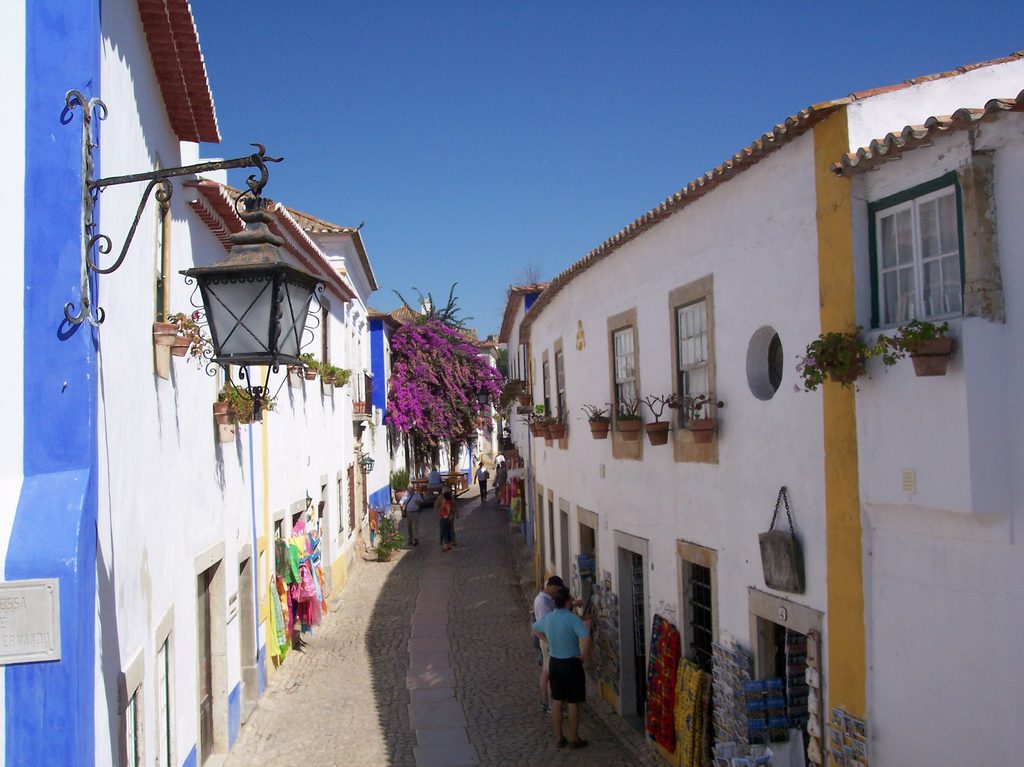
King Dinis gave Óbidos to his queen, Isabel, as a wedding present in 1282, and for centuries it passed from queen to queen, which explains why it looks like a wedding present: a complete medieval town of white houses edged in blue and ochre, bougainvillea over the doorways, all inside a circuit of castle walls. You can walk right round the top of the walls, though there are no railings, so hold on to children. The castle itself is now a pousada. The town’s speciality is ginja, a sour-cherry liqueur, sold from every doorway, often in little edible chocolate cups.
By day, and particularly at weekends, the main street is full of coaches from Lisbon; by evening it empties and becomes lovely. It hosts a medieval market in summer, an international chocolate festival in spring and a Christmas village in December, all of which fill it further. Verdict: sleep inside the walls if you can, and walk them at sunset. Park outside the gates and walk in. If you’re coming from Lisbon for the day, our day trips from Lisbon guide covers the buses.
Caldas da Rainha and the Óbidos lagoon
Ten minutes north, Caldas da Rainha, the “Queen’s Baths”, grew up around a thermal hospital founded by Queen Leonor in the fifteenth century. It has a lively morning fruit and vegetable market in its main square, a good park and the Bordallo Pinheiro ceramics factory, known for its cabbage-leaf plates and tableware. West of it, the Lagoa de Óbidos is a big, shallow lagoon meeting the sea at Foz do Arelho, where you can choose between calm lagoon water and ocean surf on the same beach. Verdict: Caldas for the market on a weekday morning; Foz do Arelho for a beach afternoon.
Peniche, Baleal and the Berlengas
Peniche is a fishing town on a former island, now a peninsula, and one of Europe’s great surf centres. Its beaches face in almost every direction, so there’s nearly always somewhere working, and the Supertubos beach hosts professional surf contests. The town’s fortress was a political prison under the Salazar dictatorship and is now a national museum of resistance and freedom, one of the most affecting places in the country. Baleal, next door, is a tiny island village joined to the mainland by a sandbar, with a beach on each side. Off the coast, the Berlengas archipelago is a UNESCO Biosphere Reserve of granite islands full of seabirds, with a seventeenth-century fort on a rock reached by a stone causeway. Boats run from Peniche in the warmer months, taking about 40–50 minutes, and daily visitor numbers are capped, so book ahead in summer and take a seasickness tablet. Verdict: a great day for surfers and birdwatchers alike, and the Berlengas are one of Portugal’s most spectacular day trips on a calm day.
São Martinho do Porto
A small resort built around an almost perfectly round, shell-shaped bay, closed to the ocean except for a narrow entrance, which makes its water unusually calm and warm for this coast. It’s a favourite with Portuguese families. Verdict: the best swimming beach on the Silver Coast for children.
Nazaré
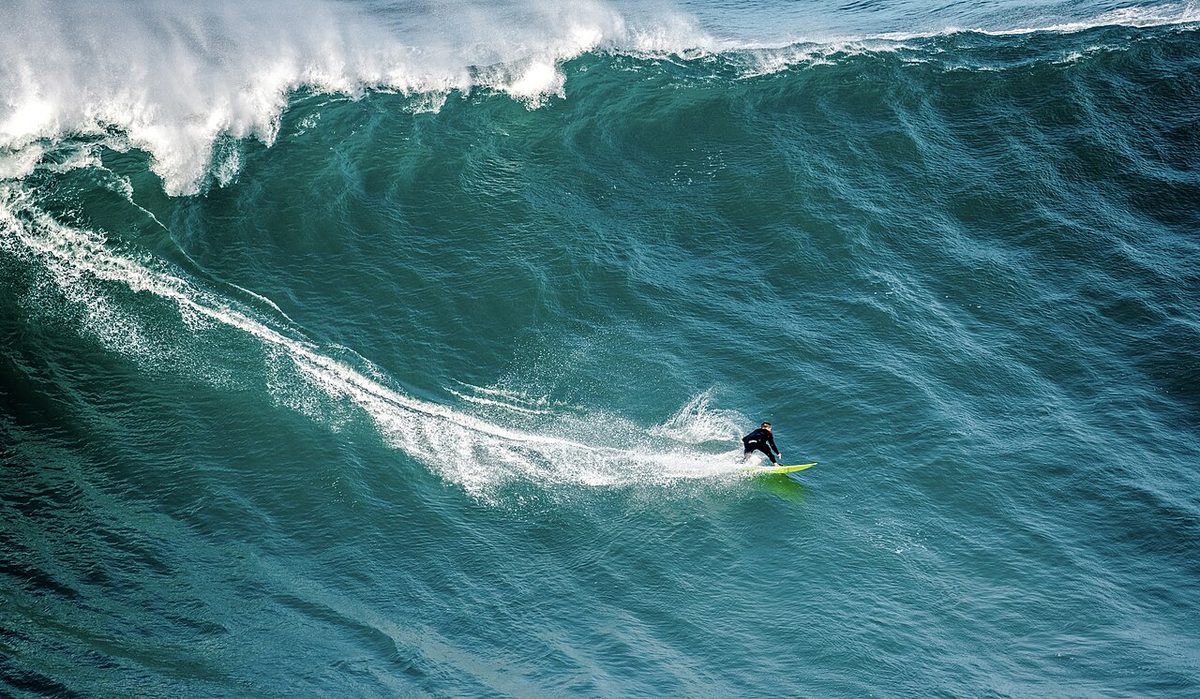
Nazaré has two personalities. The lower town is a fishing-village-turned-resort on a long sandy beach, with a seafront of fish restaurants and, still, a few older women in the traditional layered skirts. The upper town, Sítio, is on a clifftop reached by a funicular, with a church, a viewpoint and the road out to the lighthouse fort on the headland. North of the headland is Praia do Norte, where an underwater canyon focuses Atlantic swells into some of the biggest waves ever surfed. That happens roughly between October and March, most dramatically from November to February, and it’s unpredictable more than a few days ahead. In summer Praia do Norte is an ordinary, if powerful, beach.
Verdict: on a big-wave day in winter, Nazaré is one of the great spectacles in Europe, and you should drop everything to go. Watch from the lighthouse fort, and arrive early. In summer it’s a pleasant beach town with good grilled fish, and a nice lunch stop between Óbidos and the monasteries.
The monastery route: Alcobaça, Batalha and Tomar
Three of Portugal’s most important buildings stand within an hour’s drive of each other in the hills between the coast and the Tagus, all UNESCO World Heritage Sites. Since the national museums and monuments body raised its prices, each costs €15 for an adult (checked September 2026), with Alcobaça’s church free. Portuguese residents get a set number of free days a year, but visitors pay the full price. If you only have time for two, make them Tomar and Batalha.
Alcobaça
Founded in 1153 by Portugal’s first king, Afonso Henriques, and given to the Cistercian order, the Monastery of Alcobaça has one of the largest and most austere Gothic churches in Europe: a soaring, white, almost unadorned nave that’s free to enter. Inside it lie the carved tombs of King Pedro I and Inês de Castro, the lovers at the centre of Portugal’s great tragedy. Inês was murdered on the orders of Pedro’s father, and when Pedro became king he is said to have had her exhumed and crowned. The two tombs face each other so that, the story goes, they’ll see each other first when they rise on Judgement Day. The paid visit (€15) takes you through the cloisters, the monks’ dormitory and the vast kitchen, with a stream diverted through it to supply fresh water and fish. Verdict: the church and the tombs are essential and free; the paid areas are worth it if you have time.
Batalha
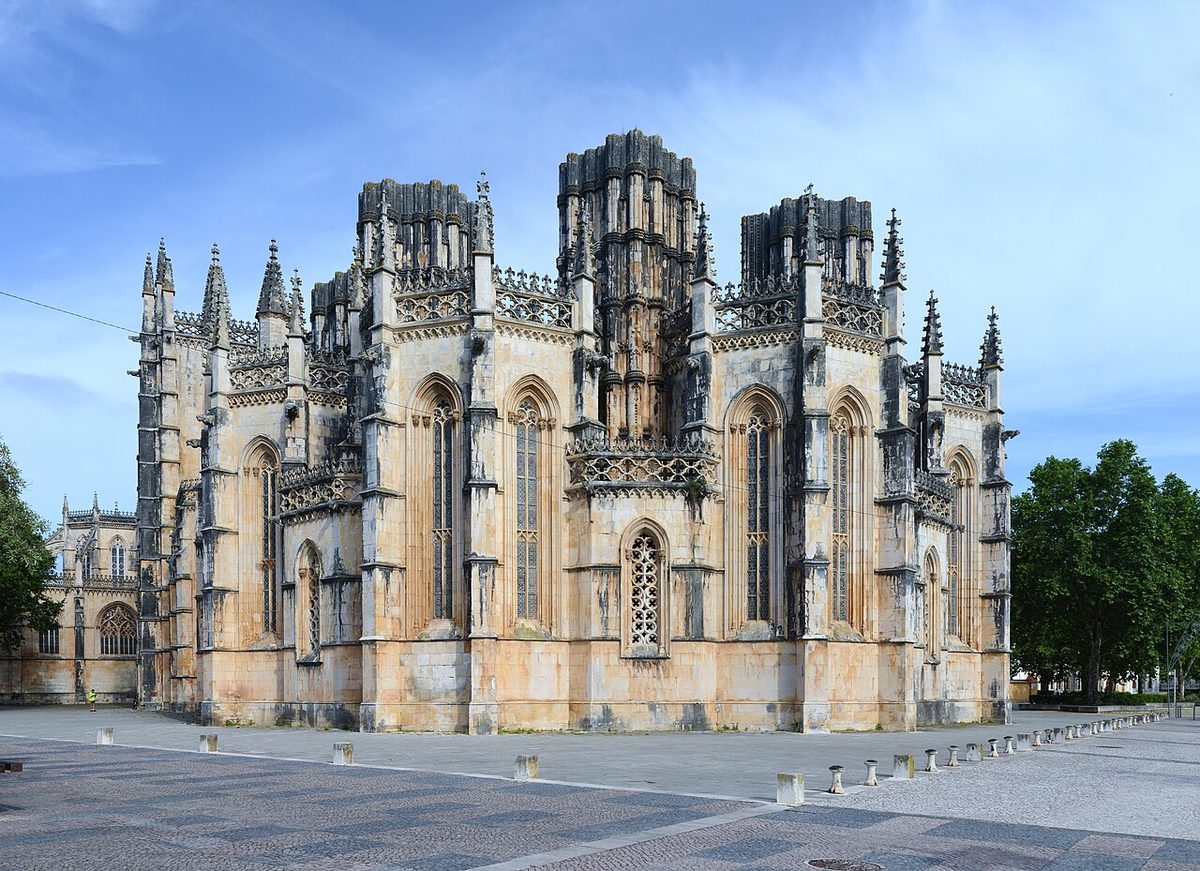
The Monastery of Santa Maria da Vitória was built to give thanks for the Portuguese victory over Castile at Aljubarrota in 1385, which secured the country’s independence, and it’s the finest Gothic building in Portugal. The golden limestone exterior is a forest of pinnacles and tracery. Inside, the Founder’s Chapel holds the tombs of King João I and his English queen, Philippa of Lancaster, lying hand in hand, with their sons, including Henry the Navigator, around them. Portugal’s tomb of the Unknown Soldier, from the First World War, is in the chapter house, with a ceremonial guard. The Unfinished Chapels, an octagon of chapels open to the sky, were begun in the fifteenth century and never roofed, and their Manueline doorway is some of the most elaborate stone carving in the country. Tickets are €15 (the price varies slightly depending on where you buy). Verdict: essential. Allow an hour and a half.
Tomar and the Convent of Christ
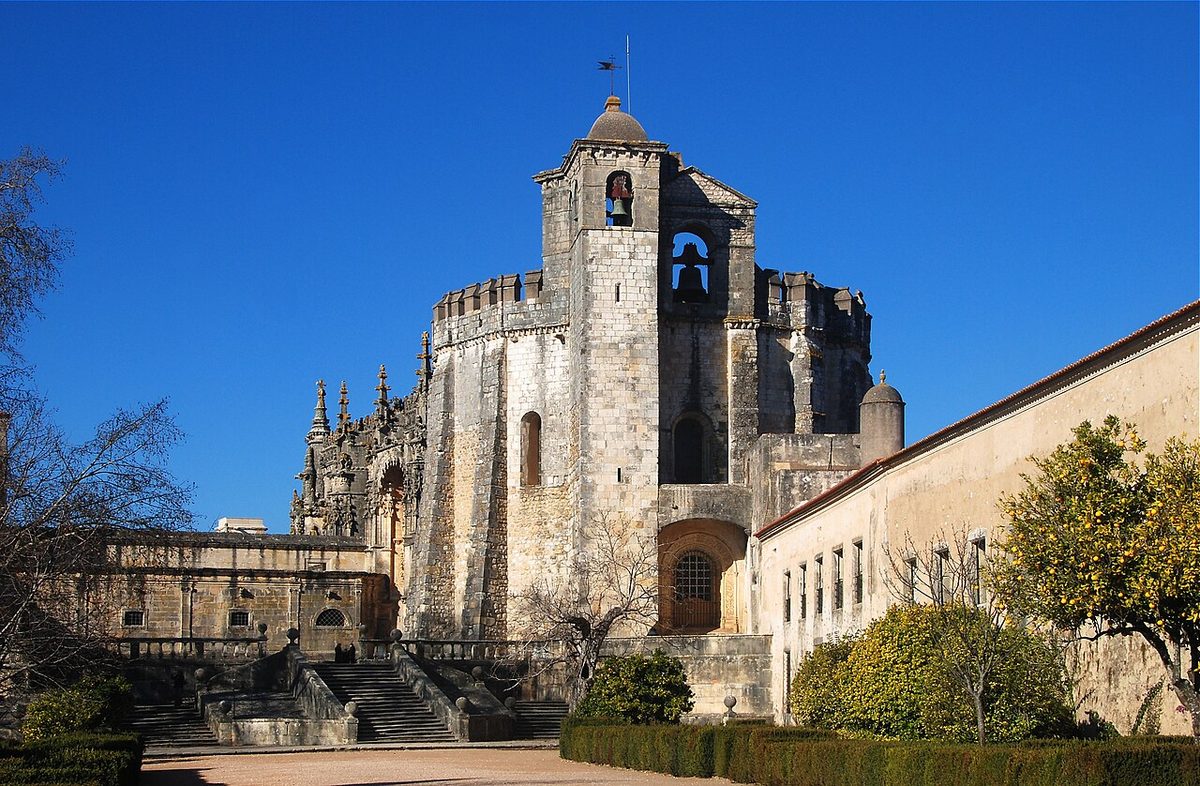
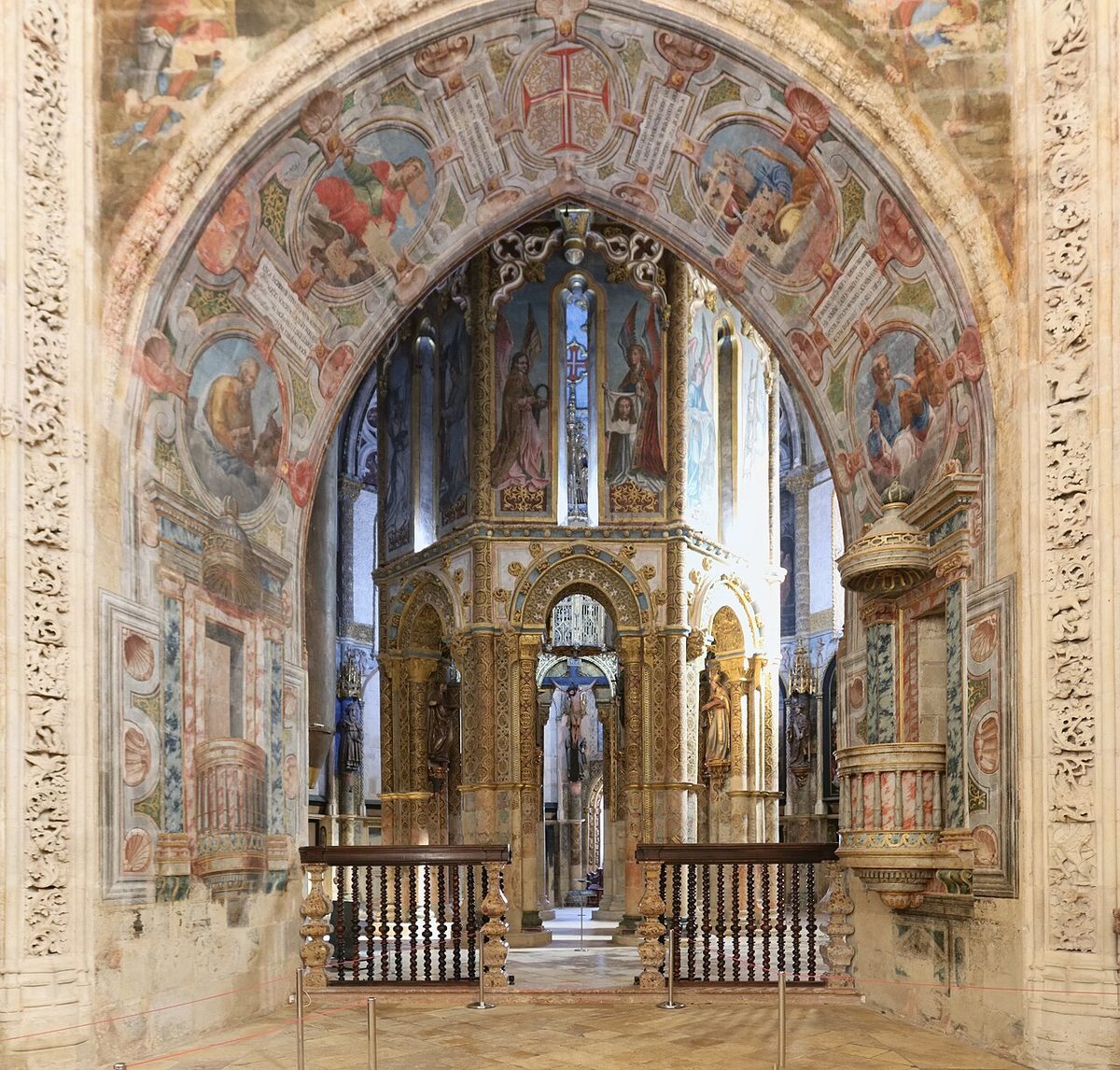
If you see one monument in central Portugal, make it this. On a hill above the town of Tomar, the Convent of Christ began as the twelfth-century castle of the Knights Templar and became the headquarters of their Portuguese successors, the Order of Christ, whose wealth helped fund the voyages of discovery. At its heart is the Charola, the Templars’ round church, modelled on the Holy Sepulchre in Jerusalem and painted and gilded inside from floor to ceiling. Around it, later centuries added eight cloisters, a Renaissance church, and the famous Manueline window on the chapter house, carved with ropes, coral, seaweed and armillary spheres, a stone hymn to the sea.
Tickets: €15 for adults, checked September 2026, with 50% off for over-65s, young people aged 13–24 and families with at least one adult and one child. Verdict: give it at least two hours, and don’t skip the upper cloisters and the long dormitory corridors. The town below is pleasant, with one of the oldest surviving synagogues in Portugal, and every four years it holds the Festa dos Tabuleiros, when women parade through the streets carrying towers of bread on their heads.
Fátima
In 1917 three shepherd children reported a series of apparitions of the Virgin Mary at Fátima, and the small town has since become one of the most important Catholic pilgrimage sites in the world. The sanctuary is a vast esplanade between a white basilica and the huge modern Basilica of the Holy Trinity, with the Chapel of the Apparitions on the spot where the visions were reported. Entry is free. The biggest pilgrimages are on 12–13 May and 12–13 October, when hundreds of thousands arrive and a candlelit procession fills the esplanade on the night of the 12th. Verdict: for believers, the reason to come to central Portugal. For others, it’s a remarkable sight of faith on a mass scale, and it’s twenty minutes from Batalha. Avoid the big pilgrimage dates unless you’re there for them, as the roads and hotels fill.
Almourol castle
East of Tomar, a Templar castle stands alone on a rocky island in the middle of the Tagus, reached by a short boat ride from the riverbank. It’s small, but the setting is one of the most romantic in Portugal. Verdict: a lovely short detour if you’re driving between Tomar and Lisbon.
Coimbra
Portugal’s capital for more than a century after independence, and its university city for much longer, Coimbra climbs a steep hill above the Mondego river to the university at the top. It’s lively with students in term time, some still wearing the black academic cape, and it’s the best base in central Portugal. Give it two nights.
The University of Coimbra
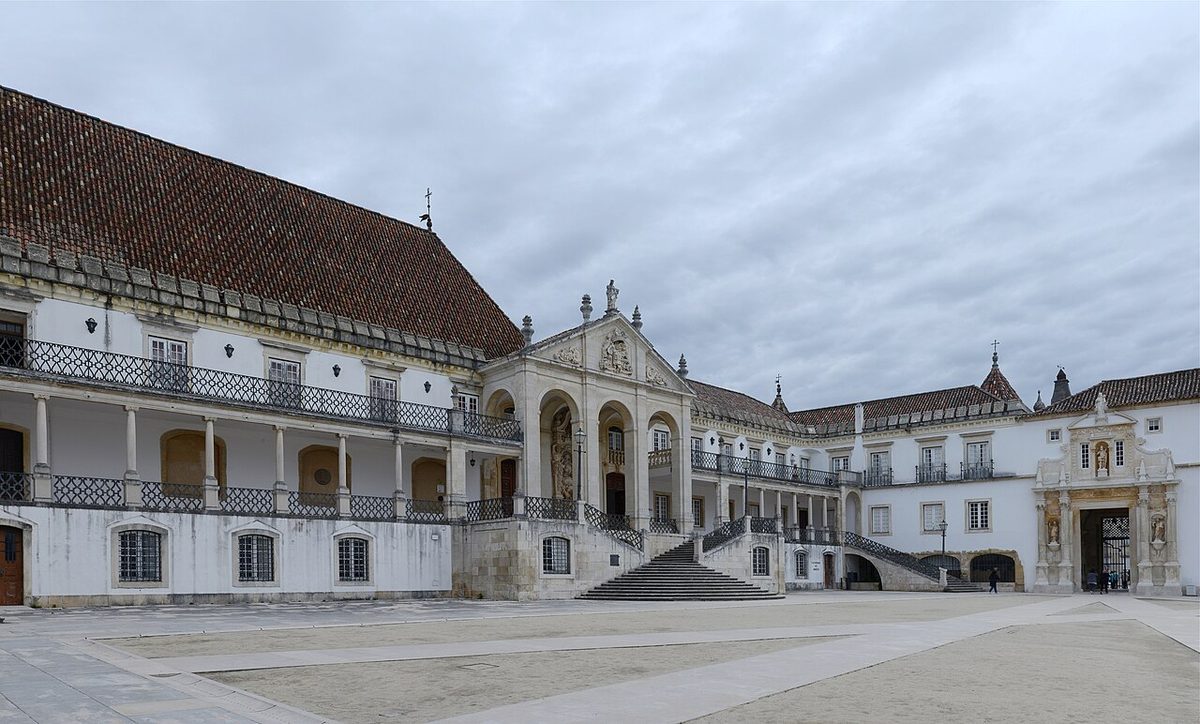
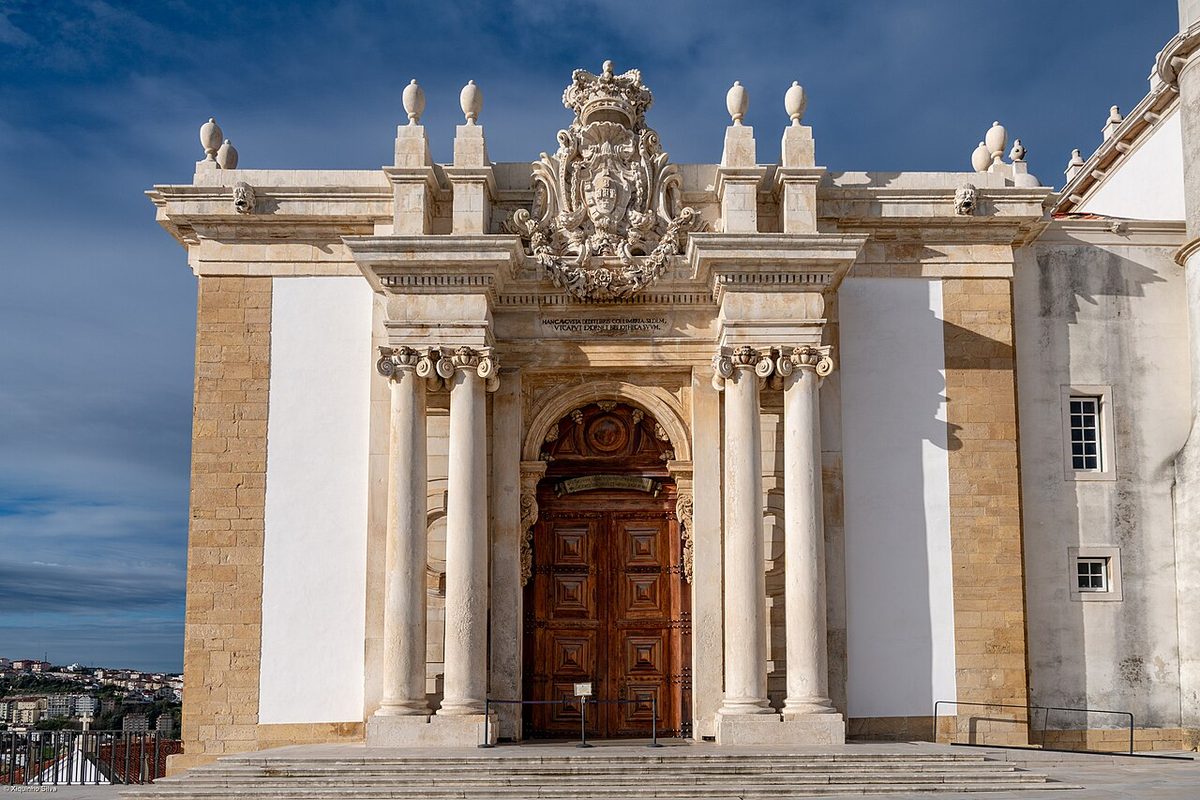
Founded in 1290, moved back and forth between Lisbon and Coimbra, and settled here for good in 1537, the university occupies the former royal palace at the top of the hill. The university’s hilltop and the Rua da Sofia below are a UNESCO World Heritage Site. The courtyard of the Paço das Escolas, with its clock tower and a view over the river, is the heart of it. The visit includes the grand ceremonial hall where doctorates are still awarded, the Manueline chapel of São Miguel, the old academic prison and the Biblioteca Joanina, an eighteenth-century Baroque library of gilded and lacquered wood holding tens of thousands of old books. It keeps a resident colony of bats that come out at night to eat the insects that would otherwise damage the books, and the tables are covered each evening to protect them from the droppings.
Tickets: €25 for adults for the visit that includes the library and the Paço das Escolas, checked on the university’s visitor site in September 2026. Entry to the library is by timed slot, and it’s small, so book ahead in summer. Verdict: expensive, but the Joanina is one of the most beautiful rooms in Europe.
The old town
Below the university, a tangle of steep lanes and stairways drops to the lower town. On the way, the Sé Velha, the Old Cathedral, is one of the finest Romanesque buildings in Portugal, fortress-like outside, with a lovely cloister. At the bottom, the Monastery of Santa Cruz holds the tombs of Portugal’s first two kings, Afonso Henriques and Sancho I, and the café in its former chapter house is one of the most atmospheric in the country. Verdict: walk down from the university through the old town in the late afternoon, and take a coffee at Santa Cruz.
Coimbra fado
Coimbra has its own fado, different from Lisbon’s: sung by men, often students or former students, in academic capes, with a more lyrical, serenading style and the distinctive Coimbra guitar. Several small venues in the old town hold short evening performances. Verdict: an hour of Coimbra fado is one of the best evenings in the region.
Across the river
On the south bank, the Quinta das Lágrimas gardens hold the “Fountain of Tears”, said to have sprung from the tears Inês de Castro wept at her murder, and linked to the story you’ll meet again at Alcobaça. Portugal dos Pequenitos is a park of miniature Portuguese buildings built for children in the 1940s, and it’s a hit with anyone under ten. Verdict: the Quinta for a romantic walk; the miniature park if you have children.
Conímbriga
Sixteen kilometres south, Conímbriga is the best-preserved Roman town in Portugal, with the walls, streets, baths and above all the floor mosaics of large houses still in place, some protected under modern roofs. A good museum explains it. Verdict: a superb half-day, and a much better use of time than a second museum in Coimbra.
Buçaco, Luso and the Bairrada
North of Coimbra, the Buçaco forest is an ancient walled woodland once cared for by Carmelite monks, with giant trees, chapels, fountains and a sweeping staircase of water. In its middle stands the extraordinary Palace Hotel do Buçaco, a neo-Manueline fantasy built as a royal hunting lodge at the start of the twentieth century and now a hotel. The forest was also the site of a battle in 1810, when Wellington’s Anglo-Portuguese army held off Napoleon’s invasion. Next door, Luso is the spa town that bottles one of Portugal’s best-known mineral waters. The surrounding Bairrada wine region is famous for sparkling wine and for leitão, spit-roasted suckling pig, served in the roadside restaurants of Mealhada. Verdict: Buçaco for a walk and a drink on the palace terrace; Mealhada for lunch.
Aveiro, the lagoon and the Costa Nova
Aveiro is often called the Venice of Portugal, which does it no favours. It’s a pleasant small city built around a few canals off the Ria de Aveiro lagoon, with brightly painted moliceiro boats (once used to harvest seaweed, now used for tourist trips), some fine Art Nouveau buildings and a sweet speciality, ovos moles, egg-yolk and sugar in wafer shells shaped like shells and fish. There’s a small Art Nouveau museum in one of the best of the buildings, and salt pans on the edge of town.
The reason to come is fifteen minutes away. The Costa Nova is a beach village where the old fishermen’s storehouses, the palheiros, are painted in bold vertical stripes of red, blue, yellow and green, lined up between the lagoon and the Atlantic. Next door, the Praia da Barra has Portugal’s tallest lighthouse. Inland, Ílhavo has the Vista Alegre porcelain factory, making china since 1824, with a museum and a factory shop, and an excellent maritime museum about the Portuguese cod-fishing fleets that sailed to Newfoundland and Greenland. Verdict: a boat ride and ovos moles in Aveiro, then a long afternoon at the Costa Nova. Half a day is plenty, but a night by the sea is lovely.
The interior: mountains, schist villages and the Historic Villages
East of the coastal belt, central Portugal turns into hills, forest and mountains, and far fewer foreign visitors come. It’s a region for a road trip, not for public transport.
The Serra da Estrela
The highest mountains in mainland Portugal rise to Torre, at 1,993 m, with the country’s only ski runs, a glacial valley at Manteigas and the source of the Zêzere and Mondego rivers. In summer it’s walking country, in winter the roads over the top can close with snow. It’s also home to queijo da Serra da Estrela, a soft, runny sheep’s cheese that’s among the best in Portugal. Covilhã, Manteigas and Seia make good bases, and the N339, Portugal’s highest road, crosses the range. Verdict: two or three days for walkers and for anyone in Portugal in winter who wants snow.
The schist villages
In the hills south-east of Coimbra, the schist villages (Aldeias do Xisto) are a network of mountain hamlets built of dark slate-like schist, many restored after emptying out in the twentieth century. Talasnal in the Serra da Lousã, a short walk up from the town of Lousã, is the easiest to reach, and Piódão, in the Serra do Açor, is the most spectacular: a village of dark stone houses stacked up a steep terraced hillside around a white church. Verdict: Piódão is a long drive on winding roads, but it’s worth it, and staying the night lets you see it lit up after dark.
The Historic Villages
Along the old Spanish border, twelve fortified villages have been designated the Historic Villages of Portugal: hilltop strongholds that guarded the frontier for centuries. Monsanto, built among and even under giant granite boulders, was once voted “the most Portuguese village in Portugal”. Sortelha has one of the most complete sets of walls; Belmonte was the birthplace of Pedro Álvares Cabral, who reached Brazil, and home to a community of Jews who kept their faith in secret for centuries; and Almeida is ringed by a star-shaped fortress. Verdict: a loop through three or four of them makes one of the best road trips in Portugal.
Viseu and the Dão
Viseu is a handsome, prosperous city with a granite cathedral and the Grão Vasco museum of Portuguese Renaissance painting. It’s the capital of the Dão wine region, whose elegant reds and whites are some of Portugal’s most underrated wines. Verdict: a good overnight between Coimbra and the Douro or the Serra da Estrela.
What to eat in central Portugal
- Leitão da Bairrada: suckling pig roasted until the skin crackles, served cold or warm with orange slices and sparkling Bairrada wine. Mealhada, on the old road north of Coimbra, is lined with restaurants that do nothing else.
- Grilled fish and caldeirada: in Nazaré, Peniche and the coastal villages, sardines in summer and fish stew all year.
- Chanfana: goat slow-cooked in red wine in a clay pot, a dish of the hills around Coimbra and the schist villages.
- Queijo da Serra da Estrela: soft, rich sheep’s cheese, scooped out of the rind with a spoon when it’s at its runniest.
- Ovos moles de Aveiro: egg-yolk and sugar in wafer shells, a legacy of Aveiro’s convents.
- Pastéis de Tentúgal: fine, flaky pastry filled with egg cream, from the village of Tentúgal near Coimbra.
- Ginja de Óbidos: the sour-cherry liqueur, sold everywhere in Óbidos.
- Wines: Dão reds and whites, Bairrada’s sparkling wines and its reds from the Baga grape, and whites from the Beira Interior.
As everywhere in Portugal, lunch is the best-value meal, and the prato do dia with a drink costs roughly €9–15. For Portugal’s food region by region, see our Portuguese food guide.
How to plan it: 3, 5 and 7 days
Three days: Óbidos, the monasteries and Coimbra
| Day | Plan | Sleep |
|---|---|---|
| 1 | Lisbon to Óbidos; the walls at sunset | Óbidos |
| 2 | Nazaré for the morning; Alcobaça and Batalha; on to Coimbra | Coimbra |
| 3 | The university and the Joanina; the old town; on to Porto or back to Lisbon | — |
Five days: the full route between Lisbon and Porto
| Day | Plan | Sleep |
|---|---|---|
| 1 | Lisbon to Óbidos, via Peniche and Baleal | Óbidos |
| 2 | Nazaré, Alcobaça and Batalha | Batalha or Tomar |
| 3 | Tomar’s Convent of Christ in the morning; Fátima if you want it; on to Coimbra | Coimbra |
| 4 | Coimbra, with Conímbriga or Buçaco | Coimbra |
| 5 | Aveiro and the Costa Nova; on to Porto | — |
Seven days: coast, monasteries and mountains
Take the five-day plan and add two days inland from Coimbra: one night in Piódão or the schist villages of the Serra da Lousã, and one in the Serra da Estrela or a Historic Village like Monsanto. Then drive north to Porto via Viseu and the Dão, or, better still, via the Douro Valley. This part of Portugal is also the heart of our Portugal road trip guide, whose seven-day Lisbon-to-Porto route follows much of the five-day plan above with leg-by-leg driving times. For fitting it into a longer trip, see our Portugal itinerary planner.
Where to stay in central Portugal
| Base | Best for | Downside |
|---|---|---|
| Óbidos | The walls after dark, the Silver Coast | Busy by day; limited restaurants in the evening |
| Nazaré | The beach, big-wave season, fish restaurants | Crowded in August |
| Batalha or Tomar | The monasteries, early starts | Quiet evenings |
| Coimbra | Culture, food, fado, central location | Steep streets; limited old-town parking |
| Aveiro or the Costa Nova | The lagoon and the beach | Aveiro itself is a half-day town |
| Piódão or the Serra da Estrela | Mountains, walking, stone villages | Long, winding drives |
For somewhere memorable, the pousada in Óbidos castle and the Palace Hotel do Buçaco are two of the most unusual hotels in Portugal. In the monastery towns and the interior, rural guesthouses and restored village houses are good value and usually have parking.
Getting there and getting around
By train. Coimbra is on the main Lisbon–Porto line, and the Alfa Pendular stops at Coimbra-B station, about halfway between the two cities on the 2h40–2h50 run. Aveiro is on the same line, a short hop north of Coimbra. Tomar has its own regional line from Lisbon. The train doesn’t reach Óbidos usefully, or Nazaré, Batalha, Alcobaça or Fátima at all.
By bus. Rede Expressos and regional operators run buses from Lisbon’s Sete Rios and Campo Grande terminals to Óbidos, Caldas da Rainha, Nazaré, Alcobaça, Batalha and Fátima. It’s possible to see the Silver Coast and the monasteries by bus, but slow, and you’ll spend a lot of time waiting at bus stations.
By car. The best way to see the region. The A8 runs up the Silver Coast from Lisbon, the A1 is the main Lisbon–Porto motorway (€25.05 end to end for a car in 2026), and the A17 continues up the coast. Drives between the main stops are short: Óbidos to Nazaré is about 35 minutes, Nazaré to Alcobaça about 15, Alcobaça to Batalha 20, Batalha to Fátima 20, Fátima to Tomar 35, Tomar to Coimbra an hour and Coimbra to Aveiro about 50 minutes. The A25 east from Aveiro and the A23 through the Beira Interior have been toll-free since January 2025. For hire cars, tolls and driving rules, see our guide to getting around Portugal.
When to go
| Season | What it’s like | Good for |
|---|---|---|
| Spring (March–May) | Mild, green, occasional rain | Monasteries, Coimbra, walking, Óbidos’s chocolate festival |
| Summer (June–August) | Warm on the coast, hot inland; the Atlantic stays cool | Beaches, Berlengas boats, Óbidos’s medieval market |
| Autumn (September–October) | Warm, settled, the grape harvest | Everything; the first big swells at Nazaré |
| Winter (November–February) | Cool and wet on the coast, cold in the mountains | Nazaré’s giant waves, snow in the Serra da Estrela, Óbidos’s Christmas village |
The Silver Coast’s sea is colder than the Algarve’s all year, which surprises people. Winter here has two unique draws: Nazaré’s waves and snow on the Serra da Estrela. Fátima’s big pilgrimage dates, 12–13 May and 12–13 October, fill the whole area. For month-by-month weather across the country, see our best time to visit Portugal guide.
What central Portugal costs (checked September 2026)
| Item | Price | Notes |
|---|---|---|
| Convent of Christ, Tomar | €15 | 50% off for over-65s, 13–24s and families with a child |
| Batalha Monastery | €15 | Varies slightly by sales platform |
| Alcobaça Monastery | Church free; cloisters and buildings €15 | The tombs are in the free church |
| University of Coimbra (Joanina + Paço das Escolas) | €25 | Timed entry to the library |
| Fátima sanctuary | Free | Donations welcome |
| Óbidos walls and town | Free | Ginja in a chocolate cup a euro or two |
| A1 toll, Lisbon to Porto | €25.05 | Car, end to end |
| Prato do dia lunch with a drink | €9–15 | The best-value meal everywhere |
| Mid-range dinner for two, with wine | €40–60 | Less in the interior |
The big change since older guides were written is the monuments: at €15 each, the three monasteries and the university add up to €70 a head, so plan which ones you really want. For a complete budget, see our guide to what a Portugal trip costs.
Festivals and events
| When | What | Where |
|---|---|---|
| Spring | International chocolate festival | Óbidos |
| 12–13 May | The first great pilgrimage of the year, with a candlelit procession | Fátima |
| May | The Queima das Fitas, the students’ end-of-year celebrations | Coimbra |
| Early July, every four years | Festa dos Tabuleiros, with towers of bread carried through the streets | Tomar |
| July | Medieval market | Óbidos |
| 12–13 October | The last great pilgrimage of the year | Fátima |
| October–March | Big-wave season, with surf contests when the swell arrives | Nazaré |
| December | Christmas village | Óbidos |
Check exact dates with the organisers each year, since several of these move with the calendar.
Two more towns worth a stop: Leiria and Figueira da Foz
Leiria
Most people drive past Leiria on the A1 without a glance, but it’s a pleasant, lively provincial city with a big castle on a rock above the river Lis and a good old town of squares and cafés below it. The castle has a Gothic loggia with a view over the city and the hills. Leiria makes a practical, reasonably priced base for the monastery route, with Batalha fifteen minutes away and Fátima, Alcobaça and Nazaré all within half an hour. West of the city lies the Pinhal de Leiria, the royal pine forest traditionally said to have been planted by King Dinis in the thirteenth century to hold back the dunes and supply timber for ships. Most of it burned in the fires of October 2017, and it’s slowly being replanted. Verdict: an underrated base, and a good lunch stop between Batalha and the coast.
Figueira da Foz
At the mouth of the Mondego, 45 minutes west of Coimbra, Figueira da Foz is an old-fashioned Portuguese seaside resort with one of the widest beaches in Europe. The sand is so deep that the walk from the promenade to the water feels like crossing a small desert. It has a casino, a seafront of apartment blocks and, at its northern end, the old fishing quarter of Buarcos, with good fish restaurants and the green headland of the Serra da Boa Viagem behind. Verdict: a fine beach day from Coimbra, and a place to see how Portuguese families holiday, but not a destination for a first trip.
The beaches of central Portugal
Central Portugal’s Atlantic coast is long, sandy and much less developed than the Algarve, but it’s also colder and rougher. The water here is cooled by the Atlantic swell and never gets properly warm even in August, and on many beaches the waves and currents are serious. Swim where there are lifeguards and flags, which in Portugal means roughly June to mid-September. These are the beaches I’d pick, from south to north:
- Baleal and the Peniche beaches. Surf beaches facing several directions, so one is usually calm when another is wild. Baleal’s sandbar has a beach on each side. It’s the base for most of Portugal’s surf camps.
- Foz do Arelho. A choice of calm, warm lagoon water or ocean surf on the same stretch of sand, where the Óbidos lagoon meets the sea. Excellent for families.
- São Martinho do Porto. A nearly enclosed, shell-shaped bay with gentle water. It’s the safest swimming on this coast.
- Nazaré. The long town beach below the Sítio cliff, with fishing boats at one end. Praia do Norte, beyond the headland, is powerful even in summer, so admire it rather than swim.
- Figueira da Foz and Buarcos. An enormous beach with plenty of room even in August.
- Praia de Mira. A long beach with a lagoon behind it and some traditional fishermen’s houses like those at the Costa Nova. It’s where some fishing boats are still hauled up the sand.
- Costa Nova and Barra. The striped houses, Portugal’s tallest lighthouse and a long Atlantic beach, with the calm lagoon on the other side of the road.
For how these compare with the rest of the country’s coast, from the Algarve’s coves to the Alentejo’s wild beaches, see our guide to Portugal’s best beaches.
Walking and the outdoors
Central Portugal has some of the country’s best walking outside the islands, and very few foreign walkers.
- The Serra da Estrela. Waymarked trails from Manteigas and the high plateau around Torre, including walks through the glacial valley of the Zêzere, the best-known glacial landscape in Portugal. In winter the high ground has snow, and in summer the plateau is open, bright and breezy.
- The Serra da Lousã. Short walks linking the schist villages of Talasnal, Chiqueiro and Casal Novo through chestnut and pine woods above Lousã. It’s an easy half-day, with lunch in a stone village at the end.
- Buçaco. Gentle walks through the ancient forest to viewpoints, chapels and the Via Sacra, the stations of the cross built by the monks, with a drink at the Palace Hotel afterwards.
- The Paiva Walkways. On the northern edge of the region, near Arouca, the Passadiços do Paiva are 8 km of wooden walkway along a wild river gorge, best walked from Areinho to Espiunca, going downhill. They’re combined with the 516 Arouca suspension bridge on a single ticket costing €12, sold online only, on the same day, through 516arouca.pt, with a daily cap and no sales on site (checked September 2026).
- The Berlengas. A short circuit of the main island’s paths to the fort and the seabird colonies, on the days the boats sail.
- Surfing. Peniche, Baleal and the coast north to Figueira da Foz and beyond are among the best surf regions in Europe, with surf schools and camps for every level.
Central Portugal with children
This is one of the easiest parts of Portugal to travel with children: short drives, castles, beaches and a few attractions built with them in mind.
- Portugal dos Pequenitos in Coimbra, a park of child-sized Portuguese buildings and monuments, is the obvious hit with under-tens.
- Castles and walls. Óbidos’s walls, Leiria’s castle and Almourol’s island castle (with a boat ride to reach it) are all good for children. The walls at Óbidos have no railings, so hold hands.
- Beaches. São Martinho do Porto’s enclosed bay and the lagoon side of Foz do Arelho have the calmest water on the coast.
- Conímbriga. Roman streets, baths and mosaics you can walk among, and a good museum.
- Boats. A moliceiro ride on the Aveiro canals is short and colourful. The Berlengas boat is exciting but can be rough, so bring seasickness remedies.
- Nazaré. The funicular up to the Sítio is a small adventure in itself.
- Snow. In winter the Serra da Estrela is the only place in mainland Portugal where children can play in snow, and it gets busy with Portuguese families at weekends.
The monasteries are more of a challenge for young children, since they’re big, quiet and expensive. Choose one and keep it short, or use Alcobaça’s free church.
The monastery route in one day, hour by hour
If you only have one day for the monasteries, this is the order that works. It needs a car and an early start, and it assumes a night in Óbidos or Nazaré before and Coimbra after.
| Time | Stop | Notes |
|---|---|---|
| 09:00 | Alcobaça: the church and the tombs of Pedro and Inês | Free; add the €15 cloisters only if you’re keen |
| 10:30 | Batalha Monastery | €15; allow 90 minutes for the church, cloister, Founder’s Chapel and Unfinished Chapels |
| 12:30 | Lunch in Batalha or Leiria | A prato do dia near the monastery |
| 14:00 | Fátima, optional | 30–45 minutes on the sanctuary esplanade; free |
| 15:00 | Tomar: the Convent of Christ | €15; allow two hours, and check the last entry time |
| 17:30 | Tomar town, then on to Coimbra | About an hour’s drive |
It’s a full day, and it works best out of the summer heat. With two days, split it: Alcobaça and Batalha on the first, sleeping in Batalha or Tomar, then the Convent of Christ first thing on the second, when it’s quiet.
A short history of central Portugal
Romans and the first kingdom. The Romans built towns across the region, of which Conímbriga is the best preserved. After the Muslim conquest of the eighth century, the Christian kingdoms of the north pushed back south, and in the twelfth century Afonso Henriques, the first king of Portugal, made Coimbra his capital. It remained the capital until Lisbon took over in the mid-thirteenth century. Afonso Henriques founded the monastery at Alcobaça, and he and his son lie in Santa Cruz in Coimbra.
Templars, Inês and Aljubarrota. The Knights Templar were given lands at Tomar for their part in the reconquest, and when the order was suppressed across Europe in the early fourteenth century, King Dinis refounded it in Portugal as the Order of Christ, which kept the Templar castle and its wealth. In 1355, Inês de Castro, the lover of the heir to the throne, was murdered in Coimbra on the king’s orders, the story behind the tombs at Alcobaça and the Fountain of Tears. In 1385, at Aljubarrota, a small Portuguese army with English allies defeated the much larger forces of Castile and secured Portugal’s independence. The monastery at Batalha was built to give thanks, and the alliance was sealed by the Treaty of Windsor in 1386 and the marriage of João I to Philippa of Lancaster, who lie together in the Founder’s Chapel.
Discovery. Their son Henry the Navigator became governor of the Order of Christ, and the order’s resources helped fund the voyages that took Portuguese ships down the coast of Africa and eventually to India and Brazil. The crosses on the sails of those ships were the Order of Christ’s cross, the same one painted in the Charola at Tomar.
Invasion and dictatorship. In 1810 Napoleon’s third invasion of Portugal was checked at Buçaco by Wellington’s Anglo-Portuguese army, which then fell back behind the fortified Lines of Torres Vedras north of Lisbon. In the twentieth century, António de Oliveira Salazar, a Coimbra economics professor born near Santa Comba Dão in this region, ruled Portugal as a dictator for decades. Among the prisons of his regime was the fortress at Peniche, which is now the museum of resistance and freedom.
Fire and renewal. In the summer and autumn of 2017, devastating wildfires swept through the forests of central Portugal, killing dozens of people at Pedrógão Grande in June and many more in October, when most of the Pinhal de Leiria also burned. The region has been replanting and rebuilding since. In the interior you’ll still see burned slopes, and you’ll hear about the fires if you talk to people. It’s one reason that wildfire warnings in summer are taken very seriously here.
Watching Nazaré on a big-wave day
If you’re in Portugal between October and March and a big swell is forecast, drop whatever you had planned and go to Nazaré. Here’s how to do it well.
- Watch the forecast, not the calendar. The giant days come with big, long-period swells from deep Atlantic storms, and they’re only predictable a few days ahead. Surf forecast sites and the Portuguese weather service’s sea-state warnings are the things to follow. When the big-wave surfers start travelling to Nazaré, you’ll hear about it.
- Go to the fort. The best viewpoint is the Forte de São Miguel Arcanjo, the small fort with the lighthouse on the headland between the town beach and Praia do Norte. It holds a small exhibition on the underwater canyon and big-wave surfing. From the fort’s walls and the slopes around it you look straight down onto the break.
- Arrive early. On famous days, thousands of people come. Parking in the Sítio fills up, and the steep road down to the fort becomes a slow procession. Get there in the morning, when the light is often best anyway.
- Respect the barriers. Waves on the biggest days can wash over the lower rocks and paths without warning. Stay behind the barriers and away from wet rock, however good the angle looks.
- Bring binoculars and layers. The surfers are towed into the waves by jet skis far out on the break, and it’s cold and windy on the headland in winter.
- Stay the night. If the swell lasts, the next morning is often as good, and Nazaré’s fish restaurants are at their best out of season.
On quieter winter days the waves are still huge by any normal standard, and the walk out to the fort is worth it for the sheer power of the sea. When the swell is right, a professional tow-surfing contest is often called at short notice.
Coimbra practicalities
Getting up the hill. The university is at the top of a steep hill, and the old town between is all stairs and cobbles. From the lower town near the municipal market, the Elevador do Mercado, a lift and short funicular, takes you most of the way up. Walk up that way and down through the old town past the Sé Velha, which is the better direction for the knees and the views.
Arriving by train. The fast trains between Lisbon and Porto stop at Coimbra-B, on the edge of the city. From there, take the connecting service or a short taxi ride into the centre, and allow for it when you plan a connection.
Driving and parking. Don’t try to drive into the upper town. Its lanes are narrow and access is restricted. Use a car park by the river or your hotel’s parking, and walk.
Term time. Coimbra is a student city and feels it. It’s liveliest in term, especially in May during the Queima das Fitas, when the students celebrate the end of the academic year with processions and concerts, and quietest in August. Book the Biblioteca Joanina’s timed slot as soon as your dates are fixed, because it’s the one thing in Coimbra that sells out.
Visiting Fátima respectfully
Fátima is a working shrine, not a museum, and a little preparation makes the visit better for you and for everyone else.
- Dress and behaviour. Cover shoulders and knees in the basilicas and the Chapel of the Apparitions, and keep your voice down. The small chapel where the visions were reported is a place of prayer, and people will be praying there whenever you visit.
- The pilgrims on the road. In the days before 13 May and 13 October you’ll see groups of pilgrims walking along Portugal’s main roads towards Fátima, many from hundreds of kilometres away, in reflective vests. Drive with care and give them room.
- The candles. Beside the chapel, pilgrims burn candles in large burners and leave wax offerings, including wax models of body parts for which they are asking for healing. They’re sold in the shops around the sanctuary. It’s one of the most striking sights of popular faith in Europe.
- Timing. Masses are held throughout the day in several languages, and the rosary and candlelit procession take place in the evening. The esplanade is at its most moving then, rather than at midday.
- Cost. Everything in the sanctuary is free.
Seeing central Portugal without a car: a practical plan
It can be done, but plan it around the railway and accept that the Silver Coast and the monasteries are easier on a tour.
| Leg | How | Notes |
|---|---|---|
| Lisbon to Óbidos | Bus from Campo Grande, about an hour | Sleep in Óbidos |
| Óbidos to Nazaré | Regional bus, via Caldas da Rainha | Check connections; services are thinner at weekends |
| Nazaré to Alcobaça and Batalha | Regional buses | Doable, but a day tour from Lisbon covering Óbidos, Nazaré, Batalha and Fátima is far more efficient |
| Batalha or Leiria to Coimbra | Bus | Rede Expressos runs this corridor |
| Coimbra to Tomar | Train, with a change | Or visit Tomar directly from Lisbon on its own line |
| Coimbra to Aveiro to Porto | Train | The easiest leg of all, on the main line |
My honest advice for a car-free trip: base yourself in Coimbra for two or three nights and use the train for Aveiro, take one organised day tour for the Silver Coast and the monasteries, and visit Tomar by train from Lisbon or Coimbra. You’ll see the best of the region with far less time spent at bus stops.
What to skip, and what’s overrated
Aveiro as “the Venice of Portugal”. It has a few canals and some boats. Enjoy the Art Nouveau, the ovos moles and a short boat ride, then go to the Costa Nova, which is the real reason to come.
Óbidos at midday on a Saturday. The main street becomes a single slow queue past the ginja stalls. Come in the evening, stay the night, or go midweek.
Doing all three monasteries in one rushed day. At €15 each and at least an hour and a half apiece, the third one rarely gets the attention it deserves. Choose Tomar and Batalha, and see Alcobaça’s free church and tombs if you’re passing.
Nazaré’s big waves in summer. They don’t exist in summer. If you’ve seen the famous footage, you need to come between October and March, and ideally on a forecast big-swell day.
Fátima on 13 May or 13 October if you’re not a pilgrim. The crowds are enormous and every road and hotel for miles is full. Go on another day.
The Buddha Eden garden. It’s billed as Europe’s biggest oriental garden, and it’s pleasant enough, but it’s a modern garden of statues. It isn’t worth a detour if your time in the region is short.
Seeing central Portugal only from the train. The most common mistake of all. Even one night in Coimbra and a day on the monastery route transforms a Lisbon-and-Porto trip.
Day trips or a few nights?
You can see parts of central Portugal on day trips. From Lisbon, Óbidos, Nazaré and the monasteries are all realistic by car or on a tour, and Fátima and Tomar by bus or train. Our day trips from Lisbon guide compares them. From Porto, Aveiro and Coimbra are easy by train; see our Porto travel guide for more on the city itself.
But the region is at its best when you stay. Óbidos and Monsaraz-style walled towns come alive after the day visitors leave, Coimbra’s evenings are its best part, and the monasteries are far better early in the morning than in the middle of a coach-tour day. Four nights between Lisbon and Porto, rather than a train ride, is the single best change you can make to a first trip to Portugal. If you have longer, the Alentejo lies just south of Lisbon; see our Alentejo guide.
Frequently asked questions
What is there to do in central Portugal?
The highlights are the walled town of Óbidos, Nazaré’s giant waves in winter, the UNESCO monasteries at Alcobaça, Batalha and Tomar, the pilgrimage town of Fátima, Coimbra’s university and library, Aveiro and the striped houses of the Costa Nova, and the mountains and stone villages of the interior.
How many days do you need in central Portugal?
Three days covers Óbidos, two monasteries and Coimbra. Five days lets you drive the whole route from Lisbon to Porto with Tomar, Nazaré and Aveiro. A week adds the schist villages, the Serra da Estrela or the Historic Villages.
What is the Silver Coast in Portugal?
The Silver Coast, or Costa de Prata, is the Atlantic coast of central Portugal north of Lisbon, taking in Peniche, Baleal, Foz do Arelho, São Martinho do Porto and Nazaré, with Óbidos just inland. It’s known for surfing, lagoons and fishing towns, and its water is cooler than the Algarve’s.
How much does it cost to visit the monasteries at Alcobaça, Batalha and Tomar?
€15 each for an adult in September 2026. Alcobaça’s church, with the tombs of Pedro and Inês, is free, and only the cloisters and monastic buildings are ticketed. Tomar’s Convent of Christ gives 50% off to over-65s, 13–24s and families.
How much is the Biblioteca Joanina in Coimbra?
€25 for an adult ticket covering the library and the university’s Paço das Escolas, checked September 2026. Entry to the library is in timed slots, so book ahead in busy months.
Can you visit central Portugal without a car?
Partly. Coimbra, Aveiro and Tomar are on the railway, and buses reach Óbidos, Nazaré, Alcobaça, Batalha and Fátima from Lisbon. But connections between them are slow, and a car, or a tour, is much better for the Silver Coast and the monastery route.
When can you see the big waves at Nazaré?
Roughly October to March, and most dramatically from November to February, when big Atlantic swells arrive. The waves are hard to predict more than a few days ahead. In summer, Praia do Norte is an ordinary beach.
Is Coimbra worth visiting?
Yes. It’s one of Portugal’s great historic cities, with a university founded in 1290, the Biblioteca Joanina, a Romanesque cathedral, the tombs of Portugal’s first kings and its own style of fado. Two nights is ideal.
Is Fátima worth visiting if you’re not religious?
It’s worth an hour or two if you’re passing, especially to see the scale of the sanctuary. For non-pilgrims it isn’t worth a special trip, and the big pilgrimage dates of 13 May and 13 October are best avoided.
Is Aveiro worth visiting?
For half a day, yes: a boat ride on the canals, the Art Nouveau buildings and ovos moles, followed by the striped beach houses of the Costa Nova. It isn’t the Venice its nickname promises.
Peniche, Baleal and Ericeira are three of the best surf towns in Europe. Our guide to surfing in Portugal covers their breaks one by one, along with the best season for each level and what a week of lessons costs.
Óbidos, Tomar, Almourol, Leiria and Porto de Mós make this one of the richest castle regions in the country. Our Portugal castles guide puts them in context alongside the frontier fortresses of the north and the Alentejo.
The interior gets far more room in our Serra da Estrela and Historic Villages guide, which covers the drive over Torre, the walk to Covão dos Conchos and the late-winter cheese fairs, and ranks all twelve Historic Villages, from Monsanto to Castelo Mendo, with drive times from Manteigas.
Alcobaça, Batalha, Tomar and the University of Coimbra are four of the country’s seventeen World Heritage Sites. Our guide to Portugal’s UNESCO sites covers all of them, with a route that links the monasteries to Sintra, Mafra, Porto and the Douro.
Where to go next
- Portugal’s best beaches, including the Silver Coast
- The best things to do in Portugal
- Portugal travel tips before you go
Photo credits
- The Charola tower of the Convent of Christ, Tomar (featured image) — Alvesgaspar, CC BY-SA 3.0, via Wikimedia Commons
- The Unfinished Chapels, Batalha — Alvesgaspar, CC BY-SA 4.0, via Wikimedia Commons
- Inside the Charola, Tomar — Ingo Mehling, CC BY-SA 4.0, via Wikimedia Commons
- The Paço das Escolas, University of Coimbra — Alvesgaspar, CC BY-SA 4.0, via Wikimedia Commons
Monument prices checked September 2026 against the Convent of Christ’s and Batalha Monastery’s official ticket pages and the University of Coimbra’s visitor site; they rose sharply compared with older guides. Travel times are approximate. Last updated: September 2026.