Most Portugal trip cost guides give you one number: a single daily figure from one traveller’s one specific trip, in one specific month, converted from dollars, that tells you almost nothing about your own. Portugal trip cost genuinely depends on three variables that most guides collapse into one: which tier you’re travelling at, which region you’re in, and which season you’re booking. A backpacker in the Alentejo in November and a couple at a Golden Triangle resort in August are both “in Portugal,” and their bills won’t share a single line item. Data aggregator sites average all of that away into one blended number, and most blog write-ups describe only the one trip the author actually took — useful as an anecdote, less useful as a plan for a different trip, in a different month, in a different part of the country.
The short version, per person per day and excluding international flights: budget travel runs roughly €50–80, mid-range €100–170, comfortable €180–280, and luxury €300 and up. Lisbon, Porto and the Algarve coast sit at the top of each band; the Alentejo, the interior and most of the north run 20–35% below it. Add roughly 20–30% again for July–August in the coastal hotspots, and expect the reverse discount in the shoulder months either side. None of that accounts for international flights, which vary too much by origin city and booking window for any single figure to mean much — this guide covers everything from the moment you land.
Cost by region: the map behind the averages
Nearly every generic “Portugal is cheap” or “Portugal is getting expensive” claim online is really a claim about one specific place. Lisbon, Porto’s centre and the Algarve coast have all seen genuine price growth over the past several years, driven by international demand, and now sit closer to comparable Spanish or southern French prices than to the rest of the country. Step outside those three areas and the older, cheaper Portugal is still very much there.
| Region | Relative cost | Why |
|---|---|---|
| Lisbon | High | Capital-city demand, short-let and tourism pressure on the historic centre |
| Porto | High, slightly below Lisbon | Similar dynamic on a smaller, still-growing market |
| Algarve coast (Albufeira, Vilamoura, Lagos) | High, seasonal spikes to very high | Package-holiday and golf-resort demand concentrated on a narrow strip |
| Algarve inland (Silves, Loulé) and eastern towns (Tavira, VRSA) | Moderate | Same region, a short drive from the premium coast |
| Douro Valley and the north beyond Porto | Moderate to low | Wine-tourism pockets aside, still a working agricultural region |
| Alentejo and central interior | Low | Least touristed mainland region relative to its size |
| Madeira (Funchal) | Moderate to high | Island logistics; fewer true-budget beds than the mainland |
| Azores | Moderate | Smaller lodging market cuts both the cheapest and priciest options |
Portugal trip cost: the fast answer
The table below is the fifteen-second version — a tier-by-tier daily budget, per person, excluding international flights. Everything after it breaks down where the money actually goes.
| Tier | Per day, per person* | Accommodation | Food | What it looks like |
|---|---|---|---|---|
| Budget | €50–80 | Hostel dorm or budget guesthouse, €20–45/night | Prato do dia lunches, bakery breakfasts, self-catering some dinners | Trains and buses over hire cars; free walking tours over paid ones |
| Mid-range | €100–170 | 3-star hotel or well-reviewed apartment, €90–160/night | One sit-down restaurant meal daily, café breakfasts | Mix of public transport and occasional taxis; paid entry to headline sights |
| Comfortable | €180–280 | Boutique or 4-star hotel, €160–260/night | Two proper restaurant meals daily, wine included | Hire car for regional legs; guided tours at the major sights |
| Luxury | €300+ | 5-star or design hotel, €260–500+/night | Tasting menus, private wine tastings | Private drivers or transfers; skip-the-line and after-hours experiences |
*Checked September 2026, mainland averages excluding Lisbon/Porto/Algarve peak-season premiums and excluding international flights. Two people sharing a room roughly halves the per-person accommodation line without changing the food or activity lines much.
Accommodation: what a room actually costs
Region matters here more than almost anywhere else in this budget. In Lisbon and Porto, a well-located, modern 3-4 star hotel or a good Airbnb typically runs €130–180 a night in 2026, with genuine budget options — hostel dorms or simple guesthouse rooms — from roughly €20–35 per person and €45–65 for a private room. The Algarve coast runs a similar top-end band, with Vilamoura and the Golden Triangle pushing well past it into €260-500+ resort territory, while the region’s inland towns (Silves, Loulé) typically undercut the coast by 30–40% for a comparable room. The Alentejo, the north beyond Porto, and most of central Portugal run cheaper again — a genuinely good rural guesthouse or converted farmhouse for €60–110 is normal outside the handful of famous towns. Évora and a handful of other well-known Alentejo towns edge back up toward the Lisbon band on their single best boutique properties, but the average room in the same town still undercuts a comparable Lisbon or Algarve stay by a wide margin.
Booking channel matters almost as much as location. Independent guesthouses and smaller hotels very often price a direct phone or email booking a few percent below the same room on a major platform, simply because they aren’t paying that platform’s commission — worth one extra message if you’ve already settled on a specific property rather than defaulting straight to the platform’s own checkout button. Villas and larger self-catering apartments typically require a five- to seven-night minimum stay in July and August, with a fixed weekly changeover day and a security deposit taken at check-in, so budget the full week rather than assuming a shorter stay is available at a pro-rated nightly rate.
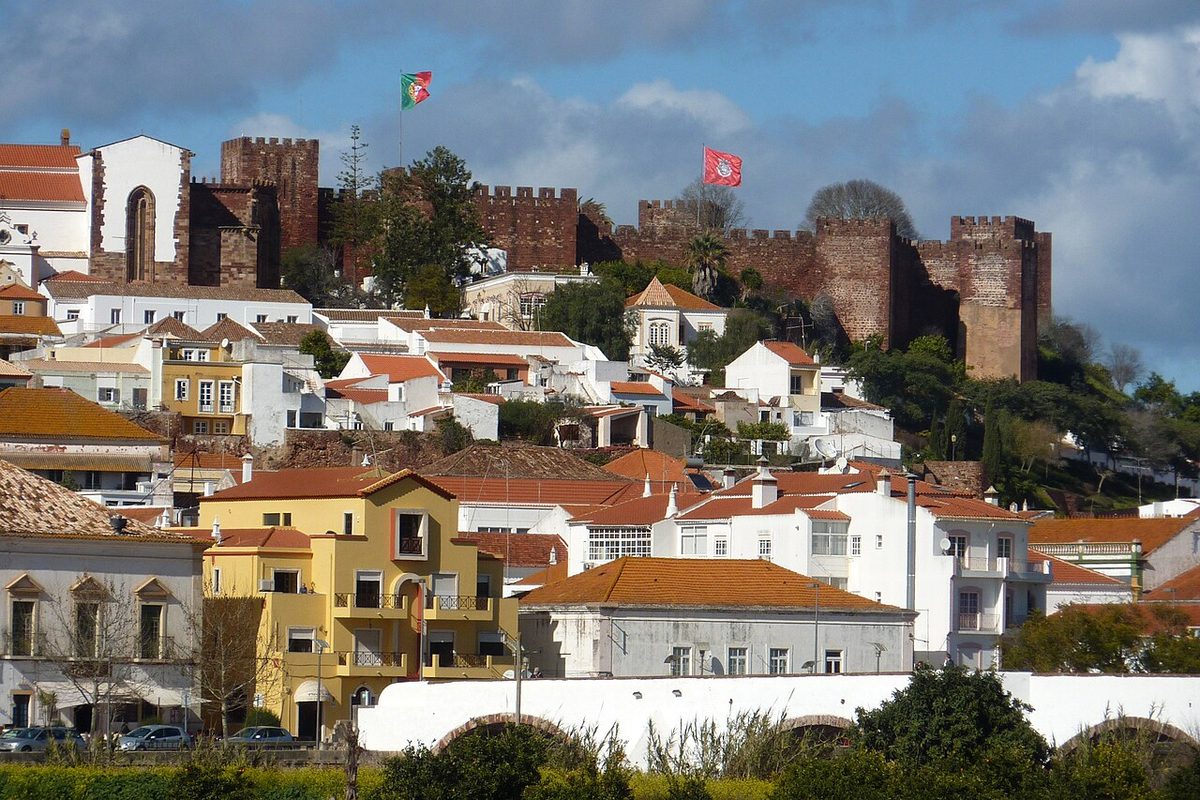
Madeira and the Azores don’t fit neatly into the mainland bands: Funchal’s hotel scene skews mid-range to upscale with relatively few true budget options, and the Azores’ smaller lodging market means both fewer rock-bottom deals and fewer ultra-luxury resorts than the mainland coast. Budget slightly above the mainland average for both archipelagos if you want reliable availability rather than the cheapest room in town.
Booking timing moves the number as much as location does. Shoulder-season rooms (May, June, September) typically run 25-40% below the same property’s August rate, and booking a specific coastal property by February gives the widest choice at the best price; August itself sells out property by property from around March onward in the most popular towns. Several municipalities, Albufeira and Portimão among them, also add a small per-person, per-night tourist tax collected at check-in rather than folded into the advertised rate — a euro or two per person per night, capped after a handful of nights and usually waived for children, easy to forget about until it shows up as an extra, unexplained line on the final bill at checkout.
Food and drink: what everything actually costs
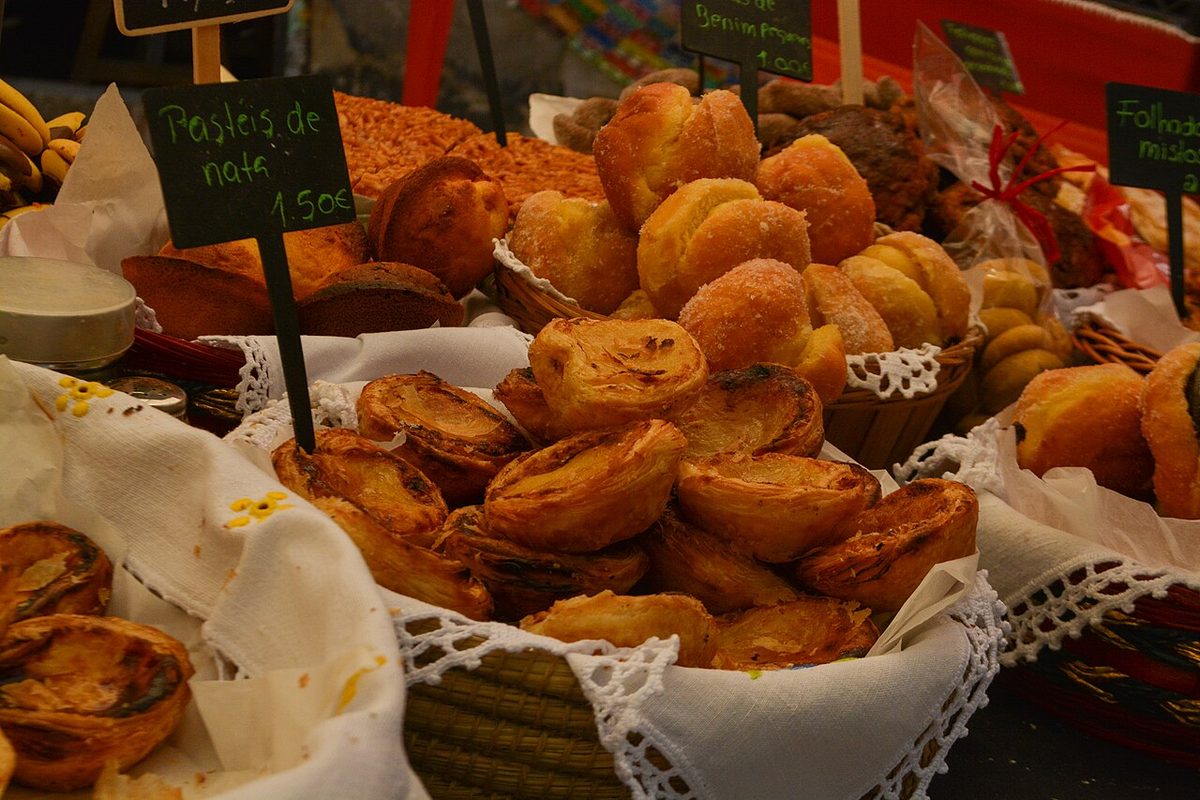
Portugal’s food costs are where the country’s reputation for value is most deserved, and where a guide with real prices earns its keep over a vague “food is cheap here.” At the counter: an espresso (bica) runs €0.80–1.20, a pastel de nata €1.20–1.50, and a bifana (pork sandwich) €3–4. A prato do dia — the fixed lunch menu every working restaurant runs — costs €9–15 including a drink, and is the single best value meal in the country. A mid-range sit-down dinner for two, with wine, runs €40–60; a bottle of vinho verde from a shop is around €10, and the same bottle on a restaurant wine list typically runs two to three times that. A draught beer (an imperial in Lisbon, a fino in Porto — the same drink, different regional name) at a neighbourhood café runs roughly €1.50–2.50, noticeably more on a tourist-facing square in Lisbon’s Baixa or Porto’s Ribeira.
The genuine local move, and the one most visitors never try, is eating at a tasca — a small, family-run restaurant with a short handwritten or chalkboard menu, no English translation, and food built around whatever the kitchen bought that morning. Prices there sit at or below the prato do dia band even at dinner, and the quality is frequently better than a tourist-menu restaurant charging double a few streets over, precisely because the tasca isn’t optimising its menu for a passing crowd that will never come back. The giveaway signs are a full car park or a queue of locals at 12:30, not a tout on the pavement outside.
One line item every visitor eventually asks about: the couvert. That small plate of bread, olives, cheese or pâté that appears unasked at the start of a meal is not free and not a scam — it’s a standard, legal Portuguese restaurant practice, priced at roughly €2–5, and you can decline it and send it back before eating anything from it. Self-catering is genuinely cheap by comparison: a simple supermarket dinner for two, cooked in an apartment kitchen, typically runs €15–25 all in, which is exactly why so many mid-range and budget travellers choose apartment stays over hotels for anything longer than a long weekend.
Transport costs
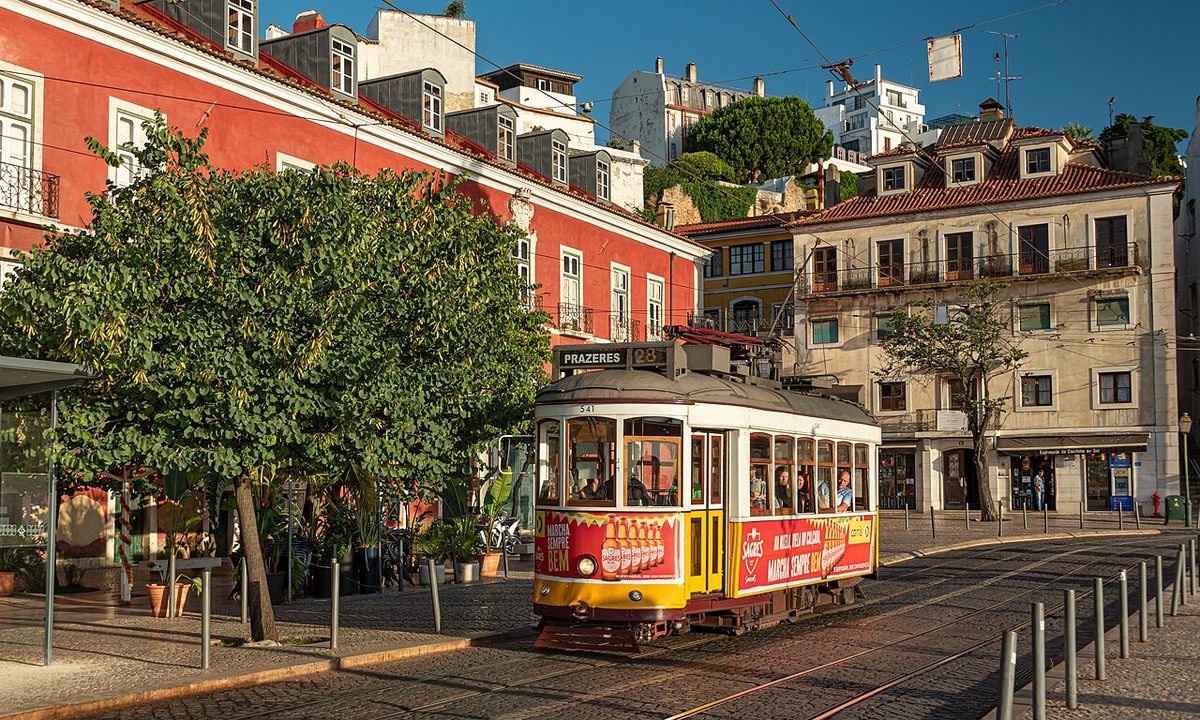
Our getting around Portugal guide covers the full route-by-route breakdown; the headline figures for a budget are the Alfa Pendular Lisbon–Porto fare (€35.70 in tourist class, from ~€16 on advance promos), the Lisbon–Faro Intercidades fare (roughly €22-25), a mid-season hire car at €180–300 a week plus tolls and fuel, and city transit at roughly €1.50–2 a ride on Lisbon’s Viva Viagem or Porto’s Andante card. Long-distance coach fares (Rede Expressos, FlixBus) generally undercut the equivalent train fare by a few euros at the cost of a somewhat longer journey — a reasonable trade for a budget-tier trip, less so once time itself has a cost attached to it. Ride-hailing (Uber, Bolt) generally undercuts a metered taxi for the same trip in the cities, and is the simplest line item to control by simply choosing it less often on a tight budget.
Attractions and activities: entrance fees and tours
Portugal’s headline sights are inexpensive by Western European standards, with a handful of notable exceptions built around a recent restructure. Sintra’s Pena Palace now runs an “Essential Visit” (palace only) at €20, a “Complete Visit” (palace and park) at €45, and park-only entry at €12 on the official Parques de Sintra site — though several resellers still quote the older €20-combined, €10-park-only structure, so book direct and expect the higher official price. The Monastery Triangle (Alcobaça, Batalha, Tomar) now costs €15 per site (checked September 2026), though Alcobaça’s church itself is free, so budget about €45 for all three. Cabo da Roca’s “westernmost point of Europe” certificate costs around €12.
Newer paid-access rules are the differentiator most competing guides miss entirely. Madeira’s PR hiking trails now require an online reservation through simplifica.madeira.gov.pt, at €4.50 per trail per person (the PR1 peak walk is €10.50), with 3-day and 7-day passes at €22.50 and €52.50. The Passadiços do Paiva boardwalk and the 516 Arouca suspension bridge cost €12 combined, online-only, with a daily visitor cap. A guided Benagil cave kayak trip runs €30–40 per person under the tightened access rules that took effect in 2024 and were amended again in 2025; a Gaia port-lodge tour and tasting is €20–30, with the Gaia cable car a further €7 each way. Free walking tours, common in Lisbon and Porto’s old towns, aren’t actually free — they run on tips, and a fair contribution sits roughly in the €8-15 per person range for a two-hour tour, comparable to what a paid tour of similar length and quality would cost outright.
Other costs visitors forget to budget for
A handful of line items rarely make it into a headline daily figure but genuinely add up. Travel insurance for a two-week Portugal trip typically runs the equivalent of a couple of restaurant dinners and is worth buying regardless of budget tier, given how much a single missed connection or hospital visit would otherwise cost. A local eSIM or a week of prepaid mobile data runs roughly €10-20 and is usually simpler than hunting for Wi-Fi, especially outside city centres, and it’s worth buying before you land rather than assuming free hotel or café Wi-Fi will cover navigation and translation on the go. A city tourism card — the Lisboa Card, for instance, from around €31 for the shortest validity, or a combined Lisboa Card plus Pena Palace ticket from around €58 — can be worth it if you’re planning to hit several paid museums and use public transport heavily in a short window, but it’s a net loss for a slower-paced trip that only visits one or two paid sights a day; do the arithmetic on your actual planned stops before buying one on the assumption that it’s automatically good value. And from later in 2026, non-EU visitors should expect a small ETIAS entry fee (a few euros, exact timing still to be confirmed) alongside the existing EES biometric registration already being phased in at the border — neither is large enough to change a budget on its own, but both are worth knowing about before you fly so an unfamiliar line item at the border doesn’t come as a surprise.
Sample weekly budgets
These are illustrative totals built from the line items above, not quotes — a real trip will move around depending on exactly which restaurants and hotels you choose, but the arithmetic holds as a planning starting point.
| Traveller | Style | 7-night total (excl. international flights) |
|---|---|---|
| Solo backpacker | Hostels, prato do dia lunches, trains and buses | Roughly €400–550 |
| Couple, mid-range | 3-star hotels, one restaurant meal daily, mixed transport | Roughly €1,400–2,200 |
| Family of four, comfortable | Apartment stays, self-catering breakfasts, a hire car, paid attractions | Roughly €2,800–3,800 |
| Couple, luxury | 5-star hotels, tasting menus, private transfers | €4,500 and up |
Working the mid-range couple’s figure through in detail shows why the range is so wide: roughly €700-1,100 for seven nights of hotel between the two of them, €500-750 on food across both people, €100-200 on intercity and city transport, and €100-150 on attractions and one or two paid tours — and that’s before deciding whether any nights fall in Lisbon (top of the band) or the Alentejo (bottom of it). Shifting even two or three nights from a coastal city to an inland town moves the total meaningfully without changing what the trip actually includes.
Is Portugal expensive? How it compares
Against its Western European neighbours, Portugal consistently comes out as one of the more affordable options for a comparable trip: cheaper than Spain for equivalent food and accommodation quality, and meaningfully cheaper than Italy or France for the same tier of hotel and restaurant. It’s also noticeably cheaper than the UK or the Nordic countries on food and drink specifically, which is a large part of why the country’s cost-conscious reputation persists even as coastal accommodation prices have climbed. The gap is narrowest in Lisbon, Porto and the Algarve in August, and widest in the Alentejo and the interior year-round. Ireland and the wider British market in particular still perceive Portugal as a budget short-haul destination, largely on the strength of the Algarve package-holiday trade, even though that specific coastal strip has drifted well above the “budget” label it carries in the popular imagination — the value now lives in the regions and seasons around it, not in the postcard image itself.
Money, cards and tipping
Portugal uses the euro, and contactless card payment is close to universal in cities and larger towns, including on public transport and at most restaurants and cafés. Multibanco, the national ATM and payment network, is genuinely reliable and widely available, and increasingly integrates with MB Way, a mobile-payment layer that lets some machines dispense cash without a physical card — useful to know, though a foreign card and PIN work perfectly well at any standard Multibanco machine. Very small, family-run cafés and shops in rural towns can still be cash-only, so it’s worth keeping a modest amount of cash for exactly those situations rather than for the trip generally. Withdrawing from a Multibanco machine directly (rather than through a currency-exchange kiosk) is reliably the cheapest way to get euros in hand, provided your home bank or card doesn’t charge its own foreign-transaction fee on top — worth checking before you fly, since that fee, not the Portuguese side of the transaction, is usually where the real cost hides. A card specifically marketed as fee-free abroad, of the kind several digital-first banks now offer, removes this consideration almost entirely and is worth setting up a few weeks ahead of a trip rather than discovering the fee on your first statement after you’re home.
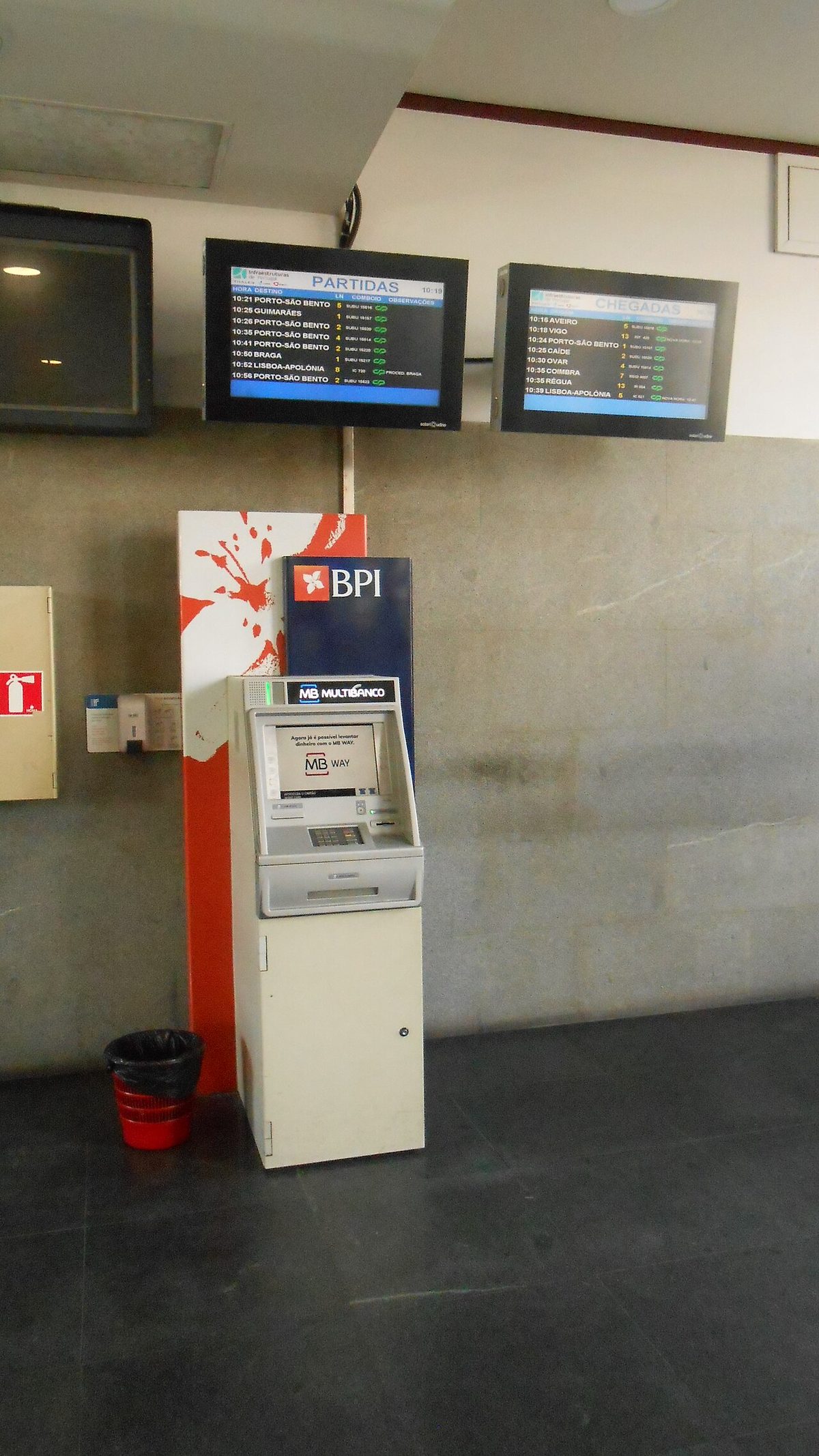
One card trap catches visitors from almost every country: when a card terminal or ATM offers to charge you in your home currency instead of euros (“dynamic currency conversion”), always decline and choose euros — the home-currency option applies a worse exchange rate on top of whatever your own bank charges. Tipping is not obligatory in Portugal and there’s no American-style percentage expectation; rounding up a restaurant bill or leaving 5-10% for good service is appreciated but optional, and taxi fares are typically rounded up to the nearest euro rather than tipped as a fixed percentage.
What to skip when budgeting for Portugal
Skip the airport currency exchange counter — the rate is reliably worse than a Multibanco withdrawal or a no-foreign-fee card, and the “0% commission” signage almost always hides the markup inside the exchange rate itself. Skip assuming the couvert is a scam and refusing to pay for it after eating from it; it’s legal and normal, and the fix is declining it before you touch the bread, not arguing about it on the way out. Skip pricing your whole trip off a single Lisbon or Algarve hotel search — the same money buys meaningfully more in the Alentejo or the north, and a one- or two-region trip built entirely around the expensive coast will look far pricier than a trip that mixes in an inland night or two. Skip choosing your card’s home-currency payment option at any till or ATM — it’s a small loss per transaction that adds up to a real sum over a week-long trip. And skip assuming a package deal is automatically the cheaper option; price the same flights and nights independently before booking, since an off-peak independent trip frequently beats a packaged one on the exact same dates once you account for the flexibility the package trades away.
How to save money without cutting the trip short
The single biggest lever is timing: travelling in May, June or September rather than July-August cuts accommodation costs by 25-40% in the coastal hotspots for weather that’s arguably better anyway. The second is the prato do dia habit — eating your main meal at lunch, when the fixed-price menu is available, rather than at dinner when the same restaurant charges à la carte prices for similar food. The third is basing at least part of a longer trip inland rather than entirely on the coast, which drops the accommodation line meaningfully without adding real driving time to most itineraries — a night or two in Silves instead of Albufeira, or in the Alentejo instead of a second Lisbon night, changes the total more than most single decisions in this whole guide. None of these require cutting anything from the itinerary itself — they change when and where you spend, not what you see. Two smaller levers worth adding: many Portuguese municipal museums offer free or reduced entry on the first Sunday of the month, worth checking against your dates if a specific museum matters to you, and midweek flights and hire-car pickups both tend to price a little below Friday-to-Sunday bookings on the same route.
Package tours vs independent travel
A packaged Algarve or Madeira week from a European tour operator can genuinely undercut booking flights, a hotel and transfers separately, particularly outside the school-holiday weeks when operators discount unsold inventory hard. What it usually removes is exactly the flexibility this guide is built around: fixed meal times, a single resort rather than the two- or three-region trips that make the biggest budget difference, and little room to trade a beach day for an inland one once you’ve noticed the price gap. All-inclusive resort packages compress food costs into a single upfront number too, which can suit a family that wants budget certainty above all else, but it also means paying resort-restaurant prices for every meal even the ones you’d happily have eaten more cheaply at a tasca down the road. Independent travel costs more in planning time and carries slightly more pricing uncertainty, but it’s the only way to actually apply the regional and seasonal savings described above — a package price is a single number precisely because it’s already averaged all of that away. The middle ground some travellers miss is booking flights and the first hotel as a package for the price certainty, then arranging everything else — the regional legs, the inland nights, the specific restaurants — independently once you’ve landed.
Family travel: what changes with kids
Several of the specific prices in this guide already build in child rates: Madeira’s PR trail permits are free for under-12s (though they still need to be named on the booking), and most Portuguese museums and monuments offer reduced or free entry for children, typically under a specific age that varies site by site. Family rooms and apartments with a kitchen tend to be better value than two hotel rooms once you’re travelling with more than two people, which is part of why the central Algarve’s apartment-heavy accommodation market suits families particularly well, and why self-catering breakfasts and the occasional home-cooked dinner do more for a family’s food budget than they would for a couple eating out every night regardless. The genuine added cost is less about entry fees and more about pace — a family itinerary generally needs one fewer paid activity per day than a couple’s, simply because the logistics of moving a family between sights eat more of the day. On transport, children below a certain age (which varies by operator) often travel free or at a reduced fare on CP trains and city transit, and a hire car sized for luggage and a car seat costs more to rent than the smallest economy class shown in a search result, so budget the actual vehicle category you’ll need rather than the cheapest one listed at the top of a comparison site.
Frequently asked questions
Is Portugal an expensive country to visit?
No, relative to Western Europe generally — it runs cheaper than Spain, Italy, France or the UK for a comparable trip, with the gap narrowest on the coast in August and widest in the Alentejo and the interior.
How much does a week in Portugal cost?
Roughly €400-550 for a solo backpacker, €1,400-2,200 for a mid-range couple, and €2,800-3,800 for a comfortable family of four, excluding international flights and varying by region and season.
Is €100 a day enough for Portugal?
Yes, comfortably at the lower end of mid-range — a 3-star hotel or good apartment, one restaurant meal a day, and a mix of public transport and the occasional taxi all fit inside that figure outside peak August coastal pricing.
What is the couvert and do you have to pay for it?
A small unrequested plate of bread, olives or cheese served at the start of a meal, typically €2-5. It’s a legal Portuguese restaurant practice rather than a scam, and you can decline it and send it back before eating anything from it.
Is Portugal cheaper than Spain?
Generally yes, for equivalent food and accommodation quality, though the gap has narrowed in Lisbon, Porto and the Algarve as those markets have grown more popular with international visitors.
Do you need to tip in Portugal?
No, not as an obligation. Rounding up a bill or leaving 5-10% for good restaurant service is appreciated, and taxi fares are usually rounded up rather than tipped as a fixed percentage.
Is it cheaper to self-cater or eat out in Portugal?
Self-catering, clearly — a supermarket dinner for two runs roughly €15-25, against €40-60 for a mid-range restaurant dinner for two with wine. The prato do dia lunch narrows that gap significantly for the midday meal.
How much should you budget for attractions and activities?
Individual sights mostly run €6-20 (monasteries, Cabo da Roca, Madeira’s PR trails), with a few outliers: Pena Palace’s Complete Visit at €45, and guided experiences like a Benagil kayak trip (€30-40) or a Gaia port tasting (€20-30) sitting well above the single-ticket average.
Are Madeira and the Azores more expensive than mainland Portugal?
Somewhat, and for a specific reason: island logistics push both archipelagos’ accommodation slightly above the mainland average, while their smaller lodging markets also mean fewer ultra-budget beds. Flights to reach either add a genuine cost the mainland doesn’t have.
Do you need travel insurance for a trip to Portugal?
It’s not legally required for most nationalities, but it’s a sensible line item at every budget tier — the cost is small relative to what a missed flight connection or an unplanned medical visit would otherwise run.
What’s the cheapest time of year to visit Portugal?
Winter (November-February) is cheapest outright, though Porto and the north run wet. May, June and September give up only a little of that saving for meaningfully better weather, which is why this guide treats them as the real value season rather than deep winter.
Do children get discounts on attractions and transport in Portugal?
Widely, yes — reduced or free museum and monument entry below a site-specific age, free hiking permits for under-12s on Madeira’s trails, and reduced fares on trains and city transit, though the exact age cutoffs and discount levels vary by operator and site.
Where to go next
For how these costs map onto an actual route, see our Portugal itinerary planning guide, and for the transport figures behind the numbers above, our getting around Portugal guide breaks down trains, buses, driving and flights route by route. Best time to visit Portugal covers the seasonal swings this budget’s shoulder-season savings are built on, and if the Algarve is on your route, where to stay in Algarve breaks its accommodation bands down town by town.
Photo credits
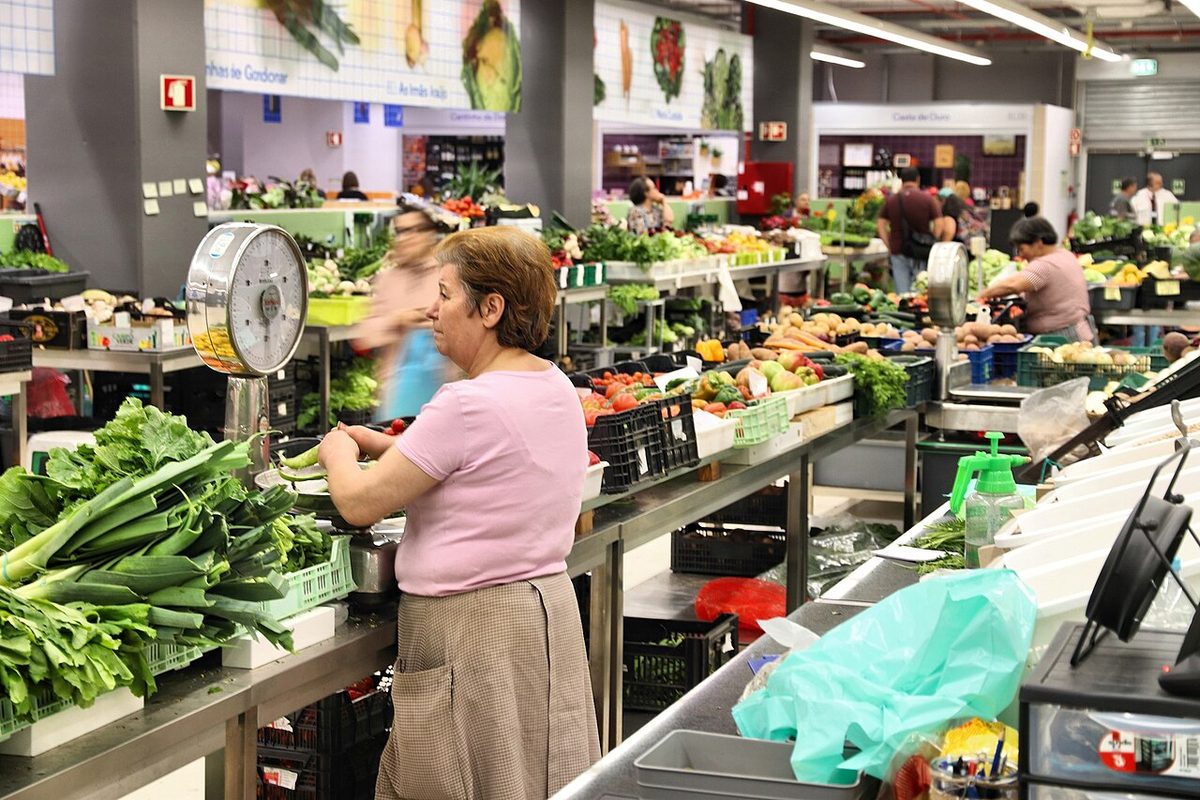
- Featured image: a market vendor weighing vegetables at Mercado do Bolhão, Porto — Marek Ślusarczyk (Tupungato), CC BY 3.0, via Wikimedia Commons
- A Multibanco ATM at Porto-Campanhã station — Joehawkins, CC BY-SA 4.0, via Wikimedia Commons
All prices checked September 2026 against operators’ own sites and everyday observed pricing; both attraction admissions and accommodation rates change, and coastal accommodation in particular moves with the season. Last updated September 2026.