Most Portuguese food guides are a top-ten list built around whatever the writer happened to eat on one trip: pastéis de nata, bacalhau, maybe a francesinha if they made it to Porto. Portuguese food is a genuinely regional cuisine — the north’s cured meats and tripe are a different food culture from the Algarve’s cataplanas, and both are different again from the bread-thickened soups of the Alentejo interior or Madeira’s spit-roast espetada. This guide covers 40 dishes and drinks properly, region by region, plus the ordering conventions that trip up first-time visitors more than any specific dish does — the couvert, the petisco format, the meia-dose, and knowing when a fixed lunch menu beats the full evening card.
The short version: order the prato do dia at lunch, treat the couvert as optional rather than mandatory, share petiscos rather than ordering a starter and main each, ask for bacalhau if you only try one thing, and don’t leave without a proper glass of vinho verde or a small measure of port. Most of what follows is regional rather than universal, which is exactly the point — a dish’s home town usually cooks it better than anywhere else claiming the same recipe. Everything below covers the how and the what.
Where Portuguese food actually comes from
Two historical forces shape almost everything on a Portuguese menu. The Age of Exploration, from the 15th century onward, sent Portuguese ships to Africa, India, Brazil and Japan, and brought back ingredients and techniques that fused with home cooking rather than staying foreign imports — piri-piri chilli from Mozambique and Angola, spices from India, sugar and coffee from the colonies, even (per genuine food-history research) the tempura technique that Portuguese missionaries carried to Japan and that Japan later refined and sent back around the world in a different form. The second force is a much older, more local one: a historically poor agricultural country that built its everyday cooking around stretching modest ingredients — bread, beans, cabbage, salt cod, offal — into food that tastes far richer than its cost, a thread that runs from the soups above through to Trás-os-Montes’ whole-animal cooking. Both forces explain why a country this size supports a cuisine as regionally varied as this guide describes: centuries of ships bringing the world home to a handful of ports, layered onto villages each solving the same problem of feeding people well on very little, independently of each other.
Portuguese food: the fast answer
| Category | Order this | Where it’s from |
|---|---|---|
| The national dish | Bacalhau (any of its hundreds of recipes) | Nationwide |
| Porto and the north | Francesinha, tripas à moda do Porto | Porto |
| Seafood | Cataplana, grilled sardines, amêijoas à Bulhão Pato | The whole coast, especially the Algarve |
| Dessert | Pastel de nata | Lisbon (Belém), now nationwide |
| Cheese | Queijo da Serra da Estrela | Serra da Estrela, central Portugal |
| Wine | Vinho verde or a Douro red | Minho / Douro Valley |
| Fortified wine | Port (tawny or white, as an aperitif) | Douro Valley, aged in Vila Nova de Gaia |
| Coffee | A bica (espresso) | Nationwide |
How to order like you’ve done this before
Portuguese restaurant menus have their own logic, and getting it right changes the meal. Petiscos — small shared plates, the closest equivalent to Spanish tapas — are ordered a few at a time for the table rather than one each; a meia-dose (half portion) is a genuine, normal order for one person or a lighter appetite, not a request restaurants resent. The couvert, that small unrequested plate of bread, olives or cheese at the start of a meal, is a legal, standard practice priced at roughly €2-5 — decline it before eating anything from it if you’d rather not pay. The prato do dia, the fixed daily lunch menu at roughly €9-15 with a drink included, is both the best value meal in the country and usually the best indicator of what a kitchen actually cooks well, since it changes with what was bought that morning rather than sitting fixed on a laminated tourist menu. Menus are almost always divided into peixe (fish) and carne (meat) sections rather than by course, and a genuinely traditional restaurant may not print a separate vegetarian section at all — asking the waiter directly what’s meat-free that day usually gets a better answer than scanning the printed menu alone. Reading the fine print on price matters too: a fish or seafood dish priced by weight (per kilo, marked “preço por kg” or similar) rather than a flat plate price can run considerably more than expected once the whole fish is weighed and the bill arrives, so ask the approximate total cost before committing to anything priced that way.
Soups and stews: bread, beans and one pot
Portuguese home cooking runs on soups and stews built to stretch simple ingredients, a legacy of a historically poor rural country that turned that constraint into some of its best food.
1. Caldo verde
Finely shredded kale in a potato broth, topped with a slice of chouriço and a drizzle of olive oil. The national soup, found on nearly every menu in the country and rarely done badly — it’s also the traditional opener at a festa junina street party in June, ladled from a huge pot into paper cups.
2. Açorda
A bread-thickened soup, often built around garlic, coriander and a poached egg, sometimes with seafood added (açorda de marisco). It sounds unpromising described and tastes considerably better than it sounds, using stale bread as the base in a genuinely old, waste-nothing tradition rather than a modern reinvention.
3. Sopa da pedra
A hearty bean, sausage and vegetable soup from Almeirim in the Ribatejo, thick enough to be a meal on its own — the name (“stone soup”) comes from a folk tale about tricking a stingy village into feeding a hungry traveller, and a real stone is still sometimes served in the bowl as a nod to the story.
4. Cozido à portuguesa
A boiled dinner of multiple meats, sausages and vegetables cooked together and served as several courses from one pot — a genuine Sunday-lunch institution, and heavy enough to plan the rest of the day around. Regional versions swap in different sausages and cuts, so no two towns’ cozido is quite identical.
5. Feijoada à transmontana
A rich bean and pork stew from the northern Trás-os-Montes region, using cuts and sausages closer to nose-to-tail cooking than most visitors expect from a “bean stew” description — pig’s ear and trotter are entirely normal inclusions, not an upsell for the adventurous.
Porto and the north: cured meats and one enormous sandwich
The north is Portugal’s meat country, built on centuries of pig-curing traditions and Porto’s own, genuinely unusual contribution to the national menu.
6. Francesinha
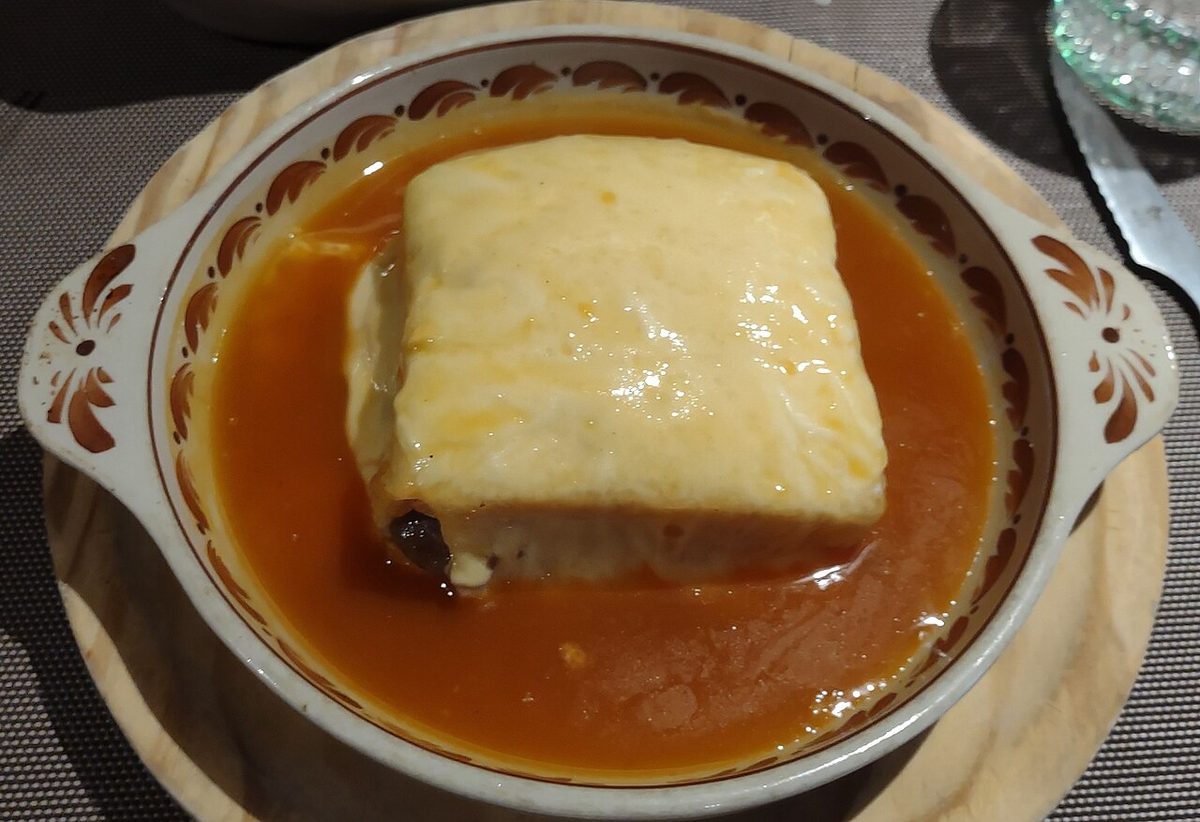
Porto’s signature dish: layers of bread, ham, sausage and steak, covered in melted cheese and a spiced tomato-and-beer sauce, usually with a fried egg on top and fries on the side. A full meal in itself, not a snack, and worth arriving hungry for — most versions come with a beer as the default drink pairing, and ordering wine instead is a mild local eyebrow-raiser.
7. Tripas à moda do Porto
A tripe and white bean stew that gave Porto’s residents their nickname, “tripeiros” (tripe-eaters), after the city reportedly sent its best cuts of meat to the navy and kept the offal for itself. A genuinely acquired taste, and a point of local pride — Porto residents will happily explain the nickname’s origin themselves if you order the dish and ask.
8. Alheira
A pale, garlicky sausage traditionally made without pork, historically created so Jewish communities forced to convert during the Inquisition could hang something that looked like a pork sausage without actually eating one. Usually grilled and served with fried egg and potatoes, and now eaten by everyone regardless of the dish’s original purpose, which has become more a piece of culinary history than a lived practice.
9. Presunto
Portugal’s air-cured ham, similar in method to Spanish jamón, served thinly sliced as a starter or folded into a sandwich. Presunto de Barrancos, from black Iberian pigs near the Spanish border, is the best-regarded regional version, and carries its own protected designation of origin the way a fine wine region does.
10. Leitão à Bairrada
Whole roast suckling pig with crackling skin, a Bairrada region specialty (between Coimbra and Aveiro) usually eaten at a dedicated leitão restaurant rather than cooked at home, and worth the specific detour if one is on your route — Mealhada, on the road between Coimbra and Aveiro, has several restaurants that do little else and do it very well.
11. Bifana
A thin pork steak, marinated in garlic and white wine, served hot in a plain white roll — Portugal’s most beloved cheap sandwich, at roughly €3-4, and best eaten standing at a bar counter rather than seated — the version sold from a small hole-in-the-wall counter is frequently better than the one from a full sit-down restaurant charging twice as much for it.
12. Prego
The beef version of the same idea: a thin steak in a roll, sometimes with a fried egg added, sometimes served on a plate with fries instead of bread. Order it “no prato” for the plate version or “no pão” for the sandwich — both names refer to the same core idea of a simply seasoned steak done fast and hot, the Portuguese answer to a quick, satisfying weekday meal.
Bacalhau: the “faithful friend”
Salt cod isn’t caught in Portuguese waters at all — it’s imported dried and salted, almost entirely from the North Atlantic, and rehydrated before cooking. Portugal reportedly has over 365 documented bacalhau recipes, one for every day of the year, and the fish has been a national staple since the age of exploration, when salting let ships carry protein on months-long voyages.
13. Bacalhau à Brás
Shredded salt cod fried with onions, thin matchstick potatoes and scrambled egg, finished with black olives and parsley. The single most popular bacalhau preparation, and a reasonable one-dish introduction to the whole category — if a menu offers only one bacalhau dish, this is usually it.
14. Bacalhau à Gomes de Sá
A baked casserole of salt cod, potatoes, onions and hard-boiled egg, named for the Porto merchant credited with inventing it in the 19th century. Milder and more comforting than À Brás, closer to a fish pie in spirit, and often the version a Portuguese grandmother would actually choose to cook at home on a Sunday.
15. Pastéis de bacalhau
Deep-fried salt cod and mashed potato fritters, sold everywhere from bakeries to bars as a snack, a starter or a petisco. Simple, cheap, and one of the easiest ways to try bacalhau without committing to a full main course — a good barometer, too, since a kitchen that fries these well usually cooks everything else with the same care.
Seafood and the coast
With an Atlantic coastline running the length of the country, fresh seafood is a daily staple rather than an occasional treat, and prices at an ordinary neighbourhood restaurant reflect that.
16. Cataplana de marisco
A mixed seafood stew — clams, shrimp, mussels, fish — steamed in a hinged copper vessel that shares its name with the dish. An Algarve specialty, built to serve two and genuinely designed to be shared rather than ordered per person — the copper pot itself is brought sealed to the table and opened there, releasing the steam and the smell as its own small piece of theatre.
17. Arroz de marisco
A wet, soupy seafood rice, closer to a risotto in texture than a dry paella, usually loaded with whatever shellfish was freshest that morning. Order it for two; portions are large and it doesn’t reheat especially well, so treat leftovers as an unlikely bonus rather than a plan.
18. Polvo à lagareiro
Whole roasted octopus, doused generously in olive oil and served with smashed, olive-oil-roasted potatoes. Portugal’s octopus dishes are consistently good enough that “the octopus here is incredible” is a genuinely common visitor observation rather than a cliché, and lagareiro-style preparation — named for the olive-press workers who traditionally ate this way — turns up on grilled fish and other seafood too.
19. Sardinhas assadas
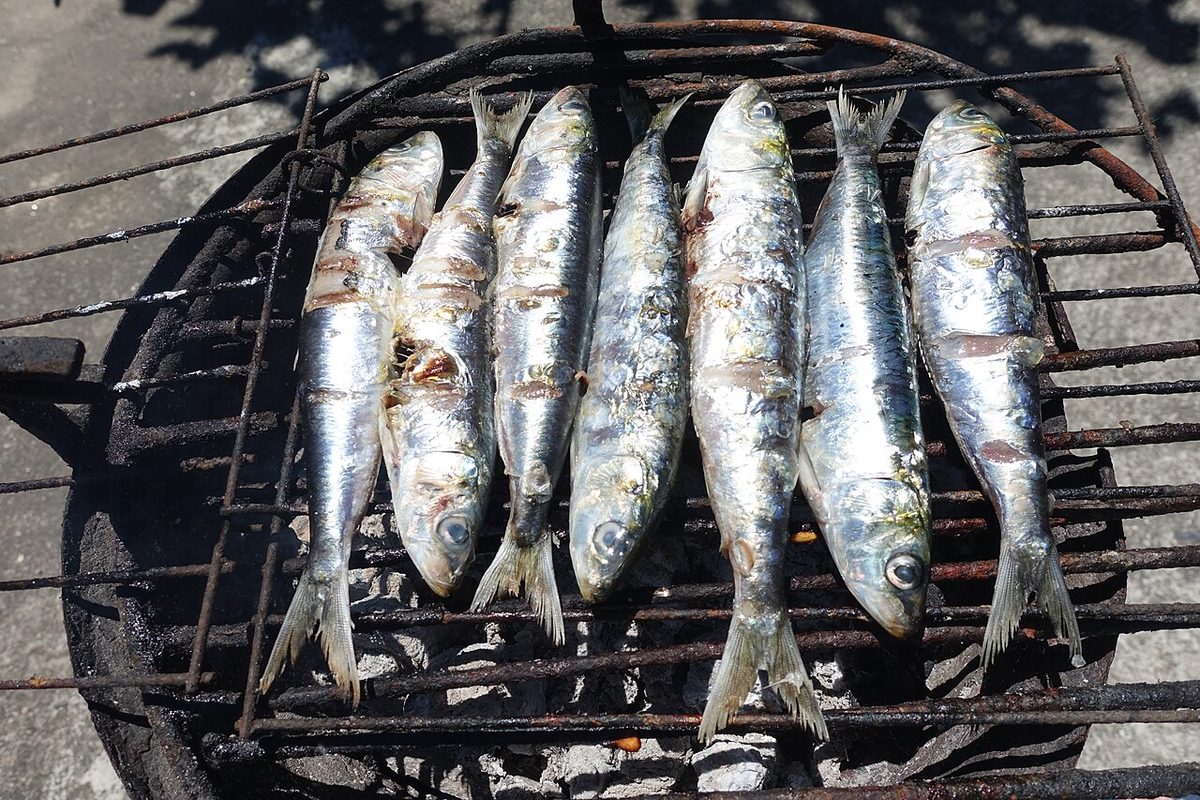
Whole sardines, grilled over charcoal and eaten with the fingers, bones and all if you’re doing it properly, alongside boiled potatoes and a simple salad. At their best in June, around Lisbon’s Santo António festival, when the whole city seems to be grilling them at once, and the smell of charcoal and fish fat drifts through Alfama’s streets for the better part of a week.
20. Amêijoas à Bulhão Pato
Clams steamed in olive oil, garlic, white wine and fresh coriander, served with bread specifically for mopping up the sauce afterward — arguably the point of the dish more than the clams themselves, and named after the 19th-century writer credited with popularising the recipe.
21. Percebes
Goose barnacles, harvested by hand from dangerous, wave-battered rocks and priced accordingly at the higher end of a seafood menu. An acquired texture (chewy, briny) that Portuguese diners genuinely prize rather than order as a novelty, and the harvesting itself is dangerous enough that experienced percebeiros are genuinely respected local figures, not just anonymous fishermen.
Petiscos: small plates worth sharing
Beyond pastéis de bacalhau, a handful of other small plates turn up on nearly every petiscos menu and are worth ordering two or three at a time across the table.
22. Peixinhos da horta
Battered, deep-fried green beans — genuinely believed by food historians to be the dish that inspired Portuguese missionaries’ tempura recipe in 16th-century Japan, making this one of Portugal’s more surprising culinary exports — a small, unglamorous petisco with an outsized claim to global culinary influence.
23. Rissóis de camarão
Crescent-shaped, breadcrumbed pastries filled with a creamy shrimp bechamel, deep-fried until golden. A staple of every pastelaria’s savoury counter alongside the sweet pastries, and one of the first things to sell out on a busy morning.
24. Croquetes
Cylindrical, breadcrumbed and fried, usually filled with shredded beef (croquetes de carne), the everyday bar snack equivalent of a francesinha’s more famous cousin — cheap, filling and available almost everywhere that serves beer — order a mixed plate of croquetes and rissóis for the table and you’ve effectively ordered a starter course without needing a menu at all.
Desserts and pastries: a genuinely serious tradition
Portugal’s convent-dessert tradition — doces conventuais — comes from centuries of nuns using egg yolks (the whites were used to starch habits and clarify wine) to make elaborate, sugar-heavy sweets, a history that still shapes the national dessert menu today.
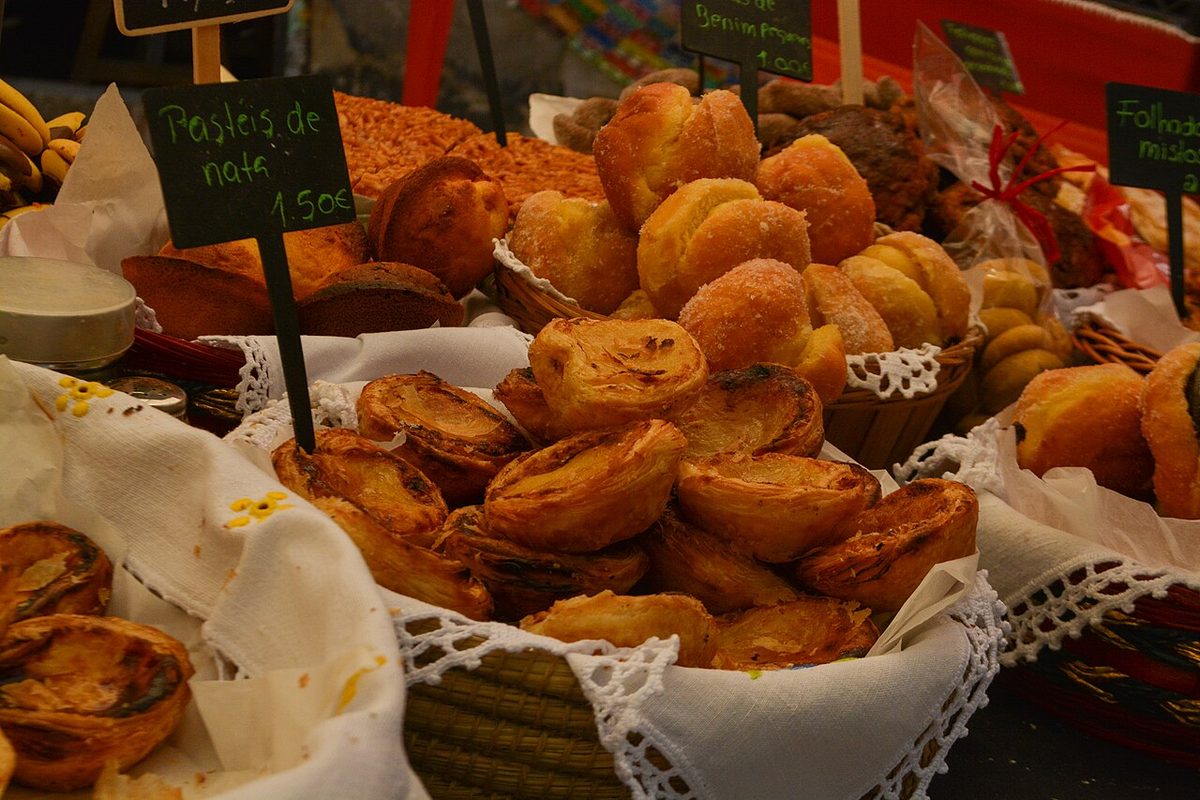
25. Pastel de nata
The custard tart that needs no introduction: crisp, laminated pastry around a rich egg custard, best eaten warm with a dusting of cinnamon. The original recipe, from the Jerónimos Monastery in Belém, is still guarded by the bakery that inherited it; every other version is a pastel de nata rather than the specific Pastel de Belém — a genuinely trademarked distinction, and the queue outside the original bakery most afternoons is proof enough that people care about it.
26. Arroz doce
Portuguese rice pudding, sweetened and finished with a cinnamon dusting, often patterned into a design on top. A homely, everyday dessert found on nearly every traditional restaurant’s menu, usually finished with a cinnamon pattern unique to whoever plated it that day.
27. Pão de ló
A featherlight sponge cake, sometimes baked deliberately underdone in the centre so it stays custard-like when sliced — the Ovar and Alfeizerão versions are particularly known for this wet-centre style, and each town guards its own recipe closely enough that comparing the two is a genuine local debate.
28. Pastéis de Tentúgal
Impossibly thin, crisp pastry rolled around a rich egg-yolk filling, a specialty of the small town of Tentúgal near Coimbra and one of the most technically demanding of the convent desserts to make well — the pastry is rolled thin enough to be almost translucent before it’s ever filled.
29. Ovos moles de Aveiro
A sweet egg-yolk cream, traditionally encased in a thin wafer shell shaped like a shell or barrel — a nod to Aveiro’s lagoon and its salt-pan and fishing heritage, and often sold in small wooden barrel-shaped boxes as a specific, packable souvenir.
30. Queijadas de Sintra
Small, cheese-and-cinnamon tarts sold in Sintra since at least the 14th century, traditionally bought as a souvenir from the town’s bakeries rather than eaten sitting down — a natural pairing with a day trip that also takes in Pena Palace and the rest of Sintra’s hilltop sights.
31. Toucinho do céu
A dense, almond-heavy cake whose name translates as “bacon from heaven” — a reference to the traditional (now usually omitted) inclusion of pork fat, one of the more misleadingly named desserts on this whole list — expect almond and egg yolk, not bacon, on the plate in front of you.
Cheese: beyond the supermarket wedge
32. Queijo da Serra da Estrela
A soft, rich sheep’s-milk cheese from Portugal’s highest mountain range, traditionally eaten so young and runny it’s served with a spoon rather than a knife, the top sliced off like a lid. Widely considered the country’s best cheese, and the one most worth seeking out by name — buy it in autumn and winter, when the wheels reach their intended runny, spoonable peak.
33. Queijo de Azeitão
Another soft sheep’s-milk cheese, from the Setúbal peninsula south of Lisbon, made using thistle rather than animal rennet — a plant-based curdling method with roots going back centuries in the region, giving it a slightly different, more herbal edge than its Serra da Estrela cousin.
Madeira and the Azores: island specialties
Both archipelagos run distinct food traditions shaped by isolation, volcanic soil and a different mix of Atlantic ingredients from the mainland.
34. Espetada Madeirense
Chunks of beef, seasoned simply with garlic, salt and bay leaf, grilled on a skewer traditionally made from bay laurel wood and often served hanging from a hook above the plate. Madeira’s signature dish, found on nearly every restaurant menu on the island, and traditionally served with bolo do caco (a flat, garlic-butter bread) on the side rather than fries or rice.
35. Poncha
Madeira’s traditional drink: aguardente (sugarcane spirit), honey and citrus juice, mixed with a wooden muddler called a “caralhinho.” Deceptively easy to drink and considerably stronger than it tastes — a single glass at lunch has ended more than one visitor’s plans for an active afternoon.
36. Cozido das Furnas
A version of the mainland’s boiled dinner cooked using the volcanic heat of São Miguel’s Furnas valley — the pot is buried in the ground near a fumarole for hours and cooked entirely by geothermal steam, with no flame involved at all — a genuine geological curiosity that also happens to produce one of the country’s most distinctive regional dishes.
37. Queijo São Jorge
A firm, tangy cow’s-milk cheese from São Jorge island in the Azores, aged for months and sharper than most mainland cheeses — a genuine point of Azorean pride and a common gift to bring home, especially the well-aged versions that develop a genuine crystalline crunch as they mature.
Drinks: wine, port, ginjinha and coffee
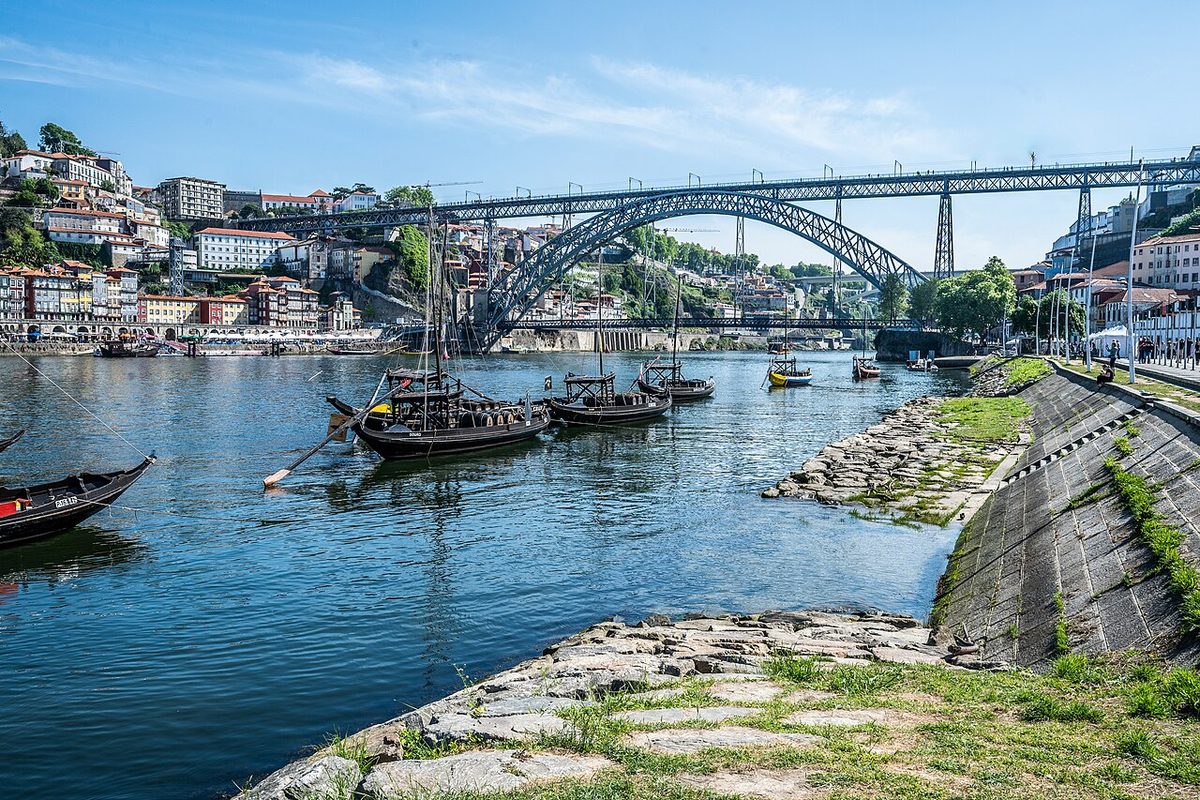
38. Port wine
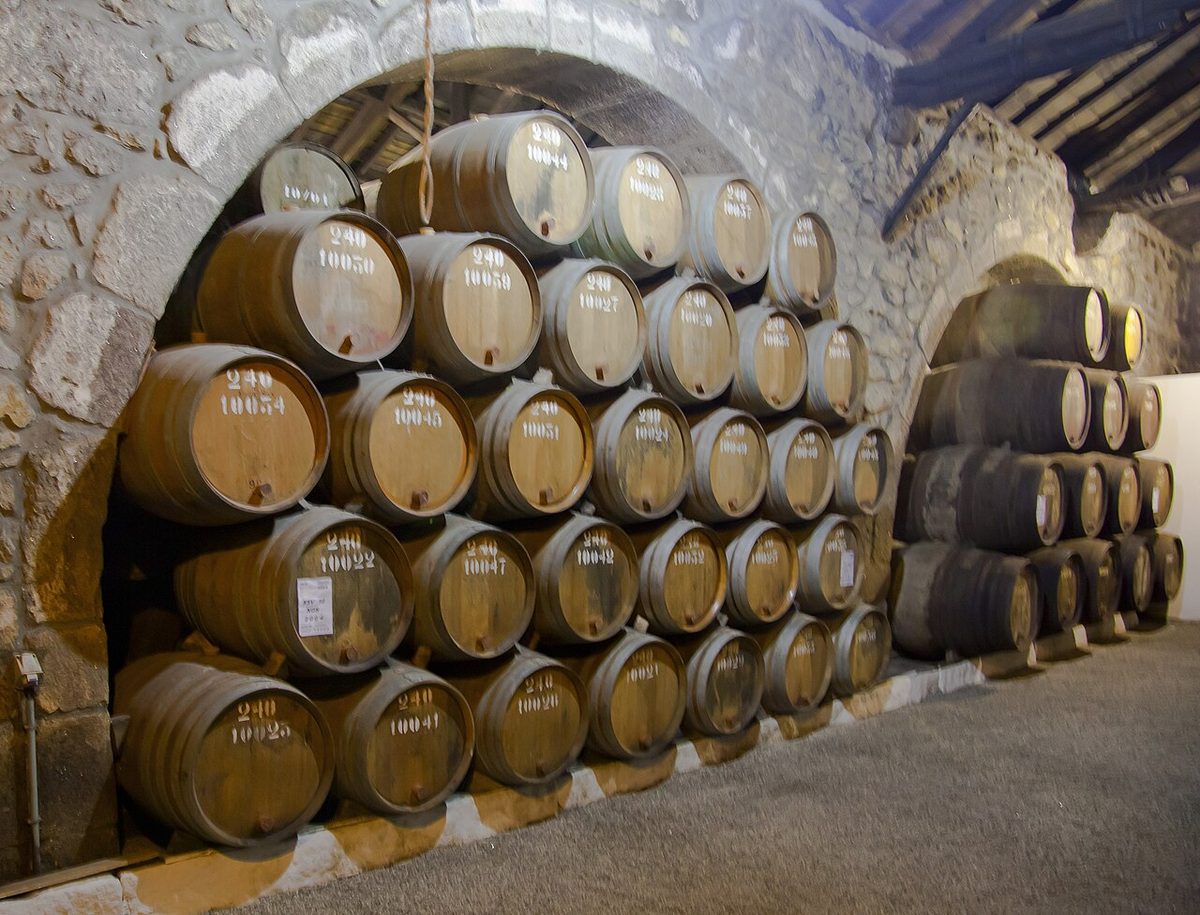
A fortified wine from the Douro Valley, aged (traditionally, though not always any more) in the lodges of Vila Nova de Gaia across the river from Porto. Ruby and tawny are the everyday styles; white port with tonic is the modern aperitif Porto locals actually drink most often, despite tourists reaching for a glass of ruby by default. Port no longer travels from the Douro to Gaia’s lodges by rabelo boat the way it once did — a truck does the job now — but the boats still line the riverbank as a genuine piece of the trade’s history rather than a purely decorative touch.
39. Vinho verde and Portugal’s wine regions
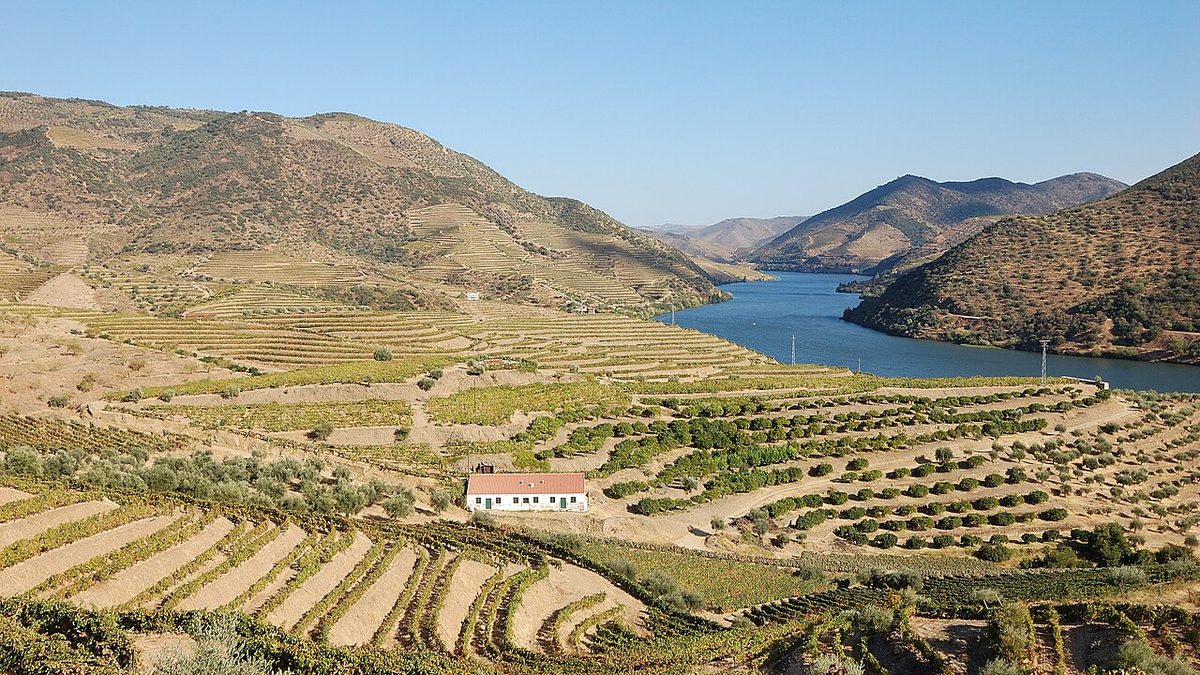
Vinho verde (“green wine,” meaning young rather than literally green) is a light, slightly effervescent white from the Minho in the far north, best served well chilled and drunk young. It’s one of fourteen officially demarcated Portuguese wine regions, alongside the Douro (structured reds, and port’s source), the Alentejo (full-bodied, increasingly internationally known reds), Dão and Bairrada (both producing some of the country’s most food-friendly reds), and Alto Douro’s status as the world’s oldest demarcated wine region, dating to 1756.
40. Ginjinha and coffee culture
Ginjinha (or ginja) is a sour-cherry liqueur, traditionally served in a small shot glass, sometimes with a cherry left in the bottom — a handful of tiny, standing-room-only bars near Lisbon’s Rossio square specialise in nothing else. Coffee culture runs alongside it as a daily ritual rather than a specialty drink: a bica (espresso) at the counter, a galão (milky coffee in a tall glass) or a meia de leite (the cup version of the same) are the three orders that cover almost every Portuguese coffee break.
Portugal’s food map: what each region actually cooks
Almost every dish in this guide belongs to a specific place first and a national menu second, and knowing the map helps more than memorising forty names in isolation.
| Region | Known for | Signature dish |
|---|---|---|
| Minho (the far north) | Vinho verde, hearty rustic cooking | Caldo verde, vinho verde |
| Porto and the north | Cured meats, tripe, the francesinha | Francesinha, tripas à moda do Porto |
| Douro Valley | Port and Douro table wines, game | Port wine, Douro reds |
| Beiras (Serra da Estrela, Coimbra, Aveiro) | Cheese, roast suckling pig, convent desserts | Queijo da Serra da Estrela, leitão à Bairrada |
| Lisbon and the Tagus | Pastries, petiscos, seafood | Pastel de nata, sardinhas assadas |
| Alentejo | Bread-based dishes, wine, black pork | Açorda, Alentejo reds |
| Algarve | Seafood, cataplana, citrus | Cataplana de marisco, amêijoas à Bulhão Pato |
| Madeira | Beef espetada, sugarcane spirit, tropical fruit | Espetada Madeirense, poncha |
| Azores | Geothermal cooking, dairy, pineapple | Cozido das Furnas, queijo São Jorge |
Where and when Portuguese people actually eat
A tasca is a small, family-run restaurant with a short, often handwritten menu and no English translation — the genuine local eating experience, and reliably better value than a restaurant advertising itself to tourists a few doors down. Recognising one from the outside gets easier with practice: a handful of mismatched tables, a chalkboard rather than a printed menu, and a clientele that looks like it eats there weekly are all better signals than a sign in the window promising “traditional Portuguese food.” A cervejaria specialises in beer and seafood, a marisqueira in shellfish specifically, and a churrasqueira in grilled meat and chicken; all three are casual, sit-down formats rather than fine dining. Meal times run later than in the UK or US: lunch typically 12:30-2:30pm, dinner from around 7:30-8pm onward, with the busiest tables filling from 8:30-9:30pm in cities. Arriving at the early end of either service gets the best choice of tables and, often, the kitchen’s freshest ingredients of the day.
Coffee, ordered correctly
Coffee is a genuine daily ritual rather than a to-go habit, and ordering it correctly is a small piece of local fluency worth having. A bica is a straight espresso, drunk standing at the counter in under a minute by most locals; ask for a “café” in Lisbon and you’ll get the same thing, though the word “bica” itself is more of a Lisbon regionalism than a national term — Porto and the north more often just say “café” or “cimbalino.” A galão is espresso topped up with steamed milk in a tall glass, roughly the local answer to a latte; a meia de leite is the same ratio in a regular cup rather than a glass. A carioca is a weaker, longer-pulled espresso for anyone who finds a bica too strong, and an abatanado is closer to an Americano, espresso lengthened with hot water. A pingado (or pingo) is an espresso with just a drop of milk, the middle ground between a bica and a galão that many locals actually reach for by default rather than either extreme. None of these are usually taken to go — a coffee here is a two-minute pause built into the day, not a walking accessory.
Wine pairing without overthinking it
Portuguese wine lists rarely need the careful pairing logic of a formal wine culture: the country’s own instinct is regional rather than varietal, meaning the safest choice with any dish is usually whatever wine the region it’s from also produces. Grilled fish and seafood pair naturally with a crisp vinho verde or an Alentejo white; hearty meat stews and cured meats favour a Douro or Dão red; and a francesinha, unusually, pairs best with beer rather than wine at all, which is exactly what most Porto locals order with it. Portugal’s own beer brands — Sagres in the south, Super Bock associated more with the north — are perfectly good, unpretentious lagers rather than a craft-beer scene in the modern sense, and ordering either by name marks you as someone who’s paid at least a little attention rather than just pointing at the tap. House wine (vinho da casa), sold by the glass or the jug at most tascas, is almost always a perfectly decent, unpretentious regional wine rather than something to avoid — a reasonable default when the full list feels like more of a decision than the meal calls for. Prices reflect this modesty too — a jug of house wine at a tasca often costs less than a bottled soft drink would at a tourist-facing restaurant a few streets over, which says as much about the local wine market’s everyday abundance as it does about restaurant pricing generally.
Eating well as a vegetarian
Portuguese cuisine skews heavily toward meat and fish, and a strict vegetarian trip takes more planning here than in a country with a stronger plant-based tradition, but it’s genuinely workable. Caldo verde without the chouriço, açorda without seafood, grilled vegetables, and a good selection of cheeses cover a lot of ground, and Lisbon and Porto both now have a real, growing number of dedicated vegetarian and vegan restaurants beyond the traditional menu, and both cities’ food scenes have shifted noticeably in this direction over the past decade as demand from residents, not just visitors, has grown alongside it. The phrase to know is “sou vegetariano/a” (I’m vegetarian); “sem carne” (without meat) alone isn’t always enough, since fish and meat stock aren’t always considered “carne” by a kitchen working from an older assumption about what vegetarian means — being specific about fish, shellfish stock and animal fat all in the same sentence avoids the most common misunderstanding.
Food festivals worth timing a trip around
Portugal’s food calendar runs alongside its saints’ days and harvests, and several are genuinely worth building a visit around rather than encountering by accident. Lisbon’s Festas de Santo António, the night of 12-13 June, turns entire neighbourhoods — Alfama especially — into open-air grills, with sardines, caldo verde and cheap red wine sold from folding tables outside every doorway. Porto’s São João, the night of 23-24 June, runs a similarly food-heavy street-party atmosphere alongside its more famous plastic-hammer tradition. September and October, one of the best windows in our best time to visit Portugal guide, bring the Douro’s vindima (grape harvest), when many quintas open for picking and treading experiences alongside the usual tastings, and the Serra da Estrela’s cheese fairs run through autumn and winter as the season’s wheels reach maturity. Smaller, regional food fairs run year-round in almost every town of any size — a chestnut festival in the interior come October, a seafood festival on the coast in summer — and are usually free to wander even if you don’t plan to eat at every stall, worth checking a local tourism office’s calendar for if the dates happen to align with your trip, since these smaller fairs rarely get promoted beyond the region itself and are exactly the kind of thing a general guidebook has no reason to mention.
Bringing food home
Several Portuguese products travel well and make better souvenirs than another fridge magnet. Vacuum-sealed presunto and chouriço, tins of high-quality Portuguese sardines and tuna (a genuinely serious category here, not a budget product), a bottle of port or vinho verde, and boxed regional pastries like Aveiro’s ovos moles all pack reasonably for checked luggage, provided liquids go in checked bags rather than hand luggage where volume restrictions would otherwise apply. Cheese is genuinely the trickiest category to bring home cleanly, given customs rules on dairy products that several destination countries enforce more strictly than most travellers expect — check your own country’s import rules before committing to a whole wheel of Serra da Estrela as a gift. Olive oil is another genuinely worthwhile, easily packed option — Portugal produces some excellent, less internationally marketed oils than its Spanish and Italian neighbours, at prices that reflect that lower profile rather than lower quality, and a bottle from a specific quinta or region makes a more interesting gift than a supermarket own-brand bought at the airport on the way out. Buying directly from a producer, where a visit allows it, also tends to be noticeably cheaper than the same bottle sold through a shop or a hotel gift counter back in a city centre.
Allergies, gluten-free and other dietary needs
Beyond vegetarian eating, Portugal’s kitchens are increasingly used to specific dietary requests, though a smaller rural tasca will handle them less fluently than a city restaurant used to international visitors. Gluten-free options exist widely in cities — most menus can point to naturally gluten-free grilled fish or meat dishes even where a dedicated gluten-free menu doesn’t exist — but cross-contamination in a small kitchen frying everything in the same oil is a real consideration for coeliac visitors specifically, worth raising directly with staff before ordering rather than assuming a dish is safe simply because it looks plain on the plate — the phrase “tenho doença celíaca” (I have coeliac disease) gets taken more seriously by kitchen staff than a general request to avoid gluten, which can be misread as a preference rather than a medical need. Halal and kosher options are limited outside Lisbon and Porto’s larger international restaurant scenes; travellers with strict requirements should research specific certified restaurants in advance rather than relying on asking at the table, since the concept itself is less embedded in everyday Portuguese food culture than it might be in a more religiously diverse home country, and a smaller town’s single traditional restaurant simply won’t have encountered the request often enough to have a ready answer prepared.
How Portuguese food differs from Spanish food
The two cuisines share a peninsula and some ingredients, but the actual eating culture differs more than a quick assumption suggests. Portugal’s petiscos are a genuine cousin of Spanish tapas but rarely dominate a meal the way tapas-hopping does across the border; a Portuguese meal still usually centres on one proper sit-down course rather than a grazing sequence of small plates across several bars — petiscos supplement a meal here more often than they replace it entirely, which is the opposite of how a full tapas crawl typically works. Meal times run notably earlier than Spain’s — Portuguese dinner service gets going around 7:30-8pm, where a Spanish kitchen might barely be opening at that hour. And where Spanish cooking leans on cured pork fat and smoked paprika as base flavours, Portuguese cooking leans more on olive oil, garlic, coriander and the sea — Portugal’s coastline and colonial trade history shaped a genuinely different flavour base from its neighbour’s, despite the geographic closeness. Even the two countries’ most similar-sounding dishes tend to diverge on closer inspection — a Spanish tortilla and a Portuguese omelette share almost nothing beyond the presence of egg, and neither country would readily claim the other’s version as a regional variant of its own.
Where to eat the specific dish you came for
Chasing one dish specifically is a genuinely good way to structure part of a trip, and a few pairings are worth planning around rather than hoping for. Porto is the obvious base for francesinha and tripas à moda do Porto, both essentially local specialties elsewhere treated as curiosities. Nazaré, Peniche and the Algarve coast are where grilled sardines and fresh seafood are least likely to disappoint, given the boats landing the catch a short walk from the kitchen. Mealhada and the Bairrada region own leitão; the Serra da Estrela towns (Seia among them) are the place to buy cheese directly from a producer rather than a supermarket shelf; and the Douro Valley is worth visiting for the wine even before considering the food a quinta lunch typically pairs with it. Madeira and the Azores, naturally, are the only sensible places to try espetada and cozido das Furnas as they’re actually meant to be eaten, rather than a mainland restaurant’s approximation of either. Lisbon, as the capital, is the one city where every regional tradition on this list shows up somewhere on a menu, making it the most efficient single base for sampling widely — at the cost of never being the single best place for any one dish compared with its actual home region. Porto runs a close second on the same logic, given its own strong local specialties plus easy day-trip access to the Douro, and is arguably the better single base for a trip weighted toward drinking as much as eating.
What to skip
Skip any restaurant with laminated multilingual photos of every dish directly opposite a major tourist sight — the food-to-price ratio there is reliably the worst in the neighbourhood, and a genuine tasca a few streets further is almost always better and cheaper. Skip assuming “sem carne” alone guarantees a vegetarian dish; confirm the stock and any hidden bacon or chouriço specifically. Skip ordering a starter and a main each for two people the way you might at home — petiscos are built to share, and two people ordering individually will over-order and pay for it. And skip writing off tripas à moda do Porto or percebes as “too weird to try” without at least asking a local for their honest opinion first; both have genuine defenders for good reason, not just tourist-shock value. Skip judging a whole country’s cuisine by one bad tourist-menu meal near a famous sight; the same city almost always has a genuinely good tasca within a few minutes’ walk, serving the same category of food for less money and considerably more care. And skip assuming a menu with English translations automatically means lower quality — plenty of genuinely good, locally loved restaurants translate their menu simply because enough regular customers ask for it, not because they’ve pivoted entirely to tourists.
Markets, self-catering and picking up ingredients
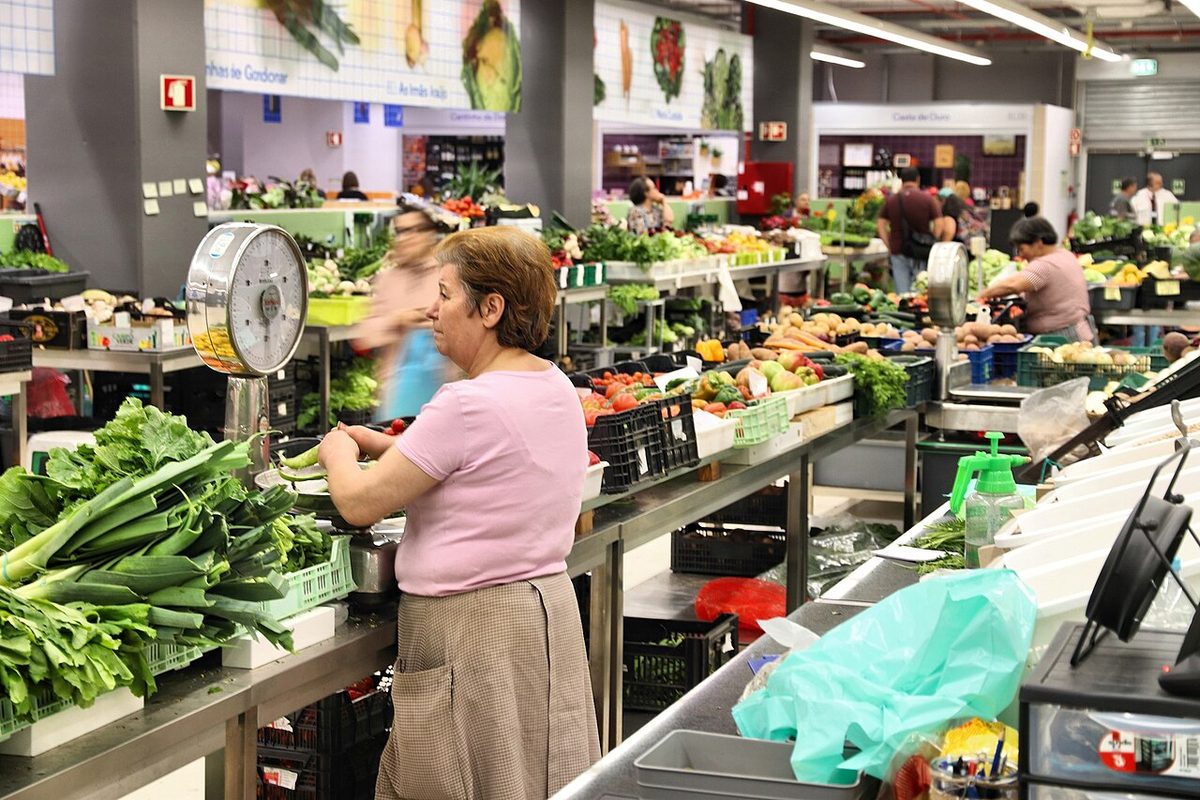
Municipal markets — Lisbon’s Mercado da Ribeira, Porto’s Mercado do Bolhão, and a working equivalent in nearly every sizeable town — are worth a visit even for a traveller with no kitchen, simply to see the produce, fish and cured meats that actually feed the country day to day rather than the tourist-facing version of it. For anyone self-catering, even briefly, a market or a decent supermarket makes assembling a genuinely good simple meal easy: good bread, presunto, a wedge of cheese, olives and a bottle of local wine adds up to a better lunch than most tourist-menu restaurants for a fraction of the price. Fish counters at these markets sell whatever came in that morning, which is also the best way to figure out, without a menu, what’s actually in season and worth ordering that night.
Getting the bill and other small restaurant mechanics
A Portuguese waiter generally leaves a table alone rather than checking in repeatedly, which first-time visitors from more attentive-service cultures sometimes misread as poor service rather than the local, unhurried default. The bill doesn’t arrive automatically at the end of a meal the way it might elsewhere; ask for “a conta, por favor” when you’re ready, and expect a short wait while it’s prepared rather than a slip left proactively on the table. Splitting a bill between separate cards is increasingly common and generally accommodated without complaint, though a very small, cash-preferring tasca may ask a group to sort it out between themselves rather than running several card transactions. Card payment, including contactless, is close to universal in cities and larger towns; a genuinely tiny, rural tasca is the main place still likely to be cash-only. Calling a waiter over is done with a raised hand and eye contact rather than a shout across the room, which is worth knowing in a country where restaurant service already runs at a noticeably unhurried pace by design rather than by neglect.
Frequently asked questions
What is the national dish of Portugal?
Bacalhau (salt cod), with reportedly over 365 documented recipes — one bacalhau dish for every day of the year, though bacalhau à Brás and à Gomes de Sá are the two most commonly found.
What is a francesinha?
A Porto sandwich of bread, ham, sausage and steak under melted cheese and a spiced tomato-and-beer sauce, usually with a fried egg on top and fries on the side. It’s a full meal, not a snack.
Is Portuguese food spicy?
Generally no — Portuguese cooking favours garlic, olive oil, coriander and paprika over heat. Piri-piri (chilli) sauce exists and is genuinely spicy, but it’s added at the table by choice rather than built into most dishes by default.
What should vegetarians order in Portugal?
Caldo verde without chouriço, grilled vegetables, a cheese board, and increasingly a dedicated vegetarian or vegan restaurant in Lisbon or Porto. Confirm “sem carne” covers stock and hidden meat, since assumptions vary by kitchen.
What is the couvert at a Portuguese restaurant?
A small unrequested plate of bread, olives or cheese served at the start of a meal, typically €2-5. It’s legal and standard, and can be declined and sent back before you eat anything from it.
What’s the difference between port and vinho verde?
Port is a fortified, higher-alcohol wine from the Douro Valley, usually drunk in small measures as an aperitif or after dinner. Vinho verde is a light, low-alcohol, slightly fizzy young white from the Minho, drunk chilled with food.
What is a petisco?
A small shared plate, Portugal’s answer to Spanish tapas — ordered a few at a time for the table rather than individually, and the normal way to eat at a casual tasca or bar.
What do you order for breakfast in Portugal?
A bica or galão with a pastry — a pastel de nata or a simple croissant — from the nearest pastelaria is the standard, quick Portuguese breakfast. A full cooked breakfast is a hotel and tourist-menu convention rather than a local habit.
Is service charge included in the bill in Portugal?
Almost never automatically. What’s printed on the bill is the total; tipping 5-10% for good service, or simply rounding up, is a separate, optional choice rather than something already added.
What’s the difference between a tasca and a restaurante?
A tasca is small, casual and family-run, usually with a short, handwritten or unwritten daily menu; a restaurante covers everything from a mid-range sit-down restaurant to genuinely upscale dining. A tasca is almost always the better value of the two for an authentic, everyday meal.
Why is bacalhau so central to Portuguese food if it isn’t caught locally?
Salting and drying cod let ships carry protein on months-long voyages during the Age of Exploration, and the habit of eating it stuck long after refrigeration made the original practical reason obsolete — it’s now cultural identity as much as necessity.
What should you drink with a francesinha?
Beer, by local convention — most Porto residents order one alongside it rather than wine, despite it being a rich, sauce-heavy dish that a wine drinker might instinctively reach for a red to match.
Are Portuguese portions large?
Often yes, particularly seafood dishes meant for two (cataplana, arroz de marisco) and a full cozido à portuguesa. A meia-dose (half portion) is a completely normal, unembarrassed order for a lighter appetite or a smaller budget.
What’s the best Portuguese cheese to try?
Queijo da Serra da Estrela, a soft, rich sheep’s-milk cheese served so young it’s eaten with a spoon, is the country’s most acclaimed. Queijo de Azeitão and the Azores’ firmer Queijo São Jorge are worth seeking out as genuinely different styles.
What can you bring home from Portugal as a food souvenir?
Vacuum-sealed presunto and chouriço, tinned sardines and tuna, a bottle of port or vinho verde, and boxed regional pastries like ovos moles all travel well in checked luggage. Check your home country’s import rules before packing cheese or fresh meat.
Is Portuguese food similar to Spanish food?
Related but genuinely distinct — Portuguese cooking leans more on olive oil, garlic and the sea, with earlier meal times and a stronger single-course tradition than Spain’s tapas-hopping culture, despite sharing a border and some ingredients.
What beer do Portuguese people actually drink?
Sagres and Super Bock are the two dominant national lagers, associated loosely with the south and north respectively, though both are sold everywhere. Neither is a craft beer in the modern specialty sense — both are straightforward, well-made everyday lagers, and a genuine craft-beer scene does exist in Lisbon and Porto’s newer bars for anyone specifically looking for it, distinct from what most restaurants actually pour by default.
Can you get a decent meal cheaply in Portugal?
Yes, reliably — the prato do dia at a genuine tasca, typically €9-15 with a drink included, is both the cheapest sit-down meal generally available anywhere in the country and usually the single best indicator of what a kitchen actually cooks well on any given day.
The Alentejo deserves a trip for its food alone: açorda, black pork fattened on acorns, Serpa cheese, sericaia with Elvas plums and wine fermented in clay amphorae. Our Alentejo region guide covers where to eat it and the wine estates worth visiting.
Queijo Serra da Estrela is best bought in the mountains it’s named after, ideally at one of the late-winter cheese fairs in Seia, Gouveia or Celorico da Beira. Our Serra da Estrela travel guide explains how to tell the DOP cheese from the cheaper “tipo Serra” sold at the summit shops.
Where to go next
For the city with the deepest food scene in this guide, see our things to do in Porto guide, and for the wine region behind half the drinks list above, Douro Valley covers the vineyards, the towns and the boat trips in full. Things to do in Lisbon covers the capital’s own food scene district by district, and our Portugal travel tips guide covers the etiquette and ordering conventions — the couvert, tipping, meal times — that apply at every table in this country.
Photo credits
- Featured image: aging port wine barrels in a stone cellar, Bodega Croft, Vila Nova de Gaia — Diego Delso, CC BY-SA 3.0, via Wikimedia Commons
- Sardines grilling over charcoal — Joseolgon, CC BY-SA 4.0, via Wikimedia Commons
Prices checked September 2026; recipes and regional attributions reflect long-standing culinary tradition rather than a single official source, and both prices and menus vary restaurant to restaurant. Last updated September 2026.